| Most Common Used-Car Noise | CV joint click on turns (Widely reported by independent mechanics and PPI services) |
| Average CV Joint Replacement Cost | $200–$400 per side (RepairPal national average estimates, 2024) |
| Pre-Purchase Inspection Cost | $100–$150 (Industry standard for independent shop PPI) |
| Engine Rebuild Cost (Rod Knock) | $3,000–$8,000+ (Varies by engine type and labor market) |
| Brake Pad + Rotor Replacement (Per Axle) | $250–$500 (RepairPal national average estimates, 2024) |
| Wheel Bearing Replacement Cost | $150–$400 per corner (RepairPal national average estimates, 2024) |
| Cold Start Listening Window | First 60 seconds (Key window for detecting oil pressure and lifter noise) |
| Highway Speed for Bearing Test | 60–70 mph (Standard diagnostic speed range recommended by mechanics) |
Why Sound Is Your First Diagnostic Tool
Most buyers walk up to a used car and look at it. Smart buyers listen to it. Mechanical problems almost always make noise before they become catastrophic — and a seller isn't going to volunteer that information. Spending three minutes listening methodically during your inspection can save you from a $2,000 repair you inherit the moment you drive off the lot.
This guide is organized by sound type, not by system. That's intentional. When you're standing next to a running car, you hear a noise — you don't see a label that says "CV joint." So we start with what you hear and work backward to what's likely broken.
A few ground rules before we get into specifics:
- Always start the car cold. Ask the seller not to warm it up before you arrive. Cold starts reveal oil pressure issues, lifter problems, and other symptoms that disappear once the engine reaches operating temperature.
- Listen in stages: engine off (walk-around), engine idling (hood open), low-speed drive, and highway speed.
- Bring a friend. One person drives, one listens from outside. It sounds obvious, but most buyers don't do it.
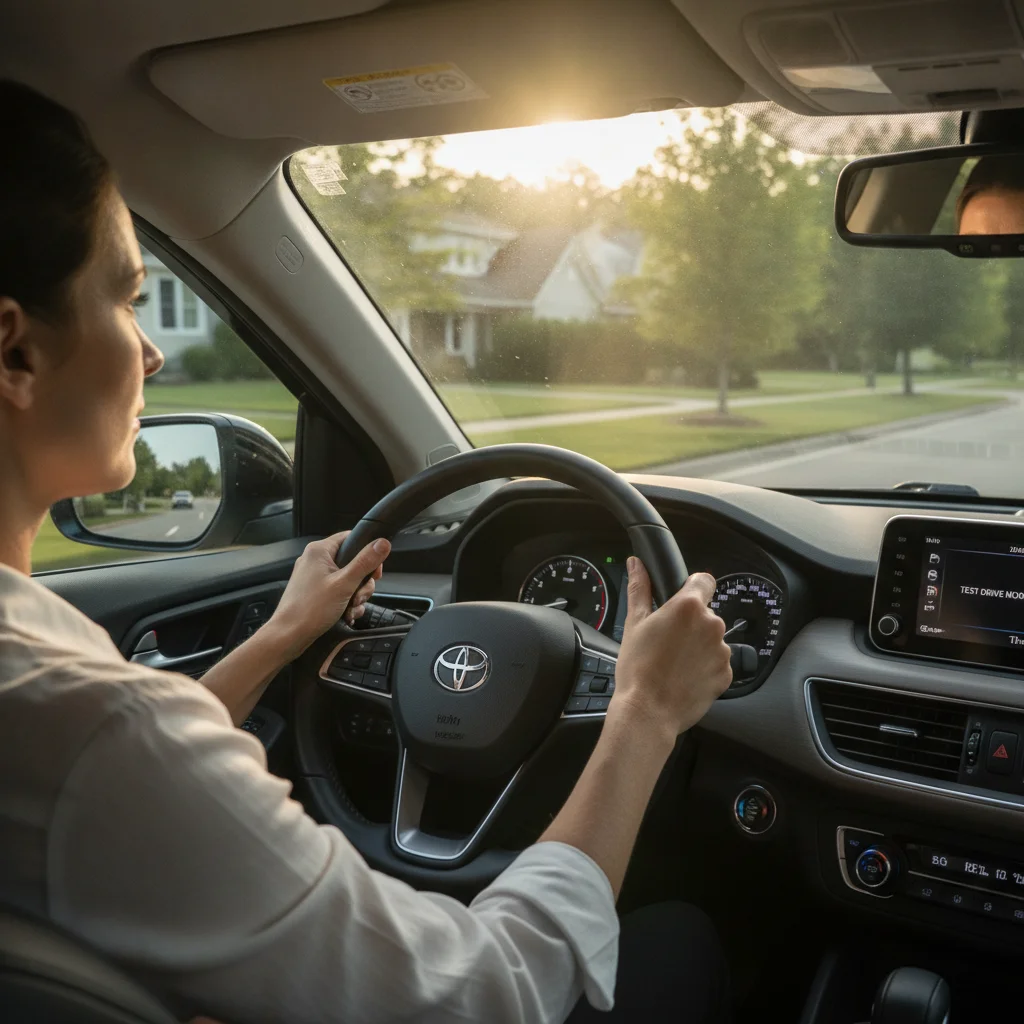
For a complete framework on what to evaluate during a test drive, see our test drive tactics guide. This article focuses specifically on sound identification — what each noise type usually means and how seriously to take it.
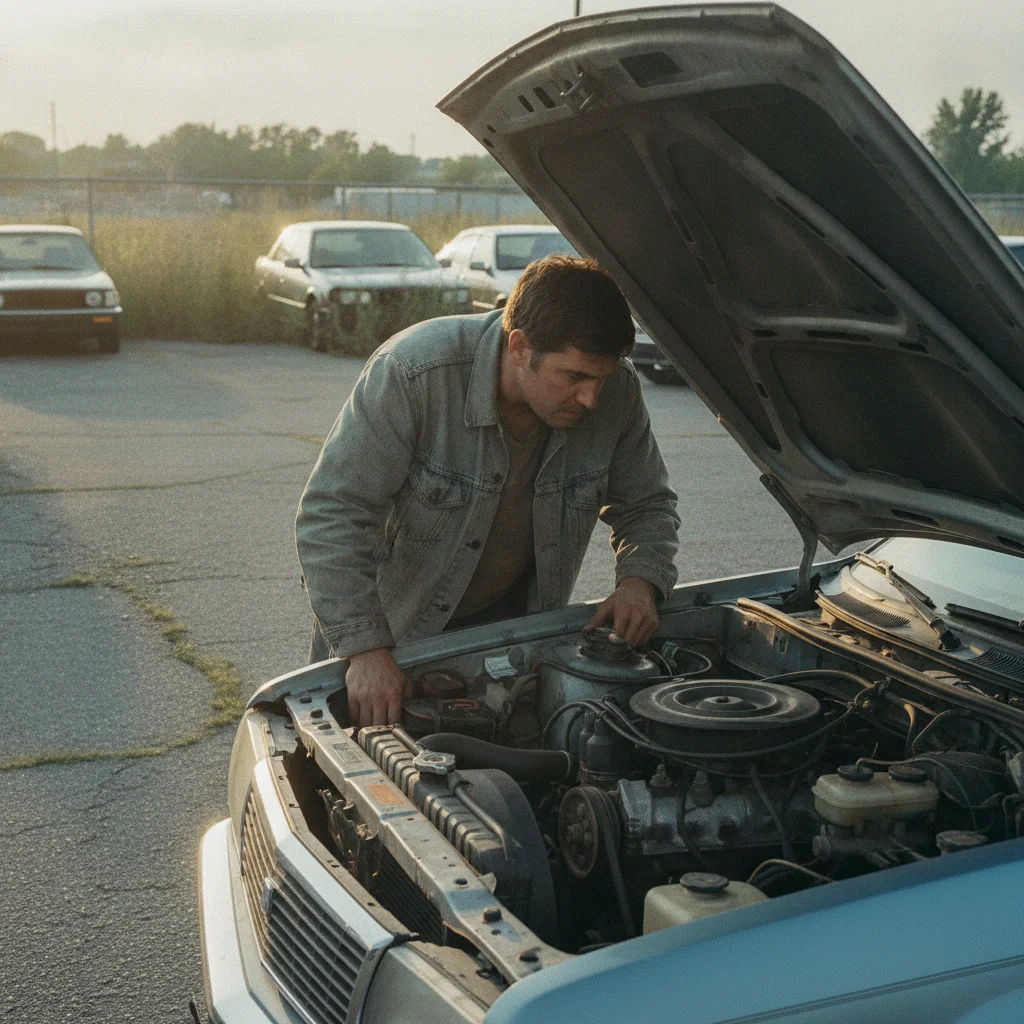
Sound-by-Sound Breakdown: What You're Hearing and Why It Matters
Use this as a lookup reference. Find the sound you heard, check the conditions it occurred under, and read the likely cause and risk level.
| Most Common Used-Car Noise | CV joint click on turns (Widely reported by independent mechanics and PPI services) |
| Average CV Joint Replacement Cost | $200–$400 per side (RepairPal national average estimates, 2024) |
| Pre-Purchase Inspection Cost | $100–$150 (Industry standard for independent shop PPI) |
| Engine Rebuild Cost (Rod Knock) | $3,000–$8,000+ (Varies by engine type and labor market) |
| Brake Pad + Rotor Replacement (Per Axle) | $250–$500 (RepairPal national average estimates, 2024) |
| Wheel Bearing Replacement Cost | $150–$400 per corner (RepairPal national average estimates, 2024) |
| Cold Start Listening Window | First 60 seconds (Key window for detecting oil pressure and lifter noise) |
| Highway Speed for Bearing Test | 60–70 mph (Standard diagnostic speed range recommended by mechanics) |
Clicking or Ticking
| When It Happens | Likely Cause | Risk Level |
|---|---|---|
| Cold start, fades after 30–60 seconds | Low oil pressure on startup; normal in some high-mileage engines if oil is fresh | Low–Moderate |
| Persistent at idle, louder under load | Worn valve train, collapsed lifter, or low oil level | High |
| Clicking from front wheel area when turning | Worn CV joint (constant-velocity joint) | Moderate–High |
| Single loud click on startup, then nothing | Starter relay or weak battery | Low–Moderate |
Bottom line: A CV joint click when turning is one of the most common used-car noises. Replacement runs $200–$400 per side. That's a negotiating chip, not necessarily a deal-breaker. Persistent valve train ticking that doesn't clear up is more serious — it can indicate deferred oil changes and engine wear you can't fully assess without pulling the valve cover.
Knocking or Pounding
| When It Happens | Likely Cause | Risk Level |
|---|---|---|
| Deep knock from engine under acceleration | Rod bearing failure — classic "rod knock" | Critical — walk away |
| Knock from suspension going over bumps | Worn strut mounts, sway bar end links, or ball joints | Moderate |
| Knock from rear when accelerating from stop | Worn U-joint or differential mount | Moderate–High |
Bottom line: Rod knock is a death sentence for an engine. If you hear a rhythmic pounding that speeds up with engine RPM, do not buy the car. Suspension knocks are usually fixable for $150–$600 but always get a pre-purchase inspection before committing.
Grinding
| When It Happens | Likely Cause | Risk Level |
|---|---|---|
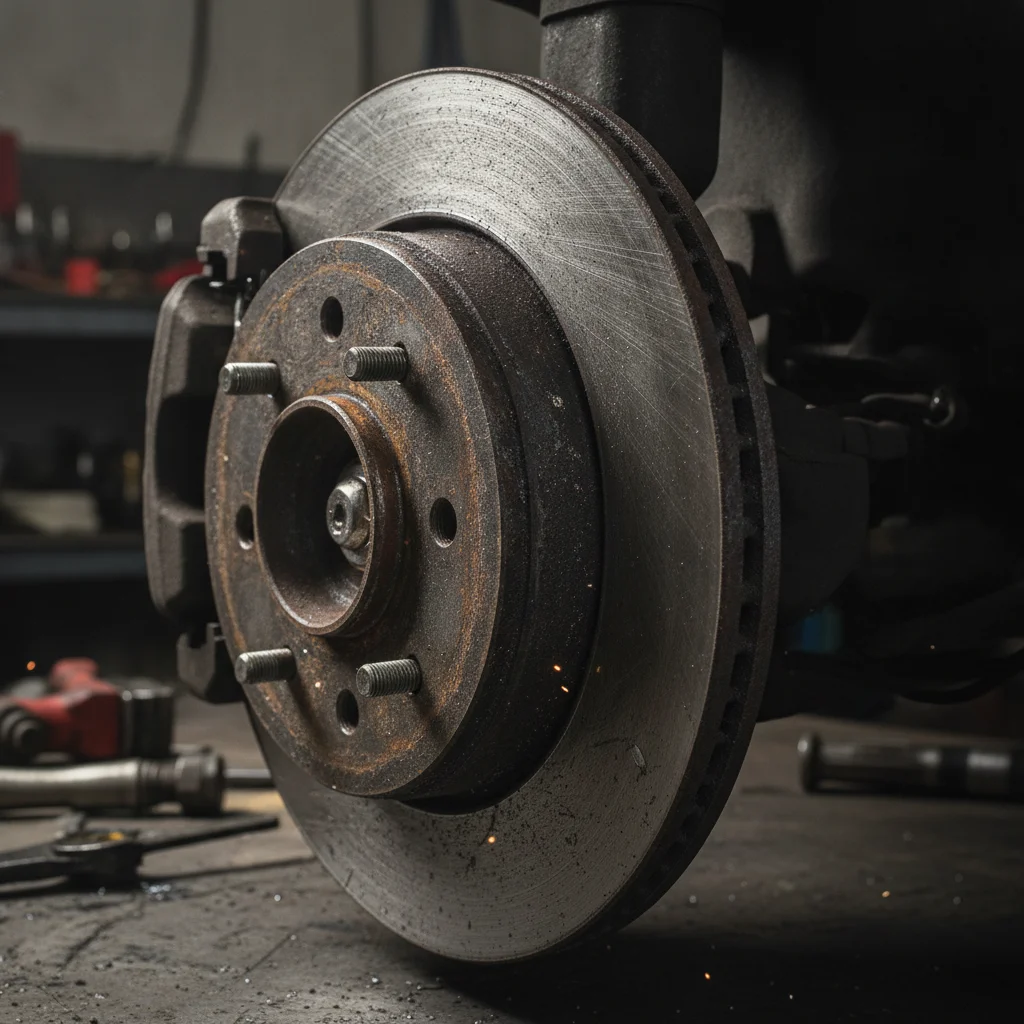
| When braking — any speed | Worn brake pads, metal-on-rotor contact | High — safety issue |
| When shifting gears (manual transmission) | Worn synchros or clutch issues | Moderate–High |
| Constant grind from wheel area | Failing wheel bearing | High — safety issue |
| Grinding during cold start that fades | Debris or surface rust on rotors (usually harmless) | Low |
Bottom line: Brake grinding is non-negotiable — it means the car needs immediate brake work. Budget at least $250–$500 per axle for pads and rotors, and use that as a hard deduction from the asking price. Wheel bearing failure is also a safety issue; a failing bearing can seize at highway speed.
Squealing or Screeching
| When It Happens | Likely Cause | Risk Level |
|---|---|---|
| When braking — high-pitched squeal | Brake wear indicator (built-in warning tab) | Moderate — needs service soon |
| On startup, fades with engine warm-up | Worn or loose serpentine belt | Low–Moderate |
| Consistent squeal from engine bay | Failing power steering pump, alternator, or idler pulley | Moderate |
| Squeal from tires when turning slowly | Understeer / worn tires — often normal at low speed | Low |
Bottom line: The brake wear indicator squeal is designed to get your attention. It means the pads are near the end of their life but rotors are likely still okay — budget $100–$200 per axle for pad replacement. A serpentine belt squeal on startup usually clears up, but a failing belt that breaks while driving will kill the engine's charging system and coolant pump simultaneously.
Clunking
| When It Happens | Likely Cause | Risk Level |
|---|---|---|
| Over bumps or potholes | Worn struts, control arm bushings, or sway bar links | Moderate |
| When shifting into drive or reverse | Transmission mount or driveshaft U-joint issue | Moderate–High |
| Hard clunk when braking | Loose caliper bracket or anti-rattle clips | High — safety issue |
| Clunk from rear on acceleration | Worn rear differential bushings or axle | Moderate–High |
Bottom line: Suspension clunks are common on high-mileage vehicles and are rarely catastrophic, but they compound quickly. A worn strut mount that's clunking is probably also a strut that's not controlling body roll properly — affecting both safety and tire wear. Get a full suspension inspection before you finalize any deal.
Rattling
| When It Happens | Likely Cause | Risk Level |
|---|---|---|
| At idle from engine bay — heat shield area | Loose heat shield on exhaust (common, cheap fix) | Low |
| Rattling at idle that changes with RPM | Timing chain slack or tensioner wear | High — potential engine damage |
| Interior rattles from doors or dash | Loose trim, worn clips | Low |
| Rattling from catalytic converter area | Broken substrate inside the cat | Moderate — $400–$2,000+ to replace |
Bottom line: Heat shield rattles are the cheapest fix in automotive repair — a $5 bolt or a hose clamp. Timing chain rattle is the opposite: ignoring it leads to engine failure. If you hear a rattle at idle that changes pitch as you rev the engine, have a mechanic pull the valve cover before you commit.
Hissing or Wheezing
| When It Happens | Likely Cause | Risk Level |
|---|---|---|
| Hiss from engine bay after shutting off | Coolant leak onto hot components — normal if mild, serious if strong | Moderate–High |
| Hiss under acceleration | Boost leak (turbocharged cars) or vacuum leak | Moderate |
| Continuous hiss at idle | Intake vacuum leak — rough idle likely accompanies it | Moderate |
Whining or Humming
| When It Happens | Likely Cause | Risk Level |
|---|---|---|
| Whine that increases with vehicle speed (not RPM) | Failing wheel bearing | High — safety issue |
| Whine that increases with RPM at idle | Power steering pump (low fluid or failing) | Moderate |
| Constant hum from rear at highway speed | Rear differential wear or wheel bearing | Moderate–High |
| High-pitched whine during acceleration | Alternator bearing or transmission issue | Moderate |
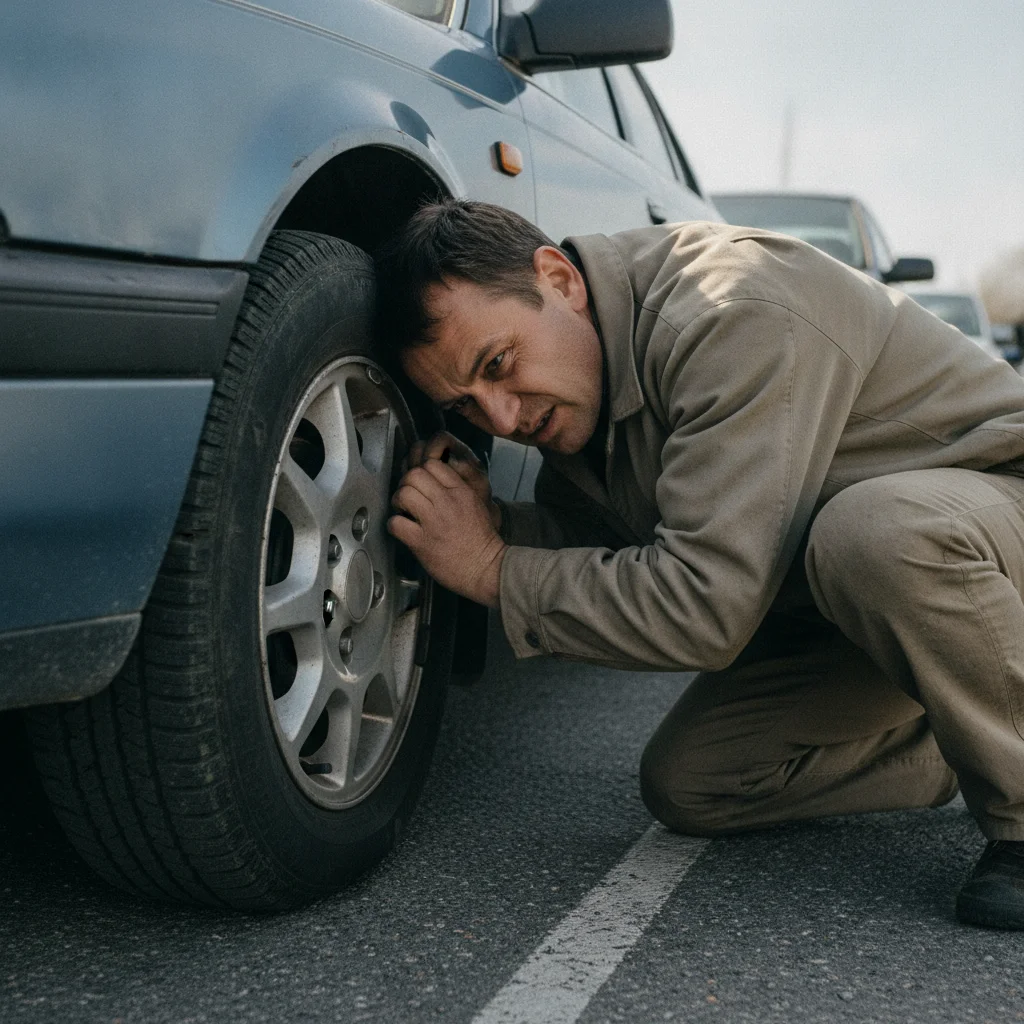
Bottom line: The wheel bearing whine test is straightforward — if the sound changes when you gently sway the car left and right at 40–50 mph, it's almost certainly a bearing. Loading the bearing by swerving shifts the weight and changes the pitch. A wheel bearing replacement runs $150–$400 per corner.
For a deeper look at how vibrations pair with sounds to diagnose problems, see why your car is shaking and when to worry about it.
Rod Knock
A deep, rhythmic knocking noise from the engine caused by excessive clearance in a connecting rod bearing. It speeds up as engine RPM increases and typically signals imminent engine failure — one of the most serious sounds a used car can make.
CV Joint
Constant-velocity joint — a flexible coupling that transfers power from the transmission to the drive wheels while allowing for steering movement. A worn CV joint produces a clicking noise that is most obvious during tight, low-speed turns.
Wheel Bearing
A set of steel balls or rollers inside a metal ring that allows the wheel hub to spin with minimal friction. A failing wheel bearing produces a humming or whining noise that changes pitch with vehicle speed, and is a safety concern because it can seize and lock the wheel.
Timing Chain
A metal chain that synchronizes the rotation of the engine's crankshaft and camshaft(s). A slack or worn timing chain rattles at idle, particularly on cold start, and can cause engine damage if it jumps a tooth or breaks.
Serpentine Belt
A single continuous belt that drives multiple engine accessories — alternator, power steering pump, air conditioning compressor, and water pump. A worn or loose serpentine belt squeals on startup and can cause all of these systems to fail if it breaks while driving.
Brake Wear Indicator
A small metal tab built into the brake pad that contacts the rotor when the pad material wears thin, producing a high-pitched squeal. It's an intentional warning system designed to alert the driver before metal-on-metal grinding begins.
Pre-Purchase Inspection (PPI)
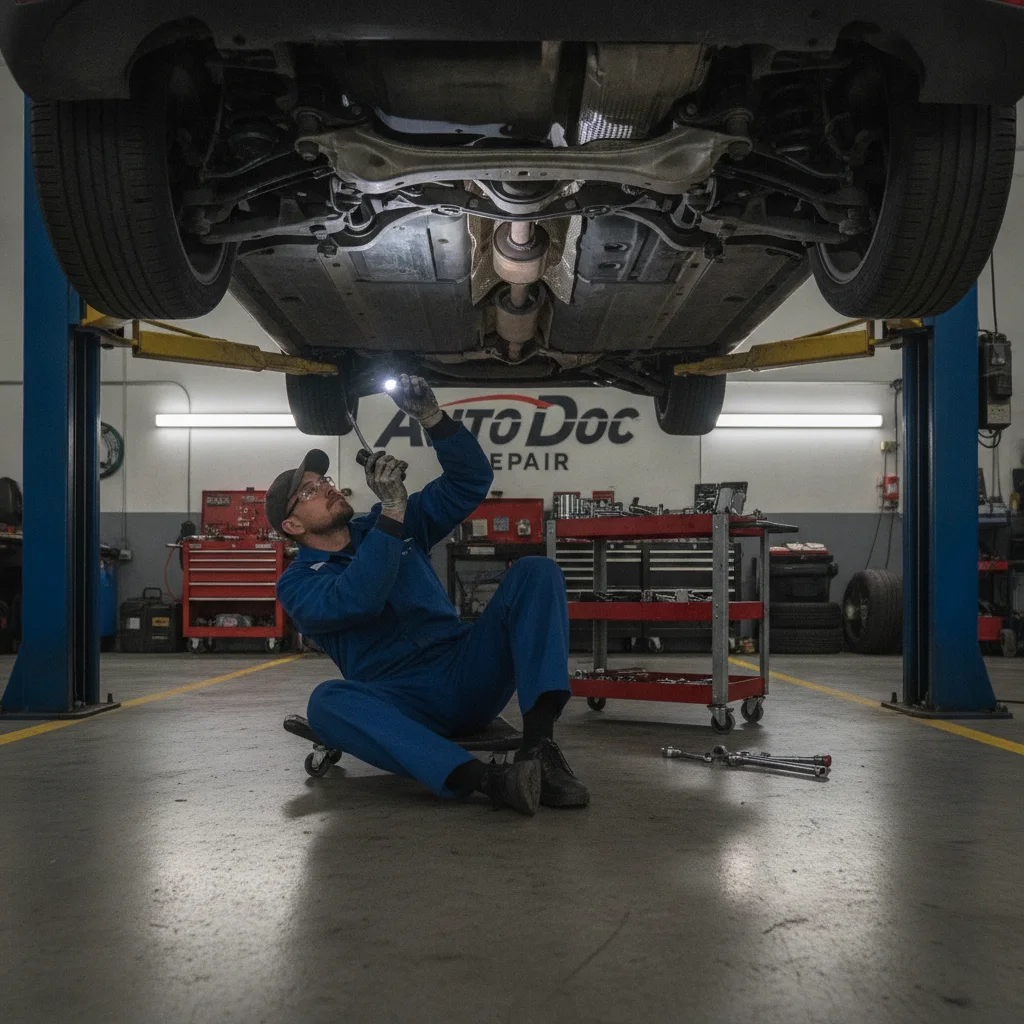
An independent mechanical inspection performed by a third-party mechanic (not affiliated with the seller) before finalizing a used vehicle purchase. A PPI typically costs $100–$150 and involves a lift inspection of the undercarriage, fluid check, test drive, and diagnostic scan.
Vacuum Leak
A breach in the engine's intake vacuum system that allows unmetered air into the engine, disrupting the fuel-air mixture. Vacuum leaks produce a hissing sound and typically cause rough idling, hesitation, or a check engine light.
The Pre-Purchase Sound Checklist
Use this sequence every time you evaluate a used car. It takes about 15 minutes and covers the major failure points.
Ask the Seller Not to Warm the Car Up
Cold start behavior reveals oil pressure, timing chain, and lifter conditions that disappear once the engine is warm. If you arrive and the car is already warmed up — especially on a cold day — that's a yellow flag. It's worth asking why, and insisting on a second visit where you can start it cold yourself.
When to Walk Away Without Negotiating
Some noises are not negotiating chips — they are exit signals. Rod knock, severe transmission grinding, and a timing chain rattle that's been ongoing all indicate damage that may already be done. No price reduction makes an engine replacement a good deal on an otherwise average used car. Trust the noise.
- Before the engine starts: Walk around the car slowly. Listen for any ticking, dripping, or hissing that indicates a leak while the engine is cold and settled.
- Cold start: Have the seller (or you) start the car while you stand near the hood with it open. Note any ticking that lasts more than 30 seconds, any puffing from exhaust, any belt squeal, any labored cranking before the engine catches.
- Idle with hood open: Listen for rhythm. A healthy engine has a smooth, consistent idle. Any irregularity in the firing — a loping or missing beat — suggests ignition or fuel delivery issues. Listen for rattling near the top of the engine (valve train) and near the front (timing chain area).
- Steering lock-to-lock at low speed: Turn the wheel fully left and fully right while moving at parking-lot speed. A CV click will be obvious here. Any grinding or clunking during full-lock turning also points to worn steering components.
- Brake test: From 30 mph, apply the brakes firmly. Listen for grinding or squealing. Note any pull, vibration, or pulsation through the pedal. Repeat from 50 mph if conditions allow.
- Highway speed: At 60–70 mph on a straight road, take your hands lightly off the wheel and listen. A bearing whine becomes most obvious at speed. Gently swerve left and right to load different bearings and confirm which corner the whine comes from.
- Deceleration: Come off the throttle at highway speed and coast down to 30 mph without braking. Listen for transmission clunks, drivetrain vibration, or changes in the hum that might indicate differential or driveshaft problems.
- Engine off: Sit in the car with it off for two minutes after driving. Then get out and listen near the engine bay. A strong hissing sound from coolant boiling off indicates the cooling system is under stress.
This checklist pairs directly with what you should be feeling and noticing visually. The full test drive tactics guide covers handling feel, brake pedal feedback, and what to look for visually while you're behind the wheel.
65%
Used car buyers who skip a PPI
According to a 2023 CarGurus survey, nearly two-thirds of used car buyers did not get an independent inspection before purchase.
$1,200
Average unexpected repair cost in first year
Consumer Reports found that buyers who skipped pre-purchase inspections averaged over $1,200 in unplanned repairs in the first 12 months.
30 sec
Cold-start listening window for lifter noise
Most hydraulic lifter tick clears within 30–60 seconds on a healthy engine; anything persistent warrants further investigation.
$150
Typical PPI cost that can prevent thousands in repairs
A standard pre-purchase inspection by an independent mechanic costs $100–$150 and routinely identifies issues worth 10–50x that amount.
Sounds That Are Deal-Breakers vs. Negotiating Chips
Not every noise means walk away. Many used cars have minor sound issues that are fully priced into the market — or that you can use to negotiate a lower price. The key is knowing which category a noise falls into.
Walk Away — Don't Negotiate
- Rod knock: Deep rhythmic pounding from the engine that speeds up with RPM. An engine replacement or rebuild costs $3,000–$8,000+. The car is essentially worth scrap value plus parts.
- Timing chain rattle at idle: If the chain has been slapping the guides, there may be metal debris in the oil. Even after a chain replacement, you don't know what damage was done.
- Transmission grinding or slipping: Automatic transmission rebuilds start around $2,500. Manual transmission synchro repairs are $1,500+. Unless the price reflects this, move on.
- Loud bearing whine at highway speed with no price adjustment: A seized wheel bearing can cause a wheel to lock up at highway speed. It's a safety issue, not just a repair cost.
Negotiate — Price It In
- Brake squeal or grind: Get a brake estimate and subtract it from the asking price. $300–$600 per axle is a reasonable ask.
- CV joint click on turns: $200–$400 per side. Ask for half — most sellers expect some negotiation on this.
- Suspension clunks over bumps: Get a quote for sway bar links and end links before negotiating. These are often $100–$250 per side installed.
- Belt squeal: A serpentine belt replacement is $100–$200. Use it as a small deduction.
- Heat shield rattle: A $5 fix. Mention it, but don't fight over it.
Get a Pre-Purchase Inspection First
If you hear any noise you can't confidently categorize, spend the $100–$150 on a pre-purchase inspection (PPI) from an independent mechanic. They'll put the car on a lift, look at the exhaust, suspension, and undercarriage, and verify what you heard. That investment has stopped thousands of buyers from making $5,000 mistakes.
For owners who've already bought and are tracking new noises over time, the guide to reading your car before it breaks down gives you a framework for catching problems early. And if a warning light accompanies the noise, cross-reference it with the dashboard warning lights buyer's guide.
Ask the Seller Not to Warm the Car Up
Cold start behavior reveals oil pressure, timing chain, and lifter conditions that disappear once the engine is warm. If you arrive and the car is already warmed up — especially on a cold day — that's a yellow flag. It's worth asking why, and insisting on a second visit where you can start it cold yourself.
When to Walk Away Without Negotiating
Some noises are not negotiating chips — they are exit signals. Rod knock, severe transmission grinding, and a timing chain rattle that's been ongoing all indicate damage that may already be done. No price reduction makes an engine replacement a good deal on an otherwise average used car. Trust the noise.
RepairPal Cost Estimator
Enter your specific repair type and zip code to get a fair-price range for any mechanic work. Use it before negotiating so you know exactly what to subtract from the asking price.
Strange Car Noises and the Problems They're Telling You About
A detailed breakdown of the most common car sounds — squealing, grinding, clunking, hissing — with likely causes and urgency ratings for owners who've already bought and are diagnosing issues.
Test Drive Tactics: What to Listen, Feel, and Notice Behind the Wheel
The full test drive evaluation framework — covering sound, handling feel, brake feedback, and visual cues — to use alongside this noise reference guide before making any offer.
Carfax Vehicle History Report
Pull a vehicle history report using the VIN to see accident records, service history, and ownership count. Use it to cross-reference whether reported repairs match the noises you're hearing.
Dashboard Warning Lights: A Buyer's Reference Guide
If a warning light accompanies the noise you heard, this quick-reference glossary tells you what triggers each light and how seriously to take it during a test drive or inspection.

All claims are backed by peer-reviewed research. Sources on request.