Key Takeaways
Why Flood Cars Keep Slipping Through
After every major hurricane or regional flood, thousands of water-damaged vehicles enter the used car market. Some are totaled and titled accordingly. A meaningful share are not. They get dried out, steam-cleaned, freshly detailed, and listed — sometimes by private sellers who genuinely don't know the history, and sometimes by people who absolutely do.
The problem for buyers is that a well-detailed flood car looks and smells almost normal in the first few weeks after cleaning. New carpet mats cover stained originals. Air fresheners mask mildew. Touch-up paint hides waterline residue on door jambs. If you rely on a quick walk-around and a Carfax printout, you will miss it.
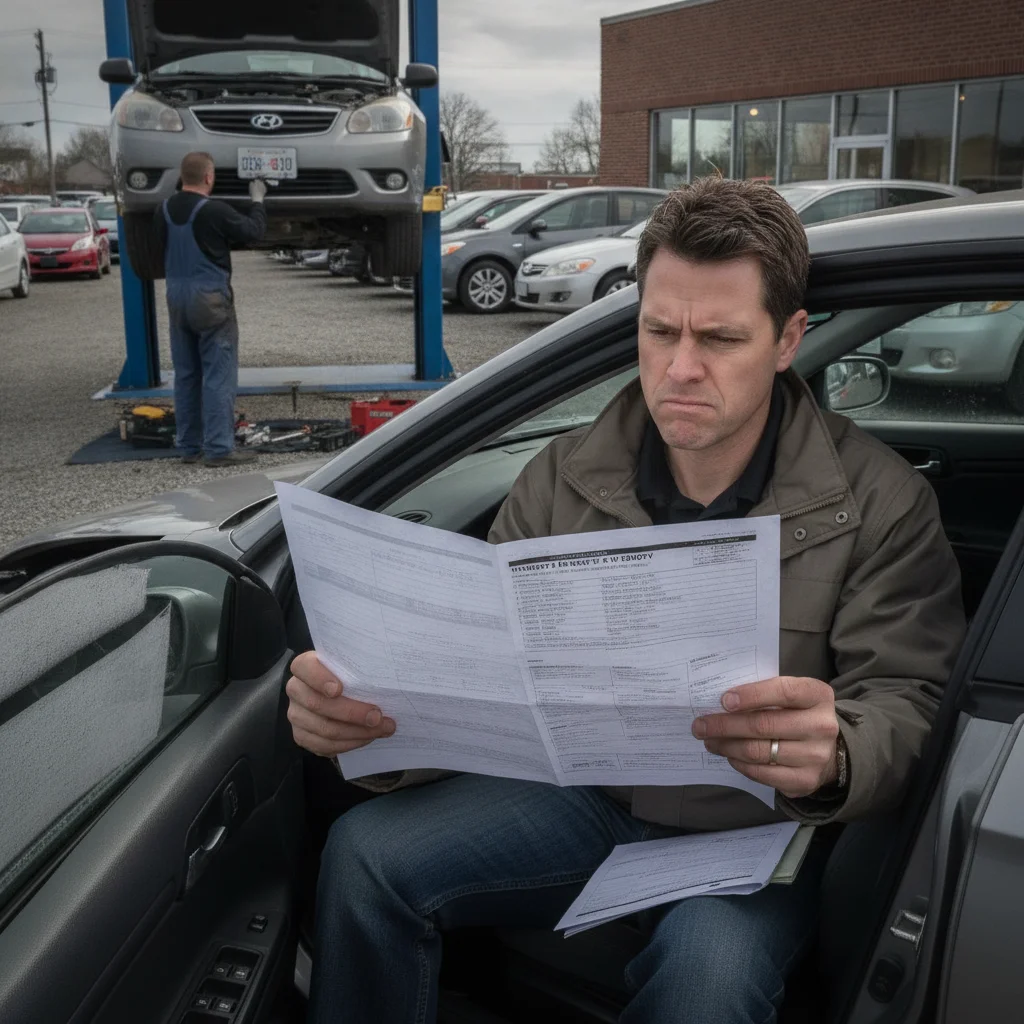
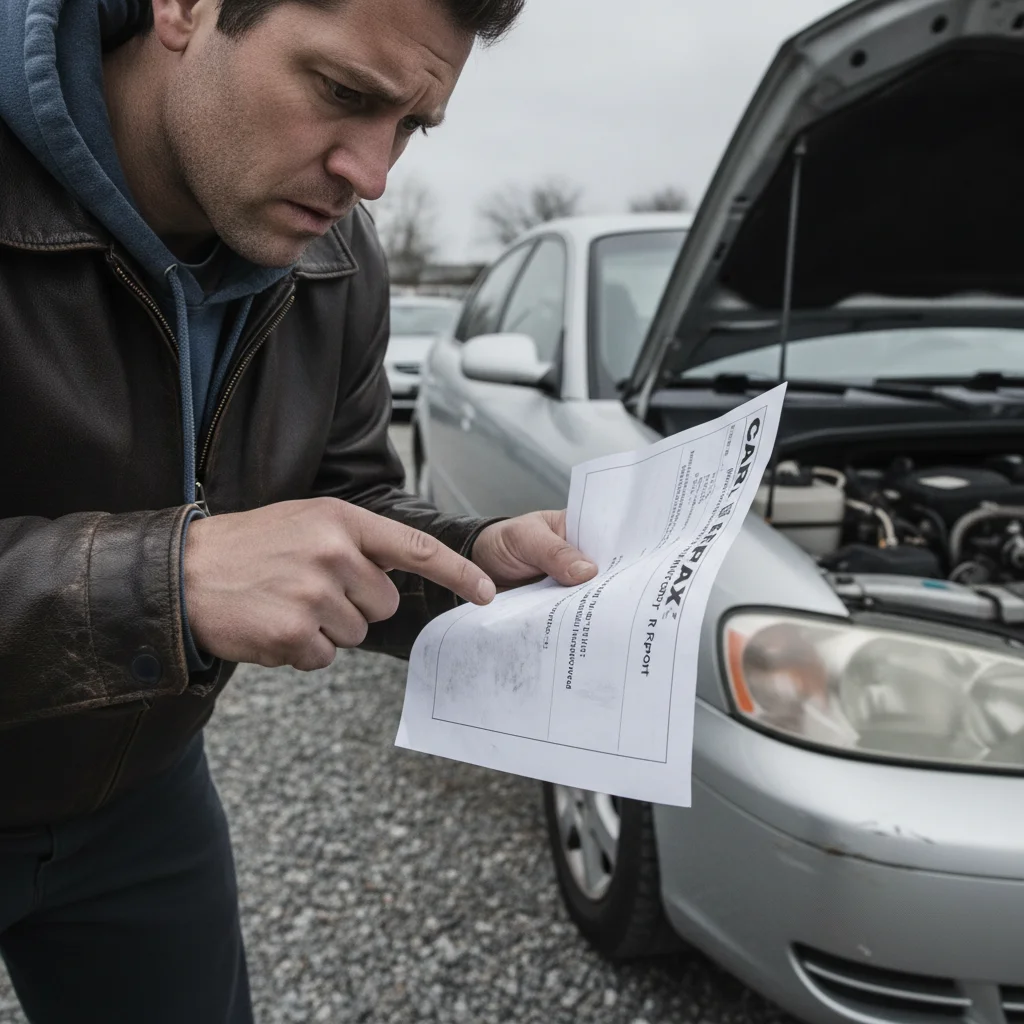
As Carfax and AutoCheck reports often don't tell the whole story, flood incidents are among the most underreported events in the used car pipeline. Insurance-company totals get flagged; private flood events and out-of-state damage frequently don't. You need your eyes and your hands — not just a report printout.
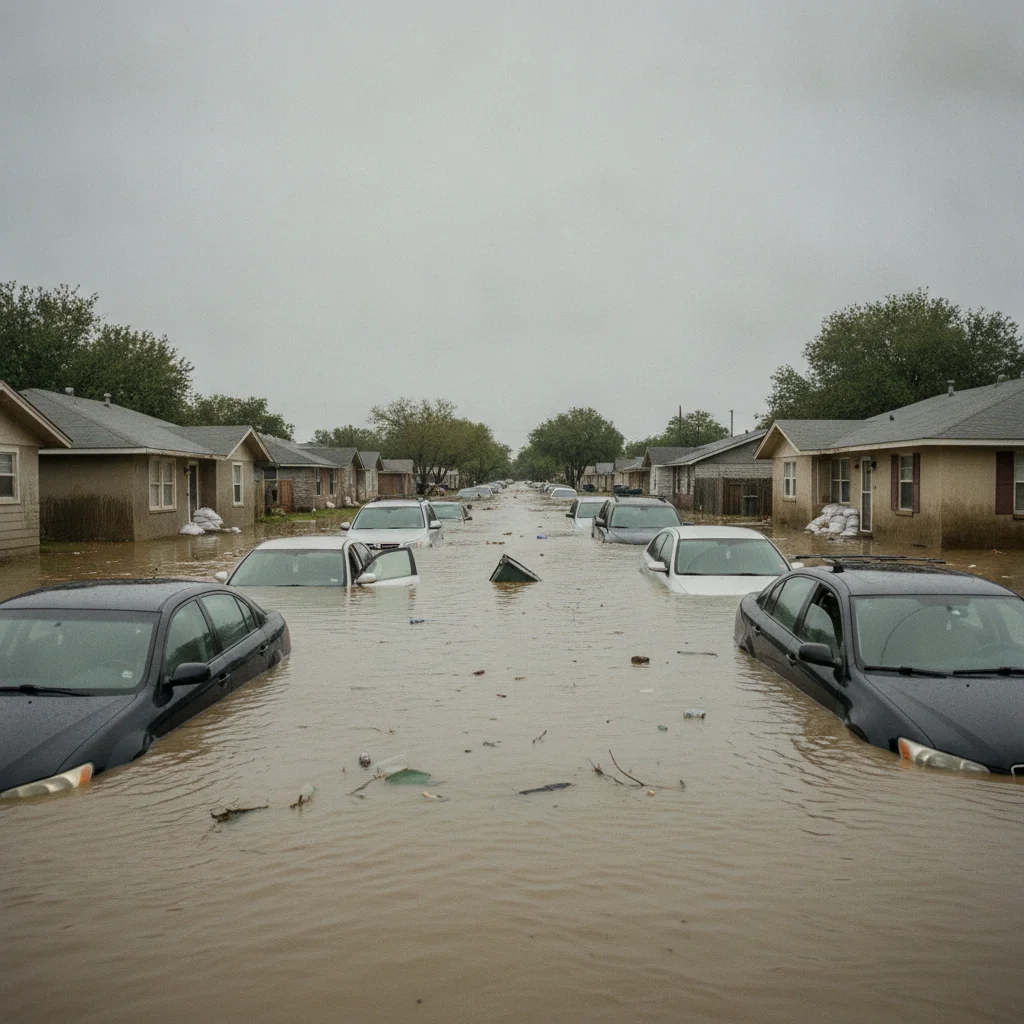
This article walks through the specific mistakes buyers make when evaluating a potential flood car and gives you the physical checklist to catch what others miss.
The Mistakes That Let Flood Damage Slip Past Buyers
Most buyers who end up with a flood car didn't ignore warning signs — they simply didn't know what to look for, or they looked in the wrong places. The mistakes below are the most consistent patterns I've seen across private party sales, small dealer lots, and auction resales.
Relying solely on a vehicle history report to rule out flood damage.
Why it happens: Buyers understandably trust Carfax or AutoCheck as authoritative sources. The reports look official and comprehensive, which creates a false sense of security about a car's background.
Skipping the smell test because the car looks clean and freshly detailed.
Why it happens: A professionally detailed interior with new mats and an air freshener looks and initially smells fine. Buyers naturally anchor on visual cues and don't think to smell the carpet or trunk.
Not checking the seat rail bolts and door jambs for rust.
Why it happens: Most buyers focus on upholstery, dashboard condition, and tire tread — the obvious visual elements. Seat rail hardware and door jamb channels are low-visibility areas that require deliberate effort to inspect.
Assuming a detailed engine bay means no flood history.
Why it happens: A clean engine bay signals good maintenance to most buyers. Sellers know this and routinely pressure-wash engine bays as part of flood cleanup, so buyers interpret cleanliness as a positive rather than a possible cover-up.
Failing to test every electrical feature during the inspection.
Why it happens: Test drives tend to focus on drivetrain — how the engine runs, how it shifts, how it brakes. Electrical features feel like secondary details that can be checked later or skipped to save time.
Skipping an independent pre-purchase inspection to avoid the cost or delay.
Why it happens: Buyers get emotionally invested in a vehicle and don't want to introduce friction — especially in competitive markets where another buyer might move faster. The $100–$200 inspection fee also feels unnecessary when a car looks good.
Beware of Out-of-State Transfers After Major Storms
One of the most consistent patterns after major flood events is rapid out-of-state vehicle transfers. A car totaled or flood-damaged in Louisiana or Florida may be cleaned up and relisted in Tennessee or Georgia within weeks. If a used car's title history shows a recent state transfer — especially from a region that experienced a major weather event — treat that as a prompt to inspect extra carefully. Always cross-reference the vehicle's listed location history against FEMA flood disaster declarations for that period.
Where to Look: A Physical Inspection Checklist
Once you know the mistakes to avoid, the actual inspection becomes a focused, systematic process. Work through these areas in order — each zone tells you something different about whether water was present and how high it got.
Under the Carpet and Floor Mats
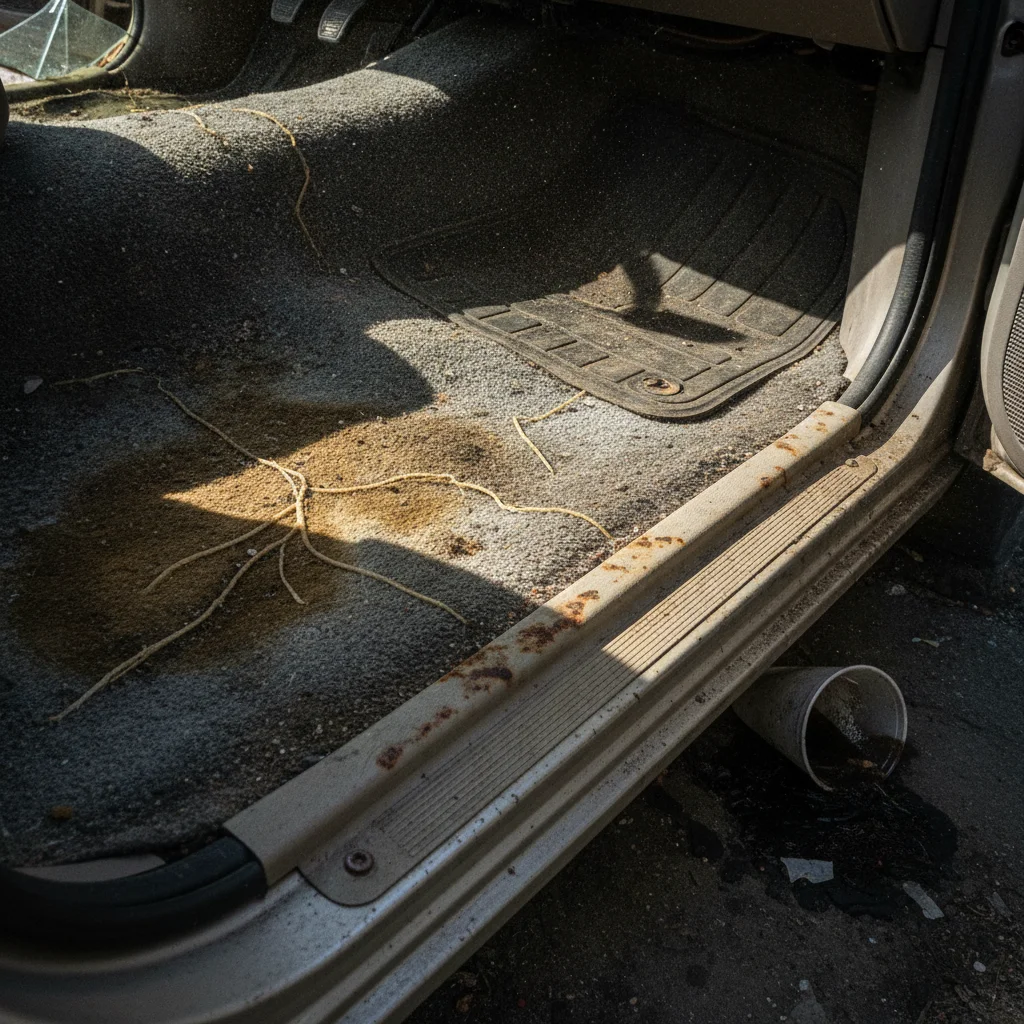
Pull up every floor mat — front and rear. Press down on the carpet beneath them with your palm. You're feeling for dampness and listening for a slight squelching. Smell that area too; mildew has a distinct, earthy-damp odor that no amount of Febreze fully eliminates. Check the carpet at the edges where it meets the door sills — that's where it's hardest to dry completely.
Seat Rail Bolts
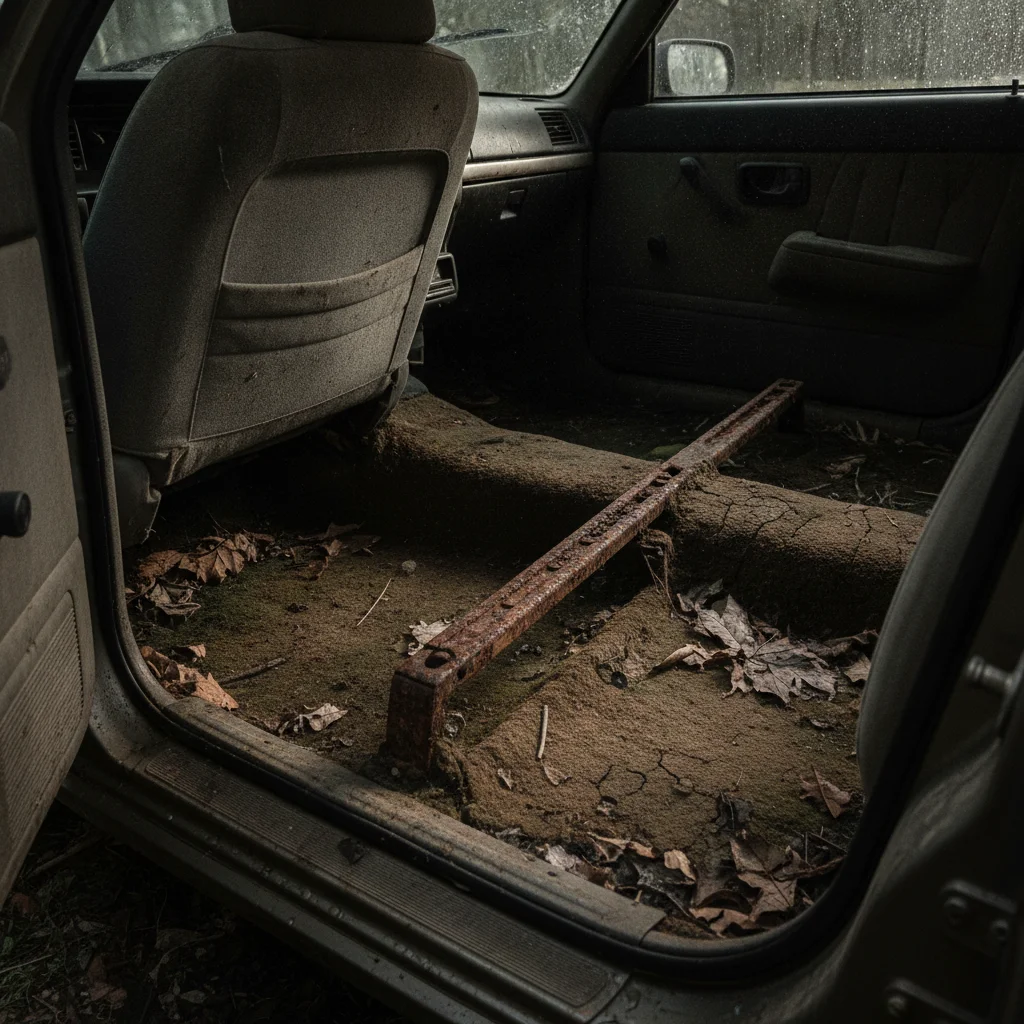
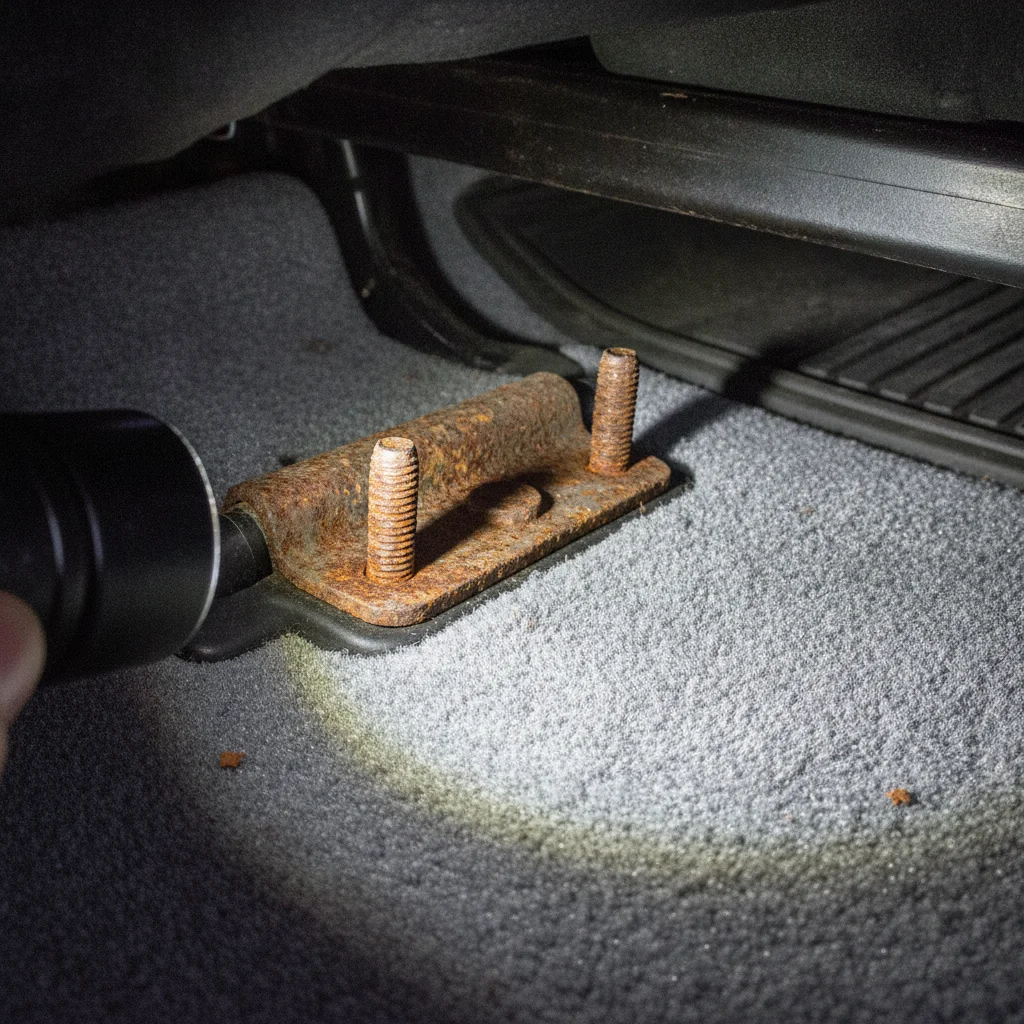
Get down low and look at the four bolts anchoring each front seat to the floor. If the car was submerged or even deeply flooded, these bolts show rust within weeks — even on a car that's otherwise spotless. Fresh rust on seat rail hardware in a vehicle that appears otherwise clean is one of the single most reliable flood indicators I know.
Door Jambs and Hinges
Open every door fully and examine the jamb — the channel the door closes into. Dried sediment, water staining, or a faint tide-line inside the jamb area indicates the vehicle sat in standing water. Hinge hardware on the B-pillar is another rust hotspot. Manufacturers coat this area well from the factory; rust appearing there on a newer vehicle means it was overwhelmed by moisture.
The Trunk and Spare Tire Well
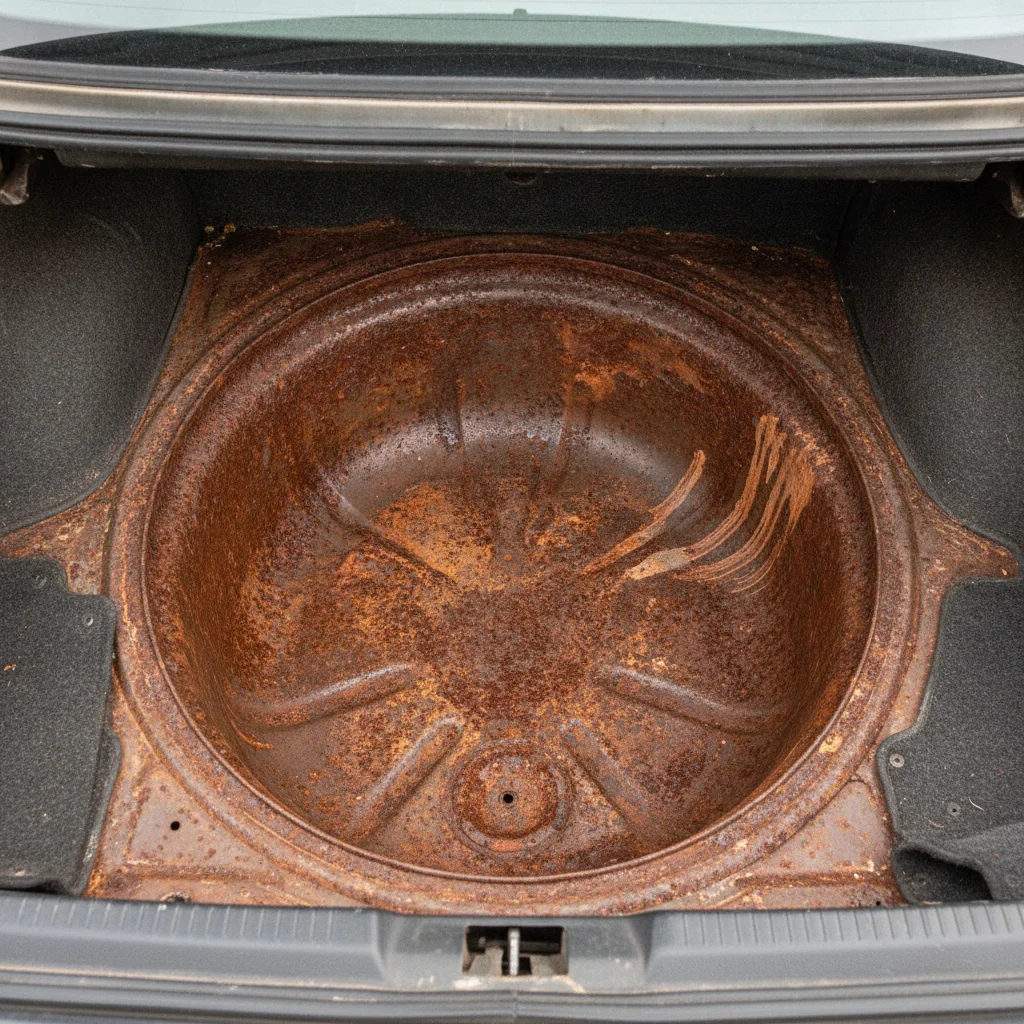
Lift the trunk liner or cargo floor. Pull out the spare tire. The well underneath is essentially a catch basin — if water got in, it pooled here last and dried out slowest. Look for rust on the spare itself, on the jack hardware, and on the metal well floor. A musty smell rising from this area when you open the trunk is a serious warning.
Under the Hood
Engine bays get pressure-washed after flood events, so a clean engine bay doesn't mean much. What you're looking for: water staining or corrosion on the firewall (the metal wall between the engine and the cabin), rust on unpainted metal brackets, sediment residue in corners that the wash didn't fully reach, and — critically — a waterline mark on the battery box or fuse box housing. Check the air filter housing too; mud or debris inside indicates water was drawn in.
Electrical Components
Turn on every electrical feature: windows, mirrors, climate control, infotainment, seat adjusters, all exterior lights. Flood damage to wiring causes intermittent failures and corrosion that can take months to fully manifest. A window that stutters, a screen that flickers, or a blower motor that makes grinding sounds are all worth noting. Check behind the kick panels near the footwells — wiring harnesses routed there are prime targets for corrosion.
378,000+
Flood-damaged vehicles entering US market annually
Carfax estimates over 378,000 flood-damaged vehicles are on US roads, many without proper title branding to alert buyers.
~25%
Flood cars resold without salvage title
Consumer advocacy organizations estimate roughly a quarter of flood-damaged vehicles are resold without a salvage or flood title designation due to gaps in state reporting requirements.
$3,000–$8,000
Typical repair cost for flood electrical damage
Independent repair shops report that electrical system remediation on flood-exposed vehicles commonly runs between $3,000 and $8,000, often exceeding the price discount buyers received.
Don't Let a Clean Report or Fresh Detail Substitute for Due Diligence
The two most dangerous words in a used car transaction are "looks clean." A flood car that has been properly detailed and listed a few weeks post-event will look clean. That's the entire point.
Never Accept 'It Just Has a Musty Smell' as an Explanation
If a seller attributes a musty odor to 'sitting in a garage' or 'the previous owner had dogs,' don't accept it at face value. Mildew in automotive carpet and foam padding is extremely persistent and usually has a specific cause: prolonged moisture exposure. Combine any odor finding with your physical checklist results before deciding how to proceed. One explanation doesn't cancel out multiple physical red flags.
A vehicle history report is worth running — but treat it as a starting point, not a verdict. A clean vehicle history report doesn't guarantee a trouble-free car, and flood events are among the most likely to fall through the cracks. Out-of-state damage, private insurance settlements, and uninsured vehicles all leave no footprint in the data.
If your physical inspection turns up even two or three of the red flags described above, don't negotiate — walk away, or insist on an independent pre-purchase inspection before giving any deposit. A mechanic who specializes in used car inspections can put the vehicle on a lift and look at the undercarriage, pull codes from the OBD-II port, and check components you simply can't access in a parking lot.
For more on how sellers prepare vehicles to obscure known problems, see what mistakes sellers make when trying to hide a car's flaws — reading that from the buyer's perspective tells you exactly what to watch for during a showing.
When to Walk Away and When to Negotiate
Not every flood car is a total loss proposition. Minor flooding — say, water that breached the door sills but never reached the dashboard — in a vehicle that was immediately dried and treated is a very different situation than a car that sat submerged for 48 hours. The distinction matters for pricing and long-term reliability.
Here's the practical breakdown:
- Walk away without negotiating if: the seller didn't disclose flood history and you found clear physical evidence; the vehicle has a salvage or rebuilt title from a flood event; you find water staining at or above the dashboard level; the airbag system or ABS have fault codes; or the seller becomes defensive or pressures you when you raise your concerns.
- Consider negotiating heavily if: the seller is upfront about limited flood exposure; physical evidence suggests water was below the seat rails and the car was professionally dried; the vehicle has a clean title in the state where the flood occurred; and a pre-purchase inspection comes back with no electrical issues or rust on structural components.
- Always insist on a pre-purchase inspection before completing any transaction involving a vehicle from a flood-affected region or year.
For context on regional market dynamics after major weather events, understand how sellers approach the market after a major weather event — it explains why supply tightens and how it creates conditions that push flood cars back into circulation.
The used car buying process involves enough variables already. Don't add flood damage to the list of surprises you discover after purchase.
Final Checklist Before You Make an Offer
Run through this list in sequence at any used car showing where flood history is a concern — or even when it isn't. It takes about 20 minutes and can save you thousands.
- Check vehicle history report — note any title brands, state transfers, or auction records from flood-prone regions.
- Smell the interior before you see it — open the door and take a breath before stepping in. Musty, earthy, or chemical-masking odors are flags.
- Pull floor mats and press carpet — front and rear, including trunk liner.
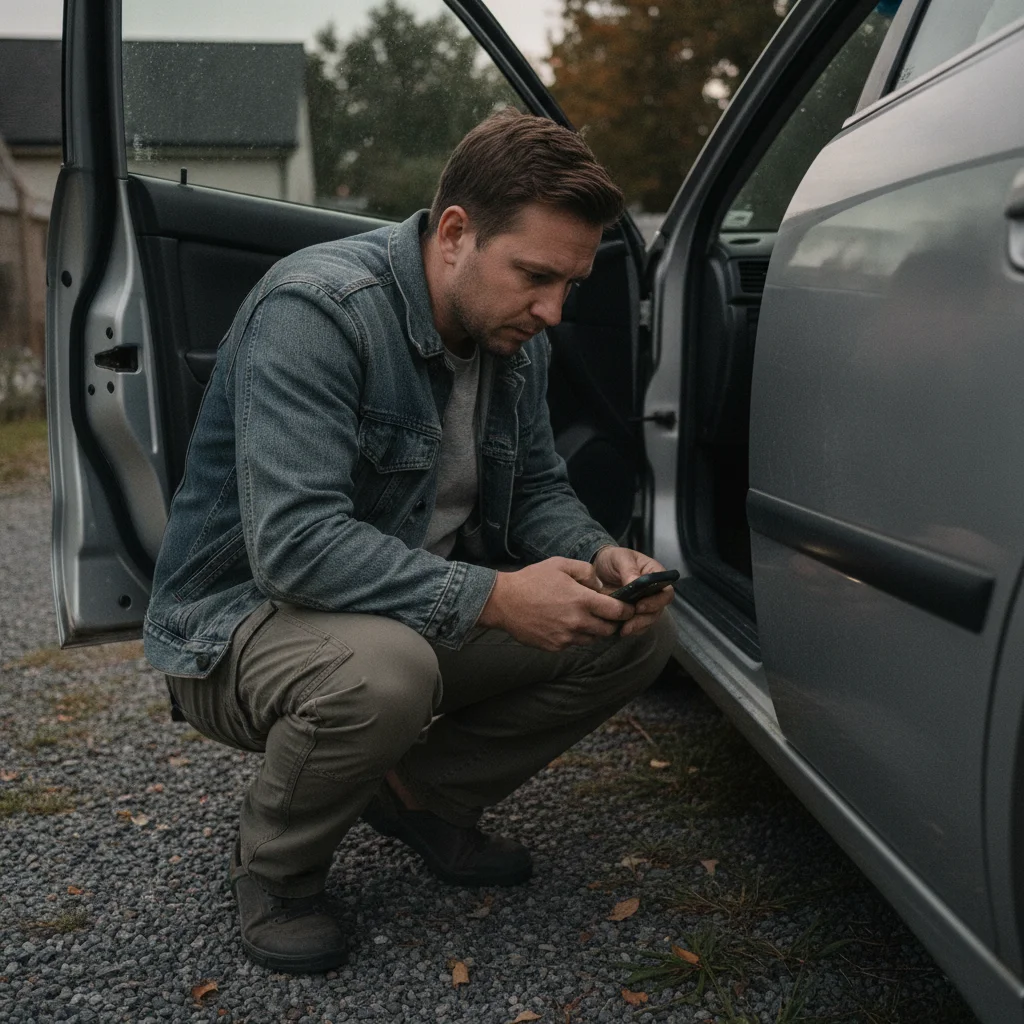
- Inspect seat rail bolts for rust — get low with your phone flashlight.
- Examine all four door jambs for sediment, waterlines, or rust on hinges.
- Check spare tire well — smell, look for rust, check spare and jack hardware.
- Inspect engine bay firewall and fuse box for water staining or corrosion.
- Run every electrical feature — windows, lights, climate, infotainment, seat adjusters.
- Test drive and listen for blower motor noise, check if the A/C produces condensation drain (blocked drains are a flood indicator).
- If anything is off: insist on an independent pre-purchase inspection or walk away.
For a deeper dive into what a proper physical inspection covers beyond flood specifically, see our guide to spotting a flood-damaged car before you buy covers additional technical checkpoints including OBD-II diagnostics and undercarriage rust assessment.

All claims are backed by peer-reviewed research. Sources on request.