Key Takeaways
Why Flood Cars Are Everywhere — And Why They're Dangerous
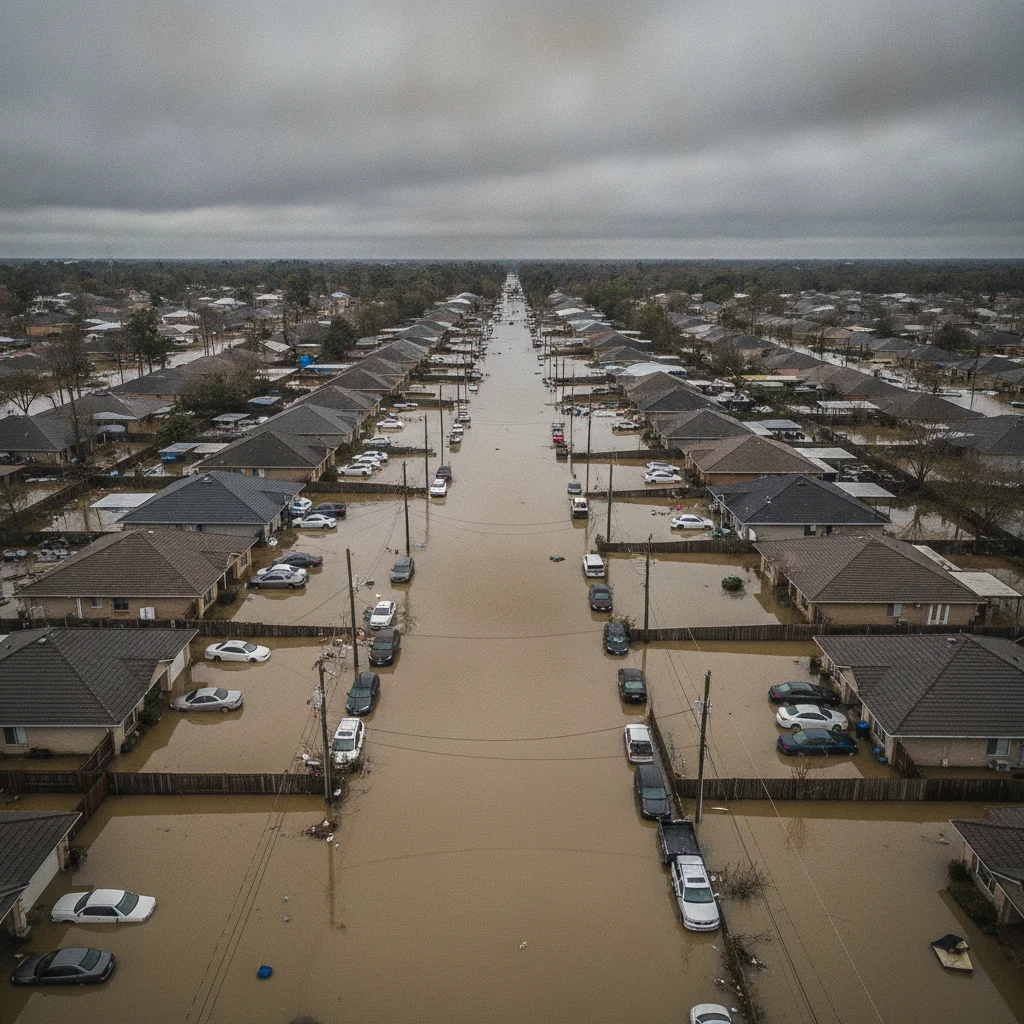
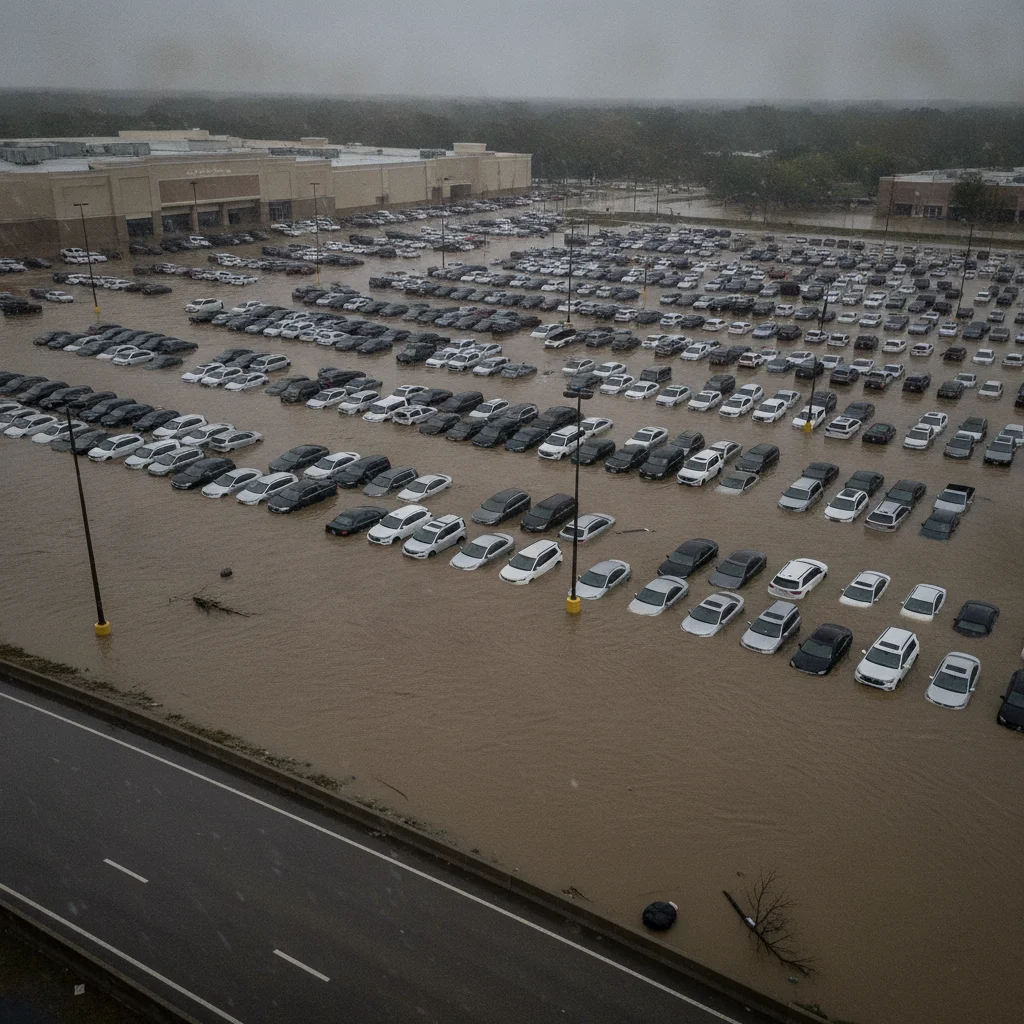
After a major hurricane or regional flood event, tens of thousands of vehicles are damaged or destroyed. Insurance companies total many of them, but a significant number are sold through salvage auctions, transported to states with different title-branding laws, cleaned up professionally, and relisted as ordinary used cars — sometimes within weeks of the original event.
This process is sometimes called title washing. It's not always illegal, and it's often difficult to trace. The result is that buyers in states hundreds of miles from a flood zone can unknowingly purchase a vehicle that was submerged three months earlier. The car may look and drive perfectly fine on the day of purchase. Six months later, the electrical system starts failing, the HVAC grows mold, and corrosion begins eating through brake lines.
Flood damage leaves a hidden history that buyers frequently miss because the visible signs have been remediated. The physical signs we describe in this guide are specifically the ones that professional detailers cannot fully erase.
The risk is amplified in the months following major weather events, when damaged vehicles migrate out of affected regions. If you're buying a used car within 6–12 months of a significant flood or hurricane, heighten your scrutiny. For more context on how weather events shift used car supply, see our article on selling a car after a major weather event.
Before you get to the physical inspection, it's worth noting that flood damage is just one category of undisclosed history you need to screen for in the used car market. Red flags in used car listings — including vague descriptions and missing VINs — can tip you off before you've even scheduled a showing.
What you will need
Flashlight or phone torch
Illuminates dark areas under seats, inside vents, and along door sills where residue and rust accumulate.
VIN history report (Carfax or AutoCheck)
Reveals title history including salvage, flood, or total-loss designations reported by insurers.
NMVTIS report
Government-backed database that cross-references title brands across all 50 states — catches damage that Carfax sometimes misses.
OBD-II scanner
Reads stored and pending fault codes from the vehicle's computer, which can reveal water-related electrical damage.
Latex or nitrile gloves
Protects your hands while probing carpets, underbody areas, and corroded components.
Independent mechanic
Performs a thorough pre-purchase inspection that catches problems invisible to the naked eye.
How to Inspect for Flood Damage: Step-by-Step
Use the steps below in sequence. Each builds on the previous one, and together they give you a layered, systematic view of the vehicle's condition. If you find multiple indicators across different steps, treat it as strong evidence of flood damage — even if any single indicator could have an innocent explanation.
Run the VIN before you ever see the car
Before you schedule a test drive or waste an hour of travel time, pull a VIN history report. Go to Carfax, AutoCheck, or the NMVTIS (National Motor Vehicle Title Information System) consumer portal and pay for a report. Look specifically for:
- Flood damage or water damage designations
- Salvage title or rebuilt/reconstructed title brands
- Ownership gaps — a car that sat unsold for 6–12 months after a known hurricane event is a red flag
- Multiple state registrations in a short window, especially if states involved were hit by recent floods
Note that not all flood damage gets reported. If a vehicle was damaged in a state with lax title-branding laws, or if the owner never filed an insurance claim, the damage may not show up in any database. A clean report is necessary but not sufficient — you still need the physical inspection steps that follow.
Trust your nose the moment you open the door
Smell is your fastest diagnostic tool. Open the car door and take a deliberate breath before you sit down. A flood-damaged car that has been cleaned up will often retain a musty, mildew, or moldy odor — sometimes masked with air fresheners or detailing sprays. Be suspicious of any car that smells aggressively of pine, vanilla, or chemical freshener; sellers use heavy scents specifically to cover moisture problems.
If the car smells like wet dog, old cardboard, or a basement after rain, walk away unless you're prepared for extensive remediation costs. The odor comes from mold and bacteria growing inside padding, insulation, and HVAC ductwork — material that can't be fully cleaned without a complete teardown.
Inspect the carpets, floor mats, and trunk liner
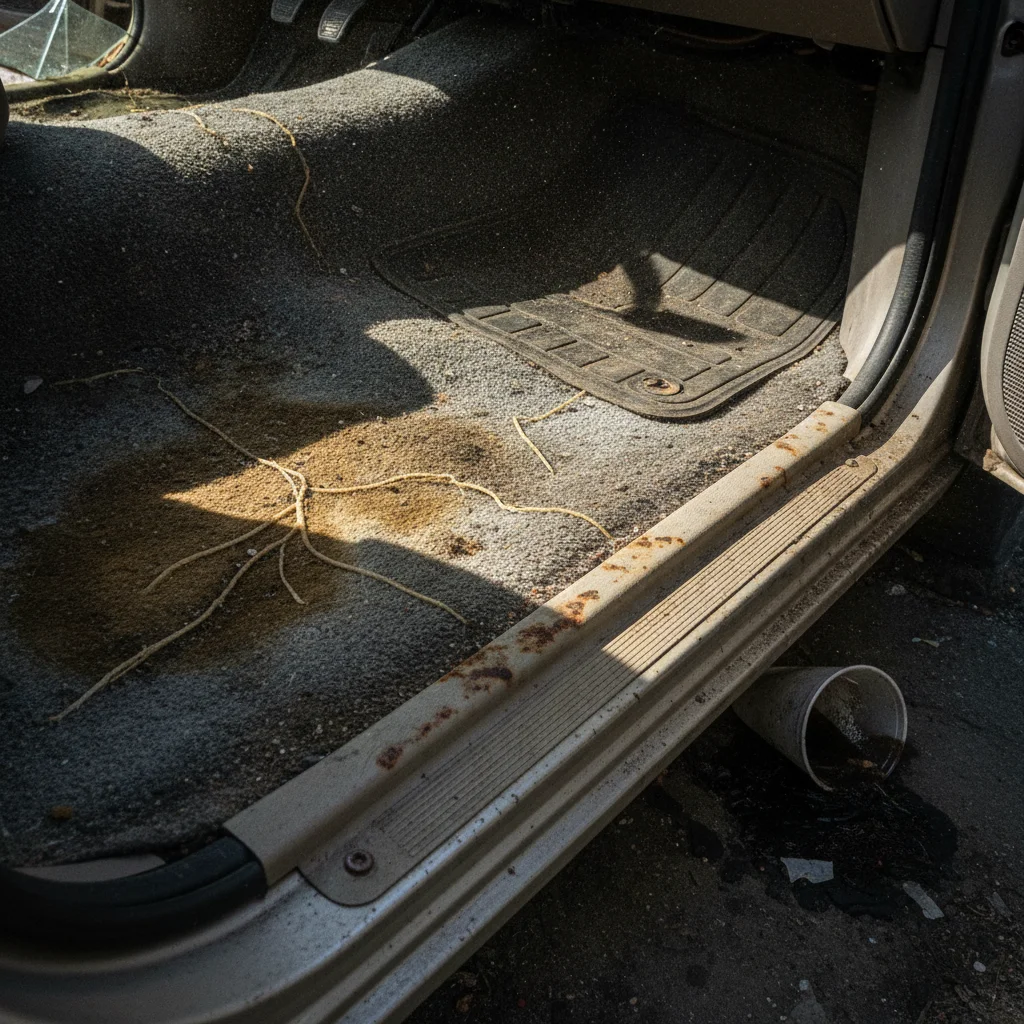
Pull back the floor mats — both front and rear — and examine the carpet underneath. Flood-damaged cars frequently show:
- Staining or tide lines left by receding water, often visible as a faint horizontal ring on carpet fibers
- Gritty sediment embedded in carpet weave, particularly near door sills and under the driver's seat
- Damp or unusually stiff carpet that hasn't fully dried
- Rust-colored staining at carpet edges where it meets the rocker panel
Pop the trunk and do the same. Remove the spare tire cover or access panel and look for standing moisture, rust on the spare tire well, or sediment in the corners. Check the trunk liner seams — flood cars often show adhesive failure or bubbling where the liner has re-dried after soaking.
[in_content_images:0]Check for rust in places rust shouldn't be
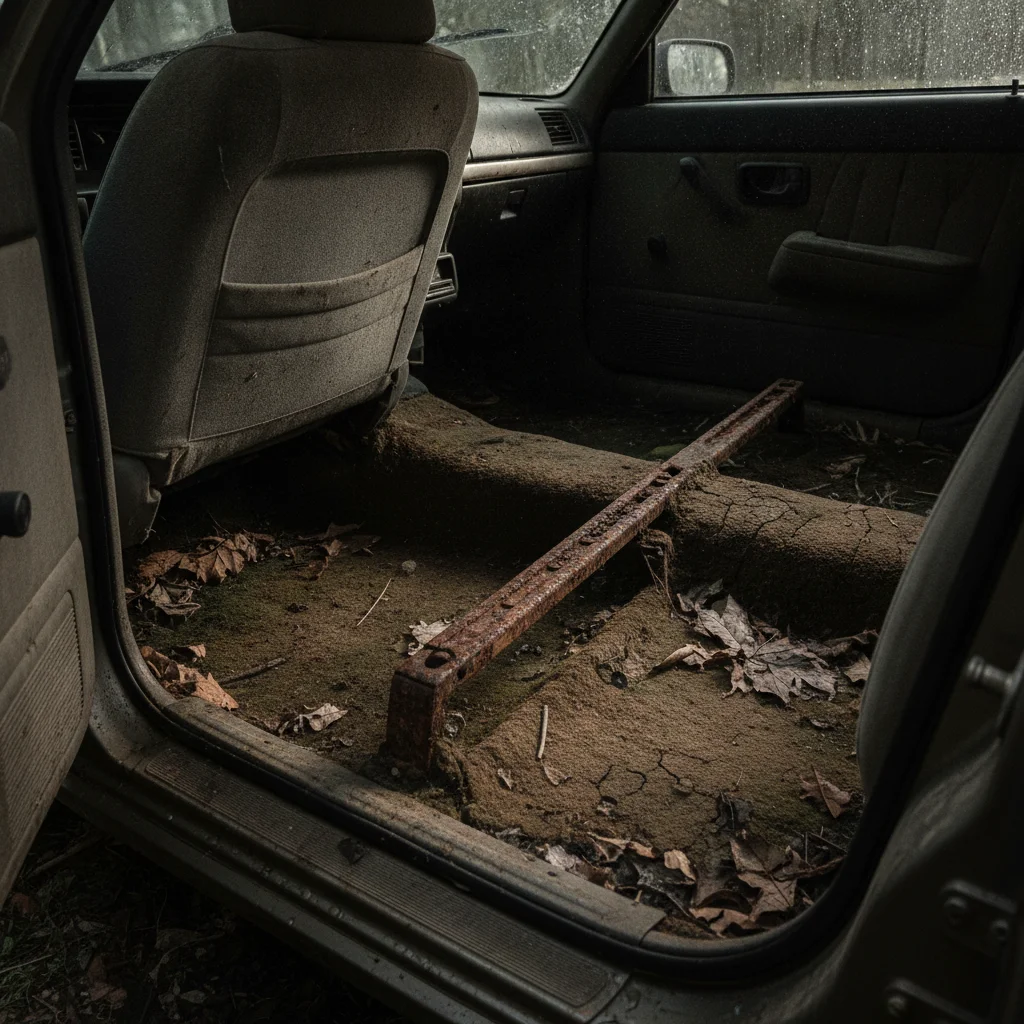
Rust on a 15-year-old car's rocker panels is expected. Rust inside a 3-year-old car's door hinges or on interior metal brackets is not. Use your flashlight to examine:
- Door hinges and striker plates — look for orange discoloration or pitting
- Seat rails and bolts — these are submerged early in a flood and rust quickly
- Seatbelt retractor housings — often overlooked but frequently corroded in flood cars
- Underdash brackets and pedal assemblies
- The spare tire well — bare metal here should be bright, not orange or scaly
Rust on interior metal components is one of the most reliable indicators of submersion. A professional detailer can steam-clean a carpet and make it look new, but they can't un-rust a seat rail bolt without replacing it — and most don't bother.
Examine the instrument cluster and interior electronics
Sit in the driver's seat and study the instrument cluster carefully. Look for:
- Fogging or condensation behind the gauge cluster lens — water intrusion causes this and it's very hard to fake or reverse
- Water droplets or residue trapped behind display screens
- Erratic behavior when you turn the key to accessory mode — flickering gauges, random warning lights, or non-responsive displays
While you're at it, test every electronic function: windows, mirrors, seat adjustment motors, HVAC blower fan (listen for grinding or rattling from debris in the ducts), heated seats, infotainment touchscreen, and all interior lights. Flood damage causes electrical gremlins that may work fine on a dry day and fail intermittently over time — the point of testing now is to catch immediate failures before purchase.
[in_content_images:1]Look under the hood for water marks and sediment
Open the hood and scan the engine bay with your flashlight. In a severe flood event, water can reach engine bay components — and it leaves evidence:
- Sediment lines or silt deposits on the firewall, strut towers, or engine block itself
- Rust on unpainted metal surfaces that would normally stay bright — battery terminals, ground straps, bracket hardware
- Water staining on the air filter housing or intake
- Corrosion on electrical connectors — pull back any wiring loom sheathing you can access and look at the connector ends
Also check the oil dipstick. If the engine ingested water through the intake, you may see a milky or frothy appearance on the oil — a sign of water contamination in the crankcase. Transmission fluid should also be a clear red, not cloudy or brown.
Check the HVAC system and drainage channels
Turn the HVAC blower to maximum on fresh air mode and hold a tissue near each vent. Any debris, moisture, or moldy smell pushed through the vents is a strong indicator of contaminated ductwork. Flood water frequently enters the HVAC system through the cowl intake (the air inlet at the base of the windshield), depositing sediment and biological material throughout the duct network.
While under the hood, locate the cowl drain and the sunroof drains if the car has one. Blocked drains are a common contributor to interior water damage — not always from flooding, but worth inspecting. Look for organic debris, standing water, or evidence of previous backups.
Hire an independent mechanic for a pre-purchase inspection
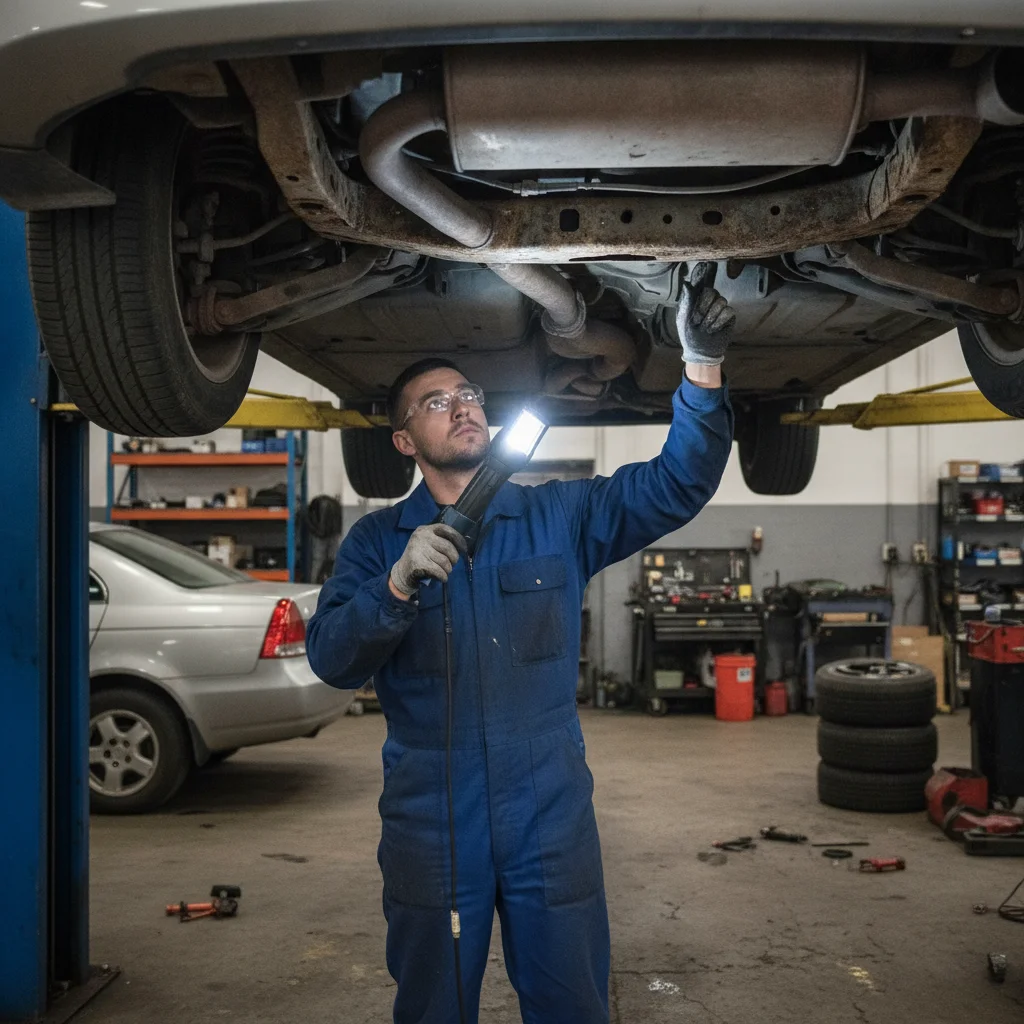
No matter how thorough your personal inspection, have the car evaluated by an independent mechanic — one you select, not one recommended by the seller. A proper pre-purchase inspection (PPI) costs between $100 and $200 at most shops and includes a lift inspection that lets the mechanic examine the undercarriage, frame rails, and suspension components for corrosion damage you simply cannot see from the ground.
Specifically ask the mechanic to look for flood-damage indicators: sediment in the frame rails, rust on brake lines and fuel lines, corrosion on electrical grounding points, and any unusual diagnostic codes. A mechanic who's done PPIs regularly will know what flood damage looks like beneath the car.
This is also the stage at which you should be thinking about what coverage you'll need after purchase. See our physical damage coverage checklist to understand how comprehensive insurance applies to flood and weather events.
Time Your Visit Strategically
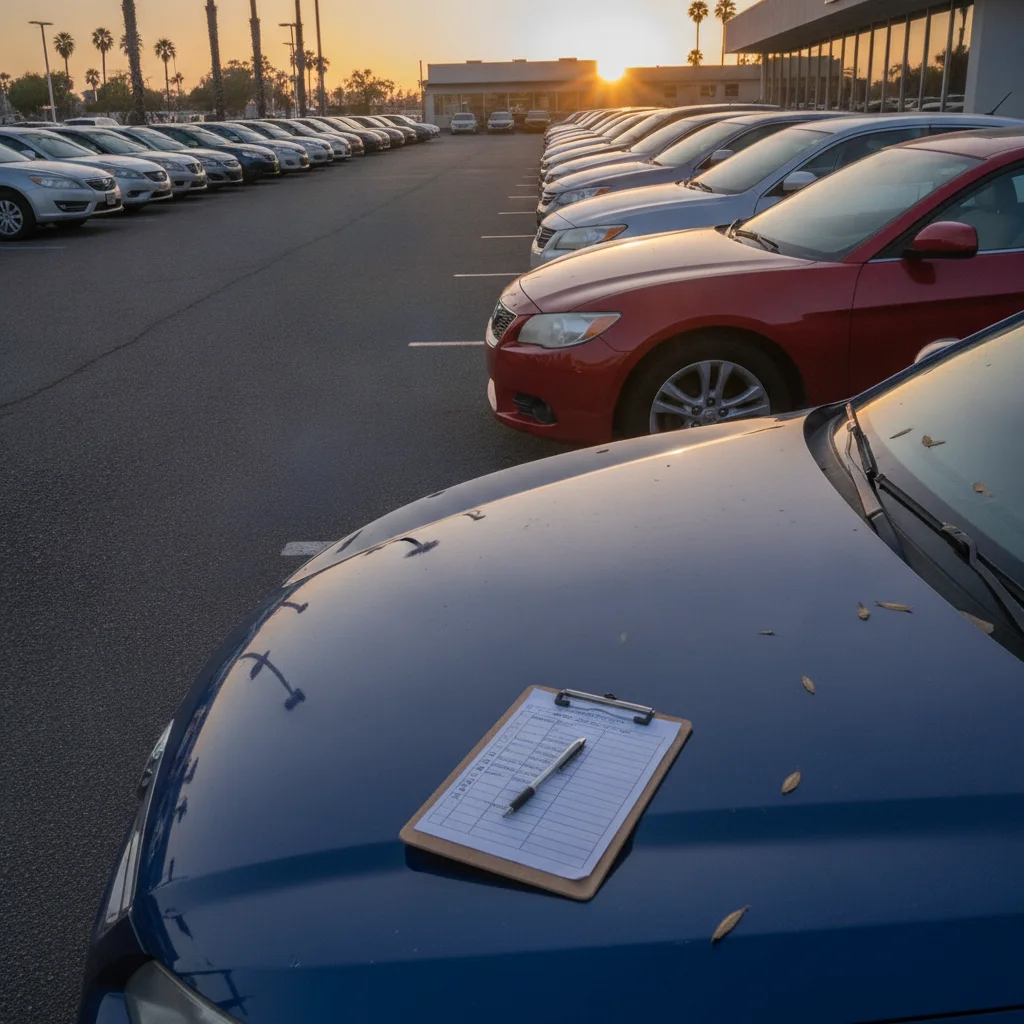
Inspect the car on a cool, dry morning rather than after it's been sitting in the sun for hours. Heat burns off masking fragrances and expands materials that may hide moisture. Early morning also makes condensation inside the instrument cluster easier to spot.
Cross-Reference Multiple Data Sources
No single VIN report captures every incident. Run both Carfax and NMVTIS if the purchase price justifies it — each draws from different reporting networks. A flood brand showing in one report but not the other is still a disqualifying find.
Post-Hurricane Markets Require Extra Caution
In the 6–12 months following a major hurricane or regional flood, used car inventory in surrounding states often includes a disproportionate number of damaged vehicles. If you're shopping in this window, treat every inspection as a flood inspection until you've verified otherwise. Ask directly where the car was during the event.
Clean Titles Don't Guarantee Clean History
Not all flood-damaged vehicles receive salvage or flood titles. If the owner repaired the car out of pocket without filing an insurance claim, the damage never gets recorded. Physical inspection and mechanic verification remain essential regardless of what the title shows.
Flood Damage Can Take Months to Manifest
A flood-damaged car can pass a basic test drive and look entirely normal on the day you buy it. Electrical failures, mold growth, and accelerated corrosion may not become apparent until months later, after warranties have lapsed and the seller is long gone. Never rely on how the car drives today as your primary indicator of flood damage.
Never Skip the Independent Mechanic Inspection
A pre-purchase inspection by a mechanic you hire — not one the seller recommends — is the single most important step you can take. For $100–$200, a lift inspection reveals undercarriage corrosion, compromised brake lines, and sediment deposits that are physically impossible to see otherwise. If a seller refuses to allow a PPI, withdraw from the deal immediately.
What to Do If You Suspect Flood Damage
If your inspection uncovers multiple red flags, the right move is almost always to walk away. The economics of a flood-damaged vehicle rarely work in the buyer's favor. Electrical remediation alone can run $3,000–$8,000 or more, and that's before addressing corrosion, HVAC replacement, or any mechanical damage caused by water ingestion.
If you've already fallen for a flood car — it happens — here's your priority list:
- Document everything you can find that indicates the car was misrepresented. Photographs, the listing text, any written statements from the seller.
- Contact an attorney who handles consumer fraud or auto fraud cases in your state. Many states have strong lemon law provisions and consumer protection statutes that may apply.
- File a complaint with your state's DMV or attorney general's office if the car had a washed title.
- Contact your auto insurer — some comprehensive policies may provide coverage depending on the circumstances.
If you're still in the shopping phase, pair your flood-damage inspection with a broader understanding of body panel condition. Our guide on reading a car's body panels covers how to spot repaints and rust that may accompany or disguise flood damage. Together, these two inspection frameworks give you a comprehensive view of a vehicle's true condition.
Finally, before you drive any newly purchased used vehicle off the lot, make sure your insurance coverage is properly in place. Our physical damage coverage checklist walks you through getting comprehensive and collision coverage lined up — coverage that protects you against future weather events, among other risks.

All claims are backed by peer-reviewed research. Sources on request.