Key Takeaways
Why Private Sales Need More Paperwork, Not Less
When you buy from a dealership, the finance office handles most of the documentation: the purchase agreement, odometer disclosure, title work, and often the DMV filing. It's a lot of paperwork, but someone with training is managing it. In a private party sale, that person doesn't exist. Both the buyer and the seller have to generate their own legal record of the transaction — and if something goes wrong afterward, that record is all they have.
This isn't a technicality. Consider a few real scenarios: the buyer gets pulled over and the car comes back as still registered to the seller; a lien the seller forgot to mention surfaces at the DMV; the buyer claims the agreed price was lower than what was paid. In each case, a properly written contract is the difference between a clean resolution and an expensive dispute.
The good news is that private party contracts aren't complicated. You don't need a lawyer to write one. You do need to know what belongs in it — and what omissions leave either party exposed. See our comprehensive guide to legal private car sales for a broader look at every step from listing to final filing.

This article walks you through building that contract from scratch, field by field, so both parties sign with full confidence.
What You'll Need Before You Start
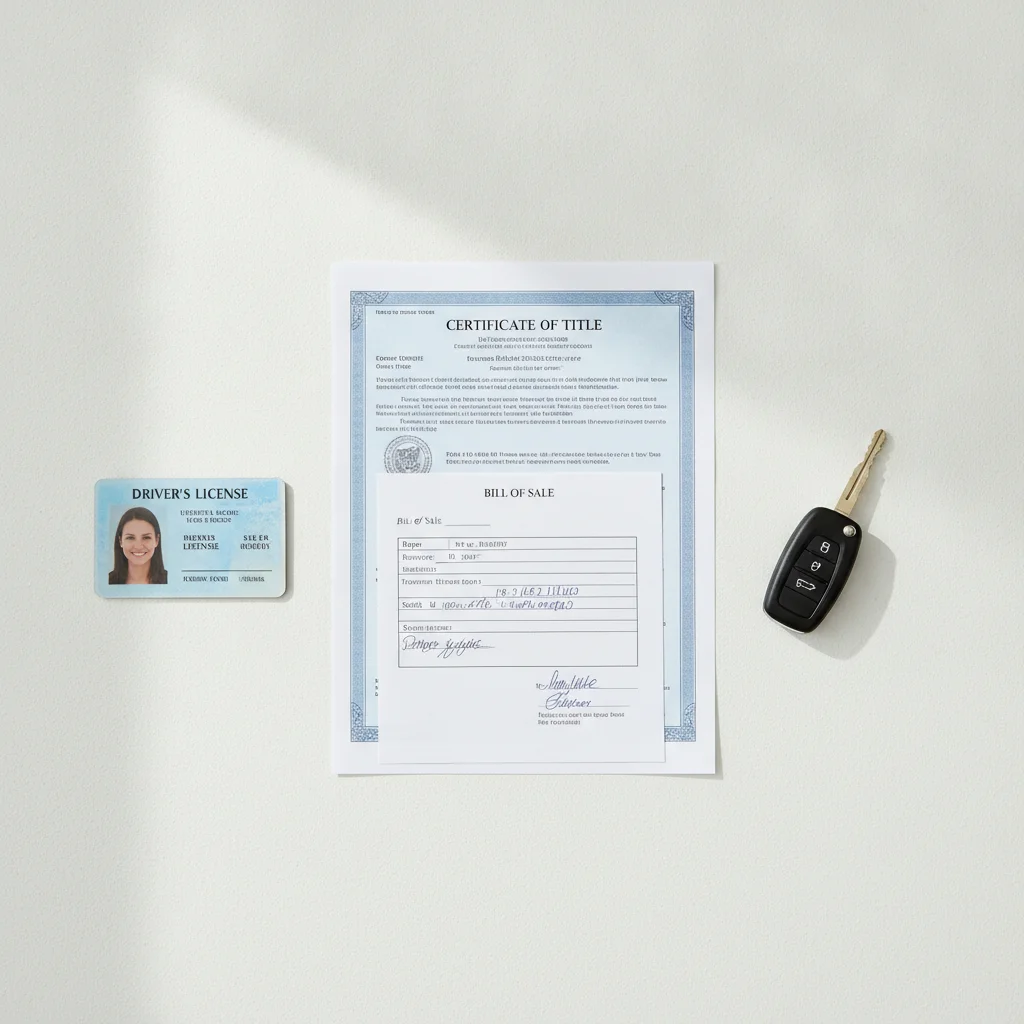
Before you sit down to write the contract, gather every document and piece of vehicle information listed below. Having these in hand prevents errors that can cause DMV rejections or legal complications later.
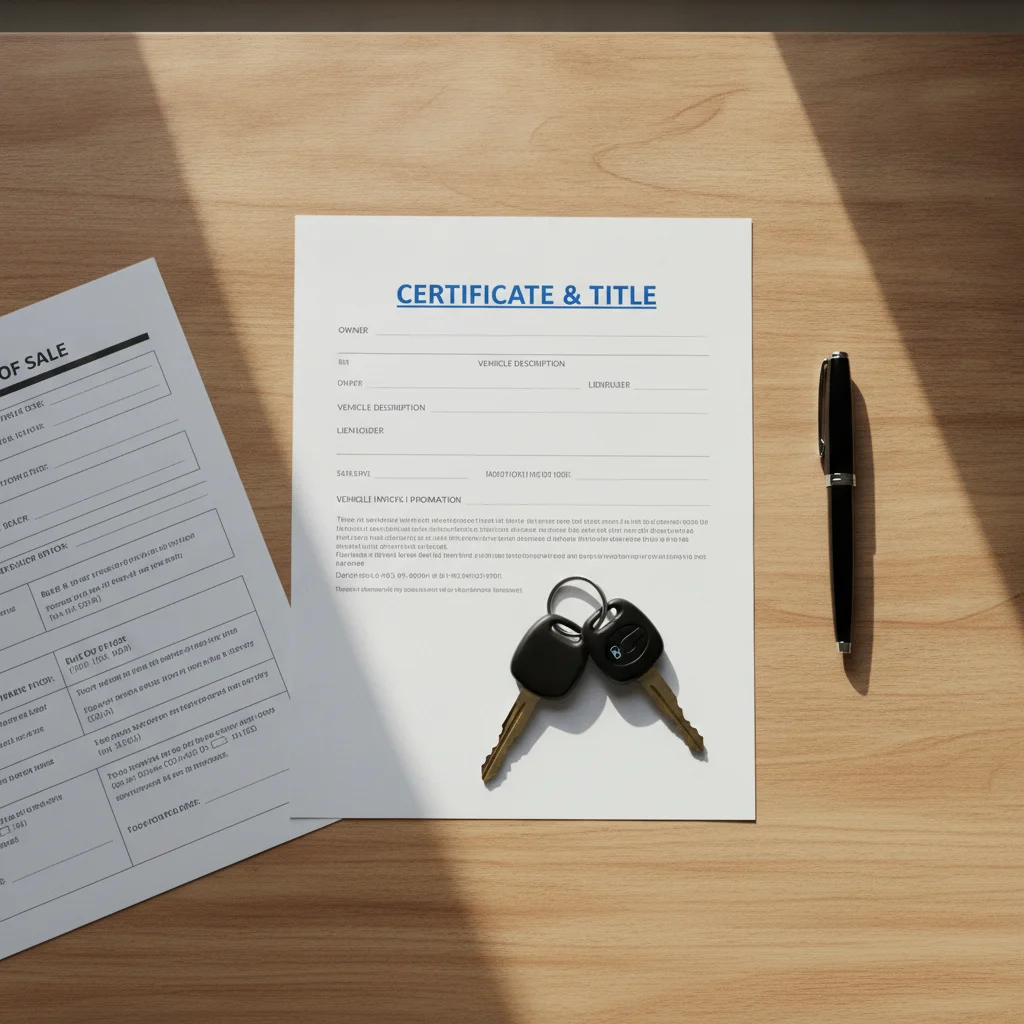
What you will need
One item worth highlighting: the vehicle title. If the seller is still making payments on the car, there may be a lienholder listed on the title — meaning a bank or finance company technically co-owns the vehicle. That lien must be satisfied and released before the title can transfer cleanly. Selling a car with an active lien without disclosing it is not just a civil problem in most states — it can constitute fraud.
For a detailed look at every document involved beyond the contract itself, see what documents you need to sell a car privately.
State DMV Bill of Sale Form
The official state-issued template ensures all legally required fields are present for your jurisdiction.
Federal Odometer Disclosure Statement
Required by federal law to document the mileage at the time of sale for most vehicles under 10 years old.
Notary Public
Required in some states to authenticate signatures on the bill of sale or title transfer.
Vehicle History Report (e.g., Carfax or AutoCheck)
Helps the buyer verify mileage history and confirm no undisclosed liens or accident records exist.
Lien Release Letter
Required if the seller has a loan on the vehicle; proves the lienholder has been paid and releases their claim on the title.
Printer or Handwriting Template
Produces a legible written record; handwritten contracts are legal but must be clear and complete.
Building the Contract: Step by Step
A private party car sale contract is essentially a structured bill of sale. Some states provide official bill of sale forms through their DMV websites — and if yours does, use that form as your foundation. Either way, the fields below must appear somewhere in the final document.
Write the Document Header
At the top of the document, write or type: "Bill of Sale — Private Party Vehicle Sale." Below that, record the date and time of the transaction. This timestamp matters because it establishes when legal responsibility transferred — critical for any parking violations, accidents, or other incidents that occur after the sale.
Include the city and state where the transaction is taking place. Some state laws apply based on where the sale occurred, not where either party lives.
Document Seller and Buyer Information
List both parties with enough detail to identify them unambiguously. For each person, include:
- Full legal name (as it appears on their government-issued ID)
- Current mailing address
- Driver's license number and issuing state
- Phone number or email (optional but useful for follow-up if a filing issue arises)
Sellers: verify the buyer's ID matches the name they've given you. Buyers: verify the seller's name matches the name on the vehicle title. A mismatch here will cause a DMV rejection when the buyer tries to register.
Identify the Vehicle Completely
This section prevents any ambiguity about which vehicle changed hands. Record all of the following:
- Year, Make, Model, and Trim: (e.g., 2019 Honda Accord EX-L)
- VIN (Vehicle Identification Number): 17 characters. Verify this against the physical VIN plate on the dashboard, not just the title — titles occasionally contain typos.
- Color: Both exterior and interior if the buyer wishes
- License Plate Number and State: at the time of sale
- Title Number: Found on the title document itself
Record the Odometer Reading
Write the exact odometer reading at the time of the sale. Then include a statement indicating whether the reading is:
- Actual mileage — the odometer accurately reflects the vehicle's mileage
- Exceeds mechanical limits — for older vehicles where the odometer has rolled over
- Not actual mileage — if the seller has knowledge that the odometer has been tampered with or replaced
Federal law requires this disclosure for most vehicles under 10 years old. Many states extend this requirement further. Both buyer and seller must sign the odometer statement — it's often a separate line on official DMV forms.
State the Sale Price and Payment Terms
Document the agreed purchase price in both numerals and written words — the same convention used on checks — to prevent any dispute about the figure. For example: $12,500 (twelve thousand five hundred dollars).
Also note:
- The form of payment (cash, cashier's check, electronic transfer)
- Whether any deposit was paid earlier, and if so, how much
- Whether any personal property (e.g., a set of winter tires, a spare key) is included in the sale price
If the buyer is paying with a cashier's check, record the check number. If paying cash, note that the full amount was received in cash at the time of signing.
Include the As-Is Clause and Disclosure Statements
Add a plain-language as-is clause. It doesn't need legal jargon — clarity is more important than formality. A straightforward version might read:
"This vehicle is sold as-is, in its present condition. The seller makes no warranties, express or implied, regarding the mechanical condition, fitness for a particular purpose, or future performance of the vehicle. The buyer accepts the vehicle having had the opportunity to inspect it."
If the seller disclosed any known defects during negotiation, list each one specifically. This is both honest and legally protective — it removes the buyer's ability to later claim they were deceived about an issue the seller actually disclosed.
Obtain Signatures and Copies
Both parties must sign and date the completed document. In states requiring notarization, both signatures must be witnessed by a licensed notary public and accompanied by their stamp and signature.
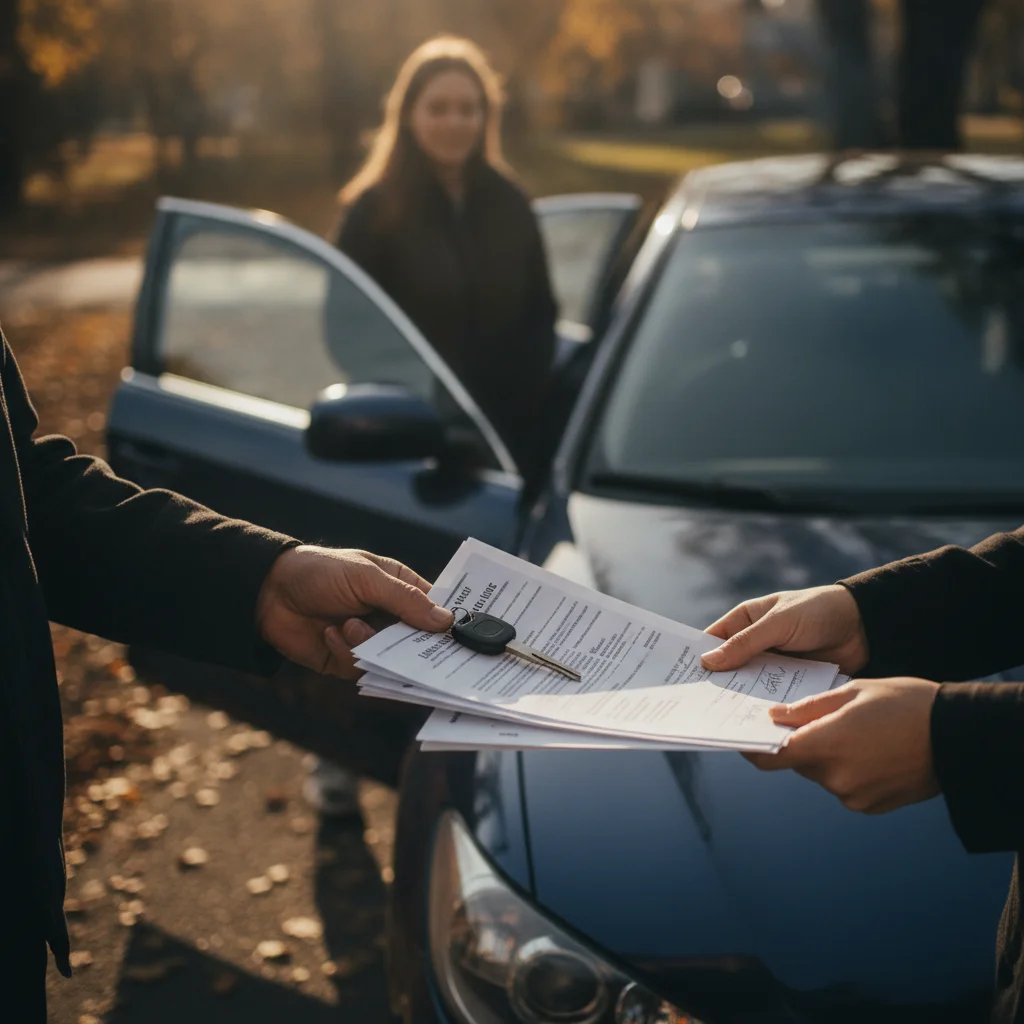
Print or write two complete copies — one for the buyer and one for the seller. Both copies should carry original signatures, not photocopies. Each party should leave with their copy in hand before the vehicle and payment change hands.
Do not release the vehicle or the payment until signatures are in place. The signed contract is the trigger that makes the transaction legally documented.
Once all steps are complete, both parties should photograph or scan the signed documents before anyone leaves. Originals can be lost; a digital backup is an easy safeguard.
Verbal Agreements Have No Legal Standing
Any promise made during negotiation — 'I'll fix the AC before you pick it up,' 'The price includes the snow tires' — is legally meaningless unless it's written into the contract. Courts cannot enforce verbal agreements in vehicle sales. If something was agreed to, it must appear in the signed document, or it did not happen.
Don't Release the Title Until Payment Clears
For sellers accepting cashier's checks, be aware that fraudulent cashier's checks do exist. If possible, meet the buyer at their bank to have the check verified before handing over the title. For wire transfers, confirm the funds have settled in your account before signing the title over. Once the title is transferred, recovering it if payment fails becomes extremely difficult.
Clauses That Protect the Seller
Sellers often focus on getting paid and handing over the keys. The paperwork side feels like the buyer's problem. It isn't. Once the sale closes, the seller's name may still appear in DMV records for days or weeks while the buyer processes the transfer. During that window, anything the buyer does with the vehicle — a parking ticket, a toll violation, an accident — can come back to the seller's record.
Two clauses belong in every seller's contract:
- As-Is Disclosure: This clause states explicitly that the vehicle is sold in its current condition, that the seller makes no warranties about future mechanical performance, and that the buyer accepts the vehicle as inspected. Without this language in writing, a buyer in some states may have grounds to argue implied warranty of merchantability.
- Release of Liability: This is separate from the bill of sale in many states — it's filed directly with the DMV to notify them that the seller is no longer responsible for the vehicle as of a specific date and time. Check whether your state requires this as a standalone form.
It's also worth noting that the sale price on the contract matters beyond the transaction itself. Most states charge the buyer sales tax on a private party sale based on the documented sale price — so both parties have an interest in accuracy. Many buyers don't realize private sales are taxable at all. Our article on common misconceptions about sales tax on private party car sales covers this in detail.

Notify Your DMV the Same Day
Sellers should file a release of liability or notice of transfer with the state DMV on the day of the sale — not after. Most states allow this online in minutes. Until that notice is filed, any citation or incident involving the vehicle may be linked to the seller's name. Don't wait until the buyer has registered the vehicle to protect yourself.
Use the State's Official Form as Your Starting Point
Most state DMV websites offer a free, downloadable bill of sale template. These forms are pre-structured to meet state-specific legal requirements. Using one saves time and ensures you haven't missed a mandatory field. Supplement it with a separate disclosure addendum if you need space for detailed defect disclosures or special conditions.
Keep Everything Until the Title Clears
Both parties should hold onto all signed documents until the buyer receives a new title in their name from the DMV. This process can take several weeks. During that window, the paperwork is your only record of the transaction terms and timing. Don't discard anything until the title is confirmed.
Clauses That Protect the Buyer
Buyers carry different risks. They're handing over cash or a cashier's check — often a significant sum — to a private individual with no institutional accountability. The contract needs to document what was represented about the vehicle and lock in the agreed terms.
- Odometer Disclosure: Federal law (the Truth in Mileage Act) requires that odometer readings be disclosed in writing at the time of sale for most vehicles. This disclosure can be part of the bill of sale or on a separate federal odometer statement form. Mileage discrepancy is one of the most common disputes in private sales, so this field matters.
- Known Defect Disclosure: If the seller disclosed specific mechanical issues during negotiation — a transmission that slips, brakes that need replacing — those disclosures should appear in the contract. This protects both parties: it prevents the buyer from claiming they were deceived, and it documents that the price reflected a known condition.
- Lien Status Confirmation: The contract should include a line where the seller affirms, in writing, that there are no outstanding liens on the vehicle. If a lien surfaces later, this written statement is the buyer's evidence.
- Payment Method and Amount: Document the exact purchase price, the form of payment (cash, cashier's check, wire transfer), and any deposit already paid. If the sale is contingent on a specific financing arrangement or inspection, note that too.
For a deeper breakdown of what a bill of sale must contain to hold up legally, see the bill of sale: what it must include to protect both parties. And if you're comparing this process to buying from a dealer, see how private sale documentation differs from a dealer trade-in.
A Lien on the Title Stops the Sale
If the seller currently has an auto loan on the vehicle, the lender is listed as a lienholder on the title — meaning they have a legal claim to the car. The seller cannot legally transfer a clean title to the buyer until that lien is fully paid and a lien release letter is issued by the lender. Buyers who accept a title with an undischarged lien may find themselves unable to register the car or, in the worst case, subject to repossession by the lienholder. Always verify lien status before money changes hands.
The Contract Does Not Transfer Ownership — The Title Does
A signed bill of sale documents the terms of the transaction, but it does not legally transfer ownership of the vehicle. Only a properly signed and endorsed title — submitted to the DMV with the required fees — accomplishes that. Buyers who have a bill of sale but no title are not legally the vehicle's owners. Sellers who sign the title but never filed a release of liability may remain on the hook for the vehicle in state records. Both documents are mandatory; neither alone is sufficient.
State Requirements and What to File After the Sale
The contract is your immediate legal record. But closing a private sale also involves filing documents with your state — and the requirements vary significantly. Some states require notarized signatures on the bill of sale. Others require the buyer to register the vehicle within a specific window (sometimes as short as 10 days). A handful of states have no mandatory bill of sale requirement at all, though using one is always advisable regardless.
Here's a general filing checklist for after the transaction closes:
- Seller: File a release of liability or notice of sale with your state DMV as soon as possible after the sale. Remove the vehicle from your insurance policy only after this is filed.
- Buyer: Take the signed title, bill of sale, and odometer disclosure to your state DMV within the required window. Pay applicable sales tax and registration fees. The DMV will issue a new title in your name.
State-specific rules — including which forms are mandatory versus optional — are covered in detail in our state-by-state overview of private sale paperwork requirements. Checking this before your sale date can prevent DMV rejections and delays.
One final note: the bill of sale is not a substitute for the title. Both documents are required. The title is the legal instrument that transfers ownership. The bill of sale is the record of the transaction terms. They work together — and a buyer who accepts a car without a clean, signed title has no legal claim to the vehicle, regardless of what the contract says. Review what a bill of sale actually does if you want a clearer picture of how these two documents interact.

All claims are backed by peer-reviewed research. Sources on request.