

Key Takeaways
Option A
Out-the-Door Price Negotiation
The total-cost approach that keeps every dollar visible.
Best for: Buyers who want to know exactly what they're paying before signing anything, with no surprise add-ons or inflated fees.
Option B
Monthly Payment Negotiation
The feel-good framing dealers prefer — for good reason.
Best for: Buyers with strict cash-flow constraints, provided they understand how easily it can obscure the true total cost of the vehicle.
If you want to minimize total money paid over the life of the deal
Out-the-Door Price Negotiation
Locking in the lowest all-in price first limits the base from which interest and fees compound. Every dollar shaved from the OTD price saves more than a dollar over a financed term.
If you have a hard monthly budget you genuinely cannot exceed
Monthly Payment Negotiation
Cash-flow reality sometimes dominates. Just know what you're trading: use a loan amortization calculator to see the total cost before agreeing, and push back on any term longer than 60 months.
If you're financing through a bank or credit union pre-approval
Out-the-Door Price Negotiation
Pre-approved buyers have the most leverage to negotiate price cleanly. Your lender already set the rate — the only variable left is the vehicle's total price.
If you plan to trade in a vehicle at the same dealership
Out-the-Door Price Negotiation
Bundling trade-in value into a monthly payment conversation is a classic dealer move to obscure both figures. Negotiate the new car price and trade-in separately, then combine.
If you're buying from a dealer known for heavy add-on packages
Out-the-Door Price Negotiation
Add-ons like paint protection, gap insurance, and extended warranties are routinely buried in monthly payment deals. The OTD price approach forces every line item into plain sight.
The Two Negotiation Worlds — And Why Dealers Live in One of Them
Walk into most dealerships and the salesperson will ask you one question within the first few minutes: "What are you looking to spend per month?" That question is not small talk. It is the opening move of a negotiation strategy that is designed to shift your attention away from the only number that actually determines how much money you hand over — the total, all-in price of the car.
There are two fundamentally different ways to negotiate a car deal. The first is to negotiate the out-the-door (OTD) price: the single, final number that includes the vehicle's selling price, all taxes, government fees, and any dealer-added charges. The second is to negotiate around a monthly payment target: a number the dealer works backward from, adjusting loan term, interest rate, and vehicle price behind the scenes to hit whatever dollar figure keeps you comfortable enough to sign.
One approach gives you full visibility. The other hands visibility to the dealer. Understanding why that distinction costs real buyers real money — often $2,000 to $5,000 or more on a single transaction — is the foundation of any smart car purchase. See our guide on how dealers use monthly payment framing for a detailed breakdown of the tactics involved.

What 'Out-the-Door Price' Actually Means
The out-the-door price is the total amount of money you will need to close the deal and drive the car off the lot — period. It is not the sticker price. It is not the "selling price" the salesperson quotes you after the first round of negotiation. It is the grand total after every line item has been added.
A proper OTD price includes:
- Negotiated vehicle price (the number you actually haggled to)
- Sales tax (varies by state, typically 5–10%)
- Title and registration fees (set by state, non-negotiable)
- Documentation fee ("doc fee" — often $100–$800 depending on state; sometimes negotiable)
- Any dealer add-ons you have agreed to (paint protection, nitrogen tires, etc.)
What it does not include: your down payment, your trade-in credit, or your financing terms. Those are separate variables that you negotiate independently after the OTD price is settled. Learn why the out-the-door price is the only number that matters and how to calculate it before you ever sit at the finance desk.
Doc Fees: Negotiable or Not?
Documentation fees — the dealer's charge for processing paperwork — range from under $100 in some states to over $800 in others. Some states cap them by law; others do not. In uncapped states, the fee is technically negotiable, but dealers rarely reduce it directly. A better strategy: acknowledge the doc fee early, then use it as a reason to negotiate the vehicle price down by an equivalent amount. The net effect is the same.
Trade-In Timing Is a Negotiation Variable
Many buyers reveal their trade-in before the vehicle price is set — a common mistake. Once a dealer knows you have a trade-in, they can absorb your equity into the deal structure in ways that are hard to untangle. Always establish a firm OTD price on the new vehicle before introducing the trade-in conversation. You can always bring a separate competing offer from CarMax or another buyer to set a floor on the trade-in value.
Online Buying Changes the Payment vs. Price Dynamic
Buying a car through an online platform or a dealer's digital sales channel typically makes OTD pricing more transparent by default — many platforms show all-in quotes upfront. However, the finance office step still happens, and the same add-on and rate-markup risks apply. Do not assume an online price is automatically an OTD price without confirming every fee is included.
The practical move: before any serious negotiation, tell the salesperson, "I negotiate on out-the-door price only. Can you write me a full OTD quote?" Dealers who refuse to provide one in writing are telling you something important about how they operate.
What Monthly Payment Negotiation Actually Costs You
Here is the core problem with payment-focused negotiating: a monthly payment figure has four levers the dealer can adjust simultaneously — vehicle price, loan term, interest rate, and down payment. When you anchor on a payment number, you invite the dealer to optimize all four levers in their favor while presenting you with the one outcome you said you wanted.
| Criterion | Out-the-Door Price Negotiation | Monthly Payment Negotiation |
|---|---|---|
| What you're agreeing to | One fixed, all-inclusive total | A payment figure with hidden variables |
| Dealer leverage | Minimal — one number to move | High — four levers to adjust |
| Fee visibility | All fees itemized and visible | Fees easily buried in payment |
| Comparison shopping | Easy — quotes are portable | Difficult — not comparable across dealers |
| Interest rate transparency | Negotiated separately, fully visible | Often obscured within payment math |
| Risk of loan term inflation | Low — term is a separate decision | High — term stretched to hit payment |
| Add-on product risk | Low — price locked before F&I | High — add-ons folded into payment |
| Best for pre-approved buyers | Yes — leverage is maximized | No — pre-approval advantage is diluted |
| Typical buyer outcome | Lower total cost paid | Higher total cost, lower perceived pain |
Consider a concrete example. You tell a dealer you need to stay under $500 a month. The car you want has an OTD price of $32,000. At 6.5% APR over 60 months, your payment would be $623 — over your stated limit. The dealer has several options to get you to $499:
- Extend the loan to 72 months — your payment drops to $531. Still over. Stretch to 84 months and you land at $460. Deal done.
- Mark up the interest rate by 2 percentage points above what the bank approved you for — pocketing the spread — while extending the term slightly.
- Raise the vehicle price by $1,500 (hiding it in an add-on package), then offer a manufacturer rebate that partially offsets it, netting the dealer extra margin.
In each scenario, you got your $499 payment. But on an 84-month loan at a marked-up rate, you might pay $8,000–$10,000 in total interest on a $32,000 car. On a 60-month loan at a competitive rate after solid OTD negotiation, you might pay $5,200. The "affordable" monthly payment cost you $4,000 extra. Dig into the math behind monthly payment vs. APR to see exactly how this compounds over different loan scenarios.
$1,741
Average extra interest cost of 72-month vs. 60-month loan
Based on a $30,000 loan at 7% APR — the longer term saves roughly $90/month but costs nearly $1,750 more in total interest paid.
2–3%
Typical dealer interest rate markup over bank approval
Dealers often mark up the APR they receive from lenders — a practice called dealer reserve — which on a $30,000 loan can yield $1,500–$2,500 in additional finance profit.
32%
Share of new-car buyers who negotiated only on monthly payment
According to consumer research from J.D. Power, nearly one-third of buyers anchor their negotiation on a monthly figure rather than total vehicle price.
$4,200
Median cost of dealer-sold add-on packages
A 2023 report from the Consumer Financial Protection Bureau found that dealer-added products averaged over $4,000 per transaction, frequently bundled into monthly payment quotes.
84 months
Longest common loan term now offered
Seven-year auto loans have become increasingly common as vehicle prices rise and dealers use them to make higher-priced vehicles appear affordable on a monthly basis.
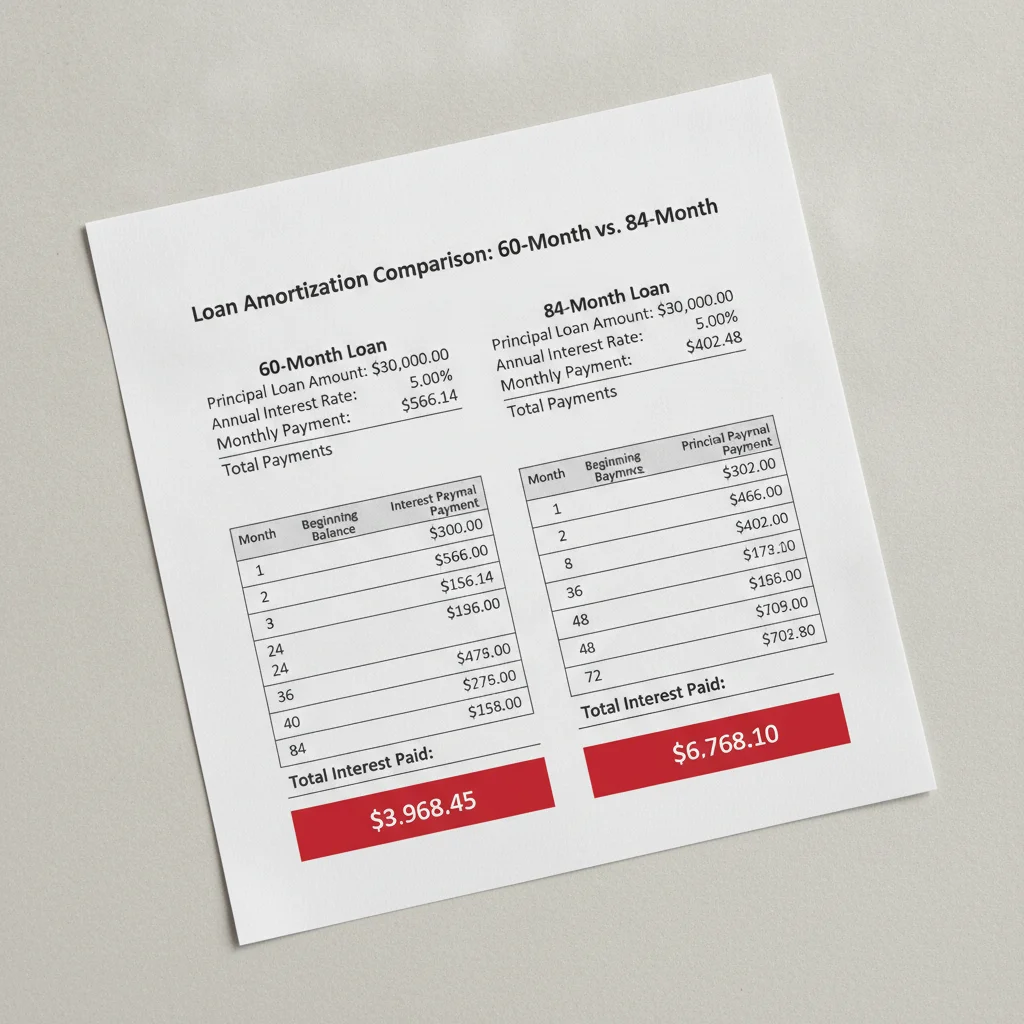
Loan term extension is the biggest hidden cost. Understand why a lower monthly payment can cost more in the end — the math is straightforward and the results are consistently surprising to buyers who haven't seen it laid out clearly.
Head-to-Head: The Negotiation Comparison
The table above maps the practical differences between both approaches across the criteria that matter most when you're sitting across from a finance manager. A few points deserve emphasis:
Transparency: OTD negotiation forces every cost onto a written quote. Monthly payment negotiation keeps costs fluid and adjustable until the moment you sign — and sometimes beyond, as add-ons get quietly appended in the finance office.
Dealer leverage: When you negotiate monthly payments, dealers have multiple variables to manipulate. When you negotiate OTD price, you've reduced the game to a single number. That is a fundamentally stronger negotiating position.
Comparison shopping: An OTD price quote is portable. You can email three dealers asking for their best OTD quote on the same vehicle configuration. A monthly payment quote is not — it depends on your down payment, term, and rate, which vary by buyer. You cannot meaningfully compare payment quotes across dealerships. See how this dynamic plays out differently in the online buying context: Negotiating at the dealership vs. buying online.
Finance office risk: The finance office is where payment-focused deals unravel most often. After agreeing on a "payment," buyers frequently get presented with extended warranties, gap insurance, and protection packages rolled into the monthly figure — each adding hundreds or thousands to the total without standing out on its own.
The Right Sequence: How to Actually Run the Negotiation
Knowing what to negotiate is only half the equation. The other half is knowing the order. Dealers profit from conflating steps that buyers should keep firmly separated. Here is the sequence that protects you:
- Get a competing baseline. Know the market price for the vehicle before you walk in. Use recent transaction data, not MSRP. Your target is to negotiate below market average, not just below sticker.
- Negotiate the OTD price exclusively. Do not discuss trade-in, financing, or down payment at this stage. If the dealer asks, say you will handle those separately. Hold that line.
- Agree on OTD price in writing. A verbal agreement in the showroom is not binding. Get a signed buyer's order showing the full OTD breakdown before the deal moves to the finance office.
- Handle the trade-in separately. Once OTD price is locked, introduce your trade-in. This prevents the dealer from absorbing your trade-in equity into the vehicle price negotiation.
- Present your financing. If you have a pre-approval from your bank or credit union, present it now. The dealer may beat it — that is fine. But your pre-approval sets a ceiling on the rate they can offer you profitably.
- Evaluate finance office products on their own merits. If gap insurance or an extended warranty makes sense for your situation, price each one independently. Know that gap insurance from your own insurer is typically 60–80% cheaper than the dealer's version.
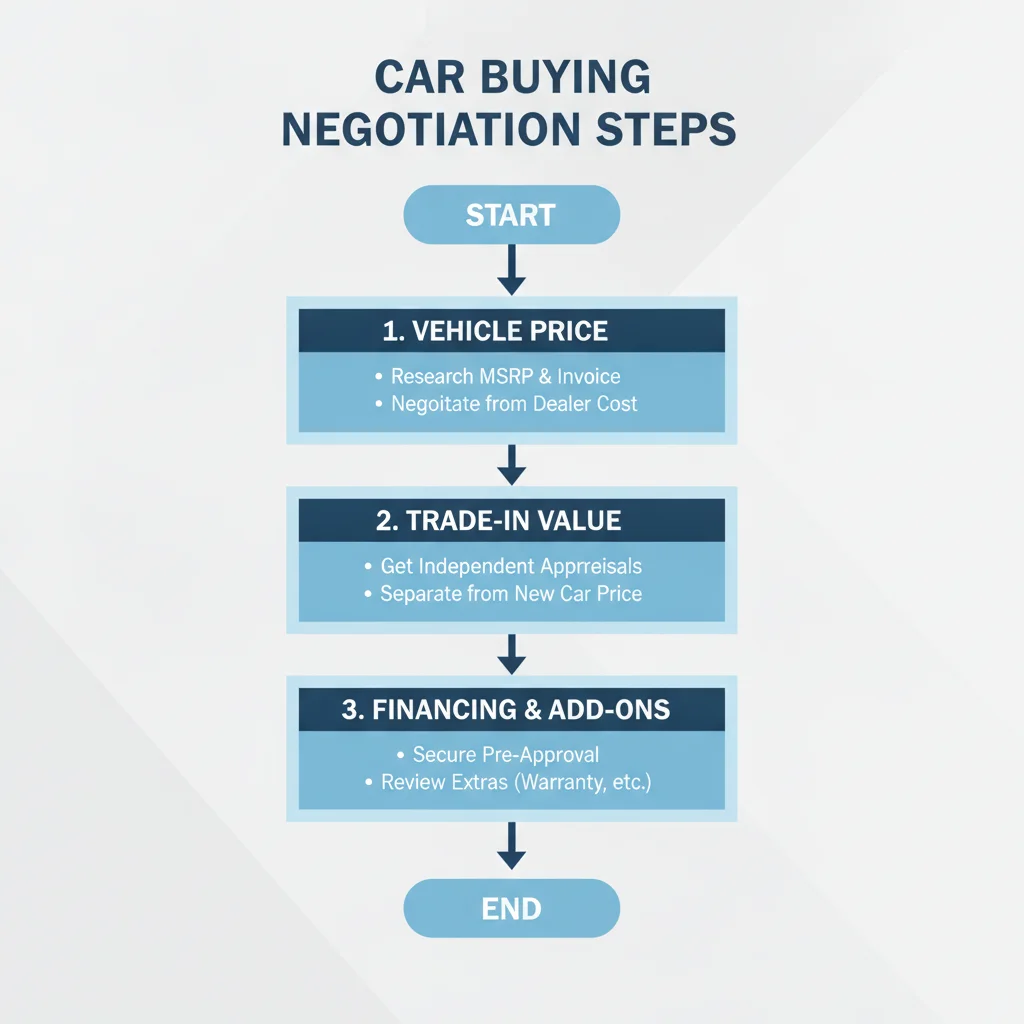
The entire strategy rests on keeping these negotiation phases separate and sequential. When a dealer tries to merge them — "Let's figure out your total package" — that is the moment to redirect the conversation back to OTD price.
For context on when in the calendar year this sequence is most effective, see our guide to timing your car purchase for discounts and incentives — end-of-month and end-of-quarter deadlines create leverage that compounds your price negotiation significantly.
When Monthly Payments Legitimately Matter — And How to Use Them Safely
There is a scenario where monthly payment focus is not just understandable but necessary: when your cash flow genuinely limits what you can service month-to-month. Not everyone has the flexibility to optimize purely for total cost. If a $600 payment would create genuine financial stress, that constraint is real and should be respected.
The safeguard is this: know the total cost before you agree to the payment. Once you have an OTD price settled, you can run your own payment calculation using any loan amortization tool. Plug in the OTD price minus your down payment, the APR you have been quoted, and the term length. If the resulting payment exceeds your budget, you now have clear options:
- Negotiate the OTD price further
- Increase your down payment
- Seek a lower APR through your bank or credit union
- Consider a less expensive vehicle
What you should not do is extend the loan term as a first resort. Going from 60 to 72 months might save $80–$100 per month, but it can easily add $2,000–$3,000 in total interest paid. Understand what loan term length actually means for borrowers before you agree to stretch the timeline.
The buyer who knows their OTD price, has a pre-approved rate, and understands the term-vs-total-cost trade-off is in a fundamentally different position than the buyer who walked in with a monthly payment number in their head. One is negotiating. The other is hoping.
All claims are backed by peer-reviewed research. Sources on request.