
Key Takeaways
A Widespread Fear With a Legal Answer
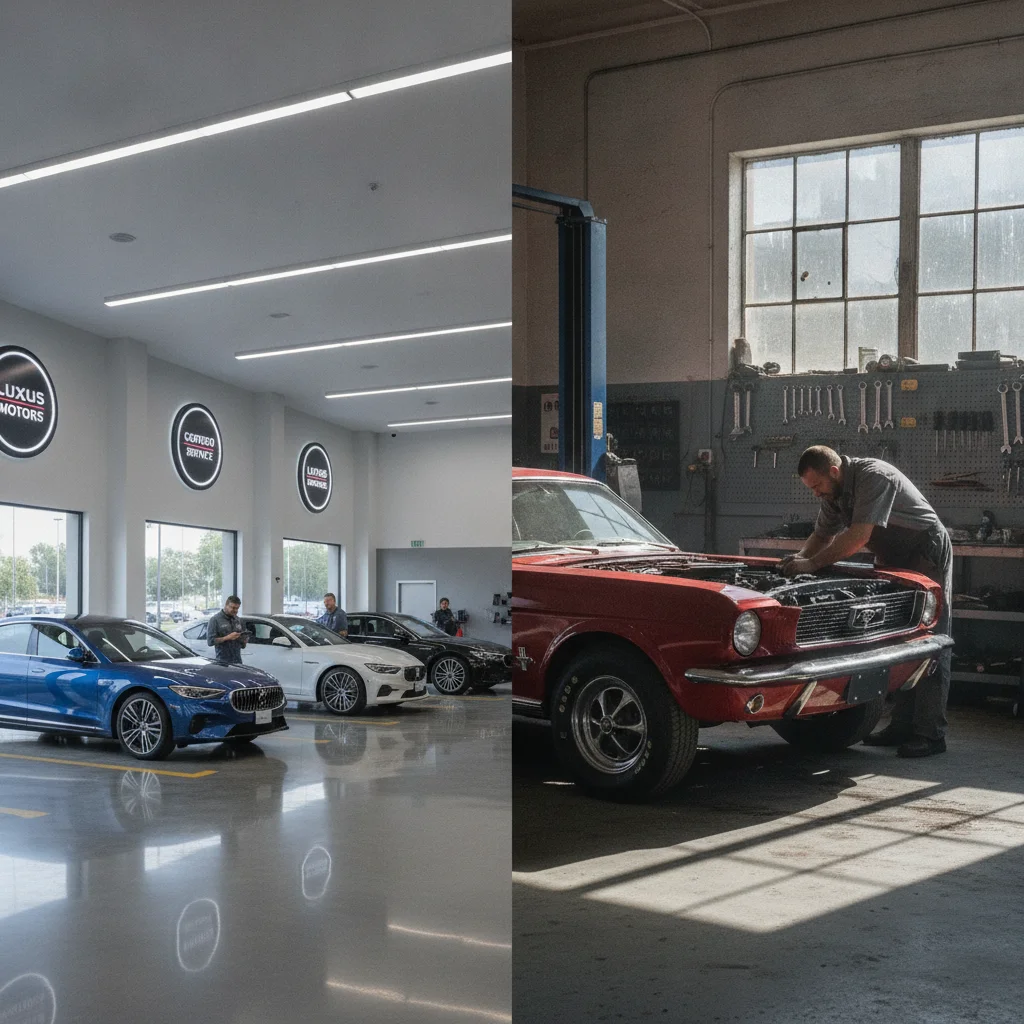
Walk into almost any dealership service department and you'll hear some version of this line: "You really should have all your maintenance done here to keep your warranty valid." It's repeated so often that many car owners treat it as settled fact. But it isn't — and a federal law passed more than 50 years ago makes that explicit.
The Magnuson-Moss Warranty Act of 1975 is the governing statute here. Enforced by the Federal Trade Commission, it prohibits manufacturers and dealers from conditioning warranty coverage on the use of any specific service provider, brand of parts, or brand of fluids — unless those products or services are provided free of charge to the consumer. In plain terms: a manufacturer cannot void your warranty simply because you had your oil changed at a neighborhood shop rather than the dealership.
Yet the myth persists, and it costs American drivers real money. When people believe their warranty depends on dealer service, they pay dealership labor rates that can run 30–40% higher than independent shop rates, sometimes for routine maintenance that any qualified technician can perform. Understanding what the law actually says — and what it doesn't — is one of the most practical things a car owner can do.
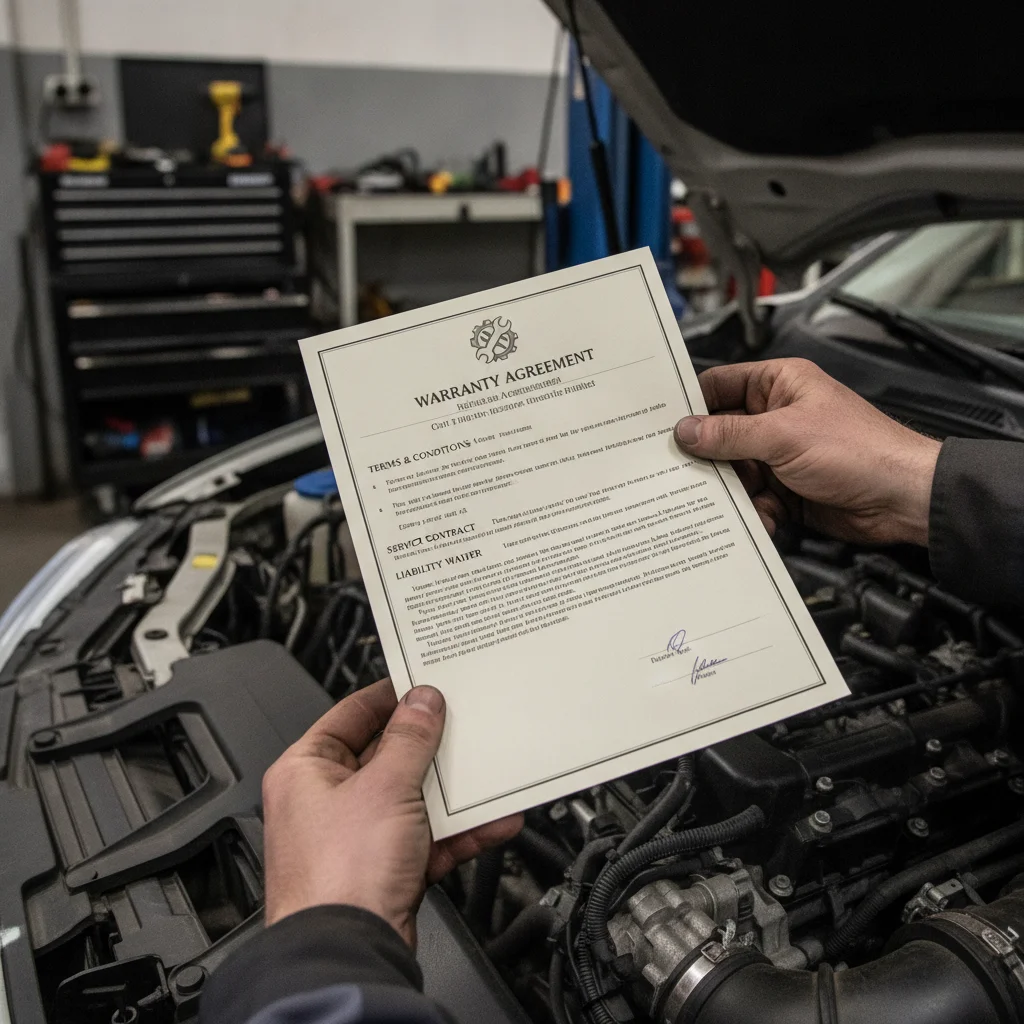
This article walks through the most common misconceptions about warranties and independent service, corrects them with what federal law and industry practice actually say, and explains what you genuinely do need to do to protect your coverage.
The Myths, Corrected
The confusion around warranty and service choice isn't random — it's shaped by years of dealer messaging, fine print that's difficult to read, and a general lack of awareness about consumer protection law. Below are the most common myths, each examined against what the evidence actually shows.
Myth
If you take your car to an independent mechanic instead of the dealership, your factory warranty is automatically voided.
Fact
Federal law explicitly prohibits manufacturers from voiding warranties solely on the basis of where you had your vehicle serviced.
This is the central myth, and it's flat-out wrong under federal law. The Magnuson-Moss Warranty Act — passed by Congress in 1975 and enforced by the FTC — states that a warrantor cannot require a consumer to use any specific brand of product or service as a condition of warranty coverage unless those products or services are provided free of charge.
That means a manufacturer cannot legally say "your warranty is void because you used Joe's Auto Shop." What they can say is "your warranty claim is denied because the damage was caused by an improper repair" — but that requires proving causation, not just pointing to a non-dealer service record.
The FTC has published explicit guidance on this: "Unless [the manufacturer] provides the service free of charge, any requirement that you use a specified service or product can void your warranty only if the warrantor demonstrates that the unauthorized product or service caused the problem you're claiming under the warranty."
Myth
Dealers are legally allowed to require all maintenance be performed at their service center as a warranty condition.
Fact
Dealers have no legal authority to impose exclusive service requirements as a warranty condition under the Magnuson-Moss Act.
Some dealers communicate this requirement through verbal warnings during delivery, stickers in the glove box, or service reminders. None of these create a legally binding obligation to return to the dealer for routine maintenance.
What dealers can legitimately require is that warranty repair work itself — replacing a defective part under coverage — be performed at an authorized service center. That's different from insisting that every oil change and tire rotation happen there too.
If a dealer tells you verbally that your warranty requires exclusive dealer service, ask them to show you where that requirement appears in the written warranty documentation. In virtually all cases, you will find the warranty says you must follow the maintenance schedule — not that you must follow it at a dealership.
Myth
Using aftermarket parts or non-OEM filters automatically voids your vehicle warranty.
Fact
Aftermarket parts don't automatically void a warranty — the manufacturer must prove the aftermarket part caused the specific failure being claimed.
This myth has real staying power because it contains a grain of truth stretched into something much broader. Yes, some aftermarket parts can cause problems. But "can cause problems" and "automatically void your warranty" are very different things.
Under Magnuson-Moss, the burden of proof falls on the manufacturer. If you install an aftermarket oil filter and later have a transmission issue, the manufacturer must demonstrate a causal link between that filter and the transmission failure before denying coverage. They cannot use the presence of any non-OEM part as blanket justification for denial.
The practical implication: using a quality aftermarket air filter, oil filter, or wiper blades carries minimal warranty risk. Using a heavily modified exhaust, aftermarket suspension components, or performance tuning software on a powertrain that subsequently fails — that's a different calculation, because causation becomes much easier to argue.
When in doubt on high-cost components, use OEM or OEM-equivalent parts and keep the packaging as documentation.
Myth
Extended warranties and factory warranties work the same way when it comes to service requirements.
Fact
Extended service contracts are separate products with their own terms — some do contain network restrictions that factory warranties cannot legally impose.
This distinction trips up a lot of consumers. Your factory (manufacturer's) warranty is governed by Magnuson-Moss and subject to its protections. An extended warranty — more accurately called a vehicle service contract — is a separately purchased product, and its terms are governed by the contract you sign.
Some extended service contracts do require repairs to be performed at specific network shops, or require pre-authorization before work begins, or exclude coverage for maintenance items entirely. These restrictions can be legally valid within the contract framework, even though similar restrictions in a factory warranty would be unenforceable.
The takeaway: read the actual contract language before purchasing an extended service agreement. Don't assume it works the same way as your factory warranty. Pay specific attention to sections on "authorized repair facilities," "pre-authorization requirements," and "maintenance exclusions." Our guide to extended warranty contract terms walks through the most common problematic clauses in detail.
Myth
Missing a single scheduled maintenance interval — even by a few weeks — voids your entire warranty.
Fact
Minor delays in routine maintenance rarely justify full warranty denial; manufacturers must show the delay caused the specific failure being claimed.
Warranty documentation can sound absolutist — "maintain your vehicle according to this schedule" — but that language is not a hair trigger that invalidates all coverage the moment you're two weeks late on an oil change.
For a manufacturer to use a missed maintenance interval as grounds for denial, they must connect that lapse to the component that failed. If your oil change was overdue and your engine develops sludge, that's a defensible denial. If your oil change was three weeks late and your power window motor fails, there is no credible causal connection — and a denial on those grounds would be legally questionable.
That said, chronic or extreme maintenance neglect is a different matter. A vehicle that has gone 20,000 miles past its recommended oil change interval and develops engine problems will face an uphill warranty battle regardless of what law says about causation. Follow the schedule — not because every violation voids your warranty, but because it protects both your coverage and your vehicle.
Myth
You need to use the exact oil brand recommended in dealer marketing materials to keep your warranty valid.
Fact
You must meet the specification — viscosity grade and certification standard — not use any particular brand of oil.
Manufacturer warranty documents specify an oil viscosity grade (such as 0W-20) and a certification standard (such as API SN or dexos1). Meeting those specifications is what matters — not whether the oil carries a particular brand name that dealerships happen to sell.
Dealer service departments often sell and recommend their branded or preferred oil products, and there's nothing wrong with using them. But a dealer who tells you that using a different brand voids your warranty — when that brand meets the specified grade and certification — is not being accurate about what your warranty requires.
Check your owner's manual for the exact specification. Any oil sold in the U.S. that meets that API or ILSAC rating is acceptable for warranty purposes. Independent shops routinely stock oils that meet these specifications, and many offer quality synthetic options at lower cost than dealer alternatives.
For a closer look at how extended service contract language differs from factory warranty protections, see our guide to extended warranties in car contracts — the fine print matters more than most buyers realize.
What the Law Actually Requires of You
Freedom to choose your service provider doesn't mean freedom to skip maintenance entirely. The Magnuson-Moss Act protects your choice of where you service your vehicle — it doesn't shield you from consequences if maintenance is neglected or done improperly. Understanding that distinction is critical.
40%
Average dealer service labor rate premium over independent shops
Industry surveys from AAA have consistently found dealership labor rates running 30–40% higher than comparable independent shops for identical routine maintenance.
~$1,200
Estimated annual savings using independent shops for routine maintenance
Consumer advocacy estimates suggest drivers who shift routine maintenance from dealers to independent shops can save several hundred to over a thousand dollars annually depending on vehicle type.
1975
Year Magnuson-Moss Warranty Act was enacted
The law has governed federal warranty standards for consumer products — including automobiles — for five decades, yet most car owners remain unaware of its protections.
2 in 3
Drivers who believe dealer service is required to maintain warranty
Surveys by consumer research organizations have found a majority of American car owners incorrectly believe they must use dealership service to preserve warranty coverage.
Manufacturers can — and do — legitimately deny warranty claims when:
- Required maintenance intervals were skipped or significantly delayed
- The wrong fluid specification was used (for example, putting a lower-grade transmission fluid in a vehicle requiring a specific type)
- An aftermarket part caused a measurable failure (this must be demonstrated by the manufacturer, not assumed)
- Unauthorized modifications altered the system experiencing the failure
The key phrase in warranty disputes is causation. The FTC guidance on Magnuson-Moss is clear: a dealer must demonstrate that the independent service — not some other factor — caused the specific component failure before denying a claim. They cannot deny coverage simply because a non-dealer oil change appears in your service history.
Documentation Is Your Most Important Protection
If a warranty dispute ever arises, your service records are your primary defense. Every maintenance visit — regardless of where it was performed — should be documented with the date, current mileage, work performed, fluids and parts used, and the shop's name and contact information. A manufacturer denying a warranty claim bears the burden of proving causation, but you bear the burden of demonstrating that required maintenance was actually completed. Don't let a missing receipt turn a winnable dispute into an unwinnable one.
This is why meticulous record-keeping matters regardless of where you service your vehicle. Every oil change, every filter replacement, every fluid top-off should be documented with a date, mileage, and description of work performed. A reputable independent shop will provide this automatically. If yours doesn't, ask for a written receipt that includes those details.
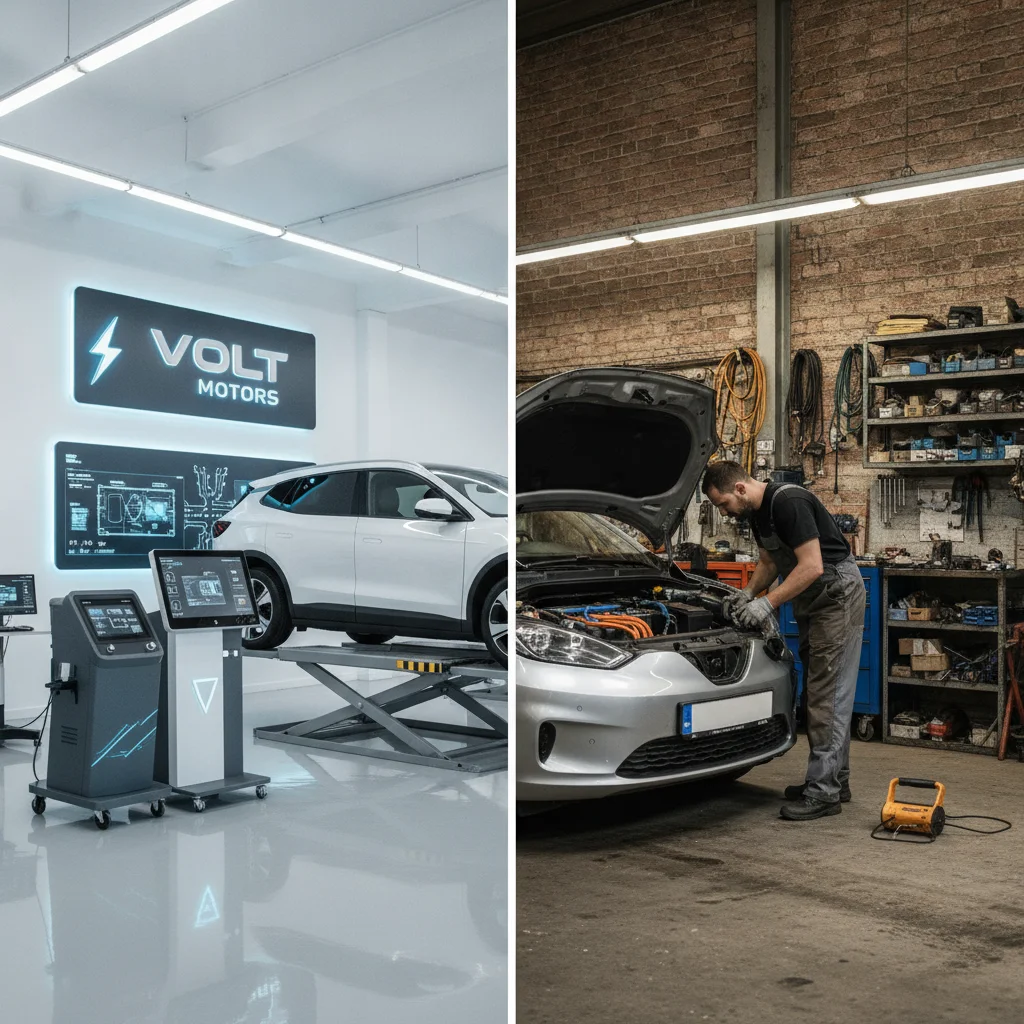
If you drive an electric vehicle, the service question has some additional nuances. High-voltage battery systems, software updates, and proprietary diagnostic tools can affect which shops are genuinely equipped to work on your car. See our companion article on dealer servicing vs. independent shops for EV maintenance for a full breakdown of what differs for EV owners.
Making the Right Choice for Your Vehicle
The legal right to use an independent shop is clear. Whether doing so makes practical sense depends on your vehicle, your situation, and the quality of shops available to you.
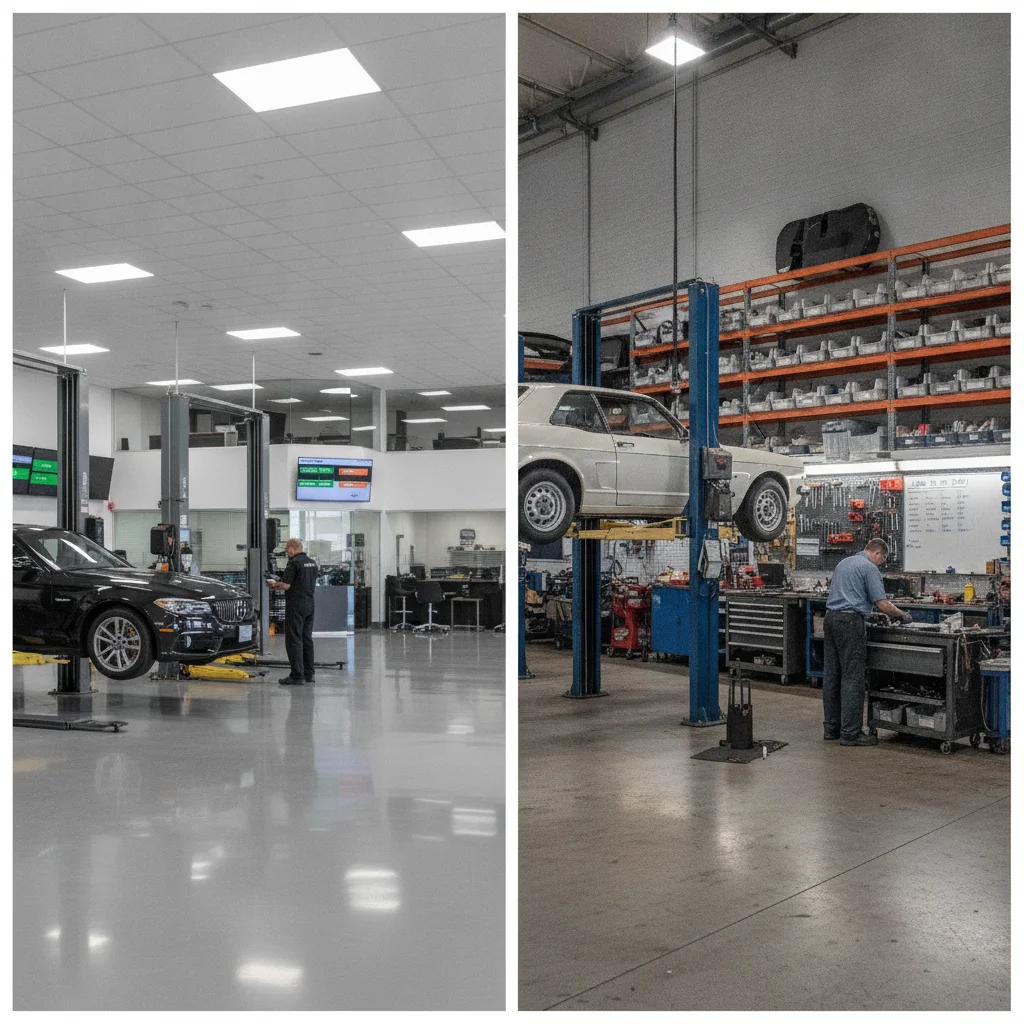
When dealer service may genuinely make sense:
- Recall repairs are always performed free at the dealership — that's not optional, and it's a good reason to maintain a relationship with your dealer's service department
- Complex warranty repairs require dealer diagnosis and parts anyway — an independent shop can't process a warranty claim on your behalf
- Vehicles still under a bumper-to-bumper comprehensive warranty benefit from dealer familiarity with recurring issues and technical service bulletins
- Software updates for modern vehicles with over-the-air capability are increasingly dealer- or manufacturer-controlled
When an independent shop typically wins:
- Routine maintenance — oil changes, tire rotations, brake inspections, filter replacements — is well within the capability of any competent independent shop
- Labor rates at independent shops average significantly lower, and the savings compound quickly over a vehicle's ownership life
- Specialized shops (transmission specialists, alignment shops, European car specialists) often provide deeper expertise for specific repairs than a general dealership service bay
For a full comparison of cost, convenience, and expertise trade-offs, our analysis of dealer service vs. independent shop covers the decision in detail. The short version: most drivers can save meaningfully on routine service without any risk to their warranty coverage, provided they follow the maintenance schedule and keep their records.
Not All Independent Shops Are Equal
The right to use an independent shop is only as valuable as the shop's competence. Choosing a mechanic who uses the wrong fluid specification, skips documented procedures, or works on complex systems without proper training can create exactly the kind of "improper repair" damage that gives manufacturers legitimate grounds for warranty denial. Look for shops with ASE-certified technicians and verifiable experience with your vehicle make and model. A lower labor rate is only a savings if the work is done correctly.
Verbal Warranty Promises Are Legally Meaningless
If a dealer salesperson or finance manager makes verbal promises about warranty coverage — "we'll take care of you no matter where you service it" or conversely "you must service here to keep coverage" — neither statement is legally binding. Only the written warranty document controls. Before signing, ask to read the actual warranty terms and the extended service contract (if applicable) in full. What's said at the desk and what the contract says can be very different things.
One area where consumer rights vary: collision repair. If you're filing an insurance claim and your insurer directs you to a preferred shop, that's a different legal framework than your factory warranty. You still typically have the right to choose your own shop, but the insurer's obligations to cover additional costs vary by state and policy. Our guide on choosing a repair shop after an insurance claim covers that terrain separately.
Protecting Yourself if a Dispute Arises
Even with the law on your side, warranty disputes happen. Dealers sometimes deny claims citing independent service history, and not every car owner knows how to push back effectively. Here's what to do if you face a warranty denial you believe is unjustified.
- Request the denial in writing. Ask the dealer to specify the exact reason for the denial and which warranty clause is being cited. Vague verbal refusals are not sufficient.
- Document your maintenance history. Gather every receipt, every service record, and any communication with the shop that performed the work. Demonstrate that the correct fluids, intervals, and procedures were followed.
- File a complaint with the FTC or your state attorney general. The FTC enforces Magnuson-Moss. Many state attorneys general also have consumer protection divisions that handle warranty disputes. A formal complaint creates a record and often prompts faster manufacturer response.
- Use the manufacturer's customer relations line. Dealers are franchisees — the manufacturer holds ultimate authority over warranty decisions. Escalating directly to the manufacturer's regional customer service representative frequently resolves disputes that stall at the dealer level.
- Consider arbitration or small claims court. Most manufacturer warranties include an arbitration provision. State lemon laws may also apply if a defect is persistent and unresolved.
The legal architecture protecting you is genuinely strong — but it requires you to engage it actively. A dealer's first "no" is rarely the final word when the law is on your side and your records are solid.

The Bottom Line on Warranty and Service Choice
The fear of warranty loss from using independent shops is one of the most durable and costly myths in car ownership — durable because it benefits dealers, costly because it leads millions of drivers to overpay for routine service year after year.
The Magnuson-Moss Warranty Act draws a clear line: manufacturers cannot void your warranty simply because you chose a qualified independent mechanic over the dealership service bay. What they can do — legitimately — is deny claims when your maintenance choices directly caused a failure, or when required service was skipped outright. The law gives you freedom; exercising that freedom responsibly means following the maintenance schedule, using the right materials, and keeping documentation.
If you're purchasing a vehicle and weighing an extended service contract, apply the same scrutiny. Extended warranties are separate contracts with their own terms, and some do contain network restrictions or requirements that a factory warranty cannot. Our guide to what extended warranties actually say explains how to evaluate that language before signing.
Know your rights, document your service, choose qualified technicians — and keep the money you've been leaving on the table at the dealership service desk.

All claims are backed by peer-reviewed research. Sources on request.
Related articles

Extended Warranties in Car Contracts: What the Service Agreement Says vs. What You Expect
Dealer Servicing vs. Independent Shops for EV Maintenance: What to Consider