Key Takeaways
Option A
As-Is Sale
The risk-shifting clause that puts the burden squarely on the buyer.
Best for: Buyers purchasing discounted vehicles who fully understand they accept the car in its current condition with no recourse for defects.
Option B
Implied Warranty
The automatic legal protection that survives even without written promises.
Best for: Buyers purchasing from licensed dealers who want baseline protection that the vehicle is roadworthy and fit for ordinary use.
If you're buying a deeply discounted used car from a dealer with known mechanical issues
As-Is Sale
As-is pricing often reflects real risk. If you've had an independent inspection and understand the repair costs, accepting as-is terms can make financial sense — just don't sign without that inspection.
If you're buying from a licensed dealer and want baseline legal protection
Implied Warranty
Dealers in most states carry an implied warranty of merchantability even without written promises. This gives you legal recourse if a major defect surfaces immediately after purchase.
If you're purchasing from a private seller in any condition
As-Is Sale
Private sellers don't carry the same implied warranty obligations as dealers in most states. Assume you're buying as-is and get a pre-purchase inspection regardless of what the seller says.
If you discover a defect the seller clearly knew about but didn't disclose
Implied Warranty
Even a signed as-is clause can be challenged when fraud or active concealment is involved. Implied warranty protections and fraud claims may still give you legal standing.
If you want maximum protection and are buying a newer used vehicle from a franchise dealer
Implied Warranty
Franchise dealers often cannot fully disclaim implied warranties under state law, and some vehicles still carry manufacturer coverage. Understand what protections you already have before adding a service contract.
What 'As-Is' Actually Means in a Used Car Contract
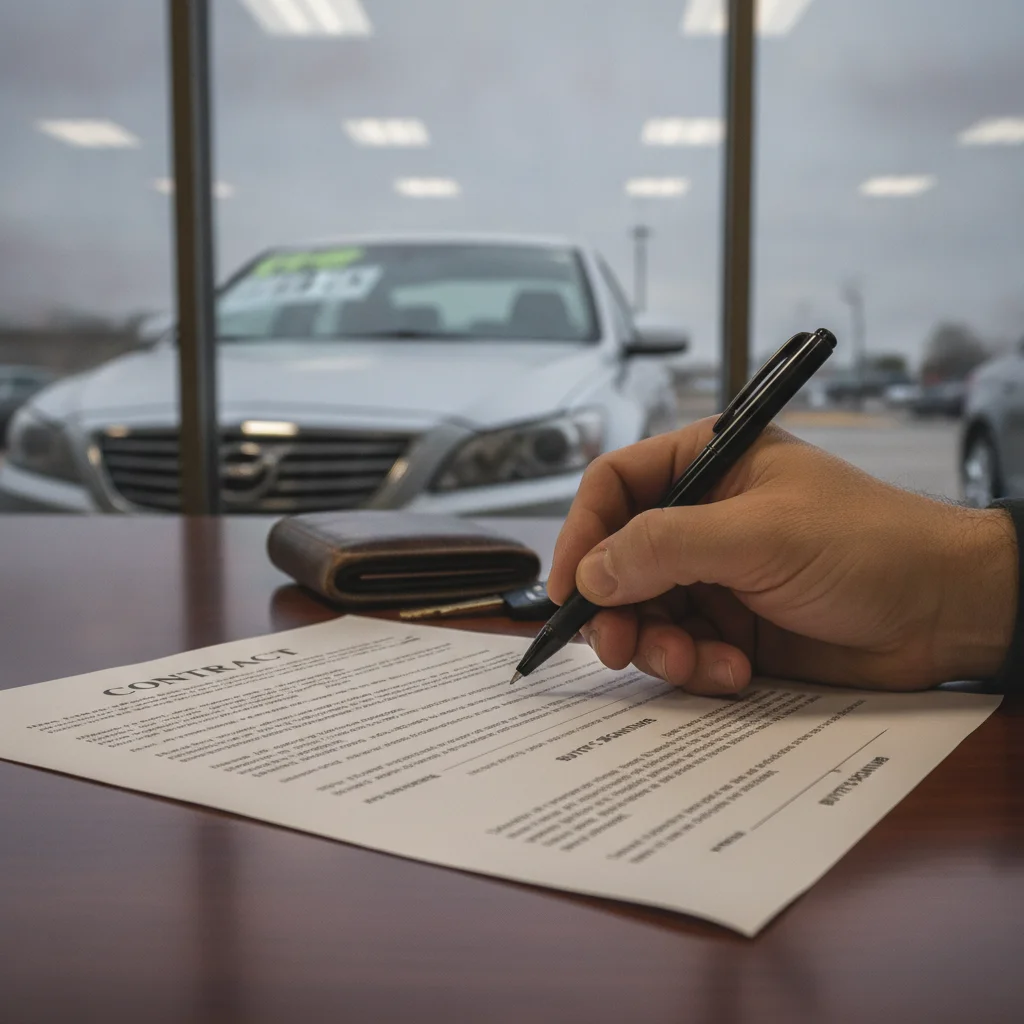
When you see a box checked on a used car contract that reads "As-Is – No Dealer Warranty," you're looking at one of the most consequential phrases in any auto purchase agreement. It is not boilerplate filler. It is a legally operative disclaimer that, in most states, transfers virtually all financial risk for undisclosed defects from the seller to you.
Here's what it means in plain terms: once you sign an as-is agreement, the seller is generally not obligated to pay for repairs, even if the engine fails the day after you drive off the lot — unless you can prove fraud or a violation of state consumer protection law.
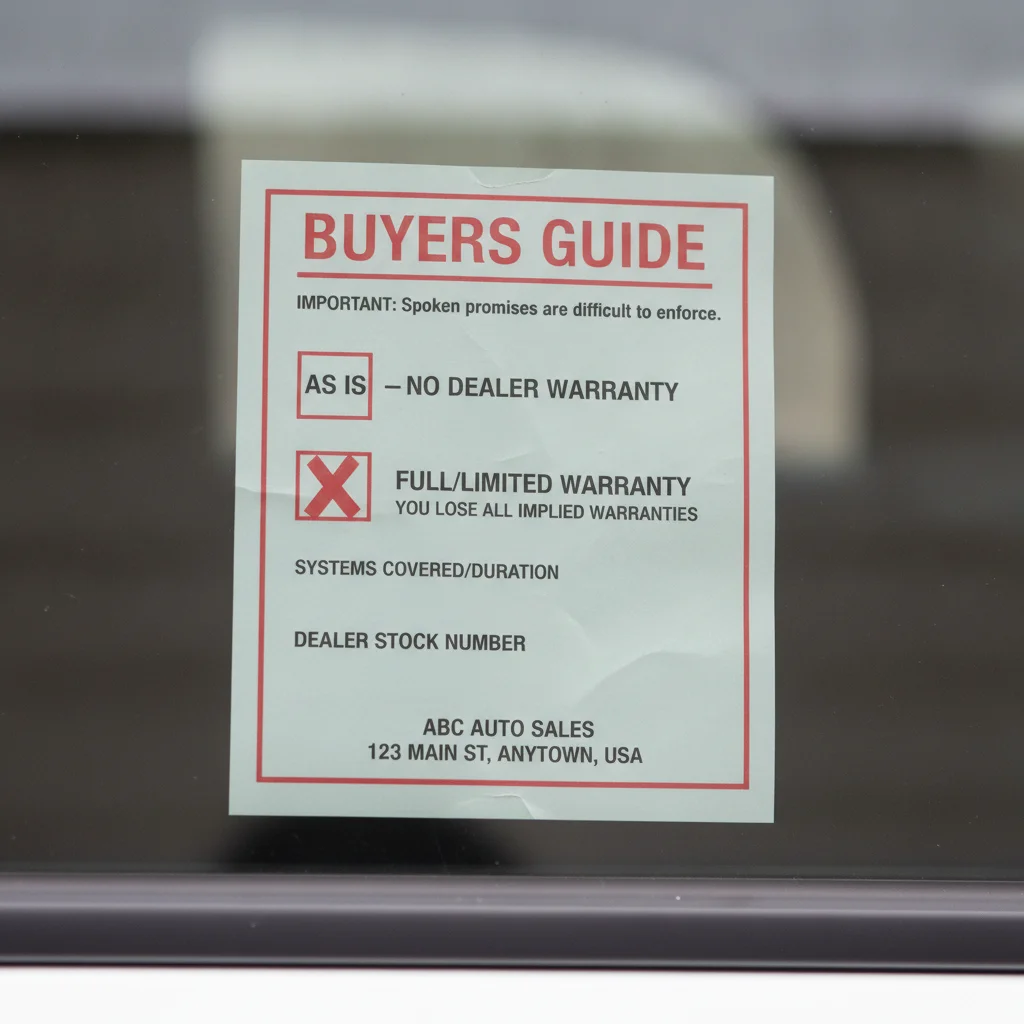
The Federal Trade Commission requires every used car dealer to display a Buyers Guide sticker in the vehicle's window. That sticker is the first place you'll see whether a car is being sold as-is or with some form of dealer warranty. It must clearly state one of the following: (1) the vehicle is sold as-is with no warranty, (2) the vehicle comes with a limited or full warranty, or (3) some systems are covered under a warranty. If the as-is box is checked, that sticker is your warning.
What many buyers don't realize is that an as-is clause doesn't just waive written warranty promises — it's specifically designed to waive implied warranties as well. That's the critical legal interaction between these two concepts, and it's where most buyers get hurt.
For a deeper look at how this compares to the protections new car buyers receive, see New Car Warranties: What's Covered, What Isn't, and What to Watch For — the contrast between new and used car protections is significant.
What Implied Warranties Are — and Why They Exist
An implied warranty is a legal protection that doesn't need to be written into any contract. It arises automatically under the Uniform Commercial Code (UCC), which most states have adopted in some form. There are two types that matter most in used car sales:
- Implied Warranty of Merchantability: This is the big one. It means the product must work for its ordinary intended purpose. In the context of a car, that means it must be reasonably roadworthy — it should start, drive, and operate safely under normal conditions. A car that breaks down catastrophically within days of purchase may violate this warranty.
- Implied Warranty of Fitness for a Particular Purpose: This applies when the seller knows you're buying the car for a specific use — say, towing a boat — and you rely on their recommendation. If they assure you the vehicle can handle that purpose and it can't, you may have a claim.
Here's the crucial point: implied warranties are automatic protections when purchasing from a licensed dealer. The seller doesn't have to promise anything in writing for these protections to exist. They kick in by default.
| Criterion | As-Is Sale | Implied Warranty |
|---|---|---|
| Source | Explicit contractual clause signed by buyer | Arises automatically by law (UCC) |
| Written requirement | Must appear clearly in the contract | No writing required — applies by default |
| Who it protects | Seller — limits liability for defects | Buyer — baseline right to a functional vehicle |
| Applies to private sellers | Yes — most private sales are treated as as-is | Rarely — usually limited to licensed dealers |
| Applies to licensed dealers | Yes, if properly disclosed | Yes — automatically, unless validly disclaimed |
| Can it be waived? | Waives implied warranties when signed | Can be disclaimed by as-is language in most states |
| State law exceptions | Some states restrict full as-is disclaimers from dealers | Some states protect implied warranties regardless |
| Fraud exception | Does NOT protect against active concealment or fraud | Reinforced when seller knew of defect and concealed it |
| FTC Buyers Guide disclosure | Requires checked as-is box on Buyers Guide | Shown by absence of as-is box on Buyers Guide |
| Buyer's best defense | Pre-purchase inspection before signing | Document defect quickly and consult attorney |
However — and this is where the as-is clause enters the picture — the UCC also allows sellers to explicitly disclaim implied warranties, typically by using specific language like "as-is" or "with all faults" in the contract. When that disclaimer is written clearly and conspicuously, most courts will enforce it.
78%
Used cars sold as-is at independent dealers
According to FTC research on used vehicle sales practices, the majority of cars sold at independent dealerships carry no dealer warranty.
~50%
States restricting full implied warranty disclaimers
Roughly half of U.S. states have enacted statutes that limit a dealer's ability to fully disclaim implied warranties in consumer vehicle sales.
$1,200+
Average repair cost after as-is purchase failure
Consumer complaint data from state attorneys general shows repair bills averaging over $1,200 when major defects surface within 30 days of an as-is purchase.
30 days
Typical window courts examine for implied warranty claims
Courts frequently scrutinize whether a defect existed at time of sale by considering how quickly — often within 30 days — the failure occurred.
That said, not every state allows full disclaimer of implied warranties in consumer sales. Wisconsin and several other states have passed legislation making it illegal for dealers to completely waive implied warranty protections when selling to individual consumers. Always check your state's specific rules.
If you're also considering an extended service contract to supplement whatever protections apply, read our breakdown of Extended Warranties in Car Contracts: What the Service Agreement Says vs. What You Expect before signing — service contracts have their own exclusion-heavy language that deserves close reading.
Side-by-Side: As-Is vs. Implied Warranty Protections
Understanding how these two concepts interact requires looking at specific scenarios. The table above lays out the core differences, but let's walk through what each one means for your actual situation.
As-Is at a Dealership: You sign the as-is box, drive off, and the transmission fails two weeks later. Under a strict as-is agreement, the dealer owes you nothing for the repair — as long as they didn't actively hide a known problem. Your best arguments in this scenario are (1) the defect existed at the time of sale and was concealed, or (2) your state doesn't permit full implied warranty disclaimers from dealers.
Implied Warranty at a Dealership (No As-Is Box): If you buy a used car from a dealer and no as-is disclaimer is signed, the implied warranty of merchantability remains in force. If the car fails to perform its basic function within a reasonable period, you may have a legitimate legal claim. What's "reasonable" varies by state and court, but courts generally look at how quickly the failure occurred and whether the problem likely existed at the time of sale.
Private Party Sale: The implied warranty landscape is thinner here. Most states don't extend the same implied warranty obligations to private individuals selling their own vehicles as they do to licensed dealers. That means most private-party sales are functionally as-is, whether or not the word appears on paper. As-Is Sales: What That Label Means Legally and Financially breaks this down further for buyers navigating private transactions.
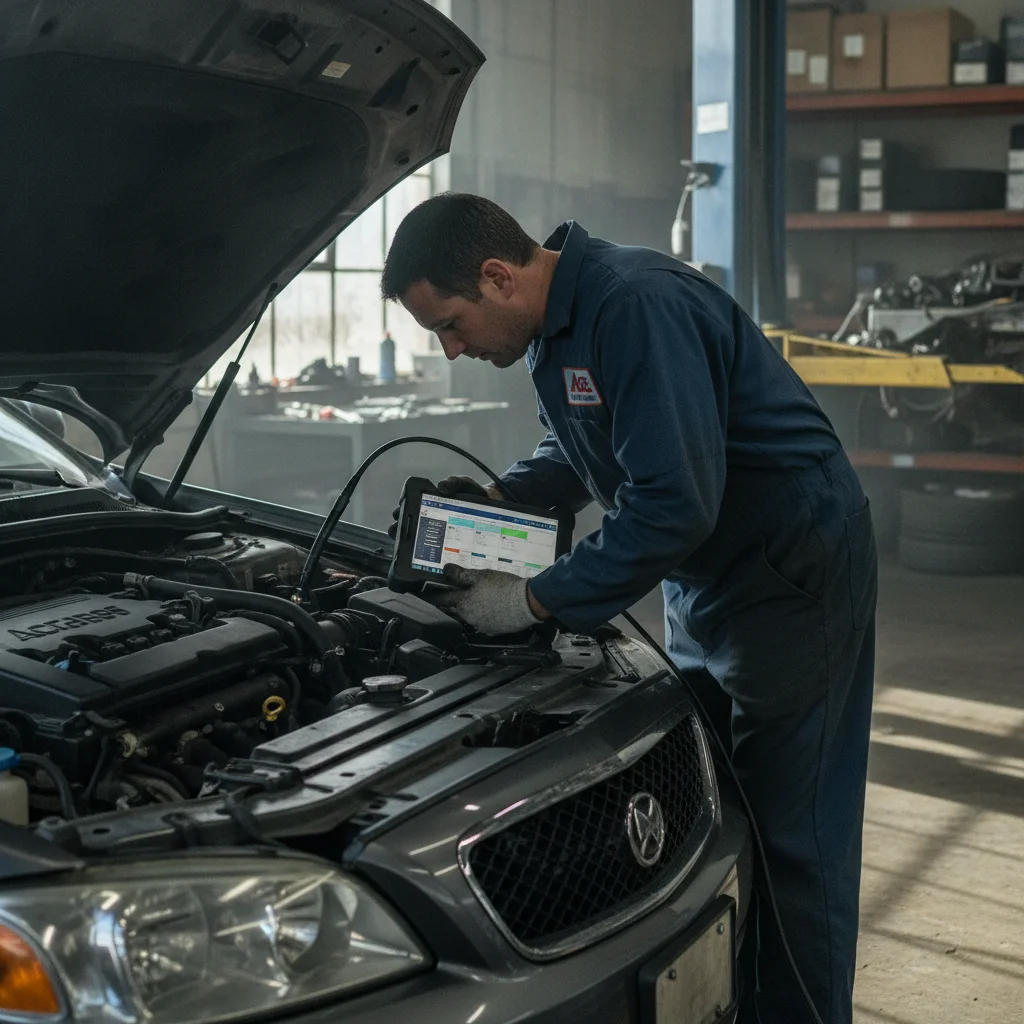
The Fraud Exception: An as-is clause is not a blank check for sellers to hide defects. If a dealer knows about a serious mechanical problem — say, a cracked engine block that was temporarily patched — and deliberately conceals it, an as-is disclaimer will not protect them in most jurisdictions. Courts have consistently held that active fraud can override contractual disclaimers.
The 'With All Faults' Phrase Matters Too
Some contracts use the phrase "with all faults" instead of — or in addition to — "as-is." Under the UCC, both phrases function as implied warranty disclaimers, provided they appear conspicuously in the contract. If you see either phrase, treat it the same way you would an explicit as-is declaration. Neither phrase, however, shields a seller from liability for active fraud or intentional concealment of known defects.
State Lemon Laws Typically Don't Apply to As-Is Sales
Lemon laws are designed to protect buyers of new or near-new vehicles with repeated, unfixable defects. In most states, as-is used car purchases are explicitly excluded from lemon law coverage. Some states extend limited lemon law protections to used cars sold with dealer warranties — but once you sign an as-is contract, you're generally outside that legal framework. Check your state's specific used car lemon law provisions before assuming any protection applies.
When to Involve an Attorney
If you believe a dealer concealed a known defect before an as-is sale, the fraud exception to as-is disclaimers may give you legal standing. Many consumer protection attorneys offer free initial consultations and work on contingency for auto fraud cases, meaning you pay nothing unless they win. Filing a complaint with your state attorney general's office simultaneously can add pressure and may result in faster resolution — dealers often prefer to settle than face regulatory scrutiny.
How to Read the Paperwork Before You Sign
The Buyers Guide is your first checkpoint. Federal law requires it to be displayed on every used car at a dealership, and it must be given to you as part of the purchase paperwork. Read it before you get to the finance office. Look for:
- The warranty status checkbox: Is the "As-Is – No Dealer Warranty" box checked, or is there a warranty offered? If a warranty is offered, what systems does it cover, and what percentage of repair costs will the dealer pay?
- State law addenda: Some states require additional disclosure language to appear on the Buyers Guide. If you're in a protected state (like Wisconsin), this section will note that implied warranties may still apply despite the as-is language.
- The purchase agreement itself: Buried in the body of the contract — sometimes on the back — you may find additional warranty disclaimer language. Look for phrases like "sold in present condition," "with all faults," or "buyer accepts all risk." These reinforce the as-is position.
If the finance manager presents you with an extended service contract at this point, be aware that you're being asked to pay for protection that — in some cases — you might already have under state law if implied warranties apply. read the service contract terms carefully before agreeing.
If you're on the selling side and trying to understand your own obligations, The Truth About 'As-Is' Sales and What Sellers Are Still Liable For explains where your liability ends — and where it doesn't.
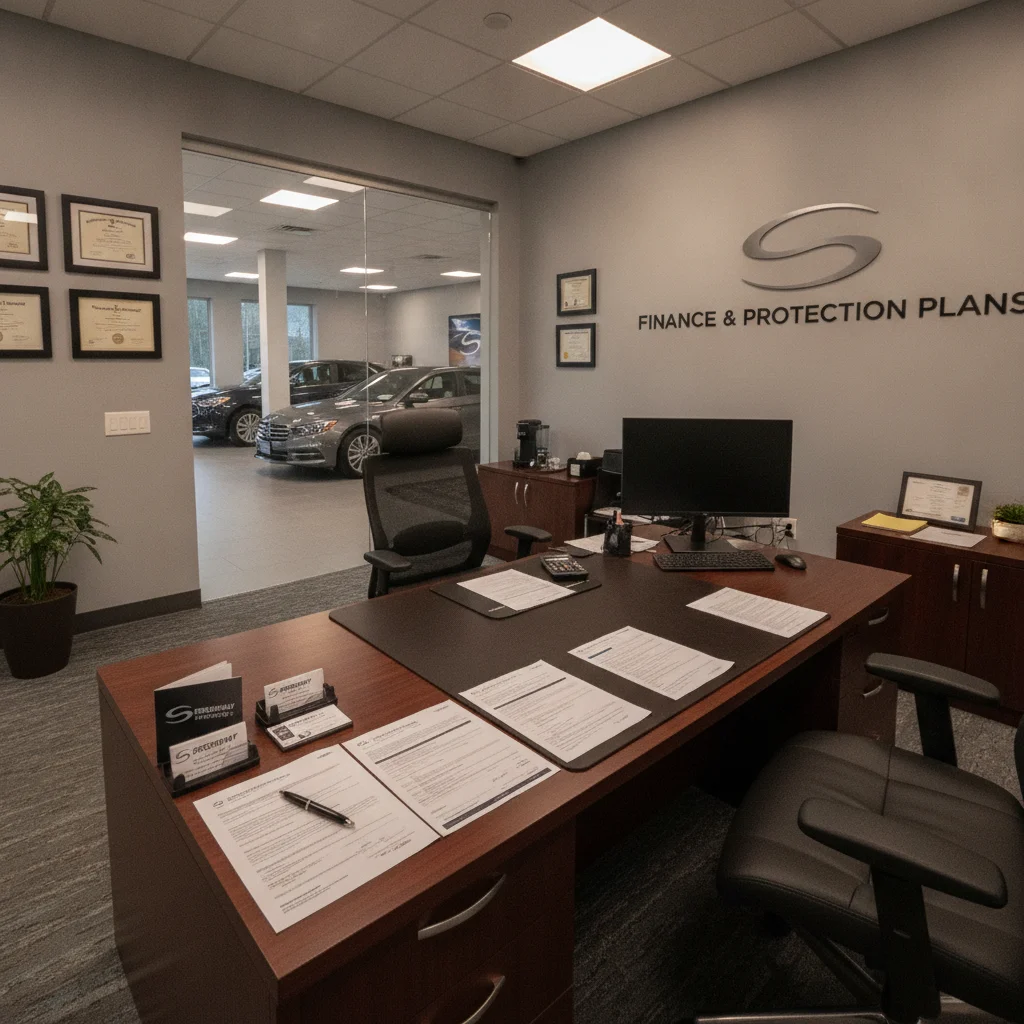
Before signing anything, ask the dealer directly: "Is there any as-is language in this contract, and does your dealership disclaim implied warranties?" Their answer — and their willingness to answer clearly — tells you something important about how they're operating.
Protecting Yourself: What to Do Before and After Signing
Whether you end up signing an as-is contract or buying with implied warranty protections intact, there are concrete steps you can take to reduce your risk.
Before You Sign
- Get an independent pre-purchase inspection. A licensed mechanic — not the dealer's service department — should inspect the vehicle. This single step does more to protect you than any contractual clause. If the dealer refuses to allow an inspection, treat that as a serious red flag.
- Pull a vehicle history report. A CARFAX or AutoCheck report won't catch everything, but it will surface accident history, odometer discrepancies, and title issues that should factor into your decision.
- Research your state's implied warranty laws. A quick search for " implied warranty used car" will tell you whether your state restricts dealer disclaimers. Your state attorney general's consumer protection office often publishes plain-language guides.
- Negotiate the as-is clause. In some cases — particularly at independent dealerships — you may be able to negotiate a short-term limited warranty in exchange for slightly higher price. Ask. The worst they can say is no.
After You Sign
- Document everything immediately. If a problem surfaces within days of purchase, photograph it, get a written repair estimate, and send a certified letter to the dealership detailing the issue. This creates a paper trail for any potential legal action.
- Contact your state attorney general or consumer protection agency. If you believe fraud was involved, file a complaint. Regulators take dealer fraud seriously, and a complaint can sometimes prompt a dealer to settle quickly rather than face an investigation.
- Consult a consumer protection attorney. Many work on contingency for fraud-based auto claims. An initial consultation is usually free and will tell you whether you have a viable case.
The 'With All Faults' Phrase Matters Too
Some contracts use the phrase "with all faults" instead of — or in addition to — "as-is." Under the UCC, both phrases function as implied warranty disclaimers, provided they appear conspicuously in the contract. If you see either phrase, treat it the same way you would an explicit as-is declaration. Neither phrase, however, shields a seller from liability for active fraud or intentional concealment of known defects.
State Lemon Laws Typically Don't Apply to As-Is Sales
Lemon laws are designed to protect buyers of new or near-new vehicles with repeated, unfixable defects. In most states, as-is used car purchases are explicitly excluded from lemon law coverage. Some states extend limited lemon law protections to used cars sold with dealer warranties — but once you sign an as-is contract, you're generally outside that legal framework. Check your state's specific used car lemon law provisions before assuming any protection applies.
When to Involve an Attorney
If you believe a dealer concealed a known defect before an as-is sale, the fraud exception to as-is disclaimers may give you legal standing. Many consumer protection attorneys offer free initial consultations and work on contingency for auto fraud cases, meaning you pay nothing unless they win. Filing a complaint with your state attorney general's office simultaneously can add pressure and may result in faster resolution — dealers often prefer to settle than face regulatory scrutiny.
Sellers considering their own paperwork approach can find additional guidance in As-Is Sales vs. Warranty Disclosures: Choosing the Right Seller Stance, which covers how different disclosure strategies affect liability from the seller's perspective.
The Bottom Line on As-Is vs. Implied Warranty
These two concepts are not opposites so much as a legal tug-of-war. An as-is clause is a seller's attempt to eliminate the protections that implied warranties provide. Whether that attempt succeeds depends on your state's law, whether the seller is a licensed dealer or private party, whether any fraud was involved, and whether the disclaimer language is legally adequate.
As a buyer, your job is to understand which side of that tug-of-war you're on before you sign anything — not after. The Buyers Guide, the purchase contract, and your state's consumer protection statutes all contribute to that picture.
The phrase "as-is" is not a shield that protects dishonest sellers from every consequence. But in an honest transaction where you simply didn't have the car inspected and the seller disclosed nothing fraudulent, it is largely enforceable — and courts will hold you to it.
Know what you're signing. Get the inspection. Understand your state's rules. That combination gives you far more protection than any warranty disclaimer can take away.


All claims are backed by peer-reviewed research. Sources on request.