Key Takeaways
What 'No-Haggle' Actually Means in Practice
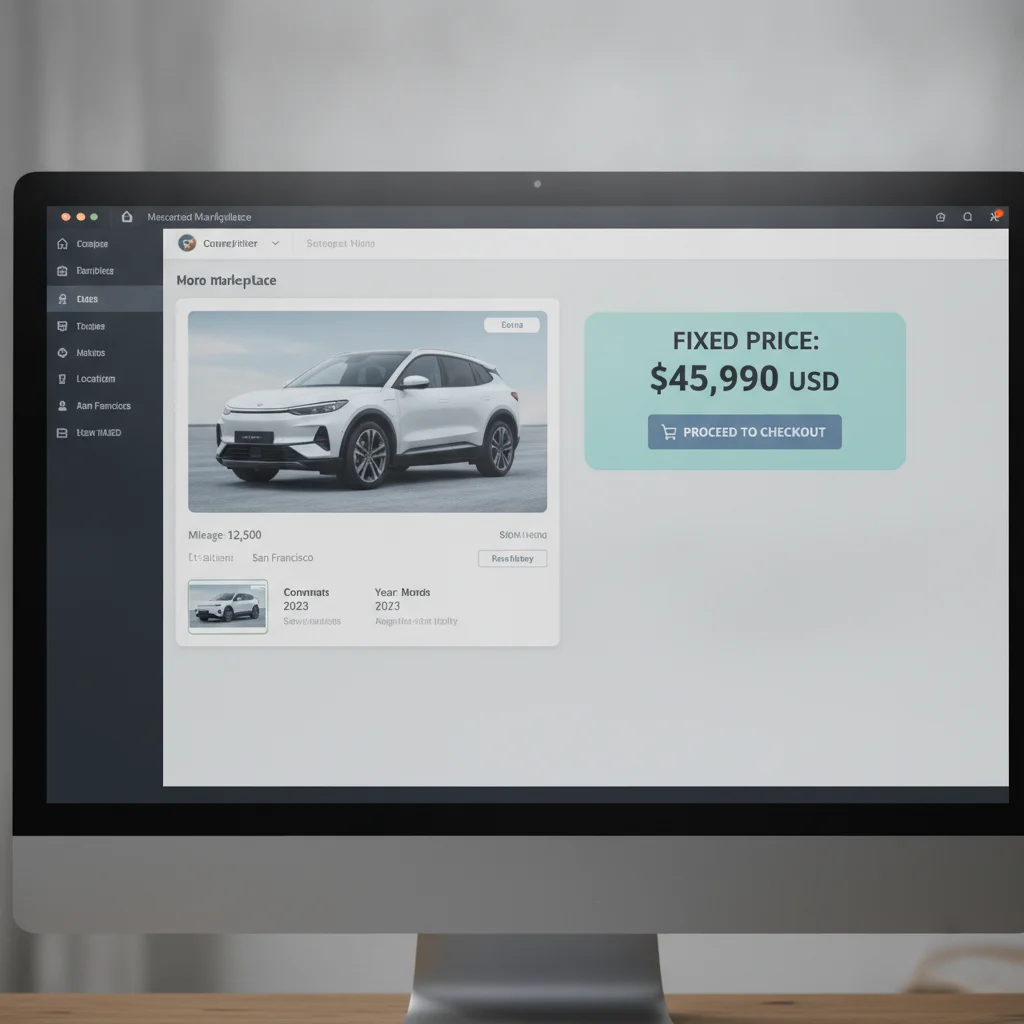
When Carvana, Vroom, CarMax, and their competitors market 'no-haggle' or 'fixed pricing,' they're making a very specific promise: the number you see on the listing is the number you'll pay for the vehicle itself. No back-and-forth, no sitting in a finance office while a manager 'checks with his boss.' For buyers who've experienced traditional dealership pressure, that sounds like relief.
And in a narrow sense, it is. The price on the car won't move. But anyone who thinks that means the total transaction is immune to upselling, margin extraction, or unfavorable terms needs to look more carefully at where these platforms actually make their money.
Fixed vehicle pricing doesn't mean fixed total cost. What no-haggle removes is one specific lever — the sticker negotiation. What it doesn't remove is the financing markup, the extended warranty pitch, the trade-in spread, and in some cases, mandatory add-on fees that get disclosed only late in the checkout flow.
Understanding this distinction is the foundation for using these platforms intelligently. The full cost comparison between online and in-person buying reveals that in many transactions, the savings from avoiding negotiation are partially offset by the margins baked into ancillary products.
The Myths and the Reality: No-Haggle Pricing Unpacked
Below are the most persistent myths buyers carry into no-haggle transactions — and what's actually true. Understanding these will reframe how you evaluate any fixed-price platform.
Myth
No-haggle pricing means I'm getting the best possible price on the vehicle.
Fact
Fixed pricing means the price won't change during your transaction — it does not mean the price is at or below market value.
This is the most costly misunderstanding in fixed-price car buying. A no-haggle price is simply a price the platform has decided not to move on during negotiation. It can be priced above, at, or below what comparable vehicles are selling for in your market — and that gap can be substantial.
Platforms set their prices using algorithms that factor in regional demand, acquisition cost, recondition spend, and competitor inventory. In competitive markets with high supply, these prices tend to be fair. In markets where a specific vehicle is scarce, the fixed price may reflect scarcity rather than value.
The discipline required: before committing to any fixed-price vehicle, pull comps from Edmunds, KBB, and local listings. If the platform's price is more than 3–5% above comparable vehicles in similar condition, that 'no-haggle' price is doing work that benefits the platform, not you.
Myth
Online platforms that offer fixed prices are fully transparent — there are no hidden costs.
Fact
Fixed vehicle pricing is transparent; the total transaction often is not. Fees, financing markups, and add-on products are where margin accumulates.
The vehicle price on the listing page is honest. What happens between that page and your final contract is another matter. Mandatory processing or documentation fees — sometimes labeled as 'market adjustment' or 'platform fee' — may appear only during checkout. Some platforms roll these into the advertised price; others add them at the end.
Beyond fees, the platform's financing offer, if accepted without comparison shopping, can quietly add thousands to the total cost of ownership. A 2% rate difference on a $30,000 loan over 60 months is roughly $1,600 in additional interest. That's real money that no amount of price transparency on the vehicle sticker recovers.
Add-on products — extended warranties, gap coverage, wheel and tire protection — are pitched digitally and often presented as defaults or strong recommendations. These carry significant margins and are rarely the best-value option available to you.
Myth
The trade-in offer from an online platform is fair because they use objective algorithms.
Fact
Algorithmic pricing is objective in method but is designed to generate resale margin for the platform — not to maximize what you receive.
Every instant offer for your trade-in is calculated to leave room between what the platform pays you and what it expects to sell the vehicle for. That spread funds the business. The algorithm is accurate — it knows what your car is worth on the wholesale and retail markets — but the offer it generates is calibrated to the platform's margin target, not your best interest.
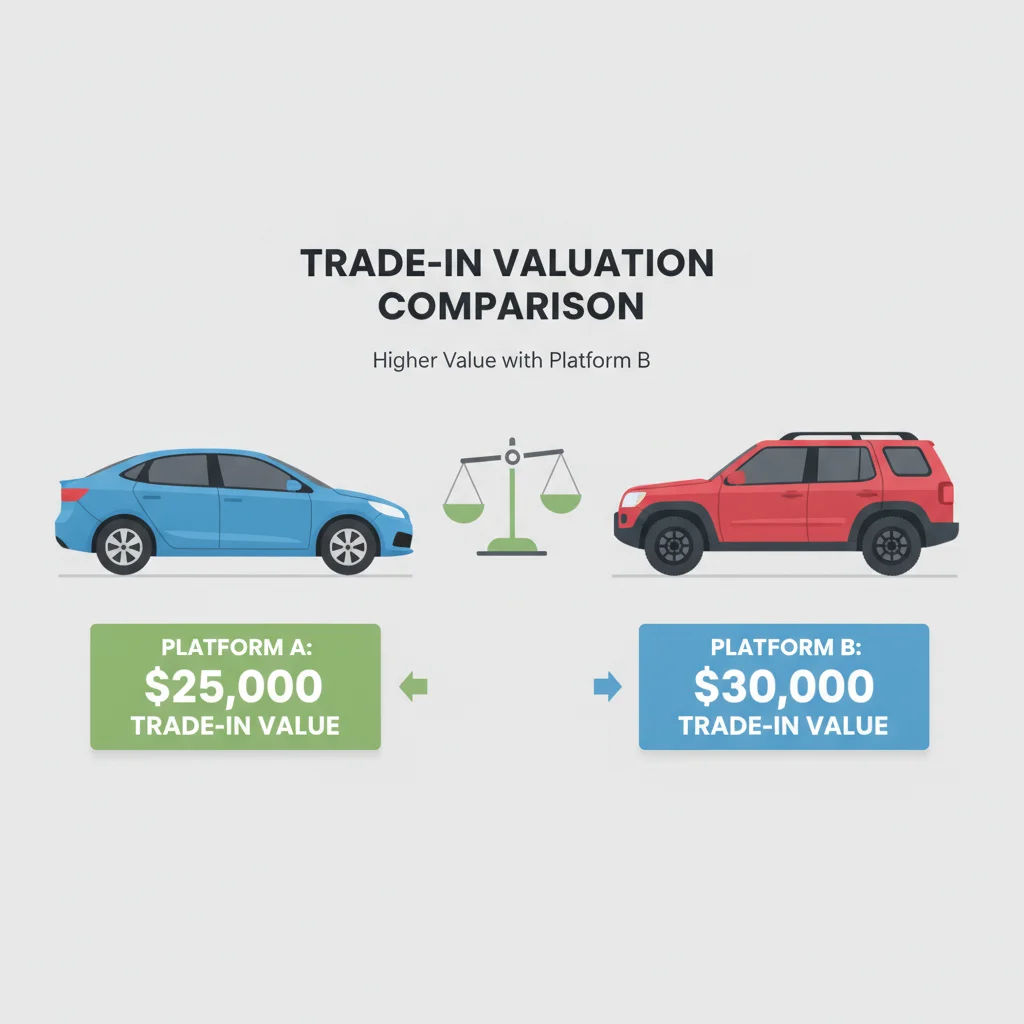
In practice, this means trade-in offers from online platforms frequently land below private-party sale value and sometimes below what a competing platform would offer. The variation between platform offers for the same vehicle can be significant — $1,500 to $3,000 differences are common, depending on each platform's current inventory needs.
The rule is simple: get at least three written trade-in offers before accepting any. The highest offer is your real floor; anything below it is a subsidy you're providing to the platform.
Myth
Because the price is fixed, there's nothing left to negotiate on a no-haggle platform.
Fact
The vehicle price is fixed, but financing rate, trade-in value, add-on products, and sometimes fees remain negotiable or avoidable.
Fixed-price platforms have narrowed the negotiation surface, but they haven't eliminated it. Buyers who understand where flexibility still exists can improve the total deal meaningfully even when the sticker won't move.
Financing is the clearest example. If you arrive with a preapproved loan from your bank or credit union, you can either use that rate or force the platform's financing team to beat it. Many will, because they'd rather earn a smaller financing margin than lose the loan origination entirely. The specific tactics for negotiating on fixed-price platforms include leveraging this financing competition directly.
Trade-in value is explicitly negotiable — you can bring a competing written offer and request a match. Add-on products can simply be declined. On some platforms, documented competing prices have prompted fee reductions. The no-haggle promise applies to one line item. Everything else is still a conversation.
Myth
No-haggle platforms are always more expensive than buying at a dealership.
Fact
For unprepared buyers, online platforms are often cheaper in practice; for skilled negotiators, dealerships can sometimes yield better total deals.
This myth cuts both ways — some buyers assume no-haggle always costs more; others assume it always costs less. Neither is consistently true. The outcome depends heavily on the buyer's skill and preparation level.
The average buyer who walks into a traditional dealership without a preapproval, without knowing the vehicle's market value, and without a trade-in offer from a competing source will almost certainly pay more than they would on a well-run no-haggle platform. The dealership's finance and insurance office is optimized to recover margin at every step of the transaction, and most buyers don't have the knowledge or composure to resist all of it.
A well-prepared buyer, however, can use dealership competition, invoice pricing transparency, and financing leverage to negotiate a total deal that beats a fixed-price platform — particularly on new vehicles where MSRP is a known reference point. The real cost comparison between the two approaches shows the gap narrows significantly when buyers come prepared.
Myth
A 'certified' or 'inspected' label on an online platform listing means the vehicle is in reliable condition.
Fact
Inspection standards vary widely between platforms, and certification does not guarantee the vehicle has no significant issues.
Most online platforms perform some form of multi-point inspection before listing a vehicle. But the depth, rigor, and transparency of those inspections vary considerably. One platform's '150-point inspection' may cover different items than another's, and the actual inspection reports are not always available to buyers before purchase.
Certified labels also don't mean the vehicle has no history of accidents, flood damage, or odometer irregularities. Always pull a vehicle history report independently — don't rely solely on the one the platform provides. If the platform allows third-party pre-purchase inspections (some do, some restrict it), use that option for any vehicle priced above $20,000.
Understanding how platforms handle misrepresentation and buyer protection before you buy is especially important when you can't physically inspect the vehicle before it arrives.
Where Online Platforms Actually Make Their Money
Every platform that promises a transparent, fixed vehicle price has a business model that extends well beyond that price. Knowing the revenue streams tells you exactly where to scrutinize the deal.
~$1,500
Average dealer F&I profit per vehicle sold
According to NADA data, the finance and insurance office consistently generates $1,200–$1,800 per retail unit, a model that online platforms replicate digitally.
2.9%
Typical financing rate spread on platform loans
Industry analysts estimate online car platforms mark up financing rates by 1.5–3% over their cost of funds, mirroring traditional dealer reserve practices.
$2,100
Average trade-in offer gap vs. private sale
iSeeCars research found that consumers typically net $1,500–$2,500 more selling a vehicle privately than accepting an instant trade-in offer from an online platform.
67%
Buyers who don't compare trade-in offers
A Cox Automotive study found that the majority of car buyers accept the first trade-in offer they receive without soliciting competing bids.
Financing
This is the biggest one. Online platforms that offer in-house financing — and most major ones do — earn money on the spread between the rate they secure from a lender and the rate they quote you. That spread can be 1–3 percentage points, which over a 60- or 72-month loan on a $35,000 vehicle adds up to thousands of dollars. The fix: get preapproved through your bank or credit union before you start shopping. Walk in — metaphorically — with a rate in hand.
Extended Warranties and Add-Ons
The digital checkout flow on most platforms includes one or more prompts to add a protection plan, gap insurance, or extended warranty. These are high-margin products. The platform earns a commission when you accept. Nothing about the no-haggle price promise extends to these items — they are negotiable, or at minimum, skippable. You can almost always purchase equivalent coverage cheaper from a third party after the sale.
Don't Skip the Financing Comparison
Accepting a platform's in-house financing offer without comparison shopping is one of the most expensive mistakes buyers make on no-haggle platforms. A 2% rate difference on a 60-month, $32,000 loan adds up to approximately $1,900 in additional interest over the loan term. Get preapproved through your bank or credit union first — always — and treat the platform's financing offer as one option, not the default.
Add-On Products Are High-Margin Pitches
Extended warranties, gap insurance, and paint protection plans offered during online checkout carry profit margins of 40–60% for the platform. These products are not bad by definition, but they are rarely the best-value version of that coverage available to you. Decline at checkout, research third-party providers, and purchase separately if you determine the coverage makes sense for your situation.
Trade-In Spread
If you have a vehicle to trade, the platform will make you an offer. That offer is typically below what you'd net selling privately, and sometimes below competing instant-offer prices. The mechanics of how instant offer platforms value your car show that the algorithm is designed to maximize the platform's resale margin, not match market value. Always get offers from multiple sources before accepting a trade-in figure. The price difference between platforms for the same car can easily reach $2,000 or more.
Documentation and Processing Fees
Some platforms bundle mandatory fees into the checkout that aren't part of the advertised vehicle price. These can range from $200 to over $600 and are rarely negotiable. Read the full out-the-door cost breakdown before committing, not after.
When No-Haggle Pricing Actually Works in Your Favor
This isn't a takedown of fixed-price platforms — they deliver genuine value under the right conditions. Here's when the model genuinely works for buyers.
You Lack Negotiation Experience or Bandwidth
A skilled negotiator at a traditional dealership can sometimes beat a no-haggle platform price. But most buyers aren't skilled negotiators, and the dealership's finance and insurance office is specifically designed to recover any discount given on the vehicle price. If you walk into a dealership without preparation, a transparent fixed-price platform will likely produce a better overall outcome.
The Market Is Hot
During periods of high demand and low inventory — like the supply disruptions of 2021–2022 — traditional dealerships were marking vehicles above MSRP. Fixed-price platforms, in many cases, held closer to market-fair pricing. In a seller's market, no-haggle can actually be the lower price.
You're Buying a Commodity Vehicle
For high-volume, widely available vehicles, platform pricing tends to be competitive because these cars are easy to comp against market data. The fixed price on a common 3-year-old crossover with average mileage is usually within a few hundred dollars of fair market value.
That said, even when the vehicle price is fair, there are still deal levers buyers can pull — particularly around trade-in value, financing terms, and add-on products.
Your Out-the-Door Number Is What Matters
Never evaluate a no-haggle platform deal by the vehicle price alone. Calculate the full out-the-door cost: vehicle price + all fees + financing total interest cost - trade-in value. That single number is the only fair basis for comparing one platform's deal against another's, or against a traditional dealership offer. Platforms that make it difficult to generate this number before checkout deserve extra scrutiny.
Fixed Price Does Not Mean Final Deal
The vehicle price is fixed. Your financing rate, your trade-in value, and the add-on products you accept are not fixed — they are decisions you make, often under digital checkout pressure. Treat each component as a separate negotiation. Buyers who separate these decisions consistently outperform those who move through the checkout flow as a single transaction.
How to Protect Yourself on Any Fixed-Price Platform
The buyers who get the best outcomes from no-haggle platforms aren't passive. They treat the fixed price as one data point, not a verdict. Here's the practical framework:
- Verify the vehicle price against market comps. Use Edmunds True Market Value, Kelley Blue Book, and NADA to establish what the vehicle is actually worth. If the fixed price is more than 5% above comp, look elsewhere or negotiate on the back end.
- Get preapproved for financing before you start. Your bank or credit union preapproval is your leverage against platform financing offers. Compare APRs directly — even a 1.5% rate difference on a 60-month loan saves hundreds.
- Get competing trade-in offers. Before accepting the platform's trade offer, get written offers from CarMax, a competing online platform, and at least one local dealership. Use the highest offer as your floor. See how instant offer platforms compare on payout before committing.
- Decline or defer all add-ons at checkout. Extended warranties, gap insurance, and protection packages can all be purchased after the sale — often at lower cost. Don't let a streamlined digital checkout push you into a rushed decision on a high-margin product.
- Read the full fee disclosure before signing. Ask for an itemized out-the-door cost that separates the vehicle price, taxes, registration, and any platform fees. Unexpected fees are a red flag.
- Know your buyer protection rights. Understand the platform's return policy, inspection standards, and what recourse you have if the vehicle is misrepresented. The buyer protection policies of major online platforms vary significantly.

The same skepticism that applies to sellers on these platforms applies to buyers. The platform's convenience is real — but convenience has a cost built into the model. Being informed means you capture the convenience without absorbing the hidden margin.
The Bottom Line on Fixed Pricing
No-haggle pricing is a marketing promise, not a financial guarantee. It tells you one thing: the vehicle price won't change during negotiation. It says nothing about whether that price is fair, whether the financing terms are competitive, or whether the trade-in offer reflects your vehicle's true value.
For buyers who do their homework — who arrive with preapproval, competing trade-in offers, and a clear sense of market value — fixed-price platforms can be efficient and reasonably priced. For buyers who take the platform's convenience at face value and click through every checkout screen without scrutiny, the 'no-haggle' experience can cost more than a well-prepared visit to a traditional dealership.
The platforms are not adversaries. But they are businesses with margin requirements. Treat the fixed price as a starting point for your research, not the end of it. Understanding dealership negotiation tactics — even if you never set foot in a showroom — makes you a smarter buyer on any platform.

All claims are backed by peer-reviewed research. Sources on request.