Key Takeaways
Option A
Carvana
The category pioneer with massive inventory and a theatrical delivery experience.
Best for: Buyers who want the widest selection, a polished digital process, and the iconic vending-machine pickup option.
Option B
Vroom
The leaner, home-delivery-focused alternative fighting for its footing.
Best for: Buyers who prioritize doorstep delivery and are comfortable doing thorough due diligence on pricing.
If you want the largest selection of used vehicles online
Carvana
Carvana's inventory routinely exceeds 50,000 vehicles, dwarfing Vroom's catalog. More listings means more filters, more price points, and a better shot at finding your exact spec.
If you want a car delivered straight to your driveway with zero dealership visits
Carvana
Carvana's delivery logistics are more mature and have a better track record for on-time, condition-accurate deliveries compared to Vroom's historically inconsistent fulfillment.
If you're selling a car and want a quick benchmark offer
Vroom
Vroom's instant offer tool is fast and worth including in your comparison, though you should always stack it against Carvana and CarMax offers before accepting any single bid.
If you're financing and want flexibility
Carvana
Carvana's in-house financing arm (Bridgecrest) is more transparent about terms upfront, and the platform integrates prequalification without a hard credit pull.
If you're on a tight budget and hunting for the lowest sticker price
Neither — shop both plus alternatives
Neither platform consistently undercuts the other. Run the same vehicle search on both, then check local dealers and CarMax before committing to any offer.
What Each Platform Actually Is (And Isn't)
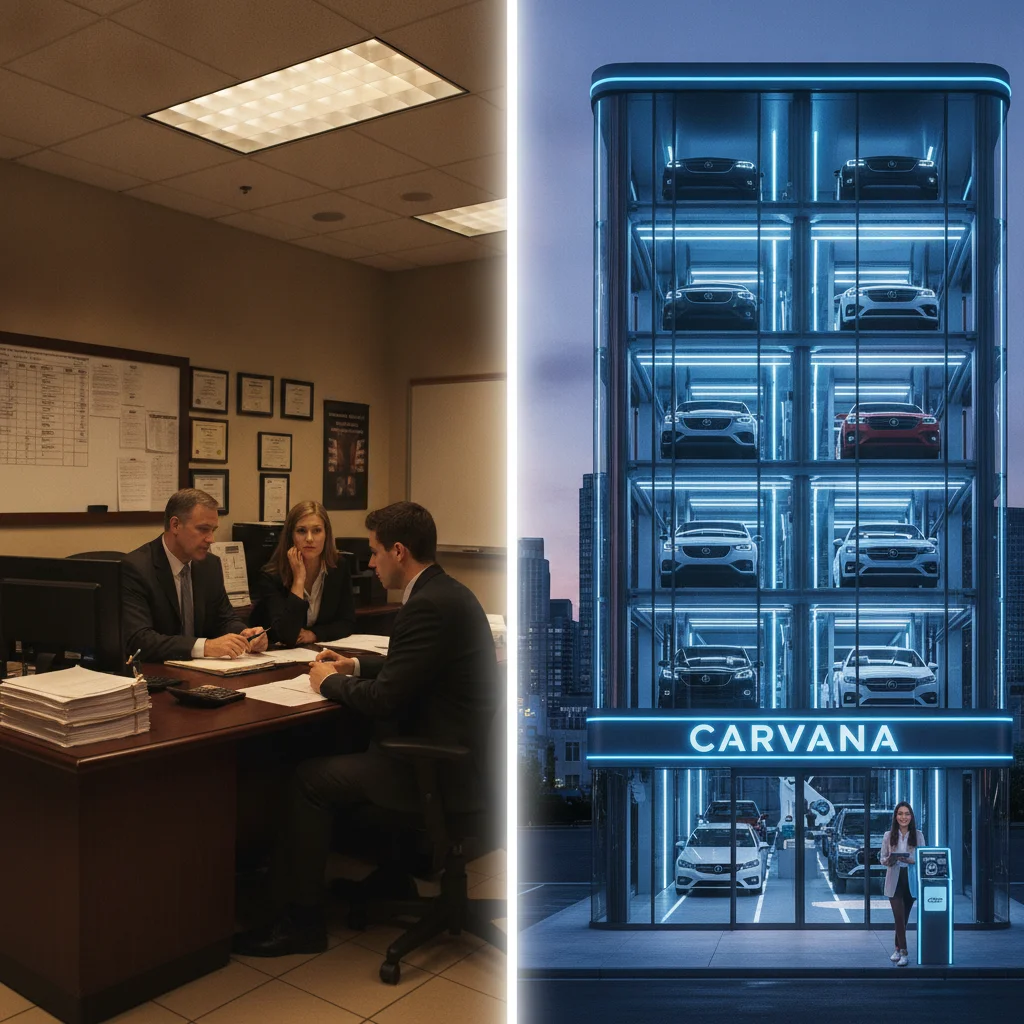
Carvana launched in 2012 and has spent over a decade building the infrastructure of a fully online used-car dealership. It operates its own reconditioning centers, its own financing arm (Bridgecrest), and its signature multi-story car vending machines in select cities. The company went public in 2017 and, despite a turbulent post-pandemic period, remains the dominant player in the digital-first car-buying space.
Vroom launched publicly in 2020 after years of operating under the Texas Direct Auto brand. It has a narrower footprint, a smaller reconditioning network, and has faced significant operational headwinds — including layoffs and a strategic shift to focus on its vehicle dealer software subsidiary, CarStory. That context matters: Vroom is a leaner, less stable operation than it was at its IPO peak.
Both companies operate as actual licensed dealers, not just marketplaces. That means they take title to the vehicles they sell, handle the paperwork, and are responsible for the condition of what they deliver. Neither is a peer-to-peer platform like Facebook Marketplace. If something goes wrong with a vehicle, you have a corporate entity to deal with — which is a feature, not a bug, compared to private-party risk.
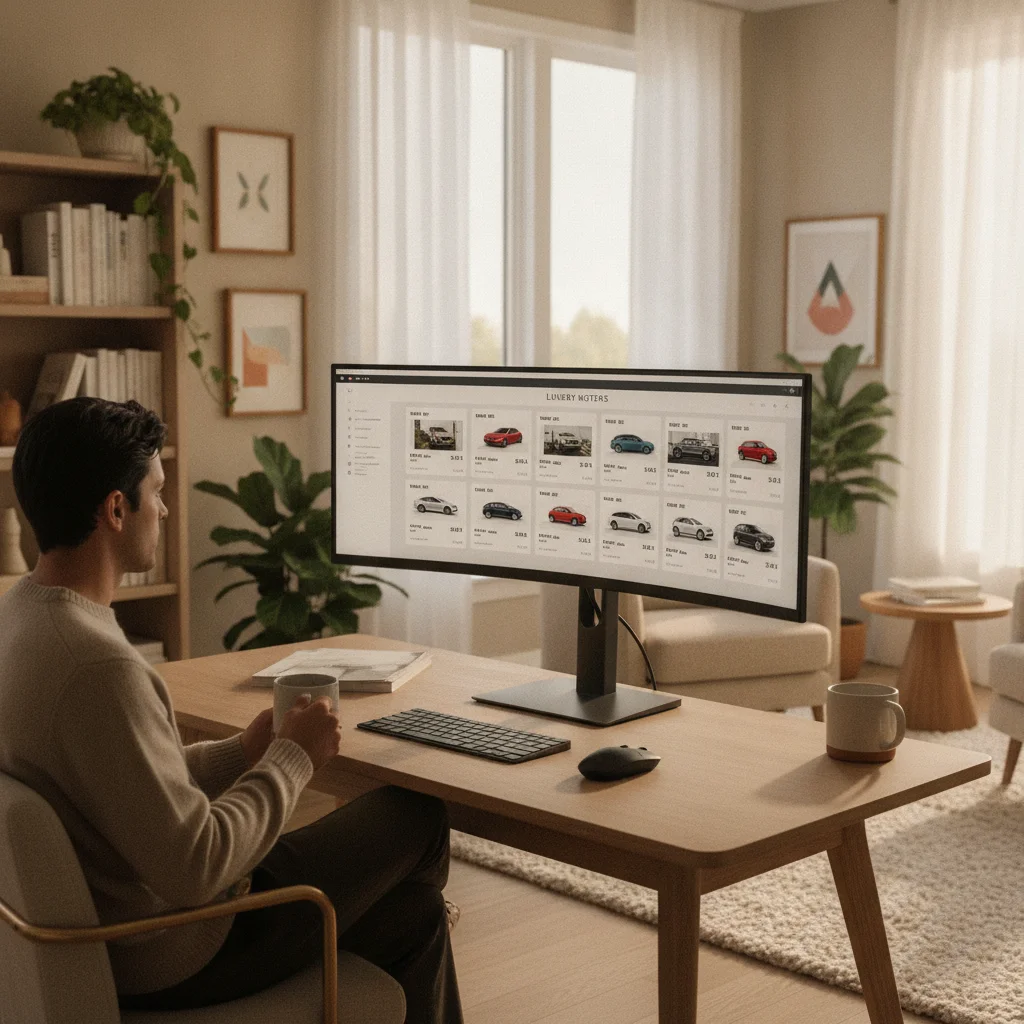
What they are not is a substitute for due diligence. The no-haggle model eliminates price negotiation, but it doesn't eliminate the need to compare that price against market data. Use valuation tools like KBB and Edmunds to benchmark any listing before you click buy.
Inventory, Search, and Vehicle Quality
Inventory depth is where the gap between these two platforms is starkest. Carvana consistently lists upward of 50,000 vehicles nationwide. Vroom's active inventory is a fraction of that — typically in the low thousands depending on when you check. For a buyer with specific requirements (particular trim, mileage cap, color preference), Carvana simply offers more chances to find a match.
Both platforms claim to put each vehicle through a multi-point inspection before listing. Carvana advertises a 150-point inspection and provides a free Carfax report on every listing. Vroom similarly offers inspection reports, but the consistency of those inspections has drawn more criticism in customer reviews. Independent car-buying advisors routinely flag that inspection reports from any online retailer should be verified — if you're spending real money, a pre-purchase inspection by an independent mechanic (which both platforms allow during the return window) is worth the $100–$200 cost.
| Criterion | Carvana | Vroom |
|---|---|---|
| Active inventory size | 50,000+ vehicles | Low thousands |
| Return window | 7 days / 400 miles | 7 days / 250 miles |
| Financing prequalification | Soft pull available | Varies by lender |
| Delivery reliability | Generally consistent | Historically inconsistent |
| Inspection report quality | 150-point + Carfax | Inspection report provided |
| Listing photo quality | 360° HD, consistent | Adequate, less uniform |
| Instant sell offer | Yes, online in minutes | Yes, online in minutes |
| Physical pickup option | Yes (vending machines) | No |
| Customer service reputation | Mixed but improving | More complaints on record |
| Company stability | Public, restructured, active | Reduced focus, pivoting |
One meaningful differentiator: Carvana's photo quality and listing detail are generally stronger. Listings include high-resolution 360-degree interior and exterior views, which matters when you're buying a vehicle you haven't sat in. Vroom's listings are adequate but less consistent in presentation quality.
For buyers selling a vehicle rather than buying, both platforms generate instant offers based on your VIN, mileage, and condition answers. Neither consistently comes out on top — the spread depends heavily on the vehicle. See how both compare in detail in our article on what CarMax, Carvana, and Vroom actually pay.
Pricing Transparency and the No-Haggle Reality
"No-haggle" sounds like a consumer win, and in some ways it is. You're not going to waste a Saturday in a finance office while a manager plays games with your trade-in. But no-haggle does not mean low price. It means the price is fixed — and that fixed price may be above, at, or below market depending on the vehicle and the moment.
Carvana's pricing is generally competitive with the used-car retail market but not uniformly aggressive. The platform prices dynamically, meaning a listing you saw Tuesday may be priced differently by Friday. Vroom has historically been criticized for pricing that trends higher relative to market comps, particularly on popular models where demand is predictable.
50,000+
Carvana active vehicle listings
Carvana's inventory has consistently exceeded 50,000 vehicles, according to the company's own platform data and third-party tracking.
7 days
Return window on both platforms
Both Carvana and Vroom offer a 7-day return policy, though mileage limits and logistics execution differ between them.
3–10%
Typical premium over wholesale on instant offers
According to analyses by Edmunds and iSeeCars, online instant-offer platforms typically price vehicles 3–10% above wholesale but at or slightly above traditional retail in competitive segments.
$1,000+
Potential savings from external financing
Buyers who secure preapproval from a credit union before purchasing through an online platform can save over $1,000 in interest over a 60-month loan compared to in-platform financing, based on rate differentials reported by consumer advocacy groups.
The practical move: before committing to either platform, pull the same vehicle's pricing on Autotrader, Cars.com, and your local dealer network. If a Carvana or Vroom listing is within 3–5% of comparable retail listings, the convenience premium is probably worth paying. If it's 8–10% above comps, walk away — no-haggle doesn't mean you can't leave.
Also worth noting: both platforms charge a delivery fee that varies by your location and the vehicle's origin point. Carvana's fees are generally disclosed earlier in the buying flow; Vroom's have historically shown up later in checkout. Always get to the total out-the-door number before comparing deals. And if you're weighing this against a traditional dealer, check our Carvana vs. dealer trade-in comparison for a full cost picture.
Out-the-Door Price: The Only Number That Matters
Both Carvana and Vroom display vehicle prices before fees, taxes, and delivery charges are added. These add-ons can push your actual cost significantly above the listed price. Always navigate to the final checkout summary — or ask for the full out-the-door figure in writing — before making any deal comparisons. A vehicle that looks $500 cheaper on one platform may cost $800 more after fees.
Vroom's Strategic Pivot: What It Means for Buyers
Vroom has publicly shifted strategic focus toward its CarStory data and dealer software business, reducing emphasis on its direct-to-consumer vehicle retail operation. This doesn't mean Vroom has stopped selling cars, but it does mean the platform may receive less investment in customer experience and inventory growth going forward. Buyers should factor this operational uncertainty into their risk assessment, particularly when considering Vroom for higher-value purchases.
Financing: Convenient, But Rarely Optimal
Both Carvana and Vroom offer in-house financing, and both make it extremely easy to apply within the purchase flow. Carvana's prequalification uses a soft credit pull, so checking your rate won't ding your score. Vroom similarly offers financing through third-party lenders it has relationships with.
Here's the insider truth: the financing rate you're offered through either platform's checkout is almost never the best rate available to you. These platforms make margin on financing — that's standard in the auto retail business, whether you're at a dealership or online. The platform earns a fee from the lender when they originate your loan.
The correct move is to get preapproved from your own bank or credit union before you start shopping either platform. Bring that rate as your baseline. If Carvana or Vroom's financing beats it, great — use theirs. If not, you already have your financing locked. This single step can save you hundreds to thousands of dollars over the life of a loan, and neither platform will penalize you for using outside financing.
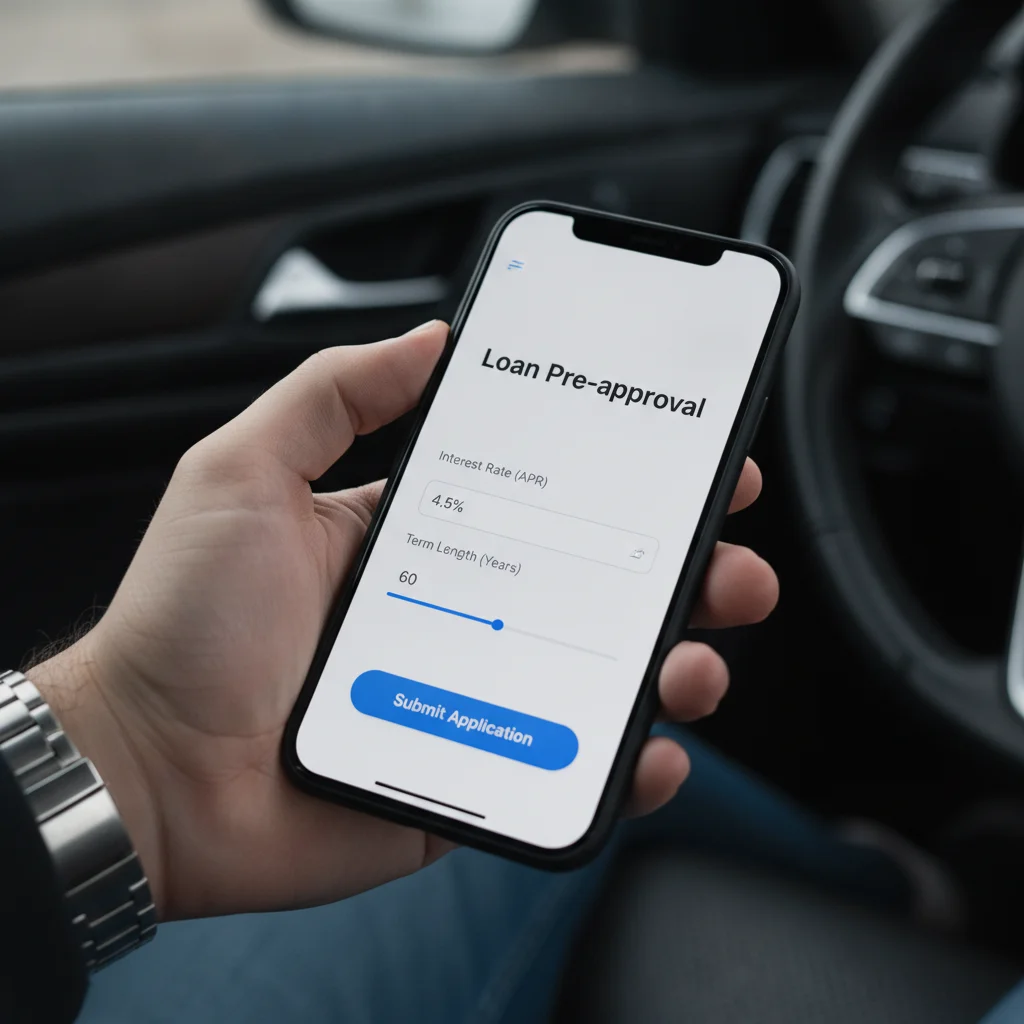
Also watch for add-ons. Both platforms will offer extended warranties and GAP insurance during checkout. These products aren't inherently bad, but the prices embedded in online checkout flows are often higher than what you'd pay sourcing the same coverage independently. GAP insurance through your auto insurer, for example, typically costs a fraction of what dealers and online retailers charge.
Returns, Delivery, and What Happens When Things Go Wrong
Both Carvana and Vroom advertise a 7-day return policy. On paper, that sounds identical. In practice, the experience of executing a return differs significantly between the two.
Carvana's return process is more streamlined: you schedule a pickup within your 7-day window, the vehicle is collected, and the refund is processed. Customer reviews on returns are mixed but manageable — most buyers who've needed to use the policy report it worked as advertised, with occasional delays in refund processing.
Vroom's return experience has generated substantially more complaints. Delivery delays (vehicles arriving late or in condition that didn't match listing photos), difficulty reaching customer service, and complications in return logistics have been documented in both consumer review platforms and media reporting. The company has acknowledged operational challenges and has been restructuring — but as a buyer, that operational history is real risk you're absorbing.
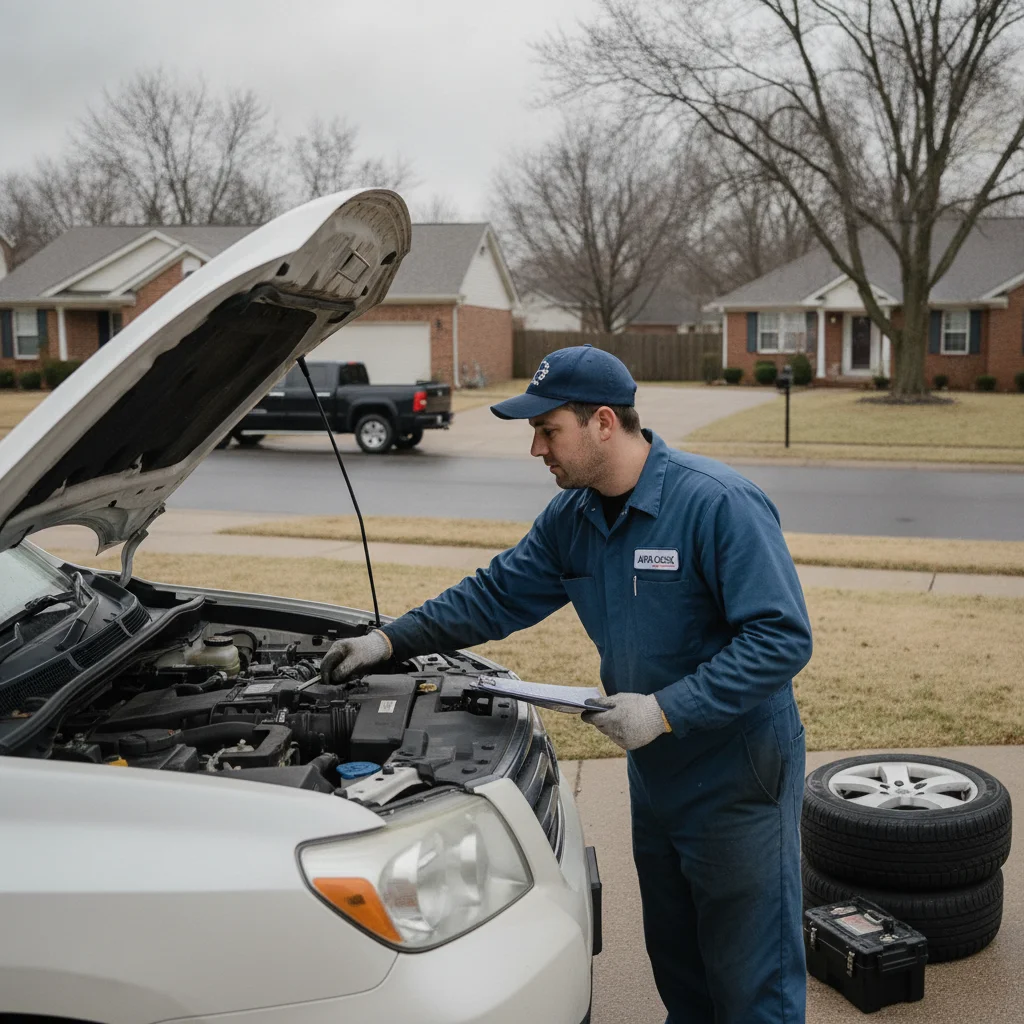
The 7-day window sounds generous, but consider the practical limit: you typically can't get a third-party inspection scheduled, completed, and acted on within 7 days if you don't move quickly. When your vehicle arrives, schedule that inspection immediately — don't wait until day 5.
For context on how these platforms compare when you're on the selling side — where execution speed and offer accuracy matter just as much — see our breakdown of Carvana vs. CarMax on speed and payout. The operational discipline that makes one platform better for buyers often shows up in selling transactions too.
Which Platform Should You Actually Use?
If you're buying a used vehicle online and forced to choose between these two today, Carvana is the stronger platform for most buyers. Its inventory advantage is decisive, its delivery track record is better, and its financing transparency is more buyer-friendly. That doesn't mean every Carvana deal is a good deal — it means the infrastructure is more reliable.
Vroom isn't worthless — it's worth checking if Carvana doesn't have what you need, and its instant offer tool should be part of your comparison when selling. But given Vroom's operational challenges and smaller catalog, it functions better as a secondary check than a primary destination.
Neither platform should be your only comparison point. The smartest buyers run the same vehicle search across multiple channels simultaneously: Carvana, local franchised dealers, CarMax, and private listings. The instant offer platform landscape has gotten competitive enough that you can often use competing offers as leverage — even when the platforms themselves claim no-haggle pricing.
Finally, if you're selling a car as part of this transaction, don't default to convenience. Get offers from multiple sources. Our comparison of private sales vs. online car-buying services shows that the convenience premium on instant offers can cost you thousands — and that tradeoff is worth understanding before you hand over your keys.
Out-the-Door Price: The Only Number That Matters
Both Carvana and Vroom display vehicle prices before fees, taxes, and delivery charges are added. These add-ons can push your actual cost significantly above the listed price. Always navigate to the final checkout summary — or ask for the full out-the-door figure in writing — before making any deal comparisons. A vehicle that looks $500 cheaper on one platform may cost $800 more after fees.
Vroom's Strategic Pivot: What It Means for Buyers
Vroom has publicly shifted strategic focus toward its CarStory data and dealer software business, reducing emphasis on its direct-to-consumer vehicle retail operation. This doesn't mean Vroom has stopped selling cars, but it does mean the platform may receive less investment in customer experience and inventory growth going forward. Buyers should factor this operational uncertainty into their risk assessment, particularly when considering Vroom for higher-value purchases.
Bottom line: use Carvana as your primary online-only platform, treat Vroom as a secondary benchmark, get your own financing lined up before you start, and never skip the independent inspection. The no-haggle model is real — but the buyer's homework requirement is just as real.

All claims are backed by peer-reviewed research. Sources on request.