
Key Takeaways
When comparing two identical vehicles across platforms, build the full out-the-door price in a spreadsheet — include taxes, doc fees, delivery charges, and any mandatory add-ons. The lowest sticker price is almost never the lowest total cost.
Platforms and dealers design their fee structures to make direct comparison difficult. A systematic side-by-side comparison neutralizes that tactic and often reveals a 5–10% cost difference on apparently similar listings.
Apply for financing at your credit union or bank before you even start browsing inventory. Your pre-approval gives you an APR benchmark that forces the platform or dealer to compete for your business — instead of setting the terms themselves.
Dealer and platform financing consistently carries a rate markup above what lenders would offer directly. Without a competing offer in hand, buyers have no way to recognize when they're overpaying on financing.
When buying from a dealership through an online portal, send all price negotiations and confirmations via email rather than phone. A verbal price agreement doesn't bind the finance office — a documented email exchange does.
Finance offices routinely 'forget' phone agreements when the contract is drawn up. A written email chain is admissible and creates accountability that verbal conversations don't.
On delivery day, video-record your walk-around of the vehicle continuously before signing the delivery receipt. If there's undisclosed damage, that footage is your evidence.
Disputes over transport damage or pre-existing condition require proof of when and where the damage was discovered. Timestamped video recorded before signature is the strongest documentation you can have.
Before accepting any extended warranty offered at checkout, call your insurance provider to check whether mechanical breakdown coverage is available on your auto policy — it's often cheaper and more flexible.
Mechanical breakdown insurance from auto insurers typically costs 50–70% less than equivalent dealer-offered extended warranties, with broader repair network access and without the high-pressure upsell environment.
How Online Car Buying Actually Works
The promise of buying a car without stepping into a dealership is real, but it doesn't mean the process is simple or risk-free. What it means is that nearly every step that used to happen in a showroom — browsing inventory, arranging financing, signing contracts, even handling the trade-in — can now happen through a browser or app. The question is whether you know what to expect at each stage.
There are two broad categories of online car buying. The first is marketplace-based buying, where platforms like Cars.com, Autotrader, or CarGurus connect you with local dealerships or private sellers. You find the car online, but the deal still closes with a human — often at the dealer or through a phone handoff. The second is fully digital retail, where platforms like Carvana, Vroom, or CarMax's online arm let you complete the entire transaction — financing, signing, delivery — without talking to a salesperson if you choose not to.
A growing number of traditional dealerships now offer hybrid online experiences: you configure and price a car on their site, get a finance decision, and only visit to pick up the keys. Knowing which model you're dealing with shapes everything that follows.
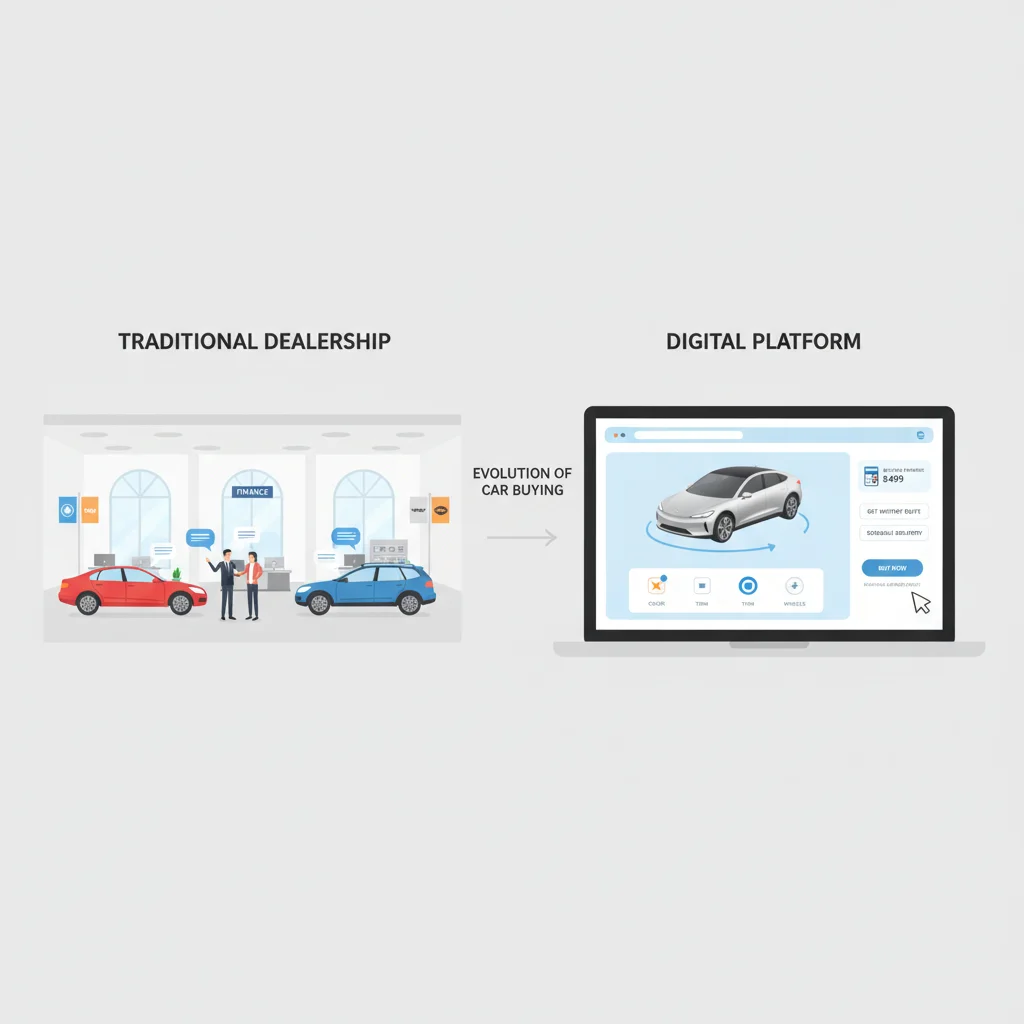
For a comparison of how this process differs from the traditional in-person route, see The New Car Purchase Process, Start to Finish. If this is your first time buying online, Online Car Buying for First-Timers: What to Expect covers the fundamentals without assumptions.
30%
Of new car buyers completed purchase fully online in 2023
According to Cox Automotive's 2023 Car Buyer Journey Study, roughly 1 in 3 new vehicle buyers completed their purchase without visiting a dealership in person.
$1,600+
Extra interest paid accepting a 1.6% higher loan rate
On a $30,000 loan over 60 months, accepting a rate of 7.5% vs. 5.9% costs approximately $1,600 more in total interest — a real cost of skipping pre-approval.
7 days
Standard return window on major digital retail platforms
Platforms including Carvana and Vroom offer 7-day return policies, though mileage caps and condition requirements apply and vary by platform.
$2,500
Average dealer documentation and add-on fees at signing
A 2023 Consumer Reports analysis found that dealer fees — including doc fees, prep charges, and unsolicited add-ons — averaged over $2,500 above the advertised vehicle price.
30–90 days
Typical title processing timeline after online purchase
Title and registration processing time after an online vehicle purchase varies by state DMV workload; most buyers receive permanent plates within 30 to 90 days.
Finding the Right Vehicle Online
Search is where most buyers spend the most time and make the most preventable mistakes. The biggest one: falling for a listing price without accounting for all the costs layered on top. Dealer fees, documentation fees, and destination charges can add $1,000–$3,000 to a vehicle's price — and online listings frequently omit them until checkout.
Where to Search
- Carvana and Vroom: Best for a fully no-contact purchase. Fixed prices, no negotiation, direct delivery. What you see is close to what you pay — but verify the out-the-door price carefully.
- CarMax: Fixed pricing with a robust nationwide inventory. Online purchase option available in most markets.
- Cars.com, Autotrader, CarGurus: Best for comparing across multiple dealers and private sellers. Prices are negotiable, and listings are syndicated from dealerships, so quality varies.
- Dealer websites: Increasingly capable online retail tools, but watch for bait-and-switch pricing where the online quote diverges significantly from the finance office offer.
How to Filter Without Wasting Time
Lock in your non-negotiables first: body style, drivetrain, must-have safety features, and maximum mileage if you're buying used. Use the price filter to display out-the-door estimates where the platform supports it — not just the sticker. Set a saved search alert so new inventory matching your criteria comes to you; good deals at fair prices move fast.
When comparing two identical vehicles across platforms, build the full out-the-door price in a spreadsheet — include taxes, doc fees, delivery charges, and any mandatory add-ons. The lowest sticker price is almost never the lowest total cost.
Platforms and dealers design their fee structures to make direct comparison difficult. A systematic side-by-side comparison neutralizes that tactic and often reveals a 5–10% cost difference on apparently similar listings.
Apply for financing at your credit union or bank before you even start browsing inventory. Your pre-approval gives you an APR benchmark that forces the platform or dealer to compete for your business — instead of setting the terms themselves.
Dealer and platform financing consistently carries a rate markup above what lenders would offer directly. Without a competing offer in hand, buyers have no way to recognize when they're overpaying on financing.
When buying from a dealership through an online portal, send all price negotiations and confirmations via email rather than phone. A verbal price agreement doesn't bind the finance office — a documented email exchange does.
Finance offices routinely 'forget' phone agreements when the contract is drawn up. A written email chain is admissible and creates accountability that verbal conversations don't.
On delivery day, video-record your walk-around of the vehicle continuously before signing the delivery receipt. If there's undisclosed damage, that footage is your evidence.
Disputes over transport damage or pre-existing condition require proof of when and where the damage was discovered. Timestamped video recorded before signature is the strongest documentation you can have.
Before accepting any extended warranty offered at checkout, call your insurance provider to check whether mechanical breakdown coverage is available on your auto policy — it's often cheaper and more flexible.
Mechanical breakdown insurance from auto insurers typically costs 50–70% less than equivalent dealer-offered extended warranties, with broader repair network access and without the high-pressure upsell environment.
When comparing across platforms, always pull the same VIN into each platform's fee calculator. A car listed for $28,000 on Carvana and $27,500 at a dealership may cost more at the dealership once doc fees hit.
Vetting the Car Before You Commit
Remote buying removes your ability to walk around the car, hear the engine cold-start, or smell whether someone smoked in it for eight years. That gap has to be closed deliberately — and it's entirely closable if you know what to request.
Vehicle History Report
Run a Carfax or AutoCheck report on every vehicle, no exceptions. Reputable online platforms include one; if a private seller or smaller dealer doesn't provide one, buy it yourself for $40–$50. Look for: accident history, number of previous owners, service records, title status (clean, salvage, rebuilt, flood), and odometer discrepancies.
Salvage and Rebuilt Titles Are Deal-Breakers for Most Buyers
A salvage or rebuilt title means the vehicle was declared a total loss by an insurance company at some point in its history. These vehicles are typically ineligible for standard financing, carry dramatically lower resale value, and may have structural integrity concerns that are invisible in photos. If a vehicle history report reveals a salvage or rebuilt title, factor that in carefully — or walk away.
E-Signed Contracts Are Immediately Binding
Once you click to sign a digital contract, that agreement is legally enforceable in every U.S. state under the E-SIGN Act. Unlike a dealer visit where you might have a brief window to reconsider before documents are processed, digital signatures execute instantly. Read every page of every document before signing — including the arbitration clauses and add-on contracts.
Independent Pre-Purchase Inspection (PPI)
For any used vehicle priced above $10,000, pay for an independent pre-purchase inspection. Services like Lemon Squad, DEKRA, or a local ASE-certified mechanic can inspect the car at the seller's location and send you a full report — typically for $100–$200. On a fully digital platform like Carvana, you won't get a PPI before purchase, but their 7-day return policy is designed to substitute for it. Use that window.
Virtual Walkaround and Additional Photos
Any legitimate dealer or private seller should be willing to provide a live video call showing the car running, the undercarriage, tire condition, all four corners, and the interior thoroughly. If they push back, treat that resistance as a red flag. Platforms like Carvana offer 360° photo sets and condition reports — read every annotation.
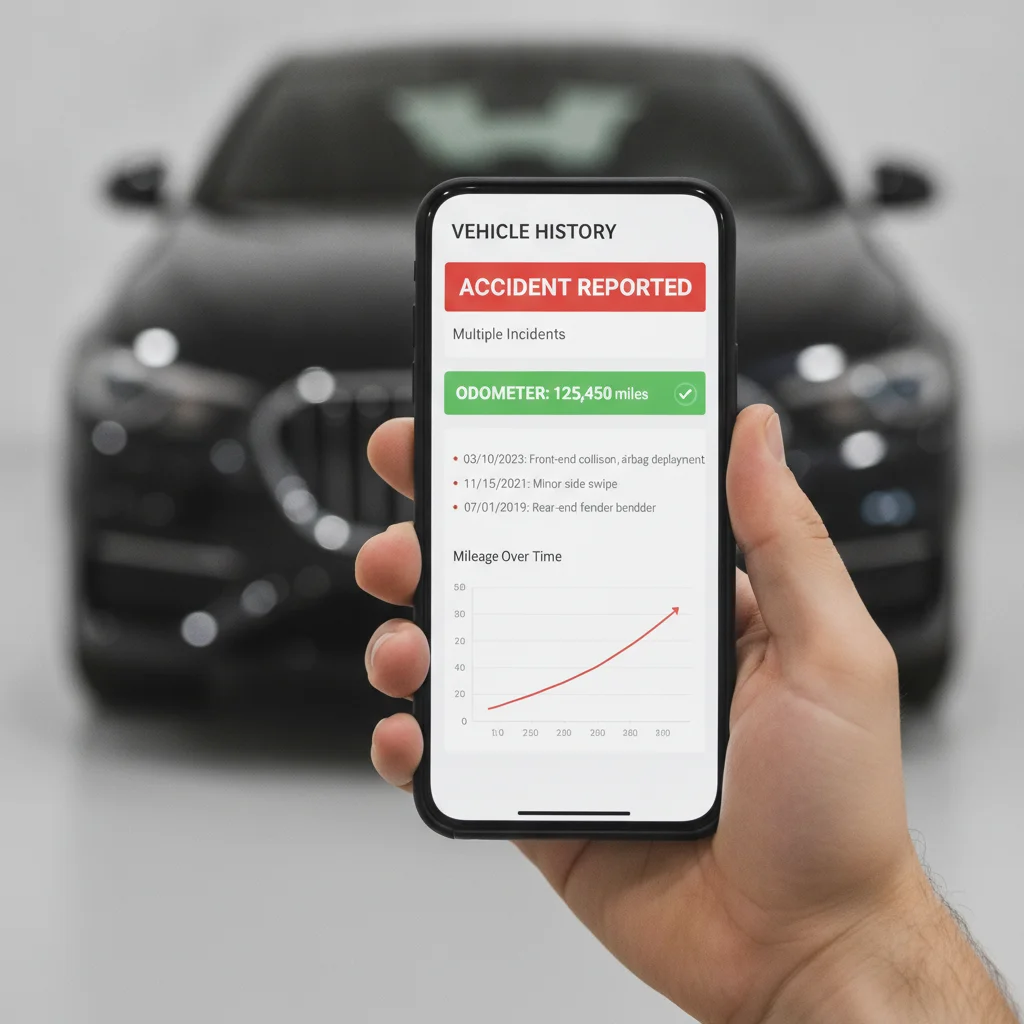
Before you move to deposit or financing, use the Pre-Purchase Checklist for Buying a Car Online to make sure you haven't skipped a verification step.
Getting Financing Right the First Time
Financing is where the most money gets left on the table in any car purchase — online or in person. The difference online is that dealer finance pressure is lower, which gives you more room to act strategically if you prepare in advance.
Get Pre-Approved Before You Shop
Apply with your bank, credit union, or an online lender like LightStream, PenFed, or Capital One Auto Finance before you finalize any vehicle. Pre-approval tells you your actual rate, your approved loan amount, and gives you a benchmark the dealer or platform has to beat to earn your business. Without it, you're negotiating blind.
Never Finalize a Deal Without the Out-the-Door Price in Writing
The out-the-door (OTD) price is the only number that matters: it includes the vehicle price, all dealer fees, applicable taxes, and any add-ons. Anything less — a quoted price, a monthly payment figure, an online estimate — is incomplete and subject to change at signing. Before you authorize a credit pull or place a deposit, get the full OTD price confirmed in a written document or email. This one step prevents the most common and costly surprise in online car buying.
Verify Loan Terms Against Your Pre-Approval Before Signing
At the point of signing your Retail Installment Sales Contract, compare every finance term — APR, loan amount, total of payments, and term length — against your pre-approval letter line by line. It is not unusual for the platform or dealer's finance system to present a slightly higher rate, a longer term, or additional financed products that weren't in your original agreement. Catching these discrepancies before you sign is straightforward; correcting them after is not.
Understanding How Platform Financing Works
Digital retailers like Carvana and Vroom have their own financing arms. They'll often quote you a rate in seconds based on a soft credit pull during browsing, then a hard pull when you commit. That initial rate is rarely their best offer — if your pre-approval is competitive, tell them. Some platforms will match or beat it to capture the financing margin themselves.
What to Compare Beyond the Interest Rate
- Loan term: A lower monthly payment stretched to 72 or 84 months costs significantly more in total interest. Run the math on total cost, not just payment.
- Prepayment penalties: Most auto loans don't have them, but confirm before signing.
- Gap insurance: If you're financing more than 80% of the vehicle's value, gap coverage protects you if the car is totaled. Buy it from your insurer — not the dealer — where it's typically 60–70% cheaper.
“The single biggest mistake buyers make online is treating the monthly payment as the price of the car. You're not buying a payment — you're financing a total cost. When you focus only on the monthly number, dealers and platforms can manipulate the term, rate, and add-ons invisibly.”
— Desmond Kimathi, Former Dealership Finance Manager and Auto Financing Advocate
For a detailed breakdown of every document involved in your loan and purchase, see Your Car Buying Paperwork, From First Quote to Final Title.
Negotiating Price Remotely
Online platforms with fixed pricing — Carvana, CarMax — eliminate price negotiation by design. But when you're buying from a dealership through its online portal or through a marketplace listing, negotiation is still in play. The channel changes; the leverage points don't.
How to Negotiate Over Email or Chat
Email is your best friend in remote negotiation. It creates a paper trail, removes time pressure, and lets you compare competing offers side by side. Lead with a specific out-the-door price target, not an open-ended inquiry. Reference comparable listings by VIN or listing URL to anchor your number. Ask the dealer to confirm any agreed price in writing before you proceed with credit application.
Trade-In Valuation Online
Get trade-in offers from at least three sources before disclosing your trade-in to the selling dealer: Carmax's instant offer, Carvana's offer tool, and Kelley Blue Book Instant Cash Offer are all free and take under 10 minutes. Dealers will often low-ball a remote trade-in because they know you can't easily comparison shop in the moment. Walking in with competing written offers eliminates that tactic entirely.
Lock In Your Trade-In Offer Independently
Get written trade-in offers from CarMax, Carvana, and KBB Instant Cash Offer before telling the selling dealer you have a trade. These offers are typically valid for 7 days. Once you have them, the dealer must beat those numbers to earn the trade — rather than setting the baseline themselves. This single step routinely adds $500–$2,000 to your effective trade-in value.
Secure Insurance Before Delivery Day
Call your insurer or bind a new policy at least 24 hours before your scheduled delivery. Most states require proof of insurance before a vehicle can be legally driven or registered. Have the policy number and declarations page ready to provide at delivery if requested. Waiting until after the car arrives creates a window of uninsured exposure.
Dealer Add-Ons in an Online Context
Even in digital retail, finance menus appear. You'll encounter offers for extended warranties, paint protection, tire-and-wheel coverage, and credit insurance embedded in the checkout flow. These are almost always overpriced and available cheaper elsewhere. Decline everything from the platform or dealer, then separately evaluate third-party warranty providers if you want coverage.
The Digital Paperwork: What You'll Sign and Why
The contract package for an online car purchase mirrors what you'd sign in a dealer finance office — it's just delivered through DocuSign, Adobe Sign, or a platform's proprietary e-signature system. The documents are just as binding, and the pressure to click through quickly is just as real.
Core Documents You'll Encounter
- Retail Installment Sales Contract (RISC)
- This is the primary purchase agreement if you're financing. It contains the purchase price, APR, loan term, total amount financed, and total cost of the loan. Verify every number against your pre-approval terms before signing.
- Buyer's Order / Purchase Agreement
- Lists the vehicle price, all fees, taxes, trade-in credit, and down payment. The out-the-door total here is what you're actually paying — verify it matches everything discussed.
- Odometer Disclosure Statement
- Federally required for most vehicle sales. Confirms the mileage at time of sale.
- Arbitration Agreement
- Many dealers include mandatory arbitration clauses that waive your right to sue in court. These are often presented as non-negotiable but can sometimes be declined in writing — worth asking.
- Finance and Insurance Add-On Contracts
- Any warranty, GAP, or protection product you agreed to will have its own contract. Read the cancellation terms — most are cancellable within 30–60 days for a prorated refund if you change your mind.
Never Finalize a Deal Without the Out-the-Door Price in Writing
The out-the-door (OTD) price is the only number that matters: it includes the vehicle price, all dealer fees, applicable taxes, and any add-ons. Anything less — a quoted price, a monthly payment figure, an online estimate — is incomplete and subject to change at signing. Before you authorize a credit pull or place a deposit, get the full OTD price confirmed in a written document or email. This one step prevents the most common and costly surprise in online car buying.
Verify Loan Terms Against Your Pre-Approval Before Signing
At the point of signing your Retail Installment Sales Contract, compare every finance term — APR, loan amount, total of payments, and term length — against your pre-approval letter line by line. It is not unusual for the platform or dealer's finance system to present a slightly higher rate, a longer term, or additional financed products that weren't in your original agreement. Catching these discrepancies before you sign is straightforward; correcting them after is not.
The Paperwork & Contracts hub has detailed breakdowns of each document type you're likely to encounter throughout the purchase process.
Delivery, Inspection, and Accepting the Vehicle
Delivery is the moment the transaction becomes physical — and it's your last real opportunity to reject the vehicle before the deal fully closes. Most digital platforms deliver within 3–14 days depending on your location and the vehicle's origin. Dealerships vary significantly; some offer local delivery within 48 hours, others require you to arrange transport for out-of-state purchases.
What to Do When the Vehicle Arrives
- Do a full exterior walk-around before signing the delivery receipt. Check all four panels, the roof, bumpers, and glass for damage not disclosed in listing photos. Transport damage does happen.
- Verify the VIN on the vehicle matches the VIN on all your paperwork. This sounds obvious but is a step many buyers skip.
- Start the car and run through all systems: HVAC, infotainment, windows, mirrors, seats, lights. Plug in your phone via both USB and wireless if applicable.
- Check the tire tread depth with a coin test or tread gauge — four new tires represent $600–$1,200 in near-term costs if they're worn.
- Note any discrepancies in writing on the delivery receipt before you sign it. Your ability to claim post-delivery issues diminishes significantly once you've accepted the vehicle without notation.
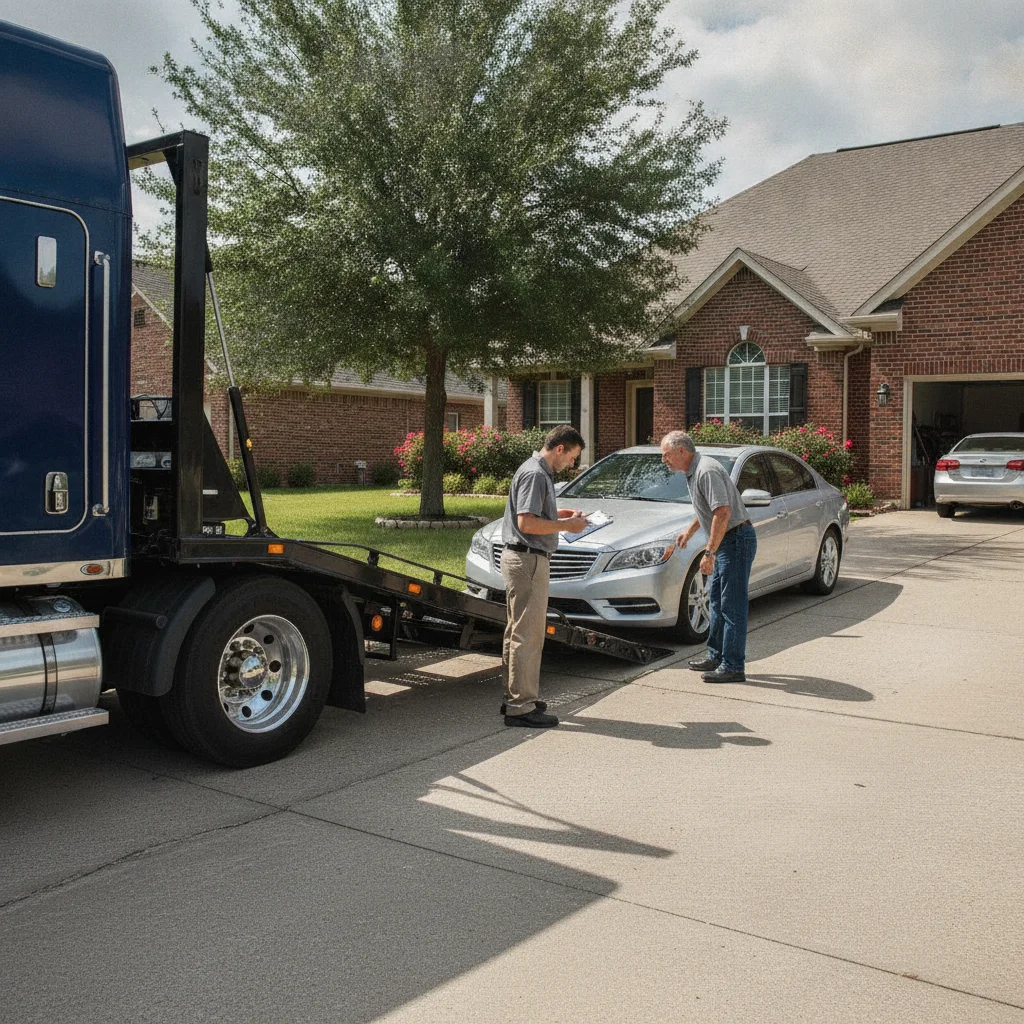
If anything is wrong at delivery, do not feel pressured to accept the vehicle on the spot. Reputable platforms have processes for returning or exchanging vehicles that arrive with undisclosed damage. Document everything with photos timestamped at delivery.
For a detailed look at what happens in the days and weeks after delivery — including title and registration — see What Happens After You Buy a Car Online.
Title Transfer and Registration After an Online Purchase
Title and registration are the administrative tail of the transaction, and they're where online purchases can occasionally get messy — especially when the seller is in a different state than the buyer.
How Title Transfer Typically Works
When you buy from a major online platform or franchise dealer, they typically handle title transfer on your behalf — either by mailing title documents to your state DMV or by using a title service company. You'll receive a temporary operating permit or transit tag (depending on your state) that lets you drive legally while the permanent title and plates are processed. This process generally takes 30–90 days depending on your state's DMV workload.
What You're Responsible For
- Sales tax and registration fees: Owed to your home state, not necessarily the state where the vehicle originated. Most platforms calculate this at checkout for common states, but verify the amount independently.
- Proof of insurance: Required before the vehicle can be legally registered. Have a policy in place before delivery day — not after.
- Lien release documentation: If the previous owner had a loan on the vehicle, confirm that the lien has been or will be released as part of the transaction before funds are transferred.
Out-of-State Title Transfers Vary Significantly by State
Some states — including Florida, California, and Texas — have specific documentation requirements for out-of-state vehicle purchases that can delay registration if not addressed upfront. If you're buying from a seller or platform in a different state, ask them specifically which title transfer process they use and whether they work with a title service company. Confirming this before you sign prevents weeks of follow-up.
If you're buying from a private seller across state lines, the title process is significantly more hands-on. You'll need to obtain the signed title from the seller, pay sales tax at your local DMV, and register the vehicle yourself. For a complete overview of the documents involved in ownership transfer, the Paperwork & Title hub is a useful reference — even from the buyer's perspective.
Common Pitfalls and How to Avoid Them
Online car buying removes many of the worst pressure tactics from the dealership experience, but it introduces its own set of failure points. Here are the ones I see most often — and how to sidestep them.
1. Depositing Without Reading the Return Policy
Return and cancellation policies differ dramatically across platforms. Carvana offers a 7-day, 400-mile return window. Vroom offers 7 days but with conditions. Many dealerships doing online sales have no return policy once you've signed. Read this before you place a deposit — it's not boilerplate, it's your safety net.
2. Accepting the First Finance Offer
Platform financing is convenient, but convenience is priced in. The difference between a 7.5% rate from a digital retailer and a 5.9% rate from your credit union on a $30,000 loan over 60 months is roughly $1,600 in extra interest. That's a real number, not a rounding error.
3. Ignoring Out-of-State Title Complications
Buying from a seller in a different state adds 2–4 weeks to title processing in most cases, and some states have quirky requirements around notarized documents or specific DMV forms. Ask the seller or platform explicitly: who handles title transfer, what's the expected timeline, and what happens if there's a lien on the vehicle that needs to be cleared first?
4. Overlooking Dealer Fees Hidden in Online Checkout
Documentation fees, electronic filing fees, and dealer preparation charges can appear in the final checkout screen in a way that feels like taxes (i.e., non-negotiable). They're not. Document fees are regulated in some states and entirely arbitrary in others. If you see a $799 doc fee on a car with a $24,000 sticker, that's a negotiating point — even online.
Lock In Your Trade-In Offer Independently
Get written trade-in offers from CarMax, Carvana, and KBB Instant Cash Offer before telling the selling dealer you have a trade. These offers are typically valid for 7 days. Once you have them, the dealer must beat those numbers to earn the trade — rather than setting the baseline themselves. This single step routinely adds $500–$2,000 to your effective trade-in value.
Secure Insurance Before Delivery Day
Call your insurer or bind a new policy at least 24 hours before your scheduled delivery. Most states require proof of insurance before a vehicle can be legally driven or registered. Have the policy number and declarations page ready to provide at delivery if requested. Waiting until after the car arrives creates a window of uninsured exposure.
5. Skipping Insurance Until After Delivery
You need active auto insurance before you can legally drive the vehicle — and in many states, before registration can be processed. Get your insurance binder or ID card in hand before the delivery truck arrives. If you're switching insurers, time the effective date to the delivery date to avoid a coverage gap or double-paying.

If you have a vehicle to sell as part of this transition, Selling Your Car Online: A Complete Walkthrough for First-Timers walks through how to get maximum value from instant offer platforms before you commit to a dealer trade-in.
Carfax Vehicle History Report
Run a full history report on any used vehicle by VIN to check for accidents, title issues, odometer fraud, and ownership history. A mandatory step before any remote purchase.
Capital One Auto Navigator
Get pre-qualified for an auto loan with a soft credit pull before you shop. Lets you see real financing terms against real inventory from participating dealers.
Lemon Squad Pre-Purchase Inspection
Book a certified mobile mechanic to inspect any vehicle at its current location and deliver a detailed condition report — critical for out-of-state or remote purchases where you can't inspect in person.
Pre-Purchase Checklist for Buying a Car Online
A structured checklist covering vehicle verification, financing review, return policy terms, and delivery logistics — designed to be used before you commit to any online vehicle purchase.
KBB Instant Cash Offer
Get a real cash offer for your trade-in from Kelley Blue Book in minutes. Use this as a benchmark before disclosing your trade to any dealer or digital retail platform.
Consumer Financial Protection Bureau Auto Loan Tools
Free resources from the CFPB covering how to compare auto loan offers, understand your rights, and avoid predatory lending practices in vehicle financing.

All claims are backed by peer-reviewed research. Sources on request.