
Key Takeaways
Federal Funds Rate vs. Auto Loan Rate
The federal funds rate is the interest rate at which banks lend money to each other overnight — it's set by the Federal Reserve and used as a lever to slow down or stimulate the economy. Auto loan rates are not the same thing, but they are influenced by it. When the Fed cuts its benchmark rate, lenders' borrowing costs typically fall, which can eventually lead to lower rates on consumer loans like auto financing — but there's no automatic, instant connection between the two.
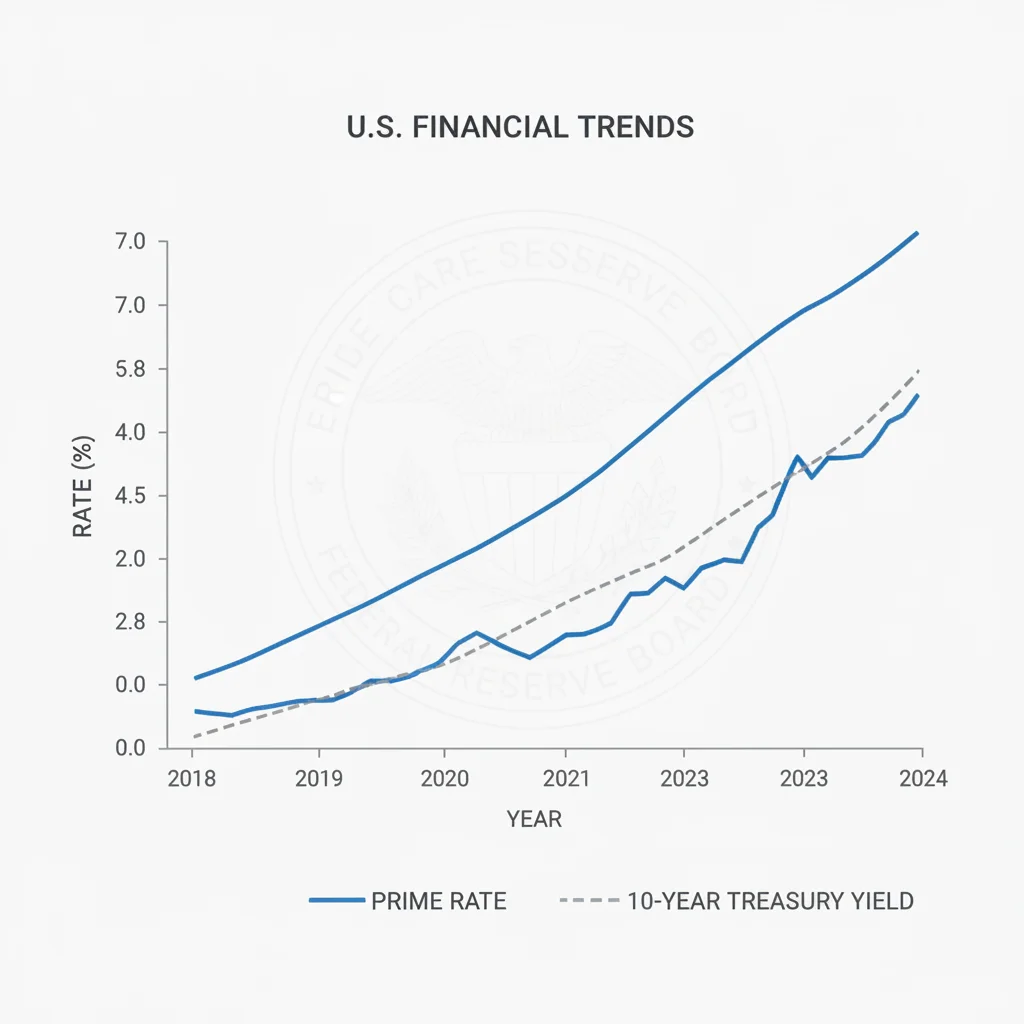
Auto loan rates track more closely with Treasury yields and the prime rate than the federal funds rate directly. The prime rate typically moves in lockstep with Fed changes, while longer-term Treasury yields depend on broader market expectations about inflation and economic growth.
Why a Fed Rate Cut Gets People Thinking About Refinancing
When the Federal Reserve announces a rate cut, financial media lights up with headlines about cheaper borrowing. It makes sense that car owners would ask: does this mean I should refinance my auto loan? The instinct is reasonable — but the connection between Fed policy and your actual loan offer is more indirect than most people realize.
Understanding that connection is the difference between acting at the right moment and making a move that doesn't actually save you money. Let's walk through exactly how a Fed rate cut ripples through the economy, where it eventually touches auto lending, and how to evaluate whether your specific situation makes refinancing worthwhile right now.
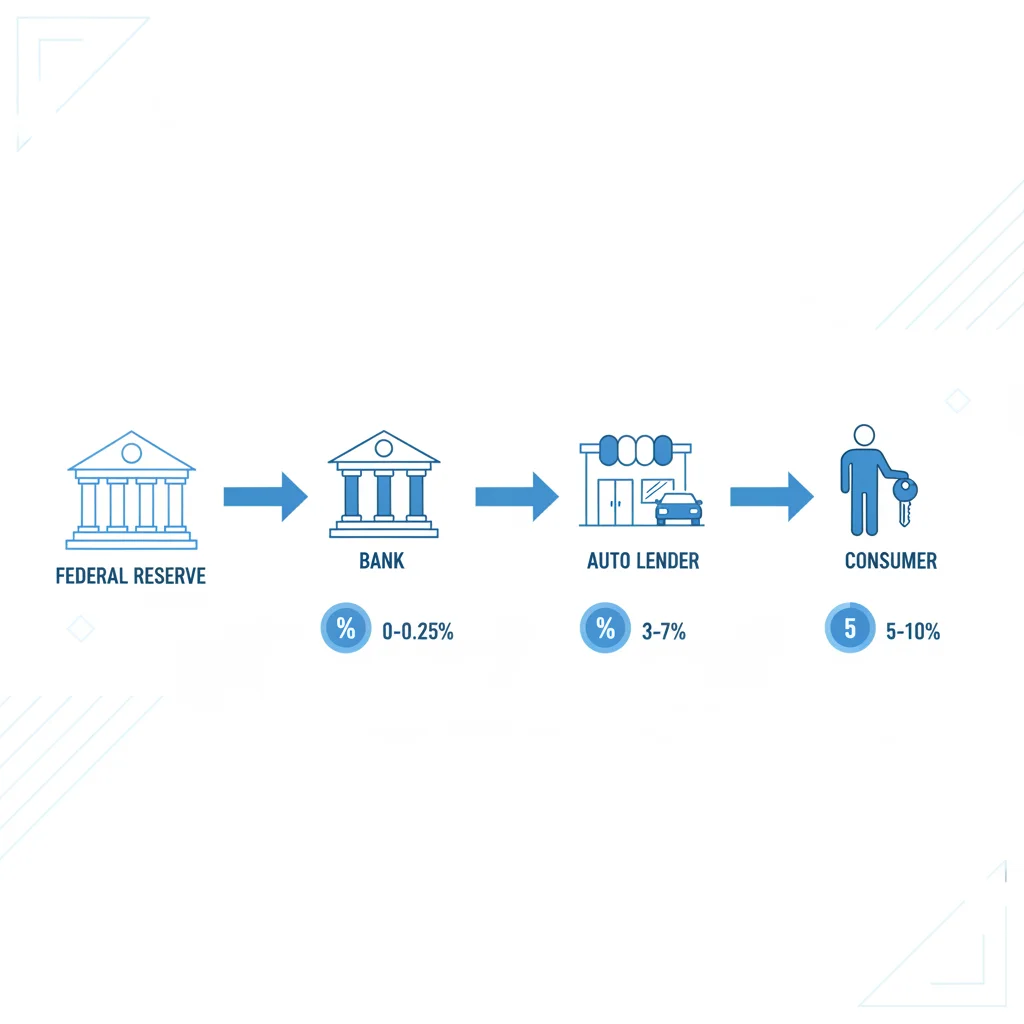
First, some important groundwork. The Federal Reserve doesn't set auto loan rates. What it sets is the federal funds rate — the overnight lending rate between banks. This rate influences the cost of capital throughout the financial system, which in turn affects what banks and credit unions charge consumers for loans. But it's a chain reaction with several links, not a direct dial.
How the Fed Rate Travels from Washington to Your Loan Offer
Here's the transmission mechanism in plain terms:
- The Fed cuts its benchmark rate. Banks can now borrow from each other more cheaply overnight.
- The prime rate drops. The prime rate — the baseline most banks use to price consumer lending — historically moves in perfect lockstep with the federal funds rate, typically sitting 3 percentage points above it.
- Lenders recalibrate their loan pricing. Auto lenders, especially banks and credit unions, adjust their rate sheets based on their own cost of capital, competitive pressure, and risk appetite.
- New loan offers arrive — eventually. The offers borrowers see in the market begin to reflect the lower rate environment, though the timing and magnitude vary widely by lender.
3%
Prime rate spread above fed funds rate
The prime rate has historically tracked exactly 3 percentage points above the federal funds rate, moving in lockstep with Fed changes since the 1990s.
5–8%
Rate spread between best and worst credit tiers
According to Experian's State of the Automotive Finance Market report, the difference in auto loan APR between super-prime and deep subprime borrowers regularly spans 5 to 8 percentage points or more.
6–8 weeks
Typical lag before auto rates reflect Fed cuts
Industry data suggests consumer auto loan rates typically take 6–8 weeks after a Fed cut to fully reprice across major lenders and credit unions.
$1,200+
Average interest saved by refinancing to a lower rate
A 2-point APR reduction on a $20,000 loan with 36 months remaining saves approximately $1,200 in total interest charges, based on standard amortization calculations.
45 days
Credit bureau rate-shopping window
FICO and VantageScore both allow multiple auto loan inquiries within a 14–45 day window to be counted as a single inquiry, reducing the credit score impact of comparison shopping.
Notice that every step above describes what happens to new loan offers. Your existing auto loan — the one you're already paying — has a fixed interest rate baked in at signing. A Fed cut does nothing to change that number. The only way to benefit from a lower-rate environment is to replace your current loan with a new one through refinancing.
For a deeper look at how interest rates and APR affect your total loan cost, it's worth understanding the baseline mechanics before evaluating any refinancing decision.
Variable vs. Fixed Auto Loan Rates
Most auto loans in the U.S. carry fixed interest rates, meaning your rate doesn't change even if market rates move dramatically. A small number of auto loans — particularly those structured through certain credit unions or as part of lease-purchase arrangements — may have variable components. If you're unsure whether your loan is fixed or variable, check your original loan agreement or call your lender directly.
Rate Cuts Don't Always Mean Better Credit Access
In some economic environments, the Fed cuts rates precisely because the economy is weakening. During those periods, lenders may simultaneously tighten underwriting standards — meaning your rate offers could be less favorable even as the baseline rate drops. This is especially important for borrowers with credit scores below 660, who may face stricter approval criteria during uncertain economic periods.
The Gap Between the Fed Rate and Your Actual Offer
Even after the prime rate drops, you won't necessarily see that full reduction in your refinancing offer. Several factors determine the gap:
Your Credit Profile
Lenders add a risk premium on top of the baseline rate that reflects how likely they think you are to repay. A borrower with a 780 credit score gets a very different offer than someone at 620, even in the same rate environment. Your credit score directly shapes the rates lenders will offer you — sometimes by 5–8 percentage points or more.
Loan-to-Value Ratio
If your car has depreciated faster than you've paid down the loan — meaning you owe more than the car is worth — lenders may offer less favorable terms or decline to refinance at all. A healthy loan-to-value ratio (ideally below 100%) puts you in a stronger negotiating position.
Remaining Loan Term
Lenders also factor in how much time is left on your loan. If you're close to paying off, refinancing may generate minimal savings even at a lower rate — the interest savings window is simply too short.
Lender Competition
Credit unions, regional banks, and online auto lenders don't all reprice at the same speed after a Fed move. Shopping multiple lenders in a compressed window is essential to finding the actual market floor for your credit profile.

Shop Multiple Lender Types, Not Just Banks
Credit unions consistently offer some of the lowest auto refinancing rates available, often 0.5–1.5% below competing bank offers for the same borrower profile. You generally need to become a member to apply, but many credit unions have open membership requirements tied to geography or employer. Add at least one credit union to your comparison shopping process — it can meaningfully improve your best offer.
Run the Numbers Before You Sign Anything
A lower monthly payment isn't the same as a better deal if the lender has extended your loan term to achieve it. Always calculate total interest paid over the full remaining loan period — not just the monthly payment difference — before deciding whether to refinance. Free online auto refinance calculators make this a 2-minute exercise.
Two Separate Reasons to Refinance — and Why They're Often Confused
One of the most common misunderstandings about refinancing is treating all rate improvements as the same kind of opportunity. In reality, there are two very different triggers:
- Market-driven refinancing
- The overall rate environment has dropped since you originally financed. Even if nothing about your financial profile has changed, the going rate for borrowers like you is now lower. A Fed cut is a signal — though not a guarantee — that this type of opportunity may be opening up.
- Profile-driven refinancing
- Your personal credit and financial situation has improved significantly since you first took out the loan. Maybe your score jumped 80 points, you paid off other debt, or your income increased. These changes alone can qualify you for substantially better rates, regardless of what the Fed has done.
Understanding the difference between these two triggers matters because the best outcome often involves both — a lower market rate and an improved personal profile compounding together for maximum savings.
“The Federal Reserve controls the cost of money in the wholesale market, but what consumers actually pay is that cost plus a spread that reflects competition, credit risk, and lender strategy. Rate cuts create favorable conditions — they don't deliver savings to your door.”
— Greg McBride, Chief Financial Analyst, Bankrate
The practical implication: don't wait passively for a rate cut to do all the work. Improving your credit score before you apply for refinancing amplifies whatever market improvement has occurred.
How to Evaluate Whether Now Is the Right Time for You
A Fed rate cut is a prompt to evaluate, not an automatic green light to act. Here's a structured way to think through the decision:
Step 1: Know Your Current Rate
Pull out your loan documents or check your lender's online portal. Your current APR is your baseline. You're looking to beat this number by enough to justify the process.
Step 2: Check Current Market Offers
Get pre-qualification quotes from at least three lenders — a national bank, a credit union, and an online auto lender. Pre-qualification uses a soft credit pull and won't affect your score. Compare the offered APRs against your current rate.
Step 3: Calculate Your Actual Savings
A lower rate only helps you if the math works out over your remaining loan balance and term. Use an auto loan refinance calculator and input:
- Your remaining balance
- Months remaining on your current loan
- Your current APR
- The new offered APR
The output tells you your monthly savings and total interest saved. If the number is meaningful relative to any refinancing fees, proceed.
Step 4: Check for Prepayment Penalties
Some auto loans — particularly from buy-here-pay-here dealerships or certain subprime lenders — include prepayment penalties that can significantly reduce or eliminate refinancing savings. Read your original loan agreement carefully before committing.
For a full breakdown of the mechanics involved, auto loan refinancing explained step by step walks you through exactly what lenders evaluate and what changes when you replace your existing loan.
What Economic Signals Actually Predict Lower Auto Loan Rates
The Fed's rate decision is the most publicized signal, but it's not the only one worth watching — and sometimes it's not even the most important one.
Auto loan rates, particularly for longer terms, are more closely tied to 5-year Treasury yields than to the overnight federal funds rate. When bond markets anticipate sustained rate cuts, Treasury yields often fall ahead of any official Fed announcement. This means rate-conscious borrowers can sometimes get ahead of the curve by watching bond markets rather than waiting for headlines.
Other signals worth tracking include:
- Inflation data (CPI): Falling inflation often precedes Fed rate cuts and gives lenders confidence to reduce their own rates.
- Unemployment trends: Rising unemployment can prompt the Fed to cut aggressively, but it also signals economic stress that may make lenders more conservative in their loan approvals.
- Credit spreads: The gap between Treasury yields and corporate bond yields reflects lender risk appetite. Widening spreads mean lenders are nervous and may not pass rate cuts fully through to consumers.
Economic signals that suggest auto loan rates may rise or fall gives a detailed guide to reading these indicators so you can time a refinance more strategically than simply reacting to news cycles.
Making the Most of a Rate-Cut Environment
If the Fed has cut rates and you're seriously considering refinancing, here are the practical steps to take right now:
Strengthen Your Credit Before Applying
Even a 20–30 point credit score improvement can shift you into a better rate tier. Pay down revolving balances, make sure there are no errors on your credit report, and avoid opening new credit accounts in the weeks before you apply. The goal is to present the strongest possible borrower profile at the moment lenders are also competing on rates.
Act Within a Rate Window, Not Instantly
There's no need to apply within 24 hours of a Fed announcement. Rate changes filter through the market over weeks. Give lenders 30–60 days to reprice, then shop aggressively within a concentrated 2-week window so your inquiries are treated as a single event by credit bureaus.
Evaluate the Full Loan Structure, Not Just the Rate
A lender might offer a lower APR but extend your loan term — which can actually increase total interest paid even though the monthly payment drops. Always compare total interest cost across the full loan term, not just the monthly payment figure. Refinancing to lower your APR is only advantageous if you're reducing total cost, not just restructuring it.
Consider Accelerated Payoff as an Alternative
If refinancing offers aren't compelling enough — maybe the rate improvement is marginal or you're close to payoff — consider whether simply paying more each month toward principal achieves a similar outcome. Accelerated payoff vs. refinancing compares these two strategies directly so you can choose the right path for your situation.
Shop Multiple Lender Types, Not Just Banks
Credit unions consistently offer some of the lowest auto refinancing rates available, often 0.5–1.5% below competing bank offers for the same borrower profile. You generally need to become a member to apply, but many credit unions have open membership requirements tied to geography or employer. Add at least one credit union to your comparison shopping process — it can meaningfully improve your best offer.
Run the Numbers Before You Sign Anything
A lower monthly payment isn't the same as a better deal if the lender has extended your loan term to achieve it. Always calculate total interest paid over the full remaining loan period — not just the monthly payment difference — before deciding whether to refinance. Free online auto refinance calculators make this a 2-minute exercise.

All claims are backed by peer-reviewed research. Sources on request.