Key Takeaways
Total Cost of a Car Loan
The total cost of a car loan is the full amount you pay to borrow money for a vehicle — including the original loan amount (called the principal) plus every dollar of interest charged over the life of the loan. This number is almost always higher than the sticker price of the car. Loan term length and your interest rate are the two biggest factors that determine how much extra you'll pay.
Lenders calculate auto loan interest using simple interest amortization, meaning each monthly payment reduces the principal balance, and interest is recalculated on the remaining balance each period. Early payments in the schedule carry a larger interest component than later ones.
Why Monthly Payments Miss the Bigger Picture
When most people shop for a car loan, they focus on one number: the monthly payment. Can I afford $400 a month? Can I squeeze it to $350? That instinct is understandable — your monthly budget is real and immediate. But the monthly payment by itself tells you almost nothing about what you're actually spending to borrow money.
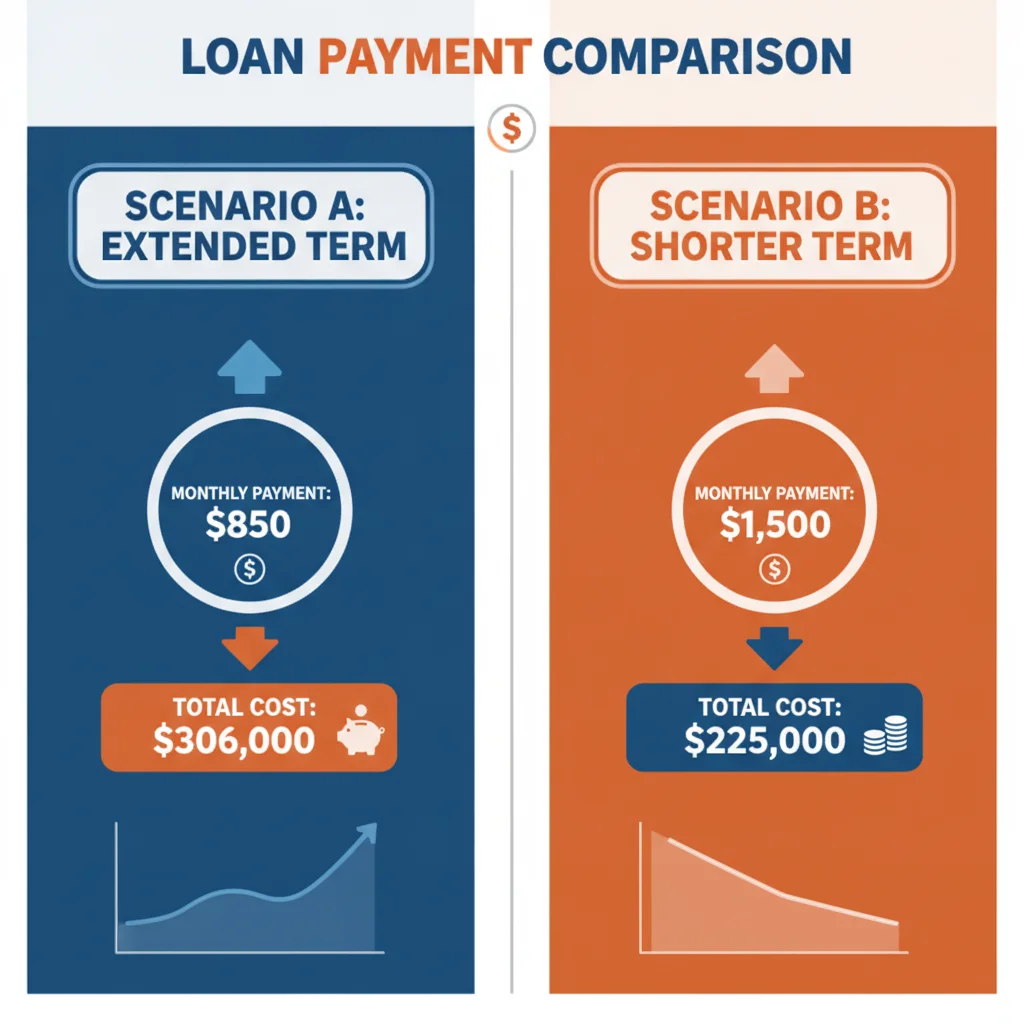
Here's the key distinction: your monthly payment is a cash flow figure. The total cost of your loan is a financial reality. These two numbers can diverge dramatically depending on how long your loan runs and what interest rate you're paying.
Consider this straightforward comparison. You borrow $25,000 to buy a car:
- 48-month term at 6% APR: $587/month — total paid: $28,176 — total interest: $3,176
- 72-month term at 6% APR: $415/month — total paid: $29,880 — total interest: $4,880
- 84-month term at 6% APR: $364/month — total paid: $30,576 — total interest: $5,576
The 84-month loan looks $223/month cheaper than the 48-month loan. But it costs you $2,400 more in total interest. That's money out of your pocket that buys you nothing — no car, no equity, no asset. It's purely the price of extending the borrowing window.
Why a lower monthly payment can cost you more walks through this math in even greater detail, but the core principle is simple: time is money when you're borrowing.
The Two Levers That Control Total Loan Cost
Loan term and interest rate are the two variables that most directly shape how much you'll pay over the life of a car loan. Understanding how each one works — and how they interact — puts you in a far stronger position when negotiating or comparing loan offers.
Loan Term: Time Equals Interest
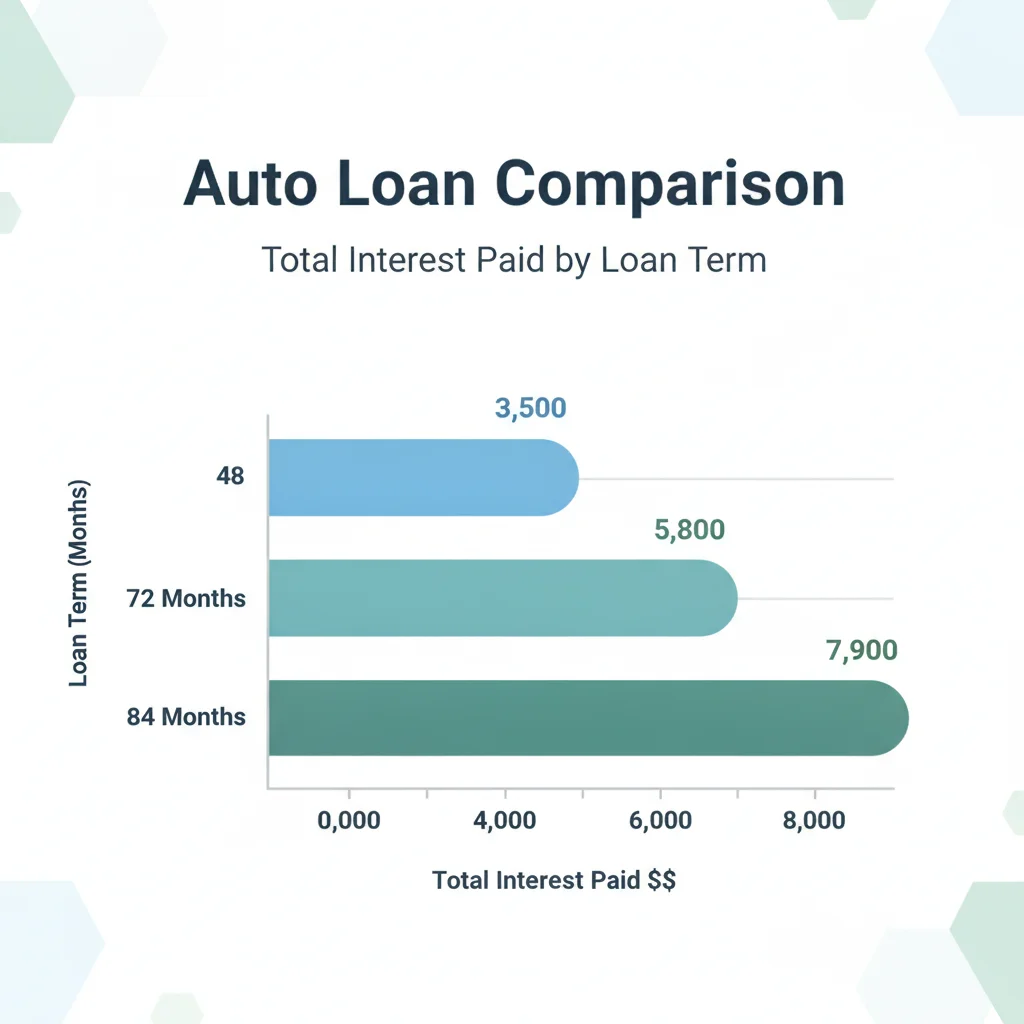
Every month your loan remains open, you owe interest on the remaining balance. The longer that balance sits, the more interest accumulates. This is why a 6-year loan costs more than a 4-year loan even if the rate is identical — there are simply more months of interest charges.
Auto loan terms today commonly range from 24 to 84 months. The industry has seen a notable shift toward longer terms over the past decade, driven largely by rising vehicle prices. But those extended terms come at a real cost that's easy to overlook when you're focused on affordability.
84 months
Longest common auto loan term now available
According to Experian's State of the Automotive Finance Market, loans of 73–84 months represented roughly 30% of all new car financing in recent years — up sharply from a decade ago.
$7,000+
Average interest paid on a long-term loan
A $30,000 car loan at 7% APR over 84 months accumulates nearly $8,000 in total interest, compared to about $4,500 over 48 months at the same rate.
~3–5%
APR gap between excellent and fair credit borrowers
Data from the Consumer Financial Protection Bureau shows borrowers with subprime credit routinely pay APRs 3 to 5 percentage points higher than prime borrowers on comparable auto loans.
15–20%
New car depreciation in the first year
Most new vehicles lose 15–20% of their value within the first 12 months, according to Carfax and Edmunds depreciation data — a key reason down payments protect against being underwater.
1 extra payment/year
Extra payments needed to accelerate payoff
Making just one additional full payment per year on a 60-month loan can reduce the loan term by several months and save hundreds of dollars in interest, depending on rate and principal.
Interest Rate (APR): The Price of Borrowing
APR — annual percentage rate — is the yearly cost of your loan expressed as a percentage. On an auto loan, APR includes the base interest rate and any lender fees rolled into the loan. The higher your APR, the more of each monthly payment goes toward interest rather than paying down your balance.
Your credit score is the single biggest factor in the APR a lender will offer you. A buyer with a 780 credit score might qualify for a 5.5% APR, while a buyer with a 620 credit score could face 14% or higher. On a $28,000 loan over 60 months, the difference between 5.5% and 14% APR is roughly $7,500 in additional interest paid — more than a quarter of the original loan amount.
For a deeper look at how APR is calculated and what it includes, see the Interest & APR hub.
“Consumers consistently underestimate the total cost of an auto loan because they anchor on the monthly payment. The interest you pay over the life of a loan can easily equal 15 to 25 percent of the vehicle's purchase price — and most buyers never calculate that number before signing.”
— Greg McBride, Chief Financial Analyst, Bankrate
How Amortization Shapes Every Payment You Make
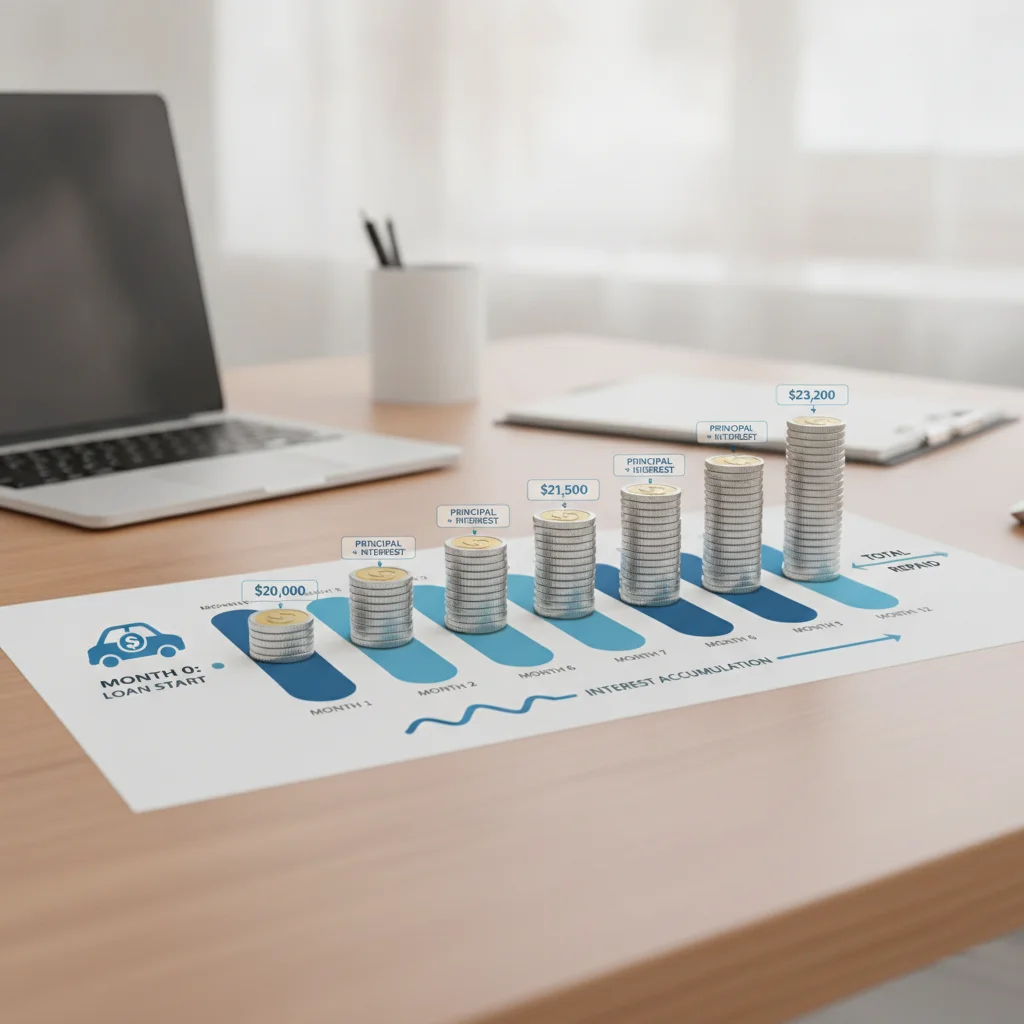
Auto loans use a repayment structure called amortization. This means each monthly payment is split between interest and principal, but the split isn't equal throughout the life of the loan — and that asymmetry matters.
In the early months of your loan, a larger share of each payment goes toward interest. As your principal balance decreases, less interest accrues and more of each payment chips away at what you actually owe. By the end of the loan, most of your payment is principal.
Here's what that looks like on a $25,000 loan at 7% APR over 60 months ($495/month):
| Payment Month | Interest Portion | Principal Portion | Remaining Balance |
|---|---|---|---|
| Month 1 | $146 | $349 | $24,651 |
| Month 12 | $120 | $375 | $20,407 |
| Month 36 | $73 | $422 | $12,367 |
| Month 60 | $3 | $492 | $0 |
The practical takeaway: if you sell or trade in the car during the first two or three years, you've paid disproportionately more in interest than in equity built. And if you're considering refinancing, doing it early — before much of the interest has already been paid — yields the greatest savings.
How Amortization Affects Early Payoff
Because more interest is paid in the early months of an amortized loan, paying off a loan 12 months early saves significantly more than it might seem. You're not just skipping 12 payments — you're eliminating 12 months of scheduled interest that would have been front-loaded into those payments. Always confirm there is no prepayment penalty in your loan contract before making extra payments.
Check Your Loan Contract for Prepayment Penalties
Most auto loans do not carry prepayment penalties, but some lender agreements — particularly from buy-here-pay-here dealers or certain subprime lenders — do include them. Before making extra payments or paying off early, review the loan agreement or call your lender to confirm there's no penalty for paying ahead of schedule.
Understanding this structure also explains why making even one or two extra payments early in your loan has an outsized effect on total interest. Every extra dollar reduces the principal balance, which lowers the base on which future interest is calculated.
Running the Real Numbers: A Side-by-Side Comparison
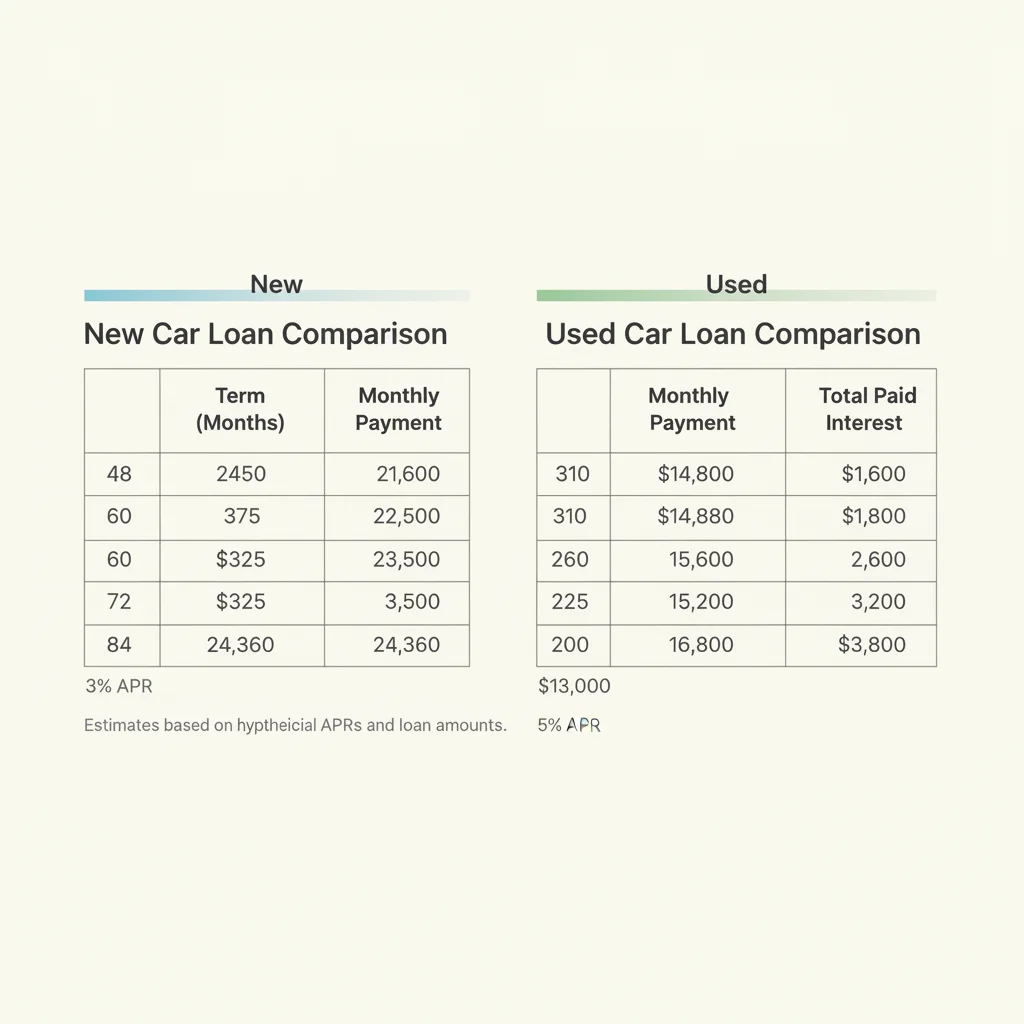
Abstract percentages can be hard to feel in your gut. Concrete dollar figures are much easier to act on. Below is a full comparison using a $30,000 loan at three different terms, assuming a 7% APR — a rate accessible to buyers with good but not exceptional credit.
| Loan Term | Monthly Payment | Total Paid | Total Interest | Interest as % of Principal |
|---|---|---|---|---|
| 48 months | $718 | $34,464 | $4,464 | 14.9% |
| 60 months | $594 | $35,640 | $5,640 | 18.8% |
| 72 months | $511 | $36,792 | $6,792 | 22.6% |
| 84 months | $452 | $37,968 | $7,968 | 26.6% |
The 84-month loan looks attractive at $452/month compared to $718/month over 48 months. But that $266/month in apparent savings costs you an additional $3,504 in total interest. Put another way: you'd pay roughly 27 cents in interest for every dollar of principal on an 84-month loan — versus about 15 cents on a 48-month loan.
Now layer in a higher APR. A buyer with fair credit who's offered 12% on that same $30,000 loan faces these numbers:
- 60-month term at 12%: $667/month — total interest: $10,020
- 84-month term at 12%: $517/month — total interest: $13,428
At 12% over 84 months, you'd pay nearly $13,500 in interest alone — almost half the car's original value. Improving your credit score before applying, or making a larger down payment, are the most powerful tools for bringing these numbers down. See Calculating Your True Monthly Auto Loan Cost for a step-by-step approach to arriving at your full number.
Use a Loan Amortization Calculator First
Before accepting any loan offer, plug the principal, interest rate, and term into a free amortization calculator. It will show you month-by-month exactly how much of each payment goes to interest versus principal — and the total interest you'll pay by the last month. This single step makes it much easier to compare competing offers on a true apples-to-apples basis.
Don't Negotiate on Payment — Negotiate on Price
Dealership finance managers are trained to focus buyers on monthly payment rather than total loan cost. Negotiating on price first — and then discussing financing — keeps the conversation grounded in real dollars. Once you know the vehicle price and have your own pre-approval rate, you can calculate the total cost of any loan scenario yourself before agreeing to anything.
The Role of Down Payments in Total Cost
A down payment doesn't just lower your monthly payment — it reduces the principal you're borrowing, which means interest accrues on a smaller base for the entire life of the loan. The effect compounds over time.
Take the same $30,000 vehicle at 7% APR over 60 months:
- No down payment: $30,000 principal — $594/month — $5,640 total interest
- $3,000 down (10%): $27,000 principal — $535/month — $5,076 total interest
- $6,000 down (20%): $24,000 principal — $475/month — $4,512 total interest
A $6,000 down payment saves you $119/month and $1,128 in total interest versus no down payment. The down payment also serves as a buffer against depreciation — new cars lose 15–20% of their value in the first year, and buyers who put nothing down frequently find themselves owing more than the car is worth within the first 12–18 months.
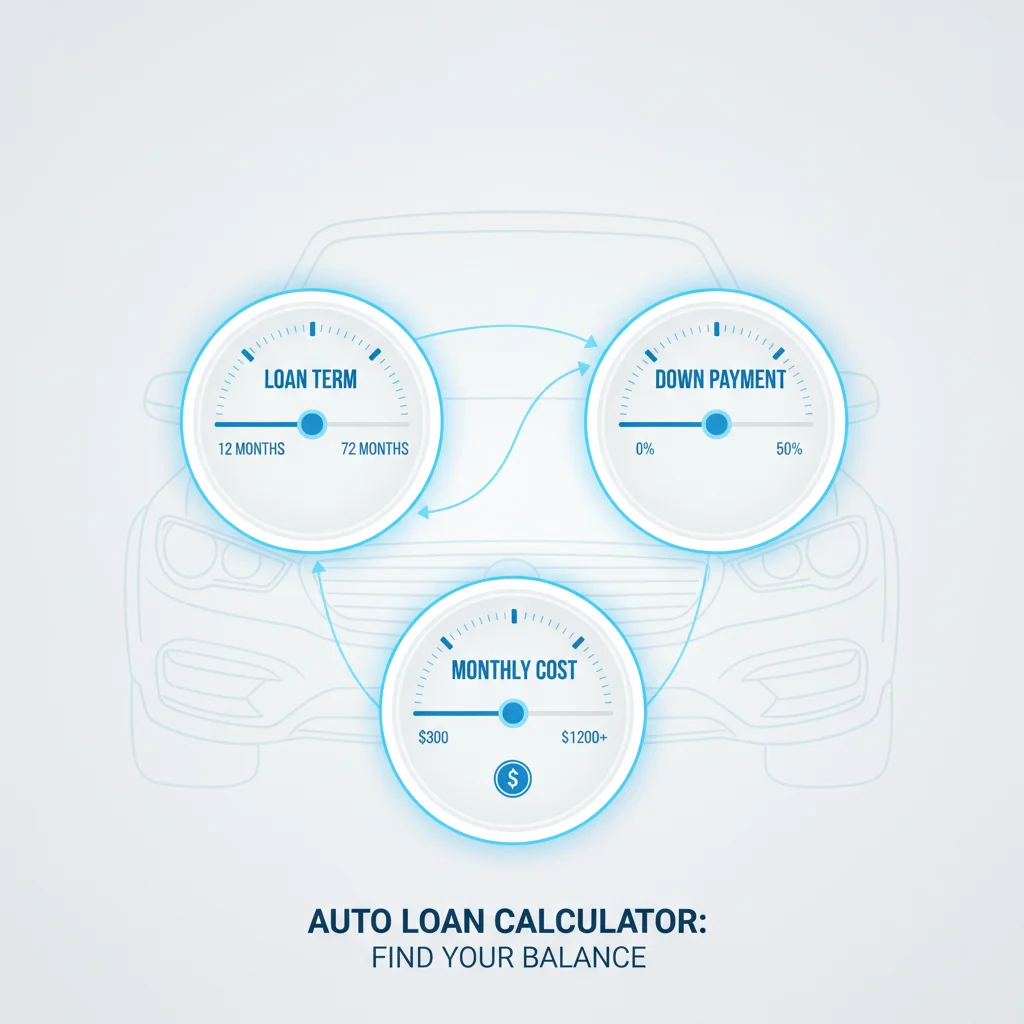
For a fuller view of how down payment, term length, and monthly cost interact, see The Relationship Between Loan Term, Down Payment, and Monthly Cost.
Strategies to Reduce Total Loan Cost
Knowing the full cost of a loan is only useful if it changes how you act. Here are the most effective moves for reducing total interest paid — before and after you sign.
Before You Sign
- Improve your credit score first. Even bumping your score from 650 to 700 can meaningfully lower your offered APR. Paying down existing balances and correcting errors on your credit report are the fastest ways to move the needle. How your credit score affects loan rates explains the mechanics in detail.
- Shop at least three lenders. Dealership financing is convenient but rarely the most competitive. Credit unions, banks, and online auto lenders often offer lower rates — and getting pre-approved gives you leverage in the finance office.
- Choose the shortest term you can afford. The discomfort of a higher monthly payment is worth running through the numbers. If you can handle a 60-month payment, the difference between that and 72 or 84 months is real money saved.
- Put more down. Even an extra $1,000–$2,000 at signing meaningfully reduces the principal and the total interest bill.
After You Sign
- Make bi-weekly payments. Splitting your monthly payment in half and paying every two weeks results in one extra full payment per year, which chips away at the principal faster.
- Apply windfalls to principal. Tax refunds, bonuses, and other lump sums directed at your loan principal can shave months off your repayment and save substantial interest.
- Refinance if your credit improves. If your score has risen significantly since you took out the loan, refinancing to a lower rate can reduce both your monthly payment and total interest. Compare this option using the framework in The True Cost of Carrying an Auto Loan to Full Term.
How Amortization Affects Early Payoff
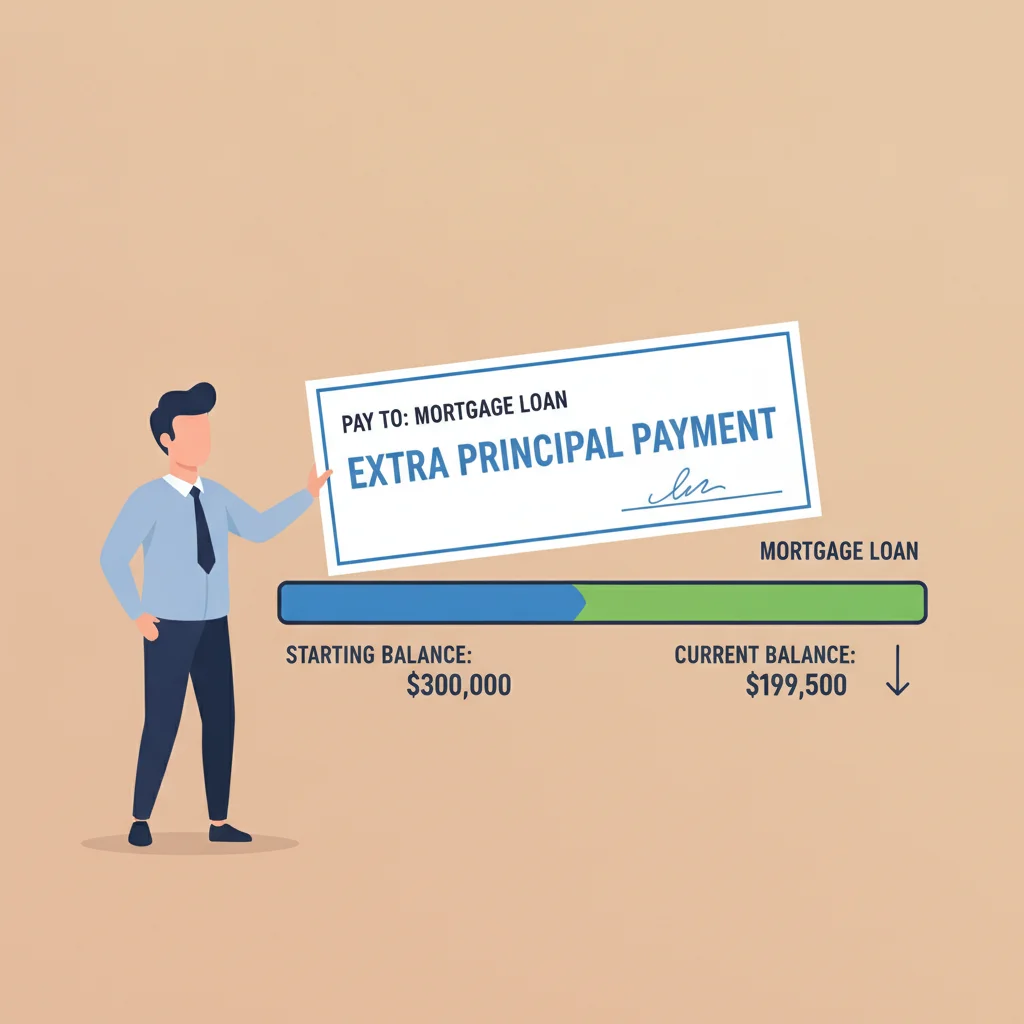
Because more interest is paid in the early months of an amortized loan, paying off a loan 12 months early saves significantly more than it might seem. You're not just skipping 12 payments — you're eliminating 12 months of scheduled interest that would have been front-loaded into those payments. Always confirm there is no prepayment penalty in your loan contract before making extra payments.
Check Your Loan Contract for Prepayment Penalties
Most auto loans do not carry prepayment penalties, but some lender agreements — particularly from buy-here-pay-here dealers or certain subprime lenders — do include them. Before making extra payments or paying off early, review the loan agreement or call your lender to confirm there's no penalty for paying ahead of schedule.
Putting Total Cost in Budget Context
Understanding total loan cost is most useful when it's connected to a real budget. A loan that costs $7,000 in interest isn't automatically bad — it depends on your income, the vehicle's purpose, and what alternatives you had. But it is a number you should know before you sign, not discover afterward.
Before walking into any dealership, calculate the total you'd pay at different term lengths and rates using the vehicle price you're considering. Then compare that total cost against your overall financial picture — not just whether the monthly payment fits into this month's bank statement.
Building a Realistic Budget Before Shopping for a New Car walks through this full-picture budgeting process, including how to factor in insurance, maintenance, and depreciation alongside the loan itself.
And if you want to calculate the interest on a specific loan you're considering before signing, Calculating Total Interest Paid on a Car Loan Before You Sign gives you a precise method to arrive at that number.
The goal isn't to talk you out of borrowing — most car buyers need a loan. The goal is to make sure you walk into that commitment with both eyes open, knowing the real price tag attached to every term and rate combination on the table.
Use a Loan Amortization Calculator First
Before accepting any loan offer, plug the principal, interest rate, and term into a free amortization calculator. It will show you month-by-month exactly how much of each payment goes to interest versus principal — and the total interest you'll pay by the last month. This single step makes it much easier to compare competing offers on a true apples-to-apples basis.
Don't Negotiate on Payment — Negotiate on Price
Dealership finance managers are trained to focus buyers on monthly payment rather than total loan cost. Negotiating on price first — and then discussing financing — keeps the conversation grounded in real dollars. Once you know the vehicle price and have your own pre-approval rate, you can calculate the total cost of any loan scenario yourself before agreeing to anything.

All claims are backed by peer-reviewed research. Sources on request.