
Key Takeaways
Option A
Fixed Interest Rate Auto Loan
The predictable, payment-stable choice for most borrowers.
Best for: Anyone who wants a set monthly payment that never changes, regardless of market conditions.
Option B
Variable Interest Rate Auto Loan
The market-linked option that can save — or cost — money over time.
Best for: Borrowers planning to pay off early or who believe rates will fall during the loan term.
If you need budget certainty with no surprises
Fixed Interest Rate Auto Loan
Your monthly payment is locked on day one. Rate hikes in the broader economy have zero effect on what you owe each month.
If you plan to pay off the loan within 12–18 months
Variable Interest Rate Auto Loan
A shorter payoff window dramatically limits your exposure to rate increases, and an initially lower variable rate can save meaningful interest.
If you're financing in a high-rate environment and rates are expected to drop
Variable Interest Rate Auto Loan
A rate-linked loan means your payments could decrease as the benchmark falls, without the need to refinance.
If you're a first-time buyer or working with a tight monthly budget
Fixed Interest Rate Auto Loan
Predictability is protection. A fixed rate prevents any scenario where a rising market turns an affordable payment into a financial strain.
If you're comparing multiple lender offers and want an apples-to-apples number
Fixed Interest Rate Auto Loan
Fixed-rate APRs are easy to compare directly. Variable-rate APRs involve assumptions about future rate movements that make comparison less clean.
What Fixed and Variable Rates Actually Mean
When a lender quotes you an interest rate on a car loan, that number determines how much of each monthly payment goes toward interest versus principal. The structure — fixed or variable — determines whether that rate can change after you sign.
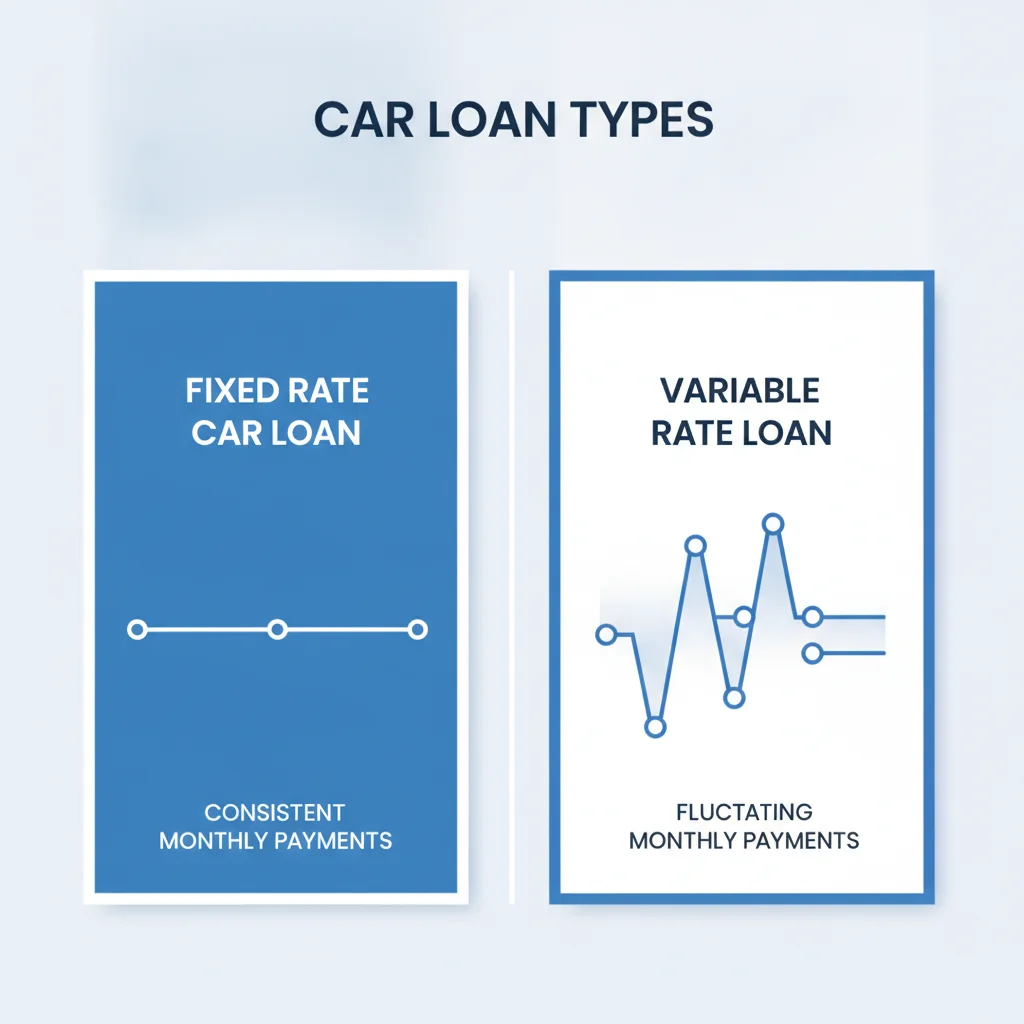
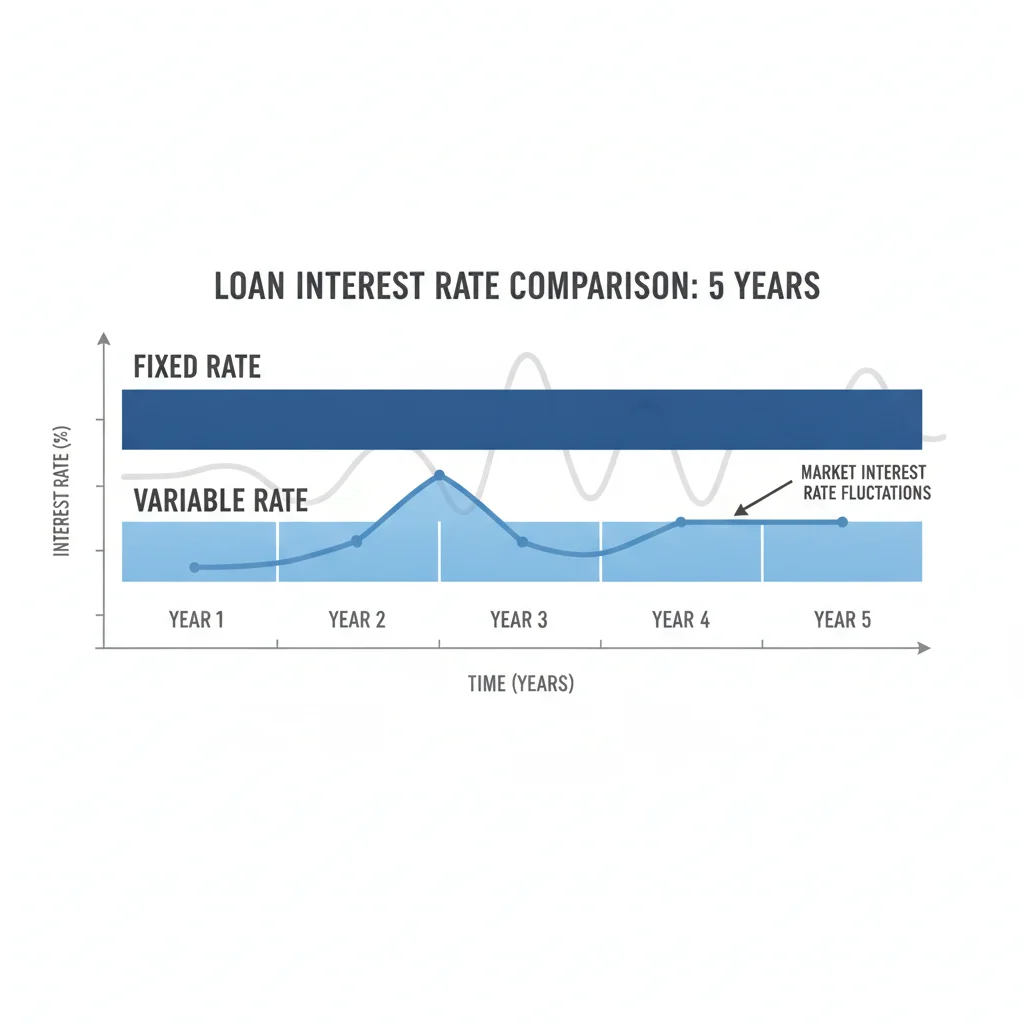
Fixed rate: The rate is set at origination and never changes. If you borrow $30,000 at 7.5% for 60 months, every single payment is calculated against that same 7.5%. Doesn't matter if the Federal Reserve raises rates six times. Your number is your number.
Variable rate: The rate floats. It's typically expressed as a spread above a benchmark index — most commonly the Prime Rate or SOFR (Secured Overnight Financing Rate, which replaced LIBOR). If your loan is priced at Prime + 2% and Prime moves from 7% to 8%, your effective rate moves from 9% to 10%. Your monthly payment adjusts accordingly.
In practice, true variable-rate auto loans are relatively uncommon in the U.S. consumer market. Banks, credit unions, and most dealership finance offices overwhelmingly issue fixed-rate contracts. Variable options tend to appear through credit unions, regional banks, or certain online lenders — and they're more commonly seen in home equity products than auto financing. But they do exist, and it's worth understanding exactly what you're agreeing to before signing.
One important distinction: a variable rate is not the same as refinancing. If you refinance a fixed-rate loan six months in, you're replacing it with a new fixed rate — not converting to a variable structure. Variable means the rate adjusts automatically within the existing contract based on external conditions you don't control.
Rate vs. APR: The Number That Actually Matters
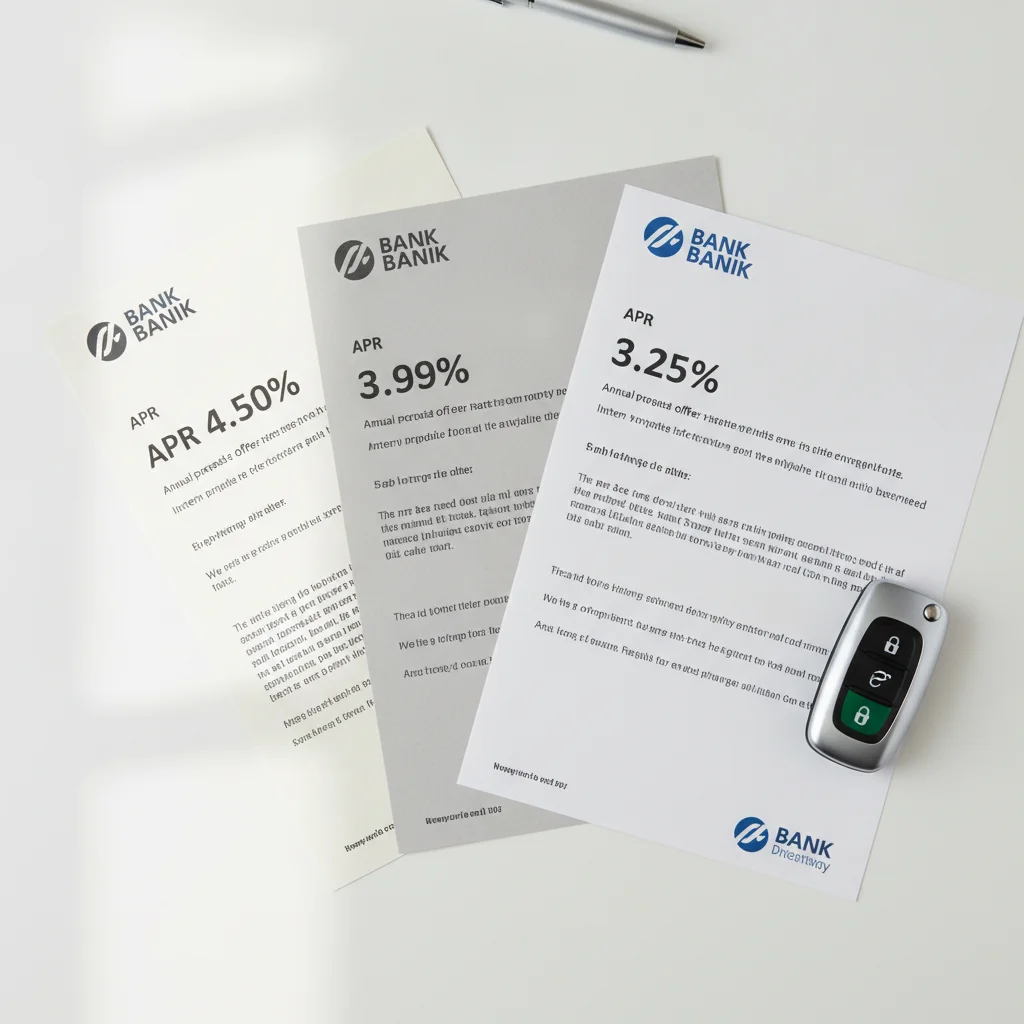
Here's where buyers routinely get burned: the interest rate a lender advertises and the APR you'll actually pay are two different numbers, and the difference can represent hundreds or even thousands of dollars over the life of the loan.
Interest rate is the base cost of borrowing the principal — expressed as an annual percentage applied to the outstanding balance.
APR (Annual Percentage Rate) is the interest rate plus all lender fees, rolled into a single annualized figure. Origination fees, documentation fees, certain prepaid finance charges — these get folded into the APR calculation, making it a more complete picture of what the loan actually costs you.
Example: Lender A quotes 6.9% with a $400 documentation fee. Lender B quotes 7.2% with no fees. On a $25,000 / 48-month loan, Lender A's APR is closer to 7.35% once that fee is factored in. Lender B's APR stays at 7.2%. The lower rate from Lender A is actually the more expensive loan.
| Criterion | Fixed Rate Auto Loan | Variable Rate Auto Loan |
|---|---|---|
| Rate stability | Locked at origination | Fluctuates with benchmark index |
| Monthly payment | Identical every month | Can increase or decrease |
| Initial rate | Slightly higher (lender absorbs risk) | Usually lower at origination |
| Market risk | None — borrower is shielded | Borrower absorbs rate movement |
| Best loan term | Any term (especially 48–72 months) | Short-term payoff (under 24 months) |
| APR comparability | Direct and accurate | Based on assumed index — an estimate |
| Availability | Universal — all lender types | Limited — select credit unions, lenders |
| Rate cap | N/A | May or may not have one — ask |
| Ideal rate environment | Any — stability is the value | Falling or already-low rate environment |
When comparing variable-rate loans, the APR calculation becomes even more layered, because lenders must disclose an APR based on assumptions about where the benchmark index will be over the loan term. That assumed APR may not reflect what you actually pay — it's an estimate, not a guarantee. Always ask what the fully indexed rate is (benchmark + margin) and what rate cap, if any, applies.
For a deeper look at why two lenders looking at the same application can offer very different numbers, see why preapproval offers vary across lenders.
~95%
U.S. auto loans using fixed rates
Industry data consistently shows the overwhelming majority of consumer auto loans originated in the U.S. carry fixed interest rates.
1.5%–2%
Typical initial rate discount for variable vs. fixed
Variable-rate auto loans often open 150–200 basis points below equivalent fixed-rate offers, though this spread narrows as rates rise.
$1,200+
Extra interest paid on 72-month vs. 48-month loan at same rate
Extending a $30,000 auto loan from 48 to 72 months at 7.5% adds over $1,200 in total interest, illustrating that term matters as much as rate type.
50–80 pts
Credit score improvement that can cut rate by 1–2%
Moving from the near-prime to prime credit tier can reduce your offered auto loan rate by 100–200 basis points — more impact than most rate structure choices.
How Each Structure Affects Your Total Loan Cost
The math of fixed vs. variable plays out differently depending on two things: the direction interest rates move during your loan term, and how long you keep the loan.
Fixed Rate: Certainty Has a Price
Lenders price fixed-rate loans slightly higher than initial variable rates because they're absorbing the risk of rate increases on your behalf. You're paying a small premium for certainty. Over a 60- or 72-month term, that premium is usually worth it — the protection from payment shock has real value, especially when household budgets are tight.
On a $35,000 loan at 8.0% fixed for 60 months, you'll pay approximately $7,610 in total interest. Your payment: $709/month, every month, no exceptions.
Variable Rate: Exposure Grows With Time
A variable-rate loan might open at 6.5% — $685/month on that same $35,000 — which sounds attractive. But if the benchmark rises 150 basis points over 18 months, your rate hits 8.0% and your payment rises accordingly. Worse, on a longer loan, more of your early payments are interest-heavy anyway, so rate increases in the first half of the term do the most damage to your total cost.
The calculus flips if rates fall. A variable loan originated when rates are high and declining gives you automatic savings without refinancing costs or paperwork.
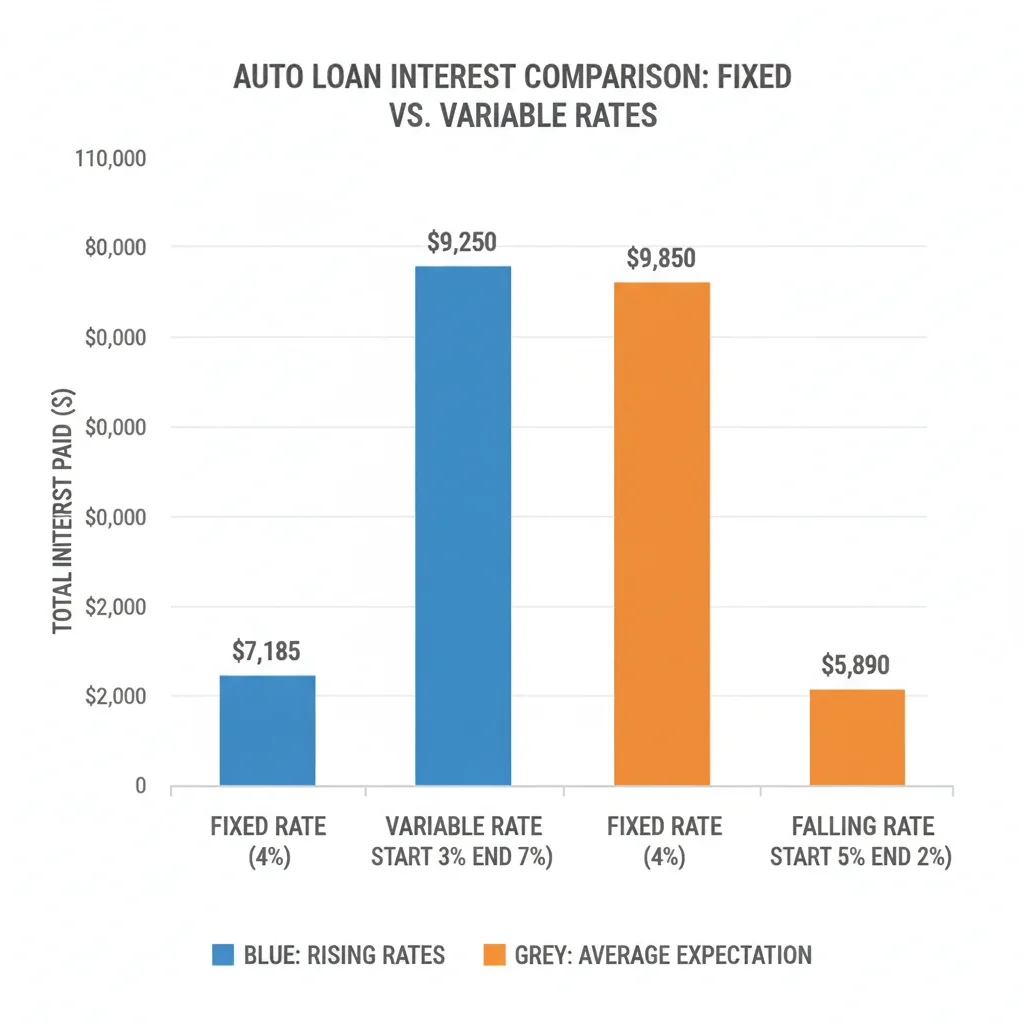
The question isn't which structure is generically better. It's which direction you believe rates are heading, and how long your exposure window actually is. For context on how rate environments should shape your timing decision, read how interest rate environments should influence when you buy.
How SOFR Replaced LIBOR for Variable Loans
Until 2023, many variable-rate financial products — including some auto loans — were benchmarked to LIBOR (London Interbank Offered Rate). LIBOR was fully discontinued in June 2023 and replaced by SOFR (Secured Overnight Financing Rate), a benchmark based on actual U.S. Treasury repo transactions. If you're comparing a newer variable-rate auto loan, expect to see SOFR or Prime Rate as the index, not LIBOR. The mechanics are the same — your rate is the index plus a margin — but the underlying benchmark is different.
Dealer Reserve and How It Affects Your Fixed Rate
When you finance through a dealership, the dealer often marks up the rate the lender actually approved you at. This markup — called 'dealer reserve' — is how finance offices earn back-end profit. On a fixed-rate loan, that marked-up rate is locked in, so the dealer's margin is baked into every payment for the life of the loan. This is a strong argument for getting preapproved through your own bank or credit union before stepping into the dealership — it gives you a competitive baseline rate the dealer has to beat.
What Lenders Don't Volunteer About Variable Rates
If you encounter a variable-rate auto loan offer, ask these questions before signing anything:
- What is the rate cap? Some variable-rate contracts include a ceiling — the maximum rate the loan can ever reach. Others have no cap at all. An uncapped variable rate on a 72-month loan is a significant risk.
- How often does the rate adjust? Monthly, quarterly, or annually? More frequent adjustments mean faster exposure to rate increases — but also faster savings if rates drop.
- What benchmark index is it tied to? Prime Rate and SOFR behave differently. Know which one applies and where it currently sits.
- What is the margin (the spread above the index)? The margin is fixed even when the benchmark moves. A low benchmark plus a high margin can produce a punishing effective rate.
- Is there a prepayment penalty? Variable-rate loans sometimes include penalties for paying off early — the exact scenario where variable works in your favor. That's a structural conflict worth flagging.
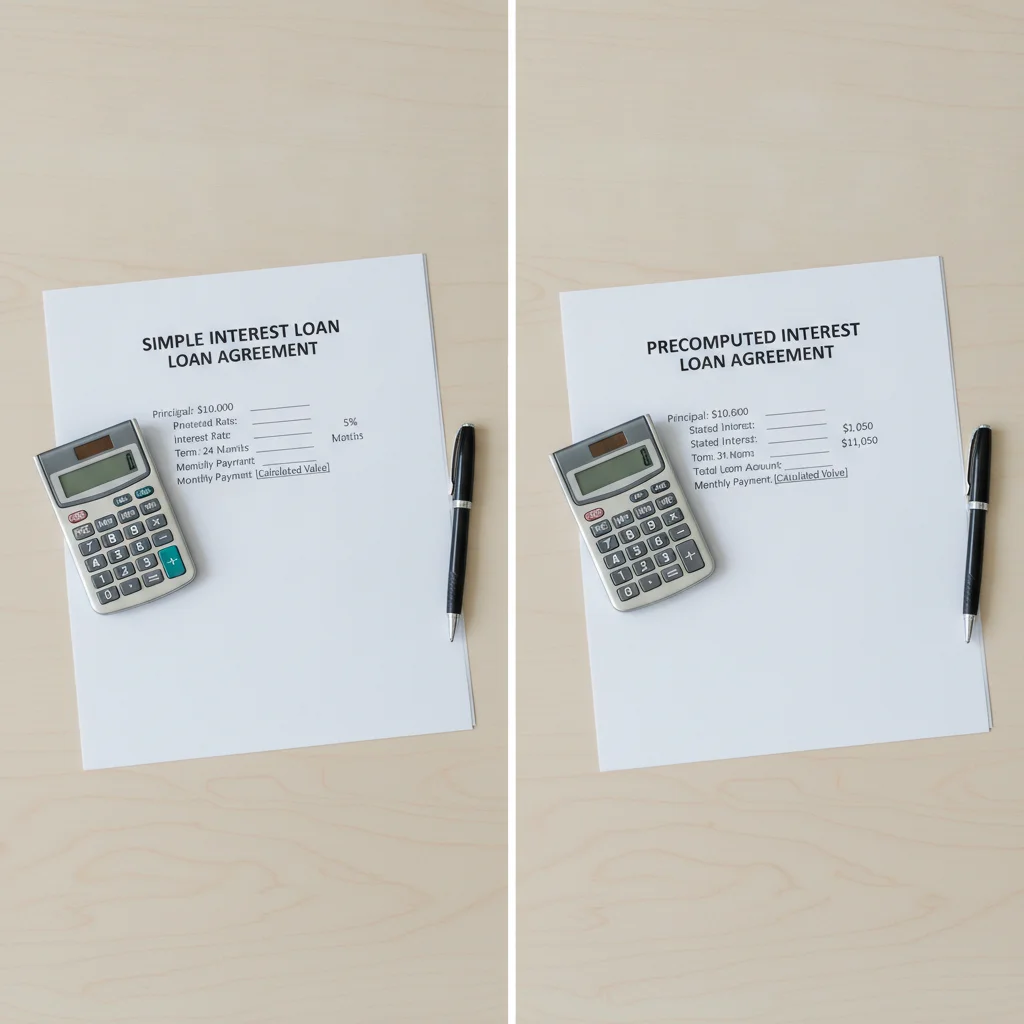
Also understand how this differs from loan interest calculation methods. Whether your loan uses simple interest or precomputed interest affects how early payments reduce your balance — and that matters more with a variable rate, where accelerating payoff is often the core strategy. See simple interest vs. precomputed interest on car loans for how each method works.
Credit Score, Loan Term, and the Variables That Dwarf Rate Structure
Here's an honest perspective from someone who's sat on both sides of the finance desk: for most buyers, the fixed vs. variable decision matters less than two other factors — credit score and loan term.
A borrower with a 780 credit score getting a fixed rate at 5.9% is in a fundamentally different position than a borrower with a 620 getting a variable rate that opens at 12.5%. The rate structure is secondary to the rate itself. Improving your credit by 50–80 points before applying will almost always save more money than choosing between fixed and variable.
Similarly, loan term has an outsized effect on total interest paid. A 72-month loan at 7% costs dramatically more than a 48-month loan at 7.5% — because you're paying interest on a larger remaining balance for longer. Extending the term to reduce monthly payment is one of the most expensive decisions buyers routinely make without realizing it.
For a full breakdown of every factor that shapes your offered rate — not just the headline credit score — see everything that shapes your auto loan rate. And the loan terms explained hub covers how term length, monthly payments, and total cost interact across different loan structures.
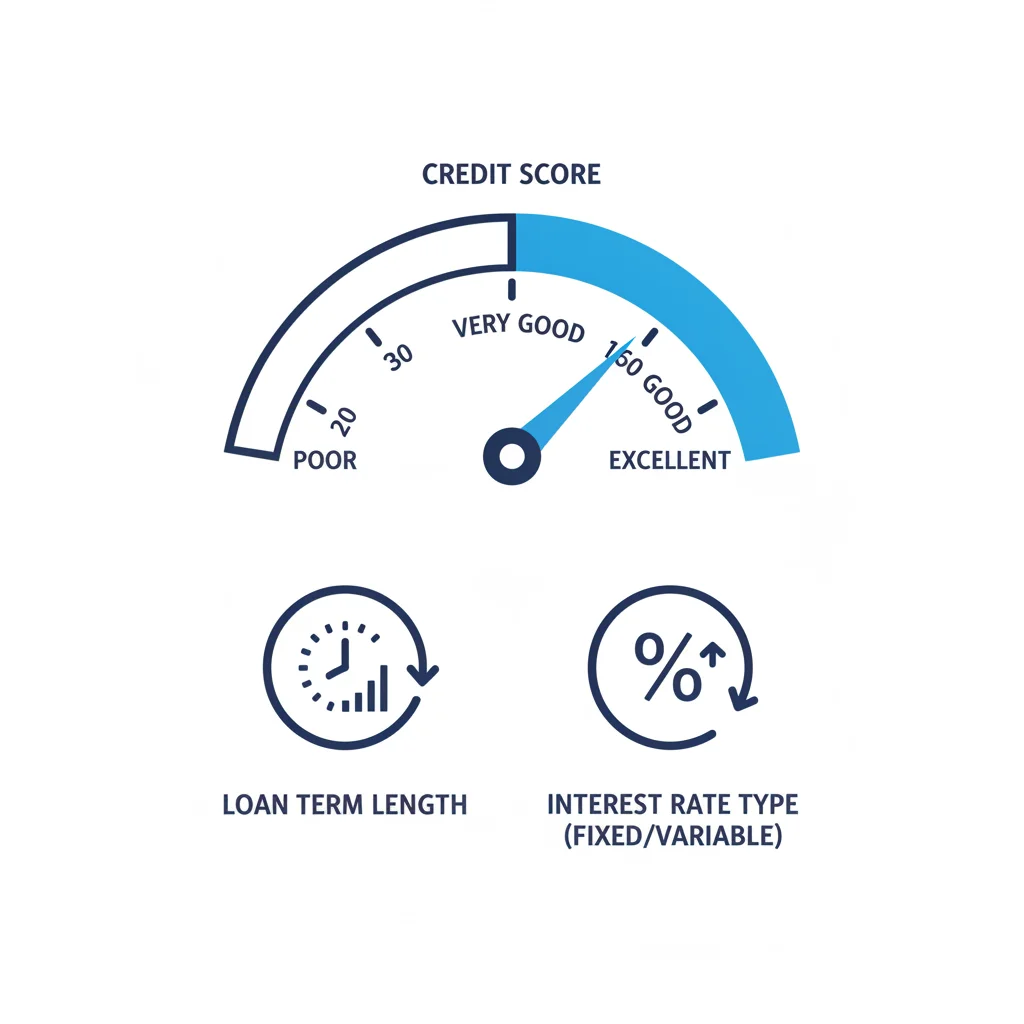
The practical takeaway: don't spend excessive energy debating fixed vs. variable if you haven't first done the work to get your credit in the best possible shape and compared APR quotes from at least three lenders — including a credit union or two, which routinely undercut bank and dealer rates. Your credit score impact on auto loans is where to start if you haven't already.
When Variable Rates Are Actually Worth Considering
Despite the cautions above, there are specific scenarios where a variable-rate auto loan is a rational choice:
Scenario 1: Short Planned Payoff
If you have significant cash flow and plan to eliminate the loan in 12–18 months, a variable rate's initial discount can save money with minimal risk exposure. Rate changes don't have time to compound meaningfully on a loan you'll clear in a year.
Scenario 2: Rate-Declining Environment
When the Federal Reserve is in an active rate-cutting cycle, a variable-rate loan means your payment decreases as rates fall — no refinancing required, no new closing costs, no credit inquiry. In 2024–2025, as the Fed has begun cutting rates after the aggressive hiking cycle of 2022–2023, this scenario is actually live for some borrowers.
Scenario 3: You Have a Rate Cap That Limits Downside
If a lender offers a capped variable rate — say, Prime + 1.5% with a maximum rate of 9% — and the uncapped fixed alternative is 8.75%, the math may favor variable. You get the initial discount, with limited worst-case exposure. Do the full amortization math on both before deciding.
The comparison between fixed and variable becomes even more specific when you factor in how interest is calculated on the loan itself. Precomputed vs. simple interest auto loans explains why your payoff strategy should account for more than just the rate structure you chose.
Bottom line: variable rates are a legitimate tool, not a gimmick. But they require a specific borrower profile — one with a clear payoff plan, a view on rate direction, and the financial flexibility to absorb payment increases if the market moves against them.
All claims are backed by peer-reviewed research. Sources on request.