
Key Takeaways
Why Most Buyers Negotiate from a Losing Position
Walk onto a dealership lot without a preapproval letter and you've handed the finance office their favorite tool: the unknown. When they don't know what rate you qualify for, they can quote you anything. When you don't know either, you have no basis to push back.
The typical unpreapproved buyer gets steered almost immediately toward the monthly payment conversation. A salesperson asks what you're comfortable paying per month, and that number becomes the entire frame for everything that follows — price, rate, loan term, and add-ons. It's a remarkably effective way to extract thousands of dollars from buyers who never realize it's happening.
Here's the mechanism: if a dealer marks up your interest rate by 2 percentage points on a $35,000 loan over 60 months, they pocket roughly $1,800 in dealer reserve — money paid by the lender for placing the loan above the buy rate. You'd never know unless you compared against an independent rate. Most buyers don't.
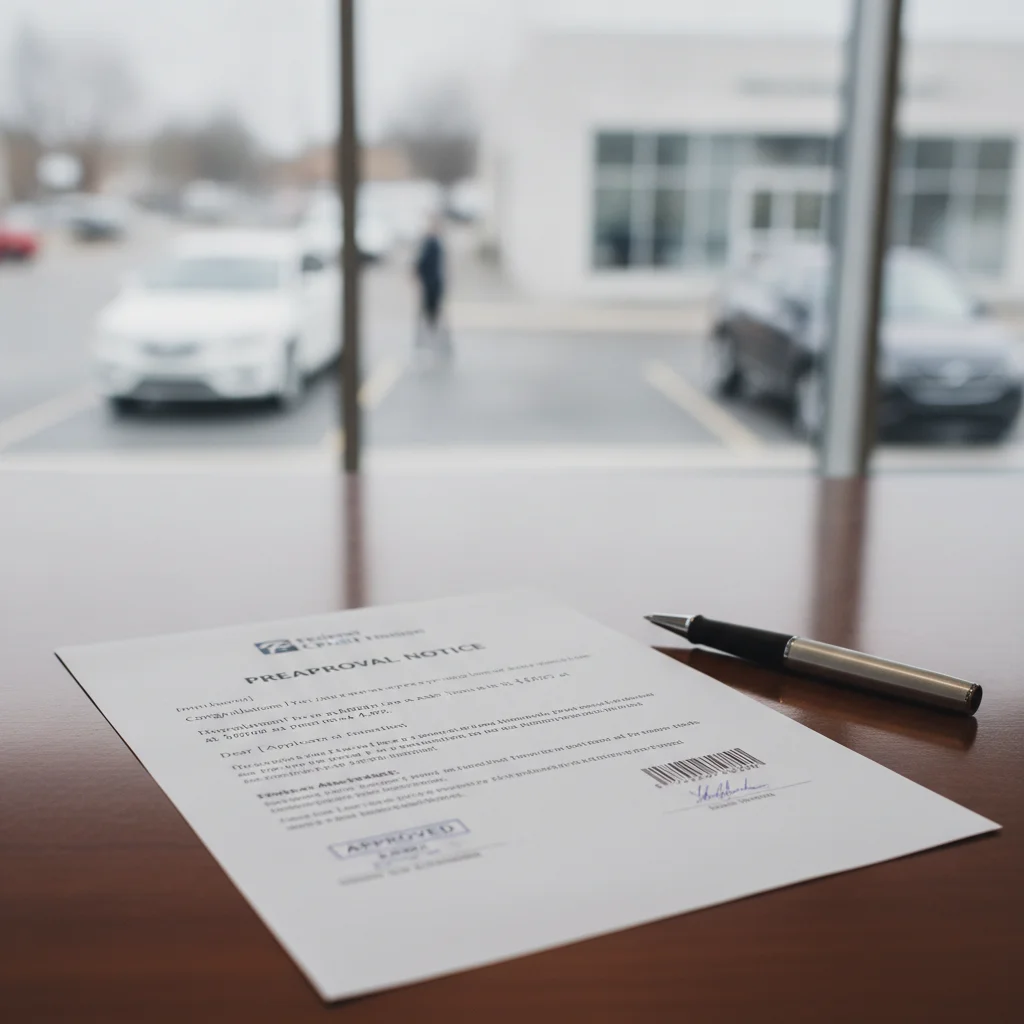
A preapproval letter changes the entire dynamic. It gives you a verified rate from a lender who has already reviewed your credit, income, and debt load. That rate becomes your anchor — and anchors in negotiation are extraordinarily powerful. If you want to understand the full mechanics of how that anchoring works, read how preapproval anchors your rate negotiation.
What Your Preapproval Letter Actually Tells You
Most buyers glance at the interest rate on their preapproval and stuff the letter in a folder. That's a mistake. The letter contains several pieces of information that are tactically useful at the dealership, and knowing how to read it separates informed buyers from everyone else.
- The approved loan amount: This is your maximum financing ceiling. It tells you — and more importantly, tells the dealer — that you have committed funding up to a specific number. Any vehicle priced above that amount requires you to put more cash down or walk away.
- The interest rate (APR): This is your rate floor. No dealer financing offer is acceptable unless it beats this number. Even a quarter-point improvement matters over a 60-month term.
- The loan term offered: Compare this to what the dealer proposes. A dealer might offer a slightly lower rate but stretch the term from 60 to 72 months, increasing total interest paid.
- The lender's name and contact: If a dealer claims they can't verify your preapproval or that the lender isn't reputable, you have a direct line to confirm everything.
- The expiration date: Most preapprovals are valid for 30 to 60 days. Don't let one expire before you use it — shop within the window.
If you haven't gone through the preapproval process yet, here's a step-by-step guide to getting preapproved before you step on the lot.
Hard Inquiry Impact Is Limited When Rate Shopping
Applying to multiple lenders for auto loan preapproval does trigger hard credit inquiries, but credit scoring models (FICO and VantageScore) treat multiple auto loan inquiries within a 14–45 day window as a single inquiry for scoring purposes. Shopping multiple lenders for the best rate has minimal impact on your credit score. Apply broadly within a short window and compare offers before choosing.
The Single Most Important Tactic: Separate Price from Financing
This is the core discipline that the preapproval letter makes possible — and that most buyers still fail to execute.
When you arrive at the dealership, your job is to negotiate the out-the-door price of the vehicle first, completely independently of how you plan to finance it. The dealer's job is to blend these two conversations together as quickly as possible, because the monthly payment frame obscures the true cost of the deal.
Here's how to hold that separation in practice:
- Agree on the vehicle and its out-the-door price. Get a written breakdown: MSRP, any dealer fees, documentation fees, and taxes. Do not discuss monthly payments, trade-ins, or financing yet.
- Once price is agreed on paper, reveal your preapproval. Say something direct: "I have preapproved financing at %. I'd like to use that unless you can beat it." This is the moment the letter earns its value.
- Let the dealer try to compete. Dealers have access to multiple lenders through their indirect lending relationships. They may legitimately beat your preapproved rate — especially if the manufacturer is running a subvented (subsidized) rate promotion. If they do beat it, take their offer.
- Only then introduce any trade-in. A trade-in discussed too early becomes a manipulation variable. Keep it separate until the purchase price is fixed.
Get at least two preapproval offers before visiting any dealership.
A single preapproval gives you a floor; two or more give you a validated market rate. If your credit union and your bank both offer you 6.5%, you know that rate is real and defensible. It also signals to any dealer you're a serious, prepared buyer who has done the work.
Never reveal your preapproval until after you've agreed on the vehicle's out-the-door price.
If you disclose upfront that you have financing sorted, the dealer loses the ability to profit on the loan — and may compensate by giving less room on price. Holding the letter until price is agreed forces the vehicle negotiation to stand on its own merits.
Always ask the dealer to beat your rate — never assume they can't.
Dealers earn a portion of the interest rate markup as dealer reserve, so they're incentivized to offer financing. But when they know your floor, they still have an incentive to place the loan — just at a slimmer margin. Many will still beat your preapproval to capture that income.
Verify every number in the dealer's financing offer against your preapproval terms before signing.
Loan terms, APR, fees, and total amount financed can all change between what was discussed and what appears in the final contract. The F&I office moves quickly, and errors — intentional or not — are common. Your preapproval letter is the reference point that lets you catch them.
Use your approved loan amount as a hard ceiling for the total financed, including any add-ons.
F&I managers may present add-ons that push the total financed amount above your preapproval limit without explicitly saying so. If you let products get rolled into financing without tracking the running total, you can end up borrowing more than you intended or approved.
Treat the preapproval expiration date as a real deadline and shop within it.
A preapproval is a conditional commitment based on your credit profile at the time of application. If you take on new debt, miss payments, or the preapproval simply expires, you may face a different rate or need to reapply. Reapplying triggers another hard credit inquiry.
For a fuller breakdown of how this changes the dynamic the moment you walk in, see what changes at the dealership when you arrive with a preapproval.
Best Practices for Using Your Preapproval at the Dealership
Having a preapproval is necessary but not sufficient. How you deploy it determines how much leverage it actually delivers. These are the practices that separate buyers who save money from buyers who just feel more confident.

$1,842
Average dealer reserve markup per financed loan
According to a Consumer Financial Protection Bureau analysis of indirect auto lending, dealers marked up interest rates by an average of 2.47 percentage points above the buy rate.
68%
Car buyers who finance through the dealership
J.D. Power data indicates that the majority of new vehicle buyers use dealer-arranged financing, making preapproval a critical but underused countermeasure.
0.5%
Average rate reduction from dealer competition
Buyers who arrive with a preapproval and allow the dealer to compete frequently see the rate improve by 0.25–0.75 percentage points, according to lending industry estimates.
The F&I Office: Where Preapprovals Save the Most Money
After you've agreed on the vehicle price and chosen your financing, the salesperson hands you off to the Finance and Insurance (F&I) manager. This is the dealership's highest-margin room, and most buyers are completely unprepared for it.
The F&I manager's primary job is to increase the back-end profit on your deal. They do this through three main levers: financing markups, extended warranties, and add-on products like paint protection, GAP insurance, and tire-and-wheel coverage. Each of these can be legitimate — but each is presented in a way designed to minimize your scrutiny.
“The F&I office is where dealerships make more profit per transaction than anywhere else in the building. A buyer who walks in without knowing their financing terms is working without a net.”
— Cody Carter, Former F&I Director and auto industry trainer
Your preapproval letter gives you armor in this room in two ways. First, you already have a rate committed, which means any financing discussion begins with the dealer needing to beat a real number rather than reveal one. Second, knowing your maximum approved loan amount prevents the F&I manager from quietly rolling add-on costs into a higher loan amount without your awareness.
When presented with add-ons, ask for the price of each product itemized separately. Ask what the out-the-door total becomes with each product added. Then compare those products against what you could purchase independently — GAP coverage from your auto insurer, for example, is almost always cheaper than dealer-sold GAP.
Price GAP Insurance Independently Before the F&I Appointment
Dealer-sold GAP insurance typically costs $400–$800 rolled into the loan, accruing interest over the full term. Your existing auto insurer may offer GAP coverage for $20–$40 per year added to your policy. Get a quote from your insurer before your dealership visit so you can decline the F&I version with a clear alternative in hand.
Confirm the Rate in Writing Before You Sign Anything
Verbal rate quotes in the dealership are not binding. The rate that matters is the one printed on the retail installment sales contract you sign. Before you put pen to paper, verify the APR, the loan term, and the total amount financed match exactly what was agreed. Any discrepancy should be corrected in writing before you proceed.
Understand why pre-approved financing fundamentally shifts the dealer conversation — especially inside the F&I office where the real money is made.
When the Dealer's Rate Is Actually Better — and How to Evaluate It
One mistake buyers make after getting preapproved is treating their rate as untouchable — refusing to even consider dealer financing because they've read that dealers mark up rates. That's overcorrecting. Your preapproval is a floor, not a contract. If the dealer can legitimately beat it, take the better rate.
There are two common scenarios where dealer financing wins legitimately:
- Manufacturer subvented rates: Automakers sometimes subsidize financing rates through their captive finance arms — think 1.9% or 2.9% promotional APR on select models. These rates are often better than anything a bank or credit union will offer on the same vehicle. However, they frequently require specific loan terms (often 36 or 48 months) and strong credit. Make sure you understand the conditions before accepting.
- Dealer relationships with niche lenders: Dealers submit applications to multiple lenders simultaneously. If your credit profile fits a particular lender's sweet spot better than your preapproval lender's, the dealer's offer may come in lower.
The evaluation process is straightforward: compare APR (not just the monthly payment), compare the loan term, and calculate the total interest paid over the life of the loan. A simple amortization calculator takes 60 seconds. Never sign financing documents without running that math.

For a deeper look at what preapproval actually means and how lenders evaluate your application, read our explainer on what auto loan preapproval actually means.
Preapproval and Trade-Ins: Keeping Two Negotiations Clean
If you're trading in your current vehicle, the preapproval dynamic extends beyond just financing. Dealers routinely use trade-in value as a third negotiating lever — absorbing losses on vehicle price by reducing what they offer on your trade, or vice versa. The only way to prevent this is to negotiate each element in isolation.
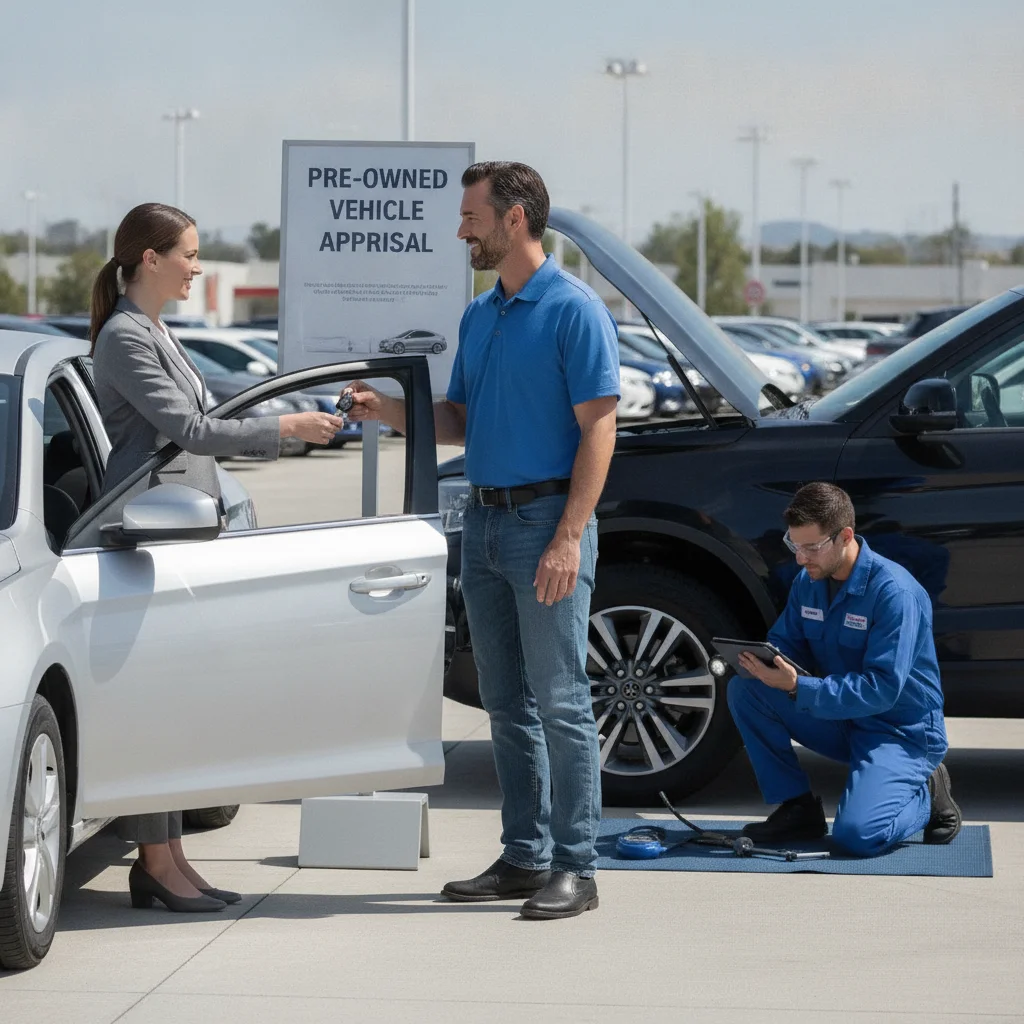
Get your trade-in value independently before you go to the dealership. Use at least two sources — a direct offer from a service like CarMax or a competing dealer, plus an online estimate from a valuation tool. That independent offer is your trade-in floor, exactly as your preapproval rate is your financing floor.
Present your trade-in only after vehicle price and financing are agreed to in writing. At that point, the dealer's trade-in appraisal either meets your floor or it doesn't. If it doesn't, you sell your car privately or to a competing buyer. The transaction becomes modular instead of blended, which is exactly where you want it.
For more on how dealership trade-in appraisals work and how to negotiate better offers, see our guide to dealer trade-ins. And for broader negotiation strategy beyond financing, explore our dealer negotiation hub.

All claims are backed by peer-reviewed research. Sources on request.