Key Takeaways
The Gap Between the Advertised Rate and Your Rate
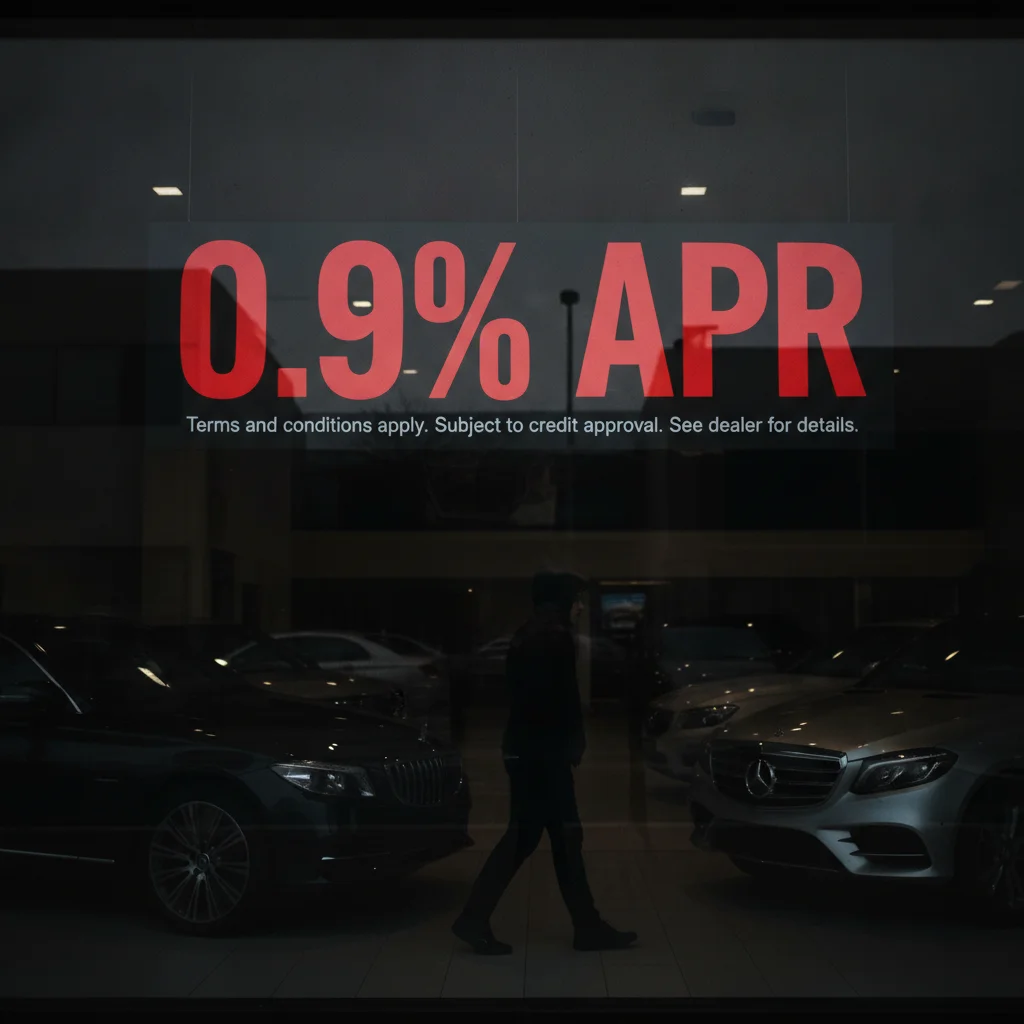
Walk onto any dealership lot and you'll see numbers like 1.9% APR or 0% financing for 60 months plastered on windshields and banners. These figures are real — but they apply to a very small group of buyers. If your credit score is below 660, those numbers are essentially decoration.
This isn't a bait-and-switch in the illegal sense. Dealers are technically required to disclose who qualifies for promotional rates — usually in fine print that says something like "for well-qualified buyers." But the gap between what's advertised and what subprime borrowers actually receive can be enormous, and most buyers don't understand why until they're already sitting in the finance office.
Understanding how rates are actually set — by lenders, not by the sticker — puts you in a much stronger position to negotiate or walk away. The Interest & APR hub is a good place to build foundational knowledge before you step into a dealership.

Let's break down the two layers of rate-setting that determine what you'll actually pay: the lender's credit-tier pricing and the dealer markup on top of it.
How Lender Rate Sheets Actually Work
When a dealer submits your loan application to a lender — whether that's a bank, credit union, or captive finance company like Ford Motor Credit — the lender uses a rate sheet to determine what interest rate to approve you for. Rate sheets are essentially pricing menus segmented by credit tier.
Here's a simplified version of what that might look like:
| Credit Score Range | Tier Label | Example Buy Rate (New Car, 60 mo.) |
|---|---|---|
| 750+ | Tier 1 / Super Prime | 5.9% |
| 700–749 | Tier 2 / Prime | 7.4% |
| 660–699 | Tier 3 / Near Prime | 10.2% |
| 620–659 | Tier 4 / Subprime | 14.8% |
| 580–619 | Tier 5 / Deep Subprime | 19.5% |
| Below 580 | Tier 6 / High Risk | 24%+ or decline |
The rate the lender assigns — called the buy rate — is what the dealer pays for the loan. This number is not disclosed to you by default. What you see is the contract rate, which may be the buy rate or may include an additional markup.
~21%
Average APR for deep subprime auto loans
According to Experian's State of the Automotive Finance Market report, borrowers with scores below 580 faced average new-vehicle loan APRs near 21% in recent quarters.
2–3 pts
Typical dealer markup allowance above buy rate
Most lender-dealer agreements permit dealerships to mark up the lender's assigned buy rate by up to 2–3 percentage points, which becomes additional dealer income.
34%
Share of auto loans originated through subprime or deep subprime tiers
Experian data indicates roughly one-third of all auto loans are issued to borrowers in subprime or deep subprime credit tiers, making rate transparency especially consequential for a large portion of buyers.
The lender's tier isn't just your credit score, either. Loan-to-value ratio (how much you're borrowing versus the car's value), loan term, vehicle age, and debt-to-income ratio all influence which tier you land in. A 650 score borrower financing a 12-year-old used car with a high LTV might get placed in a worse tier than someone with the same score buying a newer vehicle with a down payment.
To understand how your credit score specifically drives the base rate you receive, see how credit scores affect auto loan rates.
The Dealer Markup Layer — And Why It Matters So Much
Once a lender approves your loan at a buy rate, the dealer has latitude to present you with a higher rate and pocket the difference. This is called dealer reserve or dealer markup. Most lenders allow dealers to mark up rates by 1–3 percentage points — though the exact cap varies by lender and is set in their dealer agreement.
Here's what that looks like in dollar terms:
- Loan amount: $22,000
- Term: 60 months
- Buy rate (lender's rate): 14.8%
- Contract rate (with 2% markup): 16.8%
- Extra monthly cost: ~$21
- Extra total cost over loan life: ~$1,260
That $1,260 goes to the dealer — not to the lender, and not toward your car. For subprime borrowers already paying elevated rates, even a 1-point markup adds up significantly because the interest compounds on a larger base.
You Are Not Obligated to Finance Through the Dealer
Dealerships present their financing as a convenience — and sometimes it is. But you have the legal right to arrange your own financing and use it at any dealership. If a dealer tells you that you must use their financing to purchase a particular vehicle, that is a red flag. Your financing choice and your vehicle purchase are two separate decisions.
For a deeper look at how this markup mechanism works and how to identify it, the article on dealer markup on auto loan interest walks through the full picture step by step.
Common Mistakes Subprime Borrowers Make — And How to Avoid Them
Most of the financial damage done in a dealership finance office isn't the result of deception alone — it's the result of buyers walking in without enough information to push back. Here are the most costly mistakes, why they happen, and how to sidestep them.
Assuming the advertised APR is what you'll be offered.
Why it happens: Low APR promotions are prominently displayed and feel like a standard price — buyers assume they apply universally, the way a sticker price does.
Negotiating only on the monthly payment, not the total loan cost or interest rate.
Why it happens: Monthly payment is the number that feels most real to a buyer's budget, and dealers know this — stretching the term or raising the rate while lowering the payment is a common tactic.
Skipping pre-approval from an outside lender before entering the dealership.
Why it happens: Many buyers find the loan process confusing and assume the dealership will handle everything — which it will, but on terms that benefit the dealer.
Not asking what buy rate the lender assigned before accepting the dealer's offer.
Why it happens: Most buyers don't know the buy rate exists as a separate number from the contract rate — they assume the rate they're quoted is the rate the lender set.
Accepting the first financing offer without shopping it against alternatives.
Why it happens: The finance office environment is often designed to feel conclusive — paperwork is prepared, the car feels chosen, and time pressure is implied. Buyers feel it would be awkward or impossible to pause and compare.
Ignoring the impact of loan term length on total interest paid.
Why it happens: A longer term lowers the monthly payment, which feels like a better deal — buyers don't always calculate how much additional interest accumulates over 72 or 84 months versus 48 or 60.
Dealer Financing Isn't Always the Worst Option
Dealerships sometimes have access to lenders that specialize in subprime borrowers — lenders you may not be able to approach directly. This means dealer financing can occasionally beat an outside offer for borrowers with damaged credit. The key is to have an outside offer in hand so you can actually compare, not just assume one is better than the other.
Rate Shopping Has a Credit Score Impact Window
Multiple hard inquiries from auto lenders within a 14-day window are typically treated as a single inquiry by FICO and VantageScore models. If you spread applications over several weeks, each may count separately and chip away at your score. Keep your rate shopping concentrated in a tight window to minimize the credit impact.
How to Walk In With a Real Rate Benchmark
The single most effective thing a subprime borrower can do before visiting a dealership is get pre-approved by an outside lender — a credit union, bank, or online auto lender. Pre-approval gives you a real, credit-checked offer in writing. That number becomes your floor: any dealer financing has to beat it to earn your business.
Here's the process in concrete steps:
- Pull your credit report at AnnualCreditReport.com and review it for errors before applying anywhere.
- Apply to 2–3 lenders within a 14-day window. Credit bureaus treat multiple auto loan inquiries within this window as a single inquiry for scoring purposes.
- Get the pre-approval letter or offer in writing — not just a verbal quote.
- Bring it to the dealer. Tell the finance manager you already have financing arranged and ask if they can beat it.
- Ask what buy rate they received from the lender. Some dealers will tell you; many won't. But asking signals you're informed.
Also worth considering: timing matters more than most buyers realize. Interest rate environments affect the total cost of your vehicle significantly — sometimes more than the purchase price itself.

If you're trying to separate how much of your quoted APR is credit-score-driven versus how much is dealer profit, the article on understanding your quoted APR gives you a framework to estimate that split.
And once you know your rate, it's worth running the full numbers. Subprime APRs can cost borrowers tens of thousands over the life of a loan — understanding the real dollar figure changes how you approach negotiations.
The Bottom Line: Know Your Number Before They Give You One
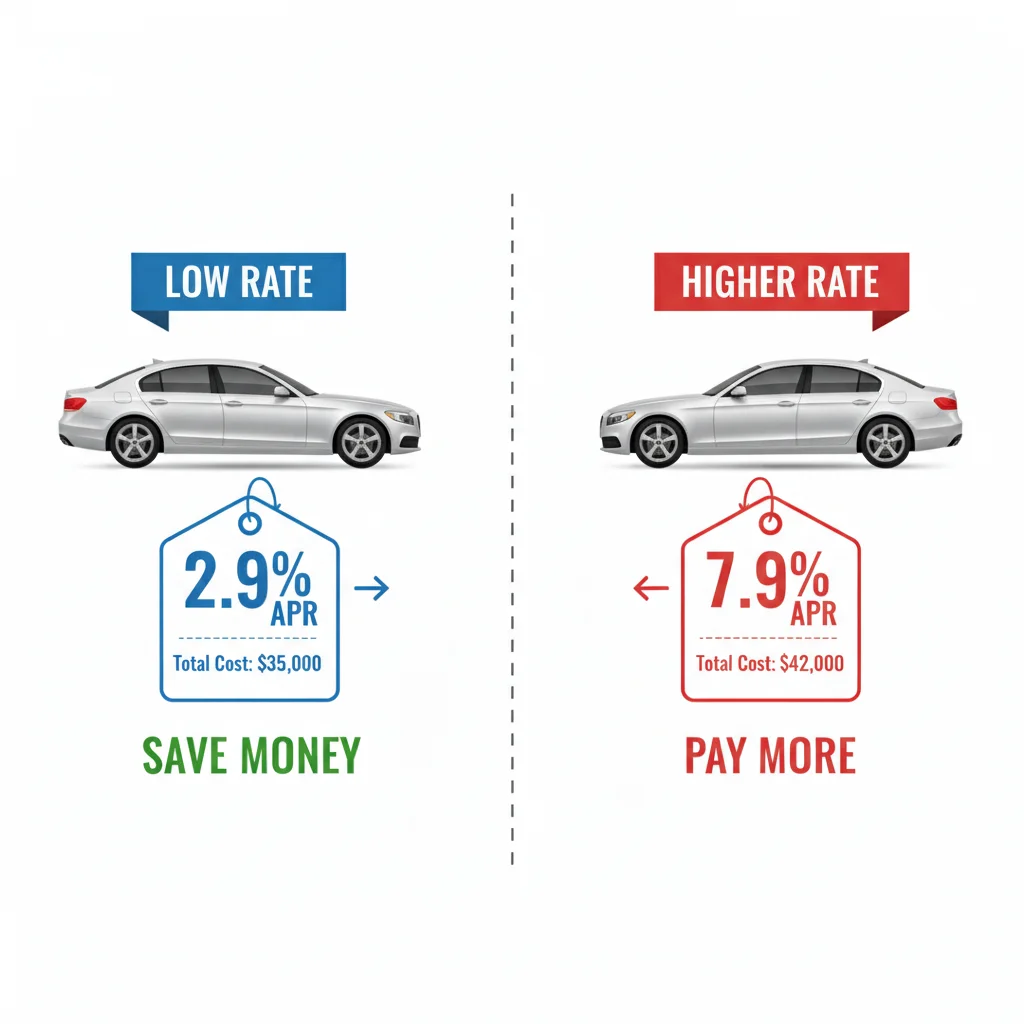
The rate on the sticker is a marketing tool aimed at the best-credit customers. As a subprime borrower, your rate is determined by a lender's credit-tier pricing model — and then potentially inflated by a dealer looking to earn additional income. Neither process is hidden from you by law, but neither is it transparently explained unless you ask the right questions.
The mechanics aren't complicated once you understand them: lenders set a buy rate based on your credit profile, dealers can mark it up within lender-allowed limits, and you have the right to compare that offer against outside financing. Doing that comparison is the most powerful thing you can do in a dealership finance office.
Common APR myths cost buyers real money — walking in aware of how the system works is the clearest path to a loan you can actually afford.

You don't need perfect credit to be an informed borrower. You need to know the questions to ask, understand what the answers mean, and have a comparison offer in hand before you sign anything.

All claims are backed by peer-reviewed research. Sources on request.