
Key Takeaways
Buy Rate vs. Contract Rate
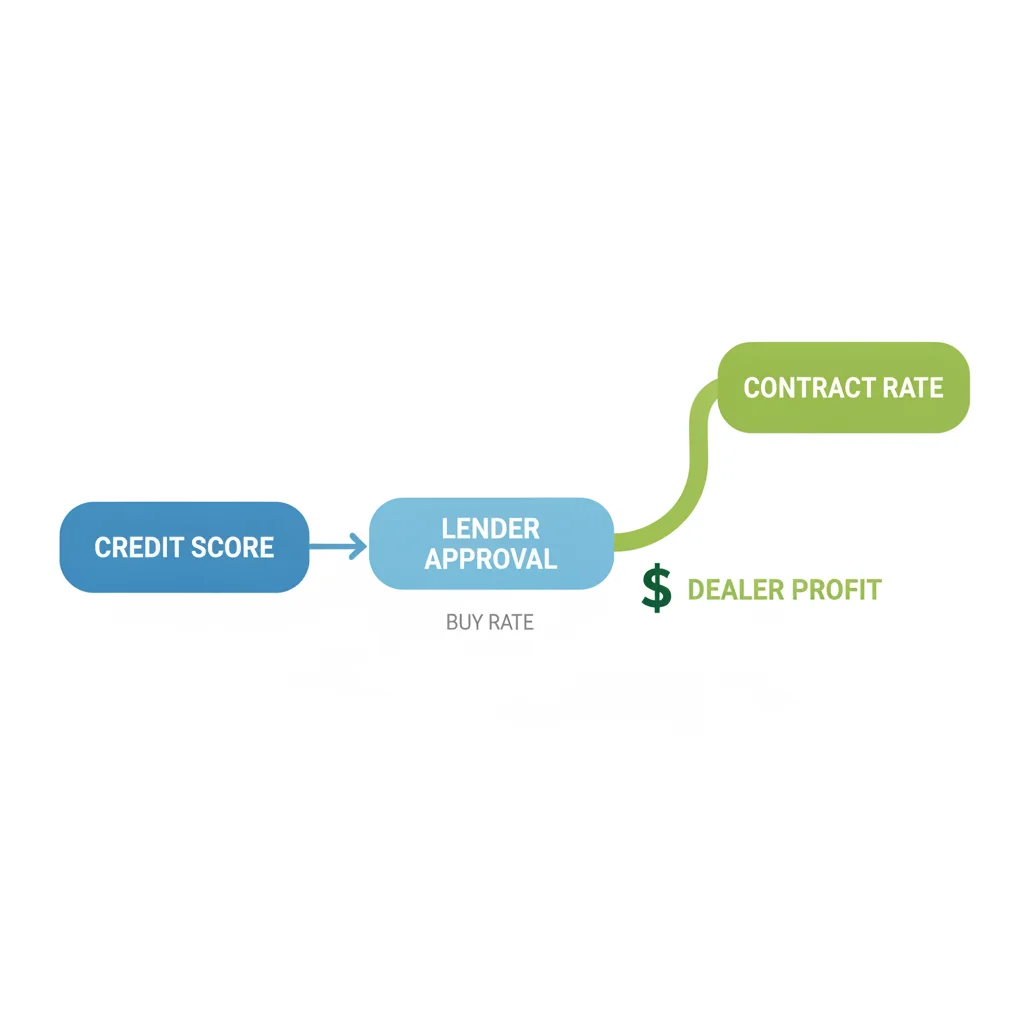
When a lender approves your auto loan, they issue a "buy rate" — the minimum APR they'll accept based on your credit profile. The dealer can then mark that rate up before presenting it to you as your "contract rate." The gap between the two is profit the dealer earns by routing your loan through the lender. You only ever see the final number, never the buy rate.
This markup is formally called "dealer reserve" or "finance reserve" and is regulated differently by state. The CFPB has scrutinized dealer reserve practices for potential disparate-impact lending violations.
Two Numbers Hiding Inside One APR
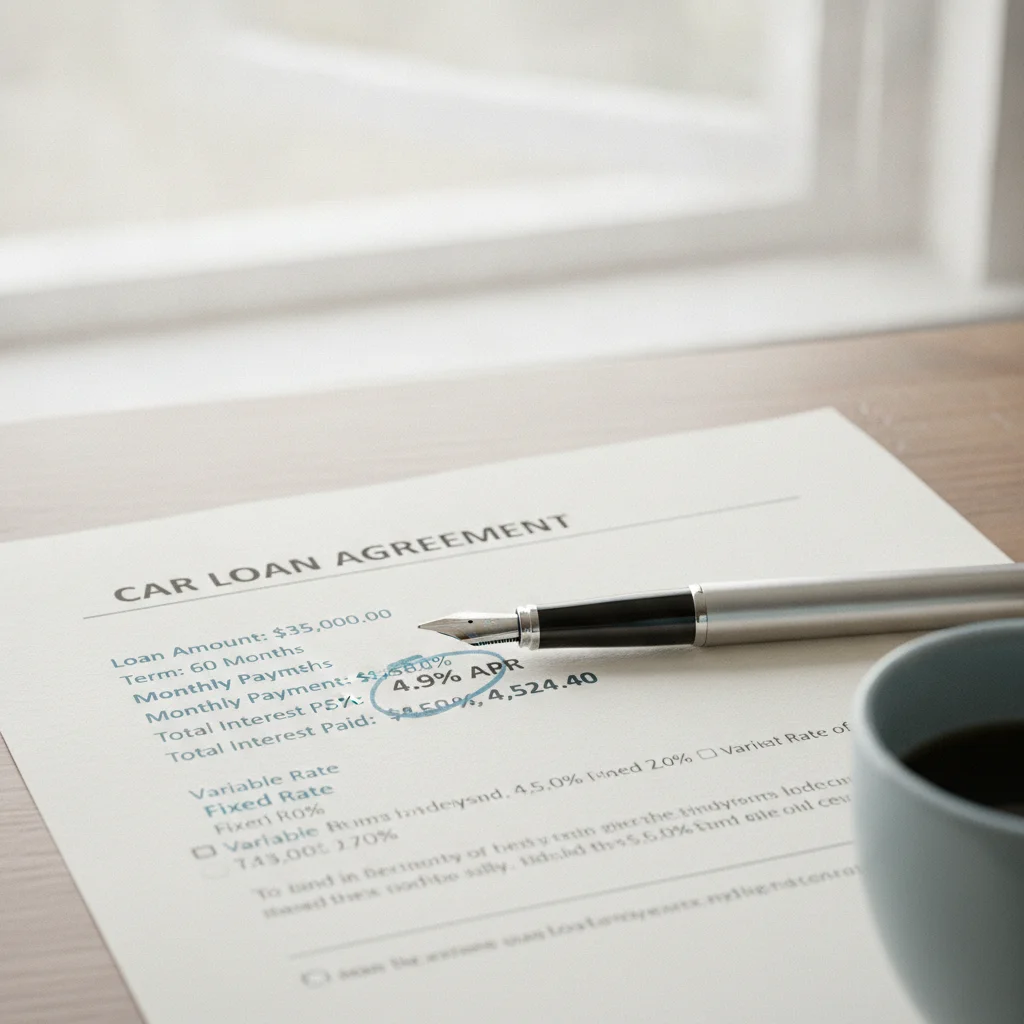
When the finance manager slides a contract across the desk, there's one number front and center: your APR. It looks clean, official, final. What it doesn't show you is that it's likely made up of two completely different things — the rate your credit score actually earned, and a markup the dealer added on top.
Understanding what APR actually means on an auto loan is the starting point. But even after you understand APR as a concept, you still need to know where that specific number came from. Was it driven entirely by your credit file? Or is part of it going into the dealer's pocket?
This article breaks down exactly how the rate-setting process works — from your credit score to the lender's buy rate to the dealer's final quote — so you can tell what you earned and what you're being charged extra for.
How Lenders Use Your Credit Score to Set a Rate
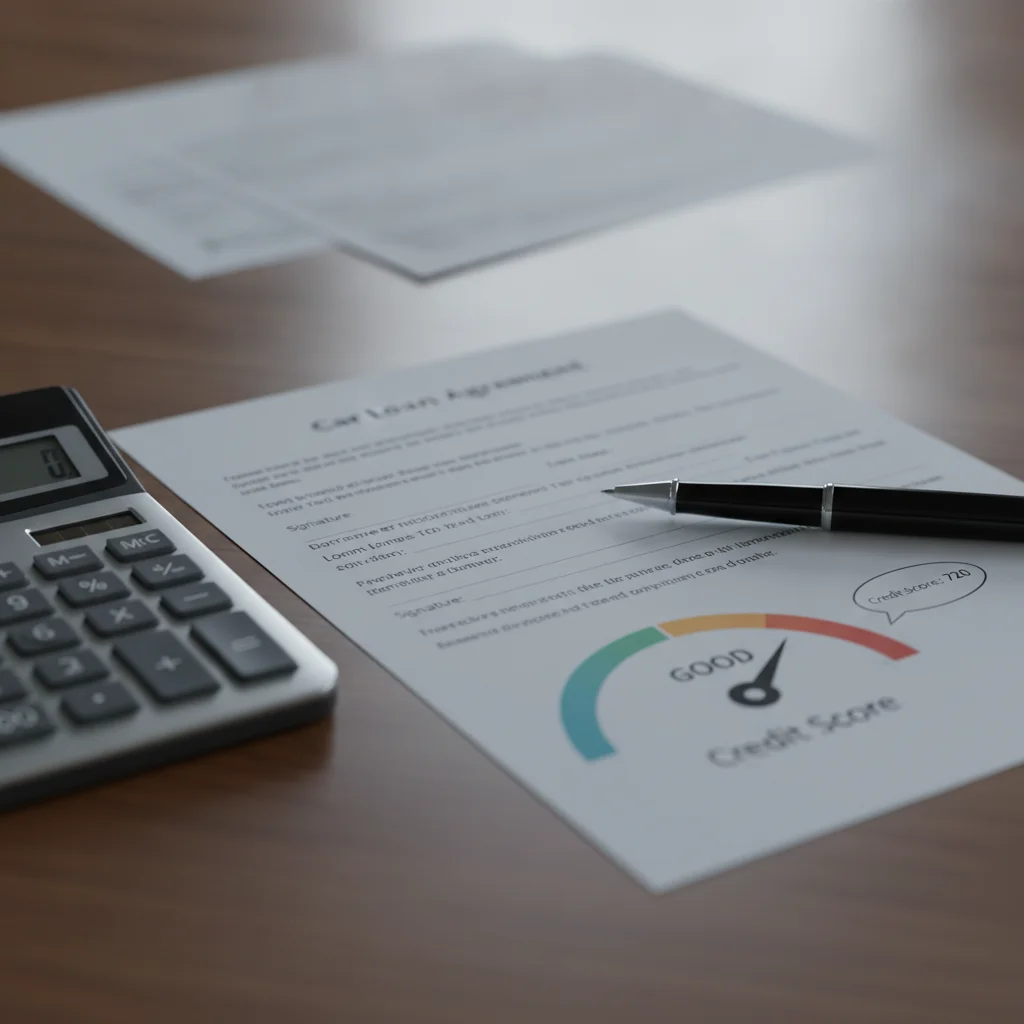
Auto lenders don't pick rates arbitrarily. They run your credit, assign you to a risk tier, and price the loan accordingly. The lower the risk they perceive, the lower the rate they're willing to accept. Here's how the tiers generally break down:
| Credit Tier | Score Range | Typical New Car APR Range |
|---|---|---|
| Super Prime | 750+ | 4.5% – 6.5% |
| Prime | 700–749 | 6.5% – 9% |
| Near Prime | 650–699 | 9% – 13% |
| Nonprime | 600–649 | 13% – 18% |
| Subprime | Below 600 | 18%+ |
These ranges reflect the buy rate — the rate the lender is willing to fund at. This is the rate your credit profile actually earned. Notice that jumps between tiers are not subtle. Going from a 700 to a 749 score might save you 2–3 percentage points. Going from 649 to 650 could drop your rate by 4 or more points.
~2%
Average dealer markup above buy rate
Industry analysis suggests dealers historically added an average of 1–2 percentage points above the lender's buy rate, though markup practices vary by lender caps and dealer policy.
$2,300+
Extra interest from a 2.5-point markup
On a $32,000 loan over 60 months, a 2.5-percentage-point markup above the buy rate adds more than $2,300 in total interest paid over the life of the loan.
64%
New car buyers who finance through the dealer
According to Experian Automotive data, approximately two-thirds of new vehicle buyers obtain financing through the dealership rather than a direct lender.
4–6 pts
Rate difference between credit tiers
Moving from the nonprime tier (600–649) to the prime tier (700–749) can reduce a buyer's buy rate by 4–6 percentage points depending on the lender and loan term.
$728
Average monthly new car payment (2024)
Experian's Q1 2024 State of the Automotive Finance Market report put the average new vehicle monthly payment at $728, where even a 1% rate reduction can save $20–$30 per month.
One thing most buyers don't realize: lenders don't use your standard consumer credit score (the FICO score you check on Credit Karma). They pull auto-enhanced FICO scores, versions of the model that weight your history with previous auto loans more heavily. A buyer with a clean payment history on past car loans may score slightly better on this version than on the standard model.
Auto-Enhanced FICO Scores May Differ
Lenders and dealers typically pull FICO Auto Score 8 or FICO Auto Score 9, not the base FICO Score 8 most consumers check online. These auto-enhanced versions weight your history with previous auto loans more heavily. If you've had a repossession or late car payment in the past, your auto score may be meaningfully lower than your general credit score — and vice versa if you have a clean auto history.
Rate vs. Rebate: Always Run the Math
When a manufacturer offers subsidized low-APR financing, there's almost always a competing cash rebate option. To decide which is better, calculate total interest paid at the low rate versus the reduced principal from taking the rebate and financing at a standard rate. On longer loans or smaller rebates, the low rate usually wins. On shorter terms or large rebates, the cash savings often beat zero-percent financing.
Pre-Approvals Don't Lock You In
Getting pre-approved by a bank or credit union before visiting a dealership is not a commitment to borrow from them. It's a negotiating tool. You can still choose to finance through the dealer if they offer a genuinely better rate. Most pre-approvals are valid for 30–60 days, giving you time to shop without repeated credit inquiries affecting your score — as long as rate-shopping inquiries occur within a 14–45 day window, FICO treats them as a single inquiry.
What Dealer Markup Adds to the Equation
Here's where the process stops being straightforward. Once a lender approves your application and issues a buy rate, that rate goes to the dealer — not directly to you. The dealer then has the ability to quote you a higher rate, keep the difference as profit, and never mention any of this.
This spread is called dealer reserve or finance reserve. If your buy rate was 6.5% and the dealer quotes you 8.5%, that 2-point difference translates into real money flowing from your loan payments to the dealership's finance department.
Dealer markup on auto loan interest operates because dealers act as intermediaries between you and the lender. They submit your application, the lender approves it at a buy rate, and the dealer presents it to you at whatever rate they choose — up to a cap the lender sets, typically 1–2.5 percentage points above buy rate.
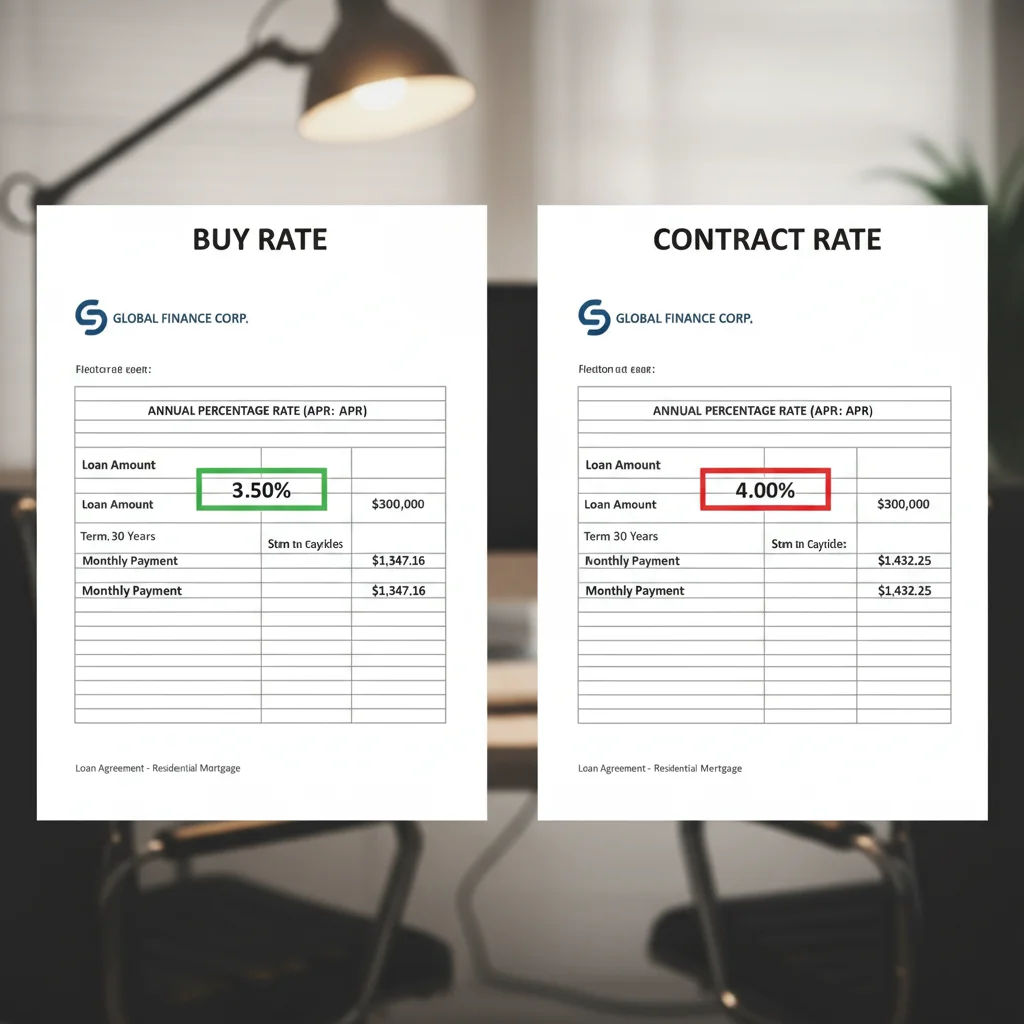
Let's put real numbers on it. Say you're financing $32,000 over 60 months:
| Scenario | APR | Monthly Payment | Total Interest Paid |
|---|---|---|---|
| Buy rate (what you earned) | 6.5% | $625 | $5,503 |
| With 1.5% markup | 8.0% | $649 | $6,926 |
| With 2.5% markup | 9.0% | $664 | $7,836 |
A 2.5-point markup on a mid-size loan adds over $2,300 in total interest. That's money leaving your wallet in $24-per-month increments — small enough that most buyers never notice.
Get Pre-Approved Before Stepping Foot in a Dealership
A written pre-approval from your bank or credit union is the single most effective tool for spotting dealer markup. It gives you a real, competing rate based on your actual credit — something you can literally hand to the finance manager and say "beat this." Even if you don't use it, the offer changes the negotiation dynamic completely.
Negotiate Rate and Price Separately
Dealers prefer to bundle price, trade-in, and financing into one conversation — it gives them more levers to adjust. Negotiate the purchase price of the vehicle first, get it in writing, then discuss financing separately. This prevents a lower monthly payment from masking a higher rate or a worse deal on the vehicle itself.
Credit Score vs. Markup: How to Tell Which Is Which
You can't directly ask a dealer to show you the buy rate — they won't, and they're not required to. But there are practical ways to figure out whether your quoted rate reflects your actual credit tier or has been padded.
Step 1: Know your credit tier before you go
Pull your credit report and get your FICO auto score (available through myFICO.com) before visiting any dealership. Cross-reference your score with the tier table above. You'll have a realistic sense of the range you should expect — not just a hope.
Step 2: Get a pre-approval from a direct lender
Apply for a pre-approval from your bank, credit union, or an online lender like LightStream or PenFed before visiting the dealer. This is the closest thing to seeing your buy rate that a consumer can access. A direct lender has no reason to mark up your rate — they're lending their own money, not acting as intermediaries.
Step 3: Compare the pre-approval to the dealer's quote
If the dealer quotes you 9% and your credit union approved you at 6.9%, the difference isn't explained by your credit score — it's markup. You can either ask the dealer to match or beat your outside offer, or simply finance through the direct lender.
Step 4: Ask the finance manager directly
Most won't reveal the buy rate, but asking "Is this rate the same one the lender approved me at?" puts pressure on the conversation. Some will negotiate the rate down rather than lose the deal entirely.
“The buy rate is the dealer's cost of money. Everything above it is gross profit. Buyers who don't know this are leaving real money on the table every time they sign.”
— Melinda Zabritski, Senior Director of Automotive Financial Solutions, Experian
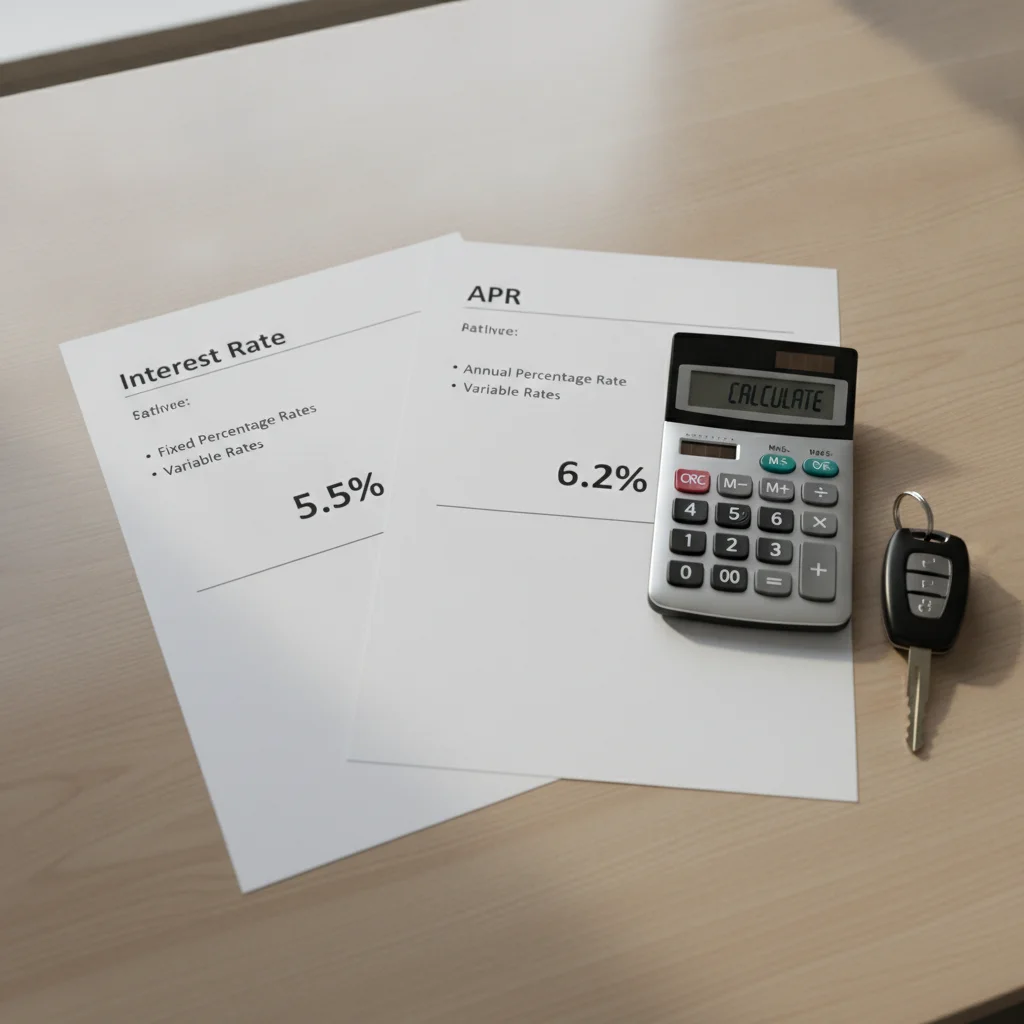
Also understand that APR and interest rate on a car loan are related but not identical — APR wraps in certain fees, so a quoted "interest rate" and the APR on the same loan can look different. Make sure you're comparing APR to APR when evaluating competing offers.
Get Pre-Approved Before Stepping Foot in a Dealership
A written pre-approval from your bank or credit union is the single most effective tool for spotting dealer markup. It gives you a real, competing rate based on your actual credit — something you can literally hand to the finance manager and say "beat this." Even if you don't use it, the offer changes the negotiation dynamic completely.
Negotiate Rate and Price Separately
Dealers prefer to bundle price, trade-in, and financing into one conversation — it gives them more levers to adjust. Negotiate the purchase price of the vehicle first, get it in writing, then discuss financing separately. This prevents a lower monthly payment from masking a higher rate or a worse deal on the vehicle itself.
When the Dealer's Rate Is Actually Competitive
It would be unfair to frame every dealer-financed loan as a rip-off. Dealers have real relationships with captive lenders (the financing arms of automakers like Toyota Financial Services or Ford Motor Credit) and sometimes access subvented rates — promotional APRs subsidized by the manufacturer — that you cannot get through a bank or credit union.
These manufacturer-backed rates are especially common on new vehicles and are frequently advertised as "0% financing" or "1.9% for 36 months." However, there's almost always a catch: you typically must choose between the low rate and a cash rebate. The right choice depends on the size of the rebate versus the total interest you'd pay with the higher rate — a calculation worth doing before you sign.
Auto-Enhanced FICO Scores May Differ
Lenders and dealers typically pull FICO Auto Score 8 or FICO Auto Score 9, not the base FICO Score 8 most consumers check online. These auto-enhanced versions weight your history with previous auto loans more heavily. If you've had a repossession or late car payment in the past, your auto score may be meaningfully lower than your general credit score — and vice versa if you have a clean auto history.
Rate vs. Rebate: Always Run the Math
When a manufacturer offers subsidized low-APR financing, there's almost always a competing cash rebate option. To decide which is better, calculate total interest paid at the low rate versus the reduced principal from taking the rebate and financing at a standard rate. On longer loans or smaller rebates, the low rate usually wins. On shorter terms or large rebates, the cash savings often beat zero-percent financing.
Pre-Approvals Don't Lock You In
Getting pre-approved by a bank or credit union before visiting a dealership is not a commitment to borrow from them. It's a negotiating tool. You can still choose to finance through the dealer if they offer a genuinely better rate. Most pre-approvals are valid for 30–60 days, giving you time to shop without repeated credit inquiries affecting your score — as long as rate-shopping inquiries occur within a 14–45 day window, FICO treats them as a single inquiry.
Even when a dealer's rate is genuinely competitive, knowing the landscape of interest and APR on auto loans ensures you're not taking the dealer's word for it — you're verifying it against real alternatives.
What This Means for Your Next Car Purchase
Separating credit-score-driven rate from dealer markup isn't about distrusting every finance manager. It's about knowing what you're buying. When you take out a $35,000 loan, you're buying two things: a car and a financing arrangement. Most buyers negotiate the car price hard and accept the financing without a second question.
Treat the APR with the same skepticism you'd apply to a sticker price. Understand your credit tier. Get a competing offer in writing before you sit down. When the dealer quotes a rate, you'll have the context to evaluate it — not just accept it.

A few practical reminders as you head into any dealership finance office:
- Your score determines the floor, not the ceiling. The buy rate based on your credit profile is the minimum you should be paying — markup only goes up from there.
- Pre-approvals are leverage. Even if you end up financing through the dealer, the offer changes the negotiation entirely.
- Shorter terms usually mean lower markup room. A 36-month loan has less total interest for the dealer to skim from. Consider the math before defaulting to a 72- or 84-month term.
- Captive lender specials are worth checking. Manufacturer-subsidized rates can legitimately beat what a bank offers — just compare the rate-vs.-rebate tradeoff explicitly.
- You can walk away. No loan is final until you've driven off the lot. If the financing doesn't feel right, you have every right to finance elsewhere and complete the purchase later.
All claims are backed by peer-reviewed research. Sources on request.