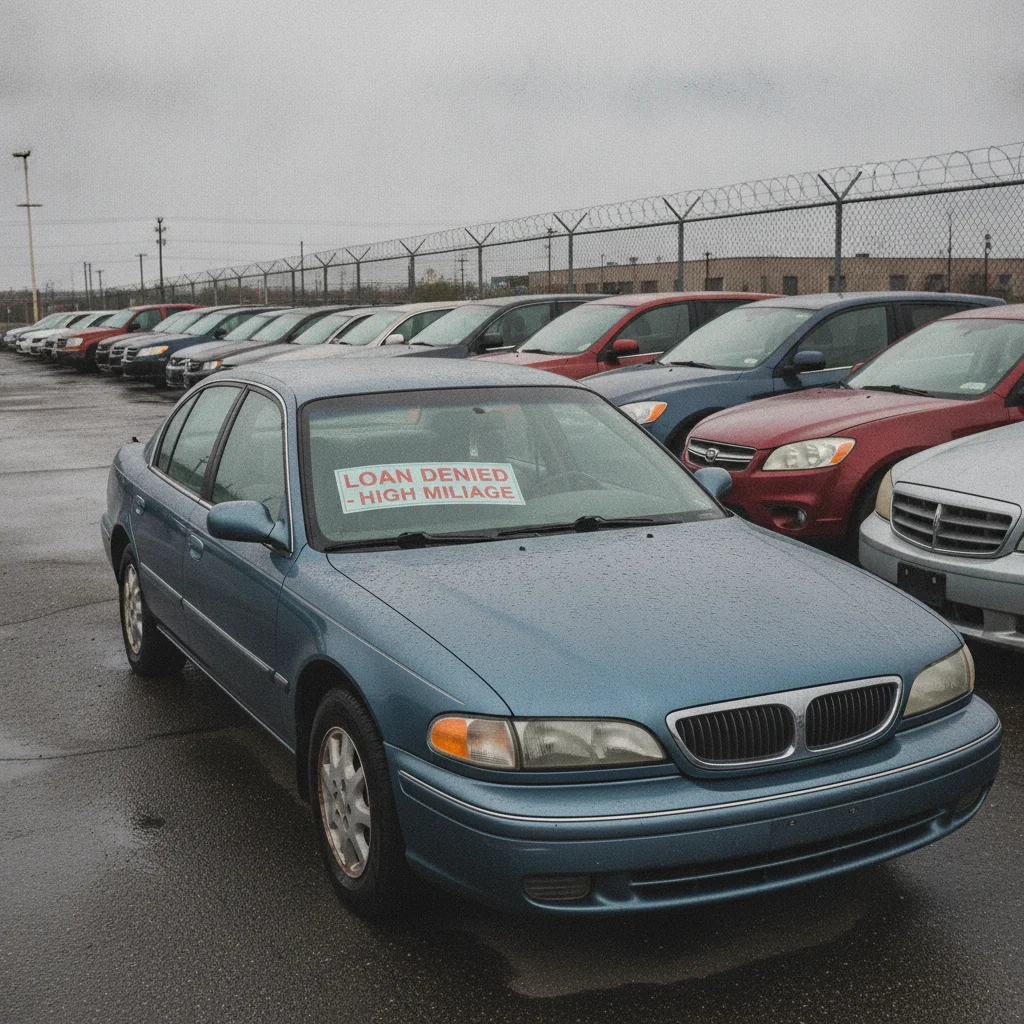
| Typical Age Limit (Subprime Lenders) | 7–10 model years old (Common industry range; individual lender policies vary) |
| Typical Mileage Cap | 100,000–150,000 miles (Common industry range; stricter lenders may cap at 75,000–80,000 miles) |
| Subprime Credit Score Threshold | Below 620 (FICO score range used by most major lenders) |
| BHPH Lender Collateral Flexibility | High — often no standard age/mileage cap (Offset by significantly higher interest rates) |
| LTV Ratio Considered Favorable | 80% or lower (Lower LTV can unlock lender flexibility on borderline collateral) |
| Valuation Source Used by Lenders | Kelley Blue Book or Black Book (Lenders finance based on book value, not asking price) |
Why Lenders Care So Much About the Car, Not Just Your Credit
When you apply for an auto loan, your credit score gets most of the attention — but it's not the only variable lenders evaluate. The vehicle itself is collateral. If you stop making payments, the lender repossesses the car and sells it to recover their money. That equation only works if the car retains enough resale value to make repossession worthwhile.
For borrowers with strong credit, this is rarely a problem — lenders extend more trust and take more risk. But for subprime borrowers (generally those with credit scores below 620), lenders tighten every variable they can control. That includes exactly which cars they'll finance.
The result: a significant portion of used vehicles listed at dealerships and on private lots simply cannot be financed through a subprime lender, no matter how affordable the car looks on paper. Understanding these collateral rules before you start shopping can save you from falling in love with a car that no lender will touch — and costing you wasted time, hard inquiries on your credit report, and real disappointment.

This article lays out exactly what those limits look like, why lenders set them where they do, and how to work within them strategically. If you're still figuring out whether you can get approved at all, our guide on getting preapproved with less-than-perfect credit is a good starting point.
Standard Collateral Limits Subprime Lenders Use
Subprime auto lenders — whether banks, credit unions, or specialty finance companies — use a combination of vehicle age and mileage thresholds to define what they'll accept as collateral. These thresholds vary by lender, but there's a recognizable pattern across the industry.
| Typical Age Limit (Subprime Lenders) | 7–10 model years old (Common industry range; individual lender policies vary) |
| Typical Mileage Cap | 100,000–150,000 miles (Common industry range; stricter lenders may cap at 75,000–80,000 miles) |
| Subprime Credit Score Threshold | Below 620 (FICO score range used by most major lenders) |
| BHPH Lender Collateral Flexibility | High — often no standard age/mileage cap (Offset by significantly higher interest rates) |
| LTV Ratio Considered Favorable | 80% or lower (Lower LTV can unlock lender flexibility on borderline collateral) |
| Valuation Source Used by Lenders | Kelley Blue Book or Black Book (Lenders finance based on book value, not asking price) |
Age Limits: How Old Is Too Old?
Most subprime lenders cap vehicle age at 7 to 10 model years old at the time of loan origination. A lender operating in 2025, for example, might only finance vehicles from the 2016 model year or newer. Some stricter lenders set the cutoff at 5 or 6 years.
Here's why this matters: a 2010 vehicle might be listed for $6,000 and seem like a reasonable deal. But if your lender caps financing at 10-year-old vehicles and you're applying in 2025, that car falls outside their policy regardless of its actual condition. You'd need to pay cash or find a lender with looser collateral standards — and lenders with looser standards often compensate with higher interest rates.
Mileage Limits: When the Odometer Kills the Deal
Age isn't the only factor. Most subprime lenders also set hard mileage caps, typically between 100,000 and 150,000 miles. Some draw the line even lower — at 75,000 or 80,000 miles — especially for older model years.
The logic is straightforward: high mileage correlates with higher mechanical risk. A car with 130,000 miles is more likely to need costly repairs or experience a breakdown, reducing its resale value quickly. If a lender repossesses a 130,000-mile car, they may not be able to recover much at auction.
Combined Thresholds: When Both Factors Apply
Many lenders apply both limits simultaneously, and some use a sliding scale. For instance:
- A vehicle that is 8 years old might be allowed only if it has fewer than 90,000 miles.
- A vehicle with 120,000 miles might be allowed only if it's fewer than 5 years old.
- A vehicle that is both 9 years old and has 110,000 miles would fail both thresholds and be declined entirely.
This sliding scale approach means you can't evaluate age and mileage in isolation. A newer car with very high mileage (think fleet vehicles or rideshare cars) can still be rejected, even though the model year looks acceptable.
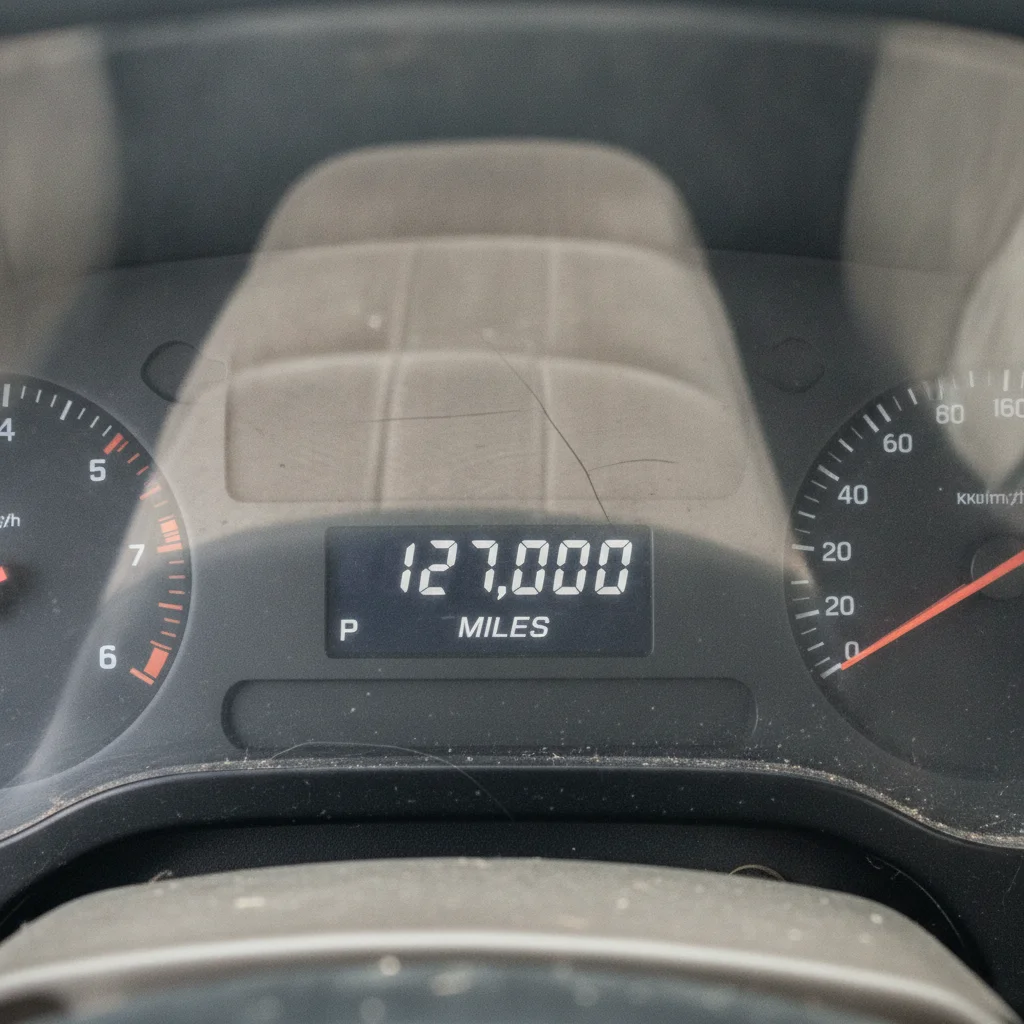
Understanding this interplay is critical. Before you get excited about a specific vehicle, run a quick mental check: Does it clear both the age threshold and the mileage threshold your target lenders typically enforce?
How These Limits Vary by Lender Type
Not all subprime lenders operate from the same playbook. Where you apply matters just as much as what you're buying.
38%
Share of subprime auto loans on used vehicles
According to Experian's State of the Automotive Finance Market report, the vast majority of subprime auto loan volume is concentrated in used vehicle purchases.
~21%
Average APR for deep subprime auto loans
Experian data shows borrowers with scores below 500 routinely face average interest rates exceeding 20% on used vehicle loans.
6–7 years
Median age of used vehicles being financed
Industry data suggests most financed used vehicles fall in this range, which aligns with the tighter end of subprime collateral eligibility windows.
30%+
Used vehicles with over 100,000 miles on market
A significant share of available used inventory exceeds common mileage caps, narrowing options for subprime borrowers shopping in lower price ranges.
Captive Finance Arms vs. Independent Subprime Lenders
Captive finance companies — the lending divisions owned by automakers like Ford Motor Credit, Hyundai Motor Finance, or Toyota Financial Services — tend to have stricter collateral rules. They're most interested in financing newer vehicles within their own brand ecosystem, and they may not participate in subprime lending at all for older inventory.
Independent subprime lenders (companies like Westlake Financial, DriveTime, or CAC) often have more flexible collateral policies because financing challenged-credit borrowers across a range of used vehicles is their core business. That said, flexibility comes at a cost: interest rates from these lenders are often significantly higher.
Buy Here, Pay Here Dealerships
Buy Here, Pay Here (BHPH) dealerships serve as both the seller and the lender. Because they hold the loan in-house rather than selling it to a third party, they can set their own collateral standards — and some will finance almost anything on their lot, regardless of age or mileage. The tradeoff is severe: BHPH interest rates are frequently at or near state usury limits, and loan terms are often structured in ways that make it easy for borrowers to fall behind. For a full picture of what those costs look like, see the real cost of borrowing with a low credit score.
Credit Unions
Some credit unions have subprime-friendly programs with more borrower-centered terms. Their collateral standards may be comparable to independent lenders, but their rates are often better. Membership requirements apply, but many credit unions serve broad geographic communities or professional associations. It's worth checking before assuming you're limited to dealership financing.
If your credit file is limited rather than damaged, you may also have options that don't fit neatly into the subprime category. The article on applying for an auto loan with a thin credit file explains how thin-file borrowers are evaluated differently.
Subprime Borrower
A borrower with a credit score typically below 620, considered higher-risk by lenders. Subprime borrowers generally face higher interest rates and stricter loan conditions than prime borrowers.
Collateral
An asset pledged to secure a loan. In auto lending, the vehicle itself is the collateral — if the borrower defaults, the lender can repossess and sell the car to recover the loan balance.
Loan-to-Value (LTV) Ratio
The ratio of the loan amount to the appraised value of the vehicle. A lower LTV means the borrower owes less relative to what the car is worth, which reduces lender risk.
Negative Equity
A situation where the outstanding loan balance is greater than the current market value of the vehicle, also called being 'underwater.' This is common when vehicles depreciate faster than the loan is paid down.
Certified Pre-Owned (CPO)
A used vehicle that has passed a manufacturer or dealer inspection and meets specific age and mileage criteria. CPO vehicles typically come with extended warranties and are more likely to meet lender collateral requirements.
Buy Here, Pay Here (BHPH)
A dealership model where the dealer acts as both the seller and the lender, financing the purchase in-house. BHPH lots often accept vehicles and borrowers that traditional lenders reject, but typically at very high interest rates.
Book Value
The estimated market value of a vehicle as determined by pricing guides like Kelley Blue Book or Black Book. Lenders use book value — not the asking price — to determine the maximum loan amount they'll approve.
Debt-to-Income (DTI) Ratio
The percentage of a borrower's gross monthly income that goes toward debt payments. Most subprime lenders require DTI to stay below 45–50% to approve a loan.
The Real-World Impact: Why Good Deals Get Rejected
Here's a scenario that plays out at dealerships constantly: A buyer finds a well-maintained 2013 sedan with 95,000 miles priced at $7,500. The seller has service records. The car runs well. The buyer can afford the monthly payment. But the lender declines — not because of the buyer's income, not because of the down payment, but because the vehicle is 12 years old and exceeds the lender's age cap.
From the buyer's perspective, this feels arbitrary. From the lender's perspective, it's risk management. The car may run fine today, but the lender is thinking about where it'll be in years two and three of a 60-month loan term. At 12 years old with 95,000 miles, even modest depreciation and wear can leave the vehicle worth less than the outstanding loan balance — what's known as being underwater or in a negative equity position.
This is especially painful for subprime borrowers because the vehicles that fall outside lender limits are often the most affordable ones. Older, higher-mileage vehicles cost less — exactly the price range many subprime borrowers are targeting. The collision between what borrowers can afford and what lenders will finance is one of the defining frustrations of subprime auto lending.
There's also an often-overlooked risk specific to used vehicles. As detailed in our guide on financing a used car with bad credit, the combination of mechanical uncertainty and high-rate subprime financing can create a compounding financial problem if the vehicle breaks down and payments become impossible to maintain.
Salvage and Rebuilt Titles Are Almost Always Rejected
Even if a vehicle clears every age and mileage threshold, a salvage or rebuilt title will disqualify it from financing with virtually every subprime lender. These titles indicate the vehicle was previously declared a total loss by an insurance company. Always pull a vehicle history report (Carfax or AutoCheck) before pursuing financing — discovering a salvage title after you've submitted a loan application wastes your time and adds an unnecessary hard inquiry to your credit report.
Model Year vs. Calendar Year: Know the Difference
Lenders calculate vehicle age based on the model year, not the year the vehicle was manufactured or purchased. A car produced in late 2015 and sold as a 2016 model year vehicle will be treated as a 2016 by lenders. This distinction can matter when a vehicle is right on the edge of a lender's age cutoff. Always confirm the model year listed on the title, not just the build date on the door jamb sticker.
Preapproval Locks In Collateral Requirements Upfront
One underappreciated benefit of getting preapproved before you shop is that the lender will tell you exactly what vehicle parameters they'll accept. This eliminates guesswork and lets you filter your car search accordingly. Without preapproval, you may not discover collateral restrictions until after you've fallen for a specific car — at which point switching gears is harder emotionally and logistically.
Strategies for Working Within These Restrictions
Knowing the rules lets you shop strategically rather than reactively. Here's how to work within collateral limits without compromising your financial position.
1. Identify Your Target Vehicle Range First
Before visiting a dealership, research which lenders you're likely to qualify with and what their collateral policies are. Many lenders publish general guidelines publicly, or a dealership's finance manager can tell you upfront what their lending partners will accept. Set your vehicle search filters accordingly — use model year minimums and mileage maximums as hard search parameters, not soft preferences.
2. Prioritize Certified Pre-Owned Vehicles When Possible
Certified Pre-Owned (CPO) vehicles are typically newer, lower-mileage, and have undergone inspections — which means they're far more likely to clear a lender's collateral requirements. CPO vehicles do cost more than comparable non-certified used cars, but they're more reliably financeable and often come with extended warranties that reduce your mechanical risk.
3. Consider a Larger Down Payment
A larger down payment reduces the loan-to-value (LTV) ratio — the proportion of the vehicle's value you're borrowing. Some lenders are willing to approve a vehicle that's slightly outside their standard parameters if the LTV is low enough, because their exposure is reduced. If you have extra savings available, leading with a strong down payment can sometimes unlock flexibility that a standard offer wouldn't.
4. Get Preapproved Before You Shop
Preapproval tells you exactly how much a specific lender will finance and under what conditions — including collateral requirements. Shopping with a preapproval letter means you know your constraints before you fall for a car. It also puts you in a stronger negotiating position with dealers. See our overview of the loan preapproval process to understand how this works.
5. Verify the Vehicle's History and True Value
Even if a vehicle clears the age and mileage thresholds, the lender will also appraise it against book value (typically Kelley Blue Book or Black Book). A car priced at $10,000 that books at $7,500 may be financed at the $7,500 figure — leaving you to cover the $2,500 gap out of pocket or walk away. Run your own value check before assuming the dealer's price is what the lender will approve.
6. Understand How This Affects Future Refinancing
The vehicle you finance today may be harder to refinance tomorrow if it ages into ineligibility. A car that's 8 years old when you take out a 5-year loan will be 13 years old when it's paid off — and well outside the eligibility window if you'd hoped to refinance mid-term. Our article on how vehicle age and mileage affect refinancing eligibility goes into detail on this timing problem.

7. Watch Your Debt-to-Income Ratio
Even if you find a vehicle that clears every collateral hurdle, approval still depends on your broader financial picture. Subprime lenders scrutinize your debt-to-income ratio carefully — often refusing applications that push DTI beyond 45–50%. Before shopping, calculate your current DTI and understand how an auto loan payment would affect it. Our guide on the DTI ratio most subprime lenders won't cross explains the exact thresholds lenders use.
Quick Reference: What to Check Before You Commit to a Vehicle
Use this checklist before you get emotionally attached to any specific car. Run through each item before submitting a loan application or putting a deposit down.
- Model year: Is it within the last 7–10 years? (Confirm the exact cutoff with your lender.)
- Mileage: Is it under 100,000–150,000 miles? (Again, confirm the specific cap.)
- Combined threshold: Does the car pass both the age and mileage checks together?
- Book value: Does the asking price align with KBB or Black Book value? If not, are you prepared to cover the gap?
- Vehicle history: Have you pulled a Carfax or AutoCheck report? Salvage titles and flood damage can make a vehicle unfinanceable regardless of age or mileage.
- Lender policy: Have you confirmed what your specific lender allows? Don't rely on industry averages alone.
- Loan term vs. vehicle age: Will the car still be within a financeable range if you need to refinance midway through the loan?
Taking ten minutes to run through this list before you visit a dealership can save you the frustration of discovering a vehicle is ineligible after you've already invested time and energy into the deal.
Kelley Blue Book (KBB)
The industry-standard vehicle valuation tool. Use it to check the current market value of any used vehicle before applying for financing — lenders base loan amounts on book value, not asking price.
Carfax Vehicle History Report
Reveals a vehicle's accident history, title status, mileage records, and ownership changes. Essential for confirming that a car doesn't have a salvage title or undisclosed damage that would disqualify it from financing.
CFPB Auto Loan Guide
The Consumer Financial Protection Bureau's guide to auto loans explains your rights as a borrower and what lenders can and cannot do when evaluating your application.
AutoCheck Vehicle History
An Experian-owned alternative to Carfax that provides title history, odometer readings, and accident data. Useful for cross-referencing vehicle history before finalizing a purchase decision.
NADA Guides
Another major vehicle valuation resource used by many lenders and dealers. Comparing NADA and KBB values gives you a fuller picture of a car's fair market value.
The more you understand about how lenders evaluate collateral, the better equipped you are to shop with your eyes open. Subprime financing is a workable path to vehicle ownership — but only when you know the rules of the game before you start playing. Your credit score affects the rate you'll receive, but the car you choose determines whether you can get a loan at all. These two factors work together, and understanding both puts you in control of the outcome.

All claims are backed by peer-reviewed research. Sources on request.