
| Typical subprime DTI ceiling | 50% back-end DTI (Common institutional subprime lender threshold) |
| Preferred DTI range for subprime approval | 45% or below (Industry lender guidelines) |
| DTI range for easier approval and better conditions | Under 40% (Subprime auto lending benchmarks) |
| Income type used for DTI calculation | Gross (pre-tax) monthly income (Standard across auto lenders) |
| Debts counted in back-end DTI | Car loans, credit cards, student loans, mortgage/rent, child support |
| Expenses NOT counted in DTI | Utilities, groceries, subscriptions, insurance premiums |
| Typical subprime APR range | 12%–24% APR (Varies by lender, credit score, and loan term) |
| Hard inquiry window for rate shopping | 14–45 days (counted as one inquiry) (FICO scoring model guidelines) |
What DTI Means and Why Subprime Lenders Care So Much
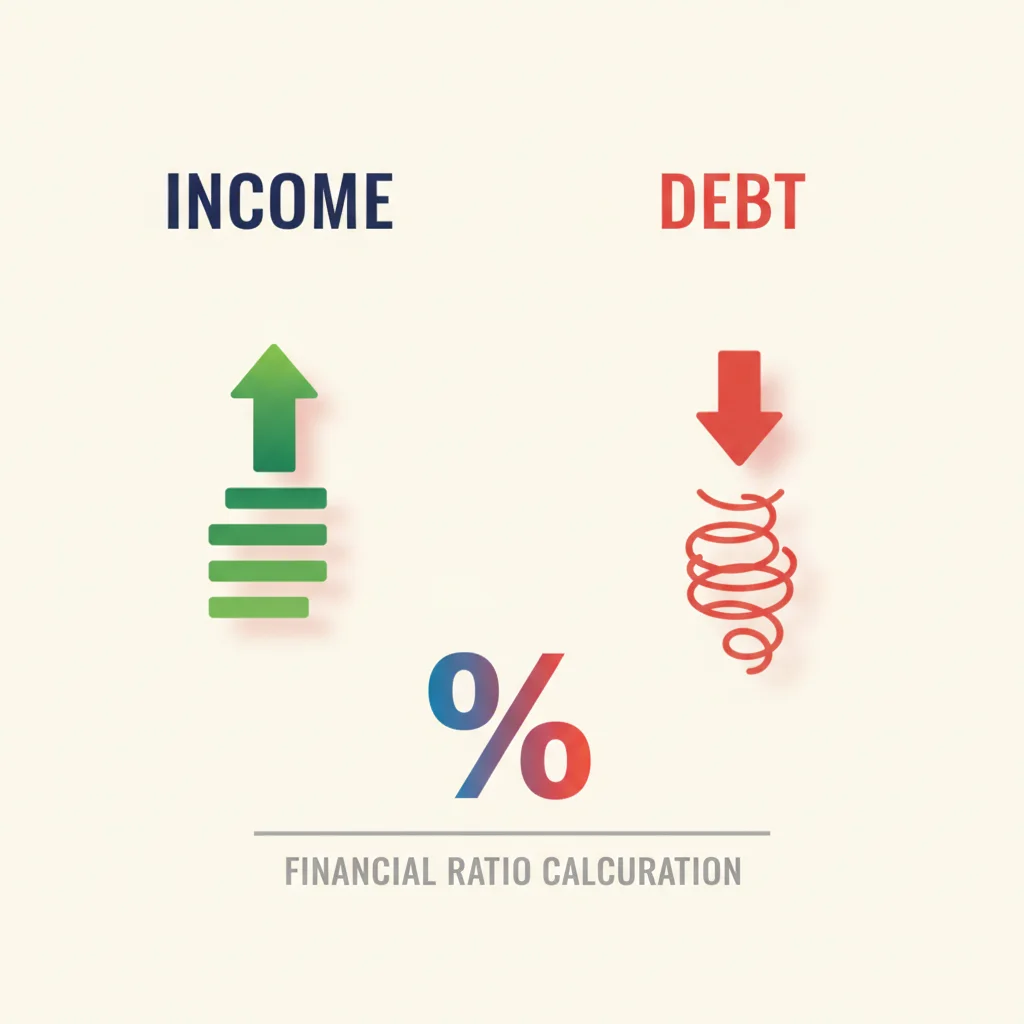
Your debt-to-income ratio (DTI) is the percentage of your gross monthly income that goes toward paying existing debts. It's calculated by dividing your total monthly debt obligations by your gross monthly income, then multiplying by 100. For example, if you earn $4,000 per month before taxes and pay $1,200 toward debts each month, your DTI is 30%.
Debt-to-Income Ratio (DTI)
The percentage of your gross monthly income consumed by monthly debt payments. Calculated by dividing total monthly debt obligations by gross monthly income and multiplying by 100. Lenders use this to assess whether you can absorb additional debt.
Back-End DTI
A DTI calculation that includes all monthly debt obligations — car loans, credit cards, student loans, rent or mortgage, and court-ordered payments. This is the figure most auto lenders use when evaluating applications.
Front-End DTI
A DTI calculation that includes only housing-related costs. More commonly used in mortgage lending; auto lenders rarely apply this metric.
Subprime Borrower
A borrower with a credit score generally below 620, who represents elevated risk to lenders. Subprime borrowers typically face higher interest rates, stricter DTI requirements, and additional conditions for loan approval.
Gross Monthly Income
Your total income before taxes, deductions, or withholdings. Lenders use gross income — not take-home pay — when calculating DTI, and they require documentation to verify it.
Conditional Approval
A loan approval that comes with specific requirements the borrower must meet before funding, such as paying off an existing debt, providing additional documentation, or increasing the down payment.
Loan-to-Value Ratio (LTV)
The ratio of the loan amount to the vehicle's actual market value. A high LTV means the borrower is financing more than the car is worth, increasing the lender's risk exposure.
Compensating Factor
A positive element in a loan application that offsets a weakness elsewhere, such as a larger down payment, a cosigner, or a long employment history. Subprime lenders weigh these when a borrower's DTI or credit score is borderline.
For borrowers with strong credit, DTI is one factor among many. For subprime borrowers — those with credit scores generally below 620 — it often becomes the deciding factor. Here's why: a lender looking at a low credit score is already accepting elevated risk. If your income is also heavily committed to existing debts, the lender has almost no confidence you can absorb an additional monthly payment without defaulting.
Think of it this way: your credit score tells a lender what happened in the past. Your DTI tells them what's happening right now — and whether your finances can actually handle one more obligation today. As covered in our guide to how credit scores affect loan rates, your score opens the door. Your DTI determines whether you get to walk through it.
Understanding where you stand before you apply puts you in a much stronger negotiating position — and prevents wasted hard inquiries on applications that have little chance of approval.
The DTI Thresholds Subprime Lenders Actually Use
Subprime auto lenders don't publish a single universal cutoff, but industry patterns are consistent enough that you can treat the following benchmarks as reliable guidelines.
| Typical subprime DTI ceiling | 50% back-end DTI (Common institutional subprime lender threshold) |
| Preferred DTI range for subprime approval | 45% or below (Industry lender guidelines) |
| DTI range for easier approval and better conditions | Under 40% (Subprime auto lending benchmarks) |
| Income type used for DTI calculation | Gross (pre-tax) monthly income (Standard across auto lenders) |
| Debts counted in back-end DTI | Car loans, credit cards, student loans, mortgage/rent, child support |
| Expenses NOT counted in DTI | Utilities, groceries, subscriptions, insurance premiums |
| Typical subprime APR range | 12%–24% APR (Varies by lender, credit score, and loan term) |
| Hard inquiry window for rate shopping | 14–45 days (counted as one inquiry) (FICO scoring model guidelines) |
The 50% Hard Ceiling
The most common threshold cited by subprime and buy-here-pay-here (BHPH) lenders is a back-end DTI of 50%. This means your total monthly debt payments — including the proposed new car payment — must not exceed 50% of your gross monthly income. Cross this line and most institutional subprime lenders will decline the application outright, regardless of other positive factors.
The 45% Comfort Zone
Many subprime lenders prefer to see a back-end DTI at or below 45%. Between 45% and 50%, approval is still possible but lenders may require compensating factors: a larger down payment, a cosigner, a shorter loan term, or a less expensive vehicle. If your DTI lands in this range, you have leverage to negotiate — but you'll need to bring something extra to the table.
Below 40%: Easier Approval, Better Terms
If you can get your DTI under 40% — even as a subprime borrower — your application starts to look more like a manageable risk. Lenders may still charge a high interest rate due to your credit history, but you're more likely to receive approval without major conditions. Some subprime lenders will also offer slightly longer terms to a borrower in this range, which affects both approval odds and total loan cost. See how that tradeoff works in our article on how loan term length affects your debt-to-income ratio.
50%
DTI ceiling most subprime lenders won't cross
Subprime auto lenders consistently cite 50% back-end DTI as the point beyond which approval becomes extremely rare, regardless of other factors.
1 in 3
Subprime auto loan applications denied for income or DTI reasons
According to industry analysis of subprime loan application data, DTI and income verification issues are among the top three denial causes for bad-credit applicants.
~$133/mo
Monthly payment reduction: 48-mo vs. 72-mo term on $15K at 18% APR
Extending a loan term from 48 to 72 months on a $15,000 subprime loan at 18% APR reduces monthly payment from approximately $441 to $308, directly lowering DTI at application.
620
Credit score threshold separating prime and subprime borrowers
Scores below 620 typically place a borrower in subprime territory, where DTI thresholds and underwriting criteria become significantly more restrictive.
Front-End vs. Back-End DTI
Most auto lenders focus on back-end DTI, which includes all monthly debt obligations: car payment, rent or mortgage, credit cards, student loans, personal loans, and child support. Front-end DTI covers only housing costs and is more relevant to mortgage lending. When an auto lender says "DTI," assume they mean back-end DTI unless they specify otherwise.
How to Calculate Your DTI Before You Apply
Calculating your own DTI takes about five minutes and can save you from a denial that lingers on your credit report as a hard inquiry. Here's a step-by-step method:
- List every current monthly debt obligation. Include: minimum credit card payments, personal loan payments, student loan payments, any existing auto loan payments, rent or mortgage, and court-ordered payments like child support or alimony. Do not include utilities, groceries, or subscription services — lenders don't count these.
- Add the estimated new car payment. Use an online auto loan calculator to estimate the monthly payment for the vehicle you're considering, at the interest rate a subprime lender is likely to offer. For subprime borrowers, rates often range from 12% to 24% APR, so model a realistic scenario rather than an optimistic one.
- Sum those monthly obligations. This is your total monthly debt.
- Identify your gross monthly income. This is your income before taxes and deductions. If you're paid hourly, multiply your hourly wage by average hours worked per week, then multiply by 52 and divide by 12. Include all verifiable income sources: wages, self-employment income (documented with tax returns), alimony received, Social Security, or disability payments.
- Divide and multiply. Total monthly debt ÷ gross monthly income × 100 = your DTI percentage.

Example: You earn $3,500/month gross. Your current debts are: $350 rent share, $120 credit card minimums, $200 student loan payment. You're considering a car with an estimated $450 monthly payment at 18% APR. Total debt: $1,120. DTI: $1,120 ÷ $3,500 = 32%. That's well within most subprime lenders' comfort zone.
Now change the scenario: same income, but you also have a $300 personal loan payment. Total debt becomes $1,420. DTI: $1,420 ÷ $3,500 = 40.6%. Still approvable, but you'll face more scrutiny. Add one more obligation — say, a $200 existing car payment — and DTI climbs to $1,620 ÷ $3,500 = 46.3%. You're now in conditional-approval territory.
For a comprehensive look at all the data points a lender reviews alongside DTI, read everything your lender looks at before issuing a preapproval.
Strategies to Lower Your DTI Before Applying
If your DTI is too high, you have four levers to pull — and they're not equally effective. Here's an honest assessment of each.
1. Pay Down Existing Debt
This is the most direct solution. Eliminating even one monthly obligation can shift your DTI meaningfully. Prioritize debts with high minimum payments relative to their balances — a credit card with a $150 minimum payment that you could pay off with $900 delivers an outsized DTI benefit. Before you spend savings on a down payment, run the numbers: would retiring that debt improve your DTI enough to justify the tradeoff?
2. Increase Documented Income
Lenders can only count income they can verify. If you have a side hustle, freelance gigs, or rental income, make sure it's documented. Two years of tax returns showing consistent self-employment income is typically required. A part-time job that you can show via pay stubs may also help, even if it's recent. Simply working more hours at your main job can help if you can show a consistent pattern.
3. Choose a Less Expensive Vehicle
A lower loan amount means a lower monthly payment, which directly reduces the DTI the new loan creates. If you're at 47% DTI with a $450/month payment, stepping down to a $350/month payment might push you below 45% and into cleaner approval territory. This is often the fastest and most controllable adjustment available. Keep in mind that subprime lenders may also have restrictions on vehicle age and mileage that limit your options — see vehicle age and mileage limits that block bad-credit loan approvals.
4. Extend the Loan Term
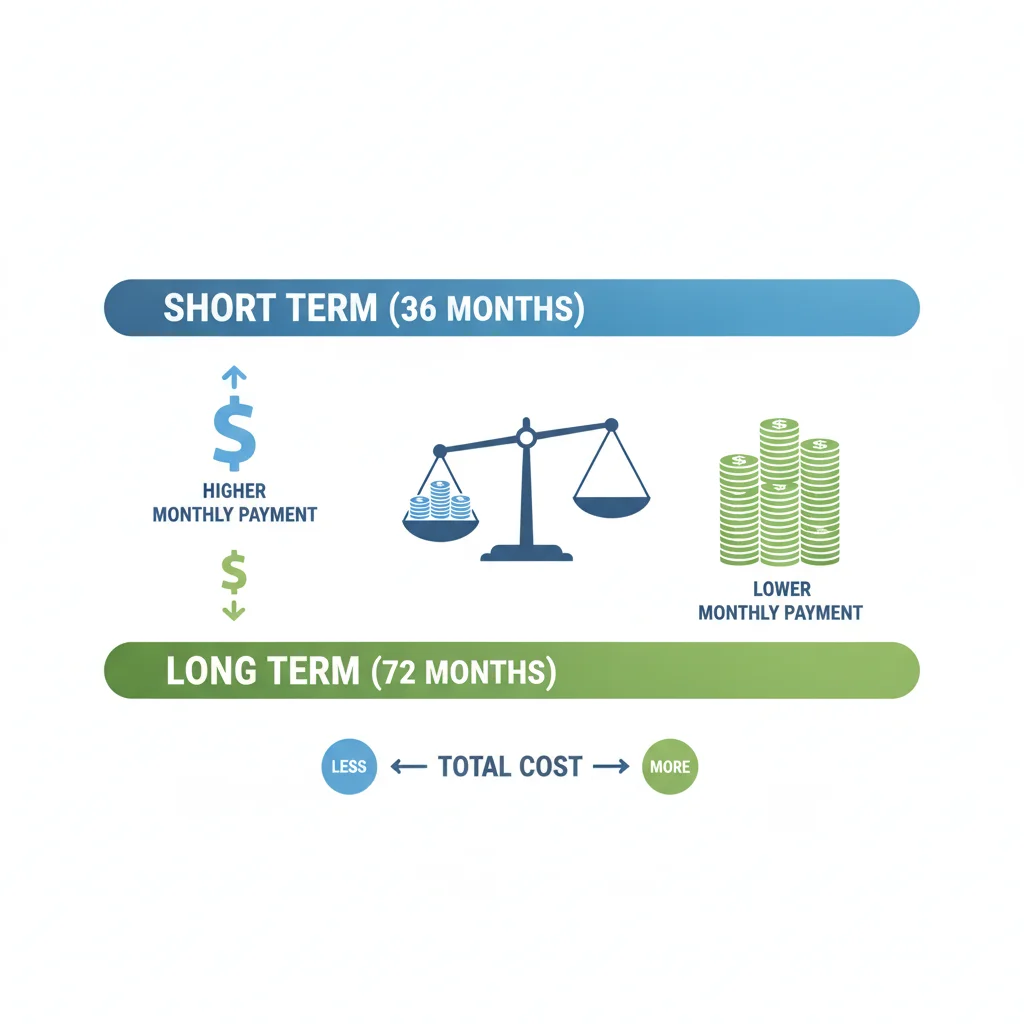
A longer loan term spreads the same balance over more payments, reducing the monthly obligation and thus your DTI at the time of application. A 72-month term instead of 48 months on a $15,000 loan at 18% APR drops the monthly payment from about $441 to $308 — a meaningful DTI improvement. The real cost is significant: you'll pay substantially more in total interest, and you risk being underwater on the loan (owing more than the car is worth) for longer. Use this lever deliberately, not by default. Our related article on LTV ratio and why it matters more when credit is low explains the downstream risk in detail.
Rental and Gig Income: Proceed Carefully
Lenders generally require two years of documented history to count self-employment or gig income toward your gross monthly income for DTI purposes. Rental income may require lease agreements and tax return documentation. If you recently started a new income stream, it may not be countable yet — factor this into your timeline before applying.
Multiple Denials Can Compound Your Problem
Each hard credit inquiry from a loan application can slightly lower your credit score. If you apply to multiple subprime lenders spread out over several months without rate-shopping intentionally, those inquiries add up. Apply to multiple lenders within the same 14–45 day window so they're treated as a single inquiry under FICO guidelines. A denial due to DTI doesn't require a new credit pull to fix — address the DTI issue first, then reapply strategically.
Conditional Offers Deserve a Second Look
A conditional approval — where the lender says yes, but only if you pay off a specific debt first — can be a legitimate path forward. If paying off that debt also improves your DTI for the new loan calculation, the math may work in your favor. Before rejecting a conditional offer, run the updated DTI calculation and verify you can still meet the down payment and other requirements after satisfying the condition.
What Happens When Your DTI Is Over the Limit
If your DTI exceeds a lender's threshold, you'll typically receive a denial — but the nature of that denial matters. Understanding the reason gives you a roadmap.
Subprime lenders who decline based on DTI may note it as "excessive obligations" or "insufficient income relative to debt." This is different from a credit-score-based denial. If your score is the problem, the path forward involves time and credit repair. If DTI is the problem, it's often solvable in weeks or months with the right moves.
Some lenders won't decline outright but will instead counter-offer: approving you for a smaller loan amount than you requested, requiring a larger down payment, or making approval contingent on proof that a specific existing debt is being paid off at closing. These conditional approvals are worth considering carefully — they're often a signal that you're close to qualifying and that a modest adjustment gets you there.
Rental and Gig Income: Proceed Carefully
Lenders generally require two years of documented history to count self-employment or gig income toward your gross monthly income for DTI purposes. Rental income may require lease agreements and tax return documentation. If you recently started a new income stream, it may not be countable yet — factor this into your timeline before applying.
Multiple Denials Can Compound Your Problem
Each hard credit inquiry from a loan application can slightly lower your credit score. If you apply to multiple subprime lenders spread out over several months without rate-shopping intentionally, those inquiries add up. Apply to multiple lenders within the same 14–45 day window so they're treated as a single inquiry under FICO guidelines. A denial due to DTI doesn't require a new credit pull to fix — address the DTI issue first, then reapply strategically.
Conditional Offers Deserve a Second Look
A conditional approval — where the lender says yes, but only if you pay off a specific debt first — can be a legitimate path forward. If paying off that debt also improves your DTI for the new loan calculation, the math may work in your favor. Before rejecting a conditional offer, run the updated DTI calculation and verify you can still meet the down payment and other requirements after satisfying the condition.
If you've been denied despite having steady income, DTI is one of several possible causes. Our article on why your loan application gets denied even with a steady income walks through the full list of factors that can block approval even when you're earning regularly.
It's also worth shopping multiple subprime lenders before accepting a denial as final. DTI thresholds vary by lender — one institution's hard no at 48% may be another's conditional approval. Rate shopping within a short window (typically 14–45 days) is treated as a single inquiry by the major credit bureaus under FICO scoring models, so the credit cost of comparison shopping is lower than many borrowers assume.
Auto Loan Payment Calculator
Estimate your monthly payment at various loan amounts, interest rates, and terms so you can model the DTI impact before approaching a lender.
DTI and Auto Loan Preapproval: The Number Lenders Focus On
A deeper dive into how DTI interacts with credit score during preapproval, including what ratio lenders want to see and how to calculate yours accurately.
AnnualCreditReport.com
Pull your free credit reports from all three bureaus to verify that all debts counted in your DTI are accurately reported and that no erroneous accounts are inflating your obligations.
What Lenders Look at Beyond Your Credit Score
Understand the full underwriting picture — income, DTI, loan term, and collateral — so you can present the strongest possible application to a subprime lender.
DTI in Context: What Else Subprime Lenders Evaluate
DTI doesn't exist in a vacuum. Subprime lenders layer it against several other factors to build a complete risk picture. Understanding how they interact helps you anticipate how a lender will read your application.
Credit Score and Payment History
A DTI of 44% is viewed differently at a 580 credit score versus a 520 credit score. The lower the score, the more a lender relies on DTI as a tiebreaker. A borrower with a 580 score and 44% DTI may be approved; a borrower with a 510 score and 44% DTI may not — even with identical income and debts. See the DTI and auto loan preapproval overview for a deeper look at how these two factors interact.
Down Payment
A larger down payment reduces the loan amount, which reduces the monthly payment, which directly lowers the DTI the new loan creates. Even more importantly for subprime applicants, it signals financial discipline and reduces the lender's collateral risk. A 10%–20% down payment can meaningfully change the risk calculation a lender performs.
Loan-to-Value Ratio
Lenders also evaluate how much you're borrowing relative to the vehicle's actual value. If you're borrowing $18,000 on a car worth $14,000 — due to negative equity rolled in from a trade-in — the lender is exposed even if your DTI looks manageable. This is why addressing negative equity separately, rather than folding it into a new loan, often makes the application stronger.
Employment Stability
A borrower who has been at the same job for three years with a 46% DTI looks more reliable than one at a new job for two months with a 40% DTI. Longevity at your employer, consistency of income type (W-2 vs. gig work), and absence of income gaps all factor into how lenders interpret your DTI numbers. Income volatility increases the perceived risk that your debt ratio could worsen suddenly.
For a full breakdown of every data point lenders pull together, visit our guide on how your credit score interacts with other approval factors and the companion piece on everything lenders look at before issuing a preapproval.

All claims are backed by peer-reviewed research. Sources on request.