Key Takeaways
Summary
22 items · 25–45 minutes
Why Used Cars and Bad Credit Create a Double Risk
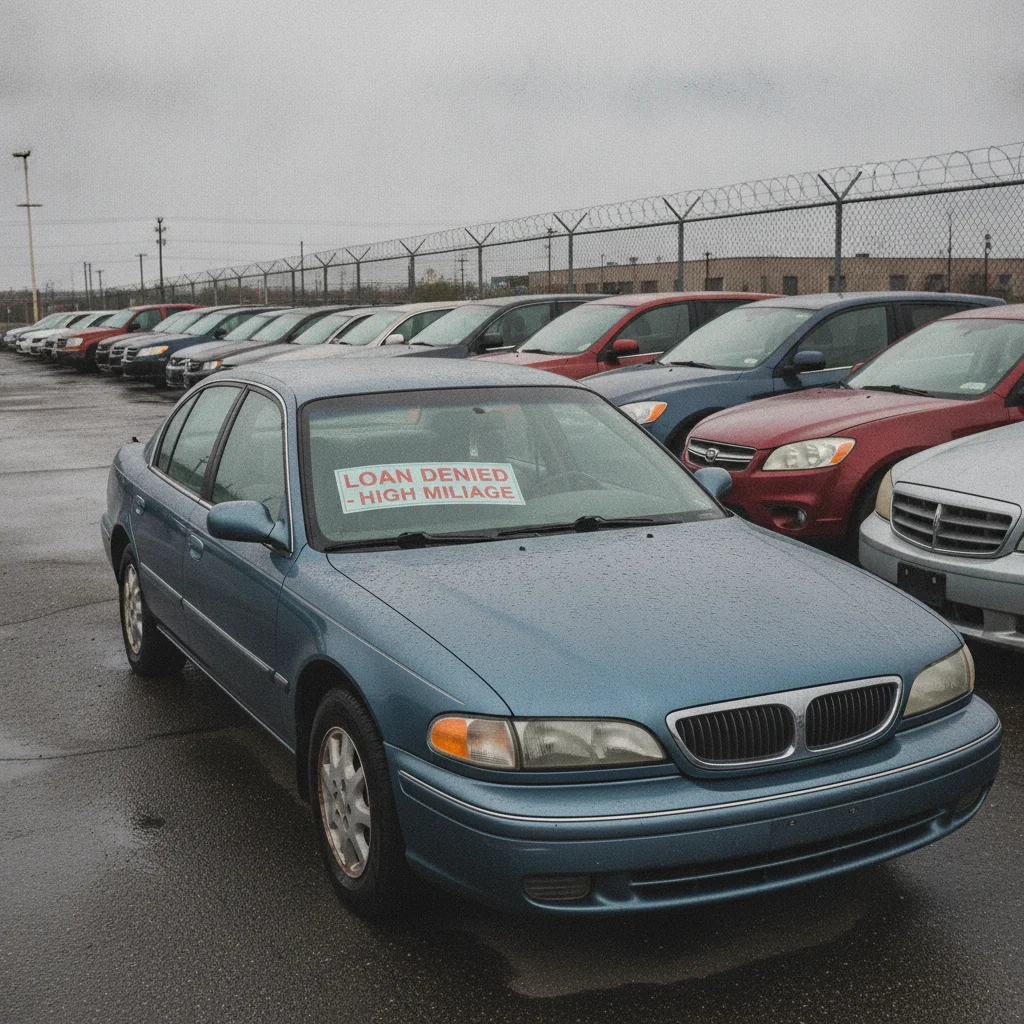
Buying a used car already means accepting a degree of uncertainty — unknown maintenance history, accelerated depreciation, and mechanical wear that's harder to predict than on a new vehicle. Add a subprime auto loan to that equation, and the margin for error shrinks considerably. You're paying a higher interest rate, often for a vehicle whose value is dropping faster than your loan balance — a condition known as being underwater or having negative equity.
This isn't a reason to avoid financing a used car. For many borrowers, it's the only practical path to reliable transportation. But it does mean you need to go in with eyes wide open, doing more due diligence than a buyer with excellent credit would need to.
A subprime auto loan can cost thousands more over its lifetime, and that cost is amplified when the vehicle itself is depreciating rapidly. The checklist below is designed to help you protect yourself on both fronts — the car and the loan — before you sign anything.
Think of this as your pre-signing audit. Work through it methodically, and you'll be in a far stronger position than most subprime borrowers who focus only on getting approved.
Tools and Resources You'll Need
Before you start working through the checklist, gather these resources. Having them in place before you visit a dealership or private seller will save you time and prevent you from making decisions under pressure.
Carfax or AutoCheck
Pull a full vehicle history report to check for accidents, title issues, odometer rollbacks, and ownership history.
Independent Mechanic
Conduct a pre-purchase inspection to identify hidden mechanical problems before you commit to the vehicle.
AnnualCreditReport.com
Access your free credit reports from all three bureaus to check for errors before lenders pull your credit.
Auto Loan Calculator
Calculate total repayment cost and compare loan scenarios across different rates, terms, and down payment amounts.
Kelley Blue Book or Edmunds
Verify the fair market value of any vehicle you're considering so you know whether the asking price is reasonable.
State DMV Title Search
Confirm the vehicle title is clean, lien-free, and not branded as salvage or flood-damaged.
Credit Union or Online Lender Pre-Approval
Obtain a competing loan offer before visiting a dealership to use as a benchmark against dealer financing.
Consumer Reports Reliability Ratings
Research the vehicle model's reliability history and common repair issues before committing to the purchase.
The Complete Checklist
Work through each group in order. The items marked must are non-negotiable — skipping them significantly increases your financial exposure. Items marked should are strongly recommended. Nice-to-have items improve your position but won't make or break the deal.
Before You Shop: Know Your Loan Parameters
Vehicle History and Condition
Loan Terms and Total Cost Review
Insurance, GAP, and Add-Ons
Don't Skip the Pre-Purchase Inspection
A pre-purchase inspection by an independent mechanic is the single most important step a used-car buyer can take — and subprime borrowers have even more at stake. If the car needs a $2,000 transmission repair six weeks after purchase, you're still on the hook for every loan payment. A $125 inspection can surface problems that would cost you thousands and leave you with no good options. Never let a dealer or seller pressure you into skipping this step.
Dealer Add-Ons Can Quietly Inflate Your Loan
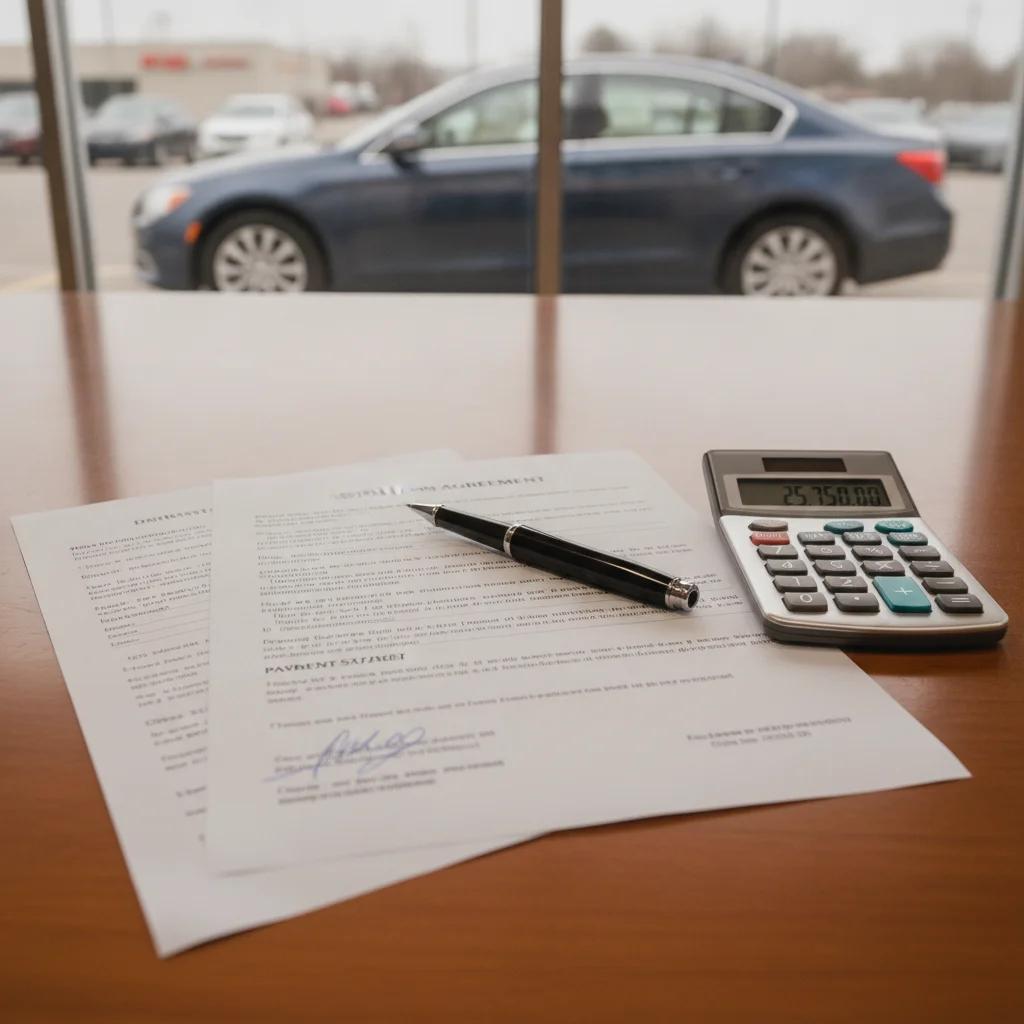
Dealers may roll extended warranties, GAP coverage, paint protection, and other products into your loan amount without drawing attention to the total cost. When these add-ons are financed at a subprime rate over several years, a $1,500 warranty can cost you $2,000 or more by payoff. Review the itemized purchase agreement line by line and decline anything you didn't specifically request.
Negative Equity Compounds Quickly on Older Vehicles
An older used car combined with a high-APR loan and a small down payment is a near-certain path to owing more than the car is worth for most of the loan term. If the vehicle is totaled or breaks down beyond repair, you could owe thousands with nothing to show for it. Consider whether a modest down payment — even $500–$1,000 more — can meaningfully reduce that risk before you sign.
Understanding Subprime Lender Restrictions on Used Vehicles
One of the most overlooked risks for bad-credit buyers is that subprime lenders frequently place restrictions on which vehicles they'll finance at all. If a car is too old or has too many miles, the lender may decline the loan — or approve it only at terms that make even less financial sense.
Subprime lenders often restrict financing to newer or lower-mileage vehicles, and these rules vary by lender. Common cutoffs include vehicles older than 8–10 model years or those with more than 100,000–120,000 miles. Some lenders set the limit even lower.
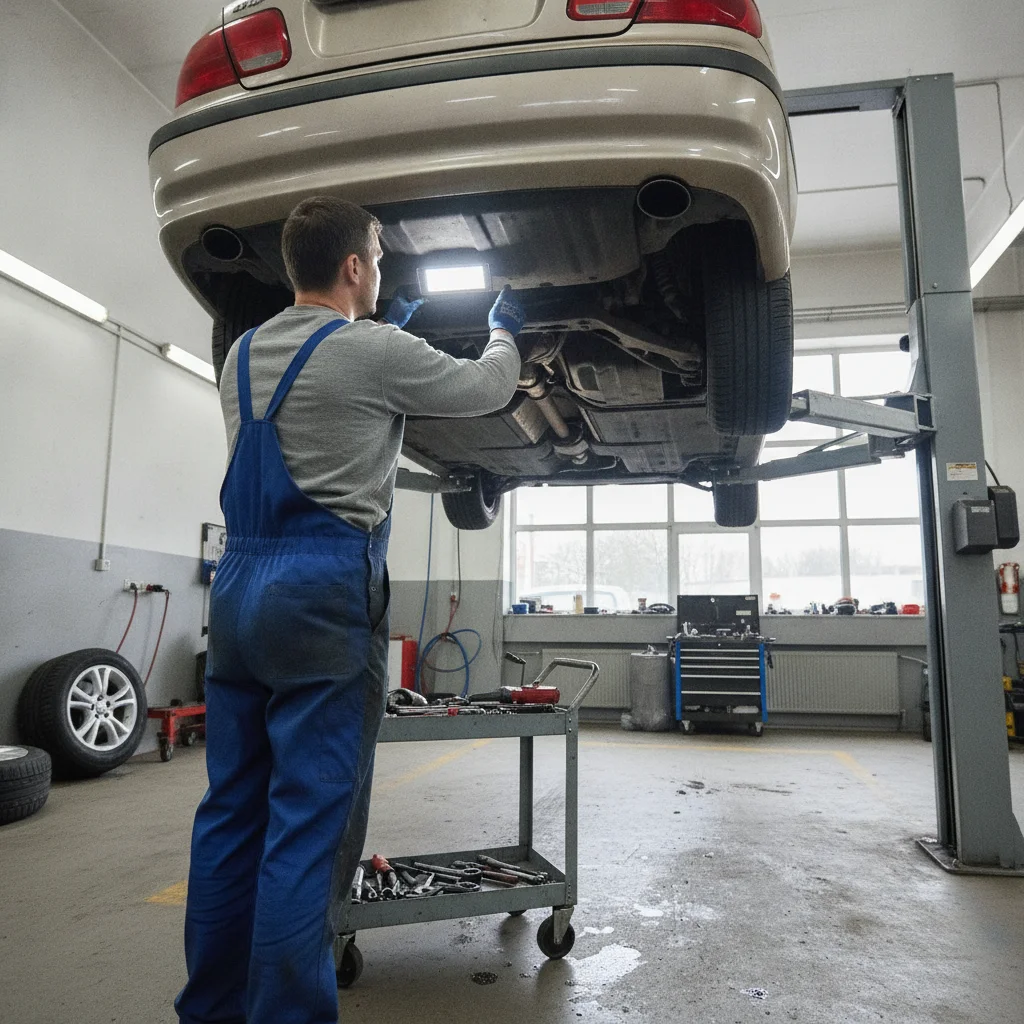
The practical consequence: you may fall in love with a $7,000 vehicle only to find your lender won't touch it. Or worse, a lender approves the loan but at a rate so high that the total repayment cost far exceeds the car's value over the loan term.
What to do: Before you shop for a vehicle, contact your lender (or get pre-approved) and ask specifically about vehicle age and mileage restrictions. This narrows your search upfront and prevents wasted time and emotional investment in cars that won't qualify.
Lender Vehicle Restrictions Can Kill a Deal Late
Subprime lenders often decline to finance vehicles that are too old or have too many miles — and they typically won't tell you this until you've already selected a car, negotiated a price, and submitted a full loan application. Finding out at the finish line costs you time, a hard credit inquiry, and significant emotional energy. Always confirm vehicle eligibility criteria with your lender before you start shopping, not after. This single step prevents more deal failures than almost any other preparation.
If you're comparing lenders, understand what terms you can realistically expect before walking into a dealership. Knowing the range of rates available to you prevents dealers from presenting an inflated rate as your only option.
Protecting Yourself After the Loan Is Signed
Once you've signed the financing agreement and driven the car off the lot, your risk profile shifts. Now it's about managing the loan responsibly and protecting yourself from the scenarios that send subprime borrowers into a financial spiral.
The most dangerous scenario is mechanical failure early in the loan term. You're making payments on a vehicle that no longer runs, and if you can't keep up, repossession follows quickly. Subprime loan agreements often have shorter cure periods — the window you have to catch up on missed payments before the lender can act — than prime loans.
When managed carefully, a subprime car loan doubles as a credit-building tool. Every on-time payment gets reported to the credit bureaus and contributes to score recovery. But a single late payment, a repossession, or a voluntary surrender can devastate the credit progress you've been building.
If you're struggling with terms, know that you have more leverage than you might think. Many bad-credit borrowers assume they have zero leverage — but that's not always true. Lenders would often rather renegotiate than go through the cost of repossession.
Consider also whether a co-signer could help you access better terms — not just for approval, but for a rate that makes the total cost of ownership more manageable. Compare the used-car loan experience against what you'd face buying new — in some cases, new-car incentive financing outperforms what subprime borrowers can get on a used vehicle.
Finally, if you want to understand more about evaluating used vehicles and the full purchasing process, our guide to buying used cars covers the end-to-end process in detail.

All claims are backed by peer-reviewed research. Sources on request.