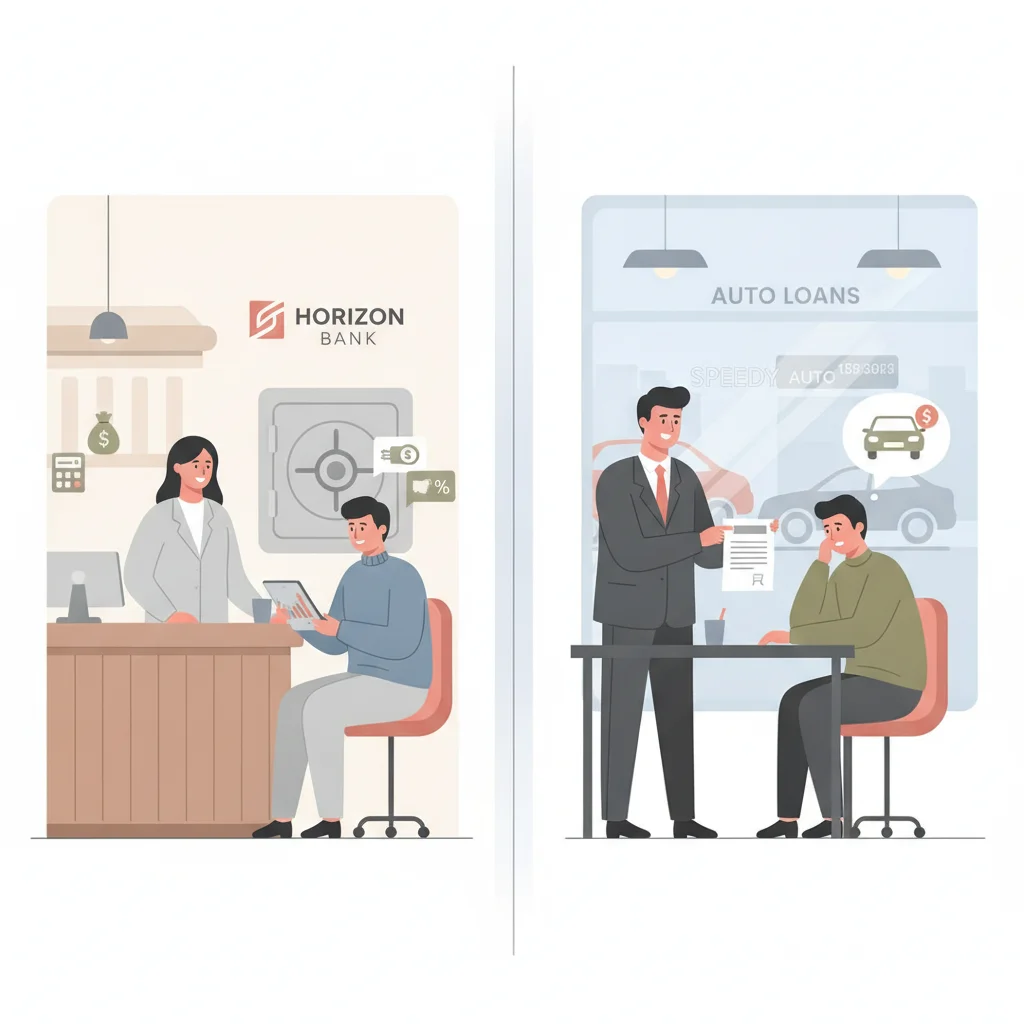
Key Takeaways
Approves borrowers banks consistently reject
BHPH underwriting focuses on income and down payment rather than credit scores, making approval realistic for borrowers with bankruptcy, repossession, or sub-500 credit histories.
Same-day approvals with minimal documentation
Most BHPH lots can complete the entire process — application, approval, and vehicle delivery — in a single visit, which matters when transportation is urgently needed.
No hard credit inquiry in many cases
Dealers who don't pull a full credit report protect borrowers from additional score drops at an already vulnerable time.
Flexible down payment negotiations possible
Unlike institutional lenders with fixed LTV requirements, some BHPH dealers will work with buyers on down payment structure, particularly if the vehicle is priced higher.
Potential to rebuild credit if dealer reports payments
A minority of BHPH dealers do report to credit bureaus — if yours does, consistent on-time payments can meaningfully improve your score over a 24–36 month loan term.
Interest rates far exceed any other financing option
BHPH APRs routinely range from 18% to 29%, compared to 12%–18% for subprime bank loans. On a $12,000 loan, this difference can cost an extra $2,500 or more over the loan term.
Most dealers don't report payments to credit bureaus
Without credit bureau reporting, years of on-time payments build zero credit history, leaving borrowers no better positioned for future lending than when they started.
GPS tracking and remote ignition disablers are standard
Dealers install these devices to protect their collateral — they are legal, but they mean a missed payment can leave you stranded within days, with limited recourse.
Inventory skews toward high-mileage, older vehicles
BHPH lots typically stock cars with 100,000+ miles that may need near-term maintenance. Buying a problem vehicle on a high-interest loan with no refund on down payment is a costly combination.
Vehicles are often priced above market value
BHPH dealers frequently mark up vehicle prices significantly, knowing buyers in crisis have fewer options and are less likely to price-shop extensively.
Limited consumer protections compared to bank lending
Because the dealer holds the loan internally rather than selling it to a regulated third party, certain federal consumer finance protections apply differently, and recourse for disputes is more limited.
Aggressive collections and repossession timelines
BHPH dealers move faster toward repossession than traditional lenders — sometimes as few as 10–15 days after a missed payment — and starter interrupt devices make the process nearly automatic.
Our Verdict
Buy here pay here financing fills a real gap for borrowers who have been turned down everywhere else. The accessibility is genuine — but so are the costs. Sky-high interest rates, GPS tracking, and non-reporting to credit bureaus mean BHPH is rarely a good long-term strategy. Treat it as a short-term bridge, not a preferred path.
BHPH is best suited for borrowers with severely damaged or no credit who need reliable transportation immediately and have exhausted every other financing option, including credit unions and subprime direct lenders.
What Buy Here Pay Here Actually Means
The phrase "buy here pay here" describes a specific dealership model where the lot sells you the car and lends you the money directly. There's no bank, no credit union, and no third-party lender involved. The dealer collects your payments — often weekly or bi-weekly — on-site or through an automated withdrawal.
This matters because the normal auto lending pipeline doesn't apply. At a traditional dealership, the finance office sends your application to multiple lenders who compete for your loan. At a BHPH lot, there's only one lender: the dealer. That single point of control shapes everything about how these loans work — the approval process, the interest rate, the repayment structure, and what happens if you miss a payment.

Most BHPH dealers target buyers with credit scores below 580, recent bankruptcies, repossessions, or no credit history at all. That's a real and large population — and for many of them, BHPH may be the only path to getting a car financed at all. Understanding the model clearly is the first step to using it wisely.
It's worth distinguishing BHPH from subprime dealer financing. Some traditional dealerships arrange loans through subprime lenders like third-party finance companies that specialize in bad credit. That's different from BHPH, where the dealer itself holds your loan on their own books. See how dealer financing compares to direct lending for subprime borrowers to understand each path before you commit.
The Approval Process: Why It's Easier Than It Sounds
BHPH dealers approve people that banks flatly decline. Their underwriting criteria are radically different — instead of leaning heavily on your credit score, most BHPH dealers focus on three things: proof of income, proof of residence, and the size of your down payment.
Bring recent pay stubs or bank statements showing consistent income, a utility bill or lease showing your address, and a meaningful down payment — typically $500 to $2,000 depending on the vehicle — and many BHPH lots will hand you keys the same day. Some advertise "no credit check" entirely, though many still run a soft inquiry to verify identity rather than score you.
BHPH vs. Subprime Dealer Financing: A Key Distinction
Buy here pay here is not the same as a traditional dealership arranging a subprime loan through a third-party lender. In the latter, an outside finance company holds your loan and is subject to federal lending regulations. At a BHPH lot, the dealer holds the loan on their own books — meaning different rules apply and your consumer protections can differ significantly. Always clarify which type of arrangement you're entering before signing.
Starter Interrupt Devices: Know Your State's Rules
While starter interrupt devices are legal in most states, some states have begun regulating when and how they can be activated. A handful require minimum notice periods before a dealer can disable a vehicle. Look up your state's rules before signing a BHPH contract — and if your state requires advance notice, verify that the contract reflects it.
Plan an Exit Strategy Before You Sign
The smartest BHPH borrowers treat the loan as temporary from day one. Make every payment on time, track your credit score monthly using a free service, and set a calendar reminder at the 12-month mark to shop for refinancing. Even a modest credit score improvement can open the door to a refinance that cuts your rate significantly and saves hundreds of dollars.
This accessibility is legitimately useful in crisis situations. If your only car just died, you've lost a job because of it, and no bank will touch you, a BHPH approval in two hours has real value. The question is always what that access costs you — and the answer requires reading every line of the contract.
The contrast with the pre-approval path is stark. Pre-approved financing gives you negotiating leverage that simply doesn't exist at a BHPH lot, where the dealer controls both the price and the loan terms. If there's any chance you qualify for even a basic pre-approval, pursue it first.
20%+
Typical BHPH APR range
Industry analysts and consumer advocacy groups consistently document BHPH interest rates averaging between 18% and 29% APR, far above the subprime bank average.
1 in 4
BHPH loans ending in repossession
The National Independent Automobile Dealers Association has reported repossession rates at BHPH lots significantly higher than traditional auto lending, with some estimates near 25%.
$500–$2,000
Typical BHPH down payment required
Most buy here pay here dealers require a cash down payment in this range before financing is extended, with higher down payments often securing slightly lower rates.
~30%
BHPH dealers reporting to credit bureaus
Estimates suggest only a minority of buy here pay here dealers report payment history to major credit bureaus, limiting credit-building opportunities for most borrowers.
The Real Cost of Convenience: Interest Rates and Fees
Here is where BHPH financing diverges sharply from even subprime bank loans. The average BHPH interest rate falls between 18% and 29% APR — and some lots charge higher. For comparison, even borrowers with poor credit scores in the 500–580 range can often find bank or credit union auto loans in the 12%–18% range if they shop carefully.
To make this concrete: take a $10,000 vehicle loan at 25% APR over 36 months. Your monthly payment is approximately $397, and you'll pay roughly $4,300 in interest over the life of the loan — meaning you effectively paid $14,300 for a $10,000 car. At 15% APR from a direct lender, that same loan costs about $2,400 in interest. The gap is nearly $2,000 on a modest loan.
Beyond the interest rate, watch for:
- Down payment requirements that are non-negotiable and sometimes inflated
- Dealer add-ons like warranties, GAP coverage, and service contracts rolled into the loan at marked-up prices
- Shorter loan terms (often 24–36 months) that create high monthly payments
- Late fees that can be aggressive — some dealers charge fees after just a few days
Always ask for the out-the-door price, the APR in writing, and the total amount you'll repay over the loan term. These three numbers tell the real story. Understanding when dealer financing genuinely beats outside options can help you compare more effectively.
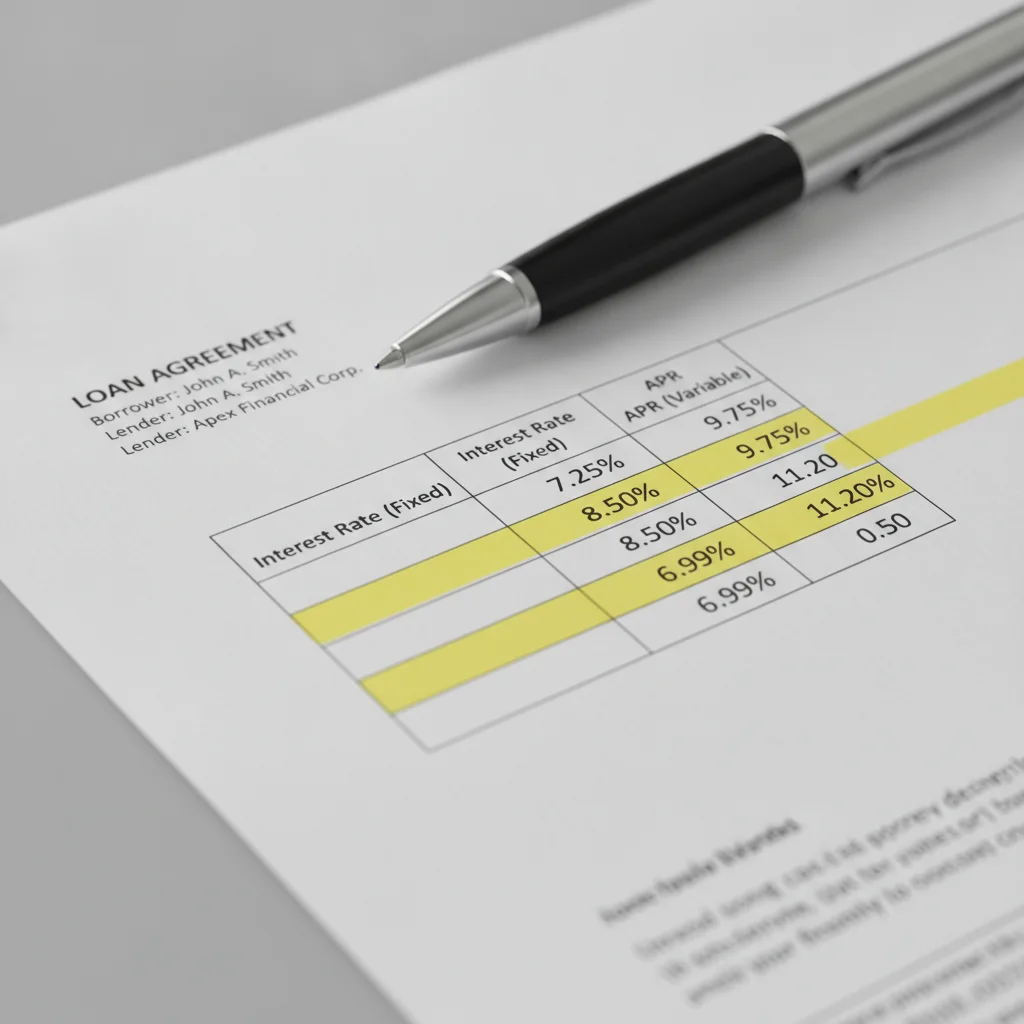
Pros and Cons of Buy Here Pay Here Financing
No financing option is entirely good or entirely bad — BHPH included. Here's an honest accounting of what works in your favor and what works against you.
Approves borrowers banks consistently reject
BHPH underwriting focuses on income and down payment rather than credit scores, making approval realistic for borrowers with bankruptcy, repossession, or sub-500 credit histories.
Same-day approvals with minimal documentation
Most BHPH lots can complete the entire process — application, approval, and vehicle delivery — in a single visit, which matters when transportation is urgently needed.
No hard credit inquiry in many cases
Dealers who don't pull a full credit report protect borrowers from additional score drops at an already vulnerable time.
Flexible down payment negotiations possible
Unlike institutional lenders with fixed LTV requirements, some BHPH dealers will work with buyers on down payment structure, particularly if the vehicle is priced higher.
Potential to rebuild credit if dealer reports payments
A minority of BHPH dealers do report to credit bureaus — if yours does, consistent on-time payments can meaningfully improve your score over a 24–36 month loan term.
Interest rates far exceed any other financing option
BHPH APRs routinely range from 18% to 29%, compared to 12%–18% for subprime bank loans. On a $12,000 loan, this difference can cost an extra $2,500 or more over the loan term.
Most dealers don't report payments to credit bureaus
Without credit bureau reporting, years of on-time payments build zero credit history, leaving borrowers no better positioned for future lending than when they started.
GPS tracking and remote ignition disablers are standard
Dealers install these devices to protect their collateral — they are legal, but they mean a missed payment can leave you stranded within days, with limited recourse.
Inventory skews toward high-mileage, older vehicles
BHPH lots typically stock cars with 100,000+ miles that may need near-term maintenance. Buying a problem vehicle on a high-interest loan with no refund on down payment is a costly combination.
Vehicles are often priced above market value
BHPH dealers frequently mark up vehicle prices significantly, knowing buyers in crisis have fewer options and are less likely to price-shop extensively.
Limited consumer protections compared to bank lending
Because the dealer holds the loan internally rather than selling it to a regulated third party, certain federal consumer finance protections apply differently, and recourse for disputes is more limited.
Aggressive collections and repossession timelines
BHPH dealers move faster toward repossession than traditional lenders — sometimes as few as 10–15 days after a missed payment — and starter interrupt devices make the process nearly automatic.
The single biggest strategic mistake buyers make at BHPH lots is treating the monthly payment as the only number that matters. Dealers know this and structure deals accordingly — stretching terms, adjusting down payments, or inflating vehicle prices to hit a number you find affordable. Always calculate the total repayment amount before signing.
The Hidden Clauses Most Buyers Never Read
BHPH contracts contain provisions that would surprise most buyers — and dealers are not legally required to volunteer them during the pitch. Here are the most common ones to know before you sit down.
GPS Tracking Devices
The majority of BHPH dealers install a GPS tracker on every vehicle they sell. This allows them to locate the car if you default. Some contracts also include a starter interrupt device — a small unit that can remotely disable the car's ignition after a missed payment, sometimes with as little as 24–48 hours' notice. These devices are legal in most states, but they must be disclosed in your contract. Read the contract. If you can't find the disclosure, ask directly: "Is there a GPS or starter interrupt device on this car?"
Mandatory In-Person Payments
Some BHPH lots require you to come in to make payments rather than pay online or by mail. This is partly a collections strategy — it's easier to discuss a payment plan face-to-face and harder for you to simply ignore the situation. It also means missing a payment is immediately visible. Know the payment method requirements before you commit.
No Refund on Down Payments
BHPH down payments are almost universally non-refundable, even if you return the car within days or the vehicle turns out to have undisclosed problems. Get the vehicle independently inspected by a mechanic you trust before handing over a down payment. This inspection typically costs $100–$150 and is almost always worth it.
BHPH vs. Subprime Dealer Financing: A Key Distinction
Buy here pay here is not the same as a traditional dealership arranging a subprime loan through a third-party lender. In the latter, an outside finance company holds your loan and is subject to federal lending regulations. At a BHPH lot, the dealer holds the loan on their own books — meaning different rules apply and your consumer protections can differ significantly. Always clarify which type of arrangement you're entering before signing.
Starter Interrupt Devices: Know Your State's Rules
While starter interrupt devices are legal in most states, some states have begun regulating when and how they can be activated. A handful require minimum notice periods before a dealer can disable a vehicle. Look up your state's rules before signing a BHPH contract — and if your state requires advance notice, verify that the contract reflects it.
Plan an Exit Strategy Before You Sign
The smartest BHPH borrowers treat the loan as temporary from day one. Make every payment on time, track your credit score monthly using a free service, and set a calendar reminder at the 12-month mark to shop for refinancing. Even a modest credit score improvement can open the door to a refinance that cuts your rate significantly and saves hundreds of dollars.
Limited or No Credit Reporting
Many BHPH dealers do not report payment history to the major credit bureaus — Equifax, Experian, or TransUnion. This means making 36 on-time payments does nothing for your credit score. If building credit is part of your goal (and it should be), ask explicitly: "Do you report payments to the credit bureaus, and if so, which ones?" Get the answer in writing.
When BHPH Makes Sense — and When It Doesn't
Buy here pay here is not inherently predatory, but it is expensive — and it's only the right choice in specific circumstances.
BHPH may be a reasonable option if:
- You have a recent bankruptcy, multiple repossessions, or a score under 500 and have been denied by every other lender
- You need a vehicle quickly for work and losing income is a bigger financial risk than a high-interest loan
- You can afford the payments comfortably without stretching your budget
- You plan to pay the loan off early, reducing total interest significantly
- The dealer does report to credit bureaus and you can verify this
BHPH is likely the wrong choice if:
- You haven't yet tried a credit union — many offer subprime programs that are far cheaper
- You could qualify for a pre-approved loan, even at a higher rate from a direct lender
- The monthly payment would consume more than 15% of your take-home pay
- You're counting on the loan to rebuild your credit but the dealer doesn't report payments
- You're being pressured to decide without time to read the full contract
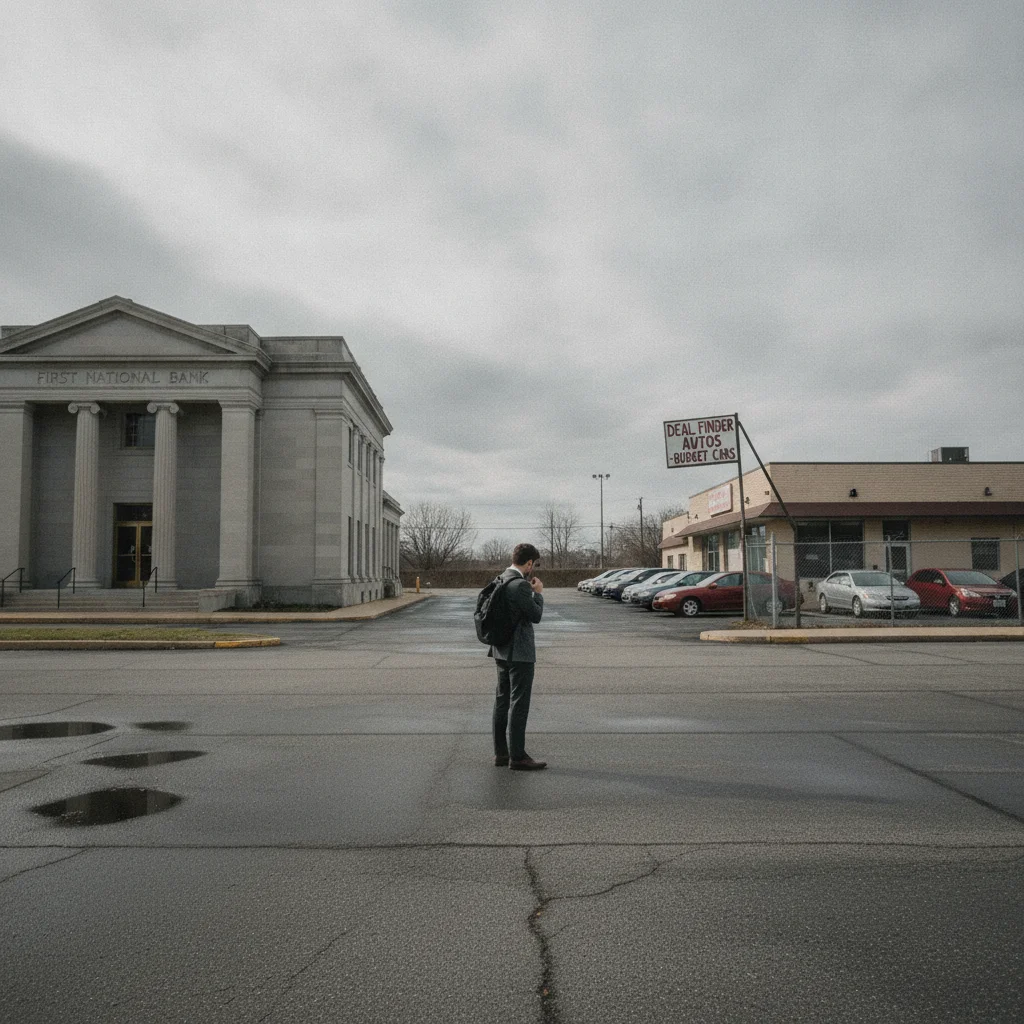
The most important alternative to explore before BHPH is a credit union that specializes in second-chance or subprime auto lending. These institutions are member-owned and often more flexible than banks — and their rates, even for challenged credit, are almost always lower than BHPH. Compare dealer financing against outside preapprovals to see whether there's a better deal available before defaulting to BHPH.
How to Protect Yourself If You Do Use BHPH
If BHPH is genuinely your best available option, these steps will help you minimize the damage and get the most value from the arrangement.
- Get the vehicle independently inspected. Pay a mechanic $100–$150 to look the car over before you sign anything or hand over a down payment. BHPH inventory often includes high-mileage vehicles with deferred maintenance.
- Negotiate the vehicle price, not just the monthly payment. The sticker price is almost always negotiable at BHPH lots. A lower purchase price means less interest over the life of the loan.
- Ask about prepayment penalties. Some BHPH loans penalize you for paying off early. If there's no prepayment penalty, paying extra principal each month can dramatically reduce your total interest cost.
- Confirm credit reporting in writing. If the dealer says they report to bureaus, ask them to identify which ones and get it documented in the contract, not just verbally.
- Understand the GPS and interrupt device terms. Know exactly how many days late triggers a disable, what the notification process is, and whether you have a grace period.
- Set up automatic payments. BHPH dealers react quickly to missed payments. Automating payments protects you from accidental lapses — just make sure the funds are there on payment day.
BHPH vs. Subprime Dealer Financing: A Key Distinction
Buy here pay here is not the same as a traditional dealership arranging a subprime loan through a third-party lender. In the latter, an outside finance company holds your loan and is subject to federal lending regulations. At a BHPH lot, the dealer holds the loan on their own books — meaning different rules apply and your consumer protections can differ significantly. Always clarify which type of arrangement you're entering before signing.
Starter Interrupt Devices: Know Your State's Rules
While starter interrupt devices are legal in most states, some states have begun regulating when and how they can be activated. A handful require minimum notice periods before a dealer can disable a vehicle. Look up your state's rules before signing a BHPH contract — and if your state requires advance notice, verify that the contract reflects it.
Plan an Exit Strategy Before You Sign
The smartest BHPH borrowers treat the loan as temporary from day one. Make every payment on time, track your credit score monthly using a free service, and set a calendar reminder at the 12-month mark to shop for refinancing. Even a modest credit score improvement can open the door to a refinance that cuts your rate significantly and saves hundreds of dollars.
Finally, make a plan to refinance. Once you've made 12 months of on-time payments and your credit has improved — even modestly — explore refinancing the remaining balance through a credit union or bank. Even dropping from 24% to 14% APR on a remaining $6,000 balance saves hundreds of dollars. See how a preapproval changes your position when you're ready to make that move.

All claims are backed by peer-reviewed research. Sources on request.