
Key Takeaways
Why the Offer Sheet Matters More Than the Verbal Quote
The number a salesperson announces after your appraisal walk-around is not the offer. It's the opener. The real offer is the document they hand you — and most sellers glance at the total figure, feel relief or mild disappointment, and sign or negotiate from there without ever understanding what they agreed to.
That's a costly habit. A typical dealer trade-in offer sheet contains six to twelve individual lines, and the specific wording of each one determines how much money you actually walk away with. Terms like trade allowance, actual cash value, reconditioning, and net trade are not interchangeable — each describes a different calculation, and each represents a potential negotiating point you'll miss if you don't know what you're reading.
This guide walks through every major line item you'll encounter on a dealer's trade-in offer sheet, explains what each one actually means, and shows you how to use that knowledge to negotiate from a position of information rather than confusion.
What you will need
Before your appointment, take 10 minutes to review how to prep your car before the appraisal — small details like cleaning the interior or locating the second key set can directly affect how the appraiser scores your vehicle's condition.
KBB Instant Cash Offer
Generates a binding written appraisal you can present as a benchmark at the dealership.
CarMax or Carvana Online Quote
Provides a competing offer that establishes a market floor for your vehicle's value.
Lender Payoff Quote (10-day written payoff)
Confirms your exact remaining loan balance so you can verify the dealer's payoff figure on the offer sheet.
Vehicle History Report (Carfax or AutoCheck)
Allows you to anticipate any deductions the dealer will cite based on accident history or title issues.
Calculator or Spreadsheet
Lets you quickly run the net trade math — offer minus payoff minus fees — to see what you're actually receiving.
Phone Camera
Documents the exact offer sheet terms before you leave the appraisal desk.
The Anatomy of a Trade-In Offer Sheet
Dealer offer sheets vary in format by region, dealer group, and software platform, but every legitimate trade-in offer contains the same core structure. Understanding that structure before you see one for the first time is the difference between a confident negotiation and a confused one.
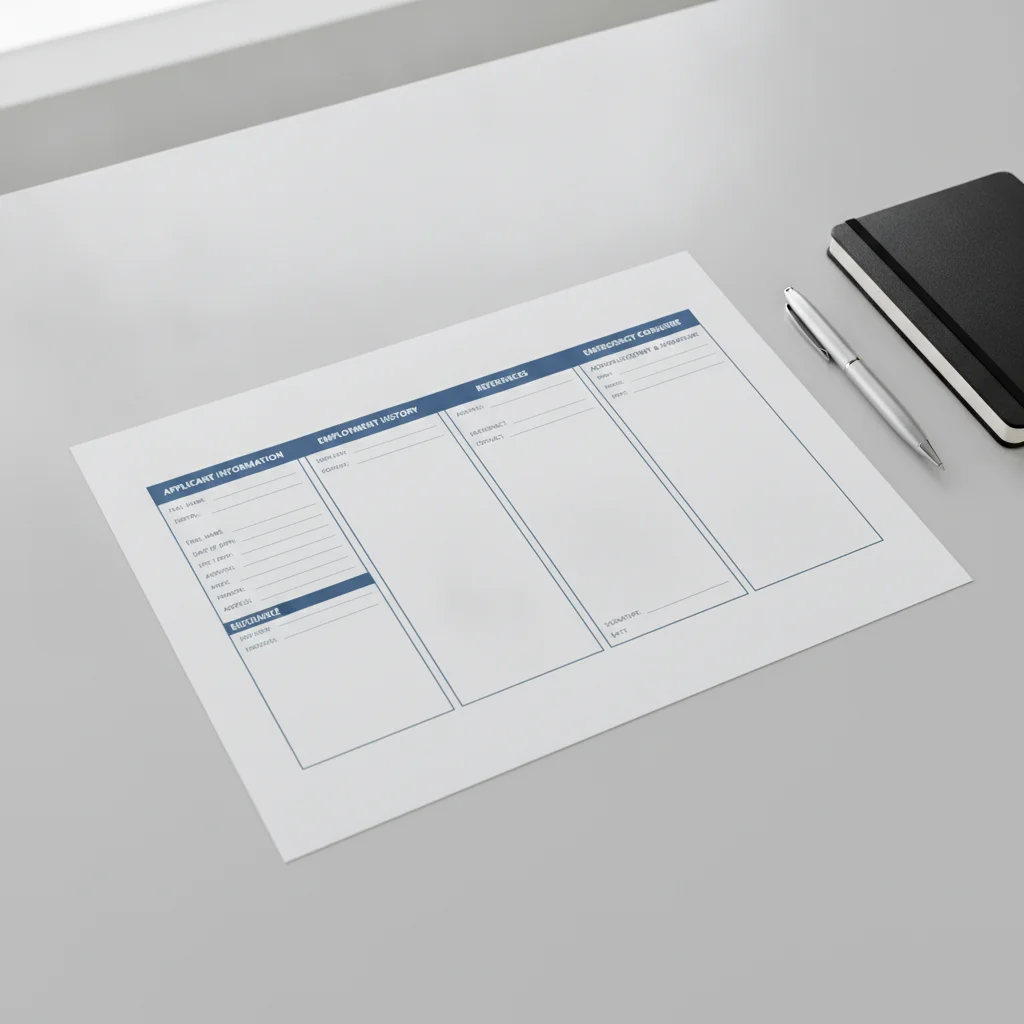
Here's how the document typically flows from top to bottom:
- Vehicle Identification Block
- Year, make, model, trim, VIN, and odometer reading. Verify these before anything else — a mismatch on trim or mileage directly affects the valuation and should be corrected on the spot.
- Appraised Value / Actual Cash Value (ACV)
- The dealer's wholesale valuation of your vehicle in its current condition. This is the baseline from which all adjustments are made.
- Deductions
- Line items reducing the ACV: reconditioning, mechanical repairs, cosmetic work, mileage adjustments, and market conditions.
- Adjusted Value / Net ACV
- ACV minus all deductions. This is the dealer's true cost basis for your vehicle.
- Trade Allowance
- The credit applied toward your purchase. May equal the net ACV or may be inflated as part of a blended deal structure.
- Payoff (if applicable)
- The dealer's estimate of your outstanding loan balance. Net equity or negative equity is calculated here.
- Net Trade Value
- Trade allowance minus payoff. The actual dollar value you receive in the transaction.
- Offer Expiration and Conditions
- The date and time the offer expires and any conditions — purchase requirement, title verification, etc. — attached to its validity.
The steps below walk through how to read and challenge each of these sections in the order you'll encounter them. For a parallel look at how these figures translate into the final purchase contract, the Paperwork & Contracts hub has additional context on what to verify before signing.
Locate the Actual Cash Value (ACV) Line
The Actual Cash Value (ACV) is what the dealer believes your car is worth as a used vehicle on their lot — before any adjustments for your deal. It's the most important number on the page and it's often buried or mislabeled.
Look for terms like ACV, Appraised Value, Wholesale Value, or Vehicle Appraisal. Some dealers list this number clearly; others present only the trade allowance (see Step 2) and leave the ACV off the customer-facing version entirely.
If you don't see an explicit ACV line, ask the salesperson point-blank: "What is the appraised cash value of my vehicle before any deal adjustments?" Write that number down separately.
Distinguish Trade Allowance from Cash Value
The trade allowance is the number the dealer credits toward your purchase — and it is frequently higher than the ACV. That sounds like good news, but it usually isn't.
Dealers inflate the trade allowance to make the trade look generous while keeping the purchase price of the new vehicle firm or slightly elevated. This is called a value-added trade or informally a bump. You're not actually getting more money — the margin is recovered on the other side of the deal.
The only way to evaluate a trade allowance honestly is to also negotiate the purchase price of the vehicle you're buying to a fair market level independently. If the dealer resists separating the two conversations, that's a red flag. See Signs a Dealer Is Undervaluing Your Trade-In for a full list of tactics like this one.
Scrutinize Every Deduction Line
Below the ACV or trade allowance, most offer sheets include a deductions section. Common line items include:
- Reconditioning / Recon: Estimated cost to bring the vehicle to resalable condition. This is the dealer's most subjective number and the most frequently inflated.
- Mechanical: Cited repairs — brakes, tires, belts, etc. Should be itemized; if it's a single round number, push back.
- Cosmetic: Paint, dents, interior damage. Request the appraiser to walk you through each specific item they documented.
- Market Adjustment: Sometimes used to lower value on slow-selling vehicle segments or oversupplied models. Legitimate but negotiable if you have competing offers.
- Mileage Penalty: Deductions for mileage above average (typically 12,000–15,000 miles/year). Verify their calculation against your actual mileage.
For each deduction, ask: "Can you show me the specific items driving this cost?" Vague or lump-sum deductions are the most negotiable lines on the entire sheet.
[in_content_images:0]Verify the Payoff Figure If You Have a Loan
If your vehicle is financed, the offer sheet will include a payoff line — the amount owed to your lender. The difference between your trade value and the payoff is your net equity (positive) or negative equity (the amount you're underwater).
Dealers typically call the lender or use a third-party service to estimate payoff, but these figures can be several days old and may not account for recent payments or interest accrual. If the dealer's payoff figure is lower than your actual balance, you'll be short — and that difference doesn't disappear; it gets rolled into your next loan.
Always bring a written 10-day payoff quote directly from your lender and compare it line-for-line against what's on the offer sheet. If there's a discrepancy of more than $50–$100, ask the dealer to call for an updated figure before you proceed.
For a broader look at how payoff and equity figures appear in the final purchase contract, see Trade-In Documentation: What the Dealership Puts in Writing.
[important_callout]Check the Offer Expiration and Conditional Language
Most dealer offer sheets include an expiration clause — typically 24–72 hours. Some also contain conditional language such as:
- "Subject to title verification"
- "Contingent on odometer confirmation"
- "Valid only with purchase of a vehicle from [dealership name]"
The expiration is almost always a pressure mechanism rather than a genuine business constraint. Wholesale vehicle values don't move materially in 48 hours. If a dealer tells you the offer expires and won't be renewed, that's negotiating theater — a competing appraisal from CarMax or Carvana that you can redeem within 7 days is a direct counter to that tactic.
The conditional language is more consequential. An offer tied exclusively to purchasing from that same dealer gives you no leverage to shop the trade elsewhere. An offer sheet that reads as a standalone cash purchase eliminates that dependency — ask whether the dealer will honor the value as a straight purchase with no new-car transaction attached.
Calculate Your Net Position and Compare
Once you've worked through every line, do the final math:
Trade Allowance (or ACV)
− Reconditioning Deductions
− Other Deductions
− Payoff Balance (if applicable)
= Net Trade Position
This net figure is what the trade is actually worth to you in this deal. Compare it against your best online offer (CarMax, Carvana, KBB ICO) using the same formula — those offers have zero deductions and no payoff assumptions built in, so compare apples to apples by subtracting your payoff from those figures as well.
If the dealer's net position is within $200–$500 of your best competing offer and the new-car price is independently negotiated to market, you're likely in a fair deal. If the gap is $1,000 or more, you have clear grounds to either counter or walk.
For a deeper look at the full negotiation strategy surrounding this process, see The Trade-In Playbook.
[in_content_images:1]Negotiate Specific Lines, Not the Total
Most sellers make the mistake of countering a trade offer with a single number: "I want $2,000 more." That framing puts you in a weak position because the dealer can simply say no without justification.
A more effective approach is to challenge individual lines:
- "Your recon estimate is $1,800. I have a receipt showing new brakes and tires from three months ago — that should reduce that number substantially."
- "Your mileage calculation shows 14,000 miles/year average, but my actual mileage is 11,200/year. The penalty doesn't apply."
- "CarMax gave me $18,500 yesterday with no deductions. Your ACV of $16,900 needs to be explained line by line before I'll consider it."
Specific, documented challenges are much harder for an appraiser to dismiss than a round-number counter. Each line you win back directly adds to your net position. For additional context on how to present your car to support these arguments, see Before You Drive to the Dealership.
After You've Read the Sheet: Your Next Move
Once you've worked through every line and calculated your net trade position, you have three choices:
- Accept the offer if it's within a reasonable range of your competing quotes and the new-car price is independently verified as fair.
- Counter specific lines using the documented approach in Step 7. This is usually the right call if deductions seem inflated or the ACV is materially below market.
- Walk and sell elsewhere if the gap between the offer and your best alternative (CarMax, Carvana, or private party) exceeds $1,000–$1,500 and the dealer won't move. A private party sale will almost always yield more — the question is whether your time is worth the difference.
Whatever you decide, make sure the offer sheet terms you negotiated are reflected exactly in the final purchase agreement. Dealers occasionally rework numbers between the sales desk and the finance office. Cross-reference your photographed copy of the offer sheet against the line items in the contract before you sign anything.
For a full guide to recognizing when a dealer is systematically undervaluing your vehicle — not just on one line, but across the entire appraisal process — see Signs a Dealer Is Undervaluing Your Trade-In.

If you want to go deeper on the full trade-in negotiation from research through final signature, The Trade-In Playbook covers every phase in detail. And if you're curious how the internal appraisal form the dealer fills out compares to the customer-facing offer sheet, How to Read a Trade-In Appraisal Sheet walks through what the back-office version actually contains.
Trade Allowance Is Not the Same as Cash Value
Dealers sometimes inflate the 'trade allowance' line to make the offer look generous while simultaneously marking up the purchase price of the car you're buying. The trade allowance is only meaningful when compared against a fair market purchase price — evaluate both numbers independently.
Reconditioning Estimates Are Rarely Itemized
A blanket 'reconditioning' deduction of $1,000–$2,500 is standard on many offer sheets, but dealerships rarely explain what specific repairs justify the number. Don't accept vague deductions. Ask for a written breakdown of every cost they're projecting before agreeing to any offer.
Get Three Offers Before You Walk Into a Dealer
Instant online appraisals from CarMax, Carvana, and KBB Instant Cash Offer take about 10 minutes each and give you a hard floor on value. Walking into a dealer with those numbers in hand changes the negotiation entirely — you're no longer guessing whether the offer is fair.
Ask for the Offer Sheet Before You Discuss the New Car
Dealers prefer to blend the trade and purchase into a single monthly payment conversation. Resist that. Request the trade-in offer sheet in writing and negotiate it to a number you're satisfied with before you discuss the price of anything you're buying. Keeping the transactions separate protects you on both sides.
Photograph the Offer Sheet Before You Leave
Dealers occasionally revise offer terms between the appraisal desk and the finance office. Take a clear photo of every page of the offer sheet the moment it's handed to you. If the numbers change later, you have documentation to challenge the revision.
Never Sign the Offer Sheet Without Reading It
In some dealerships, the trade-in offer sheet doubles as a conditional agreement or intent-to-sell document. Signing it without reading every line can be interpreted as your acceptance of the stated terms. Ask explicitly whether the document you're reviewing is 'just an offer' or a binding agreement before you put pen to paper.
Payoff Numbers on the Sheet May Be Wrong
If you have an outstanding loan, the dealer will estimate your payoff balance — often using figures that are days or weeks old. If the actual payoff is higher than what's shown, the difference comes out of your net value. Always call your lender the morning before your appointment and get a 10-day payoff quote in writing.

All claims are backed by peer-reviewed research. Sources on request.