Key Takeaways
Option A
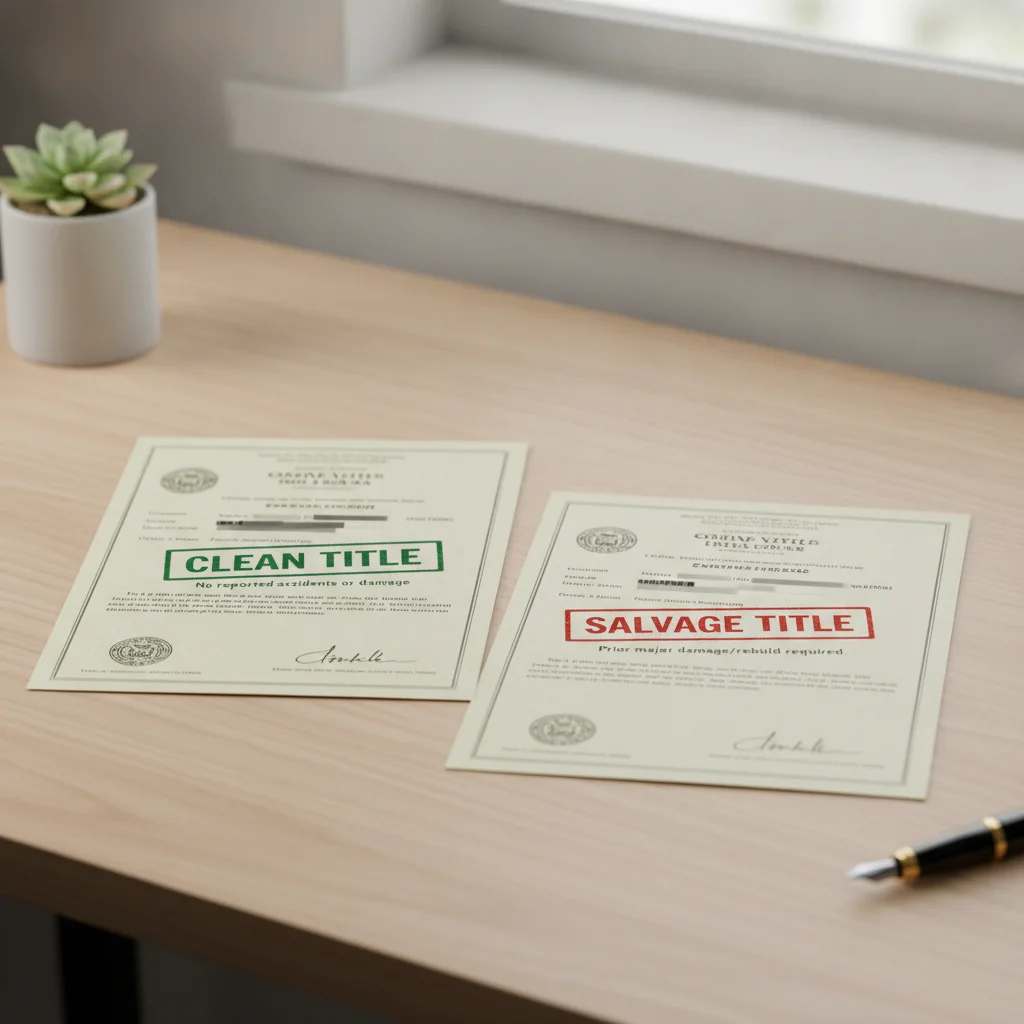
Clean Title
The standard, unrestricted ownership document every buyer expects.
Best for: Sellers who want maximum resale value, the widest buyer pool, and straightforward financing options for buyers.
Option B
Salvage Title
A permanently branded designation signaling significant prior damage.
Best for: Sellers pricing competitively for cash buyers, rebuilders, or parts buyers who understand the vehicle's history upfront.
If you want the fastest, least complicated sale
Clean Title
Clean-title vehicles attract the broadest buyer pool, qualify for conventional financing, and rarely require additional negotiation over history disclosures.
If your vehicle was totaled and repaired and you need to sell it
Salvage Title
Accept that the salvage designation is permanent, price accordingly, and target cash buyers or specialty rebuilders — transparency here protects you legally.
If you're selling to a dealership or auction house
Clean Title
Dealers typically offer wholesale pricing on salvage vehicles or refuse them entirely; a clean title gives you far more leverage in dealer-to-consumer negotiations.
If your buyer is a mechanic, rebuilder, or parts reseller
Salvage Title
These buyers are comfortable with branded titles and often seek them out at reduced prices — this niche market is your best avenue for a salvage-title sale.
If you want buyers to have full financing flexibility
Clean Title
Buyers of clean-title vehicles can access traditional auto loans from banks and credit unions; salvage titles close off most conventional lending options entirely.
What Each Title Designation Actually Means
Before you list your vehicle, you need to understand precisely what your title says — and what it signals to every buyer, lender, and insurer who sees it. Title designations aren't just bureaucratic labels; they carry legal and financial weight that follows the vehicle permanently.
Clean Title: The Baseline Standard
A clean title means the vehicle has passed through ownership without being declared a total loss by an insurance company, and carries no official branding that restricts its sale or use. It does not mean the car has never been in an accident. It means no insurer has written the car off as costing more to repair than its market value. A clean title vehicle could have had minor collision damage that was repaired out-of-pocket — as long as no total-loss claim was filed, the title stays clean.
This distinction matters for sellers because some buyers mistakenly equate "clean title" with "accident-free." That's not what the designation guarantees. For a full breakdown of what each title category covers, see our guide to title types.
Salvage Title: A Permanent Brand
A salvage title is issued by a state DMV after an insurance company declares a vehicle a total loss — meaning the estimated repair cost exceeds a threshold percentage of the car's actual cash value (ACV). That threshold varies by state, typically ranging from 75% to 100% of ACV. Once a vehicle receives a salvage brand, that designation is permanent. No amount of repairs, inspections, or paperwork can restore a salvage-branded title to clean status.
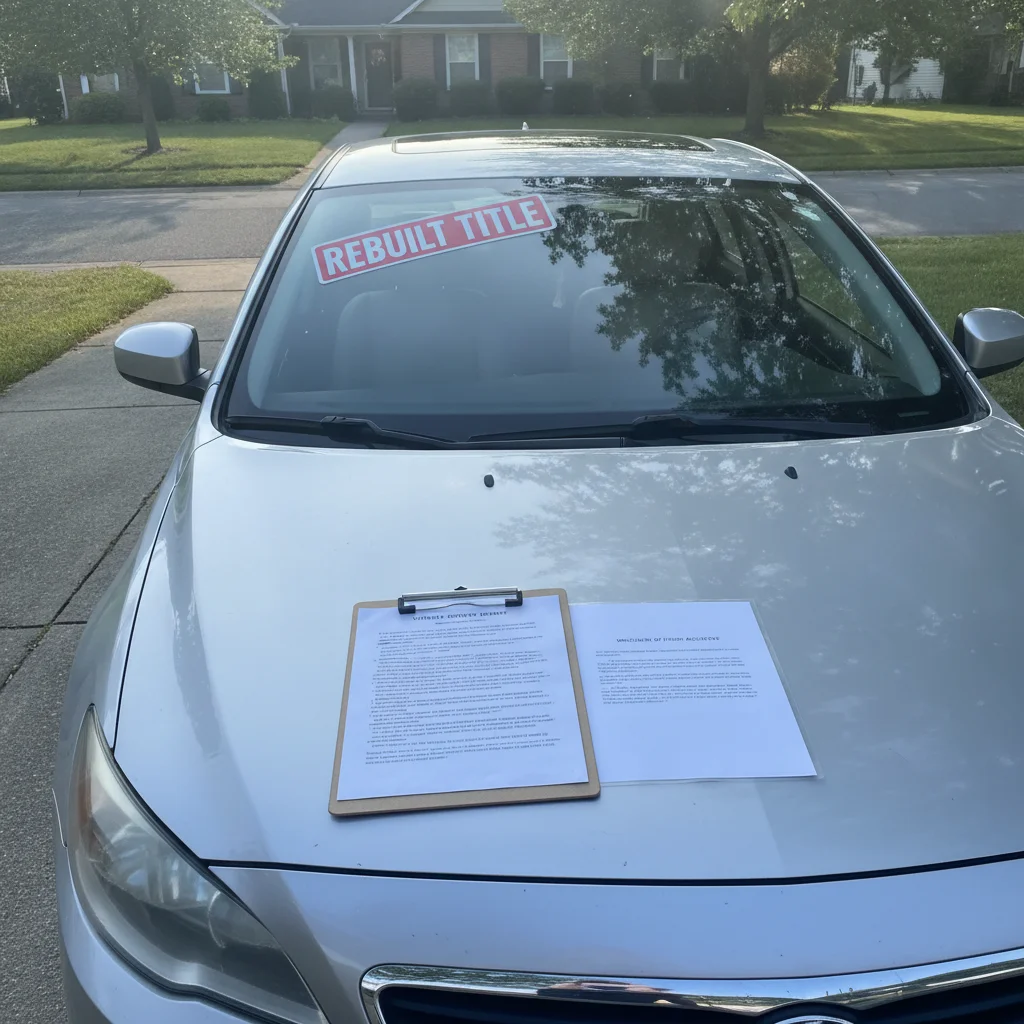
If the vehicle is subsequently repaired and passes a state inspection, it may qualify for a rebuilt title — but even a rebuilt title carries a brand. Sellers dealing with rebuilt vehicles face their own specific obligations, covered in detail in our article on what rebuilt title sellers must disclose.
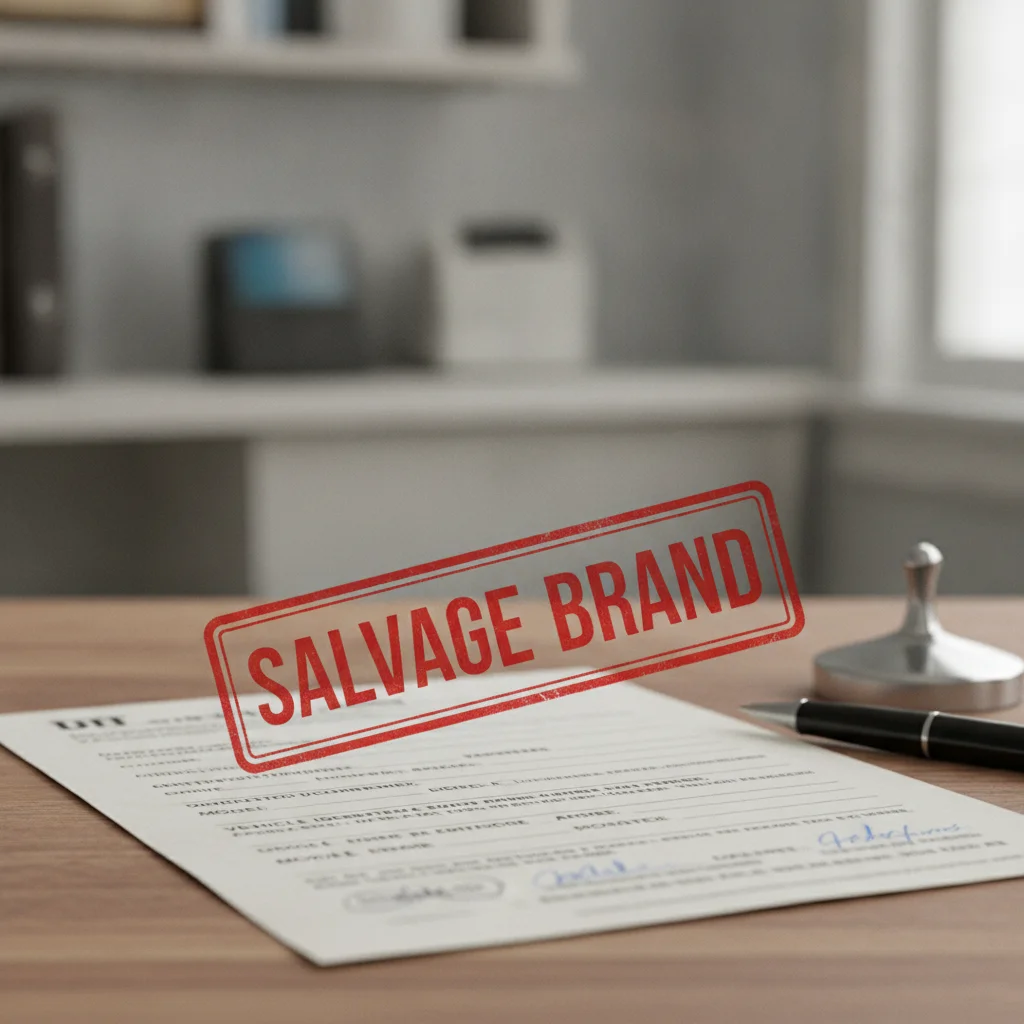
The practical effect for sellers is straightforward: if your vehicle carries a salvage title, that fact must appear in your listing, your verbal representations, and your sale contract. Omitting it is not a gray area — it is fraud in virtually every U.S. jurisdiction.
Side-by-Side: How Clean and Salvage Titles Compare
The differences between these two designations ripple through every aspect of the sale — from the price you can ask to the payment methods your buyer can use. Here's how they stack up across the criteria that matter most to sellers.
| Criterion | Clean Title | Salvage Title |
|---|---|---|
| Definition | No total-loss declaration on record | Insurer declared vehicle a total loss |
| Permanence | Maintained unless new damage occurs | Permanent — cannot revert to clean |
| Typical value impact | Full market value applies | 20–40% discount vs. clean equivalent |
| Buyer financing eligibility | All conventional lenders | Most lenders decline; cash buyers only |
| Insurance availability | Full coverage available | Liability only from most insurers |
| Seller disclosure requirement | Disclose known material defects | Must disclose title brand in all states |
| Buyer pool size | Broad — all qualified buyers | Narrow — cash buyers, rebuilders, parts buyers |
| Dealer trade-in acceptance | Standard wholesale trade-in process | Often refused or deeply discounted |
| Best selling channel | Private sale, dealer, CPO programs | Specialty auctions, eBay Motors, direct cash buyers |
The financing gap is one of the most underappreciated obstacles for salvage-title sellers. When a buyer can't get a conventional auto loan, your pool immediately shrinks to cash buyers only. That's a much smaller market, which is one reason salvage prices drop so sharply — it's not just about the vehicle's condition, it's about the buyer's ability to pay.
20–40%
Salvage title value discount vs. clean
Industry data from Kelley Blue Book and NADA consistently shows salvage-branded vehicles trade at a 20–40% discount relative to clean-title equivalents of the same make, model, and condition.
75–100%
Total-loss threshold (% of ACV by state)
State laws vary widely on when insurers must declare a total loss; most states set the trigger between 75% and 100% of the vehicle's actual cash value.
~1 in 4
Used vehicles with reported accident history
According to Carfax's 2023 Used Car Market Report, approximately one in four used vehicles on the market has at least one accident reported in its history.
Most states
Require written salvage disclosure in bill of sale
A majority of U.S. states including California, Florida, Texas, and New York mandate explicit written disclosure of salvage status in the sale documentation, not just on the title.
Insurance is the other hidden sticking point. Many standard auto insurers will write liability coverage on a salvage vehicle but refuse comprehensive and collision — which means buyers who finance through alternative lenders (if they can find one) may struggle to meet lender insurance requirements. Some specialty insurers do cover rebuilt and salvage vehicles, but at significantly higher premiums.
Disclosure Requirements: What the Law Requires of Sellers
Regardless of which title type you hold, your disclosure obligations as a seller are non-negotiable. But they vary enough by state that you need to know your specific jurisdiction's rules before you sign anything.
Federal Baseline: The Federal Trade Commission's Used Car Rule
The FTC's Used Car Rule requires dealers — not private sellers — to display a Buyers Guide disclosing warranty terms. However, private sellers are still subject to state consumer protection statutes and common-law fraud liability. If you know your vehicle has a salvage title and fail to tell the buyer, you can be sued for misrepresentation regardless of whether you're a dealer.
State-by-State Variation
Most states require the title itself to display the salvage brand, so handing over the physical title document to the buyer is inherently a disclosure. However, some states also require:
- Written disclosure in the bill of sale
- Verbal disclosure before any deposit is accepted
- Disclosure in any written advertisement or online listing
- Signature acknowledgment from the buyer confirming they received and understood the disclosure
California, Florida, Texas, and New York all require explicit written disclosure in the bill of sale for any branded title vehicle. Several states also require sellers to disclose known frame damage even when that damage doesn't appear on the title — a nuance explored further in our piece on selling cars with frame damage.
Salvage vs. Junk: Not the Same Thing
Some states issue a 'junk' or 'parts only' title for vehicles that are too damaged to be legally returned to the road. A junk title is more restrictive than a salvage title — it typically cannot be converted to a rebuilt title and cannot be registered for road use. If your title says 'junk' rather than 'salvage,' your sale options are limited to parts buyers and scrappers. Check your state DMV's exact language before assuming you can sell the vehicle for road use.
Document Everything Before You Close
Even in private-party as-is sales, courts have ruled that verbal disclosures are difficult to prove. Always put the title status, known mechanical issues, and any relevant accident history into the written bill of sale — and have the buyer sign an acknowledgment. Many state DMV websites provide free bill-of-sale templates that include the required disclosure language for branded-title vehicles. Using an official template is the easiest way to ensure compliance.
Clean Title Sellers: You're Not Off the Hook
Holding a clean title doesn't eliminate your disclosure duties. If you know the vehicle was in a significant accident — even if no insurance claim was filed — many states require you to disclose that material fact. "Material" generally means information that would affect a reasonable buyer's decision to purchase or the price they'd pay. When in doubt, disclose. The legal cost of a misrepresentation lawsuit far exceeds any price advantage you gain by staying quiet.
For a comprehensive reference on what each title brand communicates legally, consult our title branding glossary.
Pricing Your Vehicle: How Title Status Drives Market Value
Understanding the value gap between clean and salvage titles helps you price realistically — and avoid the frustration of listing too high and sitting on a vehicle for months.
Clean Title Pricing
Clean-title vehicles are priced against standard valuation guides: Kelley Blue Book, Edmunds, and NADA. Condition — excellent, good, fair, poor — adjusts the baseline, but there's no structural penalty applied to the title itself. You're competing in the full retail used-car market.
If you've maintained service records and the vehicle is in good mechanical shape, those factors can actually push you above the baseline. Buyers who can verify a clean history are often willing to pay a small premium over comparable vehicles with ambiguous records. Consider pulling together your maintenance history before listing — our hub on detailing and repairs walks through which prep steps return the most value.
Salvage Title Pricing
Salvage-title vehicles are typically discounted 20–40% below equivalent clean-title models. That discount exists for several reasons stacked on top of each other:
- Reduced buyer pool — cash buyers only in most cases
- Financing unavailability — no conventional lender will touch it
- Insurance limitations — buyers may only get liability coverage
- Resale uncertainty — the buyer knows they'll face the same discount when they eventually sell
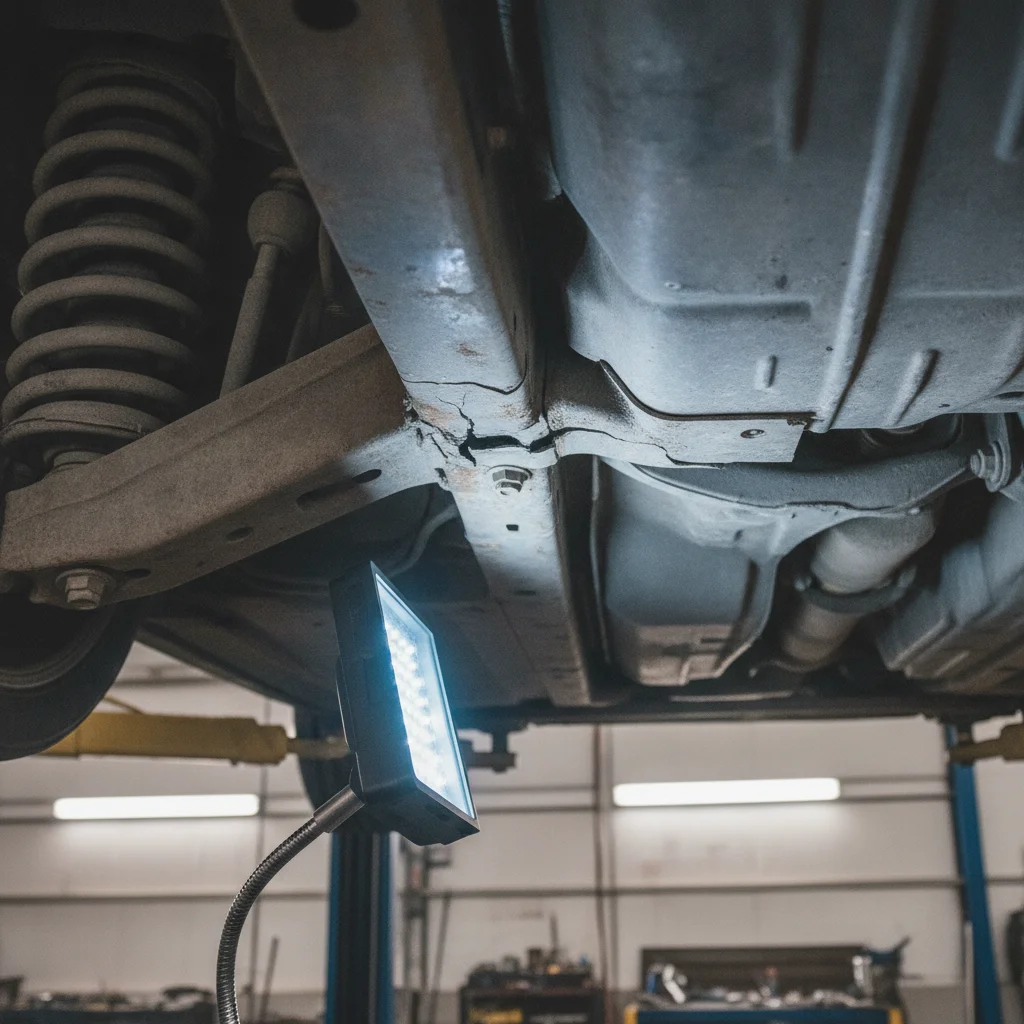
- Unknown repair quality — buyers can't always verify how well post-damage repairs were done
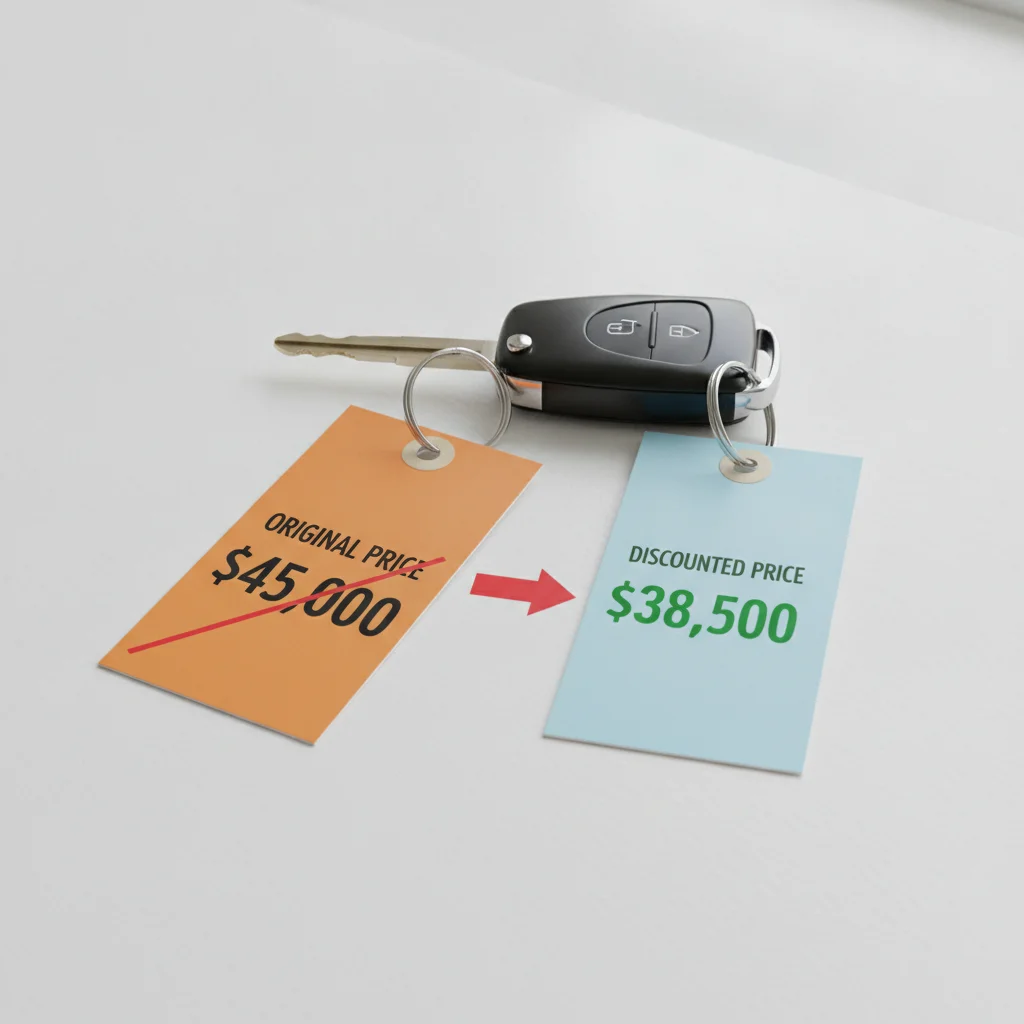
To price accurately, start with the clean-title private-party value from KBB or Edmunds, then apply a 25–35% discount as a starting point. Research completed sales of similar salvage vehicles on eBay Motors or Copart to calibrate your number against what the market is actually paying — not just asking.
One mistake sellers make: pricing a salvage vehicle at "only" 15% below clean because they believe the repairs were excellent. Buyers don't have the same confidence in those repairs that you do, and they're pricing in their uncertainty. Meeting the market means accepting that the discount reflects more than just physical condition.
Understanding why buyers are so cautious is equally important — our article on why buyers reject unclear title history explains the psychology and practical concerns driving those decisions.
Practical Steps for Sellers Before You List
Whether your title is clean or salvage, there are concrete actions that will protect you legally and position your sale for success.
Steps for Clean Title Sellers
- Verify your title is lien-free. If you still owe money on the vehicle, the lender holds the title. You'll need to coordinate a simultaneous payoff and title transfer — or work with an escrow service.
- Run a vehicle history report. Services like Carfax or AutoCheck will show what any buyer will see. If there are surprises — accidents, odometer flags, prior rentals — knowing ahead of time lets you address them proactively.
- Gather service records. A documented maintenance history is a tangible differentiator in the clean-title market. Even partial records help.
- Disclose known issues in writing. Even with a clean title, document any known mechanical problems in your bill of sale. This limits your post-sale liability.
Steps for Salvage Title Sellers
- Pull the title and read it carefully. Confirm the exact brand language — "salvage," "junk," or "parts only" designations carry different implications in different states.
- Document all repairs. If the vehicle was repaired after the total-loss event, gather every receipt, inspection report, and photograph you have. This evidence directly supports your asking price.
- Check whether a rebuilt title is available. If repairs are complete and the vehicle passes your state's inspection, converting to a rebuilt title may reduce the price discount — though it still won't restore a clean designation.
- Disclose early and in writing. Put the salvage designation in your listing title, not buried in the description. Buyers who discover it mid-negotiation will feel deceived and walk away. Those who know upfront can self-select in.
- Target the right buyer channels. Salvage vehicles sell better on specialty platforms (Copart, IAAI, eBay Motors salvage listings) and to buyers who specifically search for project cars or parts vehicles.
Salvage vs. Junk: Not the Same Thing
Some states issue a 'junk' or 'parts only' title for vehicles that are too damaged to be legally returned to the road. A junk title is more restrictive than a salvage title — it typically cannot be converted to a rebuilt title and cannot be registered for road use. If your title says 'junk' rather than 'salvage,' your sale options are limited to parts buyers and scrappers. Check your state DMV's exact language before assuming you can sell the vehicle for road use.
Document Everything Before You Close
Even in private-party as-is sales, courts have ruled that verbal disclosures are difficult to prove. Always put the title status, known mechanical issues, and any relevant accident history into the written bill of sale — and have the buyer sign an acknowledgment. Many state DMV websites provide free bill-of-sale templates that include the required disclosure language for branded-title vehicles. Using an official template is the easiest way to ensure compliance.
Regardless of title type, the bill of sale is your primary legal protection as a seller. It should identify both parties, the vehicle by VIN, the agreed sale price, the title status, any known defects, and whether the sale is "as-is." In most states, an as-is clause in a private sale limits your post-sale liability — but it does not protect you from fraud claims if you actively misrepresented the vehicle's condition or title status.
The Bottom Line for Sellers
The gap between a clean title and a salvage title is not just a paperwork distinction — it's a fundamental difference in market position, legal obligation, and pricing reality. Sellers who understand that difference approach the transaction with the right expectations and the right strategy.
Clean-title sellers hold the stronger hand: broader buyer pool, financing-eligible buyers, full market pricing, and simpler disclosure obligations. Your job is to document your vehicle's condition honestly, price against market comps, and transfer the title cleanly.
Salvage-title sellers face real constraints — but those constraints are manageable when you're transparent from the first listing word, priced to reflect actual market demand, and targeting buyers who understand what they're getting. Trying to minimize or obscure a salvage brand never ends well. Buyers discover it through vehicle history reports, state DMV lookups, or the physical title itself. When they do, the deal collapses — and if money has already changed hands, you may face legal consequences.

Your title is a fact, not a negotiation. Work with it, price around it honestly, and disclose it completely — that's the path to a clean transaction regardless of what the title says.
For buyers on the other side of this equation who are weighing branded-title vehicles against certified pre-owned options, the title designation is equally critical to understanding total ownership risk and long-term value.

All claims are backed by peer-reviewed research. Sources on request.