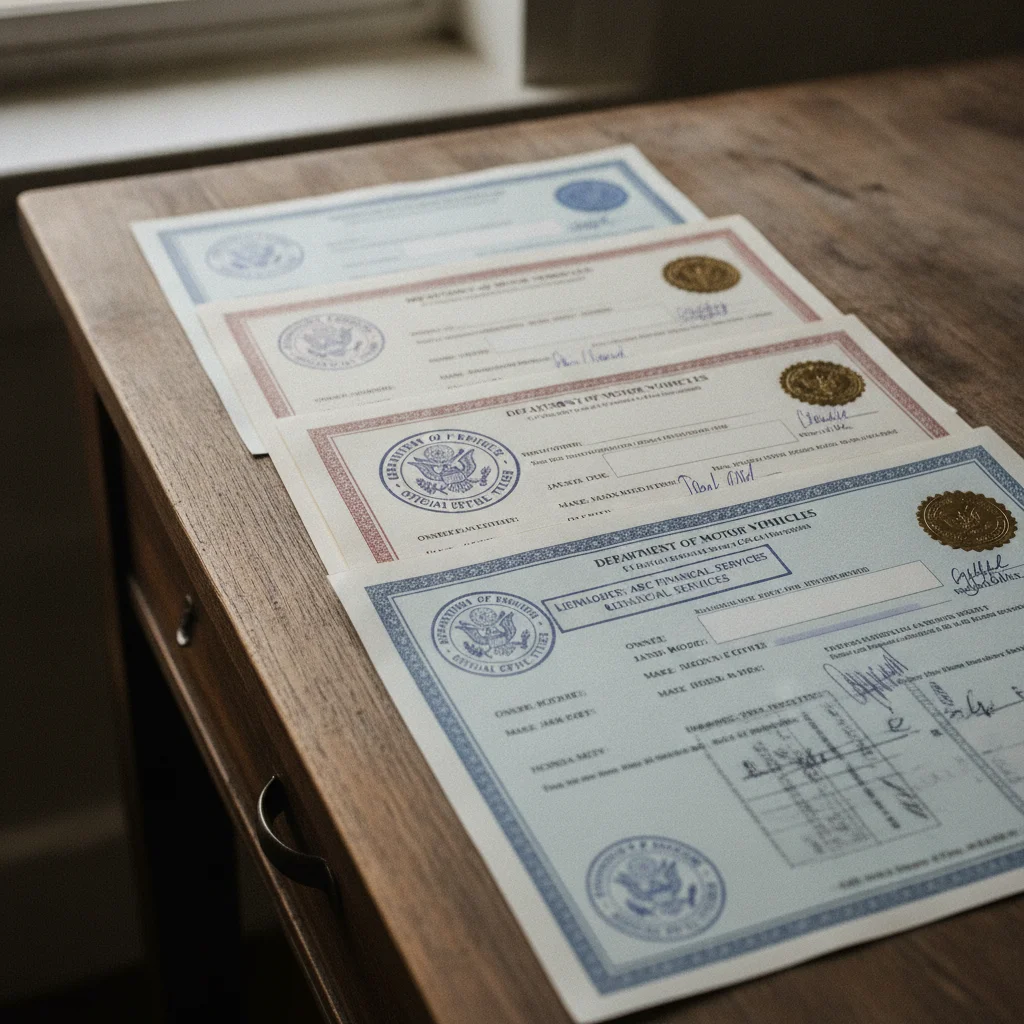
| Most common title type in used car market | Clean title |
| Typical salvage title price discount | 20%–50% below clean-title market value |
| Typical rebuilt title price discount | 20%–30% below clean-title market value |
| Typical lemon title price discount | 10%–25% below clean-title market value |
| Total loss threshold range by state | 75%–100% of ACV (Varies by state DMV regulation) |
| Full insurance available on rebuilt titles | Partial — liability and collision common; comprehensive varies by insurer |
| Database to check title brands | NMVTIS (National Motor Vehicle Title Information System) (Federal government database) |
| Lemon law typical trigger | 3+ failed repair attempts or 30+ days out of service (Thresholds vary by state lemon law) |
Why the Title Type Is the First Thing You Should Check
Before you test drive, negotiate a price, or run a VIN report, look at the title designation. That single field on a piece of paper tells you whether a car has been written off by an insurer, rebuilt after major damage, involved in a legal dispute, or never had a problem in its life. Miss it, and you could be buying a vehicle you can't fully insure, can't easily resell, or one that's genuinely unsafe to drive.
Title branding is the system states use to flag vehicles with significant histories. Once a brand is stamped on a title, it follows the car forever — no amount of reconditioning removes it. That permanence is exactly why buyers need to understand what each designation actually means before handing over money.
This guide breaks down the four most common title types you'll encounter in the used car market — clean, salvage, rebuilt, and lemon — and explains the practical implications of each one. For a broader reference that includes flood, junk, odometer rollback, and other less common designations, see the Title Branding Glossary.
| Most common title type in used car market | Clean title |
| Typical salvage title price discount | 20%–50% below clean-title market value |
| Typical rebuilt title price discount | 20%–30% below clean-title market value |
| Typical lemon title price discount | 10%–25% below clean-title market value |
| Total loss threshold range by state | 75%–100% of ACV (Varies by state DMV regulation) |
| Full insurance available on rebuilt titles | Partial — liability and collision common; comprehensive varies by insurer |
| Database to check title brands | NMVTIS (National Motor Vehicle Title Information System) (Federal government database) |
| Lemon law typical trigger | 3+ failed repair attempts or 30+ days out of service (Thresholds vary by state lemon law) |
Clean Title: The Baseline Standard
A clean title means the vehicle has never been declared a total loss, has no unresolved liens, and carries no government-issued brand. It is the baseline most buyers expect, and for good reason — a clean title does not guarantee the car is problem-free, but it does mean no insurer has ever decided it cost more to repair than it was worth.
What Clean Actually Covers
"Clean" refers specifically to the title status, not the mechanical condition. A car with 180,000 miles, two replaced transmissions, and a cracked dashboard can still hold a clean title. The designation only confirms the title history, not the maintenance record or repair quality. Always pair a clean-title purchase with a pre-purchase inspection from an independent mechanic.
Why It Matters for Insurance and Resale
Clean-title vehicles qualify for the full spectrum of coverage options — liability, collision, and comprehensive — from every standard insurer. They also command the highest resale values and are accepted by most lenders as collateral for auto loans without restrictions. If you plan to sell within a few years, a clean title keeps your options open.

Red Flags Even on Clean-Title Cars
- Frame damage disclosed in a history report — repaired frame damage doesn't automatically brand a title, but it does affect structural integrity and resale value.
- Multiple owner changes in a short period — can signal recurring problems the seller doesn't want to disclose.
- Odometer discrepancy — some states brand titles for rollbacks; others don't. A clean title is not proof the odometer is honest.
Run a VIN history report (Carfax, AutoCheck, or the NMVTIS database) on every clean-title vehicle. The cost is minimal compared to what you might miss.
Salvage Title: What Happens After a Total Loss
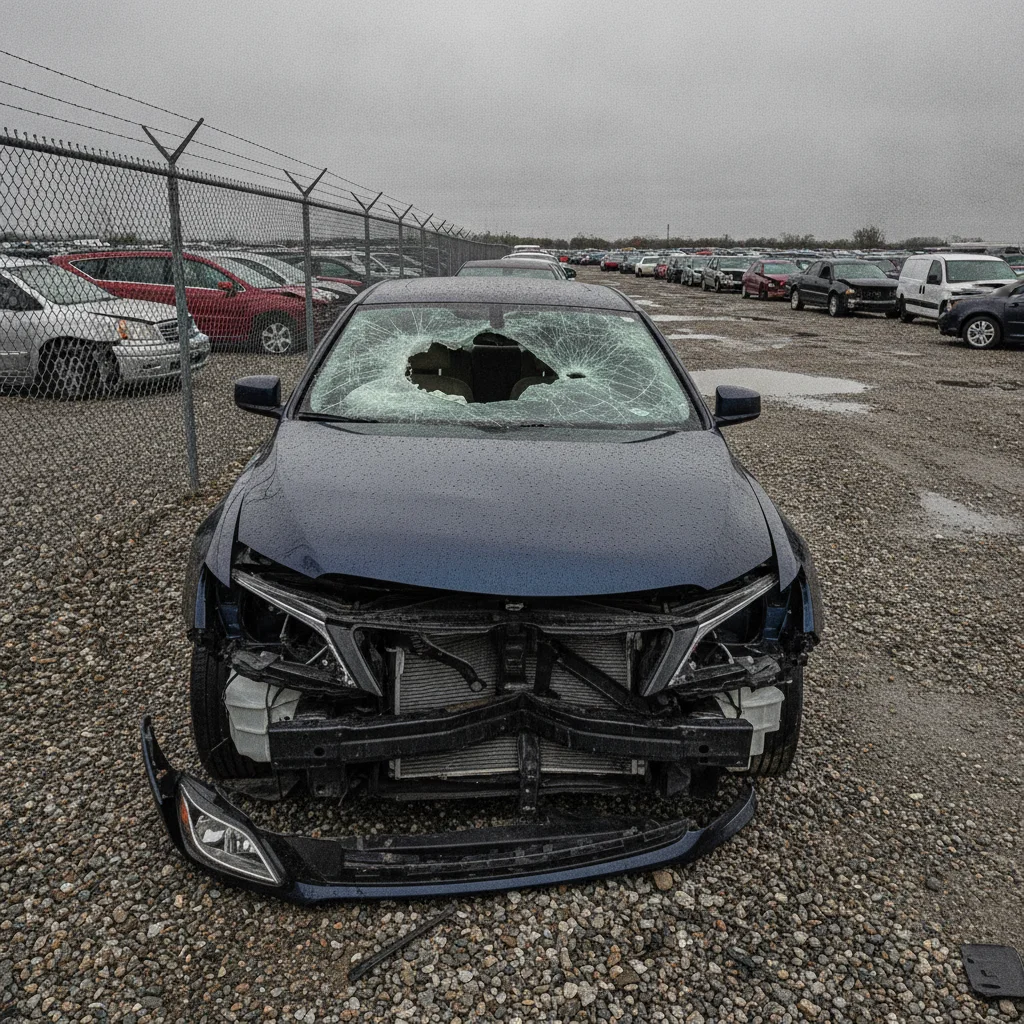
A salvage title is issued when an insurance company declares a vehicle a total loss — meaning the estimated repair cost exceeded a threshold percentage of the car's actual cash value. That threshold varies by state, typically falling between 75% and 100% of pre-damage ACV. Once an insurer pays out the claim and takes ownership of the vehicle, the state reissues the title with a salvage brand.
3.1 million
Salvage vehicles sold annually in the U.S.
According to industry estimates from the National Salvage Vehicle Reporting Program and NMVTIS data, roughly 3 million salvage-branded vehicles change hands each year.
20%–50%
Price discount on salvage-title vehicles vs. clean-title equivalents
Industry valuation guides and auction data consistently show salvage vehicles trading at steep discounts relative to clean-title comparables of the same year, make, and model.
75%–100%
Total-loss threshold range across U.S. states
State insurance regulations determine the repair-cost-to-ACV ratio at which an insurer can declare a vehicle a total loss; this threshold varies significantly from state to state.
Common Reasons a Car Receives a Salvage Brand
- Collision damage severe enough that parts and labor exceed the value threshold
- Flood or water intrusion (often branded separately as "flood" in some states, but grouped under salvage in others)
- Fire damage
- Hail damage so extensive that bodywork costs surpass the threshold
- Theft recovery where the vehicle was stripped or damaged before recovery
Can You Drive a Salvage-Title Car?
In most states, no — at least not legally on public roads. A salvage title typically means the vehicle cannot be registered or driven until it passes a state inspection and is reissued a rebuilt title. Some buyers purchase salvage vehicles specifically to part them out, which can be legitimate if you need inexpensive OEM components.
Insurance on Salvage Titles
Most standard insurers will not write a comprehensive or collision policy on a salvage-title vehicle. You may be able to get liability-only coverage in some states, but if the car is damaged again, you're out of pocket for repairs. If full coverage is important to you, a salvage title is effectively a dealbreaker.
Financing a Salvage Vehicle
Traditional auto lenders — banks, credit unions, and captive finance arms of dealers — almost universally decline to finance salvage-title vehicles. If you want to buy one, expect to pay cash. That reality alone keeps many buyers away, which is precisely why salvage vehicles sell at steep discounts, often 20%–50% below comparable clean-title examples.
Bottom line: salvage titles are for experienced buyers who can evaluate structural damage, source parts, and either self-insure or accept liability-only coverage. They are not appropriate for everyday transportation if you rely on full insurance protection or plan to finance.
Rebuilt Title: Salvage Cars That Passed Inspection
A rebuilt title — sometimes called a reconstructed title — is issued after a salvage vehicle has been repaired and passed a state inspection. The inspection process varies widely: some states require a thorough check by a licensed inspector who verifies every replaced component against a parts list; others conduct a cursory visual review. That inconsistency is the core risk with rebuilt titles.
What the Rebuilt Brand Does and Doesn't Tell You
The rebuilt brand confirms the car was once totaled, was subsequently repaired, and passed whatever inspection standard the issuing state required. It does not tell you:
- The quality or source of the parts used in the repair
- Whether airbags were properly replaced or just cleared from the system
- Whether frame measurements were verified after straightening
- Who performed the work — a certified body shop or someone's backyard
For an in-depth look at what other branded designations exist beyond rebuilt and salvage, the Title Branding Glossary covers every major category.
Insurance and Financing for Rebuilt Titles
Insurance is more accessible for rebuilt titles than for salvage, but still restricted. Many standard insurers will write liability and collision coverage on a rebuilt vehicle, but some will not offer comprehensive. Expect to be asked for a pre-insurance inspection in some cases, and anticipate that if the car is totaled again, the ACV assigned will be significantly lower than a comparable clean-title car — because rebuilt status is factored into valuation.
Financing is possible but harder to arrange than with a clean title. Some credit unions and specialty lenders will approve rebuilt-title loans, usually at higher rates and lower loan-to-value ratios. Plan to make a larger down payment.
How Much Should You Discount a Rebuilt Title?
A reasonable starting point is 20%–30% below the clean-title market value for the same year, make, model, and mileage. The actual discount depends on the severity of the original damage, the quality of the repair, and your ability to verify both. If the seller can't produce repair receipts and a detailed parts list, walk away or push the discount further.
Pre-Purchase Inspection Is Non-Negotiable
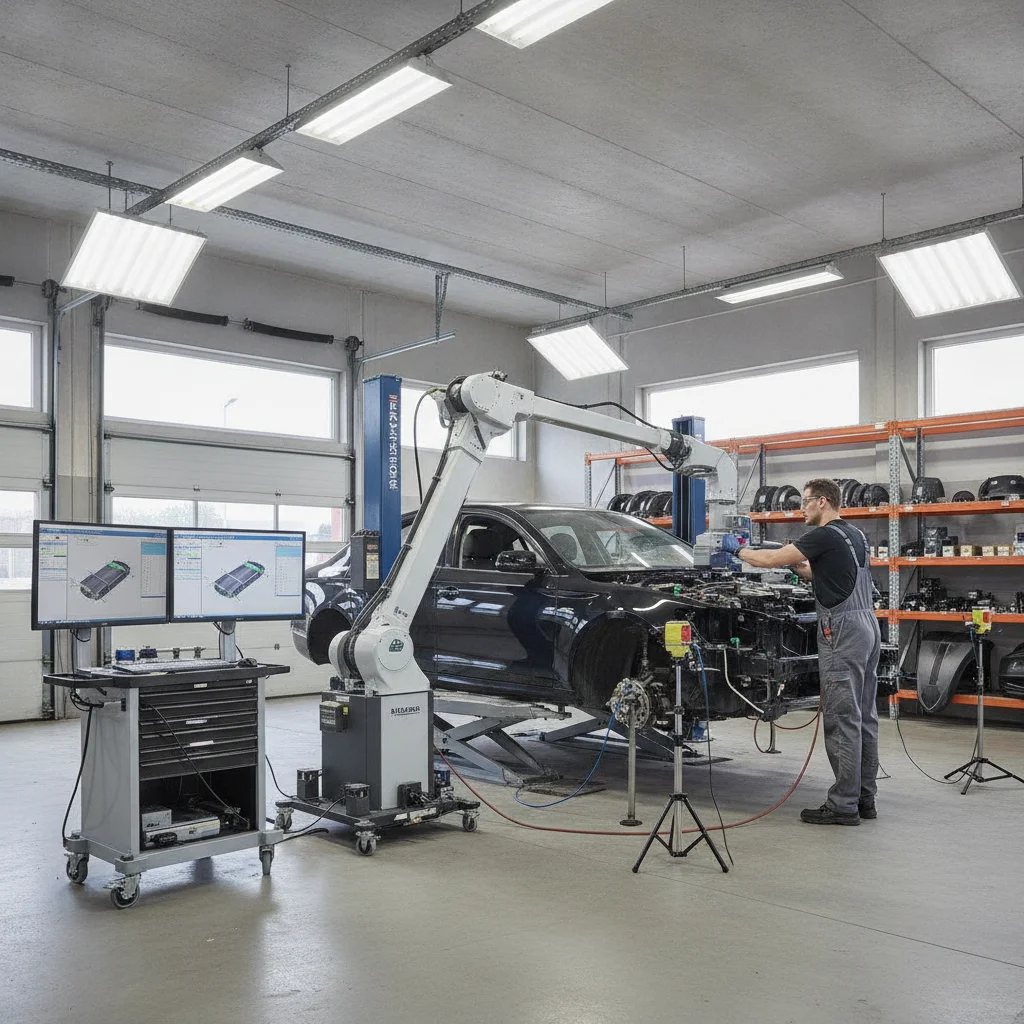
For any rebuilt-title vehicle, pay for an independent inspection from a shop with a frame machine and the ability to pull actual frame measurements. Ask specifically about:
- Frame or unibody integrity
- Airbag deployment history and current readiness
- Panel gaps and paint depth readings (indicate whether body filler was used extensively)
- Electrical system function, especially if the original damage involved flooding
If the seller refuses an independent inspection, treat that refusal as a serious warning sign. Legitimate sellers of rebuilt vehicles expect buyers to verify the work.
State Inspection Standards for Rebuilt Titles Vary Widely
A rebuilt-title inspection in one state may be far more rigorous than in another. Some states require a licensed inspector to verify every replaced part against a documented parts list; others conduct only a basic visual check. If you're buying a rebuilt-title vehicle that was inspected out of state, research the originating state's inspection standards — not just the current state's. A car rebuilt and inspected in a state with minimal standards may have significant undisclosed issues even though it technically passed.
Lemon Title: State Buyback Vehicles
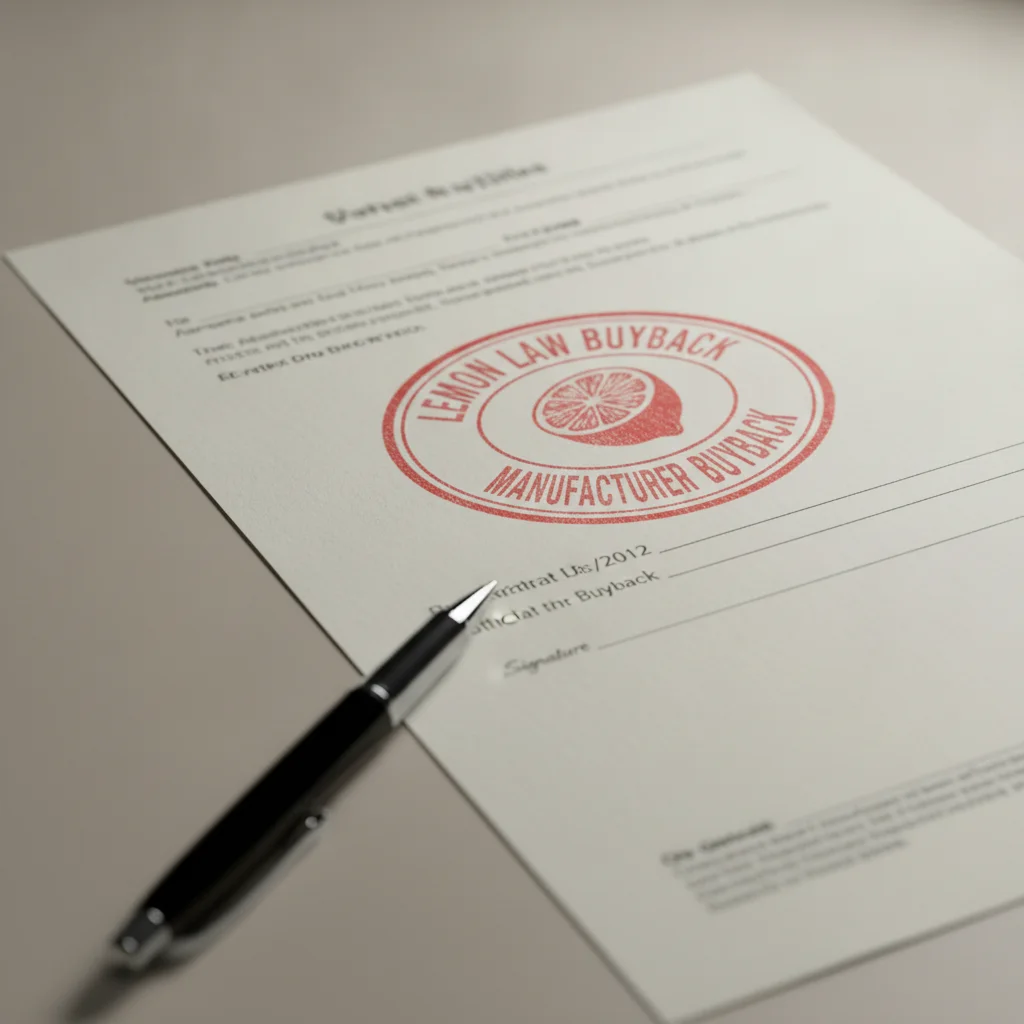
A lemon title — sometimes labeled "manufacturer buyback" — is issued when a vehicle is repurchased by the automaker under a state lemon law. Lemon laws require manufacturers to repurchase or replace vehicles that have a substantial defect the dealer cannot repair after a reasonable number of attempts. The specific thresholds vary by state, but typically involve three or more failed repair attempts for the same defect, or a vehicle out of service for 30 or more cumulative days within a defined warranty period.
What Makes Lemon Titles Different
Unlike salvage or rebuilt titles, a lemon title doesn't necessarily mean the car was physically damaged. The vehicle may look perfect. The issue is a recurring mechanical or electrical defect that the manufacturer's network could not resolve. That's an important distinction: you could be looking at a structurally sound car with a persistent engine, transmission, or software problem that stumped multiple technicians.
Some manufacturers fix the defect before reselling the bought-back vehicle; others disclose it and sell as-is. Federal law (the Federal Trade Commission's Used Car Rule) requires dealers to disclose the lemon buyback status on the Buyers Guide, but private sellers are not always required to disclose, and some states with weaker disclosure laws allow re-branding after a repair is completed.
Insurance and Financing on Lemon-Title Cars
Most standard insurers treat lemon titles similarly to rebuilt titles — coverage is available but may come with restrictions or higher premiums. Lenders vary: some will finance a manufacturer buyback if the defect has been documented as repaired; others decline categorically. Get the insurer and lender on record before committing to purchase.
What Due Diligence Looks Like on a Lemon Vehicle
- Request the full repair history from the manufacturer buyback — this is often documented in NMVTIS or can be requested from the manufacturer directly using the VIN.
- Identify the specific defect that triggered the buyback, not just that a buyback occurred.
- Have an independent technician evaluate whether that specific defect is currently present, resolved, or likely to recur.
- Negotiate the price accordingly — lemon-title vehicles typically trade at 10%–25% below clean-title market value, depending on the defect's severity and the repair documentation.
If the defect was a software calibration issue that's since been resolved by a recall or OTA update, the risk profile is very different from a recurring mechanical failure in the engine or transmission. Know which one you're dealing with before you buy.
Clean Title
A vehicle title with no state-issued brands, indicating the car has never been declared a total loss and has no unresolved liens. It is the standard title type expected in most private party and dealer transactions.
Salvage Title
A title brand issued when an insurer declares a vehicle a total loss because estimated repair costs exceeded a state-defined percentage of the car's actual cash value. Salvage-titled vehicles generally cannot be legally driven until inspected and rebranded.
Rebuilt Title
A title issued to a formerly salvage-branded vehicle after it has been repaired and passed a state inspection. The rebuilt brand remains permanently on the title and signals prior total-loss status to all future buyers.
Lemon Title
Also called a manufacturer buyback title, this brand is applied when a manufacturer repurchases a vehicle under a state lemon law due to a substantial defect the dealer could not repair within a reasonable number of attempts.
Actual Cash Value (ACV)
The market value of a vehicle at the time of an insurance claim, factoring in depreciation and condition. Insurers use ACV to determine total-loss thresholds and claim payouts.
NMVTIS
The National Motor Vehicle Title Information System, a federal database that aggregates title and branding information from all states. Carfax and AutoCheck both draw on NMVTIS data for their history reports.
Title Brand
A permanent annotation placed on a vehicle's title by a state DMV to indicate a specific event in the vehicle's history, such as a total loss, flood damage, or odometer rollback. Once applied, a brand cannot be removed.
Total Loss Threshold
The state-defined percentage of a vehicle's actual cash value at which an insurer can declare a vehicle a total loss. Thresholds typically range from 75% to 100% of ACV, depending on the state.
Side-by-Side Comparison and Practical Decision Framework
Here's how the four major title types stack up across the dimensions that matter most to a buyer:
| Title Type | Typical Price Discount | Full Insurance Available? | Financing Available? | Key Risk |
|---|---|---|---|---|
| Clean | None (baseline) | Yes — all types | Yes — all lenders | Undisclosed history (frame damage, odometer) |
| Salvage | 20%–50% | Liability only (most states) | Rarely (cash only typical) | May be undriveable; uninsurable for collision |
| Rebuilt | 20%–30% | Partial (liability + collision; comp varies) | Limited (specialty lenders) | Variable repair quality; reduced ACV at claim |
| Lemon | 10%–25% | Generally yes | Sometimes (lender-dependent) | Recurring defect may not be resolved | \n
The Decision Framework
If you need full insurance coverage and easy financing: Buy clean title only. The other categories introduce complications that can unravel a purchase or leave you underinsured.
If you're buying with cash and have mechanical expertise: Rebuilt titles offer the best value-to-risk ratio when you can properly vet the repair quality. The discount is real, and many rebuilt vehicles perform reliably for years when the underlying work was done correctly.
If you're considering salvage: Only do it if you're parting the car out or are experienced enough to evaluate structural damage and manage the rebuilt-title inspection process yourself. It's not a beginner's play.
If you encounter a lemon title: The risk is defect-specific. Identify the exact problem, verify whether it's resolved, and price accordingly. Some lemon buybacks are genuinely good deals; others are traps for buyers who don't read the repair history carefully.
For everything that needs to happen on paper to legally transfer ownership — regardless of title type — see the Paperwork & Title hub. And if you're on the selling side and want to understand how title status affects what prep work makes sense, the Detailing & Repairs guide breaks down which investments return the most value before listing.
NMVTIS Consumer Access Portal
The National Motor Vehicle Title Information System lets you run a title history check directly from the federal database. Use it to verify title brands before purchasing any used vehicle.
Carfax Vehicle History Report
Pulls title, accident, odometer, and service records from thousands of data sources. Especially useful for spotting undisclosed salvage or rebuilt brands that may not appear in a seller's disclosure.
State Lemon Law Summaries (FTC)
The Federal Trade Commission maintains a state-by-state breakdown of lemon law thresholds and consumer rights. Essential reading if you're evaluating a manufacturer buyback vehicle.
Title Branding Glossary
A complete reference defining every major title brand — including flood, junk, and odometer rollback designations — beyond the four covered here. Use it alongside this article for full coverage.
AutoCheck Vehicle History
An alternative to Carfax that draws on its own data sources, including auction records. Running both reports on the same vehicle can surface discrepancies that indicate title washing or undisclosed damage.

All claims are backed by peer-reviewed research. Sources on request.