Key Takeaways
Belt Squeal
Belt squeal is a high-pitched noise produced when a drive belt — most commonly the serpentine belt — slips, glazes, or loses proper tension against the pulleys it drives. The sound is caused by friction between the belt's rubber surface and spinning metal components. It typically signals that the belt or one of the accessories it drives is in trouble and needs inspection soon.
Squeal differs from a chirp (a rhythmic flutter caused by misalignment) and from a squeaking tensioner, which usually originates from a worn bearing rather than the belt itself. Accurate diagnosis requires listening carefully to when and how the noise changes with engine load.
Why That Squeal Isn't Just Background Noise
Most drivers hear the squeal, cringe slightly, and turn up the radio. It's understandable — the sound often comes and goes, and when it stops, it's easy to assume the problem resolved itself. It didn't. A squealing belt is one of the more reliable early-warning signals your engine sends, and unlike a check engine light, it doesn't require a scan tool to interpret. It just requires your attention.
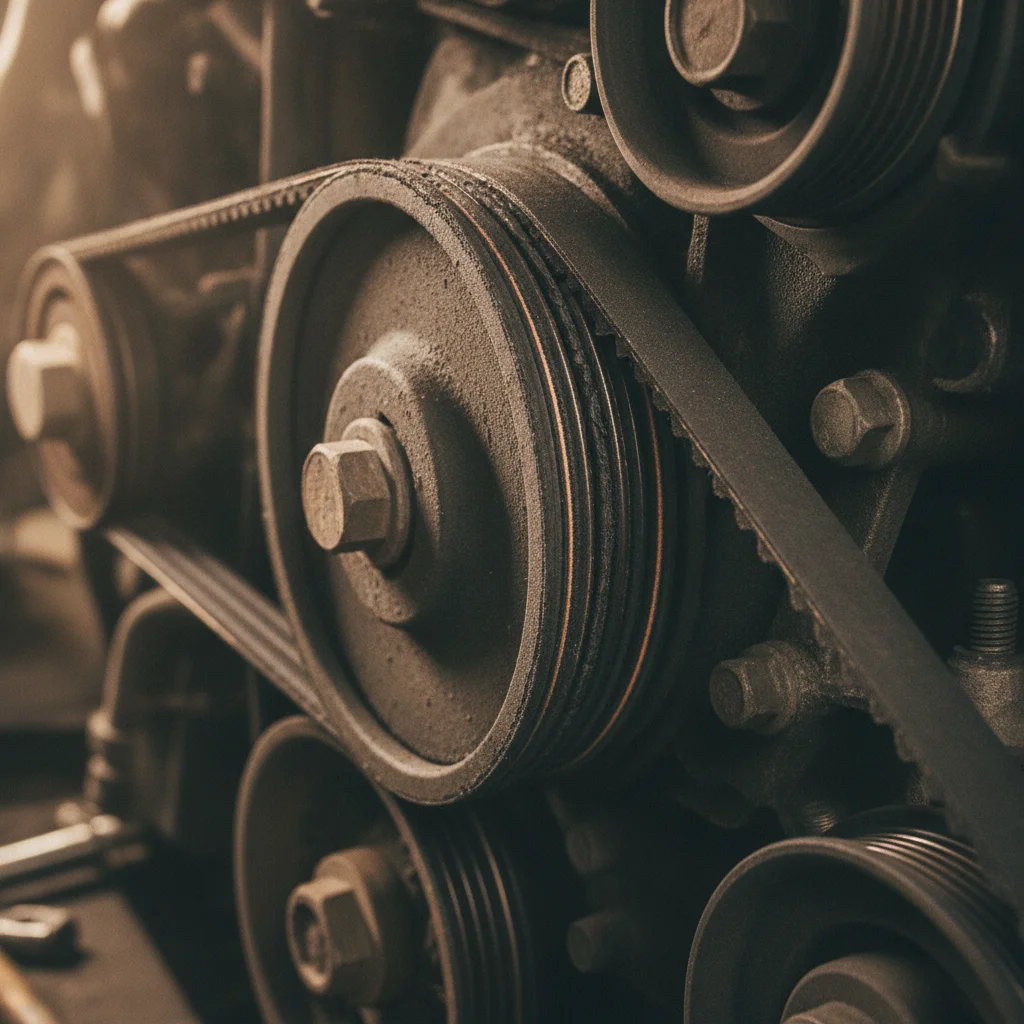
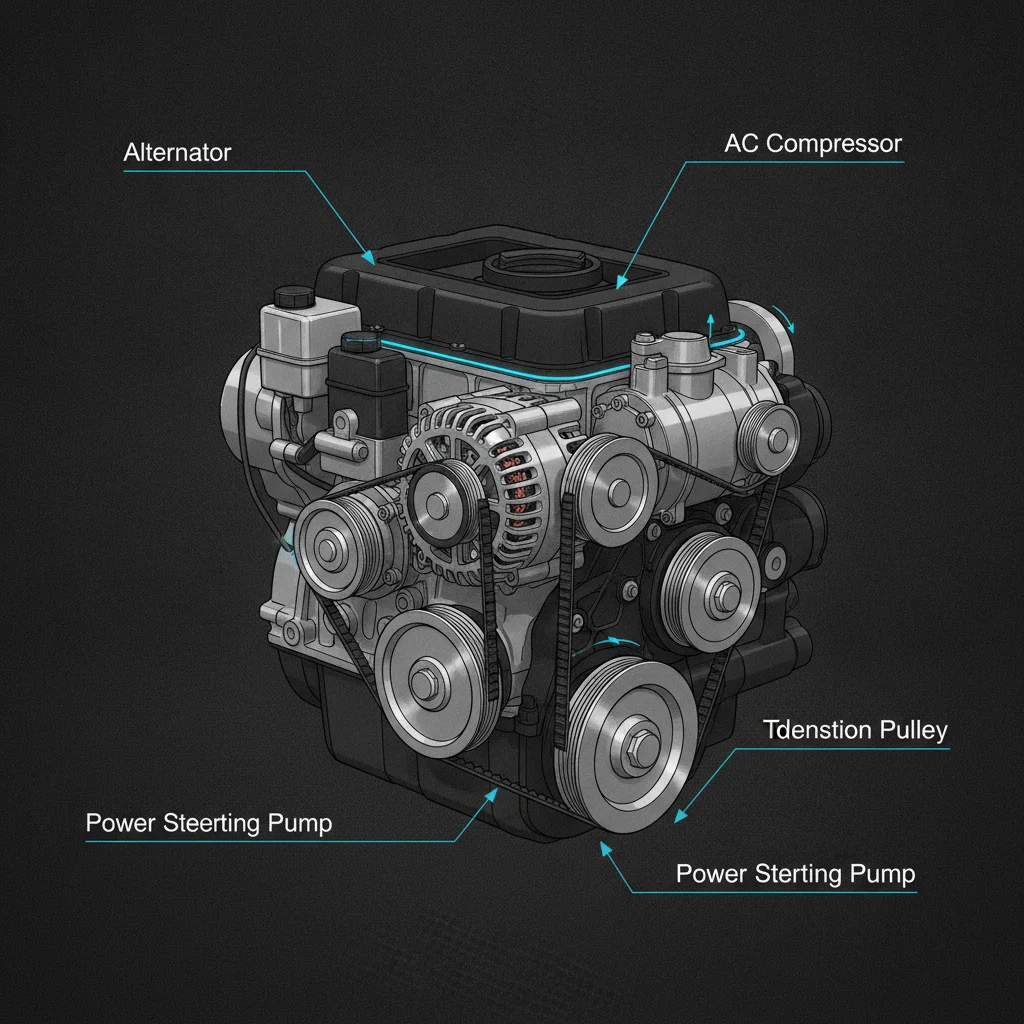
The serpentine belt is a single, continuous loop of reinforced rubber that snakes around a series of pulleys driven by the engine's crankshaft. Depending on your vehicle, it simultaneously powers the alternator, power steering pump, air conditioning compressor, water pump, and occasionally other accessories. When that belt squeals, one or more of those connections is slipping or stressed.
Dashboard warning lights get most of the attention, but sounds like belt squeal often arrive well before any light comes on. Learning to read them is one of the highest-return skills a car owner can develop.
The Four Root Causes of Belt Squeal
Belt noise isn't random. Almost every case traces back to one of four conditions. Understanding them helps you describe the problem accurately to a mechanic — or investigate it yourself before the shop visit.
1. Slipping Due to Loss of Tension
A belt must maintain consistent contact pressure against its pulleys to transfer power without slipping. When tension drops — because the belt has stretched, the automatic tensioner has weakened, or the spring inside the tensioner has fatigued — the belt can slip against the pulley surface under load. That slip generates heat and friction, which produces the familiar high-pitched squeal. You'll often notice it most when the engine is working harder: during acceleration, when the AC compressor engages, or when the power steering is turned sharply.
2. Glazing from Slipping or Contamination
When a belt slips repeatedly, the friction heats and hardens the belt's contact surface, creating a glassy, slick finish called glazing. A glazed belt has reduced grip, which causes more slipping, which causes more glazing — a self-reinforcing cycle. Glazing can also occur if oil or coolant from a nearby leak contaminates the belt. Even a small amount of fluid on the belt's surface dramatically reduces friction and causes immediate squealing. If you see a sheen on the belt's inner surface or smell burning rubber, this is likely the cause.
3. Belt Wear and Cracking
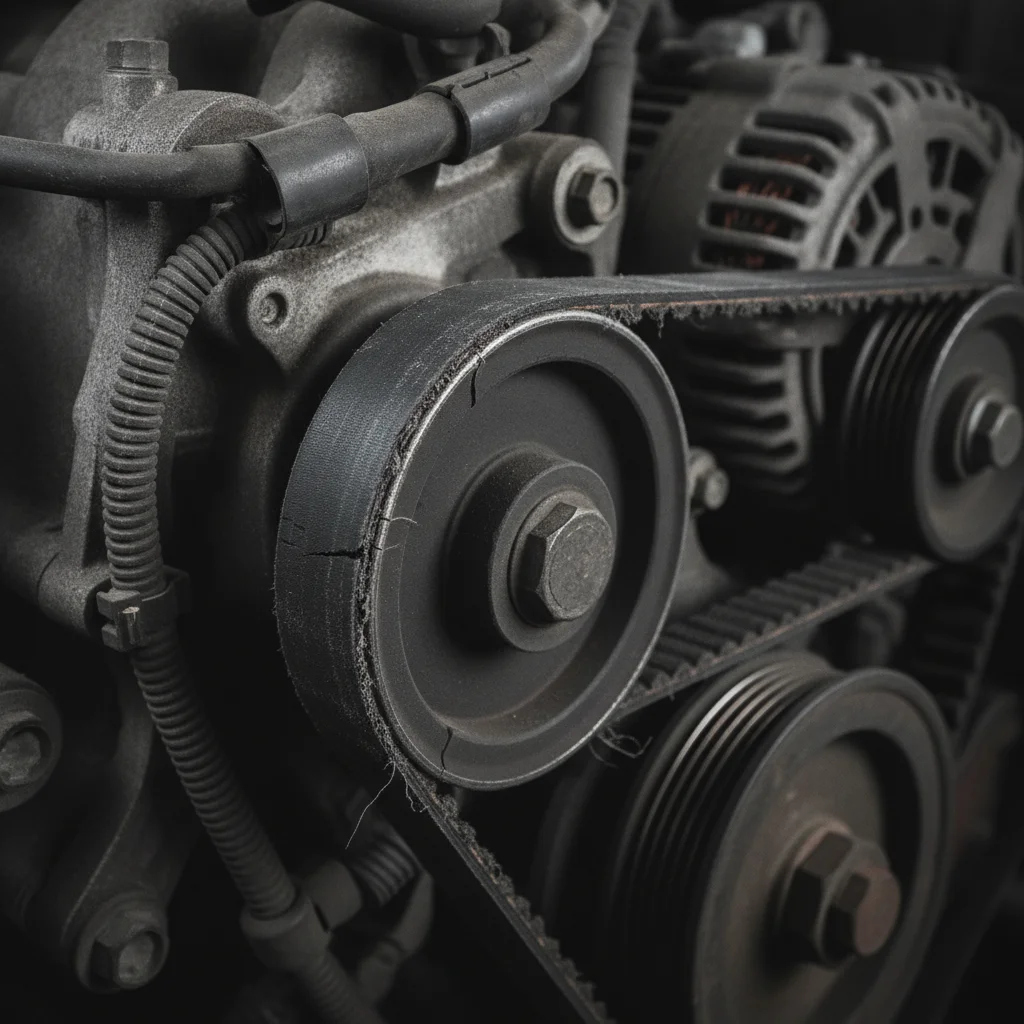
Older belts made from neoprene would visibly crack as they aged, making inspection straightforward. Modern belts use EPDM (ethylene propylene diene monomer) rubber, which wears down like a tire tread rather than cracking. The belt may look visually intact while being dangerously thin. As the belt wears, the groove profile changes, reducing the contact area with the pulley ribs and causing noise. Learning what wear actually looks like on a modern belt is essential because visual inspection alone can fool you.
4. Pulley Misalignment or a Seized Accessory
Sometimes the belt is fine and the problem is what the belt is running against. A pulley that's slightly cocked out of plane — due to a loose mounting bolt or a worn bearing — creates an uneven load that causes the belt to chirp or squeal rhythmically. More urgently, if an accessory like the alternator, AC compressor, or power steering pump begins to seize, the belt is forced to drag against a pulley that's no longer spinning freely. This creates intense friction, rapid belt wear, and a loud squeal that won't go away until the failing accessory is repaired.
$75–$200
Typical serpentine belt replacement cost
According to RepairPal and industry labor guides, most serpentine belt jobs fall in this range at independent shops, parts and labor included.
60K–100K mi
Typical serpentine belt service interval
Most vehicle manufacturers recommend inspection or replacement in this mileage range, though EPDM belts may show wear before they crack visibly.
3–5 systems
Accessories driven by a single serpentine belt
On most modern vehicles, one belt simultaneously drives the alternator, AC compressor, power steering pump, water pump, and at least one idler pulley.
$1,500+
Average head gasket repair from overheating
A snapped belt that disables the water pump can cause rapid engine overheating — leading to head gasket or cylinder head damage costing far more than preventive belt service.
15–30 min
Battery life after alternator stops charging
When the serpentine belt snaps and the alternator stops, a fully charged battery typically powers the car's electrical systems for only 15–30 minutes before the vehicle dies.
Reading the Squeal: When It Happens Tells You a Lot
The timing and conditions of belt noise are diagnostic clues. Pay attention to these patterns:
- Squeal only on cold starts that disappears after a minute: Classic sign of a glazed or slightly loose belt that slips until it warms and expands. Not immediately dangerous, but a reliable signal that tension or belt condition needs evaluation.
- Squeal when the AC turns on: The air conditioning compressor places a sudden, significant load on the belt. If the tensioner is weak or the belt is worn, this extra demand causes momentary slipping. The AC compressor clutch itself can also be the source of a squeal if it's failing.
- Squeal during hard acceleration: Engine torque spikes during acceleration, increasing belt load. A marginal tensioner or worn belt will squeal under this extra demand but quiet down at steady speed.
- Constant, loud squeal that doesn't change: More urgent. Suggests a seized or failing accessory is forcing the belt to drag, or the belt has become severely glazed or misaligned. Pull over safely and investigate before driving further.
- Rhythmic chirping rather than a continuous squeal: Usually indicates pulley misalignment. A chirp that pulses with engine speed is almost never the belt's surface and almost always a pulley plane problem or a debris-caused skip.
Belt Squeal vs. Brake Squeal: Don't Confuse Them
Both produce high-pitched sounds, but location and timing are the key differentiators. Belt squeal originates from the engine bay and is typically most prominent at startup, acceleration, or when accessories engage. Brake squeal appears when you press the brake pedal and comes from the wheel area. If you're unsure which you're hearing, roll down the windows and pay attention to whether the sound changes when you brake versus when you accelerate.
EPDM Belts Don't Always Look Worn
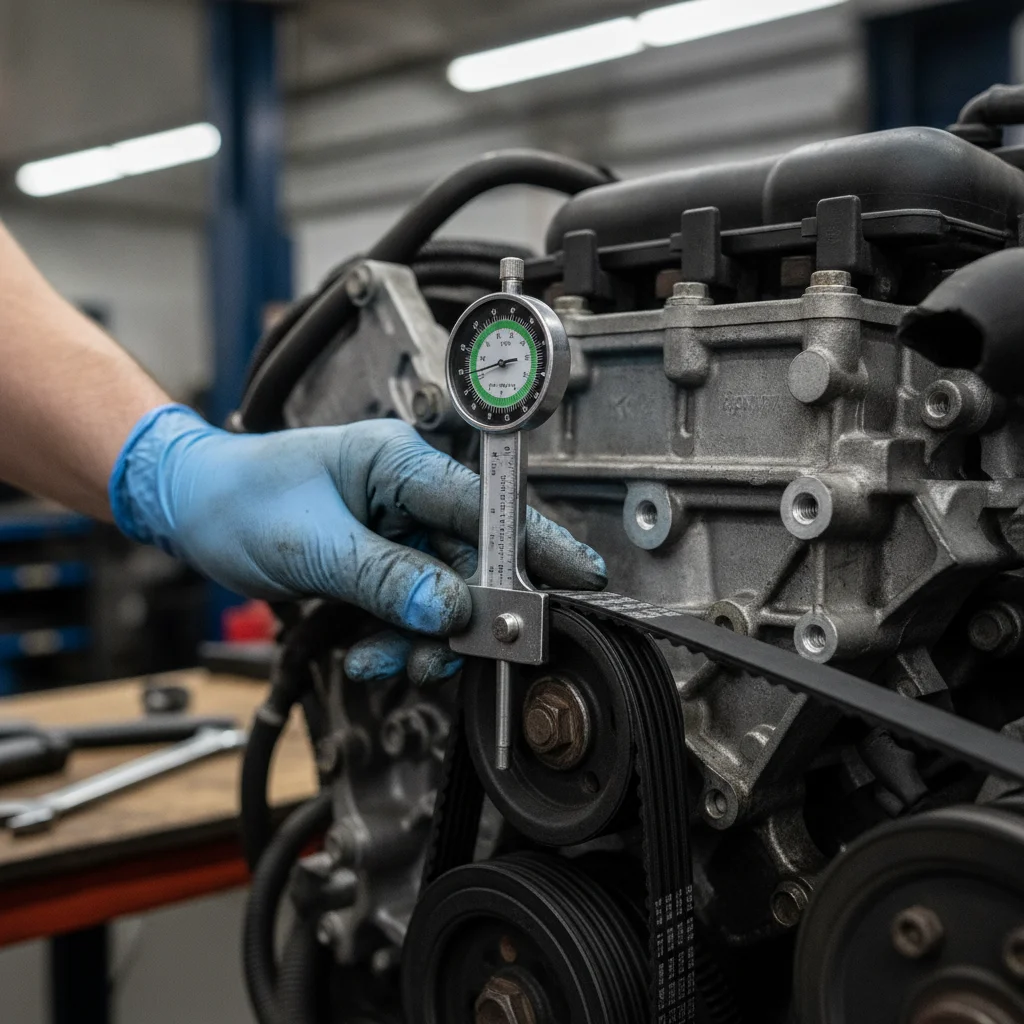
Older neoprene belts cracked visibly with age, making inspection easy. Modern EPDM belts — found on most vehicles built after the mid-1990s — wear by losing rib height rather than cracking. A belt can look perfectly healthy while being dangerously close to failure. Use a belt wear indicator tool (a simple, inexpensive gauge available at any auto parts store) for an accurate assessment rather than relying on visual inspection alone.
Understanding the full vocabulary of car sounds helps you separate belt noise from other issues. A high-pitched squeal from the front of the engine is almost always belt-related; a similar sound from the wheel area points to brakes instead.
What Happens If You Ignore It
A squealing belt is communicating a problem that will not self-correct. Here's the realistic chain of events if the noise is left unaddressed:
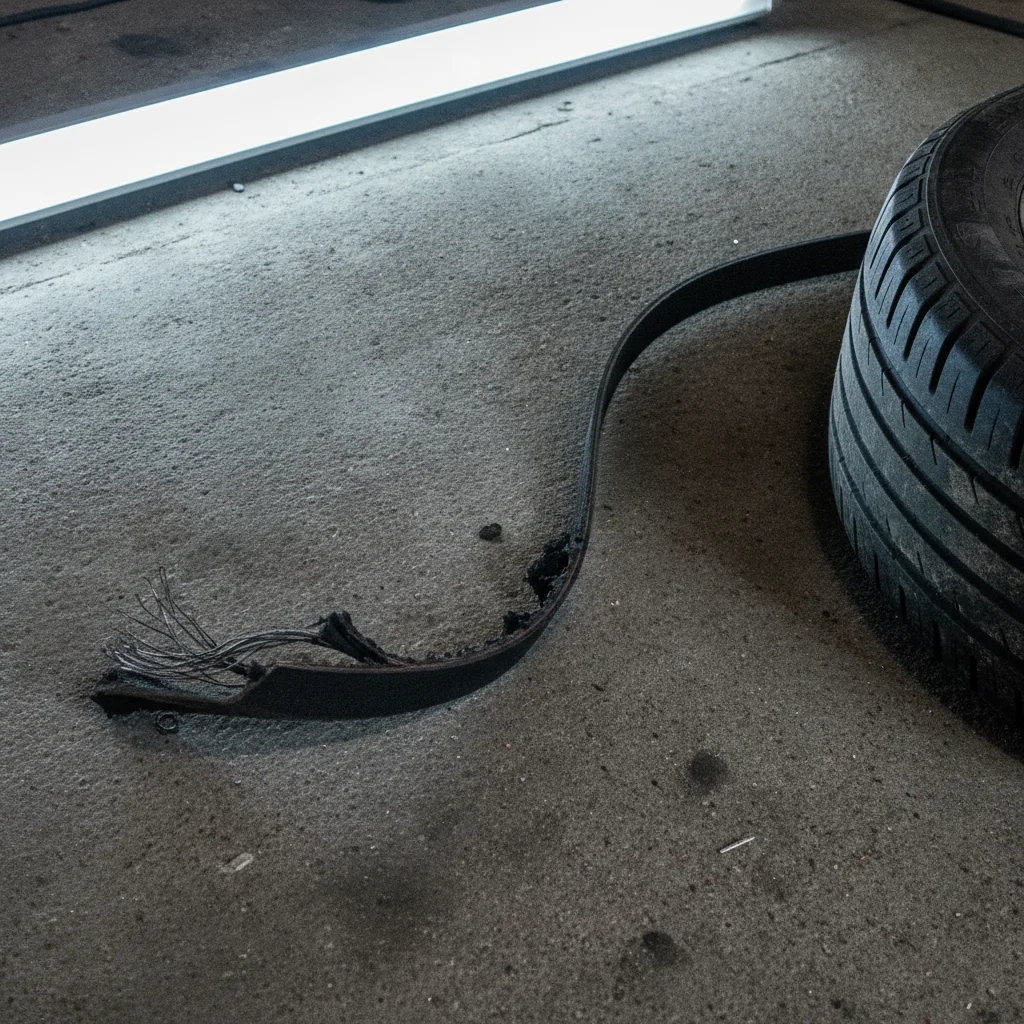
- Belt failure: A slipping, worn, or contaminated belt degrades faster than one in proper condition. Eventually, it cracks, frays at the edges, or snaps completely.
- Immediate loss of powered accessories: When the serpentine belt snaps, everything it drives stops instantly. Power steering assist disappears, making the car suddenly heavy and difficult to control. The alternator stops charging the battery, giving you perhaps 15–30 minutes of electrical operation before the car dies. If the belt also drives the water pump, engine temperature will climb rapidly.
- Potential engine damage: Overheating from a non-functioning water pump can warp cylinder heads, damage gaskets, or — in the worst case — seize the engine. A repair that started as a $150 belt job can escalate to a $2,000–$4,000 repair bill if the engine overheats severely.
- Stranding and towing costs: Even without engine damage, a snapped belt will strand you wherever you happen to be. Add a tow truck fee on top of the repair bill.
Replace the Tensioner at the Same Time
If your shop is already replacing the serpentine belt, strongly consider replacing the tensioner and idler pulley in the same visit. These components wear at similar rates and share the same labor time. Doing them separately means paying for the same disassembly twice. The combined parts cost is usually $50–$150 extra, and it buys you a fresh start for the entire belt drive system.
Check for Fluid Leaks Before a New Belt Goes On
Installing a new serpentine belt while a nearby fluid leak is still active will shorten the new belt's life dramatically. Oil, power steering fluid, and coolant all degrade rubber and cause glazing quickly. Ask your mechanic to trace any leaks in the belt path before finalizing the repair — fixing the leak source is a required first step, not an optional add-on.
Just as transmission warning signs demand attention before they cascade into major failures, belt squeal follows the same logic — the earlier you act, the smaller the bill.
How to Inspect the Belt Yourself
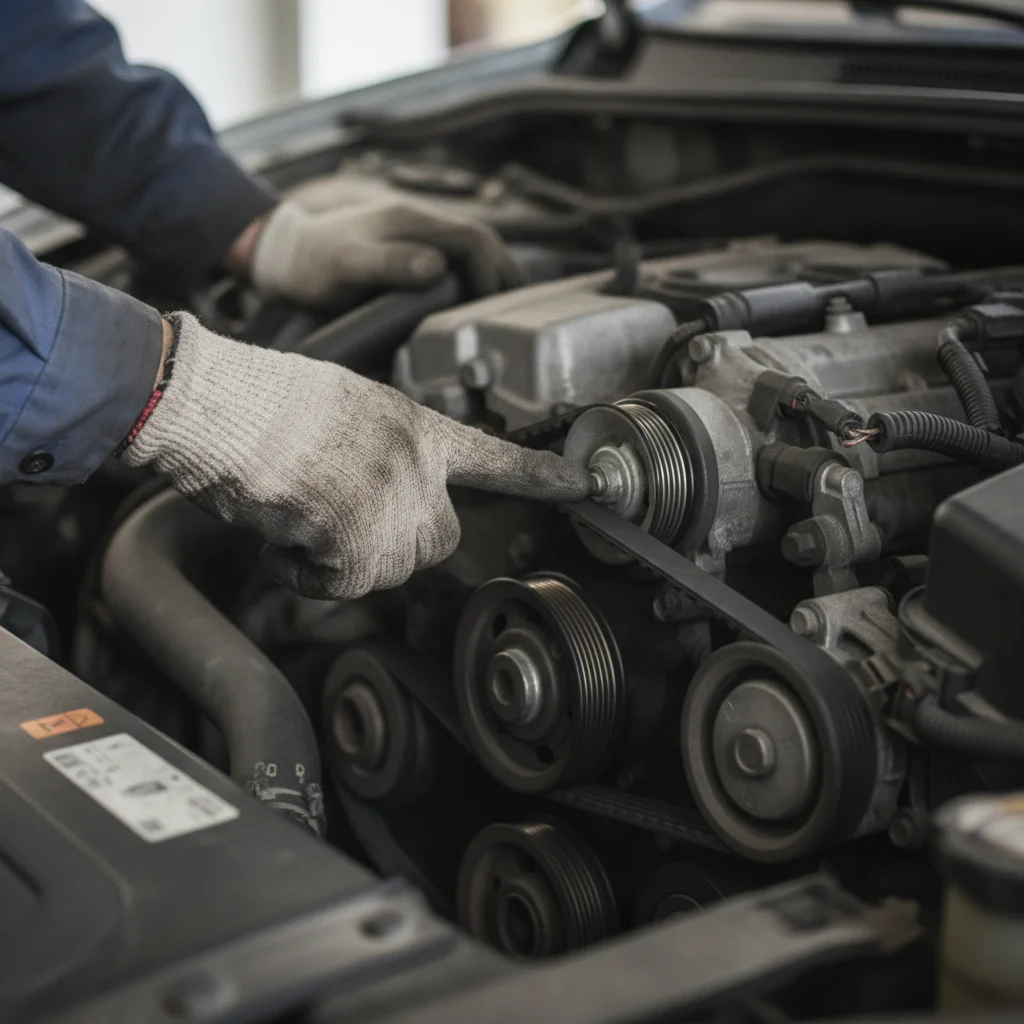
You don't need a mechanic's degree to perform a useful belt inspection. With the engine off and completely cool, open the hood and locate the serpentine belt — it's the long, flat, ribbed belt that loops around multiple pulleys near the front of the engine.
What to Look For
- Glazing: The ribbed inner surface should look dull and slightly textured. If it looks shiny, almost polished, the belt has been slipping and glazing.
- Cracks or missing chunks: Run a finger along the belt's ribbed surface. Any cracking between ribs, missing rubber, or fraying edges is a replacement signal.
- Rib wear: On EPDM belts, the rib profile wears down like tire tread. If the ribs look flattened or shallow rather than sharply defined, the belt has worn significantly. A belt wear gauge (available at any auto parts store for a few dollars) gives you a precise measurement.
- Edge fraying: The belt's outer edges should be clean and straight. Fraying, splitting, or a belt that's tracking to one side suggests misalignment.
- Fluid contamination: Any oily sheen, wet spots, or chemical smell on or near the belt suggests an adjacent leak — power steering fluid, engine oil, or coolant — that needs to be fixed before a new belt is installed, or the contamination will destroy the new belt quickly.
Check the Tensioner
The automatic belt tensioner keeps consistent pressure on the belt. With the engine off, try pressing the tensioner arm — it should move smoothly and spring back with firm resistance. If it moves too easily, feels loose, or you see scoring, cracks, or a wobbling pulley, the tensioner itself may need replacement alongside the belt. Replacing them together saves a return labor charge and is generally recommended.
The Cost of Fixing It Now vs. Later
Belt repair costs are refreshingly straightforward compared to most automotive work. The belt itself typically costs $25–$75 in parts. Labor to remove and reinstall it runs 30–60 minutes at most shops. Total cost at an independent shop: typically $75–$200. At a dealership, expect $150–$300.
If the tensioner and idler pulley are also replaced — which most mechanics recommend since they share the same service interval and labor — add another $50–$150 in parts and minimal additional labor, since the belt is already off.
Compare that to the downstream costs of ignoring a failing belt:
| Scenario | Estimated Cost |
|---|---|
| Serpentine belt replacement (preventive) | $75 – $200 |
| Belt + tensioner + idler pulley (same visit) | $125 – $350 |
| Emergency tow after belt snaps | $100 – $200 |
| Water pump replacement (if belt also drives it) | $300 – $750 |
| Head gasket repair from overheating | $1,500 – $3,000+ |
The math is clear. A belt that's squealing is giving you the cheapest possible window to fix a problem that will only get more expensive.
“The serpentine belt is one of the hardest-working and most underappreciated components on the engine. Drivers don't think about it until it's gone — and when it's gone, everything stops at once. A squeal that gets ignored for a few weeks often turns into a tow truck call that could have been avoided for the price of a dinner out.”
— Mike Donahue, ASE Master Technician with over 25 years of shop experience
Replace the Tensioner at the Same Time
If your shop is already replacing the serpentine belt, strongly consider replacing the tensioner and idler pulley in the same visit. These components wear at similar rates and share the same labor time. Doing them separately means paying for the same disassembly twice. The combined parts cost is usually $50–$150 extra, and it buys you a fresh start for the entire belt drive system.
Check for Fluid Leaks Before a New Belt Goes On
Installing a new serpentine belt while a nearby fluid leak is still active will shorten the new belt's life dramatically. Oil, power steering fluid, and coolant all degrade rubber and cause glazing quickly. Ask your mechanic to trace any leaks in the belt path before finalizing the repair — fixing the leak source is a required first step, not an optional add-on.
Getting the Right Repair Done Right
When you bring a squealing belt to a shop, ask for a complete belt system inspection — belt, tensioner, idler pulleys, and all the accessories the belt drives. A good technician will spin each accessory pulley by hand with the belt removed, listening and feeling for bearing roughness or resistance that indicates a failing component. They'll also check for any fluid leaks near the belt path before installing a new one.
If the shop finds a failing alternator, AC compressor, or power steering pump, understand that replacing the belt without addressing the failing accessory just replaces one doomed belt with another. The root cause must be fixed first.
When evaluating a used car, a belt squeal during the test drive is a useful negotiating point — it suggests deferred maintenance and may indicate a pattern of neglect across the vehicle. Always factor potential belt system work into your offer.
For most vehicles, the serpentine belt is one of the more accessible maintenance items. Many confident DIYers handle it with basic hand tools using a belt routing diagram (usually printed on a sticker under the hood). If you're comfortable with basic mechanical work, a proper serpentine belt inspection is a skill worth developing.
The bottom line: a squealing belt is not a quirk to live with or a sound to tune out. It's an early, clear signal from a system that keeps your engine running, your battery charged, and your steering responsive. Act on it now, and the fix is routine. Wait until it snaps, and the repair list grows fast.

All claims are backed by peer-reviewed research. Sources on request.