Key Takeaways
Option A
Cabin Air Filter
The filter that protects what you breathe inside the car.
Best for: Drivers who want cleaner air inside the cabin, especially those with allergies or who drive in dusty or urban environments.
Option B
Engine Air Filter
The filter that protects your engine's combustion process.
Best for: All drivers — a clean engine air filter is essential to engine performance, fuel economy, and long-term reliability.
If you have allergies or drive frequently in cities or dusty areas
Cabin Air Filter
Replacing the cabin air filter on schedule — or upgrading to a HEPA-style unit — makes a real difference in the air you breathe every commute.
If you want to protect engine performance and fuel economy
Engine Air Filter
A clean engine air filter ensures proper air-fuel mixture and prevents abrasive particles from entering the engine over time.
If you're doing a general maintenance catch-up on a used car you just bought
Both filters
You almost never know when a previous owner last changed either filter. Replacing both at once is cheap insurance and usually under $40 total in parts.
If you drive mostly highway miles in clean, rural air
Engine Air Filter
Highway driving in low-dust conditions is easiest on the cabin filter but keep a close eye on the engine filter — high-volume airflow at speed still loads it up over time.
If you own an electric vehicle and are confused about which filters apply
Cabin Air Filter
EVs don't have engine air filters at all. The cabin air filter is the only filter that applies, and it still needs regular replacement.
Two Filters, Two Completely Different Jobs
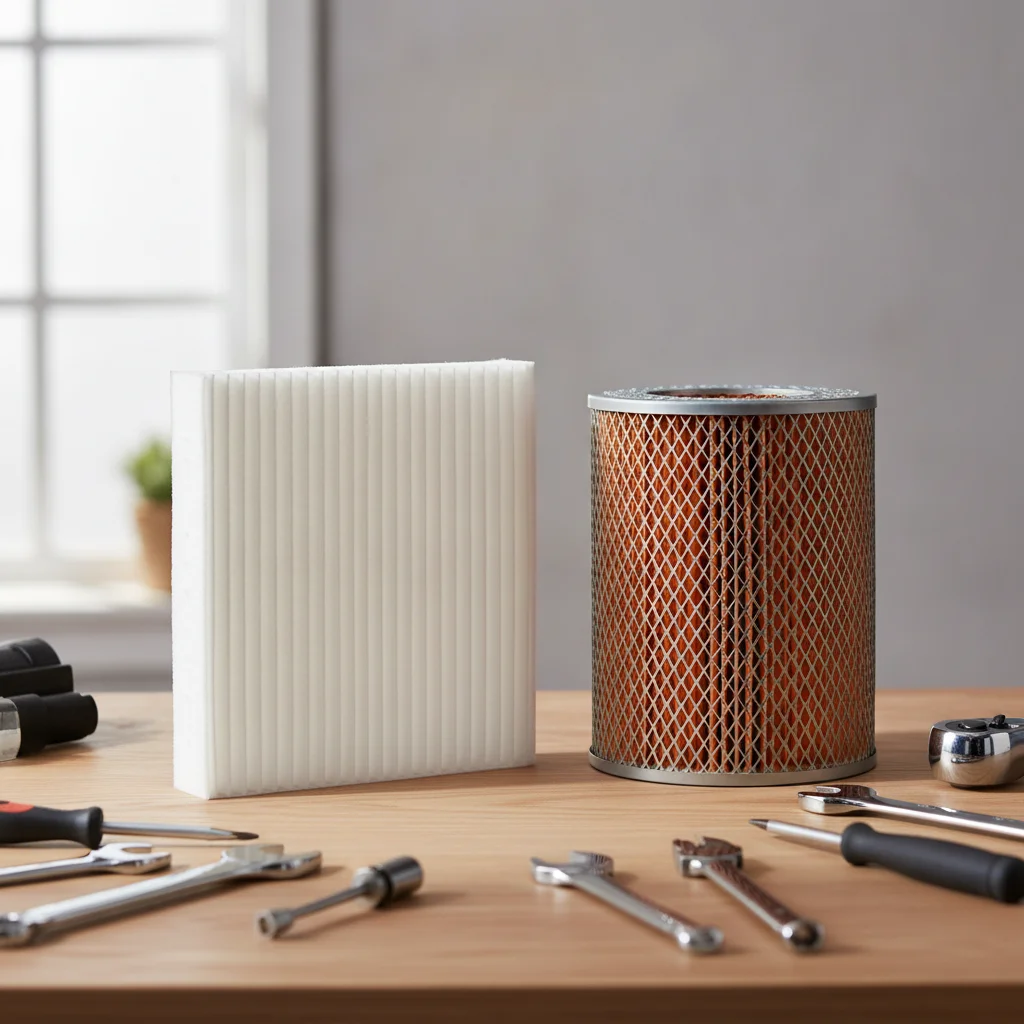
Here's something that trips up a lot of drivers: both filters have "air filter" in the name, they're both flat, pleated, and rectangular in most cars — and yet they have absolutely nothing to do with each other. Mixing them up is one of the most common misunderstandings in basic car maintenance.
The engine air filter sits in the engine bay, usually inside a plastic airbox connected to the intake. Its job is to catch dirt, dust, debris, and insects before that outside air gets drawn into the engine's combustion chambers. Your engine needs a precise ratio of clean air and fuel to run properly. Anything contaminating that airstream causes problems.
The cabin air filter is tucked inside the HVAC system — typically behind the glove box, under the dashboard, or sometimes under the hood near the base of the windshield. It filters the air that blows through your vents when you run the heat, A/C, or fan. It's there to protect you, not the engine.
Think of it this way: the engine air filter keeps grit out of your cylinders; the cabin air filter keeps pollen out of your lungs.
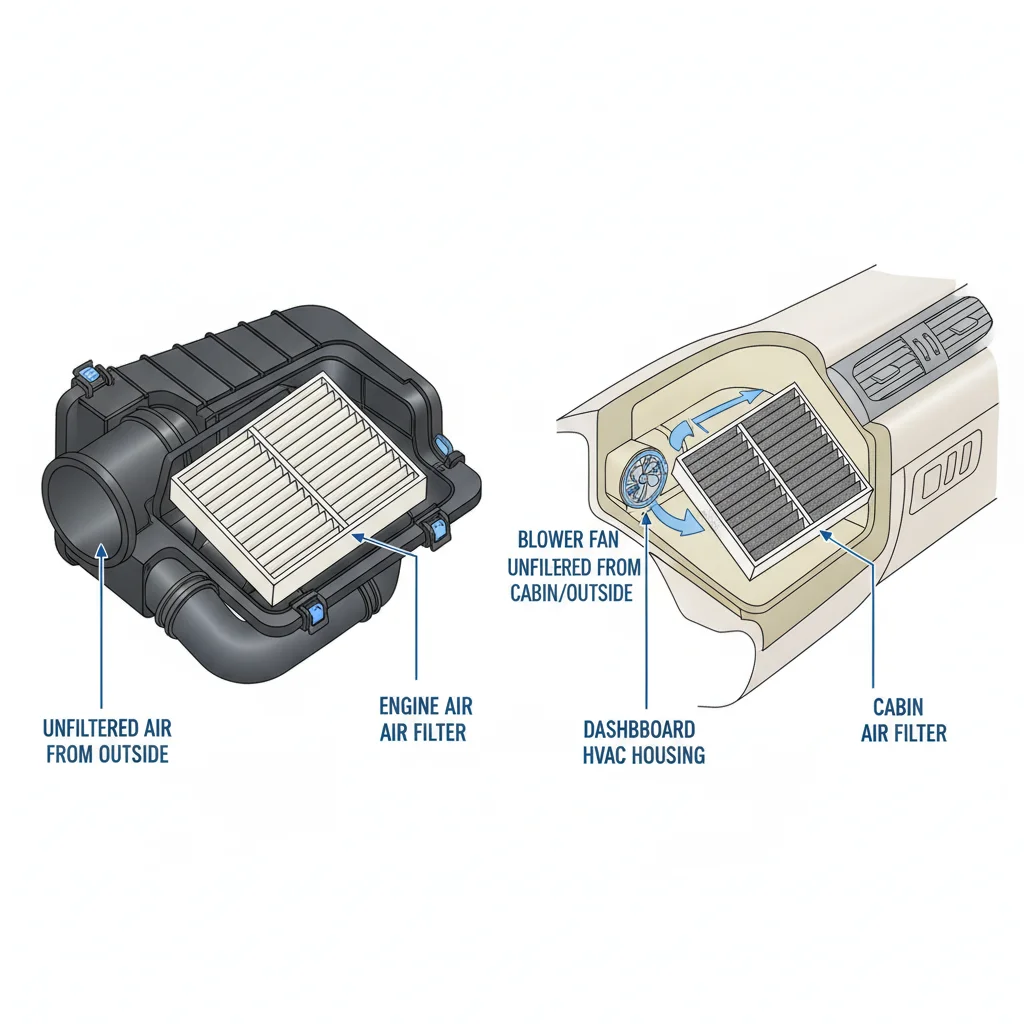
Neither filter affects the other's job in any way. A perfectly clean cabin filter won't help a dirty engine filter, and vice versa. They need to be checked and replaced on their own schedules, which we'll get into below.
How Each Filter Works
Understanding the mechanics helps you appreciate why these filters wear out differently and why neglecting either one is a real problem.
Engine Air Filter
Your engine is essentially an air pump. For every gallon of fuel it burns, it draws in roughly 10,000 gallons of air. All of that air passes through the engine air filter first. The filter medium — usually pleated paper or a cotton gauze material in performance filters — traps particles down to very small micron sizes before they can enter the intake manifold, cylinders, and valves.
When this filter gets clogged, airflow is restricted. The engine's sensors compensate somewhat in modern fuel-injected vehicles, but efficiency suffers. Over time, a severely restricted filter can cause rough idling, sluggish acceleration, and in extreme cases, misfires. See our article on what a clogged air filter actually does to your engine's efficiency for a deeper look at those effects.
Cabin Air Filter
The cabin filter works on the same principle — air is forced through a pleated medium that catches particles — but the air source and destination are completely different. Outside air (or recirculated interior air, depending on your HVAC setting) gets pulled through the cabin filter before it blows through your vents.
Better cabin filters use activated carbon layers to reduce odors from exhaust and smog, not just particulates. Some are rated to capture particles as small as 0.3 microns, which includes many allergens and fine road dust. When the cabin filter gets clogged, you'll notice weaker airflow from your vents even at high fan speeds — the motor is working harder to push air through a blocked medium.
| Criterion | Cabin Air Filter | Engine Air Filter |
|---|---|---|
| Primary function | Filters air entering cabin vents | Filters air entering engine intake |
| What it protects | Vehicle occupants / air quality | Engine internals / combustion |
| Typical location | Behind glove box or under dash | In engine bay airbox |
| Replacement interval | 15,000–25,000 miles or annually | 15,000–30,000 miles |
| DIY difficulty | Very easy (5–10 min, no tools) | Very easy (5–15 min, minimal tools) |
| Part cost (typical) | $15–$35 | $10–$25 |
| Effect if neglected | Poor HVAC airflow, bad air quality | Reduced MPG, engine performance issues |
| Applies to EVs? | Yes | No |
Replacement Intervals: What the Schedules Actually Look Like
Both filters have similar-sounding replacement intervals, but the real-world variables that affect them are quite different.
25,000 mi
Max cabin filter replacement interval
Most OEM guidelines recommend 15,000–25,000 miles, though annual replacement is advised in high-pollen or urban environments.
10,000 gal
Air drawn per gallon of fuel burned
The engine air filter must process enormous volumes of air; even modest restriction measurably affects combustion efficiency.
$50–$100
Typical dealer charge per filter replacement
Shop labor charges for a job that takes under 15 minutes frequently make filter replacement one of the highest-markup routine services.
2–4 MPG
Potential fuel economy loss from clogged engine filter
The U.S. Department of Energy has noted that a severely restricted engine air filter can reduce fuel economy noticeably in older carbureted engines; modern fuel-injected engines compensate more but still see efficiency loss.
Engine Air Filter Intervals
Most manufacturers recommend replacing the engine air filter every 15,000 to 30,000 miles, but this varies widely by driving environment. If you regularly drive on unpaved roads, through construction zones, or in dusty agricultural areas, you might need to replace it twice as often. A visual inspection tells you a lot: hold the filter up to light. If you can't see light through the pleats, it's time.
Cabin Air Filter Intervals
Cabin filters typically get replaced every 15,000 to 25,000 miles, though many manufacturers suggest annually regardless of mileage if you live in a high-pollen or high-pollution environment. The symptom-based trigger is simple: if your fan is running loud but airflow feels weak, check the cabin filter first before assuming there's a blower motor problem.
If you drive an EV and are wondering how this applies to you — the engine air filter doesn't exist on your car, but the cabin filter absolutely does. Our piece on cabin air filter replacement in EVs walks through the specifics for electric vehicle owners.
Dusty or Rural Driving Changes Everything
Standard replacement intervals assume typical suburban or highway driving. If you regularly drive on gravel roads, through farmland, or in desert environments, both filters will load up significantly faster. In those conditions, check both filters every 10,000 miles visually — don't wait for the mileage interval to tell you it's time.
Musty HVAC Smell May Not Be the Filter Alone
If you replace a cabin filter and the musty smell persists, the problem may be mold or bacteria on the evaporator core itself — not just a dirty filter. Running the fan on high with the A/C off for a few minutes at the end of a drive helps dry out the evaporator and reduce this problem over time. Evaporator-specific cleaning sprays are also available if the smell is severe.
A Note on Newly Purchased Used Cars
If you just bought a used car and have no maintenance history, replace both filters immediately. Combined, they'll cost you $20–$50 in parts and about 20 minutes of your time. There's no way to know what the previous owner did, and a clogged engine air filter in particular is the kind of thing that gets ignored for years by people who don't realize it needs changing.
How to Replace Each Filter Yourself
Both filters are beginner-level DIY jobs. No special tools required for most vehicles, and neither involves anything hazardous. Here's how each one typically goes.
Replacing the Engine Air Filter
- Locate the airbox. It's usually a black plastic box in the engine bay with a large hose (the intake) running out of it. If you're not sure, check your owner's manual.
- Open the airbox. Most are held by 2–4 metal clips or wing nuts. Some require a flathead screwdriver to pop the clips.
- Remove the old filter. Note which direction it sits — the filter is directional on some vehicles.
- Check the airbox for debris. Wipe out any leaves, insects, or grit before putting the new filter in.
- Install the new filter. Make sure it seats flat and the housing closes completely. Secure all clips.
Replacing the Cabin Air Filter
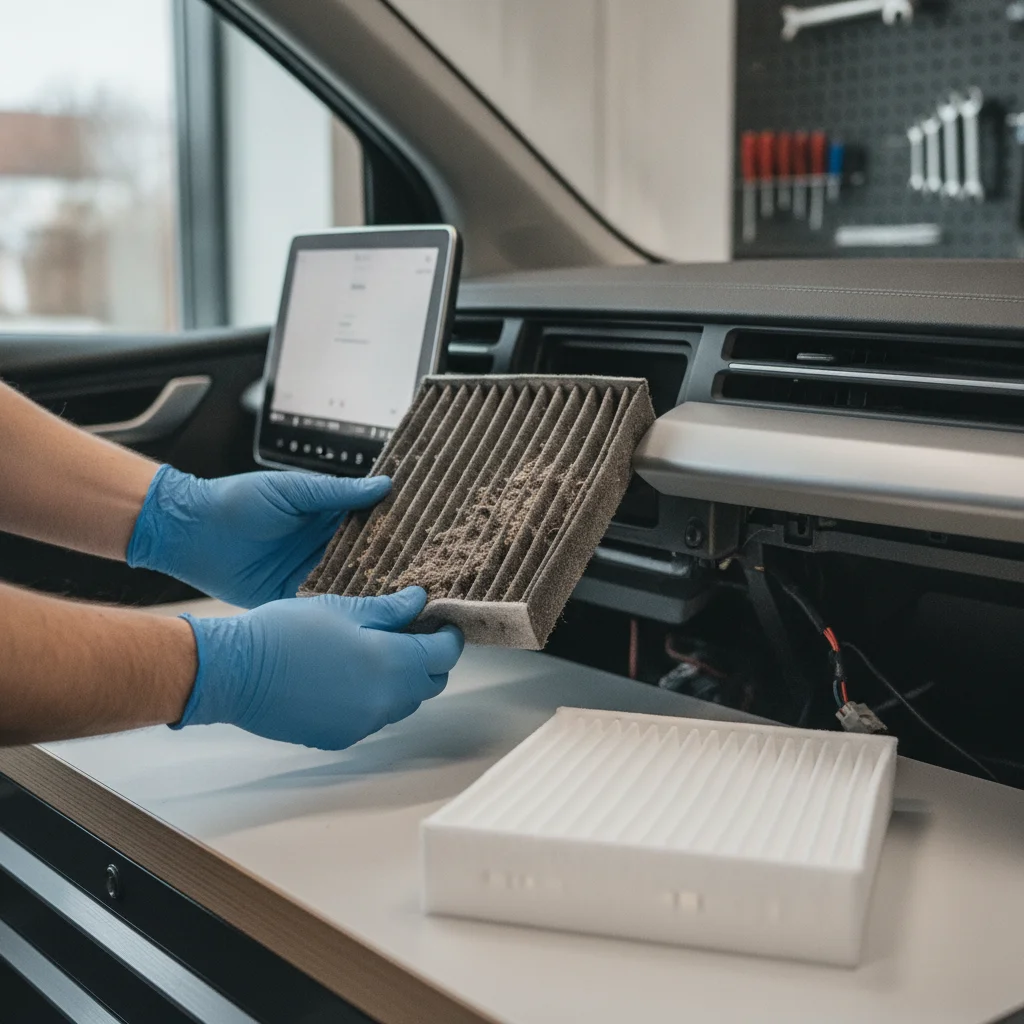
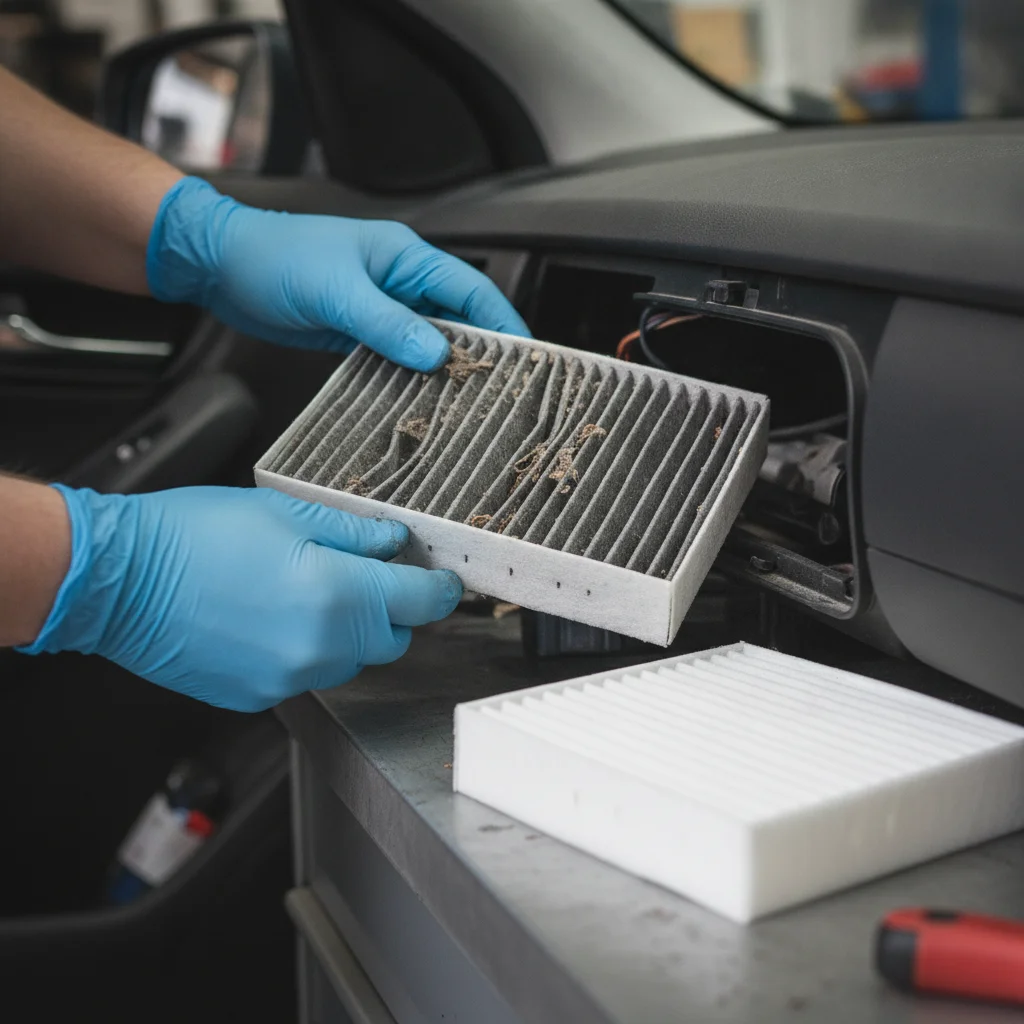
- Find your filter location. Most commonly it's behind the glove box. Open the glovebox, squeeze the sides inward to release the limiting arms, and lower it fully. The filter housing is usually visible immediately behind it.
- Slide out the old filter. Again, note the orientation — arrows on the filter frame typically indicate airflow direction.
- Check the housing. Leaves and debris love to accumulate in here. Clear it out with a dry cloth or small vacuum.
- Insert the new filter. Confirm it's seated flush and the housing cover clicks back into place.
- Reset the glove box. It goes back the same way it came out.
The whole process for the cabin filter takes most people under 10 minutes. The engine air filter is often just as fast. If your specific vehicle is more complicated — some European cars have deeply buried airboxes — a quick search for your year, make, and model will show you the exact access point.
For a comprehensive breakdown of both filters in one place, including torque specs and service reset procedures for specific models, see our full air filter replacement guide.
Costs: Parts, Labor, and Why the Dealer Markup Stings
This is one of the areas where doing it yourself saves you the most money relative to effort required.
Parts Cost
Engine air filters for most mainstream vehicles run $10–$25 for a standard OEM-equivalent filter. Cabin air filters are similar — $15–$35 for most cars, with premium activated carbon filters running a bit higher. If your vehicle is a luxury or European import, expect to pay more — sometimes $40–$60 per filter — but even then, it's cheap compared to what a shop charges.
What Shops and Dealers Charge
Dealers and quick-lube shops routinely charge $50–$100 or more per filter for the same part plus labor — and then they add both of these to the upsell list every time you come in for an oil change. The labor is genuinely 5–10 minutes of work. That margin is hard to justify when you can do it yourself in a parking lot.
Reusable / Washable Filters
Performance brands like K&N make washable, reusable engine air filters that cost $50–$80 upfront but can last the life of the vehicle if you clean them properly every 30,000–50,000 miles. For most daily drivers, the math on these is neutral to slightly positive over a long ownership period, though some mechanics — myself included — prefer the consistent filtration of a fresh OEM-spec paper filter changed on schedule.
Symptoms That Tell You Each Filter Needs Attention
You don't always have to wait for a scheduled interval. Your car and your nose will often tell you something's wrong before the mileage says so.
Signs Your Engine Air Filter Is Due
- Reduced fuel economy — if your MPG has quietly dropped without a change in driving habits, a dirty filter is worth checking.
- Rough idle or hesitation on acceleration — restricted airflow messes with the air-fuel ratio, and your engine feels it.
- Check engine light — a severely restricted filter can trigger lean mixture codes (P0171, P0174 on many vehicles).
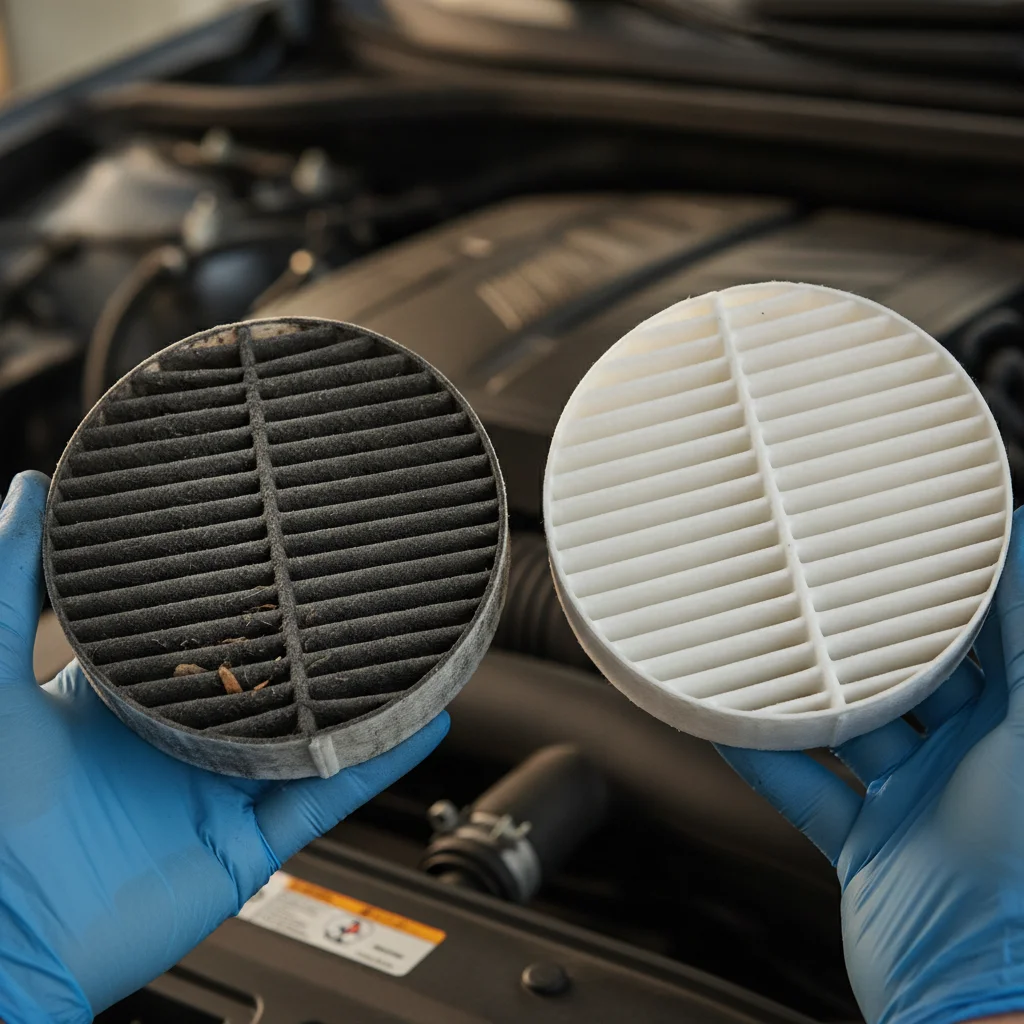
- Visual inspection fails — hold it up to light. Gray, brown, and clogged pleats mean it's done.
Signs Your Cabin Air Filter Is Due
- Weak airflow at the vents even on the highest fan setting — this is the biggest telltale sign.
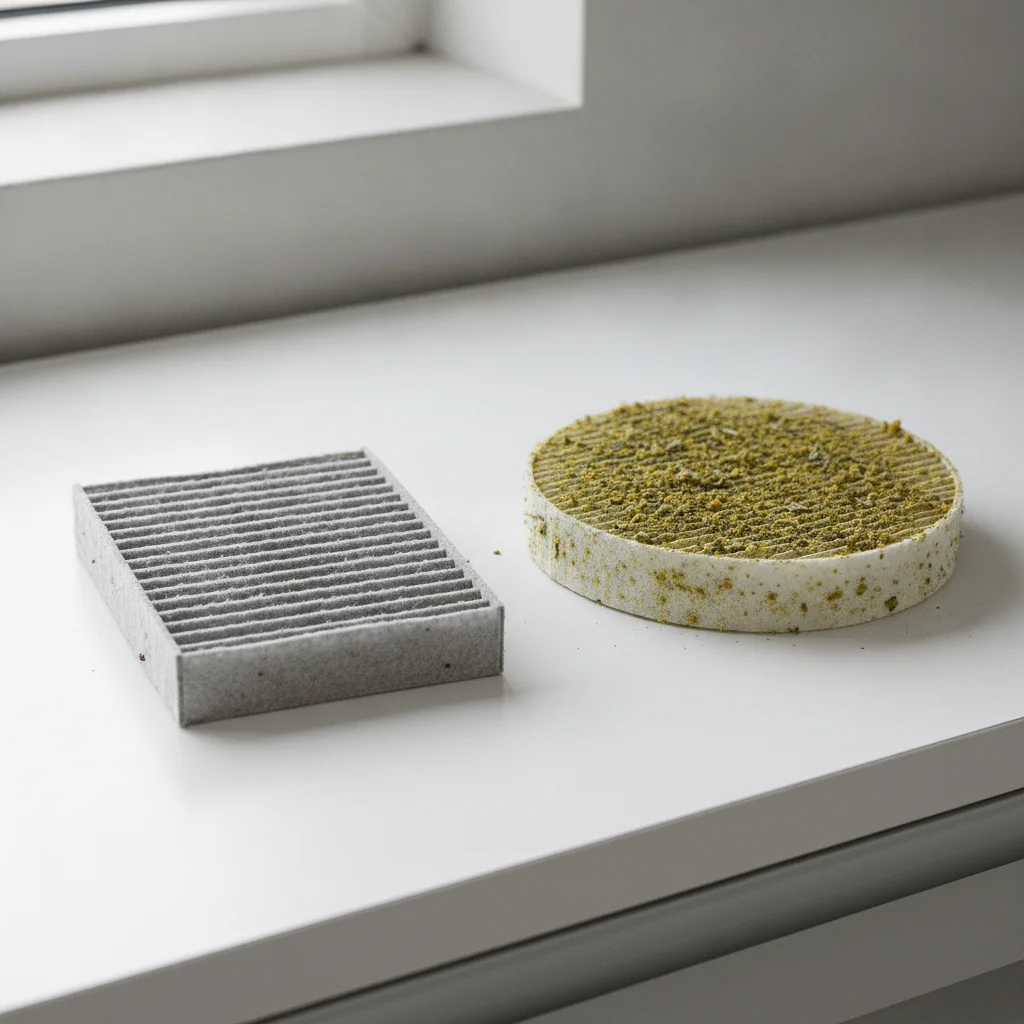
- Musty or stale smell when you turn on the HVAC — mold and bacteria can grow in a moisture-laden clogged filter.
- Increased fan noise — the blower motor works harder against the restricted medium.
- Allergy symptoms worse than usual — a saturated filter stops blocking pollen and starts releasing what it's already trapped.
Dusty or Rural Driving Changes Everything
Standard replacement intervals assume typical suburban or highway driving. If you regularly drive on gravel roads, through farmland, or in desert environments, both filters will load up significantly faster. In those conditions, check both filters every 10,000 miles visually — don't wait for the mileage interval to tell you it's time.
Musty HVAC Smell May Not Be the Filter Alone
If you replace a cabin filter and the musty smell persists, the problem may be mold or bacteria on the evaporator core itself — not just a dirty filter. Running the fan on high with the A/C off for a few minutes at the end of a drive helps dry out the evaporator and reduce this problem over time. Evaporator-specific cleaning sprays are also available if the smell is severe.
Neither of these filters is something to defer indefinitely. The engine filter is genuine protection for expensive hardware. The cabin filter is about your daily quality of life behind the wheel — and for anyone with respiratory sensitivities, it matters more than most people realize.

All claims are backed by peer-reviewed research. Sources on request.