Key Takeaways
Lapsed Vehicle Registration
A lapsed vehicle registration means your car's state-issued registration has expired and has not been renewed by the required deadline. Every registered vehicle must have a current, valid registration to be legally driven on public roads. Operating a car with a lapsed registration is a violation of state law in all 50 states, regardless of whether your vehicle is otherwise safe and insured.
Registration expiration is tracked by your state's DMV database in real time. Law enforcement officers can verify your registration status via license plate readers without ever stopping your vehicle.
What It Actually Means When Your Registration Expires
Vehicle registration is essentially your state government's certification that your car is authorized to operate on public roads. When you pay your annual registration fee, the state records your vehicle's information, confirms it meets emissions and safety standards (where applicable), and issues a sticker or certificate indicating your car is compliant. When that authorization expires and you don't renew, your car becomes — in the eyes of the law — an unauthorized vehicle.
Think of it like a business license. A restaurant that lets its health permit lapse doesn't suddenly become dangerous overnight, but it is operating illegally and can be shut down at any inspection. The same principle applies to your car the moment your registration expires.
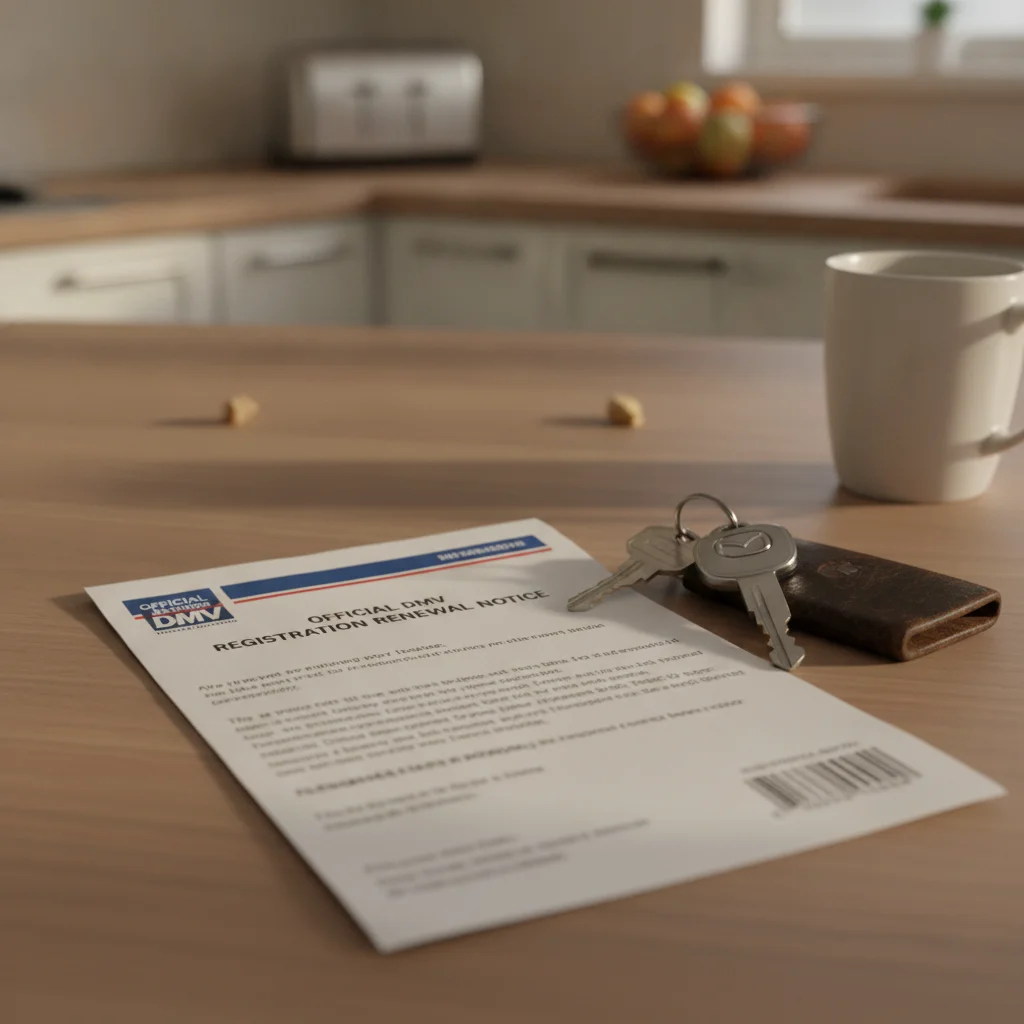
Most states send renewal notices 30 to 60 days before your expiration date, either by mail or email. But notices get lost, addresses change, and life gets busy. Missing that notice doesn't grant any legal grace — the responsibility for timely renewal falls entirely on the vehicle owner. Understanding what is at stake can make it easier to treat that renewal reminder as the financial and legal priority it truly is.
For a broader picture of how registration costs accumulate over a vehicle's life, see our full breakdown of lifetime registration costs.
Immediate Consequences: Fines and Traffic Stops
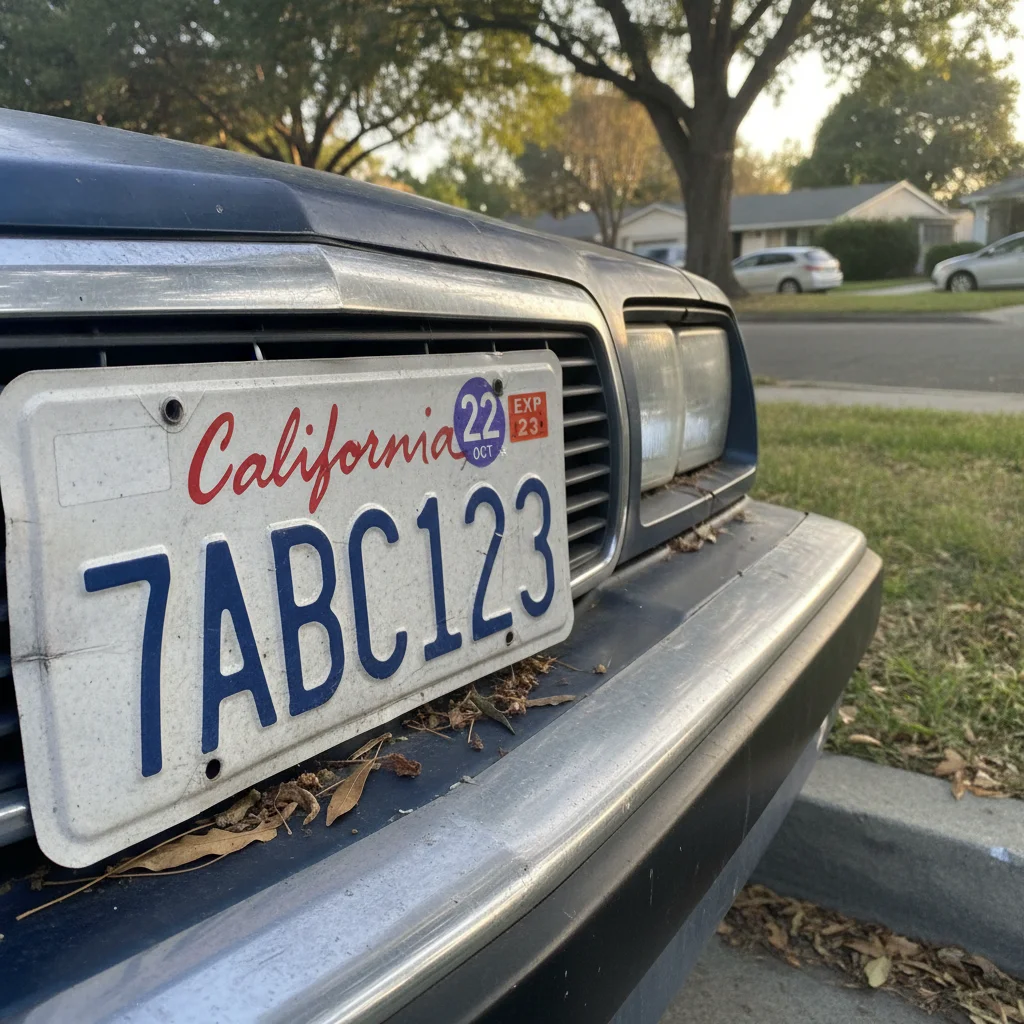
The most immediate consequence of a lapsed registration is the traffic stop and the ticket that follows. Officers are trained to spot expired stickers, and increasingly, their patrol cars are equipped with automated license plate readers (ALPRs) that scan plates and flag expired registrations automatically — no visual inspection required.
$25–$500+
Typical fine range for expired registration
Fine amounts vary by state and length of lapse; some high-cost states like New York and California sit at the upper end of this range.
25–60%
Typical increase in total renewal cost from late penalties
Based on state DMV fee schedules; percentage-based surcharge states can exceed this range for long lapses.
$400–$900
Average cost to retrieve an impounded vehicle
Includes towing fees, daily storage charges, and administrative release fees, before the renewal cost itself is added.
6 months
Lapse threshold for impoundment in California
Under California Vehicle Code Section 22651(o), vehicles with registration expired more than six months may be impounded.
38 states
States using automated license plate readers for enforcement
According to the International Association of Chiefs of Police, the majority of U.S. states now employ ALPR technology in patrol vehicles.
Fine amounts vary considerably by state and by how long your registration has been lapsed:
- Short lapse (1–30 days): Many states treat this as a minor infraction, with fines typically ranging from $25 to $100, though some states start higher.
- Moderate lapse (1–6 months): Fines generally climb into the $100–$300 range in most jurisdictions, and you may face mandatory court appearances in some states.
- Extended lapse (6+ months): At this stage, you're looking at fines that can exceed $500, and the risk of impoundment becomes very real.
In many states, you'll also be required to show proof of current registration in court before a judge will dismiss or reduce the charge — meaning you have to pay the renewal fees anyway, on top of any court costs. That's a double payment situation that's entirely avoidable.
Renew Early — It Costs Nothing Extra
Most states allow you to renew your registration up to 60 to 90 days before the expiration date, and your new registration period still starts from your original expiration date — not from the date you paid. Renewing early gives you the same full term and eliminates any risk of forgetting. Set a reminder for 60 days before your sticker expires and treat it like any other recurring bill.
Check Your State's Non-Operation Option
If you have a vehicle that won't be driven for an extended period, investigate whether your state offers a planned non-operation or non-use declaration before your current registration expires. Filing in advance is almost always cheaper and simpler than dealing with lapsed-registration penalties after the fact. This option is particularly useful for seasonal vehicles, project cars, and stored classics.
It's worth noting that some states, including Virginia and California, also run registration compliance sweeps in high-density urban areas, meaning officers actively look for expired plates even without another reason for a stop. The risk of enforcement is not uniformly distributed — urban drivers face substantially higher odds of being caught.
Escalating Penalties: Impoundment and License Issues
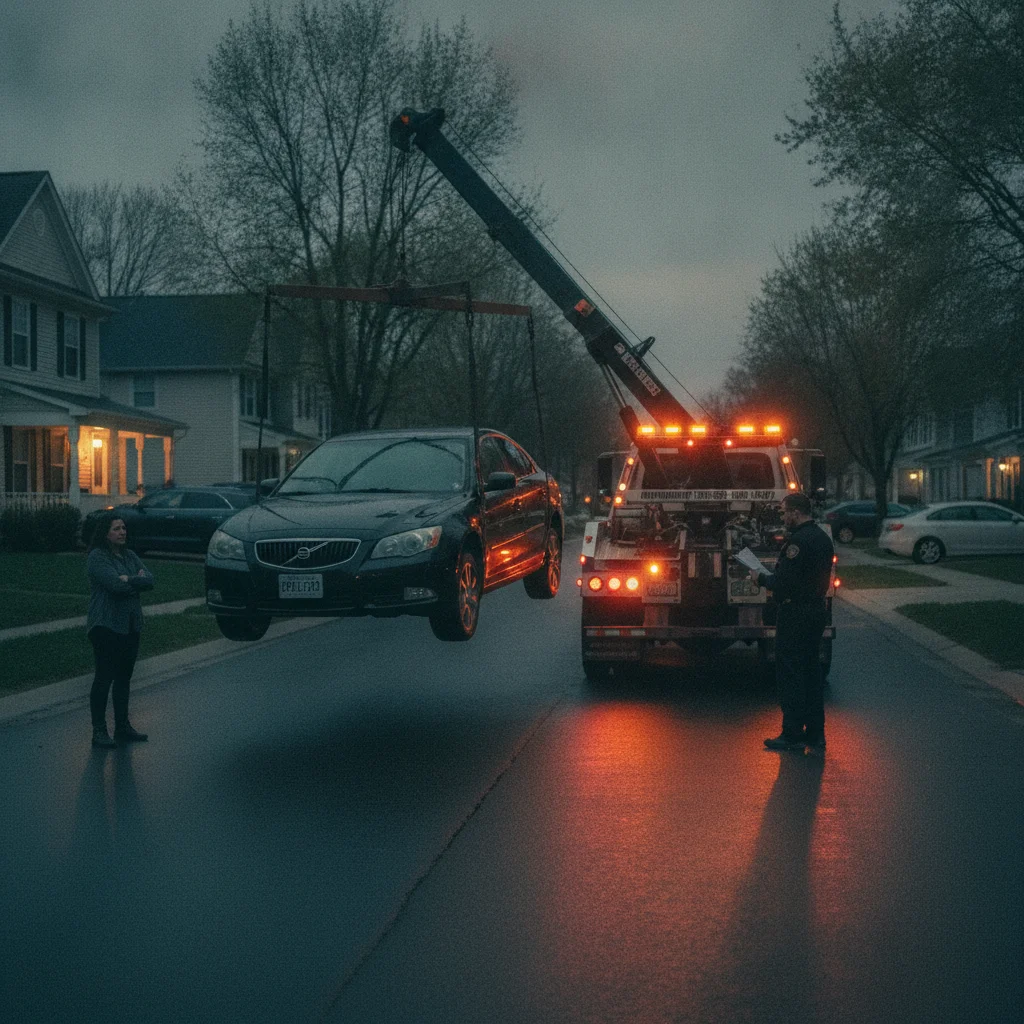
A ticket is annoying, but impoundment is a financial catastrophe. Several states authorize police to impound a vehicle on the spot if its registration has lapsed beyond a certain threshold. Once your car is in an impound lot, you're looking at daily storage fees ranging from $35 to $100 or more, plus a release fee, plus the cost of the registration renewal itself — all of which must typically be paid before the car is returned.
“The vast majority of registration violations we see are not intentional — people just lose track. But 'I forgot' isn't a legal defense, and by the time we're writing the ticket, the clock has already been running on late fees they don't even know about yet.”
— Retired Traffic Enforcement Officer, 20-year law enforcement veteran, municipal traffic division
In California, for instance, a vehicle with registration expired more than six months can be impounded under Vehicle Code Section 22651(o). Getting your car out of impound can easily cost $400–$900 once towing, daily storage, and administrative fees are totaled. That's a steep price for a registration renewal that might have cost $50–$200.
Beyond impoundment, some states treat persistent registration non-compliance as grounds for suspending your vehicle registration entirely — which is different from and separate from your driver's license. A suspended registration means you cannot legally renew or operate that vehicle until the state lifts the suspension, which usually requires paying all outstanding fines, penalties, and back fees.
License Plate Readers Change the Enforcement Equation
Automated license plate readers have fundamentally changed how expired registrations are enforced. In cities with high ALPR deployment, your plate can be scanned hundreds of times per day — parked or moving — and officers will be dispatched based on those hits. The old assumption that you'd only get caught if pulled over for another reason no longer holds in most urban areas.
Unpaid Registration Fines Can Escalate
In many states, unpaid registration violation fines are eventually referred to collections or to the state's DMV, which can then block your ability to renew any vehicle registration — not just the one that got the ticket. Some states will also suspend your driver's license if fines remain unpaid past a certain threshold. What starts as a $75 ticket can become a license suspension and registration block if ignored.
Resolving a Lapse Is Always the Right First Move
No matter how long your registration has been lapsed, the financially sound move is to renew as soon as possible. Penalties accumulate over time, and the longer you wait, the more expensive renewal becomes. Some states offer hardship payment plans for owners who can't afford the full back-fees in one payment — contact your state DMV directly to ask about available options before concluding that renewal is unaffordable.
In a smaller number of cases — particularly when a driver has multiple outstanding violations or warrants — an expired registration stop can escalate to a driver's license suspension if the fines go unpaid and are sent to collections or the court. At that point, what started as a simple registration lapse has cascaded into a problem that affects your ability to legally drive any vehicle.
For a closer look at how registration violations intersect with broader traffic laws and your driving record, that hub covers the full legal landscape.
Insurance Complications You May Not Expect
Here's a consequence many drivers don't think about until it's too late: an expired registration can complicate your auto insurance claim. Your insurance policy doesn't automatically cancel when your registration lapses — those are separate obligations. But insurance policies typically include a provision requiring you to comply with all applicable laws regarding your vehicle.
If you're involved in an accident while driving with an expired registration and you're the at-fault driver, the other party's attorney or insurance company may argue that your vehicle was being operated illegally at the time of the accident. This opens the door to bad-faith arguments, coverage disputes, and in civil litigation, it can be introduced as evidence of negligence.
In practical terms, most standard accident claims won't be denied solely because of a lapsed registration — but the complication is real, the legal exposure is real, and it adds stress and delay to an already difficult situation. Some specialty or non-standard insurers do include stricter compliance language in their policies, so reading your policy's exclusions section is worth your time.
The bottom line: your insurance may still pay out, but you've handed the opposing side an additional argument, and that has value in negotiations and litigation. Keeping your registration current eliminates that vulnerability entirely at a cost that's a fraction of any claim dispute.
The True Cost of Letting It Slide: Late Fees and Back Fees
Even if you never get pulled over, the financial hit from a lapsed registration comes at renewal time. States don't simply charge you the standard fee when you eventually renew late — they pile on penalties that can dramatically inflate your total bill.
Most states structure late fees in one of two ways:
- Flat late penalty
- A fixed dollar amount added to your standard renewal fee. This might be $10 to $25 for a short lapse, rising to $50–$100 for longer periods. Simple and predictable, but still a real cost.
- Percentage-based surcharge
- Some states charge a percentage of your base registration fee for each month of delinquency. A 10% monthly surcharge on a $150 base fee compounds quickly — after six months, you owe $90 in penalties alone before any base fees.
$25–$500+
Typical fine range for expired registration
Fine amounts vary by state and length of lapse; some high-cost states like New York and California sit at the upper end of this range.
25–60%
Typical increase in total renewal cost from late penalties
Based on state DMV fee schedules; percentage-based surcharge states can exceed this range for long lapses.
$400–$900
Average cost to retrieve an impounded vehicle
Includes towing fees, daily storage charges, and administrative release fees, before the renewal cost itself is added.
6 months
Lapse threshold for impoundment in California
Under California Vehicle Code Section 22651(o), vehicles with registration expired more than six months may be impounded.
38 states
States using automated license plate readers for enforcement
According to the International Association of Chiefs of Police, the majority of U.S. states now employ ALPR technology in patrol vehicles.
Some states also require a vehicle inspection before they'll renew a registration that's been lapsed for more than a year. If your vehicle doesn't pass, you can't renew until repairs are made — which means paying for the inspection, the repairs, a re-inspection, and then finally the overdue registration with all accumulated penalties. The total can easily reach four figures for a vehicle that needs meaningful work.
For a state-by-state look at how fees and penalties stack up over time, our article on lifetime registration costs puts those numbers into perspective across a typical vehicle ownership cycle.
Why Registration Lapses Happen — and How to Prevent Them
Understanding why registrations lapse helps you design a system to prevent it. The most common reasons are genuinely mundane: a notice sent to an old address, an email that went to spam, a busy season that caused the deadline to slip, or a financial crunch that made the fee feel like something to push off.

The fix is almost always simple — and free:
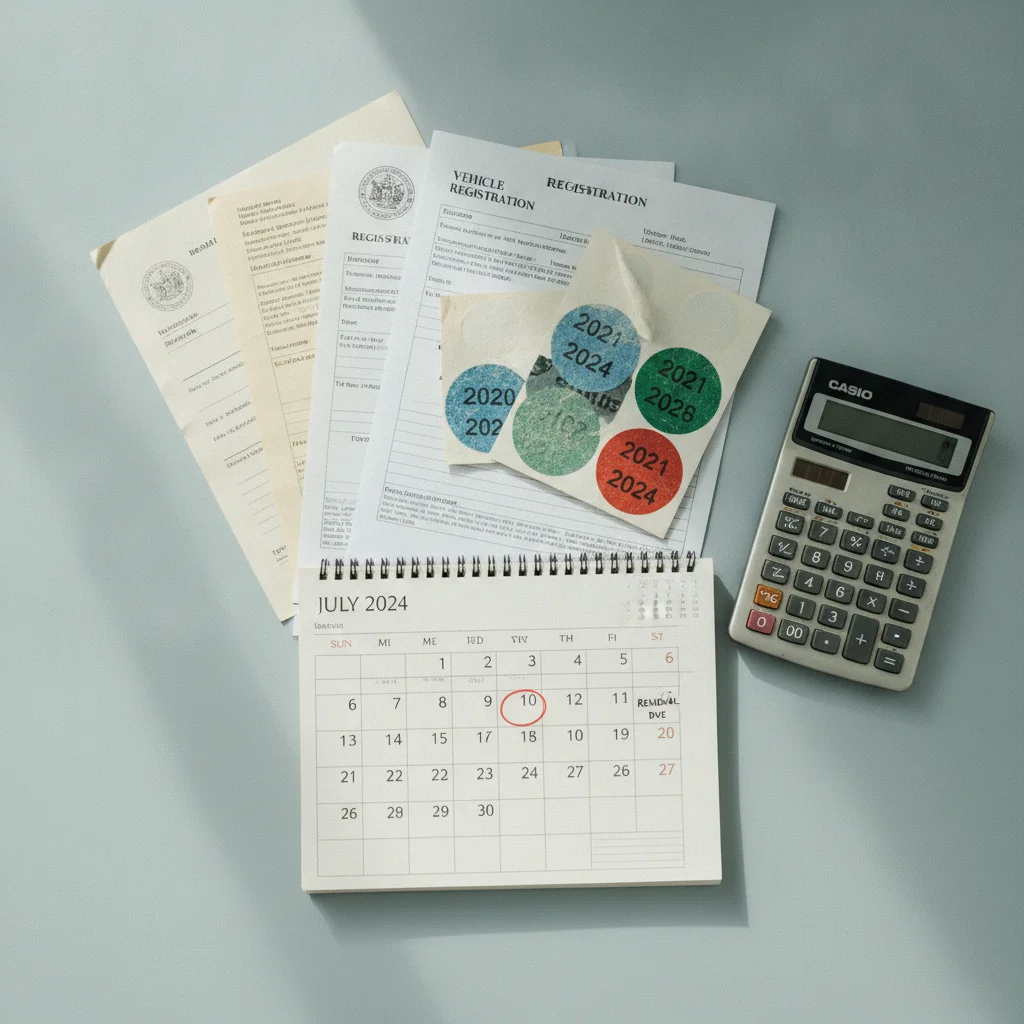
- Set a calendar reminder 45 and 15 days before your expiration date. Treat it like a bill payment due date, because it is one.
- Update your address with the DMV every time you move. Notices sent to an old address are not a legal excuse for late renewal in any state.
- Opt in to electronic notices where your state offers them. Email and text reminders are generally more reliable than mail.
- Renew early. Most states allow renewal up to 90 days before expiration. Renewing in month nine of a twelve-month registration costs you nothing extra and eliminates the risk of forgetting.
- Budget for it annually. Your registration fee is a predictable, recurring cost. Build it into your annual car ownership budget alongside insurance premiums and routine maintenance.
Renew Early — It Costs Nothing Extra
Most states allow you to renew your registration up to 60 to 90 days before the expiration date, and your new registration period still starts from your original expiration date — not from the date you paid. Renewing early gives you the same full term and eliminates any risk of forgetting. Set a reminder for 60 days before your sticker expires and treat it like any other recurring bill.
Check Your State's Non-Operation Option
If you have a vehicle that won't be driven for an extended period, investigate whether your state offers a planned non-operation or non-use declaration before your current registration expires. Filing in advance is almost always cheaper and simpler than dealing with lapsed-registration penalties after the fact. This option is particularly useful for seasonal vehicles, project cars, and stored classics.
Some states now allow multi-year registrations — paying for two or three years at once — which can reduce the administrative burden significantly. If your state offers this option, it's worth considering, especially if you tend to lose track of annual deadlines. Just be aware that multi-year registrations typically aren't refundable if you sell the vehicle, so factor that into your decision.
For organized record-keeping habits that help you stay on top of renewals and other compliance requirements, see our guide to keeping registration and tax records organized.
Special Situations: Stored Vehicles, Sold Cars, and Exemptions
Not every registration lapse is the result of simple neglect. There are situations where the circumstances are more nuanced — and where owners may have legitimate options they haven't explored.
Vehicles in Long-Term Storage
If you have a vehicle that's not being driven — a classic car, a seasonal vehicle, or a project car — some states allow you to file a planned non-operation (PNO) or non-use declaration with the DMV. This legally suspends your registration obligation and stops penalties from accruing, as long as the vehicle remains off public roads. California's PNO program, for example, charges a nominal fee of around $21 instead of the full registration renewal, and the car can sit in your garage indefinitely without penalty.
Recently Sold Vehicles
If you've sold a vehicle but haven't properly filed the transfer paperwork with the DMV, you may still receive renewal notices — and potentially penalties — for a car you no longer own. Always file a release of liability with your state DMV immediately after any private sale. This protects you from parking tickets, registration penalties, and liability exposure tied to the vehicle after it's out of your hands.
Exemptions and Discounts
Some owners qualify for reduced or waived registration fees — including military members on deployment, disabled veterans, and low-income drivers in states with assistance programs. If you've been skipping renewal because the cost is a genuine hardship, it's worth checking whether you qualify before the penalties compound further. Our article on registration exemptions and discounts most owners don't know about covers the programs available in most states.
License Plate Readers Change the Enforcement Equation
Automated license plate readers have fundamentally changed how expired registrations are enforced. In cities with high ALPR deployment, your plate can be scanned hundreds of times per day — parked or moving — and officers will be dispatched based on those hits. The old assumption that you'd only get caught if pulled over for another reason no longer holds in most urban areas.
Unpaid Registration Fines Can Escalate
In many states, unpaid registration violation fines are eventually referred to collections or to the state's DMV, which can then block your ability to renew any vehicle registration — not just the one that got the ticket. Some states will also suspend your driver's license if fines remain unpaid past a certain threshold. What starts as a $75 ticket can become a license suspension and registration block if ignored.
Resolving a Lapse Is Always the Right First Move
No matter how long your registration has been lapsed, the financially sound move is to renew as soon as possible. Penalties accumulate over time, and the longer you wait, the more expensive renewal becomes. Some states offer hardship payment plans for owners who can't afford the full back-fees in one payment — contact your state DMV directly to ask about available options before concluding that renewal is unaffordable.
Even if your registration has already lapsed, renewing it today is almost always the right financial move. The longer you wait, the more the late fees compound, and the greater your risk of a costly traffic stop, impoundment, or insurance complication. The path to resolving a lapse is the same regardless of how long it's been: go online or to your DMV, pay the renewal plus penalties, and get current. If the cost is prohibitive, some states offer payment plans for delinquent registration fees.
For a thorough understanding of what changes in your registration fee from year to year — and what stays the same — our companion article annual registration renewal: what changes each year and what doesn't is a useful next read.

All claims are backed by peer-reviewed research. Sources on request.