Key Takeaways
Vehicle Depreciation
Depreciation is the difference between what you paid for a car and what it's worth when you sell or trade it in. It happens automatically — the moment you drive off the lot, your car is worth less than you paid. Over time, every vehicle loses value due to age, mileage, wear, and shifts in market demand. For most drivers, depreciation is the single largest cost of ownership, dwarfing fuel, insurance, or even loan interest.
Depreciation is calculated as the reduction in an asset's fair market value over time. For tax and accounting purposes, the IRS allows businesses to use Modified Accelerated Cost Recovery System (MACRS) schedules; private owners don't get that deduction, but they feel the financial impact just the same.
The Cost That Doesn't Show Up on the Window Sticker
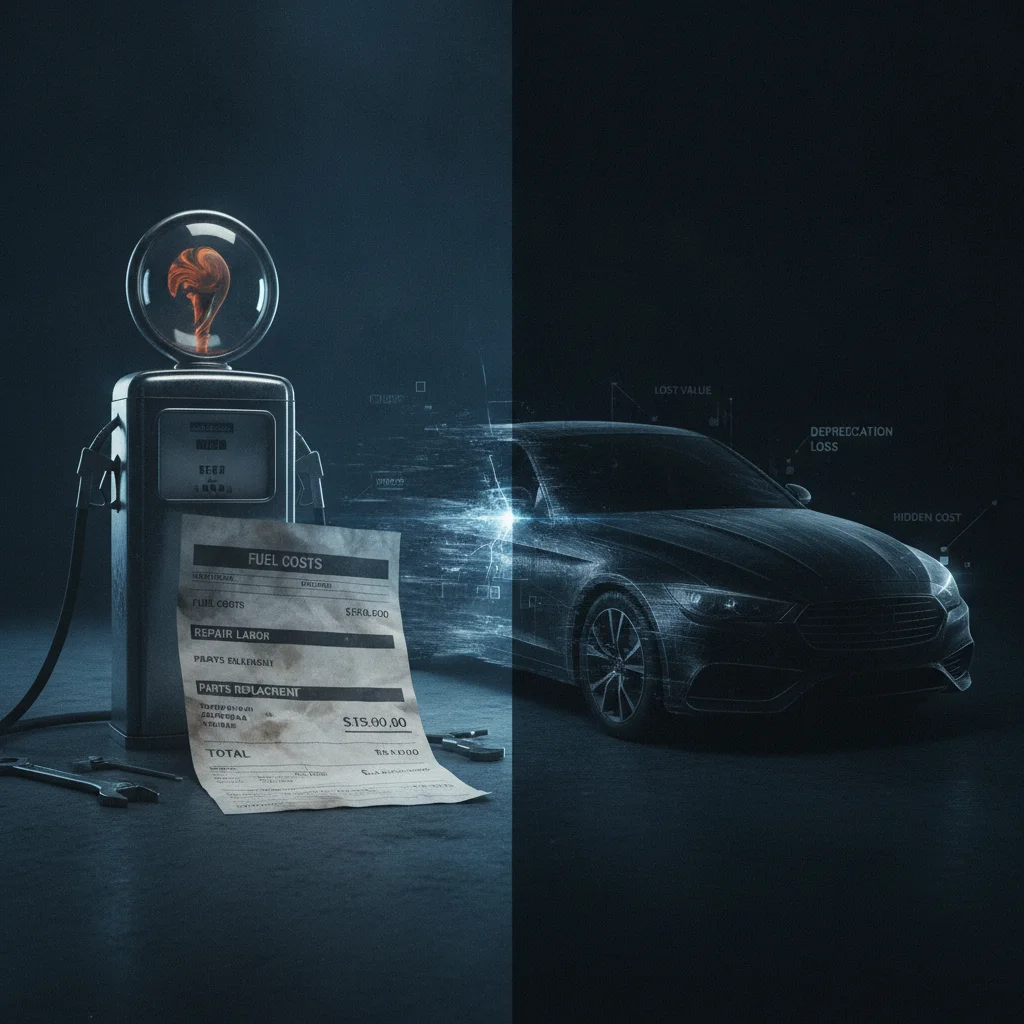
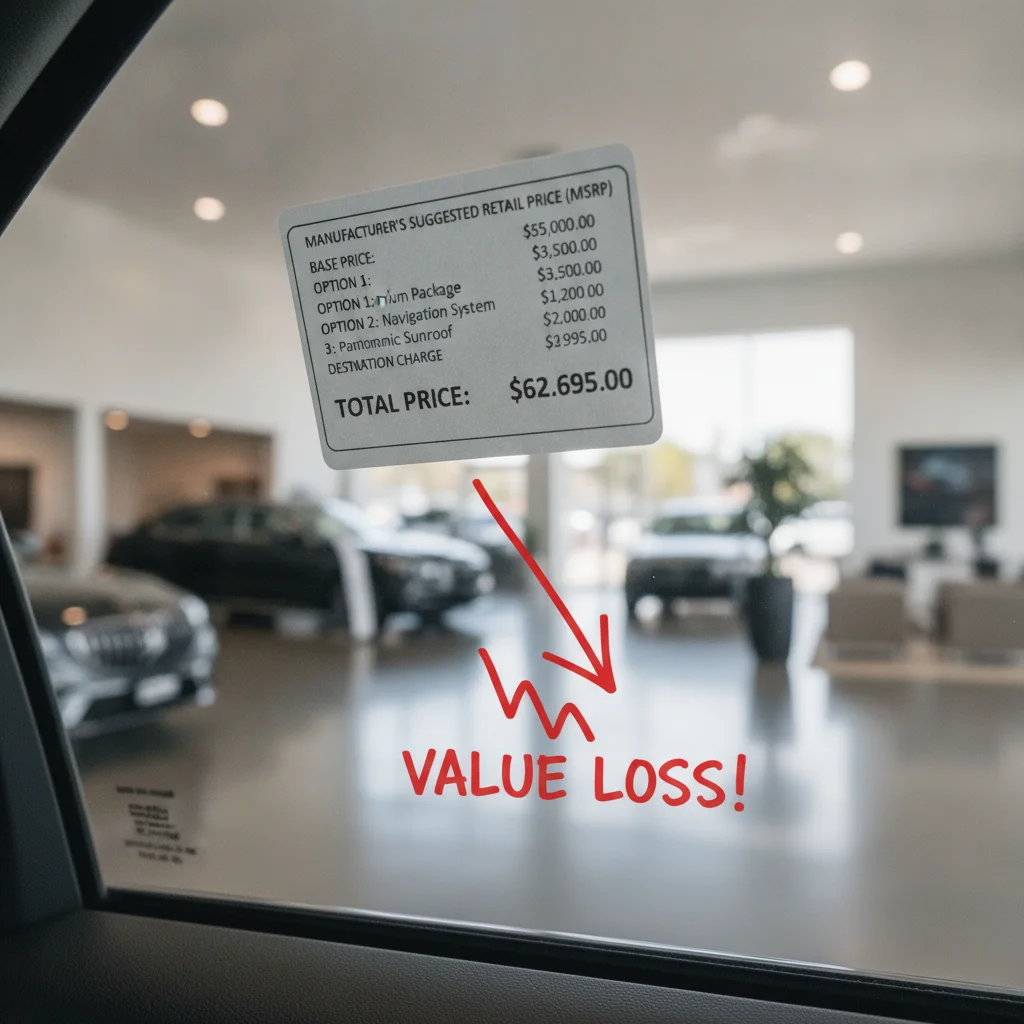
Walk into a dealership and you'll be handed a window sticker listing the MSRP, destination charge, and every optional package. Ask about monthly payments and the finance manager will run numbers for you in seconds. What you won't see — not on the sticker, not in the payment calculator, not in most affordability conversations — is depreciation.
That's a problem, because depreciation is almost certainly the biggest single cost you'll incur from owning that vehicle. More than fuel. More than insurance. Often more than loan interest, depending on your rate and term. If you're making a car decision without understanding how depreciation works, you're missing the most important number on the table.
This isn't meant to scare you out of buying a new car. Plenty of people buy new and it works out fine for them. But if you go in knowing how depreciation works, you can choose smarter — the right vehicle, the right timing, the right ownership strategy. That's the whole point of this piece.
What Depreciation Actually Means in Dollar Terms
Here's the simplest version: depreciation is the gap between what you paid and what you can sell it for. If you buy a car for $42,000 and sell it five years later for $18,000, you've "spent" $24,000 in depreciation. That's real money — money you can't recover, regardless of how carefully you drove or how religiously you changed the oil.
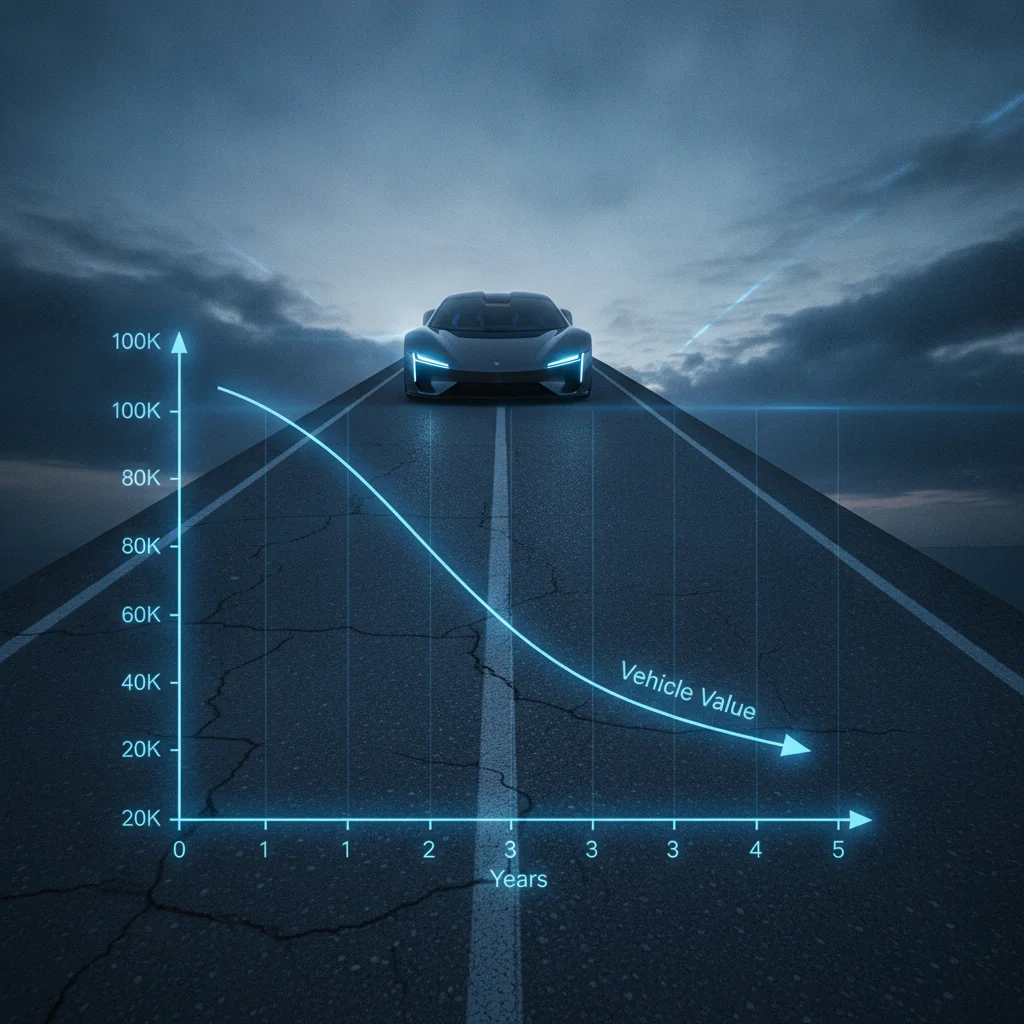
The loss isn't spread evenly over time. New vehicles lose value fastest in the first few years, then the curve flattens. A car that loses $8,000 in year one might only lose $2,500 in year five. This is why timing matters so much in car ownership decisions.
20%
Average first-year depreciation on a new car
Most new vehicles lose approximately 15–25% of their value within the first 12 months, according to industry data from Edmunds and iSeeCars.
~50%
Value lost after five years of ownership
On average, a new vehicle retains only about 40–55% of its original value after five years, depending on brand and segment.
$48,000+
Average new vehicle transaction price (2024)
According to Cox Automotive, the average new vehicle sold in the U.S. in 2024 transacted above $48,000, making depreciation losses larger in absolute terms than ever before.
35%
Buyers with negative equity at trade-in
Edmunds reported that over one-third of trade-in vehicles in recent quarters carried negative equity, largely driven by long loan terms and rapid early depreciation.
$800+
Monthly depreciation on an average new car (year one)
On a $48,000 vehicle losing 20% in year one, the monthly depreciation cost exceeds $800 — often more than insurance and fuel combined.
For a practical example: the average new vehicle in the U.S. sells for around $48,000 as of recent model years. If it follows a typical depreciation curve, it loses roughly $10,000–$12,000 in value during the first 12 months. That's over $800 per month in value erosion — before you've paid a cent in insurance, fuel, or maintenance. When you frame it that way, the real cost of ownership looks very different from what the monthly payment calculator shows.
See how the full five-year trajectory plays out in our article on the depreciation curve for the first five years of ownership. The numbers by year will probably surprise you.
Why the First Year Hurts the Most
The moment a new car leaves the dealer lot, it becomes a used car — and the market prices it accordingly. Buyers browsing used listings will almost always choose a one-year-old model over a new one if the savings are significant enough. That immediate shift in buyer perception is what drives the steep year-one drop.
A few factors accelerate early depreciation even further:
- New model year releases: When the 2026 model arrives, 2025s on dealer lots suddenly feel older, pushing their value down faster.
- Supply and demand shifts: A vehicle that was in short supply at purchase can flood the used market a year or two later, dropping resale prices.
- Financing costs embedded in MSRP: Dealers sometimes inflate sticker prices during high-demand periods. Once the market normalizes, resale values follow actual market rates — which can be lower than what you paid.
Depreciation Isn't the Same as a Bad Deal
Depreciation happens to every vehicle — even well-chosen ones. Buying new isn't inherently a mistake; it just comes with a depreciation cost that should be understood upfront. Some buyers value the warranty, peace of mind, or specific configuration enough that the depreciation cost is worthwhile. The goal is to make that tradeoff consciously, not accidentally.
After year one, the curve does flatten. By years four through six, many vehicles are depreciating at a much slower annual rate. This is one reason keeping a car for 8–10 years can dramatically reduce your average annual depreciation cost — you're spreading that steep early loss over a longer period.

Not All Cars Depreciate the Same Way
Vehicle type, brand, and even color can affect how fast a car loses value. This matters enormously when you're shopping, because two cars with identical sticker prices can have vastly different total ownership costs over the same period.
Generally speaking:
- Full-size trucks and reliable SUVs hold value best. Toyota 4Runner, Tacoma, and Tundra models are famous for this. Ford F-150 and Chevy Silverado aren't far behind.
- Mainstream sedans from Honda and Toyota depreciate slower than average. Civic, Accord, Camry, and Corolla all have strong used-car demand.
- Luxury vehicles tend to depreciate faster because the used-car buyer pool for a $70,000 car is much smaller than for a $28,000 car. There are exceptions — certain Porsche and Land Rover models hold value unusually well — but the general rule holds.
- Electric vehicles currently sit in complicated territory. Some EVs depreciate very quickly due to rapid technology changes and battery concerns. Others — particularly some Tesla models — have bucked that trend. The landscape is still evolving.
“Depreciation is the silent killer of car budgets. People obsess over the interest rate and completely ignore the $8,000 they're handing back to the market every year just by driving a new car.”
— Philip Reed, Senior Consumer Advice Editor, Edmunds.com
If you're prioritizing resale value or trying to minimize total depreciation cost, the vehicle you choose matters as much as the price you negotiate. Check out our roundup of new cars with the lowest five-year ownership cost for specific categories and models that consistently perform well.
How Depreciation Creates the "Underwater" Loan Problem
Here's where depreciation stops being just an abstract number and starts causing real financial stress: negative equity. You're underwater when you owe more on your auto loan than the car is currently worth. And with the combination of longer loan terms and steep early depreciation, it's become increasingly common.
Say you buy a $45,000 SUV with nothing down and finance it over 72 months. After 18 months of payments, your loan balance might be around $38,000. But thanks to depreciation, your car might now be worth $31,000. You're $7,000 underwater. If you need to sell, trade in, or if the car gets totaled, you're on the hook for that gap.
Protect Yourself From Negative Equity
If you're financing a new car, aim to put down at least 15–20% to keep your loan balance tracking closer to market value. Alternatively, choose a loan term of 48–60 months rather than 72 or 84. Both strategies reduce the window during which you're underwater — and the stress that comes with it.
Run the Full Cost Math Before You Sign
Before finalizing any new car purchase, take five minutes to look up the projected resale value at the end of your planned ownership period. Subtract it from your purchase price, divide by months owned, and add that number to your monthly payment estimate. That's your real monthly cost — and it should inform which car and which term you choose.
This isn't a worst-case scenario — it's routine for a lot of buyers who took on long loan terms to lower their monthly payment without considering how the depreciation curve would interact with their payoff schedule. The longer your loan, the longer you're at risk of being upside-down.
For a broader look at how depreciation fits alongside insurance, fuel, and maintenance costs, see depreciation vs. out-of-pocket costs. Understanding all of these together gives you the full financial picture before you sign anything.
Practical Ways to Work Depreciation in Your Favor
You can't eliminate depreciation, but you can absolutely structure your buying and selling decisions around it. Here are the moves that make a real difference:
Buy one to three years used
A vehicle that's 12–36 months old has already taken the steepest part of the depreciation hit. You buy it at a lower price, the curve has flattened, and you still get a relatively modern vehicle. This is one of the most reliable ways to reduce your total ownership cost. Our guide on buying new cars vs. used covers both sides of that decision in detail.
Put more down to avoid going underwater
A larger down payment keeps your loan balance closer to actual market value during those first critical years. It reduces the negative equity risk significantly, especially if your life circumstances might require selling the car sooner than planned.
Choose shorter loan terms
A 48- or 60-month loan pays down faster, keeping pace better with depreciation than a 72- or 84-month term. Yes, the monthly payment is higher — but you're building equity rather than falling further behind it.
Pick vehicles that hold value
Research residual value projections before you buy. Sites like Kelley Blue Book and Edmunds publish depreciation estimates by model. Choosing a vehicle that retains 55% of its value after five years instead of 40% is worth thousands of dollars over your ownership period.
Sell or trade before major value drops
If you're planning to move on from a vehicle anyway, doing it before a major model refresh or before hitting a high-mileage threshold (typically 100,000 miles) can meaningfully improve your trade-in return. Timing matters.
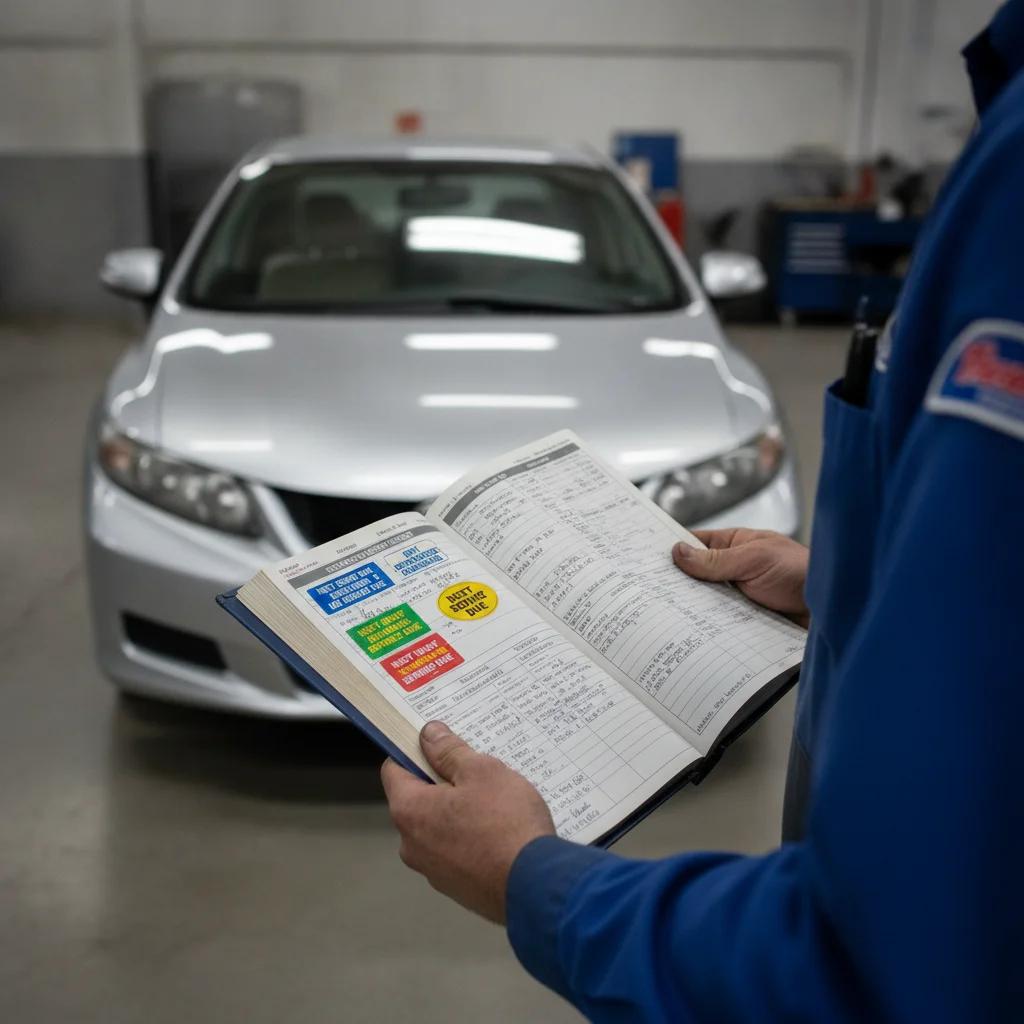
Your maintenance habits also play a real role here. A car with documented service records, a clean interior, and no deferred repairs will consistently bring more at resale than one that's been neglected. It won't stop depreciation, but it can slow the rate at which your specific car loses value relative to the market average.
The Real Number to Ask Before You Buy
Before you sign any deal on a new car, there's one calculation worth doing that almost nobody does at the dealership: estimate your total depreciation cost over your planned ownership period. It takes five minutes and can completely reframe the decision.
- Find the current MSRP of the vehicle you're considering.
- Look up the projected resale value at the end of your intended ownership period (Kelley Blue Book, Edmunds, and iSeeCars all publish these estimates).
- Subtract the projected resale value from the purchase price. That's your estimated depreciation cost.
- Divide by the number of months you plan to own it. That's your monthly depreciation cost.
Add that number to your actual monthly payment — along with insurance, fuel, and maintenance — and you have a much more accurate picture of what this vehicle really costs. Most people find this exercise sobering. A car that seemed affordable at $550/month suddenly looks different when you add $700/month in depreciation.
For a complete framework that ties depreciation into every other ownership cost, see depreciation's role in the total cost of ownership calculation. And if you're looking for a thorough start-to-finish primer on the topic, a complete owner's introduction to vehicle depreciation is worth your time before you step foot in a dealership.
The goal isn't to feel bad about buying new. It's to know exactly what you're paying for — so you can decide whether it's worth it on your terms, not the dealership's.
Protect Yourself From Negative Equity
If you're financing a new car, aim to put down at least 15–20% to keep your loan balance tracking closer to market value. Alternatively, choose a loan term of 48–60 months rather than 72 or 84. Both strategies reduce the window during which you're underwater — and the stress that comes with it.
Run the Full Cost Math Before You Sign
Before finalizing any new car purchase, take five minutes to look up the projected resale value at the end of your planned ownership period. Subtract it from your purchase price, divide by months owned, and add that number to your monthly payment estimate. That's your real monthly cost — and it should inform which car and which term you choose.

All claims are backed by peer-reviewed research. Sources on request.