
Key Takeaways
Why Sticker Price Is the Wrong Number to Shop By
Walk onto any lot and your eyes go straight to the window sticker. That number feels concrete — it's right there in large print, and it's what the monthly payment calculator starts with. But over five years of ownership, that initial figure typically accounts for less than half of what you'll actually spend.
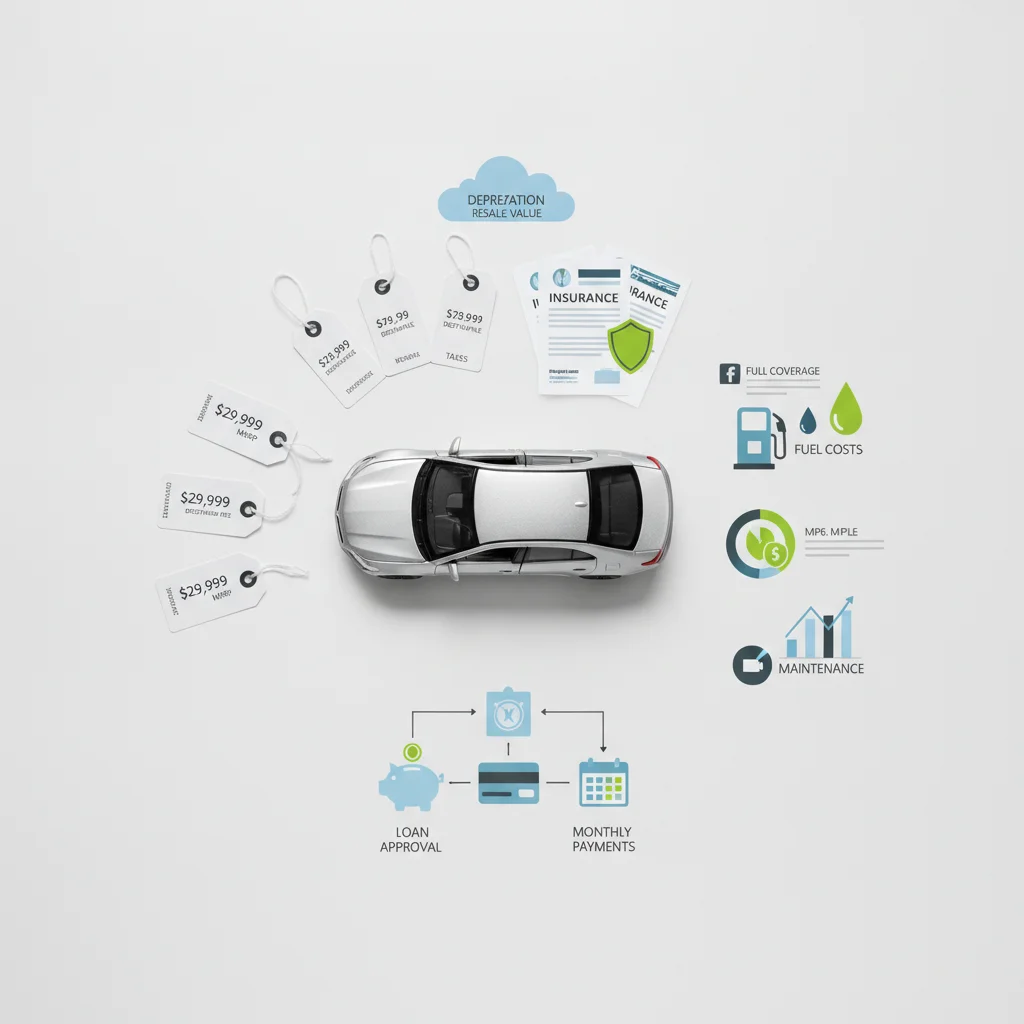
The real cost of ownership is a stack of line items: depreciation, loan interest, fuel, insurance, scheduled maintenance, repairs, registration, and taxes. Some of those — depreciation especially — dwarf anything else on the list. A truck that depreciates 55% over five years costs you more in lost value alone than most economy car buyers pay in total for fuel across the same period.
This is not abstract math. It changes which vehicle is actually the smarter buy. A $28,000 compact sedan with strong resale and 38 MPG can easily finish five years having cost you $8,000 less than a $31,000 SUV that's trendy, thirsty, and drops in value fast. See our breakdown of year-one new car costs if you want to see how quickly non-purchase costs pile up even before you hit month 13.
The vehicles below are ranked not by what they cost at signing, but by how little they cost per mile over a five-year, 75,000-mile ownership window — factoring in all major cost categories that determine real-world affordability.

Before diving in, one important framing note: individual cost outcomes vary based on your location, driving patterns, insurance profile, and how aggressively you shop financing. These entries reflect patterns drawn from independent cost-of-ownership analysis and real depreciation data, not manufacturer marketing figures.
On depreciation data and real-world variation
Depreciation figures cited throughout this article reflect historical averages drawn from used-market transaction data, not manufacturer projections. Actual depreciation in your market will vary based on regional demand, trim level, color, optional packages, and broader economic conditions. The <a href="/maintenance-and-ownership/ownership-costs/depreciation-basics/the-depreciation-curve-what-the-first-five-years-of-ownership-really-cost-you">five-year depreciation curve</a> for any specific vehicle can be verified using current used-market listings for two- to five-year-old examples in your zip code — the most accurate ground-truth data available.
New vs. used on these same models
Several vehicles on this list — particularly the Camry Hybrid, Civic, and RAV4 Hybrid — have robust used markets precisely because their strong ownership economics create sustained demand. That means buying a two- to three-year-old example can capture much of the same reliability and efficiency advantage at a lower entry price. See <a href="/buying-a-car/new-vs-used-cars/buying-used-cars/the-most-reliable-used-cars-by-vehicle-class">the most reliable used cars by vehicle class</a> for data on which models hold up best when purchased pre-owned.
The Vehicles That Win on Five-Year Total Cost
Toyota Camry (Hybrid trim)
The Camry Hybrid has been the benchmark for five-year cost efficiency in the midsize sedan category for years, and the math holds up under scrutiny. Starting around $31,000 for the base hybrid trim, it sits above the entry-level sedan price point — but that's where sticker comparison falls apart.
Depreciation on the Camry Hybrid runs significantly below segment average. After five years and 75,000 miles, owners typically retain 48–52% of original MSRP, compared to 35–42% for average midsize sedans. On a $31,000 vehicle, that's roughly $3,000–$4,500 in preserved value versus a comparable non-hybrid competitor.
Fuel cost is the second driver. At a real-world 44 MPG combined (versus roughly 30 MPG for the non-hybrid), a buyer driving 15,000 miles per year at $3.50/gallon saves approximately $875 annually on fuel alone — that's $4,375 over five years before accounting for fuel price fluctuations that tend to hurt less efficient vehicles disproportionately.
Toyota's scheduled maintenance intervals are well-spaced and parts costs are among the lowest in the industry. The hybrid powertrain in particular has an exceptional long-term reliability record, with battery warranties now extending to 10 years/150,000 miles on newer models.
Insurance costs for the Camry run at or below average for the segment. It's not a low insurance vehicle by sports car standards, but it's not penalized the way trucks and larger SUVs often are.
Five-year total cost of ownership (purchase, depreciation, fuel, insurance, maintenance, financing at 6% APR, 60 months): approximately $41,000–$44,000, depending on location and driving profile. That's competitive with economy sedans priced $5,000 less at the window sticker.
Depreciation alone gives the Camry Hybrid a $3,000–$4,500 value advantage over average midsize sedans.
Honda Civic (sedan, LX or Sport trim)
The Civic sedan is the standard by which compact car value is measured, and it earns that position every year the data is reviewed. A base LX trim starts around $24,000 — accessible enough that many buyers can put 20% down and avoid being underwater on day one.
What keeps the Civic on this list year after year is a combination of factors that each individually look modest but compound significantly over 60 months. Depreciation is consistently in the 35–40% range over five years, which is well below compact segment average. Insurance rates are low because the Civic has a long actuarial history of low repair claims relative to its price class. Maintenance costs are predictable: Honda's scheduled service intervals are straightforward, dealers and independent shops are everywhere, and parts costs are not punishing.
[in_content_images:2]The LX trim's 1.5-liter turbocharged four-cylinder returns approximately 32–36 MPG in real-world driving. That's not hybrid territory, but it's meaningfully better than entry-level SUV alternatives that often start at 26–28 MPG combined. At 15,000 miles annually, that gap translates to roughly $400–$600 per year in fuel savings versus a compact SUV.
The key risk with the Civic is trim creep. Moving from LX to Sport to EX to Touring adds meaningful cost without proportional resale value improvement. The LX and Sport trims sit in the sweet spot where purchase price, insurance, and resale align most favorably for five-year cost.
Five-year total cost: approximately $34,000–$37,000 all-in. Few new vehicles — at any price point — beat that on a per-mile basis.
The Civic's combination of low insurance, predictable maintenance, and strong resale is nearly impossible to beat under $25,000.
Toyota RAV4 Hybrid
For buyers who need utility — cargo room, AWD, higher seating position — the RAV4 Hybrid makes a compelling case that you don't have to sacrifice efficiency for practicality. Starting around $33,000, it's priced at a premium over the standard RAV4, but the five-year math consistently favors the hybrid.
Resale value is the RAV4 Hybrid's strongest card. It regularly tops segment resale rankings, retaining 55–58% of original value after five years. For a $33,000 vehicle, that means $18,000–$19,000 in retained value — substantially better than the non-hybrid RAV4 (which still performs above compact SUV average) and significantly ahead of most European or domestic compact SUV competitors.
Fuel efficiency at 37–40 MPG combined is transformative in the compact SUV category, where non-hybrid competitors typically deliver 26–30 MPG. Over five years at 15,000 miles annually, the fuel savings versus a 28 MPG competitor run approximately $3,200–$4,000 at $3.50/gallon.
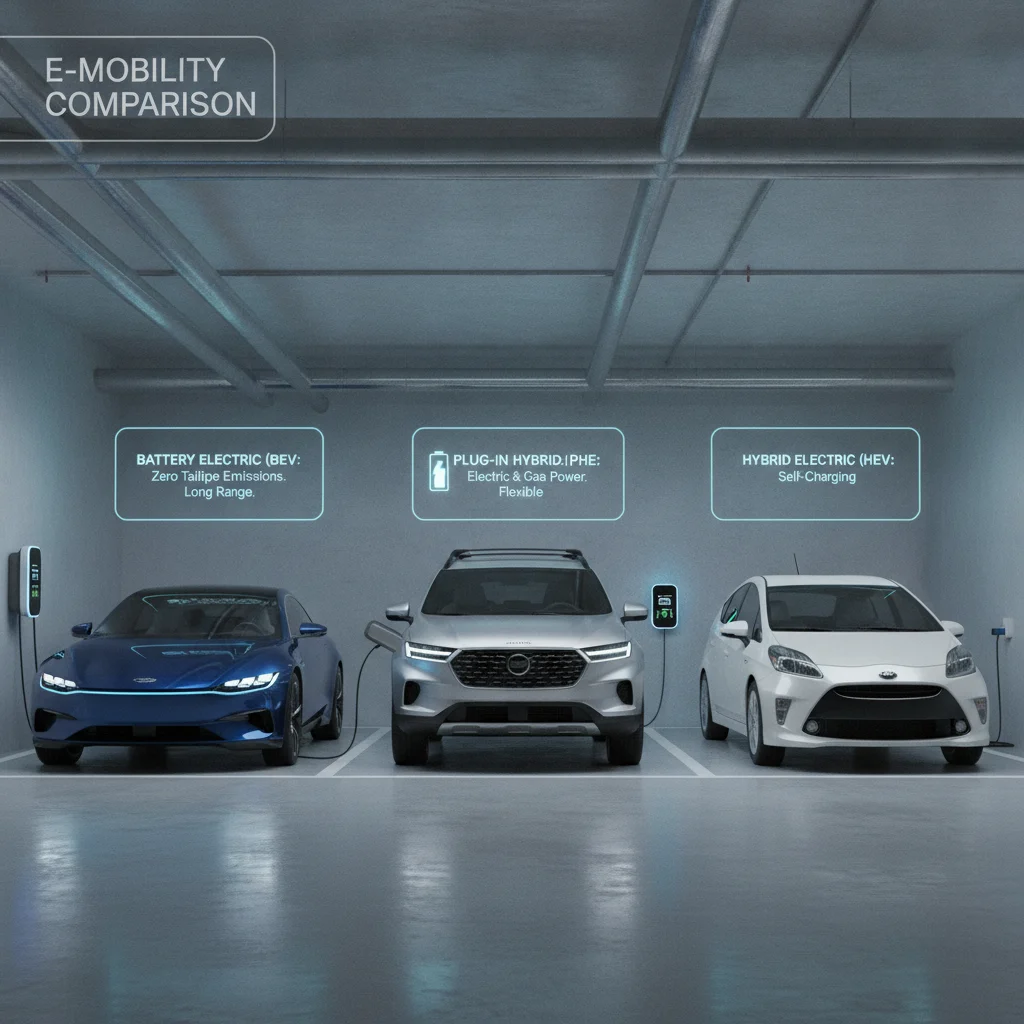
EV and hybrid ownership cost comparisons show that hybrid SUVs like the RAV4 frequently outperform both standard gas and all-electric options when total five-year costs — including charging infrastructure and insurance — are factored in for drivers without home charging access.
Five-year total cost: approximately $46,000–$50,000. For a capable AWD SUV, that's competitive with non-hybrid compact SUVs priced $3,000–$4,000 less at purchase.
RAV4 Hybrid owners retain 55–58% of original value at five years — among the best resale figures in any SUV segment.
Subaru Outback (base and Premium trim)
The Outback occupies a category of its own — wagon-sized utility in an SUV world — and that uniqueness translates into consistent demand that props up resale values in ways that purely trendy vehicles can't sustain. Starting around $29,000, it competes directly with compact SUVs on both utility and cost.
Depreciation runs at approximately 38–43% over five years for base and Premium trims, which is slightly below Subaru's crossover siblings but still competitive for the segment. The brand's standard AWD system — included on every trim — removes the price premium buyers typically pay for AWD elsewhere, which meaningfully improves the value equation when comparing against FWD-standard competitors.
Insurance costs are moderate. The Outback doesn't carry the elevated insurance premiums that performance-adjacent vehicles attract, and Subaru's parts ecosystem is well-established enough that repair costs don't spike unpredictably. The brand's relationship with independent shops is strong, giving owners flexibility that some import brands don't.
The 2.5-liter four-cylinder engine returns approximately 26–30 MPG combined — not exceptional, but acceptable for a vehicle that carries the space and AWD capability of vehicles that return significantly less. The turbocharged XT trim, while capable, adds to both purchase price and insurance cost without proportionate improvement in five-year value retention, so base and Premium trims deliver the better ownership economics.
Five-year total cost: approximately $41,000–$45,000, making it one of the most affordable ways to own a new AWD vehicle with genuine cargo utility over a five-year horizon.
Standard AWD on every trim means the Outback's price already includes what competitors charge extra for.
Hyundai Tucson Hybrid
Hyundai has closed the reliability and resale gap with Japanese brands significantly over the last five years, and the Tucson Hybrid is the clearest example of that improvement translating into genuine ownership cost competitiveness. Starting around $33,500, it enters the compact hybrid SUV field at a price point that makes the five-year numbers interesting.
Depreciation is the one area where the Tucson Hybrid still trails its Toyota counterpart — five-year retention typically runs 40–45% versus 55–58% for the RAV4 Hybrid. That gap matters, but it's partially offset by a lower purchase price and Hyundai's industry-leading 10-year/100,000-mile powertrain warranty, which reduces the risk premium buyers implicitly assign to long-term reliability.
The Tucson Hybrid's 38 MPG combined is competitive with segment leaders. Fuel cost at that efficiency level, across 15,000 miles annually at $3.50/gallon, runs approximately $1,382 per year — meaningfully below the non-hybrid compact SUV average of $1,750–$2,100 depending on the vehicle.
Maintenance costs benefit from the powertrain warranty coverage and a growing parts and service network. Hyundai dealers have expanded significantly, and independent shop familiarity with the brand has improved in most metro markets. One caution: some early hybrid models had engine reliability issues that generated significant press coverage; those concerns are less applicable to 2022 and newer production runs, but buyers financing used versions should verify the specific production period.
Five-year total cost: approximately $45,000–$49,000. For buyers who want hybrid efficiency and SUV utility without the Toyota premium, this is the most credible alternative.
Hyundai's 10-year powertrain warranty effectively lowers the risk premium buyers pay for choosing a non-Toyota alternative.
Mazda3 (sedan, base and Select trim)
The Mazda3 is one of the most underappreciated value stories in the compact segment. It's priced accessibly — base sedans start around $23,500 — but it drives and finishes like a vehicle that costs several thousand more, which contributes to an ownership satisfaction profile that keeps people out of the dealership showroom before their loan is paid off.
Depreciation on the Mazda3 has improved substantially as Mazda's brand positioning moved upmarket. Five-year retention for the sedan runs approximately 40–47%, which is above compact segment average and reflects genuine used-market demand. Part of that demand comes from buyers who discover that a two-year-old Mazda3 represents exceptional value — which indirectly confirms why buying new and holding the asset makes sense.
The Skyactiv-G 2.5-liter engine returns 26–32 MPG in real-world driving — not class-leading, but respectable — and has demonstrated consistent long-term reliability that keeps unscheduled repair costs low. Mazda's maintenance requirements are conservative and not expensive to execute, whether at a dealership or an independent shop.
Insurance premiums on the Mazda3 are competitive — lower than performance-adjacent vehicles and roughly in line with the Civic. The sedan's profile doesn't attract the same actuarial attention as trendier vehicle categories.
The AWD option, available on upper trims, does add purchase price and reduces fuel economy slightly. For pure five-year cost efficiency, the FWD sedan in base or Select trim is the sweet spot.
Five-year total cost: approximately $33,000–$36,500. It's the most compelling case for spending slightly more than the cheapest compact option in exchange for a significantly better driving experience without meaningful cost penalty.
The Mazda3 proves you can move upmarket in feel without moving upmarket in five-year cost.
Kia Niro Hybrid
The Niro Hybrid occupies a specific niche that's genuinely useful: it delivers compact crossover utility with near-hybrid-sedan fuel efficiency, in a package priced around $28,500 at entry. It's the vehicle that closes the gap between wanting a small SUV and wanting economy car running costs.
Fuel economy is the Niro's most striking ownership cost advantage. At 49–53 MPG combined (EPA estimate, real-world typically 44–48 MPG), it outperforms virtually every non-PHEV crossover on the market. At 15,000 annual miles and $3.50/gallon, fuel cost runs approximately $1,100–$1,200 per year — roughly half the annual fuel spend of a non-hybrid compact SUV. That's a $2,500–$3,000 advantage over five years before touching depreciation.
Depreciation runs at approximately 38–43% over five years, consistent with Hyundai/Kia group performance. It trails Toyota/Mazda retention slightly, but given the lower purchase price entry point, the net depreciation dollar figure remains competitive. Kia's 10-year/100,000-mile powertrain warranty provides the same risk mitigation available on Hyundai siblings.
Insurance premiums are moderate — benefiting from the Niro's non-performance positioning and its relatively low theft appeal in most markets. Maintenance costs are predictable, with hybrid-specific components covered under the powertrain warranty and conventional wear items (brakes in particular) benefiting from regenerative braking that extends pad life measurably.
Five-year total cost: approximately $39,000–$43,000. For buyers who want something taller than a sedan and smaller than a midsize SUV, the Niro Hybrid makes a legitimate claim to being the most efficient vehicle in that footprint.
At 44–48 MPG real-world, the Niro Hybrid cuts compact SUV fuel costs nearly in half over five years.
How to Apply This When You're at the Dealer
Knowing which categories win on five-year cost is useful. Knowing how to use that knowledge when you're sitting across from a finance manager is where the money actually stays in your pocket.
First, run the full cost picture before you fall in love with a specific trim or model. Tools like the Edmunds True Cost to Own calculator or Consumer Reports ownership cost data let you compare vehicles on a like-for-like basis. Input the same loan term, same down payment, same assumed mileage, and the numbers become genuinely comparable.
Run the numbers before you fall in love
Before visiting a dealership, use Edmunds True Cost to Own or Consumer Reports ownership cost data to compare at least three vehicles head to head. Input the same loan term, down payment, and annual mileage for each. The results frequently flip the conventional wisdom about which vehicle is 'more affordable.' This 20-minute exercise can be worth several thousand dollars over your ownership window.
Hold the vehicle long enough for the math to work
Five-year cost-of-ownership advantages only fully materialize if you actually hold the vehicle for five years. Trading or selling within two to three years captures the steepest part of the depreciation curve without the fuel and maintenance savings that balance it out later. If you tend to swap vehicles frequently, the ownership cost calculus changes significantly — and a <a href="/buying-a-car/new-vs-used-cars/certified-pre-owned">certified pre-owned vehicle</a> may deliver better economics than buying new at all.
Second, understand that the financing rate affects five-year cost just as significantly as the vehicle's depreciation rate. A buyer who pays 3% APR versus 8% APR on a $30,000 loan over 60 months spends roughly $4,200 more in interest alone. That difference can erase the cost-of-ownership advantage of any vehicle on this list. For the full picture on how depreciation layers on top of that, see what most buyers miss on depreciation.
Third, consider whether new is the right entry point at all. Many of the vehicles on this list hold their value precisely because demand for them used is strong — meaning you can often buy a two-year-old version of the same car at a significant discount while still capturing most of the remaining reliability and warranty life. Used car buying guidance and certified pre-owned options are worth evaluating before committing to new, especially in vehicle categories that depreciate predictably.

Finally, don't let a low monthly payment substitute for a true cost analysis. Dealers are skilled at stretching loan terms to make expensive vehicles feel affordable on a monthly basis. A 72-month loan on a depreciating truck can leave you underwater for three of those six years, meaning you'd owe more than the vehicle is worth if you needed to sell or trade. That's a financial position you want to avoid entering deliberately.
The vehicles in this list represent genuine value — but value only materializes if you finance smart, maintain consistently, and hold the vehicle long enough for the total-cost math to work in your favor.
All claims are backed by peer-reviewed research. Sources on request.