Key Takeaways
Car Depreciation
Car depreciation is the loss in a vehicle's market value over time. It begins the moment you take ownership and continues — at varying rates — throughout the life of the car. Depreciation is the single largest ownership cost most drivers never see as a line item on their monthly budget.
In accounting terms, depreciation is the allocation of an asset's cost over its useful life. For vehicles, residual value — the estimated worth at a future point — is calculated by lenders and lessors using historical market data and projected supply and demand.
What Depreciation Actually Means for Your Wallet
Let's cut straight to it: depreciation isn't some abstract accounting concept — it's real money leaving your pocket every single month you own a car. It's just quiet about it. You don't write a check for it, and it doesn't show up on your bank statement. But when you go to sell or trade in, there it is.
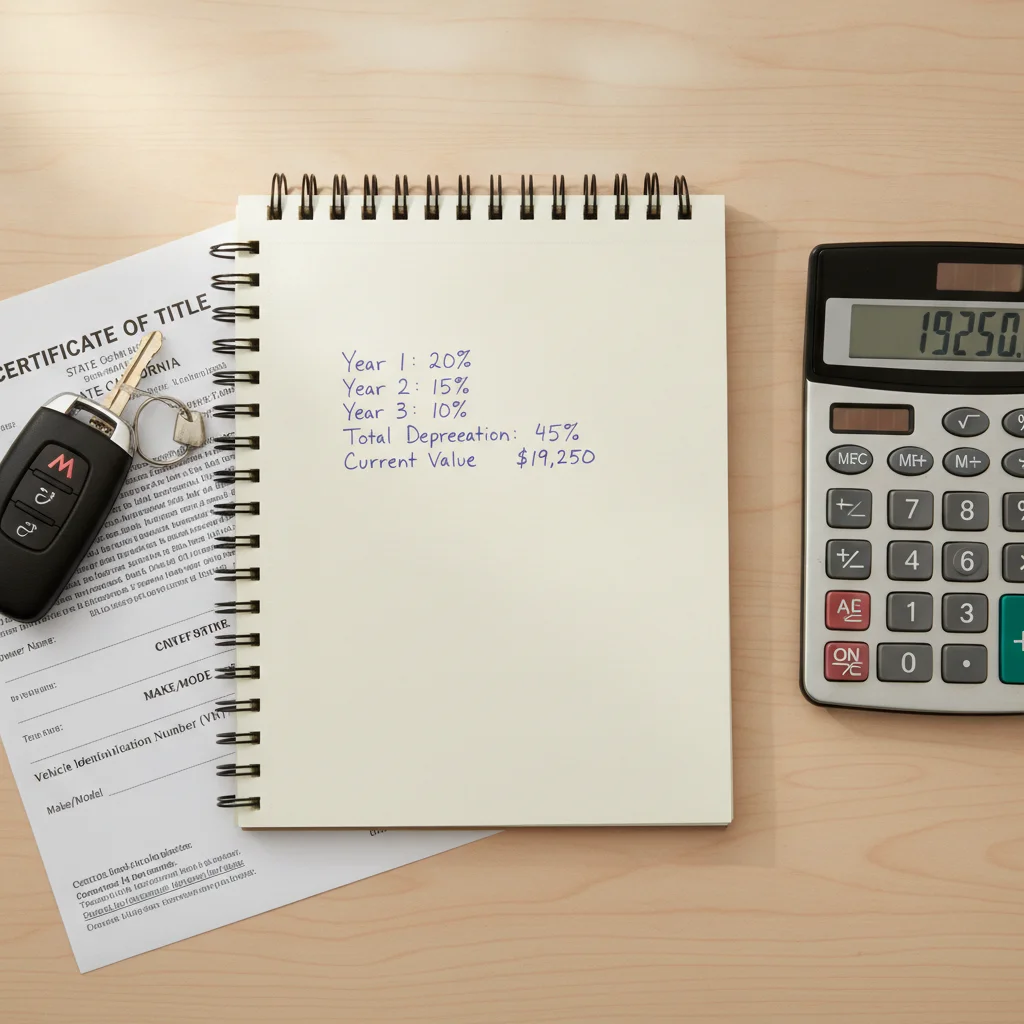
Here's a simple way to think about it. You buy a new car for $40,000. Five years later, it's worth $18,000. That $22,000 gap? That's your depreciation cost — spread across 60 months, it works out to roughly $367 per month. That's more than many car owners pay for fuel in the same period.
20–25%
Value lost in the first year of ownership
Industry data from iSeeCars and Edmunds consistently shows new vehicles lose roughly one-fifth of their value within 12 months of purchase.
$367/mo
Effective depreciation cost on a $40K new car
Based on a $40,000 purchase price depreciating to $18,000 over 60 months — a commonly cited example of average five-year value loss.
50–60%
Value retained by top resale vehicles after 5 years
Models like the Toyota Tacoma and Honda CR-V consistently retain half or more of their original value at the five-year mark, per Kelley Blue Book resale rankings.
9–11%
Immediate value drop from new to used status
The transition from new to titled-used status typically triggers this drop within the first few days, according to auto valuation analysts.
1 in 4
Car owners underwater on their auto loan
Approximately 25% of car owners with active loans owe more than their vehicle is worth, according to Edmunds' annual negative equity reports.
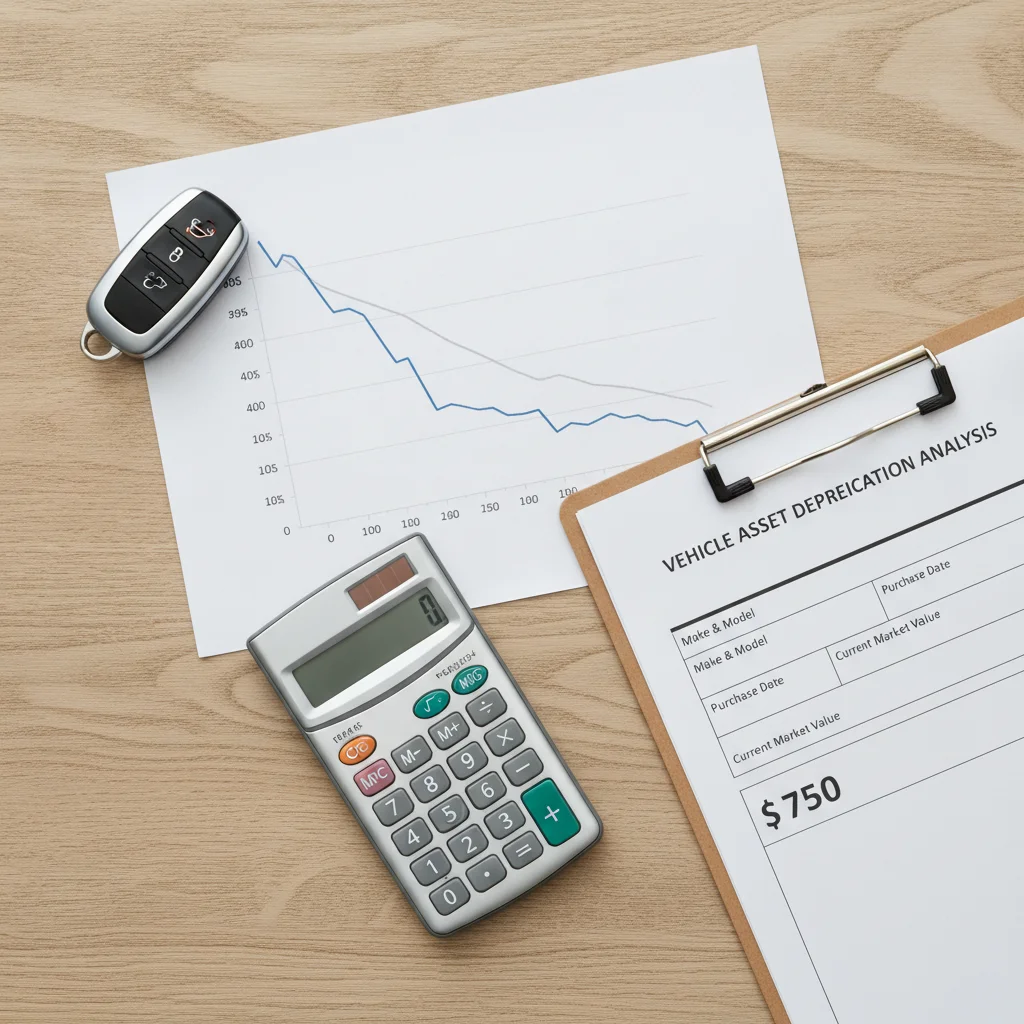
The pain isn't spread evenly, either. Depreciation hits hardest in the first one to three years. After that, the curve flattens. This is why understanding the shape of the depreciation curve — not just the total number — makes such a practical difference in your buying and selling decisions.
For a deeper look at how these numbers work in practice with your specific vehicle, check out our practical depreciation calculator walkthrough.
Why Cars Lose Value the Moment You Drive Off
The instant a car becomes yours — titled in your name — it transitions from "new" to "used" in the eyes of every future buyer and valuation tool. That shift alone triggers an immediate value reset. Here's why that happens:
- You lose the new car premium. New car buyers pay for the experience, the warranty coverage, and the certainty of zero prior owners. Once it's used, all of that is gone, and the pool of willing buyers at the original price collapses.
- Manufacturer incentives disappear. Dealers often discount new cars through rebates, low APR financing, or lease deals. A used buyer can't access those, so the price they'll pay reflects a market without that subsidy.
- Supply competition increases. Your "new" car is now competing against every other used example of the same model at auction, on dealer lots, and through private sales — a much broader market with downward price pressure.
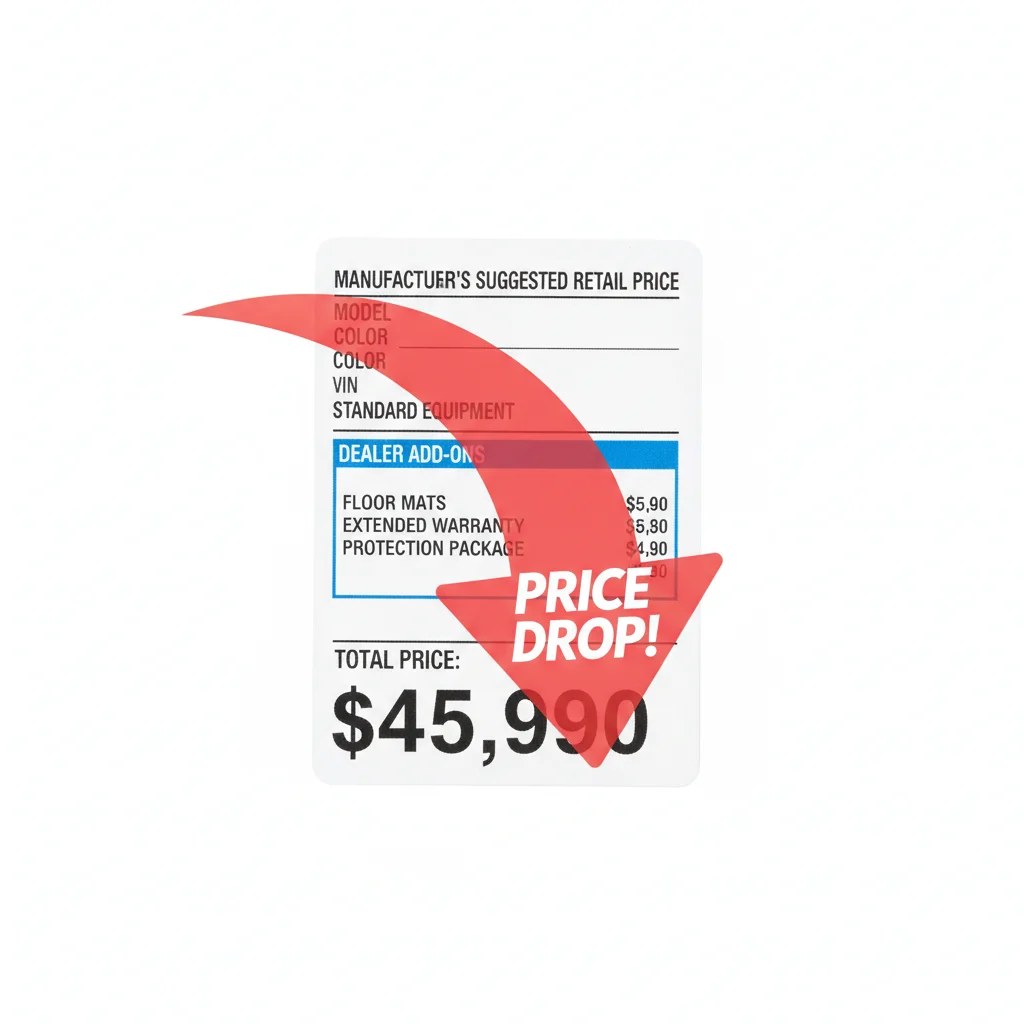
This is sometimes called the "drive-off-the-lot" depreciation hit, and it typically represents 9–11% of the purchase price. On a $45,000 vehicle, that's $4,050 to $4,950 in the first few days. It's not a flaw in the system — it's just how new versus used pricing works. See also: what this first-day drop looks like by segment.
The Depreciation Curve: How Value Drops Over Time
Depreciation doesn't move in a straight line. The curve is steep early and gradually levels off — which is exactly why the first few years of ownership are so expensive even if you never have a repair bill.
Here's a rough breakdown of how a typical new car depreciates:
| Year | Estimated Value Retained | Cumulative Value Lost |
|---|---|---|
| End of Year 1 | 75–80% | 20–25% |
| End of Year 2 | 65–70% | 30–35% |
| End of Year 3 | 55–60% | 40–45% |
| End of Year 5 | 40–50% | 50–60% |
| End of Year 10 | 15–25% | 75–85% |
These are averages — a luxury sedan might drop faster, while a well-regarded pickup truck might hold tighter. The point is that after year three, the rate of loss slows significantly. This is why buying a vehicle that's 2–3 years old is often described as the "sweet spot" for value — you get the majority of the car's useful life while someone else absorbed the worst of the depreciation.
Depreciation Averages Vary Widely by Segment
The figures in this table are averages across the broad market. Luxury vehicles, electric vehicles, and domestic sedans often depreciate faster than these midpoints. Trucks and compact SUVs from Japanese brands frequently beat them. Always check model-specific resale data before making assumptions about your vehicle.
For a comprehensive breakdown of depreciation rates across vehicle segments and the factors behind them, the complete owner's reference to vehicle depreciation covers everything in one place.
What Makes Some Cars Depreciate Faster Than Others
Not all vehicles fall off the same depreciation cliff at the same speed. A handful of factors — some in your control, some not — determine how your specific car holds value.
Brand Reputation and Reliability Perception
Buyers shop by reputation, and perception often drives resale more than reality. Toyota and Honda consistently top resale charts because of decades of reliability data and consumer trust. Brands that have had quality struggles or discontinuation rumors depreciate faster because buyer confidence is lower.
Model Demand
High-demand models in popular segments hold value better. Mid-size trucks, compact SUVs, and three-row family SUVs have strong, sustained demand. Meanwhile, sedans — particularly domestic ones — have seen accelerated depreciation as buyer preference shifted to SUVs over the past decade.
Mileage
Annual average mileage in the U.S. runs around 12,000–15,000 miles per year. Exceed that consistently and resale value takes a measurable hit. Buyers associate high mileage with wear on drivetrain components, even when a well-maintained high-mileage car may be perfectly reliable.
Condition and Service History
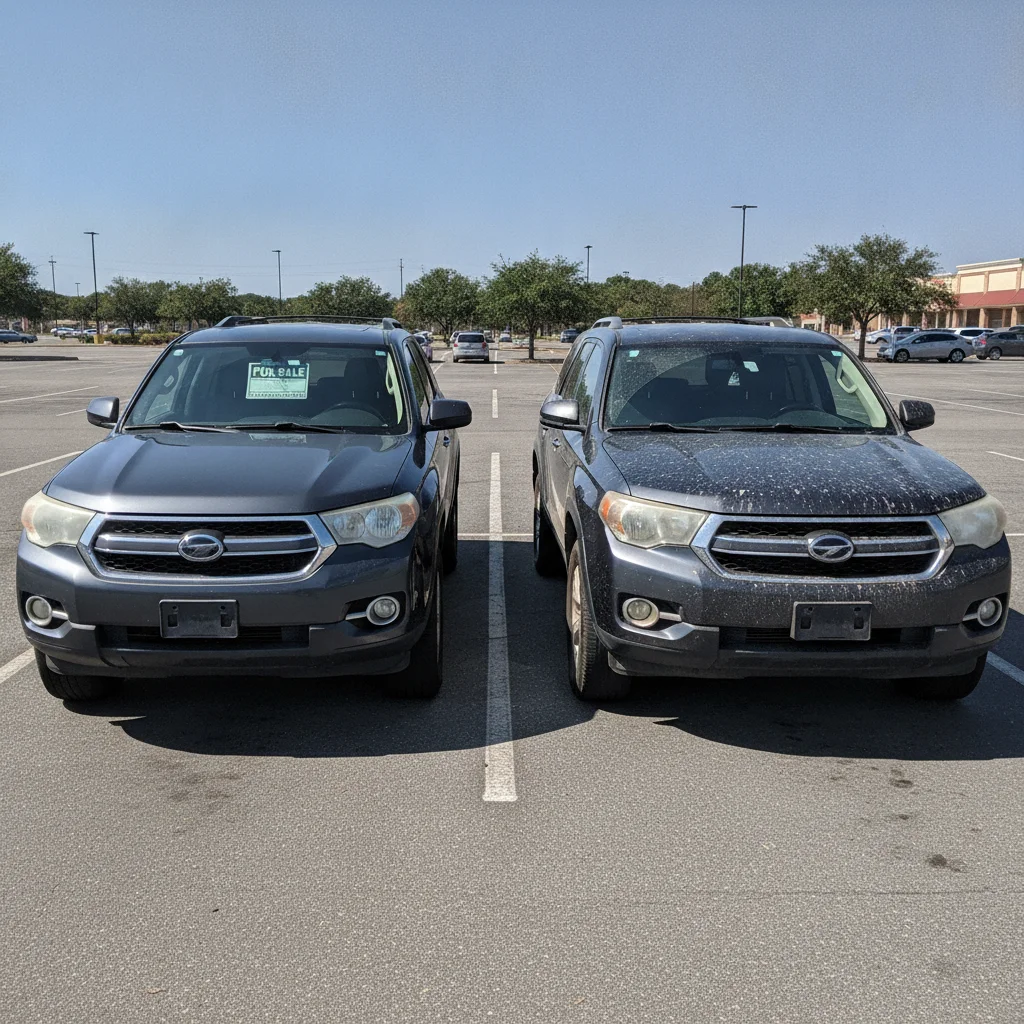
Dings, scratches, worn interiors, and deferred maintenance all show up in appraisals. A clean Carfax, a stamped maintenance logbook, and a car that presents well can meaningfully outperform the market average for its year and miles.
Color and Options
Unusual colors — think bright yellow, bright green, or heavy two-tone combinations — limit your buyer pool at resale. Neutral colors (white, black, silver, gray) typically command stronger resale values simply because more buyers are willing to accept them. The same applies to unusual option packages that were expensive to add but don't have broad appeal.
Fuel Type and Powertrain
Hybrid and electric vehicle depreciation is still evolving as the market matures. Some EVs have depreciated sharply due to new model releases and incentive changes. Diesel vehicles in certain segments — especially trucks — can command premiums, while diesel passenger cars have struggled. Gasoline remains the most predictable resale market for now.
Stick to Popular Colors When Ordering New
If you're ordering a new vehicle, resist the urge to go with an unusual color just because you love it. White, black, silver, and gray account for the majority of used car sales and consistently yield higher resale prices. A $500 color upgrade at purchase can cost you $1,500 at trade-in.
Photograph Your Car's Condition Regularly
Take dated photos of your car's interior and exterior every year — or after any service work. When it comes time to sell, this visual record reassures buyers and gives you documentation to back up your asking price. It takes five minutes and can be worth real money.
Depreciation and Your Loan: The Underwater Risk
Here's where depreciation stops being an abstract number and starts being a real financial problem: when you owe more on your car than it's worth. This is called being "upside down" or "underwater" on your loan.
It happens when you finance a car with a small down payment over a long loan term. In the first 12–18 months, your car is depreciating faster than your loan balance is shrinking. If you need to sell, trade in, or total the car during this window, you can end up in a hole — required to pay the gap out of pocket or roll negative equity into a new loan (which just restarts the problem).
“The most expensive car you ever buy might be the one you financed with the smallest down payment on the longest loan. Depreciation and debt work against you at the same time, in opposite directions.”
— Philip Reed, Senior Consumer Advice Editor, Edmunds
A few practical ways to reduce underwater risk:
- Put at least 10–20% down on a new vehicle purchase.
- Choose loan terms of 48–60 months rather than 72–84 months.
- Consider gap insurance if you're financing with less than 20% down.
- Be cautious about rolling unpaid trade-in debt into a new purchase.
For a fuller picture on how gap coverage and loan strategy interact with depreciation, look at how depreciation affects pricing your vehicle for sale.
How to Use Depreciation Knowledge to Buy and Sell Smarter
Once you understand how the curve works, you can position yourself on the right side of it — both as a buyer and a seller.
When You're Buying
The single best depreciation play for most people is buying a used vehicle that is 2–3 years old with reasonable mileage. You get a car that still has the bulk of its useful life, usually still covered by powertrain warranty or an extended warranty option, and you've side-stepped the 30–40% depreciation the first owner absorbed.
Certified pre-owned programs from manufacturers are worth considering — they bridge the gap between the peace of mind of buying new and the value advantage of buying used.
When You're Selling or Trading In
Selling before you hit major depreciation milestones can protect your return. In practical terms:
- Selling or trading before the 60,000-mile mark often keeps you in a more favorable resale bracket.
- Selling before major service intervals (like a timing belt or transmission service due) avoids buyers using those as negotiating leverage.
- Selling during periods of high used-car demand — like when new car inventory is tight — can dramatically improve your outcome.
Also, presentation matters at sale time more than most owners realize. A thorough detail, fresh tires if they're worn, and a complete service record folder can add hundreds to thousands of dollars to your final number.
Use valuation tools like KBB and Edmunds to benchmark your car before you list or trade it in. Our guide to valuation tools explains how each one calculates offers and where they tend to diverge.
And if you want to trace the full picture of depreciation across your car's lifecycle, the complete introduction to vehicle depreciation is a solid next read.
Maintenance Habits That Protect Resale Value
I've seen a lot of well-maintained cars get top dollar at resale, and I've seen a lot of cars that should have held their value get hammered at auction because the owner skipped oil changes and ignored the check engine light. Here's what actually moves the needle:
Keep the Records
A service folder with dated receipts and a Carfax report that shows regular oil changes is worth real money. Buyers pay for certainty. A car with documentation commands a premium over an identical car with no paper trail.
Don't Defer Obvious Maintenance
Worn brake pads, cracked belts, a transmission service that's overdue — these show up on a pre-purchase inspection, and buyers will either walk or use it to knock the price down by more than the actual repair cost. Stay current on your maintenance schedule.
Keep It Clean
Interior stains, dog hair embedded in the seats, and sun-damaged trim are all depressants on resale value. Regular cleaning isn't just about pride of ownership — it's asset protection.
Handle Minor Body Work
Small dents and scrapes compound in buyers' minds. A $150 paintless dent repair can easily recover $300–500 in resale value. Don't let minor cosmetic damage sit.
Stick to Popular Colors When Ordering New
If you're ordering a new vehicle, resist the urge to go with an unusual color just because you love it. White, black, silver, and gray account for the majority of used car sales and consistently yield higher resale prices. A $500 color upgrade at purchase can cost you $1,500 at trade-in.
Photograph Your Car's Condition Regularly
Take dated photos of your car's interior and exterior every year — or after any service work. When it comes time to sell, this visual record reassures buyers and gives you documentation to back up your asking price. It takes five minutes and can be worth real money.
The connection between maintenance habits and depreciation is direct: the better the condition, the slower the effective depreciation, because you're outperforming the average car at your mileage and age. Explore the depreciation basics hub for more on how condition, age, and mileage interact to set your car's market value.

All claims are backed by peer-reviewed research. Sources on request.