Key Takeaways
When you're comparing two used vehicles at similar prices, run the depreciation math forward, not just backward. Ask yourself which one will be worth more in two years — that's where you'll either gain or lose real money.
Most buyers focus only on the purchase price, but future resale value is an equally important part of the total cost equation, especially if you plan to sell or trade within five years.
Pull a live market search on your own car every six months. If prices for your model are rising due to inventory shortages or sudden demand, that's your sell signal — don't wait for the market to correct back down.
Used-car markets can shift dramatically in short windows. Sellers who watched the 2021–2022 market carefully sold at prices that won't return for a generation.
If you're buying a luxury vehicle, look specifically for one that's coming off a 2-year lease — those are usually well-maintained, low-mileage, and have already absorbed 30–40% depreciation that you don't have to pay for.
Lease-return luxury vehicles represent a predictable maintenance history and documented mileage, which makes them the lowest-risk way to buy a premium car at a used-car price.
Before listing your car privately, spend $150–$200 on a professional detail and fix any cracked or foggy headlight lenses. First impressions in photos drive click-through rates — and click-through rates drive your final sale price.
Cosmetic presentation is often the first filter buyers use when browsing listings. Cars that photograph poorly receive fewer inquiries, and fewer inquiries mean less negotiating leverage.
Never sell in December if you can avoid it. Buyer activity historically bottoms out in late November and December, and fewer buyers means lower offers. Aim to list in March, April, or September for the best results.
Seasonal demand patterns are well-documented in used-car market data. Spring and early fall consistently produce more buyer competition, which supports stronger sale prices.
What Vehicle Depreciation Actually Is
Depreciation is the difference between what you paid for a vehicle and what it's worth right now. It's not a fee, it's not a penalty — it's just the way physical assets lose value over time through use, age, and the shifting tides of the used-car market. For most people, it's the single largest cost of car ownership, dwarfing fuel, insurance, and even repairs.
The minute a new car leaves the dealership lot, the market treats it as used. That shift in status — not the miles, not the wear — is what triggers the famous first-year drop. A buyer can no longer get a factory warranty from zero miles, can't order custom options, and can't get manufacturer financing deals. So the price adjusts downward to reflect that.
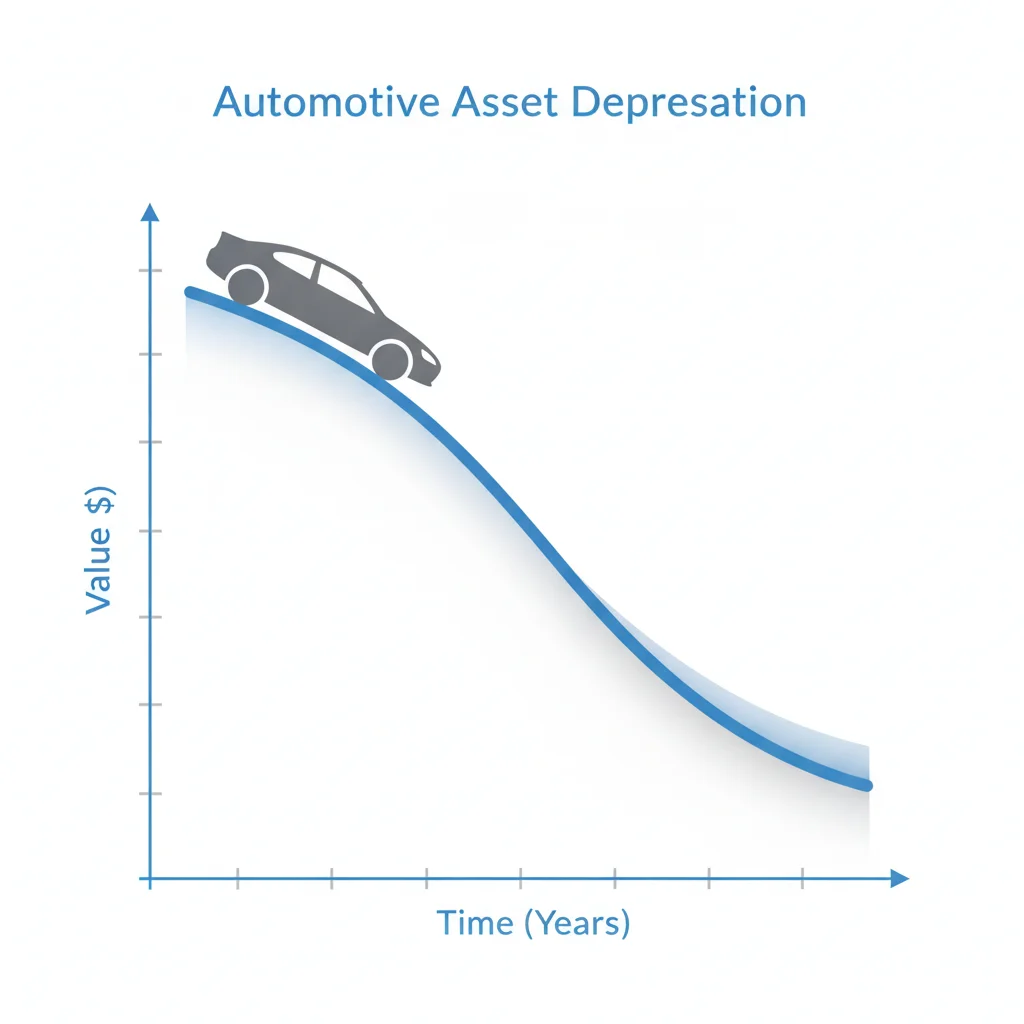
Over the following years, depreciation continues but at a slower pace. By year five, many vehicles have lost 40–60% of their original MSRP. After that, the curve flattens further. Some vehicles eventually reach a floor, a stable resale value where further drops are minimal. Others (think reliable compact trucks and certain SUVs) hold value so well they barely seem to depreciate at all.
If you've never dug into how this works, the complete owner's introduction to vehicle depreciation is a solid starting point before diving into the detail here. This guide goes deeper — into the math, the segment-level data, and the specific decisions you can make to come out ahead.
Key Depreciation Terms Every Owner Should Know
- MSRP (Manufacturer's Suggested Retail Price)
- The sticker price. It's the baseline from which depreciation is typically measured, though what you actually paid (invoice price, dealer markup, or discount) is more relevant to your real-world loss.
- Residual Value
- What a vehicle is projected to be worth at a specific future point — usually the end of a lease term. Lenders and lessors calculate this upfront using historical depreciation data. A higher residual means lower monthly lease payments.
- Book Value
- The estimated market value of a used vehicle based on its age, mileage, trim, and condition, as reported by tools like Kelley Blue Book or Edmunds. There are typically three book values: trade-in, private party, and dealer retail.
- Straight-Line Depreciation
- A simple calculation method that spreads the vehicle's value loss evenly across its useful life. Rarely mirrors real-world patterns but useful for quick estimates.
- Accelerated Depreciation
- The more accurate real-world model. Value drops steeply in years one through three, then slows considerably. Most new vehicles follow this curve.
- Total Cost of Ownership (TCO)
- A full accounting of what a vehicle costs you over time — depreciation, fuel, insurance, financing, and maintenance combined. Depreciation typically represents 40–50% of TCO for new vehicles.
- Underwater / Negative Equity
- When you owe more on a loan than the vehicle is worth. This happens when a car depreciates faster than you pay down the loan — a serious financial trap.
- CPO (Certified Pre-Owned)
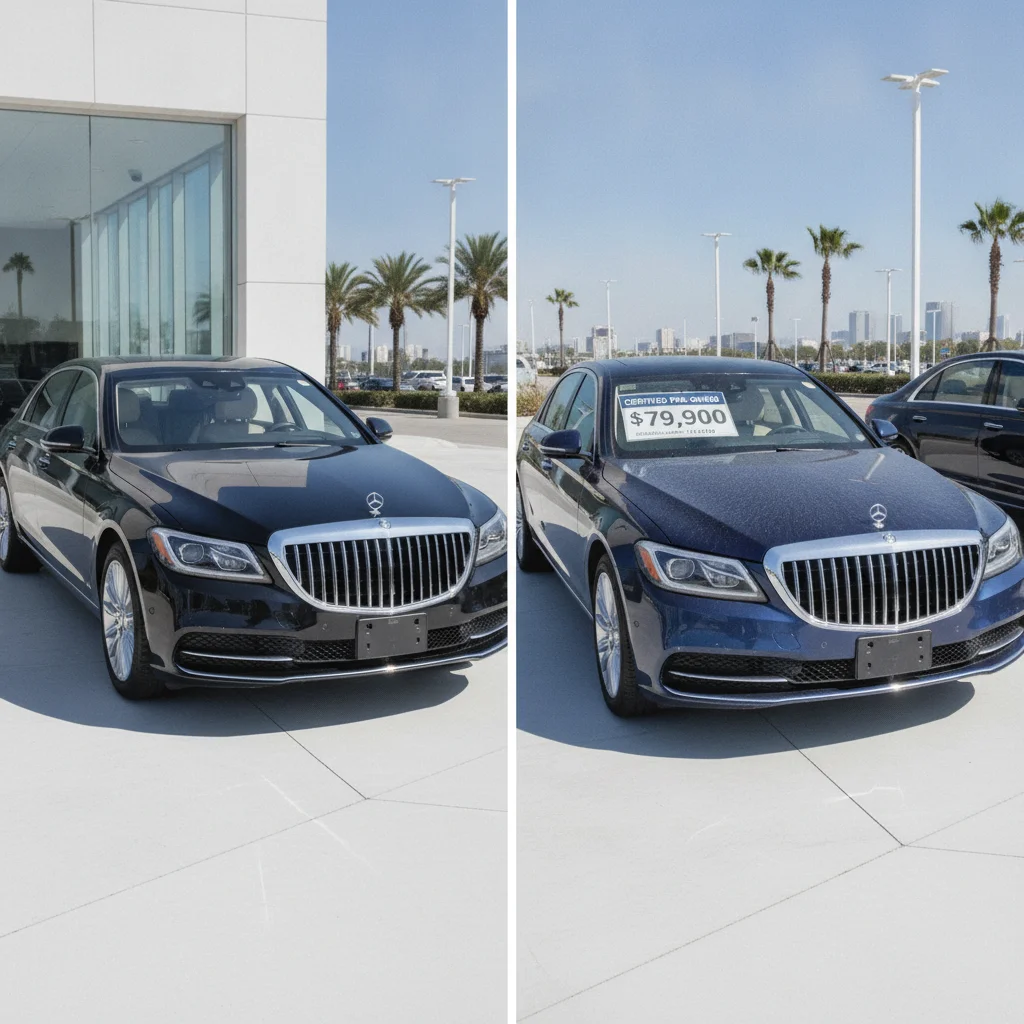
- Used vehicles that have been inspected and backed by an extended manufacturer warranty. They command a price premium over non-certified used vehicles but have already absorbed the worst depreciation.
Depreciation Terminology Varies by Context
Accountants, lessors, lenders, and used-car buyers all use depreciation terminology slightly differently. In an accounting context, depreciation is a scheduled write-down on a balance sheet. In a leasing context, it's the residual value calculation that sets your monthly payment. In a used-car context, it's simply current market value versus original purchase price. Make sure you know which context applies when you're reading a valuation or financial document.
Depreciation Rates by Vehicle Segment
Not all vehicles depreciate at the same rate. Segment, brand reputation, supply and demand, and cultural desirability all play a role. Here's a realistic overview of how major segments perform over five years.
20%
Average first-year new car depreciation
According to Edmunds and iSeeCars long-term depreciation studies, most new vehicles lose roughly 20% of their value within the first 12 months of ownership.
49%
Average 5-year depreciation across all segments
iSeeCars analysis of millions of used-vehicle transactions found the average new car loses close to half its value within five years.
40–50%
Depreciation's share of total ownership cost
The AAA annual 'Your Driving Costs' report consistently finds depreciation is the largest single component of vehicle ownership cost for new-car buyers.
$0.17
Average depreciation cost per mile (new car)
Based on AAA 2023 data for a new midsize sedan, depreciation alone accounts for roughly 17 cents per mile driven in the first five years.
10–15%
First-year depreciation for full-size domestic trucks
Full-size pickups like the Ford F-150 and RAM 1500 consistently post the lowest first-year depreciation rates of any mainstream vehicle segment.
| Segment | Avg. 1-Year Depreciation | Avg. 5-Year Depreciation | Notes |
|---|---|---|---|
| Compact/Midsize Sedans | 15–20% | 45–55% | Competitive segment; Japanese brands hold best |
| Full-Size Trucks (Domestic) | 10–15% | 30–40% | Consistently best resale value in the market |
| Compact SUVs/Crossovers | 12–18% | 35–50% | High demand keeps values relatively strong |
| Luxury Sedans | 20–30% | 55–65% | Steep drop; German brands especially fast |
| Electric Vehicles (non-Tesla) | 25–35% | 55–70% | Volatile; range anxiety and rapid tech change hurt values |
| Sports/Performance Cars | 10–25% | 30–60% | Wide range; limited editions hold or appreciate |
| Minivans | 15–20% | 40–50% | Functional demand keeps values stable |
Full-size domestic trucks — the Ford F-150, Chevy Silverado, RAM 1500 — consistently top residual value charts. Their commercial and work-site demand creates a deep, stable used market. Luxury sedans, by contrast, depreciate so fast that buying one two or three years used can save you $20,000–$40,000 compared to buying new.
Electric vehicles are a special case. Tesla models have held value better than most EV competitors, but government incentive changes, rapid battery technology improvements, and price cuts by manufacturers have made the EV resale market unpredictable. Check current data before buying or selling any EV. The detailed breakdown of why vehicles lose value covers some of these market-level forces in more depth.
The Factors That Drive Depreciation
Depreciation isn't random. Specific, measurable variables determine how fast your car loses value. Understanding them lets you predict your car's trajectory — and make decisions that either protect or accelerate your equity.
Age and Mileage
These two go hand in hand, but they're not the same thing. A 2-year-old car with 40,000 miles depreciates differently from a 2-year-old car with 8,000 miles. High mileage accelerates perceived wear. Standard mileage benchmarks are 12,000–15,000 miles per year; anything significantly over that signals higher depreciation.
Brand and Model Reputation
Reliability perception is priced into the used market. Toyota and Honda consistently retain value above segment averages because buyers trust their longevity. Brands with spotty reliability records lose value faster regardless of actual condition.
Trim Level and Options
Mid-to-upper trims often hold value better than base models because used buyers want features. But ultra-premium packages with exotic leather or rare finishes can actually hurt you — the pool of buyers who want those exact options is smaller, so you wait longer or discount more.
Color
Neutral colors — white, black, silver, gray — appeal to the broadest buyer pool and depreciate more slowly. Unusual colors like yellow, orange, or two-tone combinations depreciate faster because they shrink your audience.
Condition and Maintenance History
A car with documented oil changes, timing belt replacements, and dealer service records commands a real premium on the used market. A car with mystery miles and no paperwork makes buyers nervous — and lowball offers follow.
Market Supply and Demand
When new-vehicle inventory is tight (as it was in 2021–2022), used-car values spike. When the market normalizes, values correct. External forces like fuel prices also matter — when gas spikes, big trucks and SUVs dip; when it stabilizes, demand returns.
Accident and Title History
A Carfax-reported accident can cut resale value by 10–25% depending on severity. A salvage title can cut it by 50% or more. Even minor reported damage creates buyer hesitation.
When you're comparing two used vehicles at similar prices, run the depreciation math forward, not just backward. Ask yourself which one will be worth more in two years — that's where you'll either gain or lose real money.
Most buyers focus only on the purchase price, but future resale value is an equally important part of the total cost equation, especially if you plan to sell or trade within five years.
Pull a live market search on your own car every six months. If prices for your model are rising due to inventory shortages or sudden demand, that's your sell signal — don't wait for the market to correct back down.
Used-car markets can shift dramatically in short windows. Sellers who watched the 2021–2022 market carefully sold at prices that won't return for a generation.
If you're buying a luxury vehicle, look specifically for one that's coming off a 2-year lease — those are usually well-maintained, low-mileage, and have already absorbed 30–40% depreciation that you don't have to pay for.
Lease-return luxury vehicles represent a predictable maintenance history and documented mileage, which makes them the lowest-risk way to buy a premium car at a used-car price.
Before listing your car privately, spend $150–$200 on a professional detail and fix any cracked or foggy headlight lenses. First impressions in photos drive click-through rates — and click-through rates drive your final sale price.
Cosmetic presentation is often the first filter buyers use when browsing listings. Cars that photograph poorly receive fewer inquiries, and fewer inquiries mean less negotiating leverage.
Never sell in December if you can avoid it. Buyer activity historically bottoms out in late November and December, and fewer buyers means lower offers. Aim to list in March, April, or September for the best results.
Seasonal demand patterns are well-documented in used-car market data. Spring and early fall consistently produce more buyer competition, which supports stronger sale prices.
Don't Trust Window Sticker Depreciation Rules of Thumb
Popular rules of thumb — like 'cars lose 20% the moment you drive off the lot' — are averages that mask wide segment variation. A domestic full-size truck bought at MSRP may lose only 10–12% in year one while a European luxury sedan may lose 25–30%. Always look up segment-specific data rather than applying a blanket percentage to your specific vehicle.
Modifications Almost Always Hurt Your Resale Value
Even expensive, high-quality aftermarket modifications rarely add dollar-for-dollar value at resale. Performance upgrades, lift kits, non-OEM wheels, and custom audio systems narrow your buyer pool to enthusiasts who want exactly your setup — a much smaller group than the general used-car market. If resale matters to you, keep the car as close to factory spec as possible.
How to Calculate Depreciation Yourself
You don't need a finance degree to run the numbers. Here are three practical formulas you can use right now.
Simple Depreciation Formula
This tells you how much value has already been lost:
(Original Purchase Price − Current Market Value) ÷ Original Purchase Price × 100 = % DepreciatedExample: You bought a midsize SUV for $38,000. Its current book value is $24,000. That's a loss of $14,000, or about 36.8% in three years — right on track for the segment.
Annual Depreciation Rate
Useful for year-over-year comparisons:
(Value at Start of Year − Value at End of Year) ÷ Value at Start of Year × 100 = Annual RateRun this calculation each year and you'll quickly see when the curve flattens — that's typically your signal to hold rather than sell.
Straight-Line Depreciation (for planning purposes)
(Purchase Price − Estimated Salvage Value) ÷ Useful Life in Years = Annual $ DepreciationExample: $38,000 purchase, $4,000 estimated salvage value after 10 years. That's $3,400/year in straight-line depreciation — a rough but useful planning number for total cost of ownership calculations.
Checking Against Real Market Data
Always cross-reference your math with actual market tools. The valuation tools overview explains how to use Kelley Blue Book, Edmunds, and similar platforms to ground your estimates in real transaction data rather than just formulas.
Use Multiple Valuation Sources
Never rely on a single platform when estimating your car's current value. Kelley Blue Book, Edmunds, and CarGurus each use different methodologies and can differ by $1,000–$3,000 on the same vehicle. Average three quotes to get a realistic market value before pricing a sale or evaluating a trade-in offer.
Check for a Refresh or Redesign Before You Sell
Spend five minutes researching whether your model is due for a redesign. Manufacturer press releases, automotive news sites, and enthusiast forums usually have this information 12–18 months in advance. Selling before a new generation launches can preserve thousands of dollars in resale value that would otherwise evaporate overnight.
Depreciation and Your Buying Decision
The single most powerful depreciation move most buyers can make is simple: don't buy new if you don't need to. A two- to three-year-old vehicle with 20,000–30,000 miles has already absorbed the steepest part of the depreciation curve. You're buying at a dramatically lower cost per mile of remaining life.
The CPO Sweet Spot
Certified pre-owned vehicles — typically 1–4 years old with under 60,000 miles — often come with manufacturer-backed warranties that extend protection close to what a new-car buyer would receive. You get the financial benefit of used-car depreciation with some of the peace-of-mind of new.
Lease vs. Buy
When you lease, you're essentially paying for the vehicle's projected depreciation during your lease term, plus finance charges. If a vehicle has strong residual value (meaning it depreciates slowly), leasing it is more expensive relative to its competitors because you're paying for less depreciation. Counterintuitively, vehicles with poor residual values can be cheaper to lease in some cases — but you're also stuck with the manufacturer's depreciation risk if you go over mileage.
Buying at the Right Point on the Curve
Years 1–2: Steepest drop. Worst time to buy new, best time to buy CPO if the model just refreshed.
Years 3–5: Middle of the curve. Good used-car value, most mechanical issues have surfaced and been resolved by original owner.
Years 6–10: Flat portion of the curve. High value per dollar but higher maintenance risk. Best for buyers who are mechanically comfortable or have a trusted mechanic.
Negative Equity Is a Real Financial Trap
If you financed your vehicle with a small or no down payment and a long loan term (72–84 months), there's a real chance you'll be underwater — owing more than the car is worth — for the first two to four years. Rolling negative equity into a new loan compounds the problem. Before trading in a vehicle, check your payoff balance against your current market value using an up-to-date valuation tool. If you're underwater, consider paying down the gap before trading rather than financing it into your next loan.

When to Sell: Timing the Depreciation Curve
There's a window where your car's remaining value is maximized relative to the work it'll take to maintain it — and that window is usually years 3–6 for most mainstream vehicles. Here's how to read the signals.
The Mileage Thresholds That Matter
Most used-car buyers have mental thresholds. The biggest ones are 30,000, 60,000, and 100,000 miles. Selling before you hit the next threshold keeps your buyer pool larger and your asking price stronger. A car at 58,000 miles will get you meaningfully more than the same car at 62,000 miles, even though the real-world difference is trivial.
Before Major Maintenance Hits
Know your vehicle's service schedule. Timing belt replacement (often at 60,000–90,000 miles), transmission service, or a major 100,000-mile service are expensive. Selling before those events means you pocket the value; selling after means you either ate the cost or disclosed upcoming needs to buyers who will discount accordingly.
Model Year Transitions
When a manufacturer announces a new generation of a model, the outgoing generation depreciates faster. If you own a vehicle in its final model year before a redesign, sell before the new generation hits showrooms. The comparison will not favor your car.
Market Timing
Spring and summer are historically stronger used-car sales seasons — more buyers are shopping, and convertibles, sports cars, and family vehicles all command better prices. Tax refund season (February–April) also puts money in buyers' pockets. Avoid selling trucks, SUVs, and AWD vehicles in spring when demand for all-weather capability is low.
For a deeper look at the foundational principles behind all of this, see the depreciation basics hub which covers how age, mileage, and condition interact in the used market.
When you're comparing two used vehicles at similar prices, run the depreciation math forward, not just backward. Ask yourself which one will be worth more in two years — that's where you'll either gain or lose real money.
Most buyers focus only on the purchase price, but future resale value is an equally important part of the total cost equation, especially if you plan to sell or trade within five years.
Pull a live market search on your own car every six months. If prices for your model are rising due to inventory shortages or sudden demand, that's your sell signal — don't wait for the market to correct back down.
Used-car markets can shift dramatically in short windows. Sellers who watched the 2021–2022 market carefully sold at prices that won't return for a generation.
If you're buying a luxury vehicle, look specifically for one that's coming off a 2-year lease — those are usually well-maintained, low-mileage, and have already absorbed 30–40% depreciation that you don't have to pay for.
Lease-return luxury vehicles represent a predictable maintenance history and documented mileage, which makes them the lowest-risk way to buy a premium car at a used-car price.
Before listing your car privately, spend $150–$200 on a professional detail and fix any cracked or foggy headlight lenses. First impressions in photos drive click-through rates — and click-through rates drive your final sale price.
Cosmetic presentation is often the first filter buyers use when browsing listings. Cars that photograph poorly receive fewer inquiries, and fewer inquiries mean less negotiating leverage.
Never sell in December if you can avoid it. Buyer activity historically bottoms out in late November and December, and fewer buyers means lower offers. Aim to list in March, April, or September for the best results.
Seasonal demand patterns are well-documented in used-car market data. Spring and early fall consistently produce more buyer competition, which supports stronger sale prices.
“The best time to think about resale value is the day you buy the car, not the day you're ready to sell it. Every choice you make at purchase — brand, color, trim, mileage plan — has a direct dollar value on the back end.”
— Brian Moody, Executive Editor, Autotrader and Kelley Blue Book
How to Slow Down Your Car's Depreciation
You can't stop depreciation, but you absolutely can influence its pace. These aren't tricks — they're just the habits that buyers reward when they're writing a check for your car.
Keep Meticulous Service Records
Every oil change, tire rotation, brake job, and fluid service should be documented. A folder of receipts or a digital service log is tangible proof that the vehicle was cared for. It removes the biggest source of buyer anxiety: the unknown. When a buyer feels confident, they offer closer to your asking price.
Address Cosmetic Issues Promptly
A cracked windshield, a dented bumper, or faded headlights read as neglect — even if the mechanical condition is perfect. The cost to fix these is almost always less than the discount buyers will demand. A professional detail before listing can add $500–$1,500 in perceived value on a mid-range vehicle.
Stay Within Normal Mileage
If you know you'll be selling in 3 years and you're currently at 25,000 miles, think about how close you'll be to that 60,000-mile threshold. Keeping mileage controlled, where possible, preserves your position on the depreciation curve.
Don't Modify the Vehicle
Aftermarket modifications almost always hurt resale value. Lift kits, aftermarket exhaust, lowered suspension, non-standard wheels — they narrow the buyer pool dramatically. Keep the vehicle as close to factory spec as possible if resale matters to you.
Choose Colors and Trims Strategically at Purchase
This one requires thinking ahead. If you buy in a neutral color with a popular mid-level trim, you'll be much easier to sell later than if you specced a rare color with unusual options. The vehicle that's easiest to sell is the vehicle that appeals to the most buyers.
Use Multiple Valuation Sources
Never rely on a single platform when estimating your car's current value. Kelley Blue Book, Edmunds, and CarGurus each use different methodologies and can differ by $1,000–$3,000 on the same vehicle. Average three quotes to get a realistic market value before pricing a sale or evaluating a trade-in offer.
Check for a Refresh or Redesign Before You Sell
Spend five minutes researching whether your model is due for a redesign. Manufacturer press releases, automotive news sites, and enthusiast forums usually have this information 12–18 months in advance. Selling before a new generation launches can preserve thousands of dollars in resale value that would otherwise evaporate overnight.

Don't Trust Window Sticker Depreciation Rules of Thumb
Popular rules of thumb — like 'cars lose 20% the moment you drive off the lot' — are averages that mask wide segment variation. A domestic full-size truck bought at MSRP may lose only 10–12% in year one while a European luxury sedan may lose 25–30%. Always look up segment-specific data rather than applying a blanket percentage to your specific vehicle.
Modifications Almost Always Hurt Your Resale Value
Even expensive, high-quality aftermarket modifications rarely add dollar-for-dollar value at resale. Performance upgrades, lift kits, non-OEM wheels, and custom audio systems narrow your buyer pool to enthusiasts who want exactly your setup — a much smaller group than the general used-car market. If resale matters to you, keep the car as close to factory spec as possible.
Resources for Tracking Your Vehicle's Value
Knowing your car's current market value isn't a one-time event — it's something worth checking annually, especially if you're approaching a sell decision or concerned about negative equity on your loan. Here are the most reliable tools and approaches.
Use multiple sources and average the results. A single valuation tool can be off by hundreds or even thousands of dollars. Cross-referencing KBB, Edmunds, and live listings on platforms like CarGurus or AutoTrader gives you a realistic range rather than a number you might over- or under-trust.
The full guide to valuation tools breaks down how each major platform calculates value, what inputs matter most, and how to interpret trade-in versus private-party versus dealer retail estimates — which are three meaningfully different numbers for the same car.
Kelley Blue Book (KBB)
The most widely recognized vehicle valuation tool in the US. Use it to get instant trade-in, private-party, and dealer retail estimates based on your car's actual condition and mileage.
Edmunds True Market Value (TMV)
Edmunds bases its valuations on real transaction data from dealers in your region, making it one of the most accurate real-world pricing references for both buying and selling.
iSeeCars Depreciation Analysis
iSeeCars publishes annual segment-level depreciation reports built from millions of listings. Excellent for researching how a specific model has held its value over time before you buy.
CarGurus Market Analysis
CarGurus shows you live market listings and rates each deal as Great, Good, Fair, or Overpriced relative to comparable vehicles in your area — useful for validating your pricing before listing.
AAA Your Driving Costs Report
Published annually, this free report breaks down total cost of ownership by vehicle type including depreciation, fuel, insurance, and maintenance — essential for full financial planning.
NADA Guides
Used heavily by dealers and lenders. NADA valuations are especially relevant when negotiating trade-in value at a dealership, as many dealers use NADA as their internal reference.

All claims are backed by peer-reviewed research. Sources on request.