Key Takeaways
Option A
Dealership Service Center
The factory-trained, brand-specific option.
Best for: Owners of newer vehicles under warranty who want OEM parts and manufacturer-certified technicians.
Option B
Independent Repair Shop
The flexible, often more affordable alternative.
Best for: Drivers with older or out-of-warranty vehicles seeking competitive pricing and personalized service.
If your vehicle is still under the manufacturer's warranty
Dealership Service Center
While independent shops are legally allowed, dealers ensure OEM compliance and provide seamless warranty claim processing, reducing friction if something goes wrong.
If you drive a vehicle that's three or more years out of warranty
Independent Repair Shop
With no warranty on the line, independent shops deliver equivalent or better value on routine work and most repairs at significantly lower cost.
If you need a brand-specific software update, recall repair, or TSB fix
Dealership Service Center
Only authorized dealers can access proprietary diagnostic software, perform recall work, and install manufacturer-issued technical service bulletin repairs at no charge.
If cost and convenience are your top priorities for routine maintenance
Independent Repair Shop
Independent shops routinely beat dealer prices on oil changes, brake service, and tire work, and many offer quicker turnaround with more flexible scheduling.
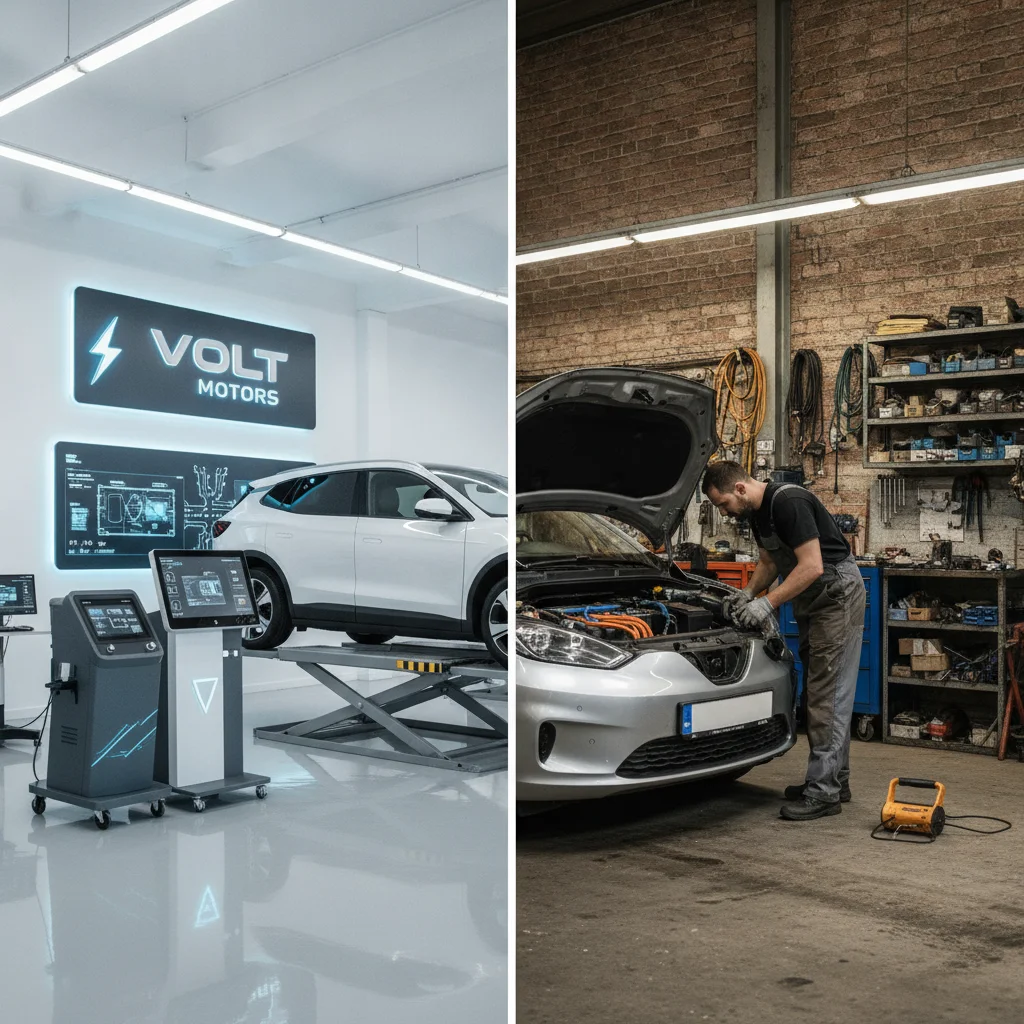
If you own a newer electric vehicle
Dealership Service Center
EV-specific training, proprietary battery diagnostics, and high-voltage system certifications remain concentrated at authorized dealers for most mainstream EV brands.
The Core Difference: Training, Tools, and Allegiance
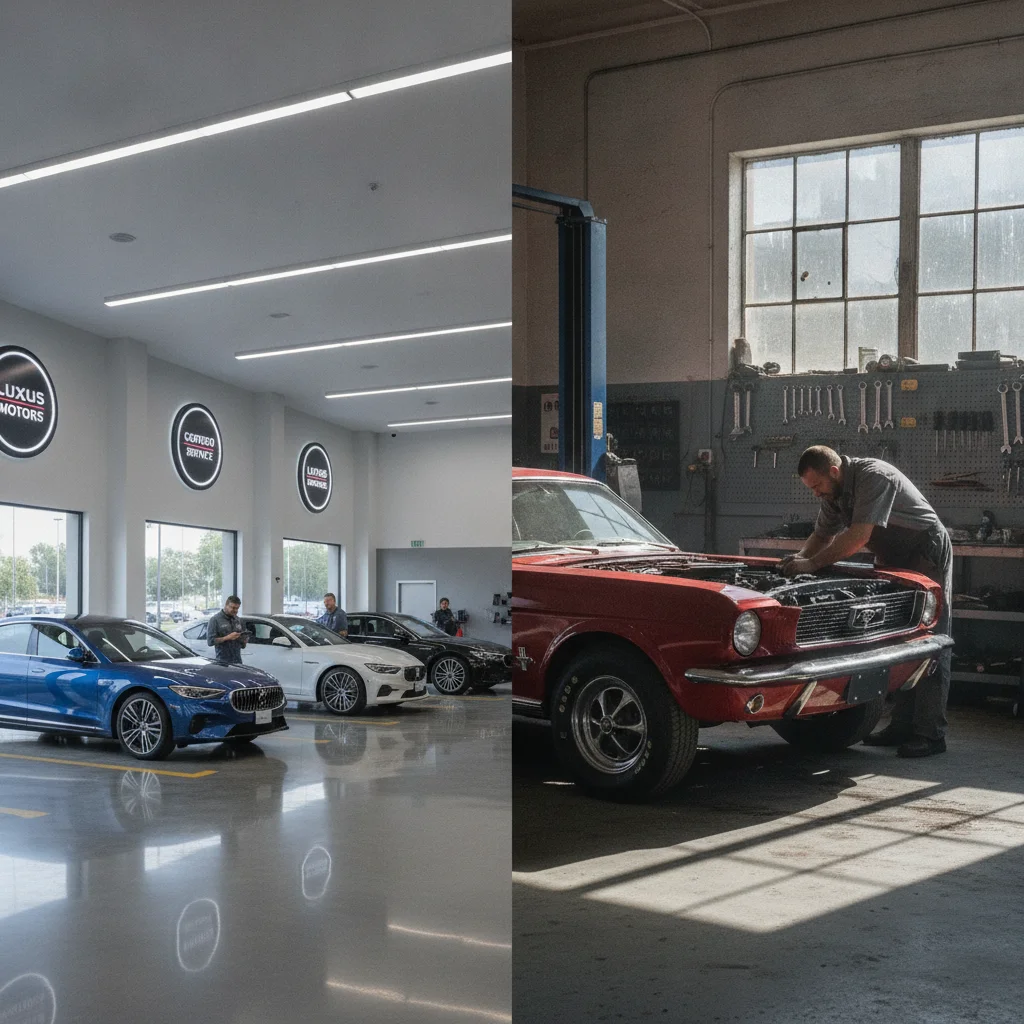
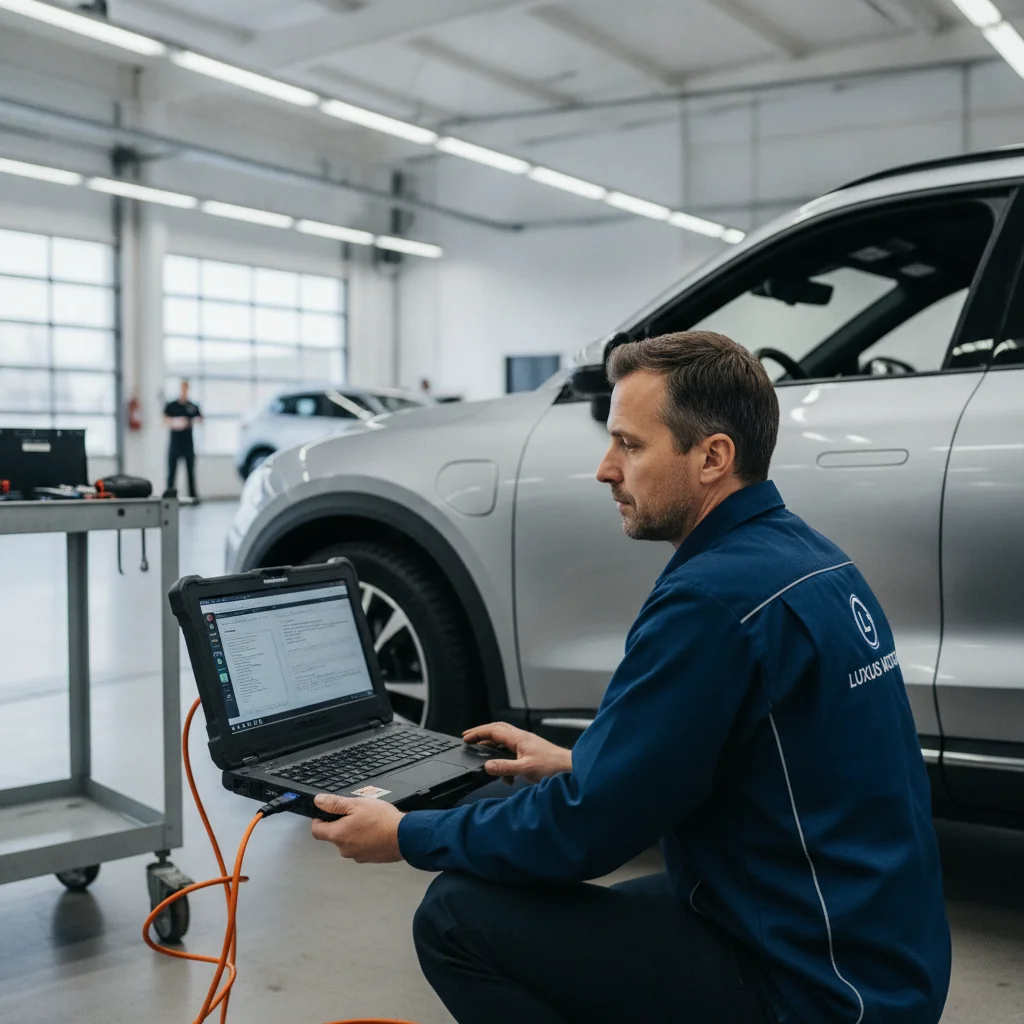
Walk into a dealership service center and you'll encounter technicians who have completed manufacturer-specific training programs — in some cases, ongoing certification requirements tied directly to the brand on the sign out front. Their diagnostic tools are factory-issued. Their parts are OEM. Their repair procedures come straight from the same technical manuals engineers use. That institutional alignment is genuine and, for certain situations, genuinely valuable.
Independent shops operate differently. Technicians there may carry ASE (Automotive Service Excellence) certifications, which are nationally recognized but brand-agnostic. They work across makes and models, often developing deep practical expertise precisely because they aren't limited to one manufacturer's vehicles. Their tools are typically aftermarket diagnostic systems — capable, but occasionally a step behind proprietary dealer software when it comes to model-specific fault codes or programming requirements.
Neither model is inherently superior. The question is which one serves your specific vehicle, your specific service need, and your budget at any given moment.
One persistent myth worth dispelling immediately: using an independent shop does not automatically void your new-car warranty. The Magnuson-Moss Warranty Act, a federal consumer protection law, prohibits manufacturers from voiding warranties solely because you chose a non-dealer service provider — as long as that service is performed correctly and with appropriate parts. What federal law actually says about warranty and service choice is more protective of consumers than most drivers realize.
Comparing Costs: What You Actually Pay
Cost is where the contrast becomes most tangible for most drivers. Dealership service departments carry significantly higher overhead — brand-new facilities, specialized tooling, manufacturer training programs, and warranty administration costs all factor into the labor rate. According to AAA, dealership labor rates in the United States typically run between $130 and $215 per hour, depending on the brand and region. Independent shops generally fall between $75 and $130 per hour for comparable work.
| Criterion | Dealership Service Center | Independent Repair Shop |
|---|---|---|
| Average Labor Rate | $130–$215/hour | $75–$130/hour |
| Technician Training | Manufacturer-certified, brand-specific | ASE-certified, multi-brand generalist |
| Parts Used | OEM parts standard | OEM, OEM-equivalent, or aftermarket |
| Diagnostic Software | Proprietary factory tools | Aftermarket scan tools |
| Recall & TSB Repairs | Yes, at no charge | Not available |
| Warranty Work | Full coverage processing | Not eligible for factory claims |
| Scheduling Flexibility | Varies; often busier | Often faster, more flexible |
| Routine Maintenance Cost | Higher, less negotiable | Lower, often competitive quotes |
| Customer Relationship | Service advisor intermediary | Direct technician communication common |
| EV-Specific Capability | Strong for authorized brands | Limited; growing but inconsistent |
That gap compounds quickly on multi-hour jobs. A timing chain service or transmission flush that takes four labor hours at a dealer could cost $300 to $400 more than the same job at a well-regarded independent shop. For routine maintenance — oil changes, tire rotations, brake pad replacement — the savings at independents are equally consistent.
20–30%
Typical savings at independent shops vs. dealers
AAA research consistently finds independent shops charge 20 to 30 percent less than dealership service centers for equivalent routine maintenance services.
$130–$215
Average dealership labor rate per hour (U.S.)
According to AAA's 2023 automotive survey, franchised dealer service rates range widely by brand, with luxury marques at the higher end of that range.
77%
Drivers who say cost is the top service-shop factor
A J.D. Power survey found that cost of service is the most frequently cited factor driving customers away from dealership service after the warranty period ends.
3 years
Average point when owners switch from dealer to independent
Industry data suggests most new-car owners begin shifting routine service to independent shops within one to three years of purchase, typically after initial warranty coverage eases their concern.
Parts pricing adds another layer. Dealerships sell OEM (original equipment manufacturer) parts, which carry a price premium but are precisely engineered for your vehicle. Independent shops typically source aftermarket parts — which range from budget-tier to OEM-equivalent quality depending on the supplier. A knowledgeable independent mechanic will often discuss brand options with you, something dealer service advisors rarely do.
The calculus changes somewhat for vehicles still covered by a new-car warranty. If a covered component fails, the dealer repairs it at no cost to you — so the price comparison becomes moot for that particular job. But for everything outside warranty coverage, the cost differential is real and consistent.
Where Dealerships Have a Genuine Edge
Acknowledging the cost advantage of independent shops doesn't mean dealers are the wrong call in every situation. There are specific scenarios where the dealership service center is the more rational choice, sometimes the only choice.
Recalls and Technical Service Bulletins
Recall repairs are performed exclusively at authorized dealerships, always at no charge to the owner. Technical service bulletins (TSBs) — manufacturer-issued repair procedures for known problems — are similarly handled most efficiently by dealer technicians who receive direct notification and have access to the required parts and software. If your vehicle has an open recall, that's a dealer visit regardless of your usual preference.
Proprietary Software and Programming
Modern vehicles are software-dependent in ways that have significant implications for service. Replacing a battery management system, reprogramming a transmission control module, or calibrating advanced driver-assistance systems (ADAS) after a windshield replacement often requires manufacturer-specific software that independent shops cannot legally or practically access. The gap is widest for EVs — see how this plays out specifically for EV owners for a closer look at that comparison.
Complex Powertrain Diagnostics on Newer Models
When a check-engine light points to an ambiguous fault in a late-model vehicle, dealer technicians have access to real-time manufacturer support lines and model-specific diagnostic flowcharts that aftermarket scan tools may not replicate. For genuinely puzzling problems on vehicles within their first few years on the road, that institutional support network matters.
Warranty Claims and Goodwill Repairs
Even on vehicles technically out of warranty, manufacturers occasionally offer goodwill repairs — partial or full coverage for known defects beyond the standard warranty period. These are dealer-administered. If you've been exclusively serviced at an independent shop, the paper trail may complicate your case. Keeping at least some dealer service records, particularly around powertrain work, can preserve your standing for these conversations.
Your Warranty Rights Under Federal Law
The Magnuson-Moss Warranty Act (15 U.S.C. § 2302) prohibits manufacturers from voiding a vehicle warranty simply because you used an independent shop for service or installed aftermarket parts — unless the manufacturer can demonstrate that the independent service or part actually caused the defect. The FTC enforces this protection. Keep records of all service performed, including receipts and part numbers, as documentation is your primary defense if a warranty dispute arises.
When Goodwill Repairs Enter the Picture
Manufacturer goodwill repairs — extended coverage offered informally outside the standard warranty — are entirely dealer-administered and discretionary. Automakers tend to extend goodwill more readily to customers with documented dealer service histories. If you're approaching a high-mileage or age threshold on a known-problematic component, a proactive dealer relationship may be worth the cost premium on one or two service visits.
ASE Certification: What It Means and What It Doesn't
ASE (National Institute for Automotive Service Excellence) certifications indicate that a technician has passed standardized tests in specific repair categories and has relevant hands-on experience. ASE Master Technician status requires passing all eight core automotive tests. Certification is a meaningful baseline signal but is not a substitute for shop-specific reputation research — not all certified technicians work at high-quality shops, and not all excellent independent mechanics hold every available credential.
Where Independent Shops Earn Their Reputation
The independent shop sector is not a monolith. It includes everything from one-person operations to multi-bay shops with ASE Master Technicians, fleet contracts, and sophisticated diagnostic equipment. The best independent mechanics develop loyal followings precisely because they offer something dealers structurally can't: a personal relationship with a technician who knows your car's history, your driving habits, and your budget priorities.
Routine Maintenance: The Core Value Proposition
Oil changes, cabin air filters, spark plugs, coolant flushes, belt replacements — none of these require factory-trained technicians or proprietary software. For the scheduled maintenance items that make up the majority of most drivers' service visits, a competent independent shop performs the same work at meaningfully lower cost. Standard maintenance schedules — typically built around mileage milestones at 30,000, 60,000, 90,000, and 100,000 miles — are well-documented in your owner's manual and require no manufacturer-specific knowledge to execute correctly.
Transparency and Communication
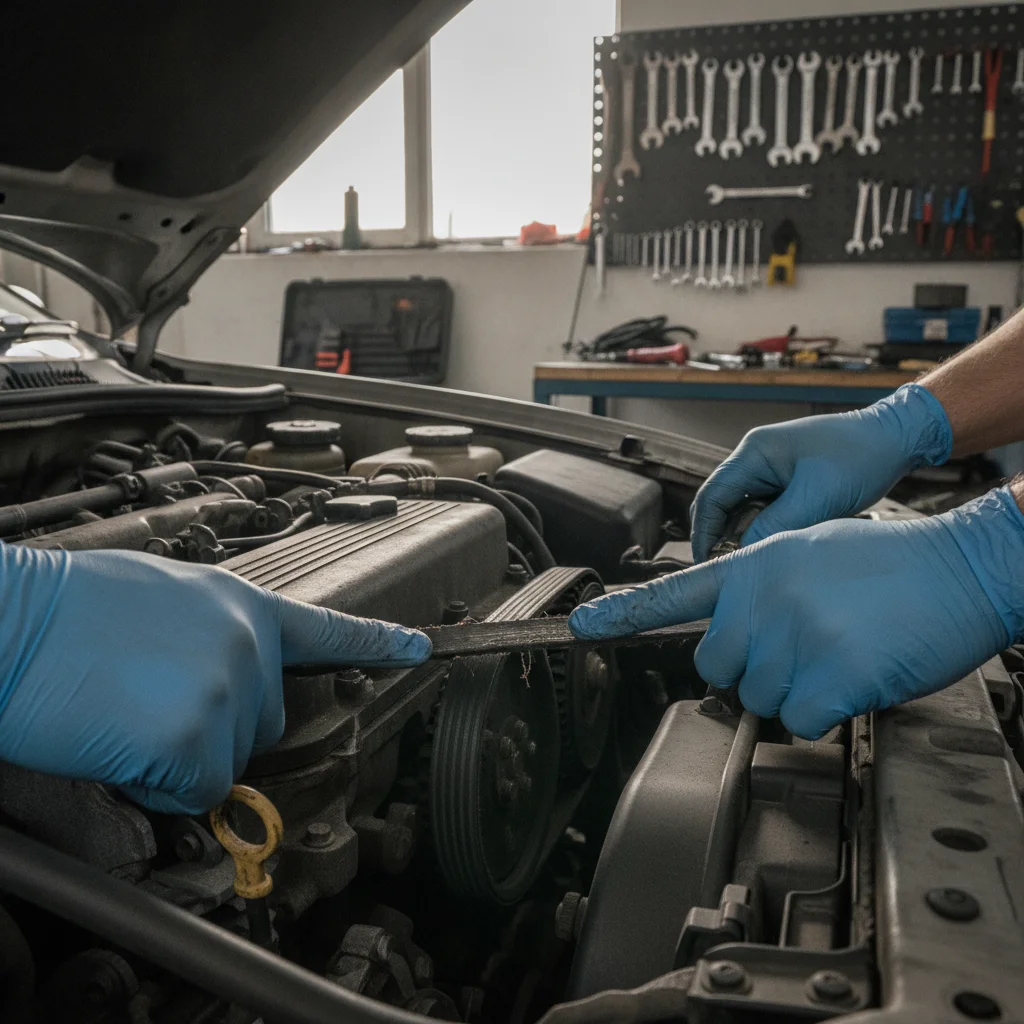
Dealerships operate service departments as profit centers with service advisors measured on upsells. Independent shops — particularly owner-operated ones — tend to have more direct communication between the technician and customer. Many independent mechanics will walk you to the vehicle and show you exactly what's worn or failing rather than presenting a service estimate printed by a service advisor who hasn't personally looked at the car.
Flexibility on Parts
A dealer will almost always install OEM parts without discussion. An independent shop may offer a choice between OEM, OEM-equivalent aftermarket (brands like Bosch, Denso, or Gates that manufacture for OEM contracts as well), or budget-tier options — letting you calibrate cost and quality for each specific repair. For a 12-year-old vehicle with 140,000 miles, that flexibility has real financial value.
When evaluating independent shops, prioritize those with ASE certifications posted visibly, written estimates, and a warranty on parts and labor — typically 12 months/12,000 miles is an industry standard baseline. Online reviews filtered for detail and specificity (rather than star ratings alone) give a more reliable signal than general reputation.
Maintenance Schedules: Neither Option Excuses Skipping Them
One underappreciated point in the dealer-vs.-independent debate: the service location matters far less than actually following your vehicle's maintenance schedule. Deferred oil changes, neglected coolant flushes, and ignored timing belt intervals cause far more mechanical damage than the choice between a dealership and an independent shop ever could.
Most manufacturer maintenance schedules distinguish between normal and severe driving conditions. Severe conditions — stop-and-go commuting, short trips under five miles, extreme temperature operation, towing — typically shorten recommended service intervals. Many drivers on severe-condition schedules don't know it, because the label sounds exceptional when it actually describes most urban and suburban commuting patterns.
Key maintenance milestones to track regardless of where you have them performed:
- Every 5,000–7,500 miles: Oil and filter change (synthetic oil vehicles may extend this; follow your specific manufacturer guidance)
- Every 15,000–30,000 miles: Tire rotation, cabin air filter, engine air filter inspection
- Every 30,000 miles: Fuel filter (where applicable), brake fluid inspection, battery test
- Every 60,000 miles: Spark plugs (iridium plugs may extend to 100,000), drive belt inspection, coolant flush
- Every 90,000–100,000 miles: Timing belt replacement (interference engines), transmission fluid, differential fluid
Both dealership service advisors and independent mechanics should be tracking these intervals for you — but the responsibility ultimately rests with the owner. Keep your own simple log.

If you're buying a used vehicle and evaluating its service history, the question of where maintenance was performed is secondary to whether it was performed at all. A complete independent shop service record is worth considerably more than spotty dealer records. That calculus applies whether you're reading a CarFax or walking through a private sale — see the trade-offs involved in buying used from a private seller versus a dealership for more context on evaluating vehicle histories.
Making the Call: A Practical Decision Framework
The honest answer for most drivers is that both options belong in your service toolkit, deployed based on circumstances rather than brand loyalty or habit. Here's a workable framework:
Use the Dealer When:
- Your vehicle is within the new-car warranty period and the repair may be covered
- There is an open recall or technical service bulletin requiring manufacturer parts and software
- The repair involves proprietary programming — key fob pairing, module reflashing, ADAS calibration
- You want to preserve a complete dealer service record for warranty goodwill negotiations or resale purposes
Use an Independent Shop When:
- Your vehicle is out of warranty and the repair is mechanical rather than software-dependent
- You need routine maintenance and want to reduce your cost per visit
- You have an established relationship with a trusted mechanic who knows your vehicle
- The dealer quote seems disproportionate and a second opinion is warranted
It's also worth noting that your insurer's preferences may come into play after an accident. Insurance companies sometimes recommend preferred repair shops, but your right to choose your own shop is generally protected. Understanding what your insurer recommends versus your right to choose a repair shop can save you from unnecessary compromise in a claims situation.
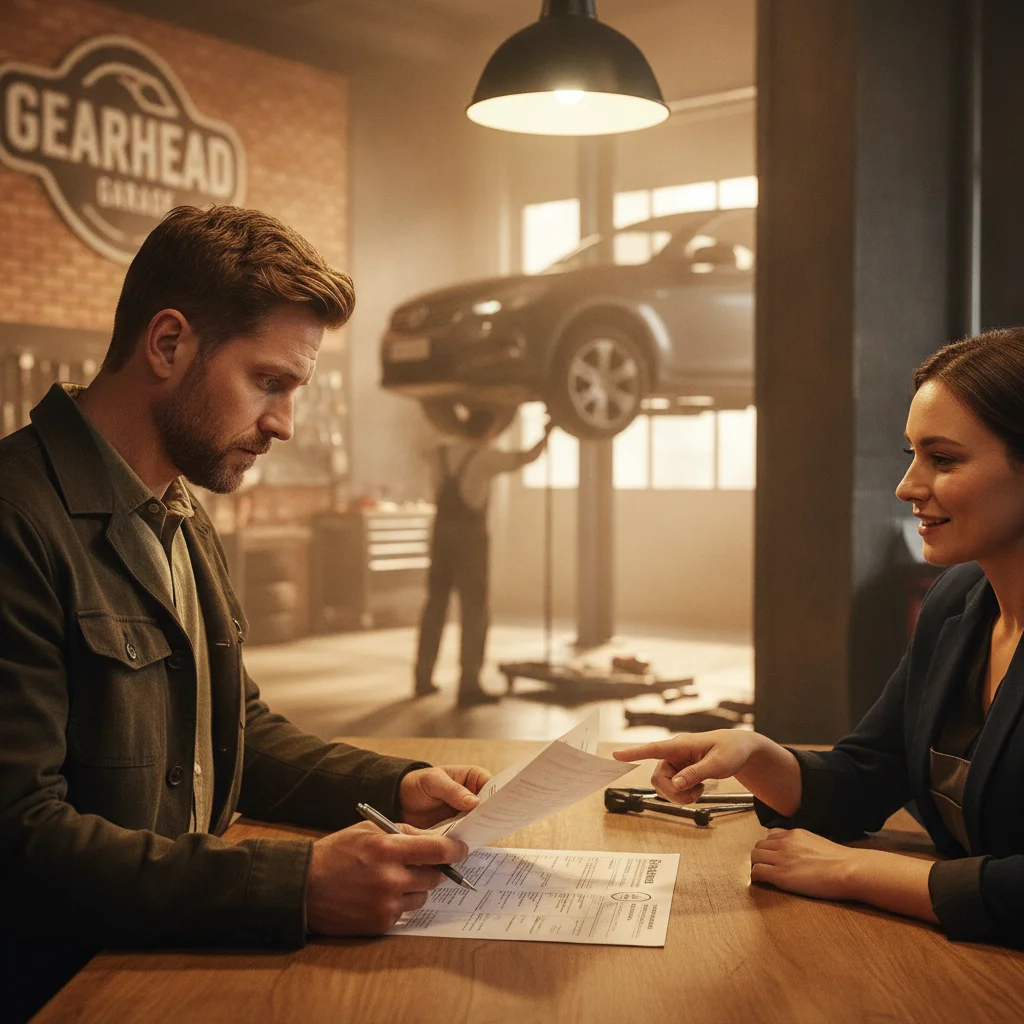
Finally, don't underestimate the value of a service relationship built over time. A dealer service department sees hundreds of different owners and vehicles each week. A good independent mechanic who has serviced your car for five years understands its quirks, its history, and the repairs that are coming before they become emergencies. That institutional knowledge has real dollar value in the form of accurate diagnoses and avoided unnecessary work.
The smartest approach isn't brand loyalty to either model — it's using each for what it does best.

All claims are backed by peer-reviewed research. Sources on request.