Key Takeaways
Carpool Lane (HOV Lane)
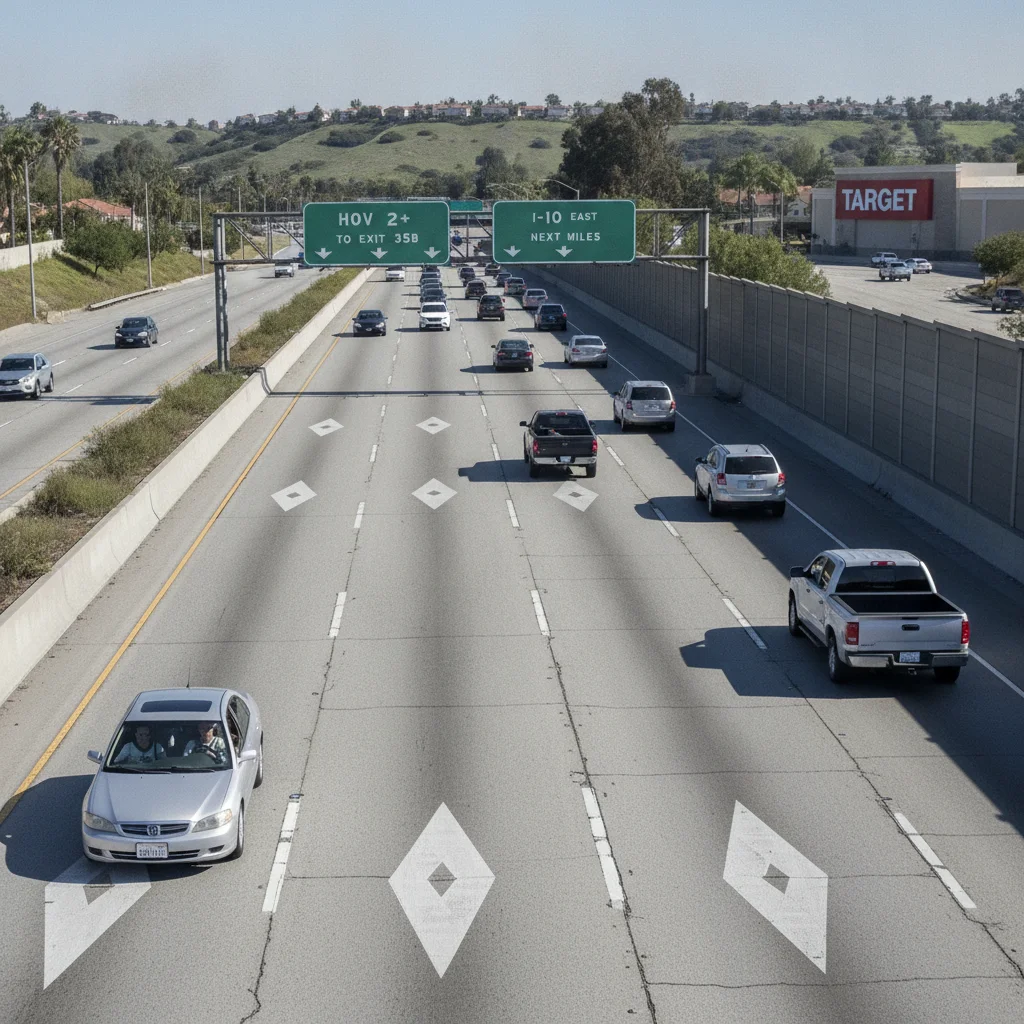
A carpool lane — officially called a High-Occupancy Vehicle (HOV) lane — is a dedicated highway lane restricted to vehicles carrying a minimum number of passengers, typically two or three people including the driver. The goal is to reduce traffic congestion and emissions by incentivizing ride-sharing. These lanes are usually marked with diamond symbols painted on the road surface and on overhead signs.
HOV lanes operate under state-level traffic codes, so occupancy thresholds, enforcement hours, and exemptions (such as for hybrid or electric vehicles) differ significantly from one jurisdiction to another.
What HOV Lanes Are Actually Designed to Do
High-Occupancy Vehicle lanes exist for a specific policy reason: move more people per lane, not more cars. Traffic engineers and transportation planners introduced them in the 1970s as a response to the oil crisis, and they've stayed on the books because the data shows they work — when properly enforced. A single lane carrying vehicles averaging 2.5 occupants moves significantly more people per hour than the same lane operating as a standard single-occupancy lane.
That context matters when you're trying to understand why the rules are written the way they are. The restrictions aren't arbitrary. Every element — the occupancy minimums, the enforcement hours, the entry and exit points — is calibrated to maintain throughput in the HOV lane. When solo drivers cheat the system, lane speeds drop, defeating the entire purpose.

For drivers, the practical implication is straightforward: the rules are enforced because they need to be. Highway patrol agencies in high-traffic states treat HOV violations seriously, and fines reflect that. Understanding exactly what qualifies — and what doesn't — keeps money in your pocket and points off your license.
For context on how HOV violations fit into the broader legal landscape of traffic offenses, see how traffic violations are classified by severity. Most HOV violations land in the infraction category, but fines can be steep.
Occupancy Rules: Who Actually Counts as a Passenger
The most common source of confusion — and HOV tickets — comes down to who counts toward the occupancy minimum. Here's the straightforward breakdown:
- Live occupants only: Every person in the vehicle must be a live human being physically present in the car. Mannequins, car seat dummies, stuffed animals, and similar props have been used by drivers attempting to game the system. Officers have seen all of it, and it results in a citation.
- Infants and children count: Age has no bearing. A newborn in a rear-facing car seat counts as a full occupant. So does a toddler, a child in a booster seat, and a teenager.
- Pregnant women generally do not count as two: Despite what you may have heard, most state laws count occupants as physically separate individuals in the vehicle. A pregnant woman counts as one occupant in all but the rarest legal interpretations. Texas became a brief exception in 2023 when a driver cited for an HOV violation cited a state abortion law — the case drew national attention but was ultimately not a broadly applicable precedent for HOV enforcement purposes.
- The driver counts: You always count yourself as one of the required occupants. An HOV-2 lane requires the driver plus one additional passenger.
HOV-2
Minimum occupancy required in most U.S. HOV lanes
According to the Federal Highway Administration, the majority of designated HOV lanes in the United States require a minimum of two occupants including the driver.
$490+
Total cost of a first HOV violation in California
California's base fine of approximately $100 escalates to over $490 once mandatory state and county surcharges are applied, per the California Courts fee schedule.
3,600+
Miles of HOV lanes across the United States
The Federal Highway Administration reports over 3,600 lane-miles of HOV facilities operating on U.S. highways as of the most recent national count.
HOV-3
Peak-hour requirement on select California corridors
Routes including I-10 and I-110 in Los Angeles operate as HOV-3 lanes during peak hours, requiring the driver plus two additional passengers, per Caltrans operating rules.
~25%
Estimated HOV lane violation rate during peak hours
Studies by the Texas Transportation Institute have estimated that roughly one in four vehicles in HOV lanes during peak periods does not meet the occupancy requirement.
HOV-2 lanes are the most common configuration across the U.S., but heavily congested corridors — especially in California on routes like I-10 and I-110 in Los Angeles — operate as HOV-3 during peak hours, meaning you need the driver plus two additional passengers. Signage will specify the requirement, and it can change based on time of day on the same stretch of road.
HOV Requirements Can Change on the Same Road
Some corridors shift between HOV-2 and HOV-3 requirements depending on the time of day. A lane that allows two occupants at 10 AM may require three occupants at 7 AM on the same section of highway. Dynamic message signs — the electronic overhead boards — display current requirements in real time. Always read those signs, especially on unfamiliar routes or during unusual travel hours.
Out-of-State EV Decals May Not Transfer
If you move to a new state or are visiting with an out-of-state EV exemption decal, don't assume it's valid in the new jurisdiction. California's Clean Air Vehicle decal, for example, is only valid in California. Other states have their own programs with their own eligibility criteria. Using an out-of-state decal as if it grants local exemption can result in a citation.
Time Restrictions and How to Read the Signs
HOV lanes don't all operate the same way. There are three basic enforcement models:
- Peak-hours only: The lane is restricted to HOV vehicles during defined commute windows, typically weekday mornings (6–9 AM) and afternoons (3–7 PM). Outside those hours, any vehicle may use the lane. These hours vary by corridor and are always posted on signs above or beside the lane.
- 24/7 enforcement: The lane is always restricted, regardless of day or time. This is more common in densely trafficked metro areas where congestion is not limited to rush hours.
- Reversible HOV lanes: Some lanes reverse direction based on the time of day — inbound in the morning, outbound in the evening. These are indicated by special overhead signal systems. Entering a reversible lane in the wrong direction is among the most dangerous traffic errors possible and carries severe legal consequences beyond a simple HOV violation.
The posted signs control, not what you remember from the last time you drove that route. Road authorities update HOV schedules, and if you cross a solid white line into an HOV lane during restricted hours without meeting the occupancy requirement, you're liable whether or not you read the sign.
Use Your Navigation App to Check HOV Status
Google Maps, Apple Maps, and Waze all include HOV lane data for many major corridors, showing whether HOV restrictions are currently active based on time of day. This is especially useful when your travel schedule changes unexpectedly and you're unsure whether peak restrictions apply. It doesn't replace reading posted signs, but it gives you a heads-up before you reach the lane entry point.
Set a Reminder for Your EV Decal Expiration
If you rely on a state-issued EV or clean-air vehicle decal for HOV access, set a calendar reminder 60 days before the decal expires. Renewal processes can take weeks, and driving with an expired decal is treated as a full HOV violation by enforcement officers — the fact that your vehicle originally qualified is not a defense.
If you're traveling across state lines and unsure whether HOV rules apply to a particular stretch of highway, this guide to traffic law differences across state lines covers the key variations worth knowing before you travel.
Vehicles That Qualify Without Meeting Occupancy Rules
Several vehicle categories get HOV access regardless of how many people are inside. These exemptions exist at the state level, so not every state recognizes all of them.
Electric and Alternative Fuel Vehicles
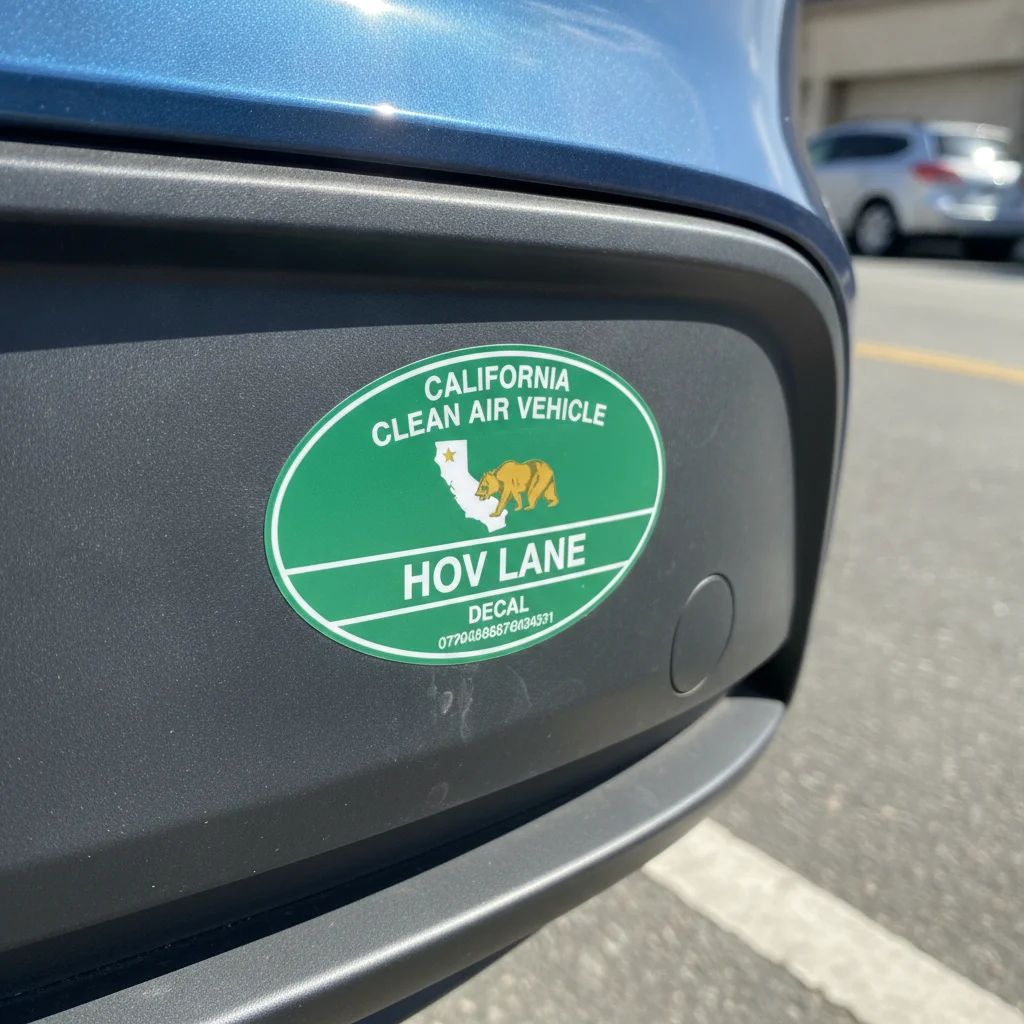
This is the most significant and widely debated exemption. California's Clean Air Vehicle (CAV) program allows certain zero-emission and plug-in hybrid vehicles to use HOV lanes with a single occupant, provided the driver displays the appropriate DMV-issued decal. There are different decal colors tied to different vehicle eligibility tiers, and each has an expiration date. Running an expired decal is treated the same as not having one.
Other states with similar programs include Virginia, New York, and Colorado, though program details — which vehicles qualify, whether the exemption is limited to certain lanes or times — differ. Always verify through your state's DMV before assuming your EV qualifies.
Motorcycles
Most states allow motorcycles in HOV lanes regardless of the number of riders. The rationale is that motorcycles occupy significantly less road space and inherently reduce lane congestion. This exemption is recognized in California, Texas, Florida, and most other high-population states. Verify in your specific state before assuming it applies.
Transit and Emergency Vehicles
Buses, emergency vehicles, and in some states authorized vanpools or employer-sponsored shuttles may use HOV lanes regardless of occupancy. These are operational exemptions tied to the vehicle's registration and use category, not something a private driver can claim.
“HOT lanes represent one of the most pragmatic solutions we have to congestion pricing — they let the market determine lane value while still rewarding carpoolers and transit users who contribute the most to throughput per lane-mile.”
— Robert Poole, Director of Transportation Policy, Reason Foundation
Tolled HOV Lanes (HOT Lanes)
An increasing number of highway systems convert HOV lanes into High-Occupancy Toll (HOT) lanes. If you meet the occupancy requirement, you typically use the lane for free. If you don't, you pay a dynamic toll — often collected via transponder — to access the lane legally. This system is common in Virginia, Minnesota, Washington State, and growing in California. Using a HOT lane without a valid transponder when you're a solo driver creates both an HOV and a toll evasion issue simultaneously.
What Counts as a Violation and What Fines Look Like
HOV violations fall into a few distinct categories, and the penalties can stack:
| Violation Type | Description | Typical Fine Range |
|---|---|---|
| Occupancy violation | Using HOV lane without meeting passenger minimum | $150–$500+ |
| Improper entry/exit | Crossing solid lane buffer lines | $100–$250 |
| Expired HOV exemption decal | Using an EV lane exemption with an outdated decal | $150–$400 |
| Wrong-way reversible lane | Entering a reversible lane traveling in the prohibited direction | $250–$1,000+, possible reckless driving charge |
California is one of the strictest states for HOV enforcement. The base fine for a first violation is approximately $100, but after mandatory state and county surcharges, the total typically exceeds $490. Repeat violations can approach $1,000 in total assessed costs. Most states do not add points to your driving record for a standard HOV occupancy violation, but some do — and any points affect your insurance premium at renewal.
One often-overlooked enforcement mechanism: carpool decoy vehicles. Highway patrol officers in unmarked civilian vehicles drive HOV lanes specifically to identify violators. Tailgating, changing lanes improperly within an HOV corridor, or looking nervous when a plain-clothes officer pulls alongside are all observable behaviors. In California and several other states, aerial enforcement from aircraft and video-based automated systems also operate in certain corridors.
For comparison to other traffic lane rules — particularly what happens when drivers misuse adjacent lanes — see how passing on the right is handled under state law and which highway lanes carry the lowest crash risk.
Practical Steps to Stay Compliant
HOV lane compliance is mostly a matter of knowing the rules before you're in the lane — not after you've already crossed the solid white line.
Before You Drive
- Know the HOV requirements for your regular commute route: Is it HOV-2 or HOV-3? What are the enforcement hours? Is it a HOT lane requiring a transponder?
- If you drive an EV or plug-in hybrid, confirm whether your vehicle qualifies for a single-occupancy exemption in your state, and ensure your decal is current.
- If you're road-tripping across state lines, check HOV rules for each state you'll pass through. Rules can change at the state border on the same physical stretch of interstate.
While Driving
- Read the posted signs every time — don't rely on memory or habit. Enforcement schedules change.
- Only enter and exit at designated dashed-line zones. Crossing a solid buffer line is a separate citable offense.
- If you're approaching an HOV on-ramp and realize you don't meet the occupancy requirement, do not enter. Wait for the next general-purpose on-ramp.
Use Your Navigation App to Check HOV Status
Google Maps, Apple Maps, and Waze all include HOV lane data for many major corridors, showing whether HOV restrictions are currently active based on time of day. This is especially useful when your travel schedule changes unexpectedly and you're unsure whether peak restrictions apply. It doesn't replace reading posted signs, but it gives you a heads-up before you reach the lane entry point.
Set a Reminder for Your EV Decal Expiration
If you rely on a state-issued EV or clean-air vehicle decal for HOV access, set a calendar reminder 60 days before the decal expires. Renewal processes can take weeks, and driving with an expired decal is treated as a full HOV violation by enforcement officers — the fact that your vehicle originally qualified is not a defense.
If you receive an HOV citation you believe is incorrect — for example, you had a qualifying passenger who wasn't visible to the officer — you have the right to contest it in traffic court. Bring evidence: photos, witness statements, or dashcam footage showing your passengers. Understanding how enhanced-fine zones work is also useful context if your citation occurred in a corridor where construction or special rules apply.

All claims are backed by peer-reviewed research. Sources on request.