Key Takeaways
Admitting Fault at an Accident
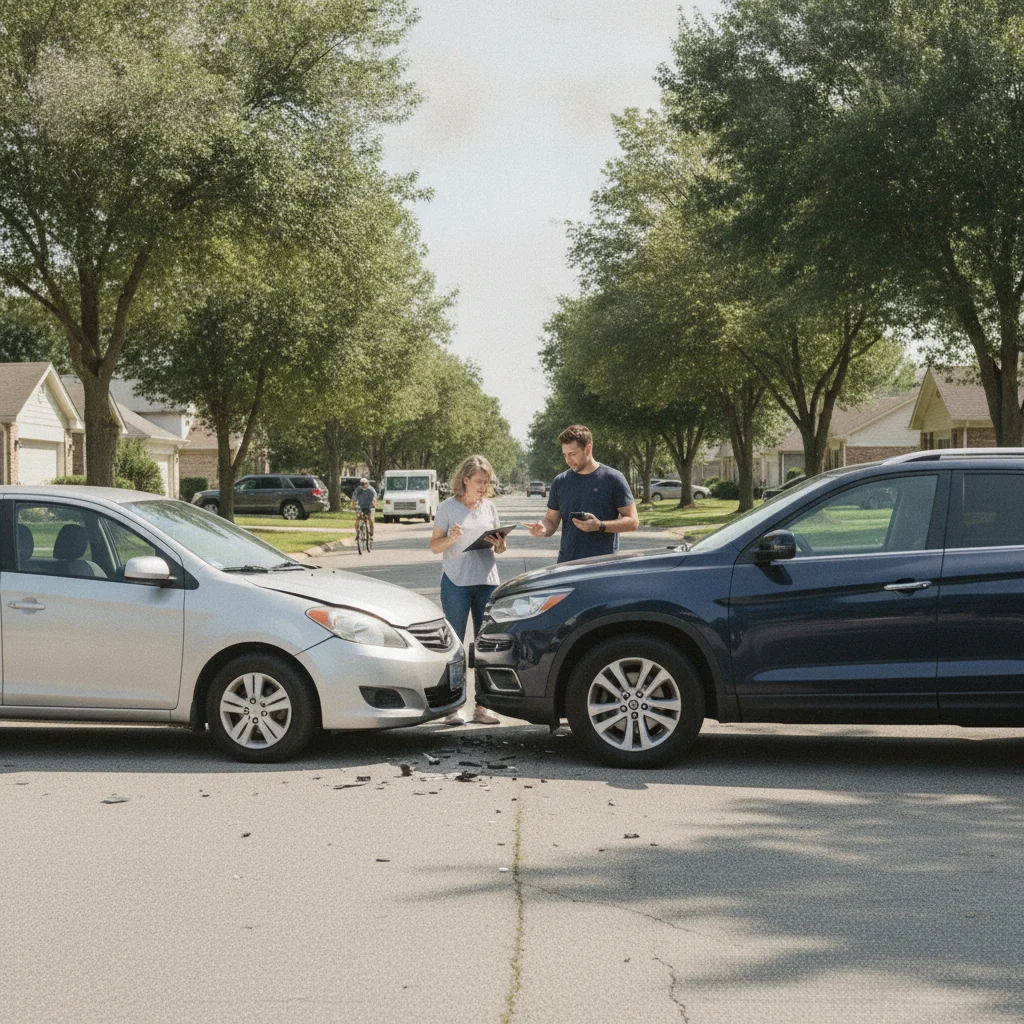
Admitting fault means making any statement at the scene of an accident that accepts responsibility — whether partial or full — for causing the collision. This includes direct apologies, phrases like "I didn't see you" or "I should have stopped sooner," and even casual comments that imply blame. These statements can be used as evidence against you by insurance companies, opposing attorneys, and in court proceedings.
In legal terms, an on-scene admission can qualify as a "statement against interest" — a recognized exception to hearsay rules that makes it admissible as evidence in civil litigation or insurance disputes.
Why Those First Words Matter So Much
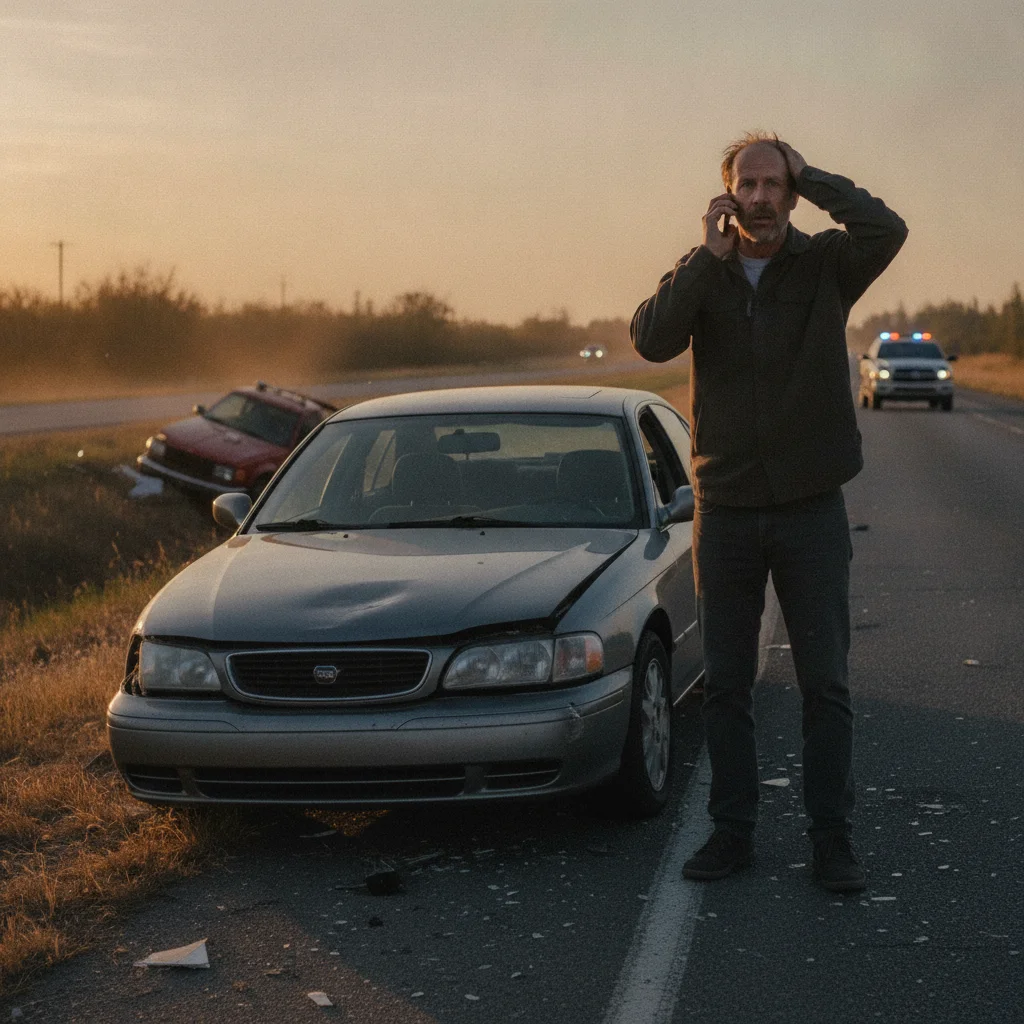
The seconds after a crash are chaotic. Your heart rate spikes, your hands may shake, and your brain starts running a rapid-fire assessment of what just happened. In that state, a lot of people's first instinct is to apologize — it's what socially conditioned adults do when they believe they've caused harm or distress to someone else.
The problem is that the person you're apologizing to isn't just a fellow driver right now. They are a potential claimant, and whatever you say is fair game. Witnesses standing nearby, dashcam footage, and the other driver's own recollection can all capture your words. From that moment forward, those words become part of the evidentiary record surrounding the accident.
Insurance adjusters are trained to look for on-scene statements during their investigations. Opposing attorneys use them in depositions. Judges allow them as evidence under specific legal exceptions. A genuine, human moment of remorse can cost you thousands of dollars in a disputed claim — or result in a coverage denial if your insurer determines you voluntarily accepted liability.
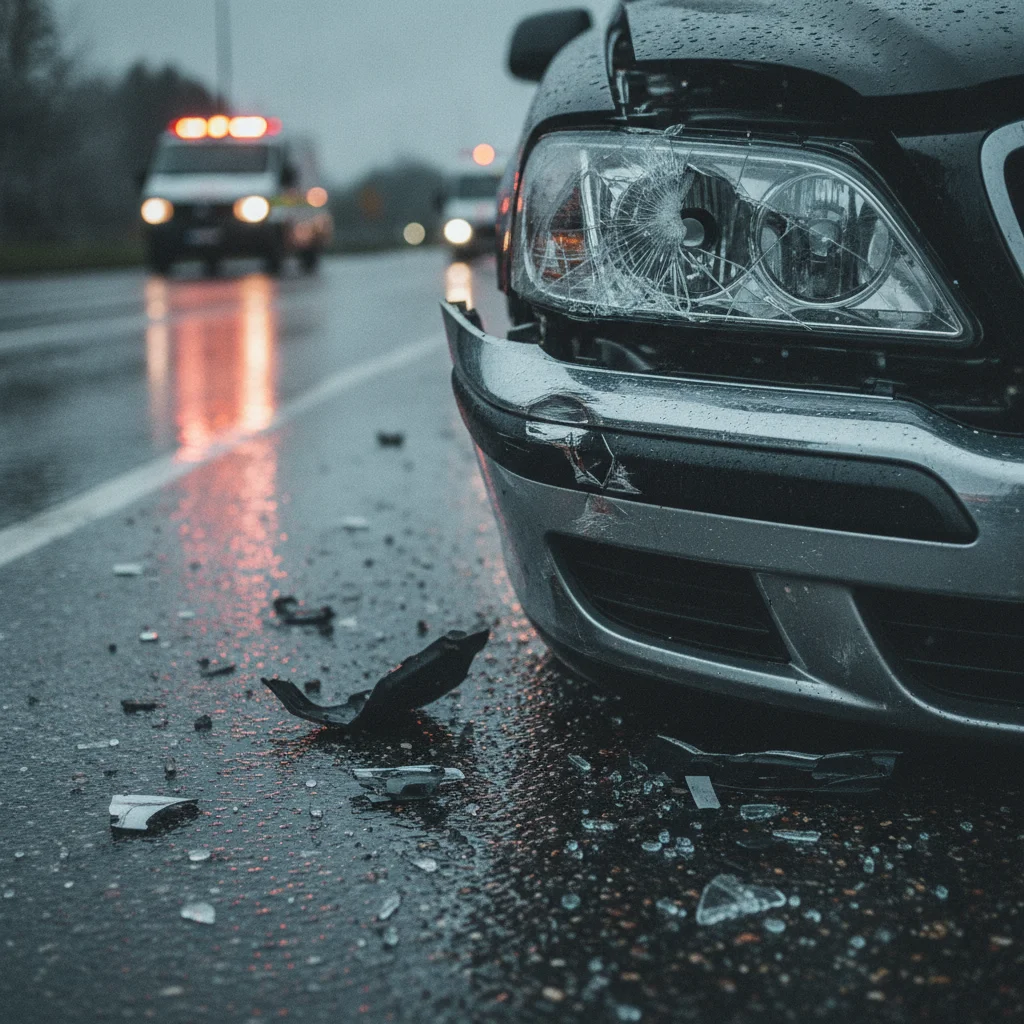
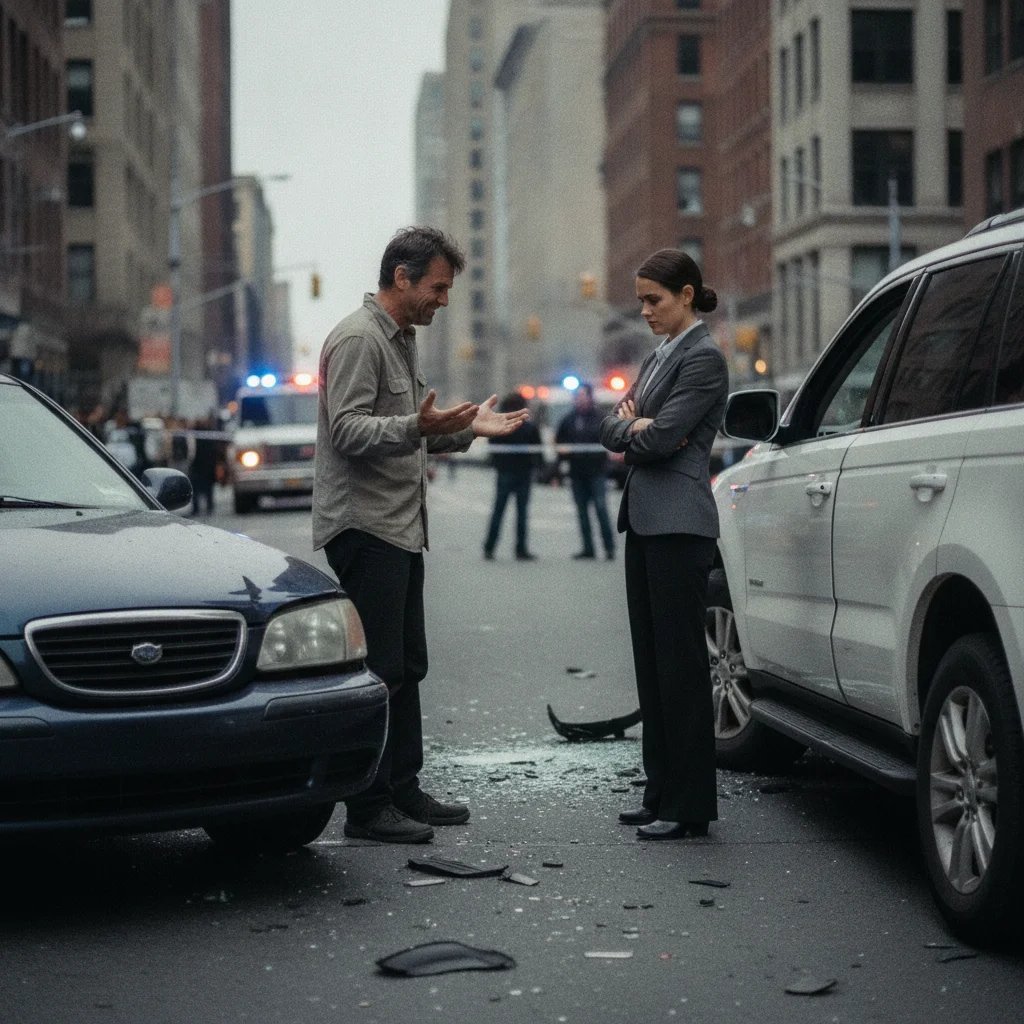
This isn't about being cold or unhelpful at the scene. You should absolutely check that everyone is physically okay, call 911 if there are injuries, and cooperate with police. What you should not do is editorialize about what you think caused the crash. There's a meaningful difference between what you're legally required to say and what you feel compelled to say — and knowing that difference protects you.
The Legal Mechanics: How an Admission Becomes Evidence
Under standard evidentiary rules in the U.S., a "statement against interest" is a recognized exception to the hearsay prohibition. That means if you said something at the scene that works against your own legal position — like acknowledging you ran a red light or were distracted — that statement can be introduced in court even though you're not actively testifying to it. The other driver, a witness, or even a police officer who overheard you can repeat it under oath.
In civil insurance disputes, the bar is lower still. Insurance adjusters aren't bound by courtroom evidentiary rules. They build claim files from everything available: police reports, witness statements, photographs, and any quoted remarks attributed to you. An adjuster reading a police report that says "Driver 1 stated he did not see the traffic signal" is going to factor that into their fault determination — regardless of what the physical evidence shows.
“The roadside is not the place to determine fault. Physical evidence is processed by experts, not extracted from emotional conversations between shaken drivers. What people say in those first minutes rarely matches what the science shows.”
— Lawrence Nordhoff Jr., Traffic accident reconstruction specialist and author of 'Traffic Crash Reconstruction'
Comparative negligence adds another layer of complexity. Most states now use some form of comparative fault — meaning if you're found 20% responsible for an accident, your compensation is reduced by 20%. In states with modified comparative negligence, if you're found more than 50% at fault, you may recover nothing at all. An off-hand comment at the scene that nudges your assessed fault from 15% to 55% isn't a minor miscalculation. It's the difference between a payout and nothing.
38 states
States using comparative negligence rules
According to the Insurance Information Institute, the majority of U.S. states apportion damages based on each party's percentage of fault, making partial admissions financially significant.
~50%
Accidents with disputed liability at filing
Industry claims data consistently shows that roughly half of multi-vehicle accident claims involve some initial dispute over fault before investigation resolves the question.
3–4 seconds
Average crash perception-reaction timeframe
Research from the AAA Foundation for Traffic Safety shows most drivers have only seconds to perceive and react to an imminent collision — too little time for accurate causal assessment.
Up to 51%
Max fault threshold to recover damages (modified comparative states)
In the roughly 30 states using modified comparative negligence, being found 51% or more at fault typically bars recovery — making every percentage point of attributed fault consequential.
It's also worth understanding what fault determination actually involves. Investigators look at skid marks, vehicle damage patterns, traffic signal timing data, road geometry, dashcam footage, and eyewitness accounts. Your own perception of the crash — formed in a fraction of a second under intense stress — is almost certainly incomplete. You may have genuinely believed you caused the collision, only for a proper investigation to reveal that the other driver's speed, lane position, or mechanical failure was the primary cause. By the time that's established, your apology is already in the file.
Common Phrases That Sound Harmless — But Aren't
Most drivers don't walk up to the other car and say "I accept full liability for this collision." The admissions that cause real damage tend to be subtle — the kind of thing a reasonable person would say without thinking twice.
- "I'm so sorry — I didn't see you." This is both an apology and a direct acknowledgment of inattention. It's arguably the single most damaging thing you can say.
- "I was going a little fast, I think." Even hedged with "I think," this creates a record of self-reported speeding.
- "I should have braked sooner." A direct admission that your reaction time or judgment contributed to the crash.
- "This is my fault, I'm so sorry." Unambiguous. Will appear in the police report if an officer hears it.
- "I wasn't paying attention." Immediately implies distraction, which has significant legal weight.
- "I didn't realize the light had changed." Equivalent to admitting you ran a red light.
Notice that none of these are lies — many drivers say them because they genuinely believe them in the moment. But even if you were partly at fault, the full picture of what caused the accident requires investigation, not a roadside confession.
A Script for the Scene
If you're unsure what to say, keep it to these basics: "Are you okay? I've called 911. Here's my insurance information. Let's wait for the police." That's it. You've been cooperative, humane, and legally sound — without saying anything that could be used against you.
Request Written Statements When Possible
When your insurer asks for a statement, ask whether you can submit it in writing rather than as a recorded call. Written statements give you more control over accuracy and wording, and you can review them before submission. This is a reasonable request that most insurers accommodate.
What you can say without legal risk: factual, neutral statements. "Are you hurt?" "I've called 911." "Here's my insurance card." "I'll wait for the police." These are cooperative, legally sound responses that keep the situation calm without creating a record of fault admission.
For a broader look at post-accident missteps that harm your claim, see common mistakes drivers make after an accident — admitting fault is one of several errors that can seriously undercut your position.
Adrenaline Is Not a Reliable Narrator
There's a physiological reason accident scenes produce impulsive, inaccurate statements. The stress response — cortisol, adrenaline, elevated heart rate — affects cognitive function in ways that specifically impair time perception, spatial awareness, and causal reasoning. Your brain is in threat-response mode, not analytical mode. Crash reconstruction experts consistently find that drivers' immediate perceptions of what happened diverge significantly from what physical evidence shows.
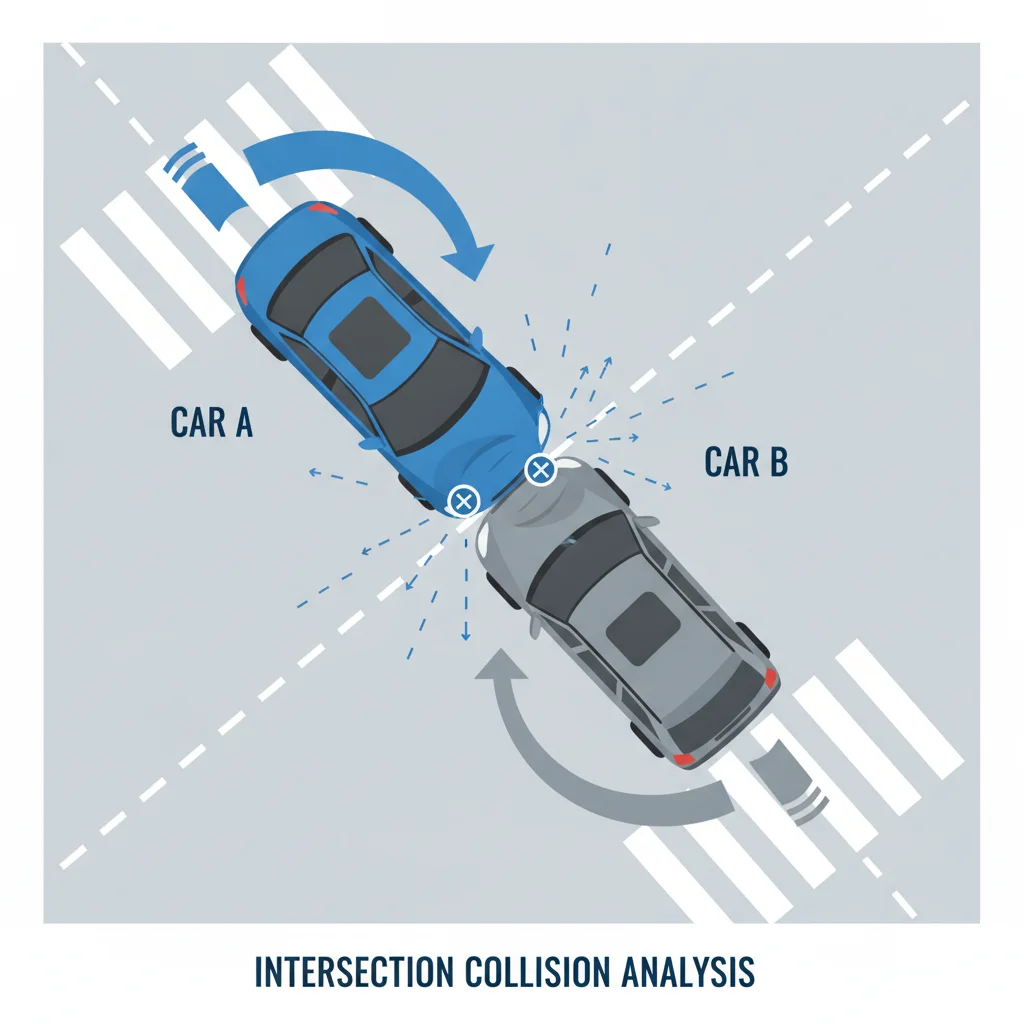
A driver who was rear-ended while braking may initially feel they "stopped too suddenly." A driver who T-boned another vehicle may genuinely believe they had a green light, when signal-timing data tells a different story. These aren't lies — they're the product of a brain processing a traumatic event in real time, filling in gaps with assumptions and assigning blame based on emotional state rather than facts.
This is precisely why fault determination is not left to the drivers involved. Police officers are trained in accident scene assessment. Insurance adjusters are trained in claim investigation. Accident reconstruction specialists spend careers analyzing the physics of vehicle collisions. None of them reach conclusions based primarily on what drivers said at the scene — they use that as one input among many.
The lesson is straightforward: however certain you feel in the moment, you are not in a position to accurately assess fault. Neither is the other driver. Let the people whose job it is to make that call do their work.
Apology Laws: Limited and Inconsistent
About a dozen U.S. states have "apology laws" that aim to prevent expressions of sympathy from being used as evidence. However, these protections are narrow — most apply only in medical malpractice contexts, not auto accidents. A small number of states extend some protection to traffic incidents, but the scope varies significantly. Don't rely on apology laws as a safety net. They are the exception, not the rule.
Your Memory of the Crash Will Change
Studies on eyewitness memory show that traumatic events produce memories that shift significantly in the hours and days after the event. Details you felt certain about immediately after the crash may feel different 48 hours later — and vice versa. This is normal, but it's another reason not to make definitive statements at the scene. Your recollection is still being formed.
What You're Actually Required to Do — and What You're Not
A common fear is that staying quiet feels evasive or legally problematic. It isn't. There's an important distinction between your legal duties at an accident scene and making voluntary statements about culpability.
Your actual obligations in virtually every U.S. state include:
- Stop your vehicle immediately and remain at the scene.
- Check whether anyone is injured and call emergency services if needed.
- Exchange names, addresses, driver's license numbers, license plate numbers, and insurance information with the other driver.
- Cooperate with law enforcement — providing your identification and a factual account of what you observed, not what you believe caused the crash.
- Report the accident to your insurer in a timely manner, per your policy terms.
None of these obligations require you to assess or assign fault. A police officer asking "what happened" expects a factual sequence of events: where you were, what direction you were traveling, what you observed before impact. That is not the same as asking whose fault it was.
For the complete picture of what's legally required after a crash, including state-specific reporting thresholds and duty-to-render-aid laws, see your legal obligations at the scene of a car accident.
When you file your claim, your insurer will conduct their own investigation. Cooperate fully with your insurer — that is a policy obligation — but ask whether you can provide a written statement rather than a recorded verbal one, which gives you more control over precision and wording.
A Script for the Scene
If you're unsure what to say, keep it to these basics: "Are you okay? I've called 911. Here's my insurance information. Let's wait for the police." That's it. You've been cooperative, humane, and legally sound — without saying anything that could be used against you.
Request Written Statements When Possible
When your insurer asks for a statement, ask whether you can submit it in writing rather than as a recorded call. Written statements give you more control over accuracy and wording, and you can review them before submission. This is a reasonable request that most insurers accommodate.
After the Scene: Protecting Your Claim from the Start
Avoiding a fault admission is one piece of a larger post-accident strategy. What you do in the hours and days following the crash matters equally.
Document Everything at the Scene
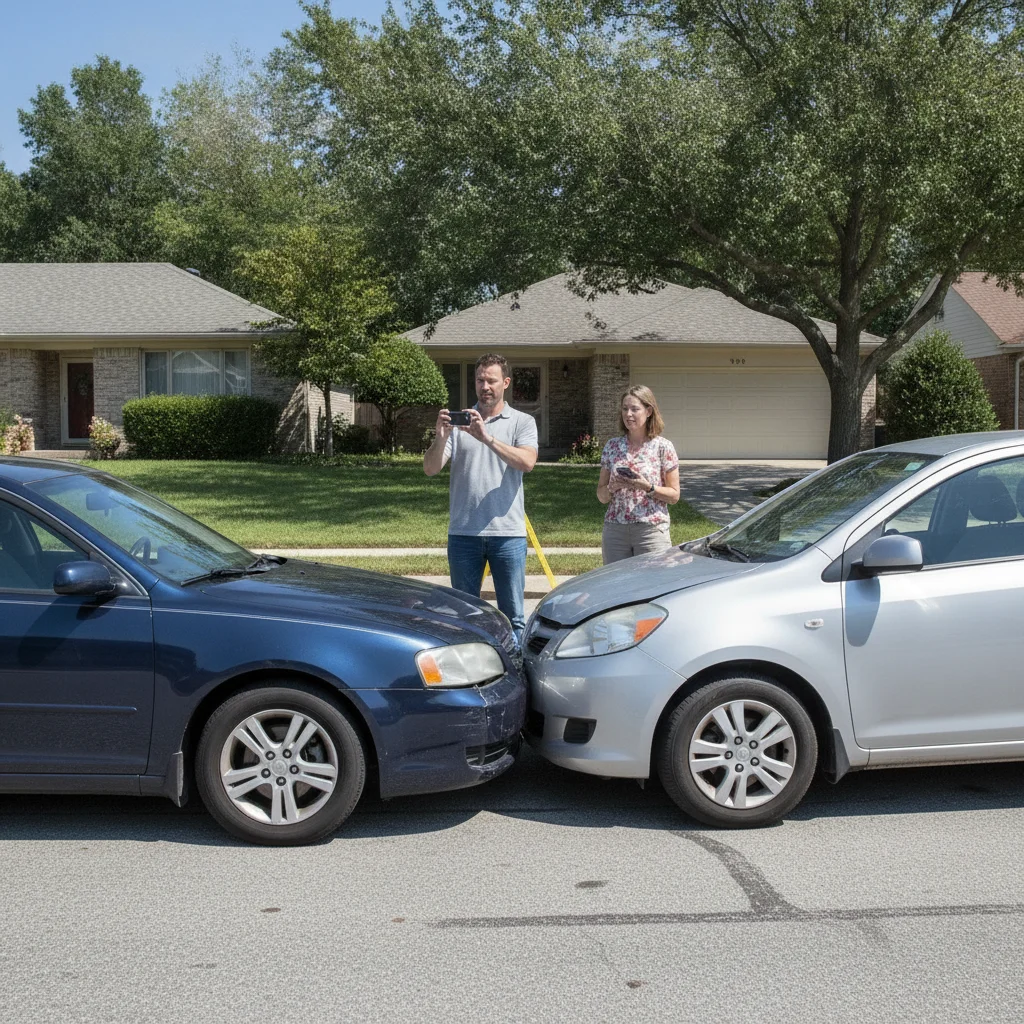
Before vehicles are moved (if it's safe to do so), photograph all four sides of each vehicle, the full accident scene including road markings and signals, any visible damage, skid marks, and weather or lighting conditions. Get the names and phone numbers of any witnesses. Ask the responding officer for the report number so you can retrieve it later.
Notify Your Insurer Promptly
Call your insurer as soon as possible — most policies require timely notification as a condition of coverage. Be accurate and factual. Describe the sequence of events you observed. Do not speculate on fault or offer conclusions. Your insurer's job is to investigate and determine liability; your job is to give them accurate raw material.
Don't Talk to the Other Driver's Insurer Without Preparation
The opposing insurer may contact you quickly, sometimes within hours. You are not obligated to give them a recorded statement, and doing so without understanding your position can be disadvantageous. Speak with your own insurer first. If injuries are involved, consult an attorney before giving any statement to the opposing carrier.
Watch What You Post
Social media posts about the accident — even seemingly innocuous ones — can be discovered and used in litigation. A post saying "crazy day, got in a fender-bender but I'm fine" could be used to challenge injury claims later. Say nothing publicly about the accident until it is fully resolved.
For the full sequence from accident scene through final settlement, our guide on filing a liability claim from scene to settlement walks through each stage in detail.
If you're weighing whether to handle the situation directly with the other driver rather than going through insurance, read our breakdown of settling an accident privately vs. going through insurance before you decide. What feels simpler often carries hidden risks.
If You Already Said Something — Now What?
If you've already apologized or made a statement that could be read as a fault admission, don't panic — but do act quickly. Here's how to manage the situation.
Contact your insurer immediately. Disclose what you said. Insurers handle these situations regularly and can factor your statement into their investigation approach. Trying to hide an on-scene admission is worse than the admission itself — it can be characterized as lack of cooperation or bad faith if discovered later.
Do not attempt to "walk it back" with the other driver. Reaching out to the other driver after the fact to clarify or retract what you said draws more attention to the statement and may be perceived as tampering with a witness.
Build the counter-evidence. Work with your insurer to ensure all physical evidence — photographs, traffic camera footage, witness accounts, vehicle black box data if applicable — is collected and analyzed. A statement is one data point. Solid physical evidence often outweighs it, particularly if fault genuinely lies elsewhere.
Consult an attorney if the stakes are high. If injuries are involved, if the other driver has retained counsel, or if you're facing a significant claim against you, an attorney experienced in auto liability can advise on how your statement is likely to be treated and what strategies are available.
First-time drivers especially can benefit from understanding this full process before an accident ever happens. Our overview of car accident basics for first-time drivers covers the post-crash process from start to finish.
Apology Laws: Limited and Inconsistent
About a dozen U.S. states have "apology laws" that aim to prevent expressions of sympathy from being used as evidence. However, these protections are narrow — most apply only in medical malpractice contexts, not auto accidents. A small number of states extend some protection to traffic incidents, but the scope varies significantly. Don't rely on apology laws as a safety net. They are the exception, not the rule.
Your Memory of the Crash Will Change
Studies on eyewitness memory show that traumatic events produce memories that shift significantly in the hours and days after the event. Details you felt certain about immediately after the crash may feel different 48 hours later — and vice versa. This is normal, but it's another reason not to make definitive statements at the scene. Your recollection is still being formed.

All claims are backed by peer-reviewed research. Sources on request.