Key Takeaways
Option A
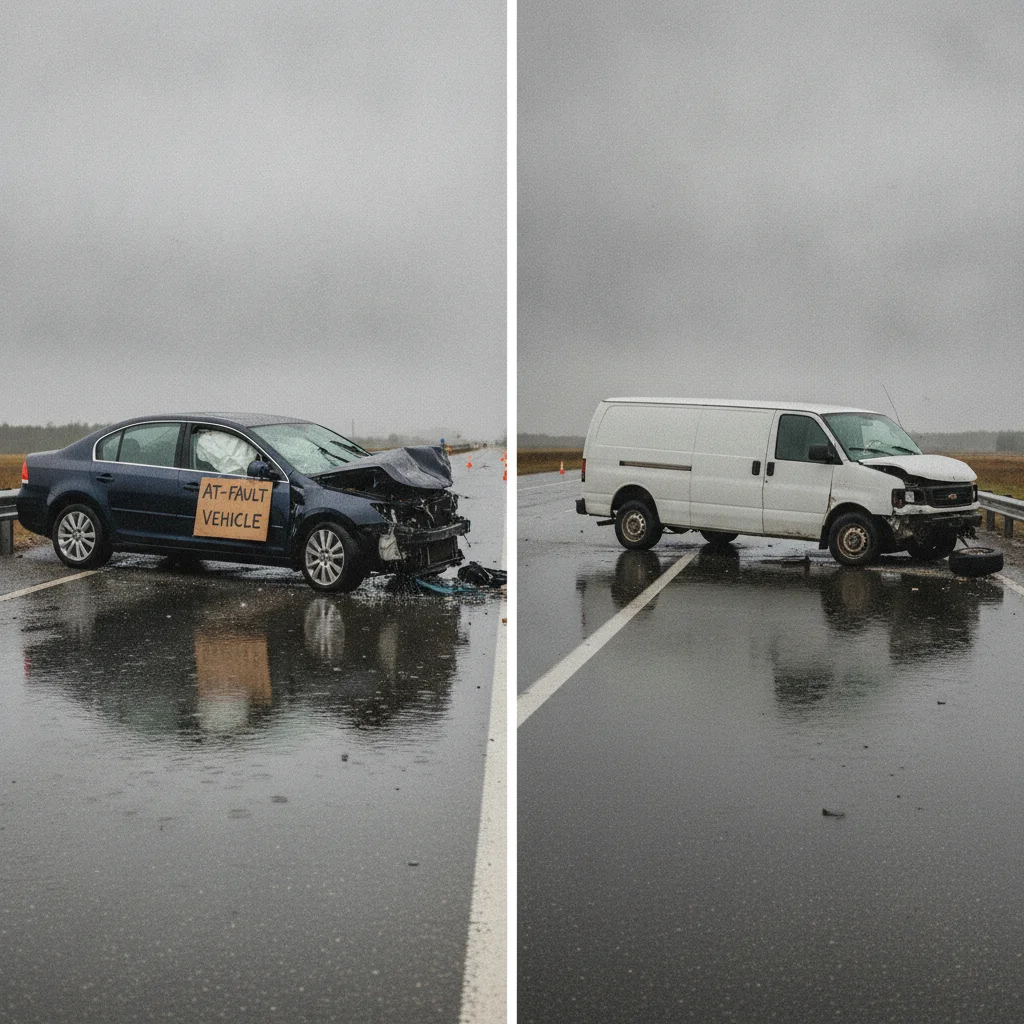
At-Fault Accident
The party legally responsible for causing the crash.
Best for: Understanding what liability triggers, which coverage applies, and what financial exposure the responsible driver faces.
Option B
Not-At-Fault Accident
The party who suffered harm through no action of their own.
Best for: Knowing your rights to compensation, how to file against the other driver's policy, and what protections apply when fault is contested.
If you caused the accident and want to understand your exposure
At-Fault Accident
Know what your liability coverage covers, what your insurer will pay out, and how a fault determination will follow you into your next renewal cycle.
If another driver hit you and you need to recover costs
Not-At-Fault Accident
Filing a third-party claim against the at-fault driver's liability policy is your primary path to compensation for repairs, medical bills, and lost income.
If liability is unclear and both parties share some blame
Not-At-Fault Accident
Even partial fault doesn't disqualify you from recovery in most states — understanding comparative negligence rules helps you pursue the maximum share of compensation you're owed.
If you're shopping for coverage before an accident happens
At-Fault Accident
At-fault scenarios expose the greatest financial risk; ensuring your liability limits are adequate and adding collision coverage protects you from out-of-pocket costs.
If you live in a no-fault state and aren't sure which process applies
Not-At-Fault Accident
In no-fault states, your own PIP coverage pays first regardless of fault — but understanding when you can step outside the no-fault system matters if injuries are serious.
How Fault Is Actually Determined After a Crash
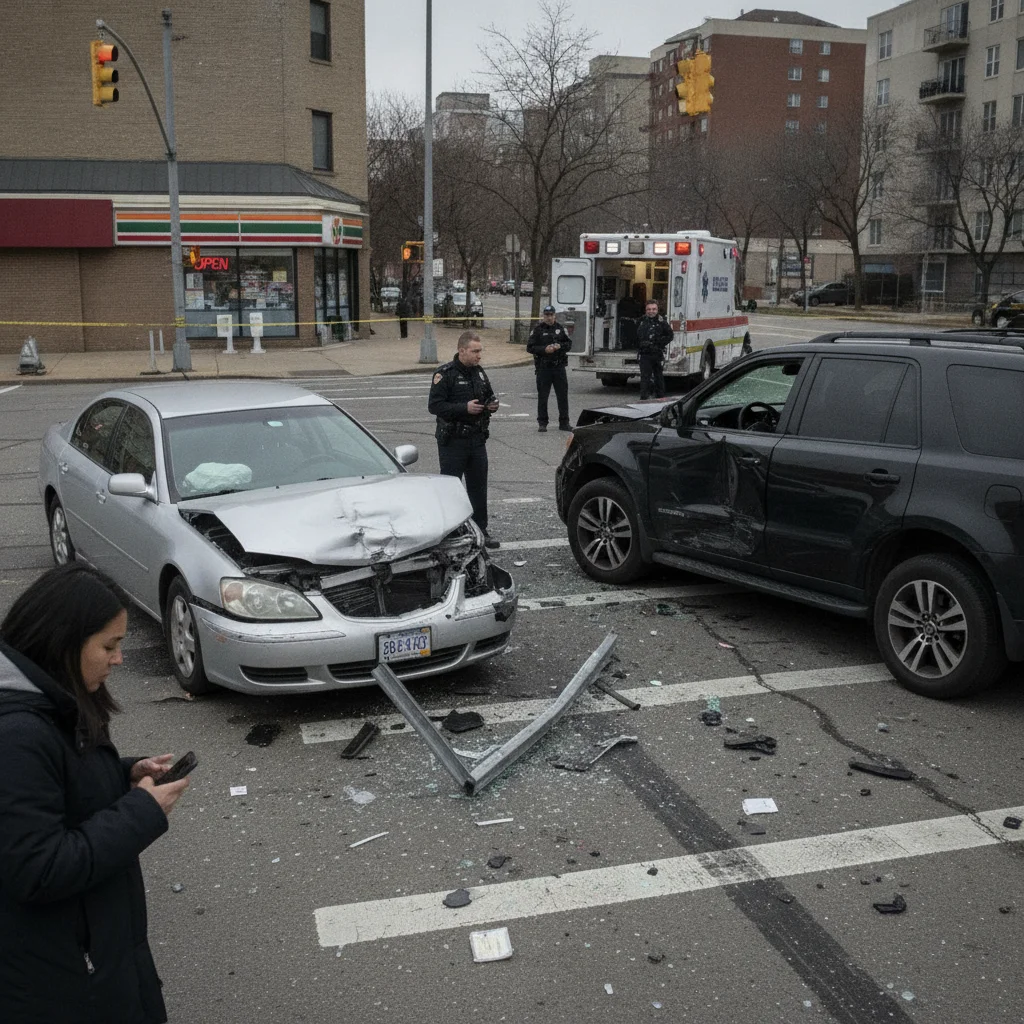
Most drivers assume fault is decided on the spot — whoever rear-ended the other is at fault, end of story. That's sometimes true, but fault determination is a process, not a declaration. Insurers investigate. Police reports carry significant weight. And in disputed cases, courts apply specific legal standards to assign blame.
Here's who contributes to that determination and how:
- Police reports: Officers assess the scene, interview witnesses, and may issue citations. A citation — for running a red light, speeding, or failing to yield — creates a strong presumption of fault, though it isn't legally binding in a civil claim.
- Insurance adjusters: Both insurers send adjusters to evaluate vehicle damage, review photos, and gather statements. Their conclusions drive claim payouts and fault percentages.
- Physical evidence: Skid marks, impact points, airbag deployment data, and vehicle black box data all inform the reconstruction of a collision.
- Witness statements: Disinterested third-party witnesses carry more weight than the drivers themselves.
- Traffic laws: Adjusters and attorneys map the facts against applicable traffic statutes. Violations create legal presumptions that shift the burden to the violating driver.
The outcome of this process determines which party's coverage is triggered and, if the case goes to litigation, how damages are divided. Understanding this matters because the determination isn't final the moment your adjuster calls — it can be challenged.

One often-overlooked point: your own statements can work against you. Saying "I'm sorry" at the scene, even out of reflex, can be cited as an admission of fault. Stick to exchanging information and speaking only to police at the scene.
At-Fault vs. Not-At-Fault: Side-by-Side Comparison
The core difference between being at fault and not at fault is simple: liability. But the downstream effects — on claims, coverage, and premiums — diverge significantly. Use this comparison to understand what each status means in practical terms.
| Criterion | At-Fault Driver | Not-At-Fault Driver |
|---|---|---|
| Liability direction | Your liability pays other party's damages | Other driver's liability pays your damages |
| Vehicle repair coverage | Your collision coverage (minus deductible) | Other driver's property damage liability |
| Medical bills (tort states) | Your health insurance or MedPay; your liability pays theirs | Other driver's bodily injury liability coverage |
| Premium impact at renewal | Likely surcharge of 20–45% | Often no increase; varies by insurer and state |
| Right to sue | Limited; you caused the harm | Yes, in tort states for injuries and damages |
| Deductible responsibility | You pay your collision deductible | May pay deductible upfront, recovered via subrogation |
| Effect on driving record | Accident on record; points possible if cited | Accident noted; typically no points assessed |
| Insurer's role | Your insurer defends and pays claims | Your insurer may assist; you claim against other insurer |
A few nuances worth unpacking:
- Liability coverage direction: When you're at fault, your liability coverage pays the other driver's damages. When you're not at fault, you file a third-party claim against the at-fault driver's liability policy — or use your own uninsured/underinsured motorist coverage if the other driver lacks adequate insurance.
- Collision coverage: Regardless of fault, your own collision coverage can pay to repair your vehicle — subject to your deductible. If you were not at fault, your insurer may later pursue the at-fault driver's insurer through subrogation to recoup what they paid, and your deductible is typically refunded in that case.
- Premium impact: At-fault accidents almost always trigger a rate increase at renewal. Not-at-fault accidents may or may not raise your rate depending on your state, your insurer, and your policy's accident forgiveness terms. See how fault determination shapes what insurers charge for the full breakdown.
38%
Average premium increase after an at-fault accident
According to a 2024 analysis by the Insurance Information Institute, at-fault accidents raise premiums by an average of 38% at renewal, though this varies significantly by insurer and state.
6 million+
Police-reported crashes annually in the U.S.
The National Highway Traffic Safety Administration reports over 6 million police-reported crashes per year, generating the fault-determination process described in this article.
12 states
No-fault states requiring PIP coverage
As of 2024, 12 states and Puerto Rico operate under no-fault insurance systems where PIP pays first regardless of who caused the accident.
4 states
States using strict contributory negligence
Only Alabama, Maryland, North Carolina, and Virginia (plus D.C.) still apply contributory negligence — where any fault on your part bars all recovery.
The Role of Negligence Laws in Assigning Fault
Fault is rarely black and white. In many accidents, both drivers contributed — one ran a yellow light, the other was slightly over the speed limit. How states handle shared responsibility varies significantly, and it directly affects how much compensation you can recover.
Pure Comparative Negligence
Used in states like California, New York, and Florida, pure comparative negligence allows you to recover damages even if you were 99% at fault — your recovery is simply reduced by your percentage of fault. If you suffered $50,000 in damages and were found 40% at fault, you recover $30,000.
Modified Comparative Negligence
Most states use a modified version with a threshold — typically 50% or 51%. If your share of fault exceeds that threshold, you recover nothing. If you're at or under it, your recovery is reduced proportionally. This is the most common framework in the U.S.
Contributory Negligence
Only a handful of states — including Alabama, Maryland, North Carolina, and Virginia — still follow the strict contributory negligence rule. Under this standard, any fault on your part, even 1%, bars you from recovering any compensation. It's a harsh rule that makes documentation and legal representation especially critical in those states.
For a deeper look at how these frameworks interact with your claim, see how comparative vs. contributory negligence affects your accident claim.
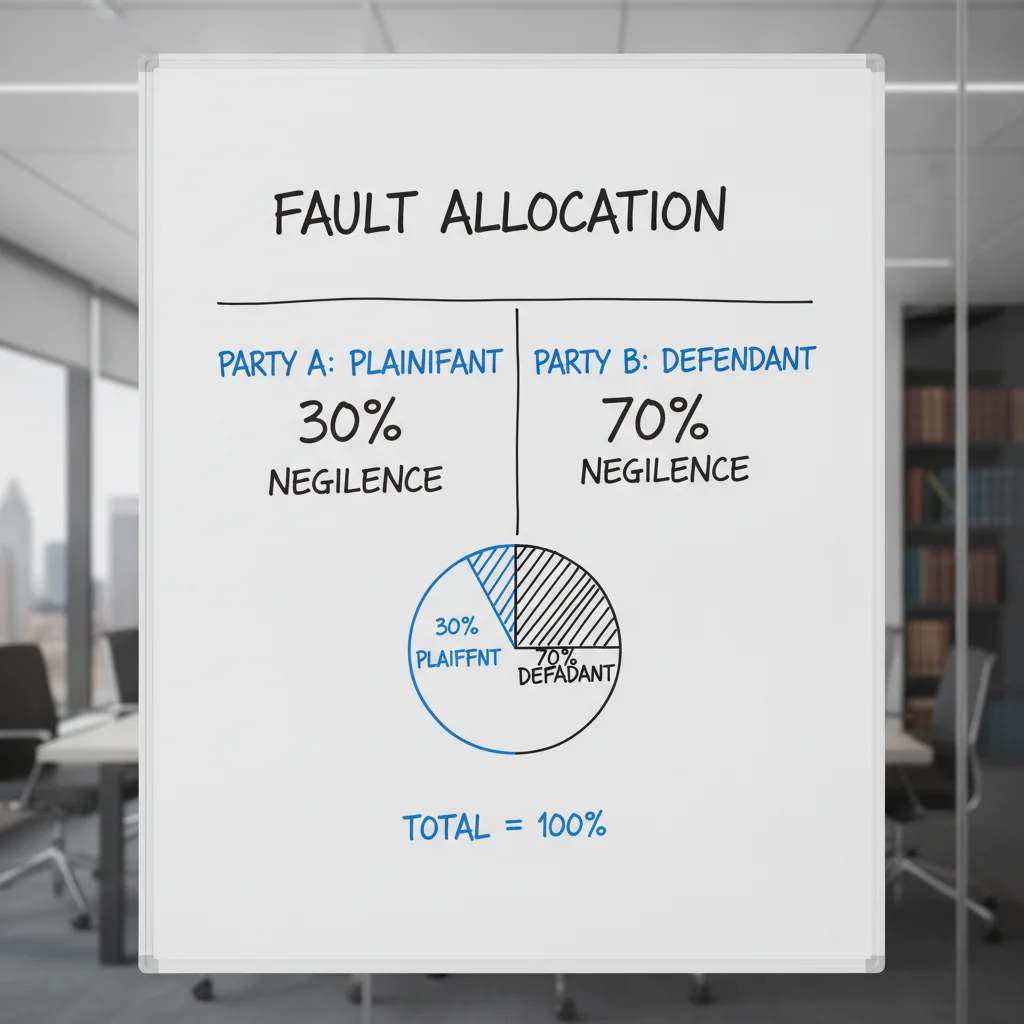
Understanding which standard applies in your state before an accident happens — not after — is one of the most underrated pieces of insurance literacy. It shapes both how aggressively you should pursue a claim and how much uninsured motorist coverage you need as a backstop.
Telematics Data and Fault Disputes
Modern vehicles collect a significant amount of data — speed, braking, steering input, and even seatbelt status — in the moments before a collision. This Event Data Recorder (EDR) information can be subpoenaed in litigation or requested by insurers during major claims investigations. If you believe the other driver's behavior caused the crash, your attorney can request their vehicle's EDR data as part of discovery. Conversely, know that your own vehicle's data may be used against you.
Not-At-Fault Claims Still Create a Claims History
Filing any claim — even one you didn't cause — creates a record in the CLUE (Comprehensive Loss Underwriting Exchange) database that insurers check when you apply for coverage. Most insurers won't penalize you for a single not-at-fault claim, but multiple claims in a short window can flag you as a higher risk. If the not-at-fault damage is minor and below your deductible, it may be worth filing directly against the other driver's insurer without involving your own policy at all.
No-Fault States: When Fault Determination Matters Less
In 12 states and Puerto Rico, the claims process begins differently regardless of who caused the crash. These are no-fault states, and they require drivers to carry Personal Injury Protection (PIP) coverage that pays their own medical bills and lost wages up to policy limits — regardless of fault. Your own insurer handles your medical claims first.
That doesn't mean fault never matters in no-fault states. It matters plenty — just for different things:
- Property damage is still handled on a fault basis in most no-fault states. If the other driver hit you, their liability coverage still pays for your vehicle.
- Serious injury thresholds: Most no-fault states allow you to step outside the PIP system and sue the at-fault driver if injuries meet a "serious injury" threshold — typically defined as significant disfigurement, permanent limitation, or medical expenses exceeding a statutory dollar amount.
- Fault still affects premiums: Even in no-fault states, insurers track who caused accidents and adjust rates accordingly.
If you live in a no-fault state and aren't sure how your coverage layers work, how liability coverage rules change by state gives you the full framework. And for a primer on what liability coverage actually covers, the liability coverage hub is a solid starting point.
Protecting Yourself After an Accident: Practical Steps
Fault is determined after the fact, but the evidence you collect — or fail to collect — in the first 30 minutes shapes that determination. Here's what to do regardless of which driver you think is responsible:
- Check for injuries and call 911. A police report is foundational. Even in low-damage accidents, having an officer document the scene creates an official record.
- Document everything. Photograph vehicle positions before they're moved, damage to both vehicles, skid marks, traffic signals, weather conditions, and any visible injuries. More is always better.
- Exchange information. Name, driver's license number, insurance carrier, policy number, license plate, and contact details. Get witness information too.
- Don't admit fault. Describe facts to police. Don't speculate, apologize, or assign blame — that includes to the other driver and on social media afterward.
- Notify your insurer promptly. Even if you believe you were not at fault, notify your own insurer. Delayed reporting can complicate claims and may violate your policy terms.
- Get a copy of the police report. Most departments allow you to request one within a few days. Review it for accuracy — errors in police reports can be corrected.
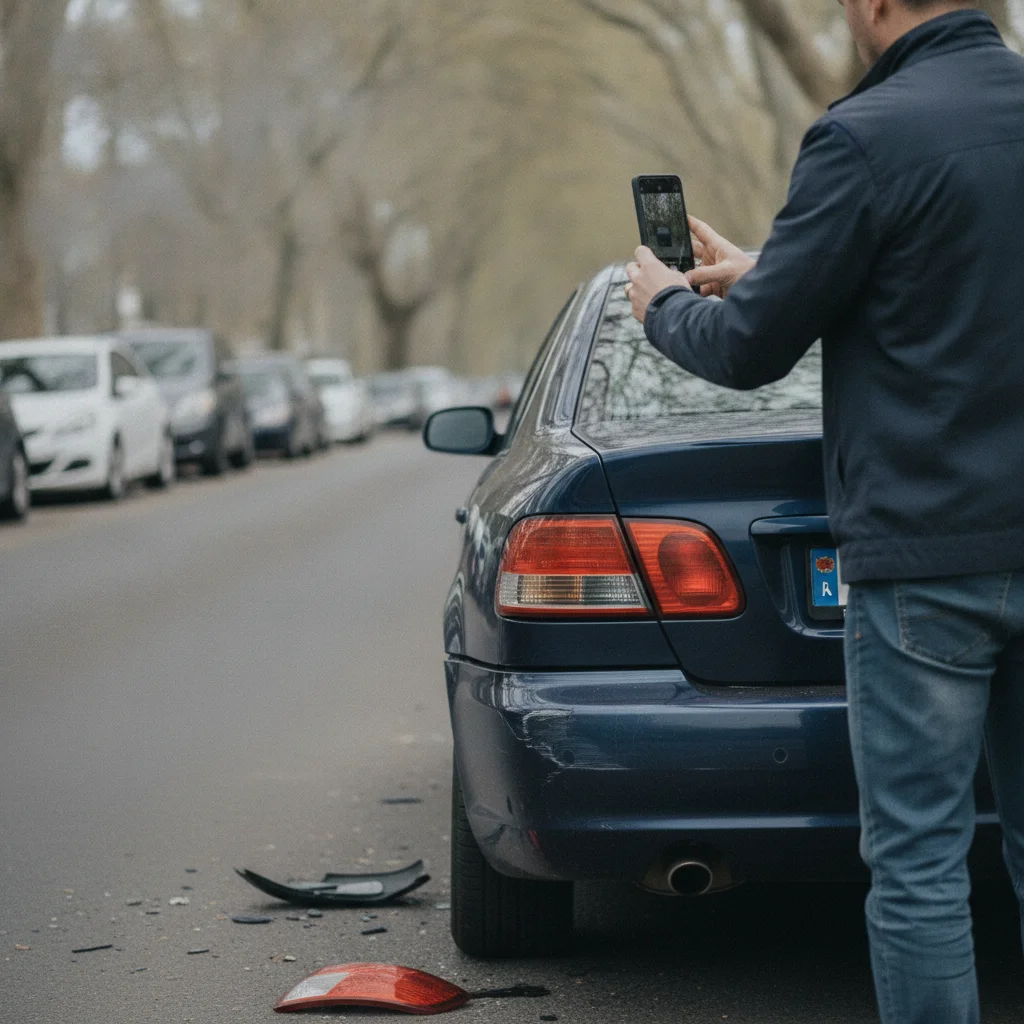
If fault is disputed — meaning both drivers blame each other — the investigation becomes more involved. Insurers may use accident reconstruction experts, subpoena traffic camera footage, or rely on telematics data from the vehicles. what to do when both drivers blame each other walks through that process specifically.
One additional protection worth considering: dashcam footage has become one of the most decisive pieces of evidence in fault disputes. A forward-facing dashcam is a low-cost investment that can resolve a disputed claim in minutes.
What Happens to Your Insurance After Fault Is Assigned
Once fault is determined, the financial consequences flow in different directions depending on which side of the ledger you're on.
If You're Found At Fault
Your liability coverage pays the other driver's vehicle repair costs and medical bills up to your policy limits. If damages exceed your limits, you're personally responsible for the remainder. Your insurer may also pay your own repairs through collision coverage, but you'll owe your deductible. At renewal, expect a surcharge — average at-fault accident rate increases range from 20% to 45% depending on the insurer and severity of the claim. Some insurers offer accident forgiveness that waives the first at-fault incident for long-standing customers.
If You're Found Not At Fault
You file a third-party claim against the at-fault driver's liability insurer. You're entitled to compensation for vehicle damage, medical expenses, lost wages, and pain and suffering (in tort states). If the at-fault driver is uninsured or underinsured, your UM/UIM coverage steps in. Your own collision coverage can also cover your vehicle immediately while the liability dispute is sorted — you pay your deductible upfront, then recover it through subrogation if the other insurer accepts liability.
One thing many drivers don't realize: even not-at-fault accidents can trigger a rate review at some insurers, particularly if you've had multiple claims in a short period. The frequency of claims — not just fault — factors into how some companies assess risk.
Telematics Data and Fault Disputes
Modern vehicles collect a significant amount of data — speed, braking, steering input, and even seatbelt status — in the moments before a collision. This Event Data Recorder (EDR) information can be subpoenaed in litigation or requested by insurers during major claims investigations. If you believe the other driver's behavior caused the crash, your attorney can request their vehicle's EDR data as part of discovery. Conversely, know that your own vehicle's data may be used against you.
Not-At-Fault Claims Still Create a Claims History
Filing any claim — even one you didn't cause — creates a record in the CLUE (Comprehensive Loss Underwriting Exchange) database that insurers check when you apply for coverage. Most insurers won't penalize you for a single not-at-fault claim, but multiple claims in a short window can flag you as a higher risk. If the not-at-fault damage is minor and below your deductible, it may be worth filing directly against the other driver's insurer without involving your own policy at all.
The most important thing you can do before any accident happens is understand your own policy's coverage limits and exclusions. Liability minimums required by most states are often dangerously low — $25,000 in bodily injury per person in many states won't cover a night in the hospital. Increasing your liability limits costs relatively little and protects you from life-altering out-of-pocket exposure when fault lands on your side.

All claims are backed by peer-reviewed research. Sources on request.