Key Takeaways
Option A
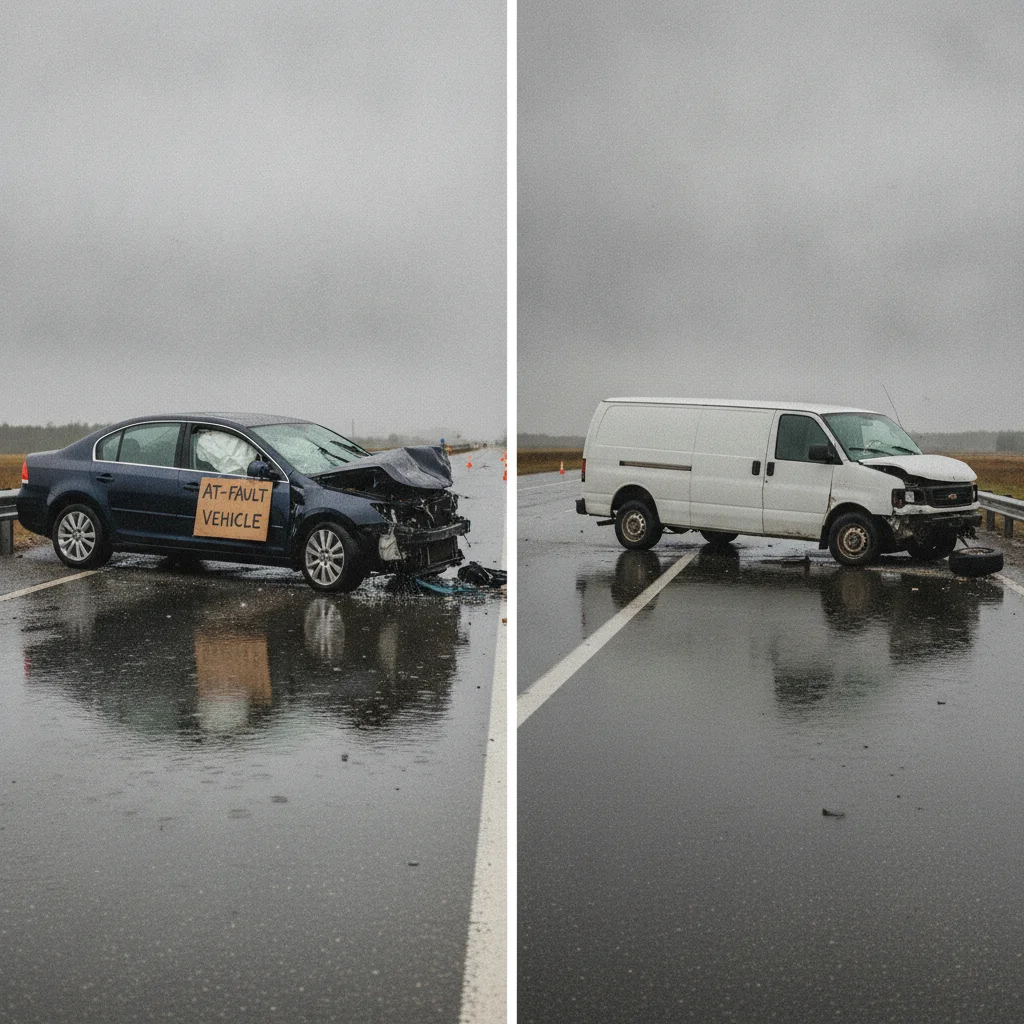
At-Fault Accident
The rate-raiser insurers penalize most heavily.
Best for: Understanding when you are financially and legally responsible for a collision and how that drives long-term premium increases.
Option B
Not-at-Fault Accident
A claim that may cost you less than you think.
Best for: Drivers who were hit by another motorist and want to know whether filing a claim will trigger a rate hike on their own policy.
If you caused a collision and want to know what to expect at renewal
At-Fault Accident
Your premium will almost certainly rise. Understanding the surcharge timeline and shopping competing carriers before renewal can limit long-term cost.
If another driver hit you and you're deciding whether to file with your own insurer
Not-at-Fault Accident
Filing through your own insurer is often faster, but confirm your carrier's not-at-fault surcharge policy first to avoid an unexpected rate bump.
If you've had multiple incidents regardless of fault
At-Fault Accident
Insurers assess overall risk. Multiple not-at-fault claims can still flag you as a higher-risk driver and lead to non-renewal in some cases.
If you live in a no-fault insurance state
Not-at-Fault Accident
In no-fault states your own PIP coverage pays first regardless of who caused the crash, making the fault distinction less straightforward at the claims stage.
If you have accident forgiveness on your current policy
At-Fault Accident
Accident forgiveness is designed specifically to absorb the first at-fault incident without a surcharge — use it strategically before shopping for a new policy.
How Fault Is Actually Determined After a Crash
Before an insurer can decide whether to raise your rate, it has to decide who caused the accident. That determination is rarely as simple as one driver admitting responsibility at the scene. Insurers conduct their own claims investigations, which typically incorporate the police report, witness statements, photos, dashcam footage, and applicable state traffic statutes.
Most states use a comparative negligence framework, which means fault can be split between multiple parties. If you are found 30% at fault for a collision and the other driver is 70% responsible, you may bear partial liability — and your insurer may apply a partial surcharge accordingly. A handful of states still use contributory negligence, where even minimal fault on your part can bar you from recovering damages from the other driver at all.
The police report carries significant weight, but it is not the final word. Insurers routinely make their own fault determinations that differ from what an officer wrote at the scene. If you believe the fault assessment is wrong, you can dispute it through your insurer's internal review process or, in some cases, through your state's department of insurance.

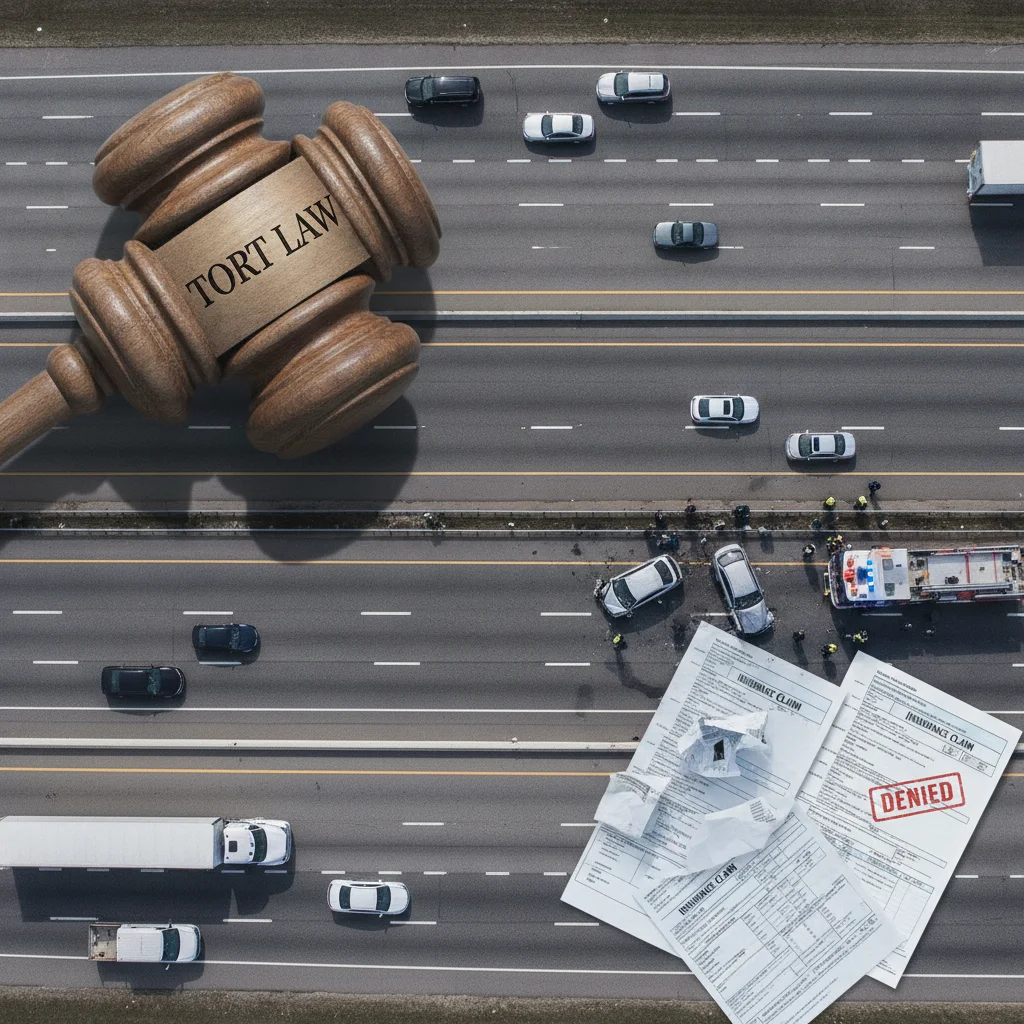
Understanding fault determination matters because it is the single biggest lever in post-accident pricing. How fault rules differ by state is a separate but closely related question — the tort system your state uses shapes how liability flows between insurers and affects whose policy absorbs what costs.
What an At-Fault Accident Does to Your Premium
An at-fault accident is the most direct path to a higher auto insurance premium. Insurers treat it as evidence that you are a statistically elevated risk to insure, and they price accordingly at your next renewal — sometimes well before the renewal date if the claim closes quickly.
41%
Average premium increase after one at-fault accident
According to a 2023 rate analysis by Bankrate, drivers with a single at-fault accident pay an average of 41% more annually than drivers with clean records.
3–5 years
How long an at-fault accident affects your rate
Most insurers and state regulations allow at-fault accidents to be rated on your policy for three to five years before dropping off your record.
$1,469
Average additional annual cost after at-fault accident
Based on 2023 national average auto insurance data, a single at-fault accident adds roughly $1,469 per year to the average driver's premium over the surcharge period.
~7
States that ban not-at-fault surcharges by statute
A small number of U.S. states have enacted consumer protection laws explicitly prohibiting insurers from surcharging drivers for accidents where they bear no fault.
The typical surcharge for a first at-fault accident ranges from 20% to 50% above your pre-accident base rate, though the exact number depends on the severity of the claim, your prior driving history, your state's regulatory environment, and the specific carrier's pricing model. A minor fender-bender resulting in a $2,000 property damage claim is priced differently than a collision that triggers bodily injury liability payments of $80,000.
The surcharge doesn't last forever, but it does last a while. Most carriers apply an at-fault accident surcharge for three to five years, depending on state regulation and company policy. In California, for instance, insurers must follow specific surcharge rules set by the state's Department of Insurance. In other states, carriers have more pricing latitude.
Compounding the base surcharge is the loss of any good-driver discount you were receiving. If your policy included a 20% good-driver discount and you now face a 30% surcharge, your effective rate change is closer to 50 percentage points from where you started — a meaningful difference on an annual premium of $1,500 or more.
| Criterion | At-Fault Accident | Not-at-Fault Accident |
|---|---|---|
| Typical rate impact | 20–50% premium increase | Usually no increase |
| Surcharge duration | 3–5 years on record | Typically no surcharge applied |
| Good-driver discount | Usually lost immediately | Typically preserved |
| CLUE report appearance | Yes — with fault noted | Yes — listed as not-at-fault |
| Accident forgiveness eligibility | Yes, if enrolled before claim | Not needed; no surcharge expected |
| Impact in no-fault states | Still rated; your PIP pays first | Complex; PIP applies regardless |
| Carrier non-renewal risk | Higher after repeat incidents | Low, unless multiple claims filed |
| State protections available | Surcharge limits in some states | Surcharge bans in several states |
One option worth reviewing is accident forgiveness. Some carriers offer this as a built-in feature for long-tenured customers, others as a paid add-on. If it applies, your first at-fault accident does not trigger a surcharge. However, accident forgiveness typically does not transfer to a new insurer, so it's worth factoring that in if you're considering switching carriers after a claim. How insurers calculate your liability premium explains the full slate of variables that interact with your accident history at pricing time.
What Happens to Your Rate After a Not-at-Fault Accident
The general rule is reassuring: if you didn't cause the accident, your insurer typically will not raise your rate. The logic is straightforward — you didn't exhibit risky behavior, so there's no actuarial basis for reclassifying you as a higher-risk driver.
But "typically" is doing real work in that sentence. Several important exceptions apply.
- State law variations: A handful of states — including California, Oklahoma, and Connecticut — have statutes that explicitly prohibit insurers from surcharging not-at-fault accidents. Many states have no such prohibition, leaving carriers free to apply modest increases if they choose.
- Carrier-specific policies: Even in unregulated states, most major insurers don't surcharge not-at-fault claims on a first occurrence. But some do apply increases after multiple not-at-fault accidents in a short window, treating claim frequency itself as a risk signal.
- Comprehensive claims: A windshield crack, hail damage, or a deer strike — all covered under comprehensive, not collision — are almost universally treated as not-at-fault events. These rarely trigger surcharges, though filing several in one policy period can affect renewal offers.
- Uninsured motorist claims: If you were hit by an uninsured driver and filed a claim under your own UM/UIM coverage, some insurers count this as a claim against your policy regardless of fault.

The practical takeaway: before filing through your own policy after a not-at-fault accident, ask your insurer directly whether the claim will affect your rate. Get the answer in writing if possible. You can also review whether to file with your own insurer or go through the at-fault driver's policy to weigh the trade-offs more fully before deciding.
No-Fault States Add Another Layer
If you live in one of the roughly a dozen U.S. no-fault states — including Florida, Michigan, New York, and New Jersey — your own Personal Injury Protection (PIP) coverage pays your medical expenses after a crash regardless of who caused it. This doesn't eliminate the fault question for property damage or for cases that exceed PIP thresholds, but it does mean your own policy takes the first financial hit in more scenarios than in traditional tort states. Drivers in no-fault states should pay particular attention to their insurer's not-at-fault surcharge policies, since their own carrier is involved in more claim payouts by design.
The Long-Term Financial Picture: Three to Five Years of Elevated Rates
A single at-fault accident doesn't just affect your next renewal — it follows your driving record for years. The financial math is worth running concretely. Consider a driver paying $1,400 per year in premiums who was receiving a 15% good-driver discount. After an at-fault accident, that discount disappears and a 35% surcharge is applied. The new annual premium becomes approximately $1,890 — a $490 annual increase. Over three years, that's nearly $1,500 in additional premium costs, before accounting for any deductible paid at the time of the claim.
For higher-base-rate drivers — urban residents, drivers of newer vehicles, younger motorists — the dollar impact is proportionally larger. And if the at-fault accident involved serious bodily injury, the driver may be flagged in the CLUE (Comprehensive Loss Underwriting Exchange) database, which insurers check when you apply for a new policy. This can make switching carriers harder, not easier, in the years immediately following a serious at-fault claim.
Not-at-fault accidents also appear in CLUE, but most carriers and most states treat them as neutral claim history rather than adverse underwriting information. Still, if you've filed three not-at-fault claims in 18 months, an underwriter reviewing your CLUE report may flag claim frequency as a pattern worth pricing for. Why your premium can rise at renewal even without a single claim explains how insurers use broader market and loss data alongside individual driving records to set rates.

Strategies to Limit the Rate Impact After an At-Fault Accident
An at-fault accident doesn't mean you're locked into elevated premiums at your current carrier for the full surcharge window. Several strategies can soften the financial blow.
Shop the market at renewal
Different carriers weigh accident history differently. Some specialize in drivers with imperfect records and price them more competitively than standard-market carriers. Get at least three to four quotes before renewing — do this before your policy lapses, since a lapse itself is a negative rating factor.
Take a defensive driving course
Many states require insurers to offer a discount — often 5–10% — to policyholders who complete an approved defensive driving or accident prevention course. In some cases, these courses can also offset points on your driving record, which carries its own insurance rating impact.
Review your coverage and deductibles
If budget pressure is acute, consider whether raising your collision deductible from $500 to $1,000 makes sense given your financial cushion. The premium savings can partially offset the surcharge, though this approach shifts more risk to you in the event of a subsequent claim.
Ask about accident forgiveness retroactively
Some carriers will add accident forgiveness to an existing policy before a claim is closed and rated. Once the accident has been rated onto the policy, it's too late. If you have a pending at-fault claim and haven't yet received a renewal with a surcharge, contact your insurer to ask whether forgiveness can be applied.
Time your policy switch carefully
Surcharges are applied by your current carrier, not universally by all carriers. Switching to a new insurer resets the pricing relationship, though the new insurer will see the accident in your CLUE report and your MVR (motor vehicle record) and will price it accordingly. The switch may still be advantageous if the new carrier's base rates or accident surcharge multipliers are lower than your current provider's.

A Side-by-Side Look at How Insurers Treat Each Scenario
The table above captures the core differences between at-fault and not-at-fault accidents across the variables that matter most to your wallet. But a few nuances are worth expanding on before drawing firm conclusions.
Severity matters more than fault alone. A minor at-fault fender-bender with a $900 claim may trigger a smaller surcharge than a catastrophic not-at-fault accident where your insurer paid out $75,000 in uninsured motorist coverage. The dollar value of the claim affects how insurers categorize the risk — fault is the primary factor, but claim severity is a meaningful secondary one.
The definition of "not-at-fault" can be contested. In states with comparative negligence rules, an insurer might determine you were 20% at fault in an accident where you believed yourself entirely blameless. That partial assignment of fault can still trigger a partial surcharge — smaller than a fully at-fault determination, but not zero.
First accident vs. repeat incidents: The trajectory changes significantly for drivers who have multiple accidents within a three-to-five-year lookback window. Even if the second and third incidents are not-at-fault, some carriers will non-renew or significantly increase rates for high-frequency claimants. Insurers use statistical models that treat accident involvement — regardless of cause — as a proxy for overall exposure risk.
The clearest takeaway from the data is that fault determination is consequential but not the only variable in play. Managing your total claims history, choosing your coverage options strategically, and understanding your state's regulatory environment are all levers that informed drivers can use to their advantage.

All claims are backed by peer-reviewed research. Sources on request.