Key Takeaways
Why Car Age Changes the Coverage Equation
When you drove a new car off the lot, full coverage made obvious sense. The vehicle was worth tens of thousands of dollars, possibly financed by a lender who required it. Fast-forward five or eight years — maybe more — and the math looks completely different. Your car has lost a significant portion of its original value through depreciation, and yet many drivers are still paying premiums sized for a vehicle worth twice as much.
This isn't about cutting corners on protection. It's about paying for coverage that actually pays off. Insurance is a financial instrument, and like any financial instrument, you need to evaluate whether the cost justifies the potential return. For physical damage coverage — collision and comprehensive — that return is capped at your car's actual cash value (ACV): what the vehicle is worth today in the open market, minus your deductible. If your car's ACV is $5,000 and your deductible is $1,000, the most you can collect on a total-loss claim is $4,000. If you're paying $900 a year for that coverage, the math starts to get uncomfortable.
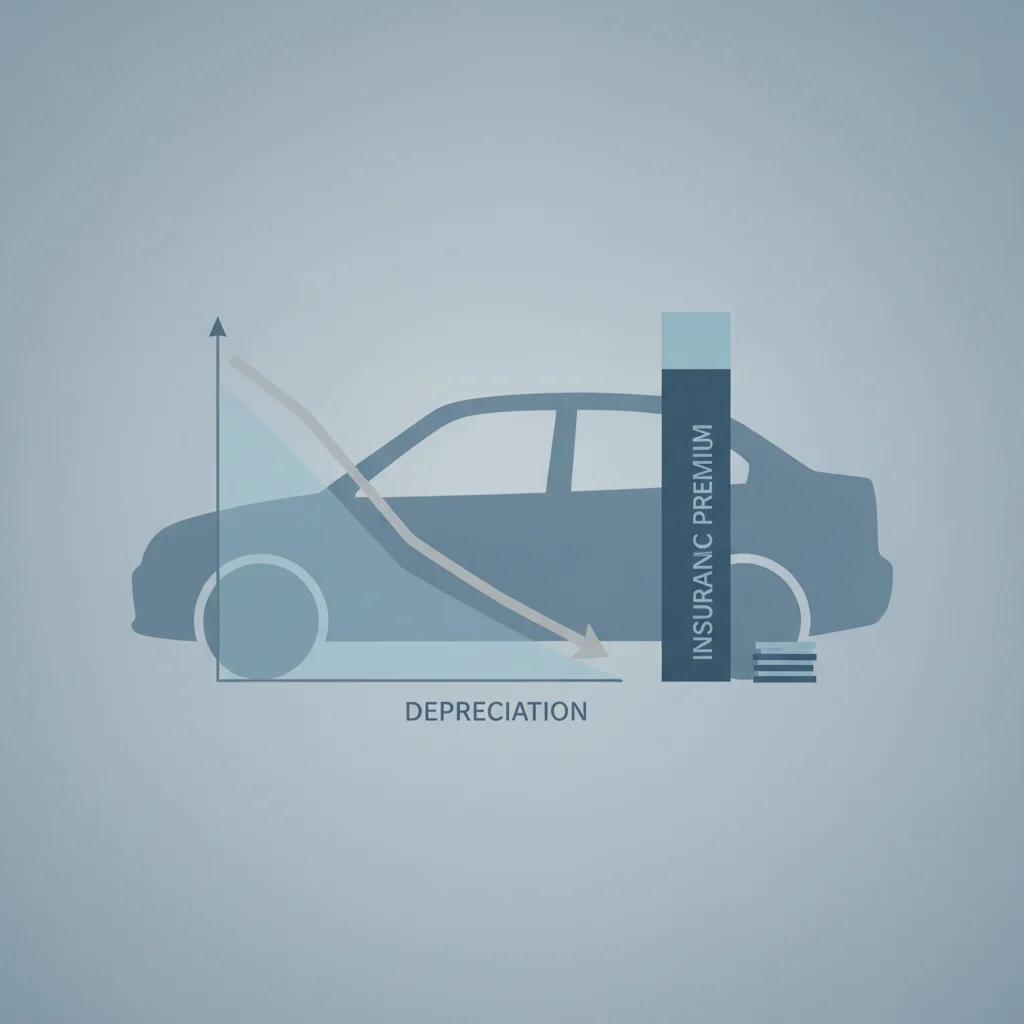
Depreciation basics play a central role here. A vehicle typically loses 15–25% of its value in the first year and continues depreciating throughout its life, though the rate slows over time. By years five through eight, many vehicles have settled into a relatively stable low value — which is exactly when most drivers should be doing a serious coverage audit.
The goal of this guide is to walk you through that audit in a structured, repeatable way. Not just once, but at every renewal, because your car's value — and your financial situation — keeps changing.
What You Need Before You Start
Before you can make smart coverage decisions, you need accurate numbers. Guessing at your car's value or your current premium breakdown will produce bad conclusions. Gather the following:
What you will need
With these in hand, you're ready to run the actual analysis. If you're not sure where your policy currently stands on collision vs. comprehensive vs. liability, call your insurer or log into your account portal — most carriers now show a clear line-item breakdown online.
Kelley Blue Book (kbb.com)
Look up your vehicle's current private-party or trade-in value to establish its actual cash value for the coverage calculation.
Edmunds True Market Value
Cross-check your KBB valuation with a second source for a more accurate ACV estimate.
Insurance Declarations Page
Provides the exact breakdown of what you're currently paying per coverage type and your deductible levels.
Online Insurance Quote Tools
Get competing quotes quickly to determine if your current insurer is pricing your revised coverage competitively.
Spreadsheet or Calculator
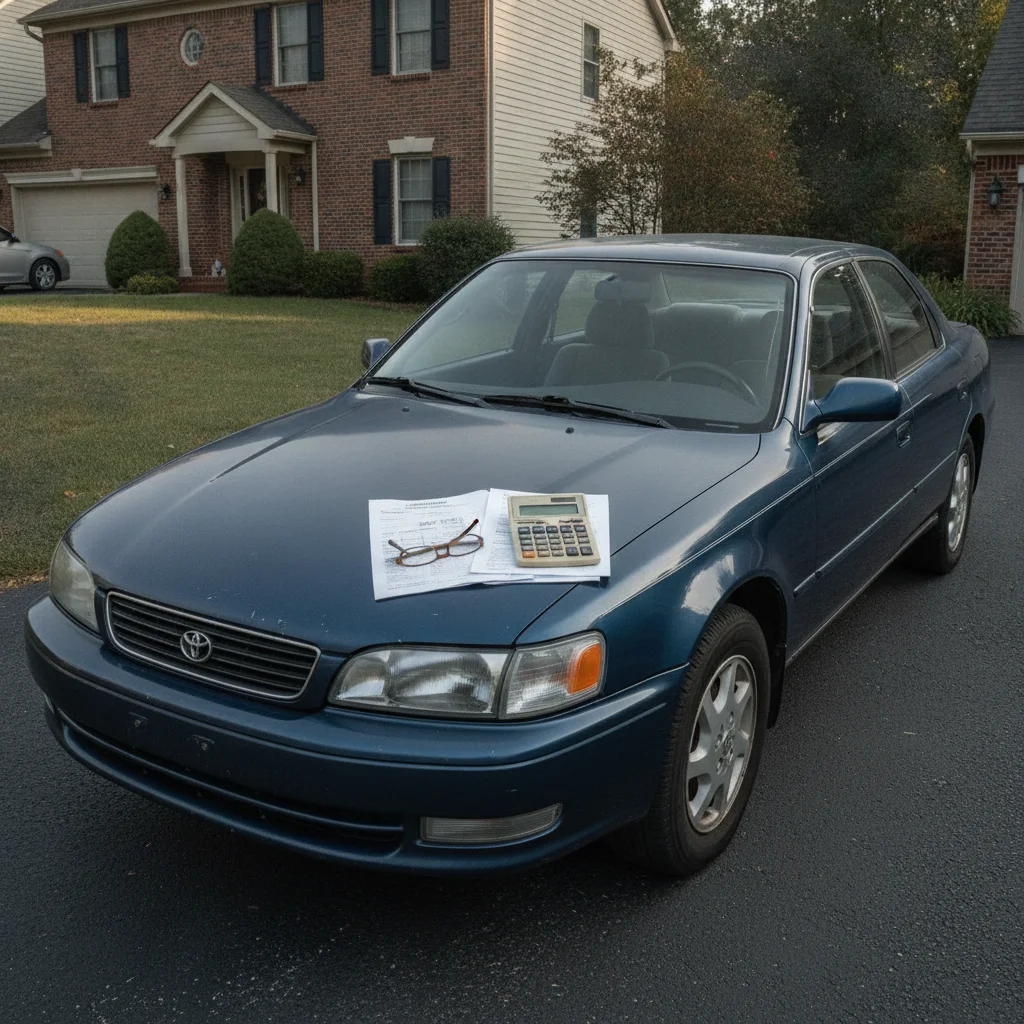
Run the 10% rule calculation and break-even analysis to compare premium cost against maximum possible claim payout.
Step-by-Step: Auditing and Adjusting Your Coverage
Follow these steps in order. Each builds on the previous one, and skipping ahead often leads to decisions that look smart in isolation but miss the full picture.
Establish Your Car's Actual Cash Value
Look up your vehicle's current value on at least two sources — Kelley Blue Book and Edmunds are the standard references. Use the private-party value in your car's actual condition, not the retail or trade-in figure. If your car has high mileage, visible damage, or mechanical issues, adjust down accordingly. Average the two figures. This number is your ACV baseline — the absolute ceiling on any physical damage claim payout.
For example: KBB says $6,200, Edmunds says $5,800. Your ACV baseline is roughly $6,000.
Identify Your Maximum Possible Claim Payout
Subtract your deductible from your ACV baseline. This is the most your insurer will ever pay out on a total-loss collision or comprehensive claim.
Formula: Maximum payout = ACV − Deductible
Using the example above with a $1,000 deductible: $6,000 − $1,000 = $5,000 maximum payout.
If your car is worth significantly less than you thought, or your deductible is high relative to the value, this number can get surprisingly small — and that matters in the next step.
Apply the 10% Rule to Your Physical Damage Premiums
Add up your annual collision premium and your annual comprehensive premium. Divide that total by your ACV baseline and express it as a percentage.
Formula: (Annual collision + comprehensive premium) ÷ ACV = Coverage cost ratio
If your combined physical damage premium is $800 per year and your ACV is $6,000: $800 ÷ $6,000 = 13.3%
The widely-used rule of thumb: if this ratio exceeds 10%, the financial case for keeping full physical damage coverage is weak. You're paying more than a dime per dollar of maximum potential benefit, every single year, before you ever file a claim.
Calculate the Break-Even Point
The break-even calculation tells you how many claim-free years you'd need to "pay back" what you'd collect on a total-loss claim.
Formula: Maximum payout ÷ Annual physical damage premium = Break-even years
Example: $5,000 ÷ $800 = 6.25 years
This means you'd need to drive 6+ years without a claim just to break even on the premium dollars spent versus the maximum you could collect. The longer the break-even period, the weaker the case for keeping the coverage at its current cost.
Check Your Lender or Lienholder Requirements
If your vehicle is still financed or leased, you almost certainly have a contractual obligation to carry comprehensive and collision coverage regardless of the 10% math. Check your loan agreement or call your lender before making any changes. Dropping required coverage while a loan is outstanding can trigger a force-placed insurance policy, which is expensive and covers only the lender's interest — not yours.
If the loan is paid off, skip ahead — you have no lender-imposed constraints.
Evaluate Your Liability and UM/UIM Limits Independently
Separate this evaluation completely from the physical damage question. Look at your current liability limits — bodily injury and property damage — and ask whether they reflect your actual financial exposure, not just the state minimum. Most insurance professionals recommend at least 100/300/100 ($100,000 per person, $300,000 per occurrence, $100,000 property damage) for drivers with assets to protect.
Also check your uninsured/underinsured motorist limits. If you're dropping collision, UM coverage becomes your primary backstop when an at-fault uninsured driver hits your car. Make sure those limits are adequate.
Make the Changes and Confirm in Writing
Once you've decided which coverage to drop, reduce, or increase, contact your insurer — by phone, online portal, or app. Request a revised declarations page confirming all changes before the effective date. Do not rely on verbal confirmation alone.
If you're shopping for a new policy with adjusted coverage, get at least two to three competing quotes. Insurers price physical damage and liability very differently, and switching carriers at this transition point sometimes yields better overall terms.
Document what you changed and why. If a future claim raises questions about your coverage decisions, a simple written record of your analysis protects you.
Once you've completed the steps, you'll have a clear picture of which coverage lines are pulling their financial weight and which ones aren't. The adjustment itself — calling your insurer or updating your policy online — usually takes less than fifteen minutes.
Schedule Your Annual Coverage Audit
Put a recurring calendar reminder 30 days before your policy renewal date. That lead time lets you gather updated ACV figures, run the numbers, and compare quotes before anything auto-renews. Treating this as an annual task — not a one-time project — consistently produces better outcomes than reactive adjustments after a rate change notice.
Higher Deductible as a Transitional Move
If dropping collision entirely feels too abrupt, consider raising your deductible to $1,500 or $2,000 as an intermediate step. This lowers your premium meaningfully while you continue assessing the vehicle's condition and your financial cushion. Revisit the full drop decision at the next renewal.
Redirect Savings, Don't Just Pocket Them
When you eliminate or reduce physical damage coverage, consider putting 25–50% of the annual savings into a dedicated car emergency fund. If you ever do face a total loss, you'll have a partial cushion toward a replacement vehicle rather than starting from zero.
The Liability Question: Don't Gut It
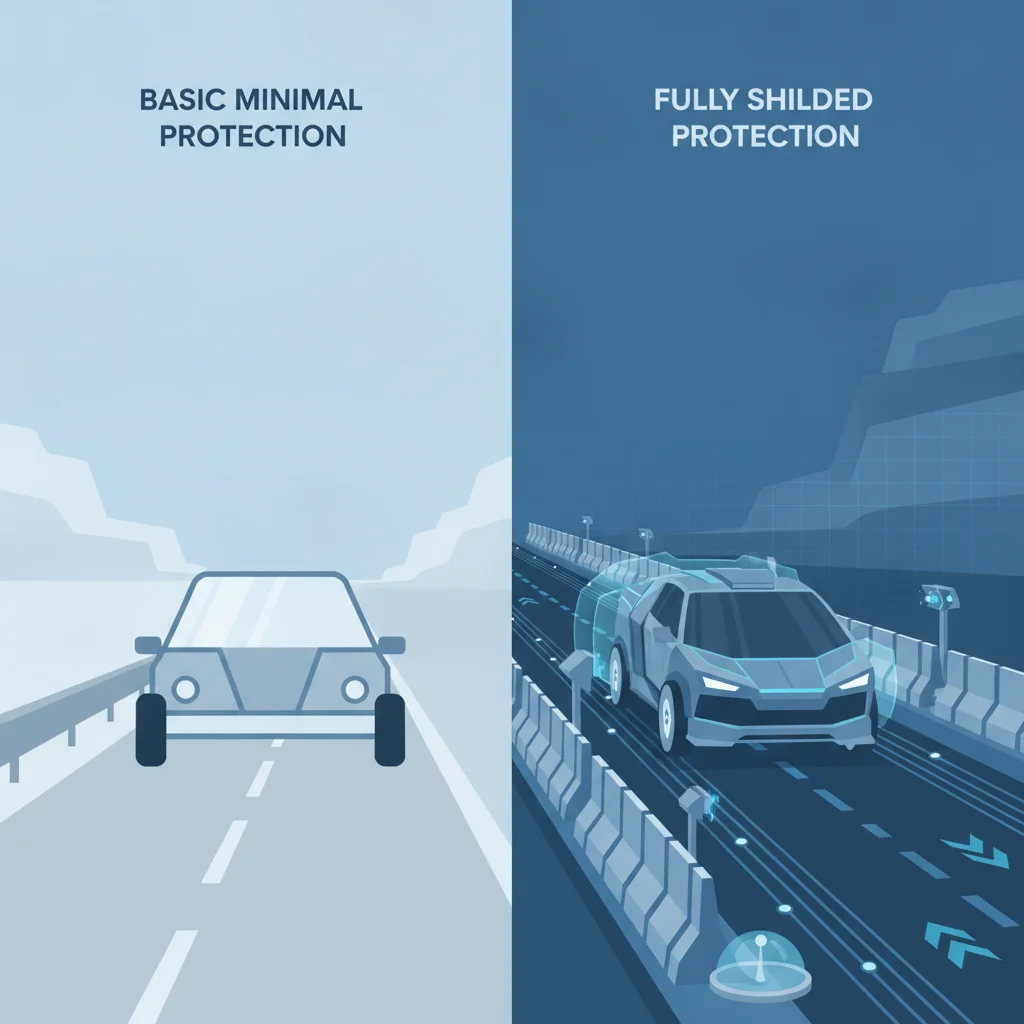
Here's where a lot of drivers make a costly mistake: they conflate "lowering coverage" with "lowering everything." When you drop or reduce collision and comprehensive on an older car, that's often a smart financial move. But liability coverage is an entirely different animal, and it should not be treated the same way.
Liability coverage pays for damage you cause to others — their vehicle, their medical bills, legal defense if you're sued. This exposure has nothing to do with your car's value. A 2010 sedan with 140,000 miles can cause the same amount of damage in a serious accident as a brand-new SUV. If your liability limits are $25,000/$50,000 (a common minimum-coverage floor), a bad accident could leave you personally responsible for anything above those caps.

The right move when adjusting coverage on an older vehicle is to redirect the premium savings toward higher liability limits, not just pocket them. Bumping from 25/50 to 100/300 often costs less than most drivers expect — sometimes $10–$25 more per month — because liability is cheaper per dollar of protection than physical damage coverage. See the full framework in our guide to liability vs. full coverage to understand exactly where the trade-off lands for your situation.
Minimum Liability Limits Are Rarely Enough
State minimums exist to comply with the law, not to protect your finances. A serious accident with injuries can easily generate $200,000 or more in medical and legal costs. If your limits are 25/50 and you're found at fault, you're personally on the hook for everything above your policy ceiling. Review your liability limits carefully before celebrating premium savings from dropping physical damage coverage.
Don't Drop Comprehensive Without Considering UM
Comprehensive coverage pays for theft, vandalism, weather damage, and animal strikes. If you drop it on an older car, make sure you've thought through those specific risks for your situation — particularly if you park on the street, live in a hail-prone area, or commute through neighborhoods with higher theft rates.
Uninsured/underinsured motorist (UM/UIM) coverage deserves a mention here too. About 1 in 8 drivers nationally carries no insurance at all. If one of them hits your paid-off older car, your liability insurance won't help you — only UM/UIM or your own collision coverage will. If you drop collision, make sure your UM/UIM limits are robust enough to fill that gap.
Special Situations That Change the Calculus
The general framework holds for most drivers, but a few common scenarios shift the math in meaningful ways.
You Just Paid Off Your Loan
Lenders require borrowers to carry comprehensive and collision coverage for the life of a loan, regardless of the vehicle's depreciated value. The moment you pay off the note, that requirement disappears. Many drivers don't know they can immediately reassess. Our guide on lowering coverage after paying off a car loan walks through exactly what changes and what to reconsider at that transition point.
Your Car Is a Classic or Collector Vehicle
Standard ACV formulas don't apply to classic cars. A 1972 pickup might have a market value that increases over time. Standard policies will undervalue it dramatically. If this applies to you, agreed-value or stated-value coverage through a specialty insurer is the appropriate product — this guide's framework doesn't directly apply.
You Drive Very Low Mileage
If you're putting fewer than 5,000 miles a year on an older vehicle, your accident exposure is genuinely lower than average. Some insurers offer usage-based or low-mileage programs that price this fairly. Before dropping physical damage coverage entirely, check whether a mileage discount or telematics program gets your premium to a level where keeping the coverage makes sense.
You Can't Easily Replace the Vehicle
The break-even math assumes you're financially positioned to absorb a total loss and replace the vehicle out of pocket or with savings. If losing the car would leave you without transportation and without funds to replace it quickly, that changes the risk calculus. Coverage that doesn't pencil out mathematically may still be worth keeping as protection against a disruption you can't absorb.
For a deeper analytical framework specifically around physical damage decisions on older vehicles, older cars and physical damage coverage provides a decision tree worth working through alongside this guide.
Your Insurer Pays ACV, Not Replacement Cost
This distinction is critical and routinely surprises claimants. When your older car is totaled, your insurer pays what the car was worth immediately before the loss — not what it costs to replace it with something equivalent today. Used car prices have climbed in recent years, meaning the ACV your insurer calculates may not buy you a comparable vehicle. Factor this gap into your coverage decisions. If you're concerned about the replacement cost shortfall on a relatively new vehicle, <a href="/car-insurance/coverage-types/optional-add-ons/depreciation-and-the-case-for-new-car-replacement-coverage">new car replacement coverage</a> is designed for exactly that scenario.
Review Coverage Every Year Without Exception
Your car loses value every year. Your premium does not automatically decrease to match. Left unchecked, you will eventually be paying full-coverage premiums for a vehicle whose ACV no longer justifies them. The only way to prevent that drift is a disciplined annual review tied to your renewal date. This is not optional fine-tuning — it is basic financial hygiene for any driver with a vehicle over five years old.
Making It a Habit: Coverage Reviews at Every Renewal
A single coverage audit is useful. Doing it annually is transformative. Your car loses value every year, your financial situation evolves, and insurance markets shift — all of which can change the right answer even if nothing dramatic has happened.
Set a reminder for 30 days before your policy renewal date. That's enough lead time to get competing quotes, request changes, and have them take effect at renewal rather than mid-term (mid-term changes sometimes carry fees). Reviewing collision and comprehensive at renewal is a habit that consistently pays off — not just in lower premiums, but in confidence that you're carrying coverage calibrated to your actual situation.
Also keep an eye on the factors beyond your vehicle that affect what you pay. Your age bracket, driving record, ZIP code, and credit profile all feed into your rate. Rate factors shift over time in both directions — understanding them means you can act when conditions favor a better deal, rather than waiting for your insurer to tell you.
Your Insurer Pays ACV, Not Replacement Cost
This distinction is critical and routinely surprises claimants. When your older car is totaled, your insurer pays what the car was worth immediately before the loss — not what it costs to replace it with something equivalent today. Used car prices have climbed in recent years, meaning the ACV your insurer calculates may not buy you a comparable vehicle. Factor this gap into your coverage decisions. If you're concerned about the replacement cost shortfall on a relatively new vehicle, <a href="/car-insurance/coverage-types/optional-add-ons/depreciation-and-the-case-for-new-car-replacement-coverage">new car replacement coverage</a> is designed for exactly that scenario.
Review Coverage Every Year Without Exception
Your car loses value every year. Your premium does not automatically decrease to match. Left unchecked, you will eventually be paying full-coverage premiums for a vehicle whose ACV no longer justifies them. The only way to prevent that drift is a disciplined annual review tied to your renewal date. This is not optional fine-tuning — it is basic financial hygiene for any driver with a vehicle over five years old.
The bottom line: adjusting coverage as your car ages isn't about spending less on insurance — it's about spending smarter. Trim the coverage that no longer pays its way. Strengthen the coverage that protects you from real financial exposure. Review it every year. That's the whole playbook.

All claims are backed by peer-reviewed research. Sources on request.