
Key Takeaways
Option A
Adding Teen to Parent's Policy
The established, lower-friction path most families choose.
Best for: Families who want simpler administration, maximum discounts, and a softer cost increase than a standalone policy.
Option B
Separate Teen Policy
The independent route that isolates risk — and cost.
Best for: Situations where the teen owns a vehicle, lives separately, or parents want to protect their own rate history from the teen's driving record.
If you want the lowest possible monthly premium
Adding Teen to Parent's Policy
Teen drivers priced as a named driver on an existing policy nearly always cost less than a standalone policy, where the teen bears the full risk load alone.
If protecting your own driving record matters most
Separate Teen Policy
Any at-fault claim the teen files stays on their own policy history, leaving your rate and claims record untouched.
If the teen owns their vehicle and lives at a different address
Separate Teen Policy
Insurers generally require a vehicle to be insured at the address where it's principally garaged; a separate policy is often mandatory in this scenario.
If you want to teach financial responsibility early
Separate Teen Policy
Paying their own premium — even if a parent subsidizes it — gives teens direct exposure to how driving behavior affects insurance costs.
If your household has multiple vehicles and multiple discounts
Adding Teen to Parent's Policy
Multi-car and multi-policy discounts compound when everyone is on one account, partially offsetting the teen surcharge.
Why This Decision Is More Complicated Than It Looks
Most parents assume adding a teen to their existing policy is the obvious move — and for many families, it is. But treating it as a foregone conclusion means skipping a real analysis that could save you hundreds of dollars a year, or cost you far more if something goes wrong on the road.
The moment your teenager gets a license, your insurer needs to know. In most states, insurers can require you to add any licensed driver in the household to your policy or formally exclude them. Failing to disclose a teen driver is considered material misrepresentation — a claim denial risk you don't want to take.
Once you've accepted that disclosure is non-negotiable, the question becomes: on which policy do they land? That's where the financial and liability calculus gets interesting.
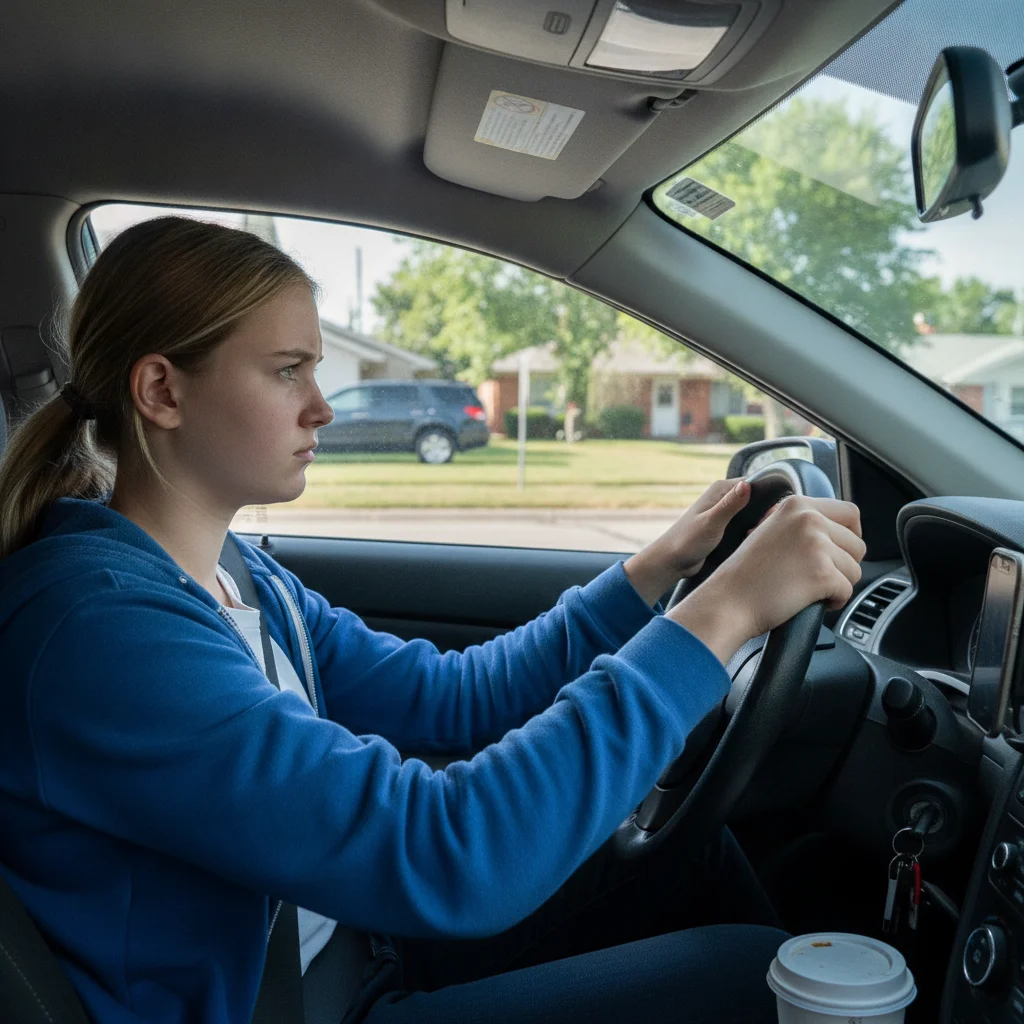
The answer depends on four key variables: who owns the car, where the teen lives, your current insurer's pricing structure for young drivers, and how much risk you're willing to absorb on your own record. Let's break down each option honestly.
Adding a Teen to Your Policy: The Full Picture
When you add a teen as a named driver on your existing policy, they gain access to all the coverage your policy carries — your liability limits, your collision and comprehensive, your uninsured motorist protection. That's often a good thing. Teens driving with bare-minimum coverage are an accident waiting to become a financial catastrophe.
The cost impact is significant but manageable compared to a standalone policy. According to industry data, adding a 16-year-old driver to a parent's policy typically raises the annual premium by 50% to 100%, depending on the insurer and the vehicle assigned to the teen. That sounds alarming, but a standalone teen policy will often run 2x to 3x the cost of that incremental increase.
50–100%
Typical premium increase when adding a teen
Industry data consistently shows adding a 16-year-old to a parent's policy roughly doubles certain coverage costs, per insurer rate filings and consumer reports.
$3,000–$5,000
Average annual standalone teen policy cost
Based on aggregated quotes from major insurers for a 16-year-old male driving a used sedan with standard liability and collision coverage.
3–5 years
How long an at-fault claim affects your rate
Most insurers apply surcharges for at-fault accidents for three to five years from the incident date, depending on state regulation and policy terms.
The risk parents underestimate is the liability exposure. If your teen causes a serious accident, the injured party can pursue your policy limits — and if damages exceed those limits, potentially your personal assets. Liability coverage for teen drivers is a topic that deserves its own deep read before you finalize any decision. Most parents carry $100,000/$300,000 limits; with a teen on the policy, you may want to consider raising those limits or adding an umbrella policy.
The other long-term consideration: a teen's at-fault accident goes on your policy's claims history. That can affect your renewal rate for three to five years, depending on your insurer and state. If your teen is a high-risk driver — or just statistically likely to have a fender bender in the first two years — that's a real cost to factor in.
On the upside, keeping everyone on one policy preserves your multi-car discount, keeps administration simple, and gives you direct control over what coverage the teen actually has. You set the limits. You decide on optional add-ons like accident forgiveness or new car replacement. Optional add-ons for teen drivers worth considering include gap insurance if you financed the teen's car, and roadside assistance if they're driving solo frequently.
| Criterion | Adding Teen to Parent's Policy | Separate Teen Policy |
|---|---|---|
| Typical annual cost impact | $1,200–$2,000 increase | $3,000–$5,000 standalone premium |
| Effect on parent's claims history | Teen's claims affect parent's record | No impact on parent's record |
| Coverage control | Parent sets all limits and add-ons | Teen (or parent) sets limits separately |
| Administrative simplicity | One policy, one bill, one renewal | Separate renewal, billing, and agent |
| Multi-car/multi-policy discounts | Preserved and compounded | Not applicable to teen policy |
| Good student discount availability | Available at most major insurers | Available but less commonly applied |
| Liability exposure for household | Shared — teen claims can exceed limits | Isolated to teen's own policy limits |
| Best fit when teen lives away | Away-at-school discount available | Required if garaged at different address |
Getting the Teen Their Own Policy: When It Actually Makes Sense
A separate policy is the right call in a narrower set of circumstances than most parents realize, but those circumstances are real and worth knowing.
The teen owns a vehicle in their name. If you co-signed or purchased a car titled to the teen, some insurers will require it to be on its own policy or at minimum verify the primary garaging address. If that address is different from yours — say, a teen heading to college in another state — a separate policy tied to their location is often the only compliant option. What happens to your policy when you buy a new car covers the mechanics of this transition in detail.
You want to protect your own rate history. This is the argument that surprises most parents. If you've spent years building a clean driving record and a preferred-tier rate, a teen's at-fault accident can cost you significantly more than just the immediate surcharge — it can push you out of preferred pricing for years. A separate policy walls that risk off entirely. The teen's record is the teen's record.
The financial responsibility lesson matters to you. There's a real behavioral argument for teens who pay their own premium (or at least see the bill in their name). It makes the connection between driving behavior and cost concrete and personal. That said, this works best when the teen has some income to contribute — otherwise it's just accounting gymnastics.
The hard reality of a standalone teen policy is pure cost. Insurers price teen policies as single-driver high-risk accounts. A 16-year-old male driving a used sedan can easily face premiums of $3,000–$5,000 per year on their own policy, versus a $1,200–$2,000 annual increase on a parent's existing policy. Comparing policies across insurers is essential here — USAA, Erie, and State Farm consistently rank among the more competitive options for teen driver pricing, but your specific ZIP code and vehicle type will move those numbers significantly.
The Away-at-School Exception
If your teen is heading to college more than 100 miles away and won't be bringing a car, don't remove them from your policy — ask about the away-at-school discount instead. Most major insurers offer a rate reduction of 15%–30% for students who are listed but not actively driving the household vehicles. This keeps the teen covered when they return home for breaks without paying for full active-driver pricing.
Telematics: A Smarter Way to Price Teen Risk
Usage-based insurance (UBI) programs track actual driving behavior — speed, braking, nighttime driving, phone use — and price accordingly. For a teen who drives carefully, telematics can cut the rate impact significantly. The added benefit: you get behavioral data that many parents find valuable for monitoring new drivers. Most major carriers now offer these programs, and enrollment is typically free.
How Insurers Price Teen Risk — and Why It Matters for Your Choice
Understanding the mechanics behind teen pricing helps you negotiate better and shop smarter, regardless of which route you take.
Insurers use a concept called primary vehicle assignment. When a teen is added to your policy, the insurer will assign them as the primary driver of one specific vehicle — typically the oldest, least valuable car in the household. That vehicle's collision and comprehensive premium gets the full teen surcharge. Your other vehicles are repriced at a lower incremental rate.
This is important for two reasons. First, if you assign the teen to an expensive or new vehicle, you're paying a much higher teen surcharge on a higher base. Second, if the teen has access to multiple household vehicles, the insurer may rate them across more than one — read your policy's driver assignment language carefully.
How a new teen driver affects your entire household rate is worth understanding before your first renewal quote arrives. The rate impact isn't just on the assigned vehicle — some insurers apply a household surcharge that touches all vehicles.
Discounts that help offset teen costs on a parent's policy:
- Good student discount: A GPA of 3.0 or above earns a 5%–25% discount at most major insurers.
- Driver training discount: Completion of an accredited driver's ed course typically saves 3%–10%.
- Telematics/usage-based insurance: Programs like State Farm's Drive Safe & Save or Progressive's Snapshot can yield meaningful discounts for teens who drive carefully — and give parents real behavioral visibility.
- Away-at-school discount: If the teen attends school more than 100 miles from home without a car, many insurers offer a substantial rate reduction while keeping them listed on the policy.
Side-by-Side Comparison
Use this breakdown to frame the conversation with your insurance agent or when comparing quotes across carriers. The right answer is rarely one-size-fits-all.
| Criterion | Adding Teen to Parent's Policy | Separate Teen Policy |
|---|---|---|
| Typical annual cost impact | $1,200–$2,000 increase | $3,000–$5,000 standalone premium |
| Effect on parent's claims history | Teen's claims affect parent's record | No impact on parent's record |
| Coverage control | Parent sets all limits and add-ons | Teen (or parent) sets limits separately |
| Administrative simplicity | One policy, one bill, one renewal | Separate renewal, billing, and agent |
| Multi-car/multi-policy discounts | Preserved and compounded | Not applicable to teen policy |
| Good student discount availability | Available at most major insurers | Available but less commonly applied |
| Liability exposure for household | Shared — teen claims can exceed limits | Isolated to teen's own policy limits |
| Best fit when teen lives away | Away-at-school discount available | Required if garaged at different address |
A few factors that don't show up in the table but matter in practice:
- Umbrella liability: If you're adding a teen to your policy and your net worth exceeds your liability limits, strongly consider a personal umbrella policy. A $1 million umbrella typically costs $150–$300 per year and provides meaningful protection when a teen's accident exceeds auto policy limits.
- Future adult transitions: Teens who start on a parent's policy do eventually need their own. Staying on a parent's policy as an adult has its own trade-offs — understanding that endpoint helps you plan the transition now rather than scrambling later.
- State requirements: A handful of states have specific rules about household members and policy disclosure that can constrain your options. Your agent should be able to clarify these in your jurisdiction.
How to Make the Call
Here's the practical framework I'd use if I were sitting across from a parent about to add a teen driver to their coverage:
- Get two quotes, not one. Call your current insurer for the add-to-policy rate, then get at least one standalone teen policy quote from a different carrier. The spread will tell you how much the convenience of staying in one place is actually costing you.
- Check vehicle title and garaging address. If the car is titled to the teen or garaged at a different address, a separate policy may not just be preferable — it may be required.
- Run the three-year math. The real cost comparison isn't just this year's premium. If a teen at-fault claim will cost you three years of surcharges on your policy, factor that probability into the comparison.
- Lock in every available discount before committing. Good student, driver training, telematics — these should all be applied before you finalize any quote. Some discounts are only available on parent policies; others apply equally to standalone policies.
- Review your liability limits honestly. Whether the teen lands on your policy or their own, this is the moment to make sure your liability coverage reflects your actual financial exposure. Minimum state limits were not designed for households with teenage drivers.
The bottom line: for most families in most situations, adding a teen to an existing policy is the more practical and more affordable option. But the exception cases — separate garaging, the desire to protect your own record, or a teen who owns their vehicle outright — are legitimate, and in those cases, a standalone policy is worth the premium cost.
Whatever you decide, make it an informed choice, not a default one. Teen driver insurance is one of the highest-impact coverage decisions a household makes, and it's worth the hour of research it takes to get it right.

All claims are backed by peer-reviewed research. Sources on request.