Key Takeaways
Option A
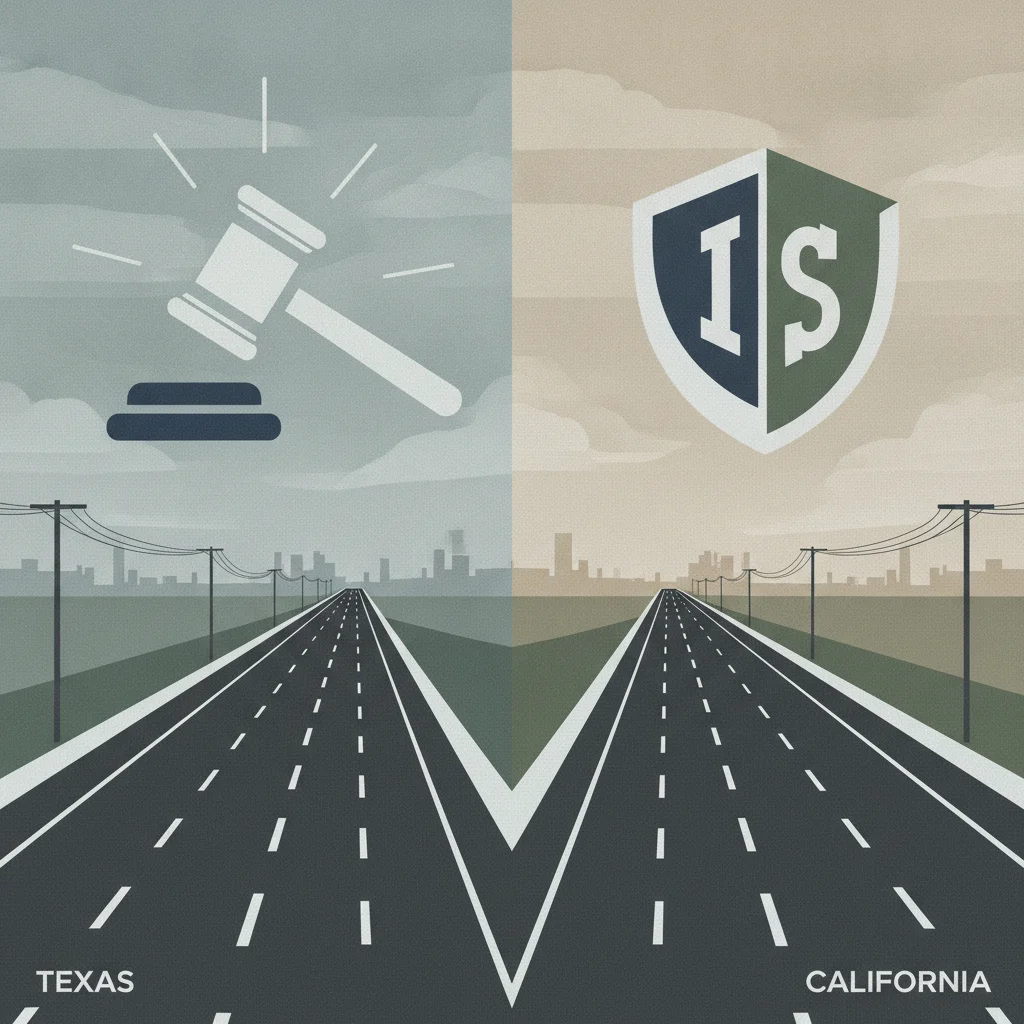
Fault States (Tort States)
The liability-first, court-compatible system.
Best for: Drivers who want the option to pursue full compensation — including pain and suffering — through the at-fault driver's insurer or the courts.
Option B
No-Fault States
The speed-first, your-own-insurer system.
Best for: Drivers who want faster access to medical and lost-wage benefits without proving who caused the accident.
If you were seriously injured and want the right to sue for full damages
Fault States (Tort States)
Tort states allow injured parties to pursue compensation beyond basic medical bills, including pain and suffering, directly from the at-fault driver's insurer or through litigation.
If you want your medical bills paid quickly without a lengthy fault investigation
No-Fault States
PIP benefits kick in almost immediately after an accident in no-fault states, regardless of who caused it — removing weeks or months of waiting for a liability determination.
If you want more control over your coverage decisions and lower mandatory minimums
Fault States (Tort States)
Fault states generally don't require you to carry PIP, which keeps minimum coverage simpler — though pairing liability with uninsured motorist coverage is still wise.
If you're a frequent commuter concerned about minor injury costs piling up
No-Fault States
No-fault PIP covers a defined range of medical and wage-loss expenses without requiring you to establish blame first, which is especially valuable in high-traffic areas.
If you move between states and want to understand how your policy adapts
Fault States (Tort States)
Most of the country operates under tort rules, so understanding fault-state claims gives you a strong baseline — then layer in no-fault nuances only if you relocate to one of the twelve no-fault states.
The Core Difference: Who You Call After a Crash
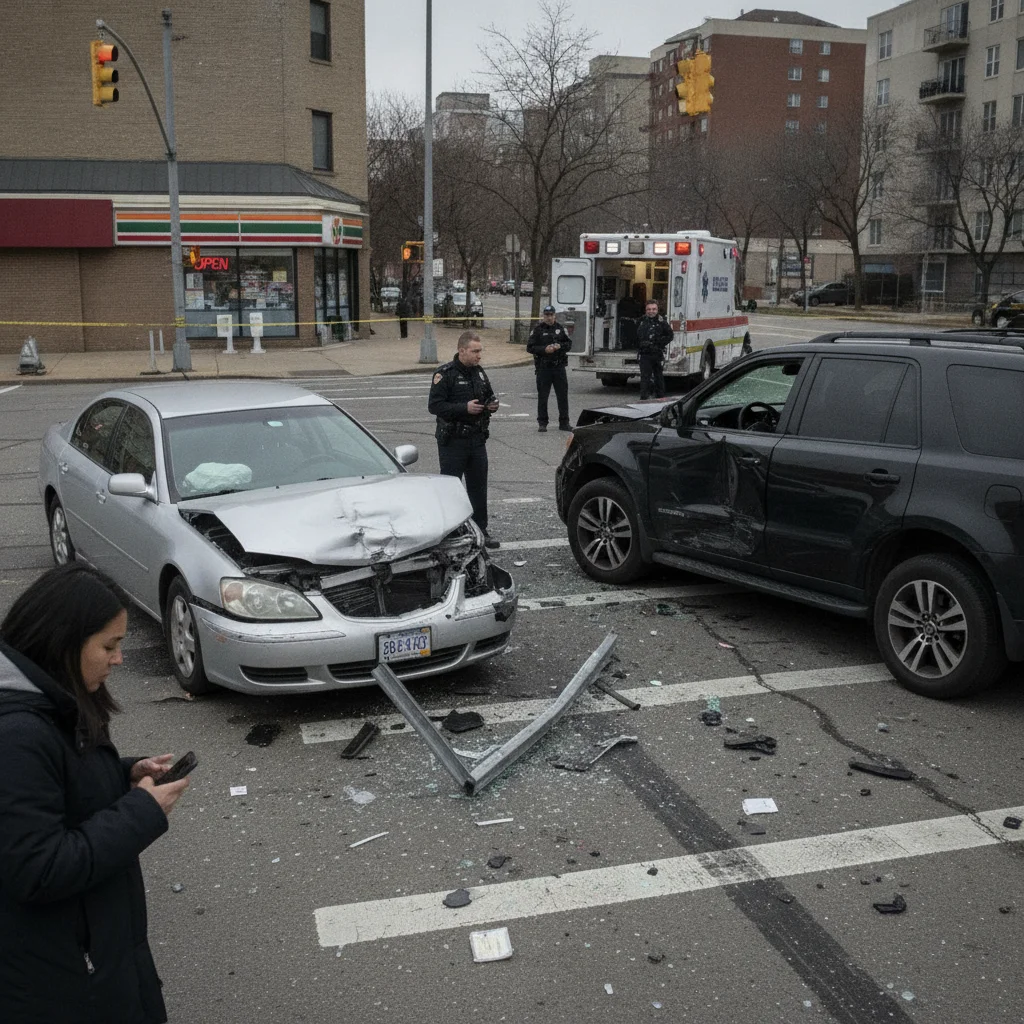
After an accident, one of the first questions that runs through a driver's head is: whose insurance do I file with? The answer depends entirely on which state you're in — and the rules are more different than most people realize.
In a fault state (also called a tort state), the driver who caused the accident is financially responsible for the resulting damages. That means the injured party typically files a claim with the at-fault driver's liability insurance, not their own. If the at-fault driver is uninsured or disputes responsibility, things can escalate to litigation. Liability coverage is the backbone of this system — it's what pays for the other person's bills when you're at fault, and what you rely on when someone else is.
In a no-fault state, the question of who caused the accident is largely set aside — at least initially. Each driver files with their own insurance company for medical expenses and lost income through a coverage called Personal Injury Protection, or PIP. The goal is to get people paid faster and reduce the volume of lawsuits clogging the courts. Fault still matters for property damage and for serious injuries that cross a legal threshold, but for the everyday fender-bender or moderate crash, no-fault keeps things contained within your own policy.

Understanding which system your state uses isn't just trivia — it tells you who to call first, what evidence to gather, and whether you'll need to prove the other driver made a mistake to get compensated. That's a meaningful difference when you're standing on the side of the road trying to figure out your next move.
How Fault States Work: Liability First, Then Compensation
In a fault state, the chain of events after a crash follows a logical sequence: someone caused the accident, that person (or their insurer) is responsible for damages, and the injured party makes a claim accordingly. It sounds straightforward, but there are several layers worth understanding.
Three ways to recover in a fault state
- File directly with the at-fault driver's insurer — This is the most common path. You contact the other driver's insurance company and file a third-party claim against their liability policy. The insurer investigates, assigns fault, and (if liability is accepted) offers a settlement.
- File with your own insurer — If the at-fault driver is uninsured, underinsured, or if fault is disputed, you can file with your own company under your uninsured/underinsured motorist coverage or collision coverage. Your insurer may then pursue the at-fault driver through a process called subrogation.
- File a lawsuit — If the insurer's settlement offer is too low or liability is denied, you can take the matter to civil court. This is more common in serious injury cases where compensation for pain and suffering is at stake.
One thing fault states share: the investigation phase matters a lot. How insurers determine fault involves reviewing police reports, witness statements, photos, and sometimes accident reconstruction. If you're found partially at fault, your compensation may be reduced depending on whether your state follows comparative negligence or contributory negligence rules — a distinction that can significantly affect your payout. For a deeper look at that, see our guide on comparative vs. contributory negligence.
| Criterion | Fault States | No-Fault States |
|---|---|---|
| Who pays for your injuries | At-fault driver's liability insurer | Your own PIP coverage first |
| Speed of payment | Slower — fault must be established | Faster — no fault determination required |
| Right to sue for pain and suffering | Generally unrestricted | Restricted to serious injury thresholds |
| PIP required | No (MedPay often optional) | Yes — mandatory |
| Evidence gathering importance | Critical — affects compensation | Still important for severe-injury claims |
| Number of U.S. states using system | 38 states + D.C. | 12 states |
| Property damage claims | Filed against at-fault driver | Still fault-based in most states |
| Typical minimum coverage required | Bodily injury + property damage liability | Liability + PIP (higher minimums) |
The upside of the fault system is flexibility and full compensation potential. The downside is time — investigations take weeks, disputes can stretch months, and litigation can take years. If you're injured and waiting on a liability determination before bills get paid, that delay is real.
How No-Fault States Work: Your Insurer Pays First
No-fault insurance flips the default assumption. Instead of pointing fingers immediately, each driver turns to their own policy for the most urgent post-accident needs: medical care and lost income. This is what PIP — Personal Injury Protection — is designed to handle.
What PIP typically covers
- Medical expenses for you and your passengers, regardless of fault
- A percentage of lost wages if your injuries prevent you from working
- Rehabilitation costs and, in some states, household services you can no longer perform
- Funeral expenses in the event of a fatality
Coverage limits vary widely by state. Florida requires a minimum of $10,000 in PIP; Michigan (historically the most generous no-fault state) has seen major reforms, but still offers higher benefit tiers. Knowing your state's minimums is worth a few minutes of research because the gap between the minimum and your actual medical costs could land on your shoulders.

The critical nuance in no-fault states is the lawsuit threshold. You generally cannot sue the other driver for pain and suffering unless your injuries meet a defined standard — either a monetary threshold (medical bills exceeding a set dollar amount) or a verbal threshold (injuries must be classified as serious: permanent disfigurement, significant limitation of a body function, or similar). This threshold is what keeps the no-fault system from being bypassed entirely for minor claims.
Verbal vs. Monetary Thresholds in No-Fault States
No-fault states use one of two standards to determine when you can step outside the PIP system and sue for pain and suffering. Monetary thresholds set a specific dollar amount of medical bills that must be exceeded (e.g., $2,000 in Minnesota). Verbal thresholds require the injury to meet a qualitative legal definition — such as 'permanent and significant limitation of use of a body function.' Verbal thresholds tend to be harder to meet but often result in higher eventual settlements when they are. If you live in a no-fault state, knowing which type of threshold applies to you matters when you're evaluating whether to pursue a claim against the other driver.
Property damage in no-fault states is treated differently from injury claims. Most no-fault states still use a fault-based system for vehicle damage, which means you or the other driver's collision coverage — or their property damage liability — still comes into play for fixing your car. No-fault primarily addresses bodily injury costs, not your vehicle repair bill.
For a full comparison of how these two liability frameworks shape your coverage requirements, our article on how liability coverage rules change by state goes deeper into the legal mechanics.
The Claims Process Side by Side
Let's get concrete. You've just been in an accident — same crash, same injuries, same day. The only variable is which state you're in. Here's how the claims experience diverges from that point forward.
12
U.S. states with no-fault insurance systems
According to the Insurance Information Institute, twelve states currently require PIP as part of a no-fault auto insurance framework.
$10,000
Florida's minimum PIP benefit
Florida law requires at least $10,000 in Personal Injury Protection — a figure that often falls short of real-world medical costs from a serious accident.
Up to 50%
Potential compensation reduction under modified comparative fault
In modified comparative negligence states, being found 51% or more at fault can eliminate your right to recover damages from the other driver entirely.
3–6 weeks
Typical PIP claim processing time
Most no-fault states require insurers to begin PIP payments within 30 days of receiving a completed claim, making initial payouts significantly faster than tort-based liability claims.
In a fault state, your first calls go to the police and then to your own insurer to report the incident. But the actual compensation claim for injuries and vehicle damage gets filed with the at-fault driver's company. You gather evidence — photos, a police report, witness contact info — because the burden of establishing fault is central to whether you get paid and how much. Filing a liability claim in a fault state is a process that can take weeks to months depending on injury complexity and whether the other driver's insurer accepts liability.
In a no-fault state, you still report the accident to your own insurer right away — but now you're also opening a PIP claim through your own policy. Medical bills and lost wages start getting processed immediately, without waiting for a fault determination. If your injuries are serious enough to cross the threshold, you can also pursue the at-fault driver for non-economic damages — but that's a parallel track, not the primary one.
The practical upshot: no-fault gets you money faster for medical needs, but caps what you can ultimately recover. Fault states take longer but leave the door open for fuller compensation if you're seriously hurt and the other driver is clearly to blame.
Coverage Requirements and Cost Implications
Your state's system doesn't just affect how claims work — it shapes what coverage you're required to carry, and therefore what you pay in premiums.
Fault states: What's typically required
Fault states mandate liability coverage — bodily injury liability and property damage liability — as the foundation. Beyond that, requirements vary. Many fault states don't require PIP, though carrying it (or medical payments coverage, known as MedPay) is a smart add-on since it covers your own injuries without waiting for fault to be settled. Uninsured motorist coverage is required in some fault states and optional in others, but it's worth having regardless. Your location is one of several factors insurers use when calculating your premium, and fault-state rates can vary dramatically depending on local litigation rates and claim frequency.
No-fault states: The mandatory extras
No-fault states layer PIP on top of the standard liability requirements. Because PIP is mandatory, it adds to your minimum premium — one reason no-fault states like Michigan and Florida have historically carried some of the highest average auto insurance rates in the country. The benefit is that your own insurer handles your medical bills quickly; the trade-off is that everyone pays for that efficiency upfront through higher required coverage minimums.
It's also worth noting that some no-fault states offer a choice no-fault option, where drivers can elect to stay in the traditional tort system. New Jersey, Kentucky, and Pennsylvania give drivers this choice at policy inception. If you're in one of these states, read the election carefully — choosing the tort option gives you fuller sue rights but means you don't get automatic PIP benefits in exchange.
If you're curious how single-vehicle accidents interact with these systems — say, you hit a guardrail on an icy road — the rules are somewhat different. Single-car accidents and liability still involve your own coverage, regardless of your state's fault framework, though the specific coverage that responds may differ.

Which States Use Which System?
As of the most recent legislative updates, twelve states operate under some form of a no-fault system. These include Florida, Michigan, New Jersey, New York, Pennsylvania, Hawaii, Kansas, Kentucky, Massachusetts, Minnesota, North Dakota, and Utah. Three of these — New Jersey, Kentucky, and Pennsylvania — offer the choice between no-fault and tort as noted above.
Every other state — and Washington D.C. — uses the traditional tort (fault) system. If you live in one of those states or ever move, the claims process described in the fault section above is your default experience.
Keep in mind that even within fault states, there's variation. Some states use pure comparative negligence (you can recover damages even if you're 99% at fault, reduced proportionally), others use modified comparative negligence (recovery is barred if you're more than 50% or 51% at fault), and a few still apply the harsher contributory negligence rule (any fault on your part can bar recovery entirely). These distinctions layer on top of the fault/no-fault framework and matter significantly if you share any blame for the accident.

The bottom line: knowing your state's system before an accident happens means you're not scrambling to figure out the rules while you're already stressed. Spend five minutes confirming whether your state is fault or no-fault, check your PIP limits if you're in a no-fault state, and review your liability and uninsured motorist limits regardless of where you live. That small amount of preparation pays off when it matters most.

All claims are backed by peer-reviewed research. Sources on request.