
Key Takeaways
Automatic Renewal in Auto Insurance
Automatic renewal means your auto insurance policy continues for another term — typically six or twelve months — without you having to take any action. Your insurer charges the same payment method on file and issues a new declarations page for the renewed period. It's designed to keep you continuously covered, but it doesn't guarantee your rate or your coverage stays the same.
Insurers are required by state law to send a renewal notice — usually 30 to 45 days before the policy expiration date — disclosing any rate or coverage changes. The notice period varies by state.
What Automatic Renewal Actually Means
When you buy an auto insurance policy, you are purchasing coverage for a defined term — almost always six or twelve months. When that term ends, your insurer doesn't just let coverage expire. Instead, the policy automatically rolls into a new term. That's automatic renewal: the presumption that the relationship continues unless one of you formally ends it.
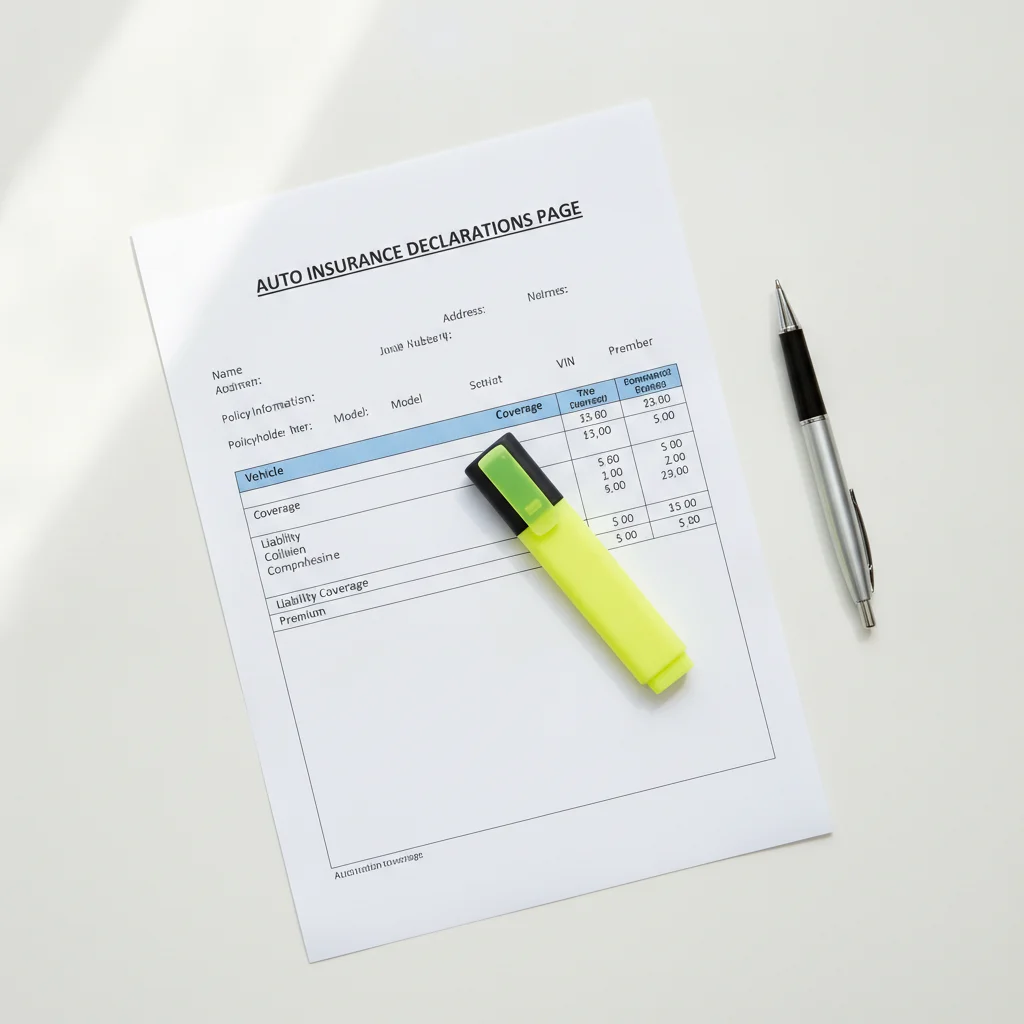
From a practical standpoint, this means your insurer will charge the credit card or bank account you have on file, issue a new declarations page, and your coverage continues without interruption. If you pay in full each term, you'll receive a bill for the new term's premium. If you pay monthly, you may not notice anything except a potential rate change reflected in your next statement.
The convenience is real — continuous coverage is genuinely valuable, and keeping that continuity intact protects you from the rate penalties that come with even a brief lapse. But convenience is not the same as hands-off. Automatic renewal is a default, not a guarantee that your situation is still well-covered at the best available price.
What Changes — and What Doesn't — at Renewal
Here's the thing most drivers miss: automatic renewal preserves your coverage status, but it does not freeze your rate or your policy terms. Your insurer reviews your file at each renewal and can — and regularly does — adjust both.
~60%
Drivers who never shop competing quotes at renewal
Industry research consistently finds that a majority of auto insurance policyholders simply allow their policy to renew without comparing alternative rates.
$800+
Average annual savings for drivers who shop and switch
The Consumer Federation of America and various insurer studies have found that active shoppers can save several hundred to over a thousand dollars annually by switching carriers at renewal.
30–45 days
Typical renewal notice window required by state law
Most state insurance regulations mandate that insurers provide written renewal notice within this window before the policy expiration date, though some states require longer notice.
Up to 10%
Loyalty surcharge paid by long-term policyholders
Research by the Consumer Federation of America found that in some markets, long-tenured customers pay more than newly acquired customers for equivalent coverage — the opposite of a loyalty reward.
What typically stays the same: Your named insured, your listed vehicles, your basic coverage types (liability, comprehensive, collision), and your deductibles — unless you or your insurer changes them.
What often changes:
- Your premium. Rates can go up or down based on your claims history, credit score, changes in your driving record, local loss trends, and statewide rate filings your insurer has received approval for. Even if nothing happened on your end, your rate may shift due to forces completely outside your control.
- Coverage sub-limits and terms. Insurers can modify things like rental reimbursement caps, roadside assistance terms, or towing limits at renewal — sometimes without much fanfare in the notice.
- Discounts applied. If a discount you were receiving (like a safe driver discount tied to a telematics program) has lapsed or changed, it may quietly disappear from your renewal without a separate alert.
The renewal notice your insurer sends is the single most important document to read in full. Most people scan it for the payment amount and move on — that's a mistake.
State Laws Vary on Notice Requirements
The required advance notice period for renewal — and the rules around rate changes — differ meaningfully from state to state. California, for instance, has strict rate change approval requirements that limit how much insurers can raise premiums at renewal. Your state's department of insurance website is the authoritative source for your specific jurisdiction's rules.
Non-Renewal Is Not the Same as Renewal
If your insurer decides not to offer you a new policy term — due to too many claims, a suspended license, or other risk factors — that is a non-renewal, not an automatic renewal. Non-renewal carries different notice requirements and has different implications for finding future coverage. Understanding the distinction is important if you receive a notice that does not look like a standard renewal offer.
How the Renewal Notice Works
State insurance regulations require insurers to notify policyholders of renewal terms before the new term begins. The required notice window varies by state but is most commonly 30 to 45 days. A handful of states require 60 days. If your insurer plans to non-renew your policy — meaning they won't offer you a new term at all — the notice requirements are typically longer and more formal. Non-renewal and cancellation work very differently, and knowing the distinction matters for your insurability.
The renewal notice will typically include:
- Your new premium for the upcoming term
- A summary of any coverage changes
- Your updated declarations page or a link to access it online
- Payment instructions if you pay in full
- A deadline by which you must act if you intend to make changes or cancel
Don't wait for the notice to arrive before thinking about your options. If your renewal date is coming up, start shopping competing quotes two to three weeks before the notice even arrives. That way you have real data to compare against whatever your insurer sends.

For a deeper look at how your insurer arrives at your renewal number, see how insurers calculate your renewal rate. The pricing is more systematic than most people realize, and understanding the inputs gives you leverage.
When to Do More Than Let It Roll
Automatic renewal is fine as a default when your life is stable and your current coverage genuinely fits your situation. But there are specific circumstances where passivity costs you money or leaves you underprotected.
Review your coverage before renewal if any of the following apply:
- You moved to a different city, county, or state — location is one of the biggest pricing variables in auto insurance
- You bought, sold, or paid off a vehicle — paid-off cars may no longer need comprehensive and collision if the vehicle's value has dropped significantly
- You added a teen driver or a new household member to the policy
- Your credit score improved significantly — in most states, this can translate to a meaningfully lower rate
- You increased your net worth or acquired new assets — your liability limits should keep pace
- Your driving patterns changed substantially (remote work, retirement, a shorter commute)
Set a Calendar Reminder 45 Days Out
Rather than waiting for your renewal notice to trigger action, set a calendar reminder 45 days before your policy expiration date. This gives you time to pull competing quotes, review your coverage needs, and negotiate — before you're rushed by the clock. Your expiration date is printed on your declarations page and your insurance ID card.
Don't Cancel Before the New Policy Is Confirmed
If you decide to switch insurers, confirm that your new policy is fully bound and that you have proof of coverage before contacting your current insurer to cancel. Never cancel first and buy second — even a brief uninsured period can create problems with your lender if you have an auto loan, and it will flag as a coverage lapse on future insurance applications.
Even absent a life change, the renewal window is the natural moment to check whether you're being priced competitively. Insurers do not automatically reward long-term customers with the best available rates — in fact, there is industry evidence that loyal customers are sometimes charged more than new policyholders. The discount conversation to have before renewing is a structured way to make sure you're not leaving money on the table.
If you're weighing whether to make coverage changes now or wait until renewal, that timing decision is worth thinking through carefully. Sometimes acting mid-term makes financial sense; other times waiting a few weeks to the renewal date costs you very little and simplifies the process.
How to Use Renewal as an Active Decision
The best way to approach renewal is to treat it as an annual financial review, not an administrative formality. Here's a straightforward process that takes less than an hour but can save you hundreds of dollars a year.
“Renewal is not a passive event — it's the one moment every year when you hold real leverage over your insurance costs. Most people let it pass without a second thought, and that inaction compounds over time into thousands of dollars of overpayment.”
— J. Robert Hunter, Former Insurance Commissioner and Director of Insurance, Consumer Federation of America
Step 1: Pull out your current declarations page
Before you do anything else, confirm what you actually have. Many drivers aren't sure of their exact coverage limits, deductibles, or optional add-ons. Your declarations page shows all of it in one place. Pay attention to optional add-ons like rental reimbursement, roadside assistance, and gap insurance — some of these may still be relevant; others you may have added years ago and no longer need.
Step 2: Check whether your life has changed
Run through the life change triggers listed above. Be honest — insurers often find out about these changes anyway, and having the wrong information on your policy can create claim complications.
Step 3: Get at least two competing quotes
Use your current coverage as the baseline and request identical or comparable quotes from at least two other insurers. Don't just use aggregator tools — go direct to a few carriers as well. The discounts you might be overlooking vary significantly by insurer, and a direct conversation often surfaces savings an online quote won't show.
Step 4: Negotiate or switch
If you find a better rate elsewhere, call your current insurer and tell them. Retention departments often have authority to match or beat competitive offers. If they don't budge, switch — but make absolutely sure your new policy's effective date aligns with the expiration of your old one. Even a one-day gap can count as a lapse on your record and raise rates with your next insurer. For a comprehensive look at managing your policy through every stage, this policy management guide covers the full picture.
Set a Calendar Reminder 45 Days Out
Rather than waiting for your renewal notice to trigger action, set a calendar reminder 45 days before your policy expiration date. This gives you time to pull competing quotes, review your coverage needs, and negotiate — before you're rushed by the clock. Your expiration date is printed on your declarations page and your insurance ID card.
Don't Cancel Before the New Policy Is Confirmed
If you decide to switch insurers, confirm that your new policy is fully bound and that you have proof of coverage before contacting your current insurer to cancel. Never cancel first and buy second — even a brief uninsured period can create problems with your lender if you have an auto loan, and it will flag as a coverage lapse on future insurance applications.
What Happens If You Miss the Renewal Window
If your renewal date passes without you taking any action, the policy simply continues — that's the point of automatic renewal. But if you pay in full and your card is declined, or if your bank account doesn't have sufficient funds for a monthly payment, you risk a lapse in coverage. Most insurers will send a payment failure notice and provide a brief grace period, but that period is typically short: often 10 to 15 days.
A lapsed policy — even a brief one — can trigger a surcharge with your next insurer. Future insurers treat coverage gaps as a risk signal. The longer the gap, the bigger the impact on your rate. If you're between policies or intentionally parking a vehicle for a season, look into strategies for maintaining continuous coverage without overpaying.
Missing the window to cancel or switch is a more common problem. If your renewal date has passed and you've already been charged for the new term, you can still cancel — but you'll typically receive a prorated refund for the remaining days rather than the full premium back. Some insurers charge a short-rate cancellation fee if you cancel mid-term (which a just-renewed policy now is), so factor that into the math before pulling the trigger.

All claims are backed by peer-reviewed research. Sources on request.