Key Takeaways
Why Cancellation Timing Is Everything
Canceling an auto insurance policy sounds simple — call your insurer, say you're done, and move on. In practice, the gap between your old policy ending and your new one starting is where things go badly wrong. A lapse of even 24 hours can result in a surcharge on your next policy, a license suspension in states that monitor coverage electronically, or — worst case — an uninsured accident you're personally on the hook for financially.
Insurance companies share coverage data through databases like CLUE (Comprehensive Loss Underwriting Exchange) and state DMV systems. If a lapse appears on your record, insurers treat you as a higher risk and price you accordingly. According to industry research, drivers with a prior coverage gap often pay 10–35% more for their next policy compared to drivers with continuous coverage — even if the gap was accidental and lasted only a few days.
The good news is that avoiding a gap is entirely doable with a bit of planning. Whether you're switching to save money, moving to a new state, selling your car, or just unhappy with your current insurer, the process follows the same core sequence: secure new coverage first, then cancel old coverage. Every step in this guide is built around that principle.
It's also worth understanding the difference between a voluntary cancellation and a non-renewal, since each works differently. Learn how cancellation and non-renewal differ before you decide which path applies to your situation — particularly if your insurer has already sent you a notice.
What You Need Before You Start
Before you pick up the phone or log into any insurance portal, gather the information below. Having everything in one place prevents delays and ensures your cancellation request is processed accurately.
What you will need
Once you have these materials ready, you can move through the steps below in a single sitting for most straightforward switches. More complex situations — such as multi-car households, financed vehicles, or a move across state lines — may require an additional day or two to coordinate between lenders and insurers.
Current policy declarations page
Provides your policy number, coverage dates, vehicle information, and lienholder details needed to initiate cancellation and set up your new policy accurately.
Insurance comparison platform or independent broker
Used to shop and compare new policy quotes across multiple carriers before canceling your existing coverage.
Certified mail or email with read receipt
Provides documented proof that your written cancellation request was delivered to your insurer on a specific date.
New policy declarations page
Confirms your new coverage is active and provides proof of insurance for your lender and DMV records.
State DMV website
Allows you to verify your new coverage appears correctly in the state's electronic insurance verification system after the switch.
Cancellation confirmation document from old insurer
Serves as proof of your coverage end date, which you may need to demonstrate continuous coverage to future insurers.
Step-by-Step: How to Cancel Without Losing Coverage
Follow these steps in order. Do not skip ahead to the cancellation step before completing the earlier ones — the sequence is deliberate and protects you financially.
Shop for and confirm your new policy first
Before you do anything with your current insurer, secure a replacement policy. Get quotes from at least three carriers, compare coverage levels carefully (not just the premium), and select your new policy. Pay the first premium and receive written confirmation — typically an insurance ID card and declarations page — showing your new policy's effective date and time.
Do not assume a quote is coverage. You must complete the application, pay the premium, and receive a policy number and effective date in writing before your old coverage is safe to cancel. Understand when switching insurers saves money versus introduces risk before you commit to a new carrier.
Choose your cancellation effective date
Decide the exact date you want your old policy to end. The safest choice is the day after your new policy starts, or your current policy's renewal date. Avoid weekends and holidays as your cancellation effective date — insurer offices may be closed, delaying confirmation.
If you're canceling at renewal, your insurer is simply not renewing rather than mid-term canceling, which is cleaner administratively and avoids any potential short-rate penalty. If you must cancel mid-term — for example, if you found a significantly lower rate — choose a business day and give yourself at least a week's lead time to complete the paperwork.
Notify your current insurer in writing
Contact your current insurer to initiate the cancellation. Most insurers require a written request — either a signed cancellation form they provide, a written letter, or a request submitted through their online portal. A phone call alone is often insufficient and leaves you without documentation.
Your written request should include:
- Your full name and policy number
- The vehicle(s) covered under the policy
- Your requested cancellation effective date
- Your signature (required by most insurers)
- Your forwarding address for any refund check
Send the request via certified mail or email with a read receipt so you have proof of delivery. Ask the insurer to confirm receipt and provide an estimated timeline for your cancellation confirmation document.
Notify your lender or lessor if applicable
If your vehicle is financed or leased, contact your lender or leasing company and provide them with proof of your new insurance — specifically a declarations page that lists them as the lienholder or additional interest. Most lenders want this information before or immediately after the switch, not weeks later.
Many lenders have an insurance verification department or an online portal where you can upload your new declarations page directly. Getting this step done promptly prevents the lender from placing their own force-placed insurance on the vehicle, which would be billed to you at rates far above market.
Receive and save your cancellation confirmation
After your cancellation request is processed, your insurer must send you a written cancellation confirmation specifying the exact date and time your coverage ends. This document is your proof of the termination date. Review it carefully and confirm that:
- The cancellation effective date matches what you requested
- The policy number and vehicle information are correct
- Any prorated refund amount is stated (if applicable)
If the confirmation contains any errors, contact your insurer immediately to have them corrected and issue a revised confirmation. Do not assume a mistake will sort itself out.
Cancel automatic payments and update your records
If you had your old premium set up on autopay, cancel those payments through your bank or the insurer's billing portal immediately after the cancellation is confirmed. Insurers occasionally continue to bill after cancellation due to processing delays, and disputing those charges takes time. Getting ahead of it is easier.
Also update any stored insurance information in places where it's on file: your vehicle registration, employer transportation benefits, roadside assistance memberships, and any household documents where the old policy details are recorded.
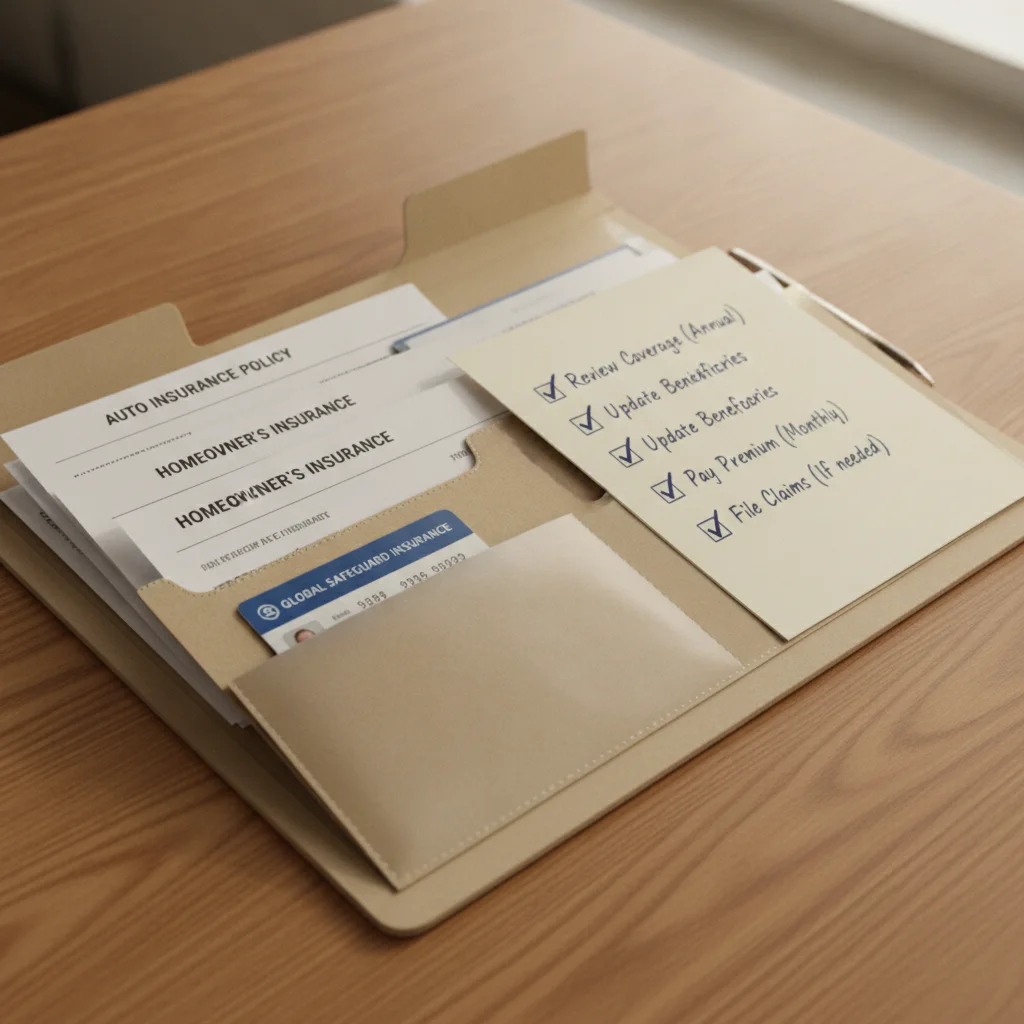
After completing all steps, keep all documentation in a single folder — physical or digital — for at least three years. If a coverage dispute arises with a future insurer or a state DMV, your proof of continuous coverage is your best defense.
Switching at Renewal Is the Cleanest Option
If your renewal date is within the next 30–45 days, it's often worth waiting rather than canceling mid-term. At renewal, there's no pro-rata calculation to worry about, no short-rate penalty, and the administrative process is simpler. Set a reminder 30 days before your renewal date to shop rates, so you have time to switch cleanly if you find a better deal.
Keep Your Confirmation Documents for Three Years
Insurance history can affect your rates for several years after the fact. Storing both your old cancellation confirmation and your new policy's declarations page gives you documentation if a future insurer or state agency questions your coverage history. A digital copy stored in cloud storage is easiest to access when you need it.
Check for Loyalty Discounts Before You Switch
Some insurers offer loyalty discounts that aren't prominently advertised. Before finalizing a switch, ask your current insurer whether there are any discounts — multi-policy bundles, usage-based programs, or payment discounts — that could bring your premium in line with competing quotes. Occasionally, a quick conversation saves the switch entirely.
Special Situations That Change the Playbook
You're Financing or Leasing Your Vehicle
If you have an auto loan or lease, your lender or lessor is listed as a lienholder on your policy, and they have a direct interest in your coverage. Most loan and lease agreements require you to maintain specific coverage levels (typically comprehensive and collision with certain deductibles). If you cancel your policy without an active replacement, your lender has the contractual right to purchase force-placed insurance on your behalf — at your expense — which is typically far more expensive and covers only the lender's interest, not yours.
Before canceling, notify your lender of the switch and provide them with the declarations page from your new policy showing them as lienholder. This protects you from a forced-placement situation and keeps your loan agreement intact.

You're Moving to a New State
Auto insurance is regulated at the state level, so moving across state lines means you'll need a policy that meets your new state's minimum liability requirements. Some insurers operate nationally and can simply rewrite your policy for the new state; others are regional and cannot. Contact your current insurer first to find out whether they cover your destination state. If they don't, you'll need to shop for a new carrier before your move date and cancel the old policy effective the day your new coverage starts in the new state.
You're Selling Your Car and Not Replacing It
If you're selling your vehicle and won't be buying another one immediately, cancel your policy effective on or after the date the vehicle transfers to the new owner. Do not cancel before the title transfer is complete — if someone test-drives the car and causes an accident before the sale closes, you could be exposed. Once the vehicle is sold, you have no ongoing need for auto coverage, but you may want to check whether your state requires you to file a notice of release of liability with the DMV.
Keep in mind that common policy management mistakes that lead to coverage gaps often happen precisely during these transitional moments — a sale, a move, or a new purchase — when it's easy to let administrative details slip.
You Have an Open Claim
Canceling a policy while a claim is still being processed does not void the claim — your insurer is obligated to honor claims that occurred while the policy was active. However, canceling mid-claim can complicate communication and delay settlement. If possible, wait until your claim is fully resolved before switching. If you must switch urgently, document all open claim numbers and your claims adjuster's contact information before you cancel.
Canceling With an Open Claim Is Risky
While your insurer must honor valid claims that occurred during the active policy period, canceling while a claim is open can slow your settlement and create communication complications. Wait until your claim is fully resolved before switching if at all possible. If you must switch urgently, document every open claim number and adjuster contact before submitting your cancellation request.
Phone Cancellations Alone May Not Be Sufficient
Many policyholders assume that calling their insurer to say they're canceling is all that's required. In reality, most insurers require a written cancellation request with your signature before they will process the termination. Relying on a phone call alone can leave your old policy active — and billing — even after you've stopped expecting coverage from it.
You're Removing a Driver, Not Canceling the Whole Policy
If your goal is to remove someone from your policy rather than cancel it entirely, that's a different process. See how to remove a driver from your auto insurance policy correctly to avoid unintended coverage changes for the remaining drivers and vehicles on the policy.
Getting Your Refund and Closing the Loop
When you cancel a prepaid policy mid-term, you're generally entitled to a refund of the unused portion of your premium. Most standard policies use a pro-rata calculation — you get back exactly what you didn't use. Some insurers, however, use a short-rate calculation that applies a cancellation penalty, which means your refund will be slightly less than a straight pro-rata amount. Check your policy documents or ask your insurer which method they use before you cancel.
Refunds are typically issued within 10–30 business days, either by check or back to your original payment method. If you paid annually and cancel six months in, expect a refund of roughly half your annual premium, minus any applicable fees. If you paid monthly and are current on payments, you may receive only a small credit or nothing at all depending on your billing cycle.
Once you receive your cancellation confirmation and refund (if applicable), do one final check:
- Confirm your new policy's declarations page lists the correct vehicle(s), drivers, and effective date.
- Save the cancellation confirmation from your old insurer with the effective cancellation date clearly stated.
- If your state uses electronic insurance verification, allow 5–10 business days for your new policy to appear in the state's system.
- Update any automatic payments to ensure you're not continuing to pay the canceled policy.
If you're switching mid-policy to save money, it's worth reviewing whether the new insurer's quoted rate accounts for all available discounts. Check what discounts you might be leaving on the table — loyalty credits, multi-policy bundles, and telematics programs can meaningfully reduce the cost of your new policy from day one.
Finally, be aware of a few persistent misconceptions about the cancellation process. Read about cancellation myths that could cost you — including the false belief that telling your agent is enough, or that canceling and restarting with the same insurer won't affect your rate. These misunderstandings trip up even experienced policyholders.
A Coverage Gap Can Follow You for Years
Insurers treat a lapse in coverage as a risk signal, and most will charge you a higher premium for one to three years after a gap appears in your history — even if the gap was accidental and short. In some states, a coverage lapse also triggers an automatic license suspension or vehicle registration hold. The financial exposure from driving uninsured, even briefly, vastly outweighs any money saved by canceling early.
Your Insurer Can Also Cancel Your Policy Unilaterally
This guide covers voluntary cancellations, but it's important to know that insurers have their own cancellation rights. Missed payments, misrepresentation on your application, a DUI conviction, or a major at-fault accident can all trigger insurer-initiated cancellation, which works on a different timeline and has different consequences. <a href="/car-insurance/claims-and-policies/policy-management/when-insurers-can-legally-cancel-your-policy-mid-term">Learn when insurers can legally cancel your policy mid-term</a> to understand what those triggers look like and what your rights are if it happens to you.

All claims are backed by peer-reviewed research. Sources on request.