
Key Takeaways
Recorded Statement
A recorded statement is a formal, spoken account of an accident that your insurance company asks you to give — usually over the phone — which is transcribed and saved as part of your claim file. It typically covers what happened before, during, and after the incident. Insurers use it to gather the facts of the loss from your perspective and to compare your account against other evidence they collect.
Recorded statements are admissible as evidence in litigation and arbitration proceedings. Unlike a general conversation with a claims rep, they carry legal weight — inconsistencies between your recorded statement and later testimony can be used to challenge your credibility.
Why Insurers Ask for a Recorded Statement
After an accident, your insurance company's claims team needs to build a complete picture of what happened. They already have the police report, any photos you submitted, and their own adjuster's assessment — but those don't capture your firsthand account. That's where a recorded statement comes in.
Think of it less as an interrogation and more as the insurer's way of locking in the key facts while your memory is still fresh. Insurers are looking to answer a few core questions:
- Who was involved, and where were they positioned before impact?
- What road, weather, and traffic conditions existed at the time?
- What were you doing immediately before the collision?
- Were there any witnesses?
- Have you sought medical treatment, and if so, where?
This information helps them determine liability — who is legally responsible — and calculate what the claim is worth. It also helps them spot inconsistencies between different accounts of the same event, which matters when fault is disputed.
Recorded Statements Are Standard — Not Suspicious
Receiving a request for a recorded statement does not mean your insurer suspects fraud or is preparing to deny your claim. It is standard operating procedure for most auto insurance claims. Treating it as routine — rather than adversarial — will help you approach the conversation more calmly and clearly.
Soft-Tissue Injuries Often Appear Later
Whiplash and other soft-tissue injuries frequently don't produce noticeable symptoms until 24 to 72 hours after a collision. This is medically well-documented. If you're asked about injuries before you've had time to fully assess how you feel, it's appropriate to say you are still being evaluated — rather than stating categorically that you weren't hurt.
Recorded statements aren't unique to auto insurance — they're used across property and casualty lines whenever insurers need a reliable, documented account. In auto claims specifically, they're almost universal for anything beyond a simple windshield chip or minor solo incident.
Your Own Insurer vs. the Other Driver's Insurer
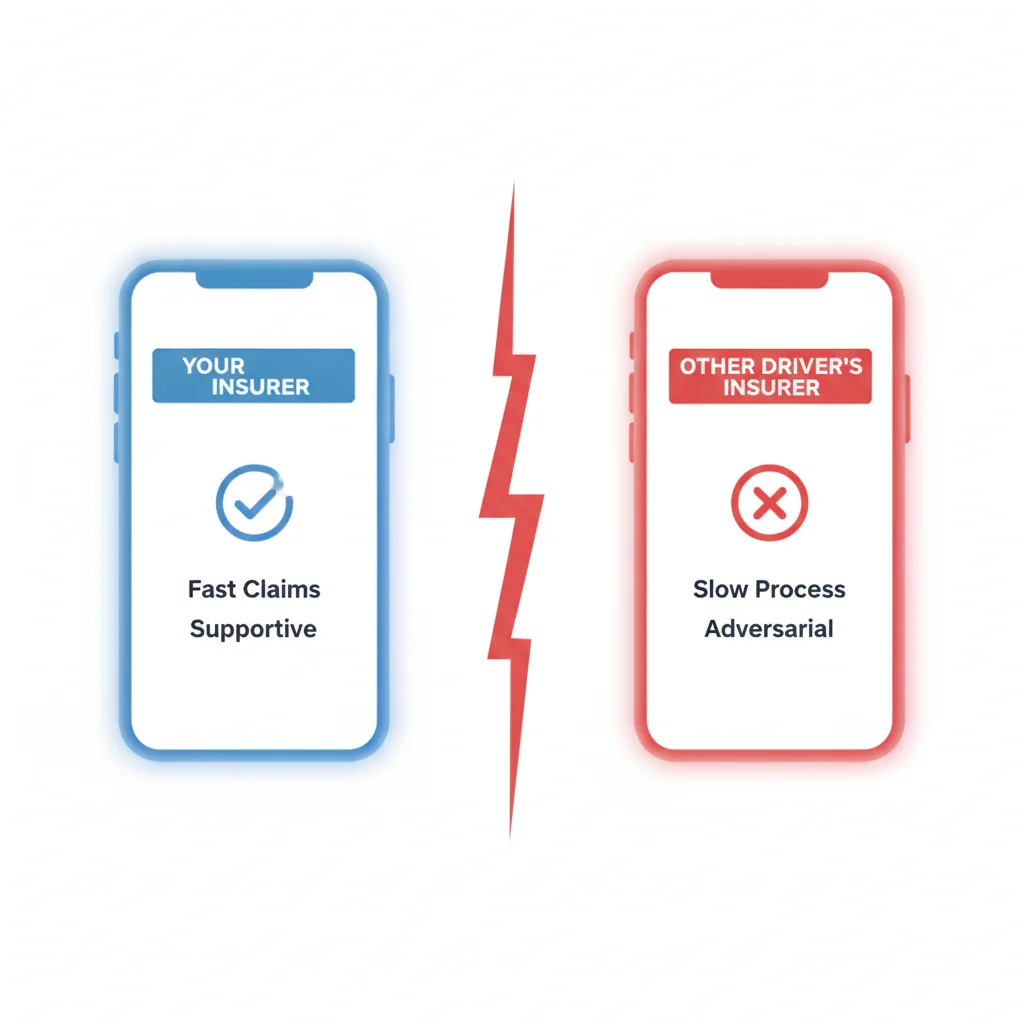
One of the most important distinctions to understand is who is asking for the statement — because it changes your obligations significantly.
Statements to Your Own Insurer
Your auto insurance policy is a contract. Buried in most policies is what's called a cooperation clause, which requires you to cooperate with your insurer's investigation — and that typically includes giving a recorded statement when asked. This isn't optional. Refusing a statement to your own insurer can give them grounds to deny your claim or even rescind your coverage for the incident.
That said, cooperation doesn't mean you have to give a statement unprepared. You're allowed — and encouraged — to review your accident notes, photos, and the police report before you get on the call. See our guide to documenting an accident scene for advice on what records to keep from the start.
Statements to the Other Driver's Insurer
This is a fundamentally different situation. The other driver's insurer is not your insurer — they are working on behalf of their policyholder, not you. You have no contractual obligation to give them a recorded statement, and in most cases, it's wise to be cautious. Their adjuster's goal is to limit their client's liability, which may mean limiting your payout.
Talking to the other driver's insurance adjuster covers this dynamic in detail — including what you are and aren't required to share.
Ask Before the Recording Starts
Before the adjuster turns on the recorder, it's entirely appropriate to ask who will have access to the statement, how it will be used, and whether you can request a copy afterward. Getting these answers upfront removes uncertainty and sets a constructive tone for the conversation.
Prepare a Simple Written Timeline
Before your call, jot down a brief timeline of events: where you were going, the route you took, what you noticed before the collision, and what happened immediately after. You don't need to read from it verbatim — it's just there to anchor your memory. Keeping this document is also useful if questions arise later in the claims process.
What the Adjuster Is Actually Listening For
Adjusters who conduct recorded statements are trained interviewers. That's not meant to alarm you — it's just useful context. They're not necessarily trying to trip you up, but they are paying close attention to specific things.
~70%
Of claims involve some form of recorded statement
Industry estimates suggest recorded statements are standard practice in the majority of auto liability and collision claims processed by major U.S. insurers.
15–45 min
Typical recorded statement duration
Most straightforward auto accident recorded statements run between 15 and 45 minutes, depending on the complexity of the incident.
72 hrs
Recommended window to review documentation
Claims professionals generally advise reviewing all accident documentation before giving a recorded statement, ideally within the first 72 hours while details remain clearest.
1 in 3
Drivers unaware of cooperation clause obligations
Surveys of auto policyholders suggest a significant minority don't know their policy requires them to cooperate with their own insurer's investigation, including giving recorded statements.
Consistency
Your statement will be compared against the police report, the other driver's account, witness statements, photos, and eventually any medical records. The adjuster notes anything that doesn't line up. Inconsistencies don't automatically mean you're lying — memories are imperfect — but major contradictions about key facts (speed, signal status, where you were looking) can complicate your claim.
Speculative Language
Adjusters listen for phrases like "I think," "probably," or "maybe" — and they also listen for you to volunteer information you don't actually know for certain. If you're not sure how fast you were going, say so. Guessing a number and later being contradicted by traffic camera data is a worse outcome than simply saying "I don't recall exactly."
Injury Claims
If you tell the adjuster you feel fine at the time of the statement and later develop symptoms — which is common with soft-tissue injuries — your earlier statement can be used to suggest your injuries weren't accident-related. Be honest and measured: it's appropriate to say you're still being evaluated or that you're sore but haven't seen a doctor yet.
Understanding how insurance adjusters evaluate your claim gives you a fuller picture of what happens on the other side of that conversation.
“The recorded statement is where a claim starts to take its shape. A clear, honest account from the policyholder — given without speculation or embellishment — is almost always in everyone's best interest. It's when people guess or volunteer information they don't actually know that things get complicated.”
— Former Senior Auto Claims Adjuster, 30-year veteran of property and casualty insurance claims
How to Prepare Before You Give a Statement
Preparation is the single most effective thing you can do to protect yourself during a recorded statement. You don't need to rehearse scripts — you just need to know the facts clearly.
- Review your documentation. Pull up the photos you took at the scene, your written notes, and the police report number. Refresh your memory on the sequence of events, the road conditions, and who was present.
- Write down a simple timeline. Where were you coming from? What route were you on? What happened in the moments leading up to impact? What did you do immediately after? A clear, linear account prevents you from skipping details or contradicting yourself.
- Know what you don't know. Make a mental note of any facts you're genuinely uncertain about — and commit to saying "I don't know" rather than guessing. This is not an admission of fault; it's honesty.
- Understand your injuries. If you've seen a doctor, know what the diagnosis or evaluation said. If you haven't, be upfront that you are still assessing your condition.
- Ask questions upfront. Before the recording starts, confirm who will have access to the statement, whether you can receive a copy, and approximately how long the session will last.

Ask Before the Recording Starts
Before the adjuster turns on the recorder, it's entirely appropriate to ask who will have access to the statement, how it will be used, and whether you can request a copy afterward. Getting these answers upfront removes uncertainty and sets a constructive tone for the conversation.
Prepare a Simple Written Timeline
Before your call, jot down a brief timeline of events: where you were going, the route you took, what you noticed before the collision, and what happened immediately after. You don't need to read from it verbatim — it's just there to anchor your memory. Keeping this document is also useful if questions arise later in the claims process.
During the Statement: What to Say — and What to Hold Back
Once the recording begins, the principles are straightforward — though in the moment, they can feel harder to follow.
Answer what's asked. Nothing more.
This is the cardinal rule. Respond to each question directly and then stop. Volunteers statements — the "and also" or "by the way" additions — are where people create problems for themselves. If the adjuster wants more detail, they'll ask.
Correct yourself immediately if you misspeak.
If you catch an error while still on the call, say so clearly: "Actually, I want to correct what I just said — I meant..." This is always better than letting a misstatement sit in the transcript.
Don't assign fault.
Avoid making definitive statements about who caused the accident. Stick to what you observed and experienced. Fault determination is the adjuster's job — and often a complex one that involves evidence you may not even be aware of.
Don't minimize injuries.
Phrases like "I'm totally fine" or "it was just a little fender-bender" can haunt you. Report your physical condition accurately and with appropriate caution, especially if you haven't completed a medical evaluation.
Take your time.
You don't have to answer instantly. Pausing to think before responding is not suspicious — it's sensible. If a question is confusing, ask for clarification.
Recorded Statements Are Standard — Not Suspicious
Receiving a request for a recorded statement does not mean your insurer suspects fraud or is preparing to deny your claim. It is standard operating procedure for most auto insurance claims. Treating it as routine — rather than adversarial — will help you approach the conversation more calmly and clearly.
Soft-Tissue Injuries Often Appear Later
Whiplash and other soft-tissue injuries frequently don't produce noticeable symptoms until 24 to 72 hours after a collision. This is medically well-documented. If you're asked about injuries before you've had time to fully assess how you feel, it's appropriate to say you are still being evaluated — rather than stating categorically that you weren't hurt.
When It Makes Sense to Involve an Attorney
For a minor claim with no injuries and clear liability, most drivers can handle a recorded statement with their own insurer without legal help. But there are circumstances where having an attorney involved before you give any statement — to either insurer — is worth serious consideration.
- Injuries are involved — yours, a passenger's, or the other driver's.
- Liability is genuinely disputed and both parties have different accounts of what happened.
- The accident involved a commercial vehicle, a rideshare driver, or a government vehicle.
- The other party has already retained an attorney.
- The potential damages are significant — major vehicle damage, lost wages, or long-term medical treatment.
Many personal injury attorneys offer free initial consultations, and a 30-minute conversation before your statement costs nothing but time. It can also give you real peace of mind.
It's also worth knowing that some common beliefs about what you must do after an accident are simply wrong. Accident myths that drivers still believe addresses several of these head-on — including the widely held idea that giving a recorded statement to any insurer who asks is mandatory.
After the Statement: Your Next Steps
Once the recording ends, your involvement in this part of the process isn't quite done.
Request a copy
Ask your adjuster for a transcript or a copy of the recording. Review it carefully. If something was misunderstood or transcribed incorrectly, flag it right away in writing.
Keep a claims log
Document the date and time of your statement, who conducted it, and any key points that were discussed. This log — along with your accident scene documentation — becomes your reference point if questions arise later.
Stay consistent going forward
Everything you say in future conversations with adjusters, medical providers, and attorneys should be consistent with what you said in your recorded statement. Not because you're managing a story — but because consistency reflects the truth, and inconsistency creates doubt even when none is warranted.
If you're unsure whether to report this incident formally or handle it differently, reporting an accident without triggering a formal claim explains the options you may have — and when each one makes sense.

A recorded statement doesn't have to be a source of anxiety. With the right preparation and a clear understanding of what the process involves, you can give an accurate, composed account that protects your claim and your credibility.

All claims are backed by peer-reviewed research. Sources on request.