Key Takeaways
Why CPO Prices Feel Fixed — And Why They're Not
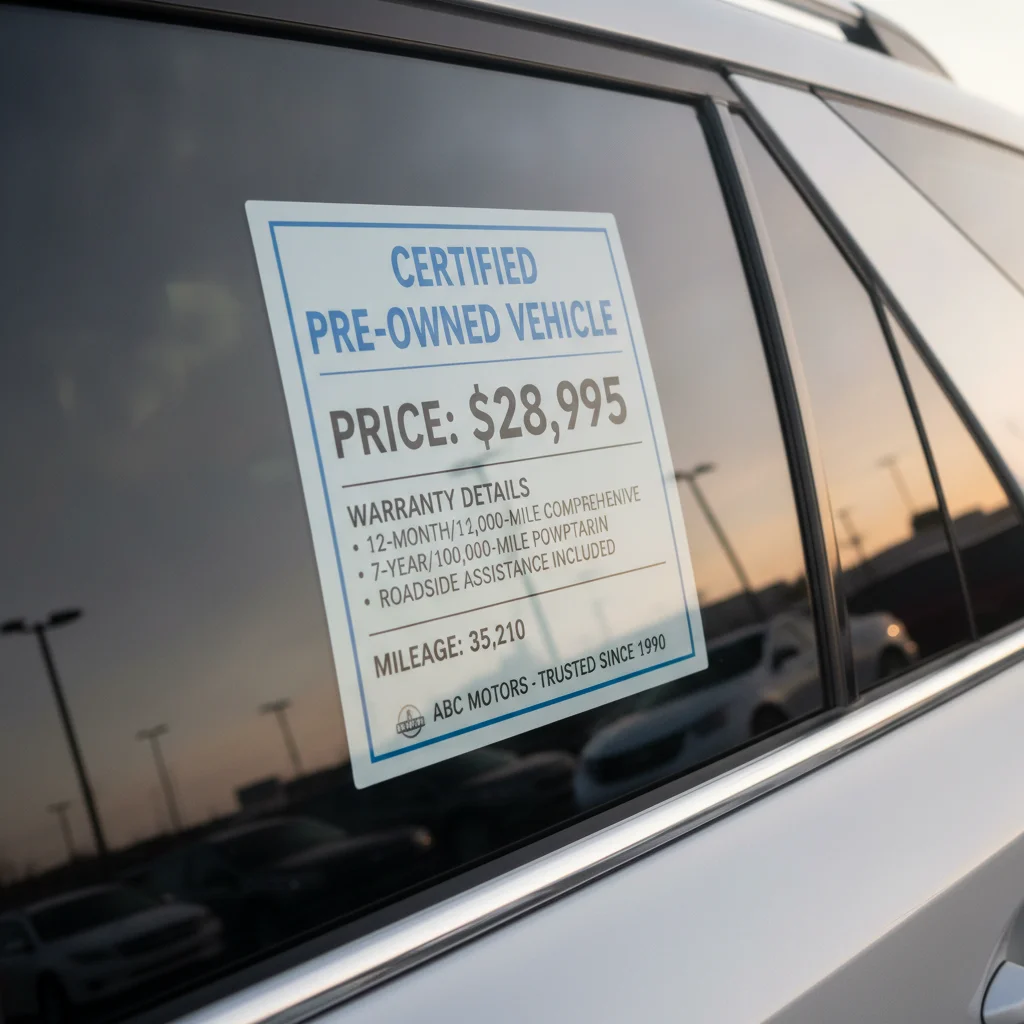
Walk into a dealership to look at a certified pre-owned vehicle and you'll often encounter a confident sales pitch: the price reflects the rigorous inspection, the manufacturer-backed warranty, and the peace of mind you're paying for. The implication is that the number on the window sticker is locked in.
It isn't. CPO vehicles carry a premium over standard used cars — typically $1,000–$3,500 more than a comparable non-certified vehicle — but that premium is built into the asking price with margin already factored in. Dealers expect negotiation. The certification cost to the dealer is usually only a few hundred dollars in labor and parts, so the markup frequently exceeds the actual cost of certification by a meaningful amount.
Understanding this dynamic is the first step toward negotiating confidently. For a broader look at what CPO programs actually include and whether they're worth it in the first place, see our breakdown of CPO vs. standard used cars. Once you've decided a CPO vehicle makes sense for your situation, the question becomes: how do you negotiate it effectively?
The short answer is that you negotiate it differently from a new car, but not as differently as dealers would like you to think. The leverage points shift, the pricing benchmarks change, and the financing incentives work differently — but the fundamental principle is the same: the buyer who arrives with data wins more than the buyer who arrives with enthusiasm.
What You Need Before You Start Negotiating
Preparation is where CPO negotiations are won or lost. Walking in without market data is the single biggest mistake buyers make. Here's what to gather before you sit down across from a salesperson.
What you will need
With these tools in hand, you can anchor every part of the conversation in objective data rather than gut feeling. When a dealer quotes you $28,500 for a CPO sedan and you know the average transaction price for that trim, mileage, and region is $26,800, you're not guessing — you're negotiating.
Edmunds True Market Value (TMV)
Provides data-driven fair market pricing for CPO vehicles by make, model, trim, mileage, and ZIP code.
Kelley Blue Book (KBB) Fair Purchase Price
Gives a regional price benchmark for used and CPO vehicles based on recent transaction data.
Carfax Vehicle History Report
Reveals accident history, number of prior owners, title issues, and service records that affect value.
Bank or Credit Union Pre-Approval
Establishes your financing baseline so you can objectively compare the dealer's rate offer.
TrueCar
Shows what other buyers in your area paid for similar vehicles, providing a second transaction-price benchmark.
Manufacturer CPO Program Details (printout or saved page)
Documents the exact warranty terms so you can assess the real value of the certification being offered.
Step-by-Step: How to Negotiate a CPO Vehicle Price
The process below works whether you're buying from a franchised manufacturer dealership (which runs the official CPO program) or an independent dealer offering its own certification. Follow the steps in order — each one builds the leverage you'll use in the next.
Establish the fair market price before contacting the dealer
Pull pricing data from Edmunds, KBB, and TrueCar for the specific vehicle: same year, make, model, trim level, and mileage range, in your ZIP code. Note both the average listing price and — where available — the average transaction price. Transaction price is more useful because it reflects what buyers actually paid, not what dealers asked.
For a CPO vehicle, also find the listing price for non-certified equivalents. The difference tells you what the market is charging for the certification premium on this specific model. If CPO examples are listing for $2,200 more than non-certified equivalents but the dealer's asking price puts the premium at $3,800, you have a concrete number to work with.
Review the vehicle history report and inspection checklist
Request the Carfax or AutoCheck report and the manufacturer's CPO inspection checklist for the specific vehicle. Both should be provided at no charge — if a dealer refuses either, that's a red flag worth taking seriously.
Look for: accident history (even minor reported incidents affect value), number of prior owners (one owner is worth more than three), rental or fleet use (heavy use patterns affect long-term reliability), and any open recalls. Each negative item is a legitimate basis for a lower offer. A vehicle with one prior accident, for instance, typically sells for 10–15% less than a clean-history comparable — even when certified.
Request quotes from multiple dealerships simultaneously
If more than one dealer in your area carries the model you want, contact all of them by email before visiting in person. Describe exactly what you're looking for (year range, trim, mileage cap) and ask for their best out-the-door price on current inventory.
Dealers who know they're competing against each other have less room to hold firm on price. You don't need to share which competitors you've contacted — simply mention that you're gathering quotes and will be making a decision within a set timeframe. This creates real urgency without manufacturing it artificially.
Make your opening offer anchored to data
When you're ready to make an offer, start below your target price — but not so far below that the dealer dismisses it as unserious. A reasonable opening offer is typically 4–7% below the asking price, depending on how the asking price compares to market data. If the vehicle is already priced at or below market, a 2–3% opening offer is more appropriate.
Frame your offer with your evidence: "Based on transaction data from Edmunds and KBB, comparable vehicles in this region are selling for around $X. Given the accident noted on the Carfax, I'd like to start at $Y." This approach signals that you've done homework and that your number isn't arbitrary.
Negotiate the trade-in separately
If you have a vehicle to trade in, get its value assessed independently before arriving at the dealer — use KBB Instant Cash Offer, Carmax's online appraisal tool, or a competing dealer's offer. This gives you a baseline the dealer must meet or beat.
Critically, negotiate the trade-in value after you've agreed on the CPO purchase price. Dealers often bundle these negotiations to create the appearance of movement in one area while making it up in the other. Keeping them separate ensures you can track each number clearly.
Evaluate and negotiate financing and add-on products
Once price and trade-in are settled, the finance office begins. This is where margin recovery happens if the vehicle price concession was larger than the dealer expected. Review every line item on the financing worksheet before signing anything.
Compare the dealer's financing rate against your pre-approval. If the manufacturer CPO rate is lower, use it. If your pre-approval is lower, use that. Decline any add-on products you don't want, and if you do want GAP insurance or an extended warranty, negotiate those prices separately — they typically have 50–100% markup built in.
Review the out-the-door price and confirm all terms before signing
The out-the-door price includes the negotiated vehicle price, any dealer fees, documentation fees, sales tax, and registration costs. Ask for this number in writing before the final contract is generated. Compare it against what was discussed, line by line.
Common line items to scrutinize: documentation fees (legitimate but sometimes inflated — $150–$500 is typical, above $700 warrants a question), dealer preparation fees (often redundant on CPO vehicles that have already been inspected and reconditioned), and any "market adjustment" additions that weren't disclosed earlier in the process.
For a detailed comparison of how this process differs when you're buying new, see how new-car vs. CPO negotiation tactics diverge. And once you've closed the deal, maximizing your CPO ownership experience over time is the natural next step.
Financing a CPO Vehicle: Don't Overlook This Negotiation
The vehicle price is only one part of the total cost equation. Financing terms — the interest rate, loan term, and any dealer-added products — can add thousands to your out-of-pocket cost even after you've negotiated a fair vehicle price.
Manufacturer and Independent CPO Programs Are Not Equivalent
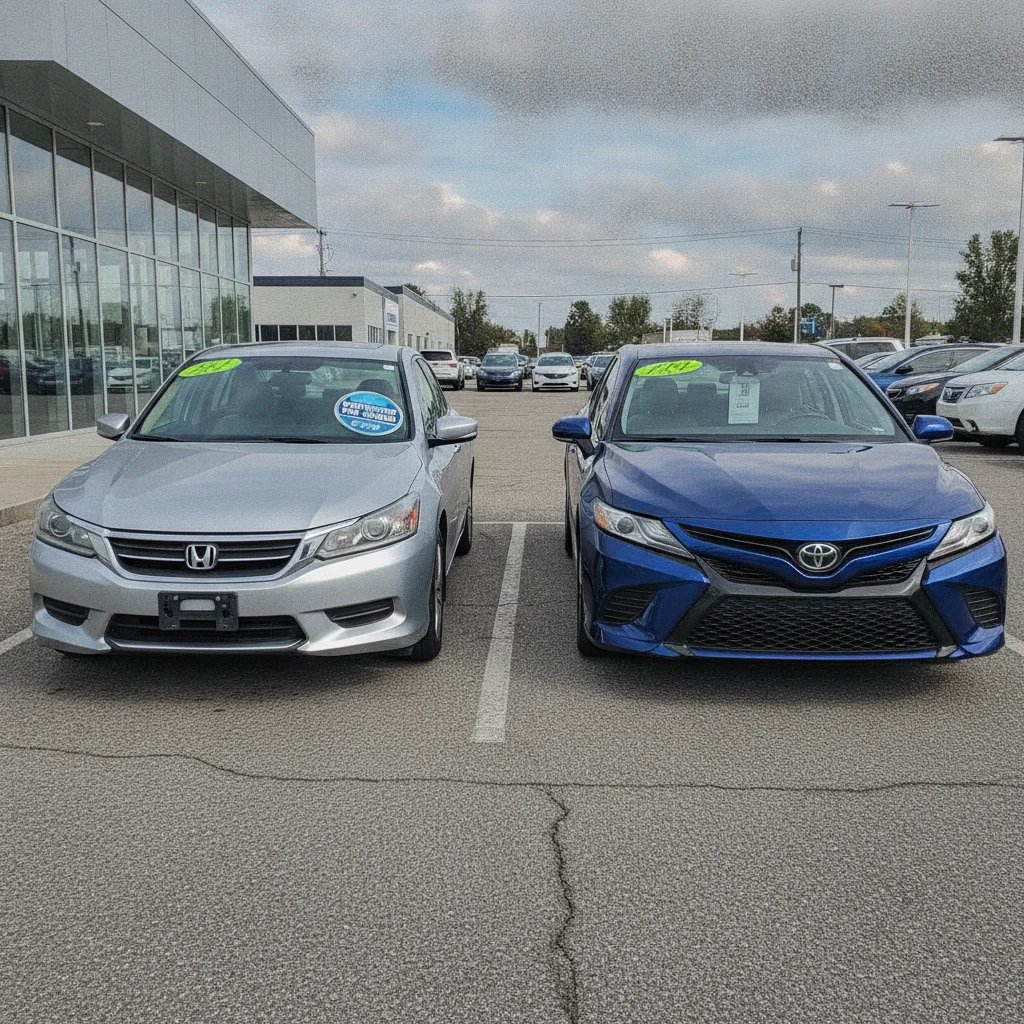
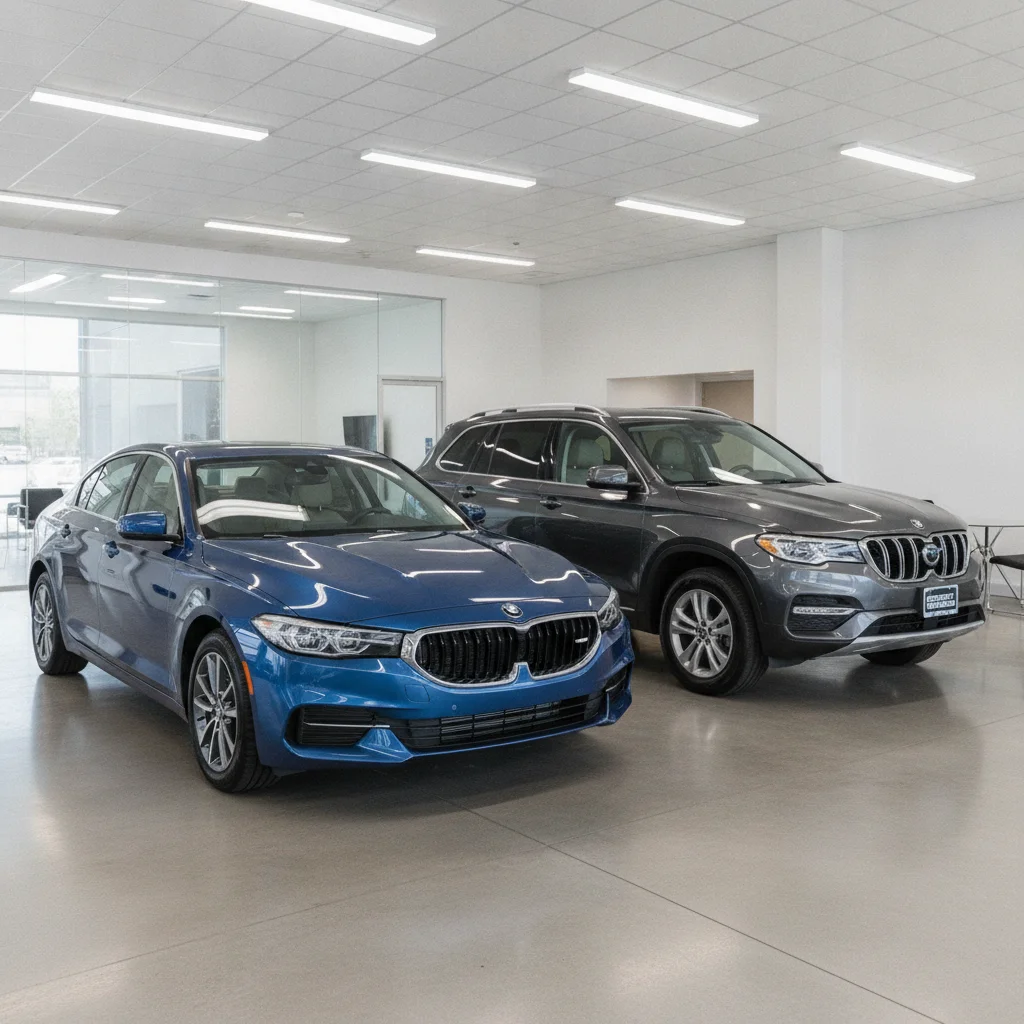
Not all CPO labels carry the same weight. A manufacturer-backed CPO program (Toyota, Honda, BMW, etc.) means the certification and warranty are backed by the automaker with nationwide dealer service support. An independent CPO program offered by a used car lot involves a third-party warranty that may have significant coverage gaps and claim restrictions. Always confirm who backs the warranty before assuming coverage is comparable.
Monthly Payment Framing Can Obscure Total Cost
Dealers sometimes respond to price negotiations by shifting the conversation to monthly payments — offering a lower payment by extending the loan term rather than reducing the vehicle price. A 72-month loan at a higher price can produce a lower monthly payment than a 48-month loan at a lower price while costing thousands more in total. Always evaluate the out-the-door price and total interest paid, not the monthly payment in isolation.
Manufacturer CPO programs often come with incentivized financing rates. Toyota Financial Services, for example, periodically offers CPO buyers rates of 1.9%–3.9% APR — significantly below the market average for used car loans, which typically runs 6%–10% depending on credit. These rates are worth taking when they're genuinely competitive. The problem is that dealers sometimes quote these promotional rates as the only option, without making clear that you can also arrange your own financing.
Before you visit the dealership, get pre-approved by your bank or credit union. When the dealer quotes a rate, you have a real number to compare it against. If the manufacturer rate beats your pre-approval, use it. If it doesn't, decline financing through the dealer entirely. This position also removes a common dealer tactic: bundling rate markups with vehicle price discounts in a way that obscures the true cost.

On the topic of add-on products: GAP insurance, paint protection packages, and extended warranties are almost always presented as package deals with fixed prices. They are not fixed. GAP insurance, for instance, can typically be purchased from your insurer for $20–$40 per year — far less than the $400–$900 a dealer might charge. Extended warranties have even more margin built in. If you want any of these products, negotiate them as separate line items, and don't commit to them on the same day as the vehicle purchase.
Use Month-End Timing to Your Advantage
Dealership sales staff work against monthly quotas. In the final three to five days of the month, salespeople and managers are more willing to approve larger discounts to hit their targets. If your timeline is flexible, scheduling your negotiation during this window measurably improves your position. The same effect occurs at the end of a quarter (March, June, September, December).
Ask About Loaner and Demo Vehicles
Manufacturer dealerships sometimes CPO-certify vehicles that previously served as loaner cars or dealer demos. These vehicles often have low mileage but are priced below comparable retail CPO inventory because of their prior use designation. They carry the same manufacturer certification and warranty — making them worth asking about specifically when you contact the dealer.
Take the Add-Ons Home to Decide
Finance offices create a sense of urgency around add-on products like extended warranties and paint protection. You are not required to decide on the spot. Ask for the product disclosure documents to review at home, and request pricing in writing. This eliminates time pressure and lets you compare costs against third-party alternatives before committing.
For more guidance on the full CPO buying process from initial research through signing, the complete CPO buying roadmap covers every stage in detail.
Common Negotiation Obstacles and How to Handle Them
Dealers have practiced responses to every buyer tactic. Knowing what to expect keeps you from being thrown off course mid-negotiation.
"The CPO price reflects the certification — it's not negotiable."
This is the most common pushback, and it sounds authoritative. The correct response is to acknowledge the certification value while redirecting to market data: "I understand the certification has real value — that's why I'm interested in this vehicle over a standard used car. But market pricing for this trim at this mileage in this region is around $X, and I'd like to start there." You're not disputing the warranty; you're anchoring to a real number.
"Another buyer is interested."
This may or may not be true. Your response: "That's fine — if they buy it, I'll find another option. I'm working from market data, not urgency." Showing that you're not emotionally attached to one specific vehicle dramatically reduces the pressure this tactic creates.
"I can only go down $200."
Small concessions are an opening, not a final position. Respond by narrowing your own offer slightly — for example, moving from asking for $1,500 off to asking for $1,100 off — rather than accepting the $200 and treating that as the resolution. Negotiation is iterative.
Never Agree to Price and Financing Simultaneously
One of the most effective dealer tactics is to bundle the vehicle price negotiation with the financing offer, presenting a combined monthly payment as the deal. This makes it nearly impossible to know whether you've gotten a fair vehicle price, a fair interest rate, or neither. Negotiate the purchase price to a firm number first, get it in writing, and only then discuss financing terms. This separation is the single most important structural discipline in the entire CPO negotiation process.
"Let me show you what your monthly payment would be."
Monthly payment framing is one of the most effective dealer tools because it shifts focus away from total cost. A lower monthly payment can actually mean you're paying more over the life of the loan if the term is extended. Always negotiate the out-the-door price first, and calculate monthly payments yourself once that number is agreed upon. See all negotiation strategies that apply to used and CPO vehicles in the dealer negotiation hub.
Knowing When to Walk Away — And When to Close
Not every CPO deal is worth taking. The goal isn't to beat the dealer at all costs — it's to reach a transaction price that's fair relative to market data and that makes financial sense given your total cost of ownership.
If the dealer won't move below a price that market data shows is 5–10% above comparable vehicles, walking away is the right call. Inventory rotates, and a similar vehicle will likely appear within weeks. Dealers know this too, which is why a written or verbal indication that you're leaving often prompts a better offer — sometimes before you reach the door.
When the numbers do align, close efficiently. Don't reopen price negotiations once you've agreed, and review every line item in the finance office carefully before signing. Add-on products can appear in contracts even after you've declined them verbally — confirm each line item reflects what was agreed.

The buyers who consistently get good CPO deals share a common trait: they treat it as a financial transaction, not an emotional one. They arrive with data, engage with patience, and are genuinely willing to leave if the math doesn't work. That posture — more than any single tactic — is what produces consistently favorable outcomes.
You can explore the full landscape of used car buying, from how to evaluate condition to how to handle private sellers, at the buying used cars hub.

All claims are backed by peer-reviewed research. Sources on request.