Key Takeaways
Option A
Manufacturer CPO Program
The factory-backed, standardized guarantee.
Best for: Buyers who want predictable warranty coverage, roadside assistance, and verifiable inspection standards set by the brand itself.
Option B
Dealer-Certified Program
The dealer-defined, variable alternative.
Best for: Budget-conscious shoppers who understand the limited protections involved and want a lower sticker price than a true manufacturer CPO.
If you want maximum peace of mind and a factory-backed warranty
Manufacturer CPO Program
The inspection standards, warranty terms, and roadside assistance are set and honored by the automaker — not subject to individual dealership discretion.
If you're buying an older or higher-mileage vehicle that doesn't qualify for manufacturer CPO
Dealer-Certified Program
When a car is too old or has too many miles to qualify for a factory program, a dealer-certified inspection with a written report is better than no vetting at all — just read the fine print carefully.
If you plan to finance through the manufacturer's lending arm
Manufacturer CPO Program
Automakers routinely offer reduced APR financing exclusively on CPO inventory, which can save hundreds or thousands in interest over the loan term.
If you're buying a non-franchise brand vehicle from an independent lot
Dealer-Certified Program
Independent dealers cannot access manufacturer CPO programs, so a rigorous dealer inspection paired with a third-party extended warranty is the practical alternative.
If resale value and future trade-in strength matter to you
Manufacturer CPO Program
Manufacturer CPO status is documented in vehicle history and recognized by appraisers, giving CPO cars a measurable edge at trade-in over dealer-certified equivalents.
Why the Confusion Exists — and Why It Costs Buyers
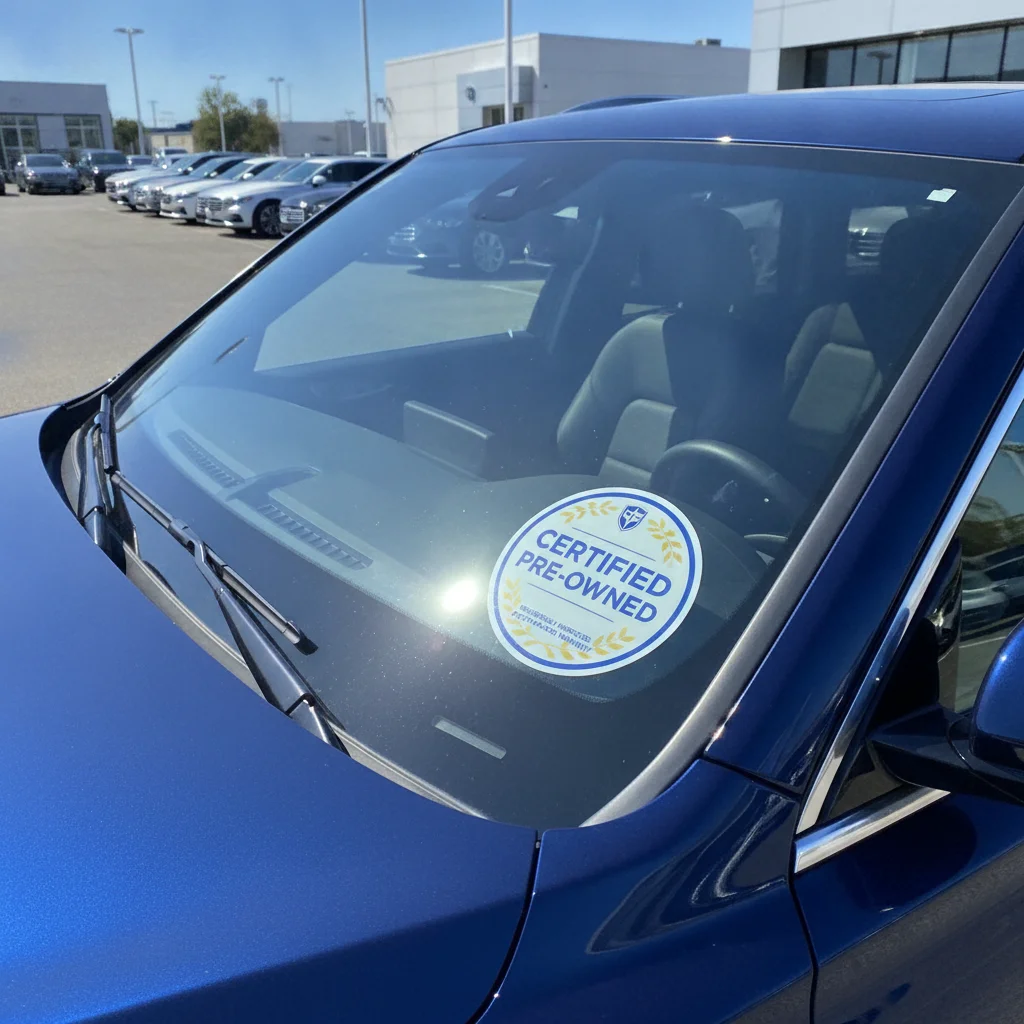
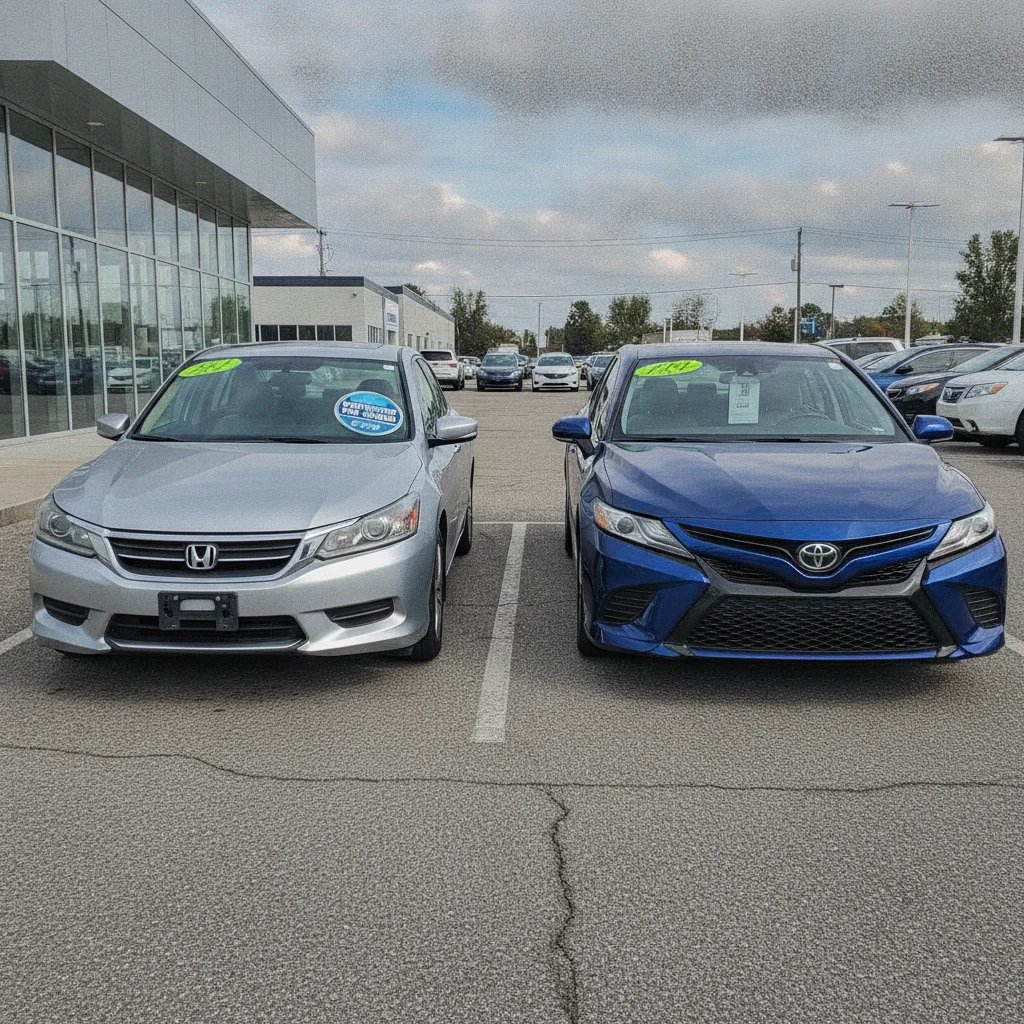
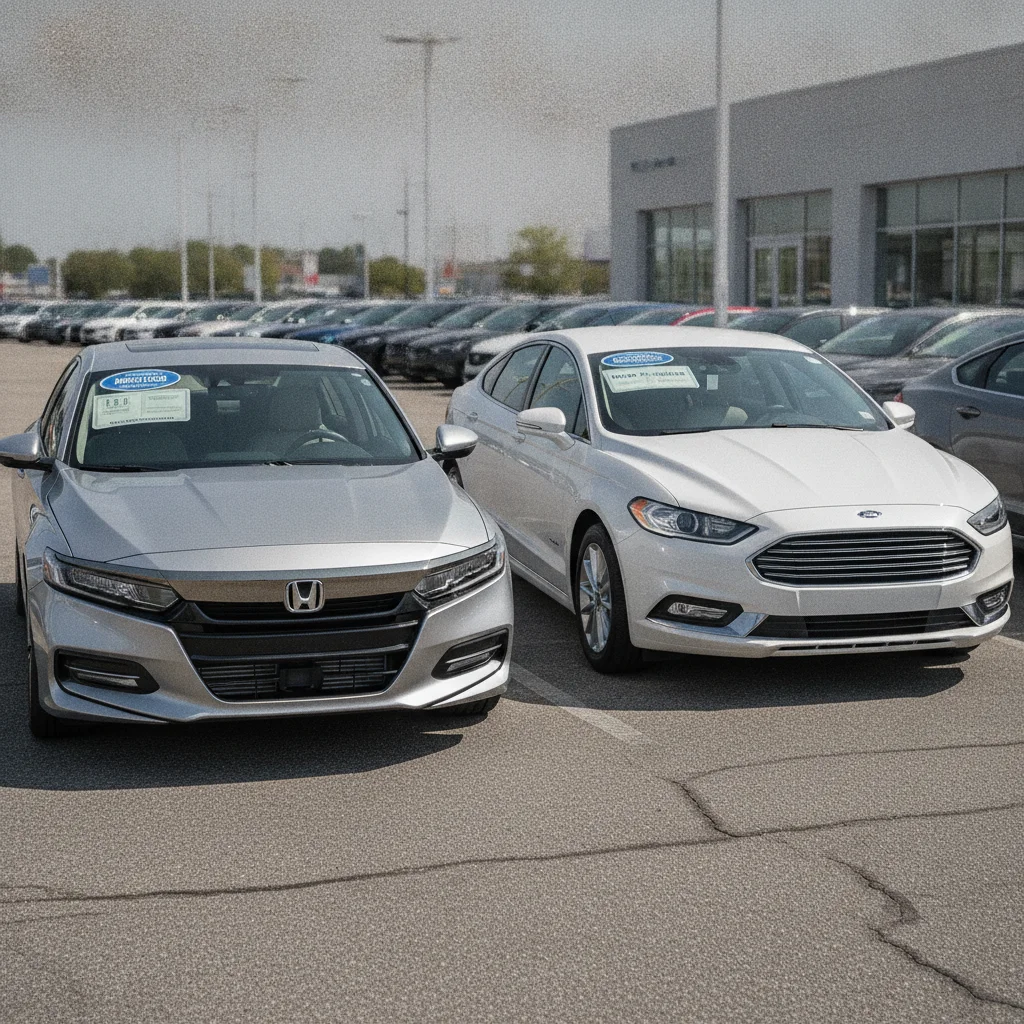
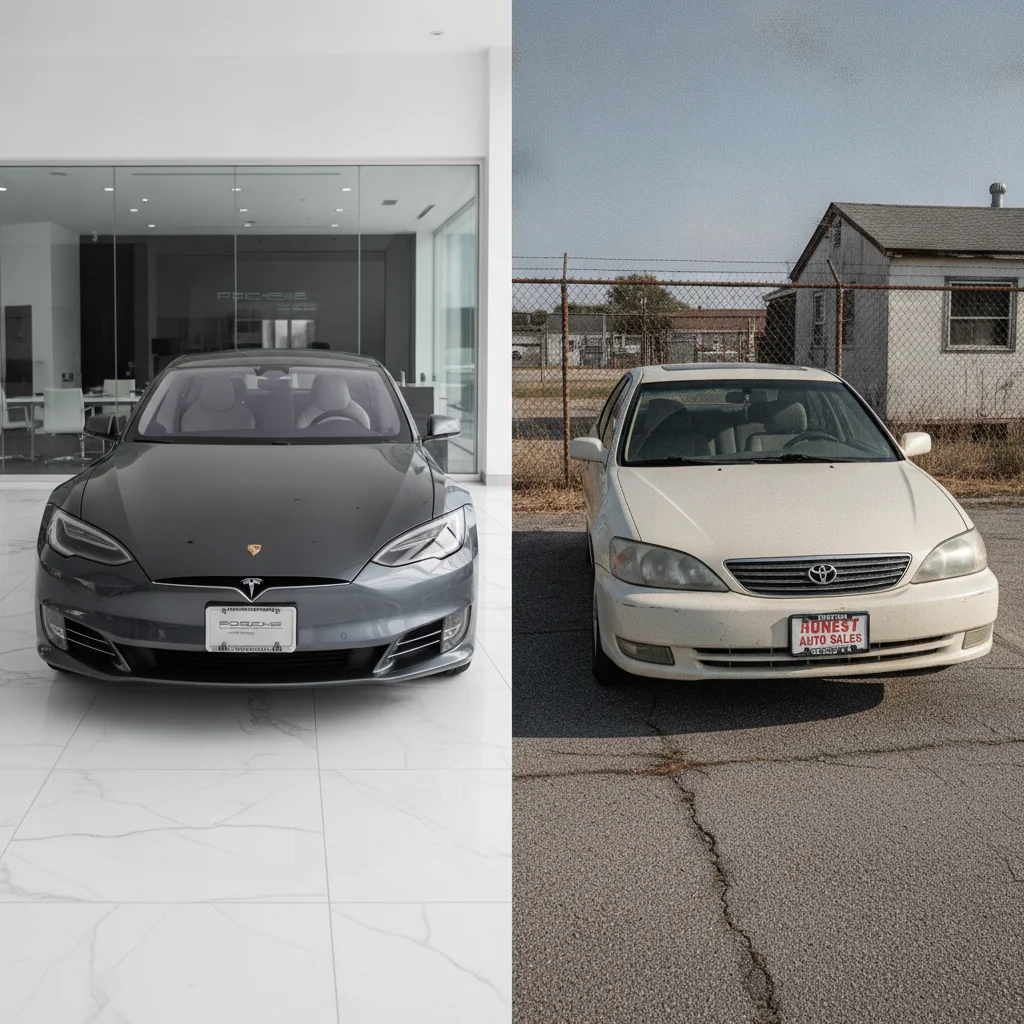
Walk into almost any dealership today and you'll see windshields plastered with the word certified. Banners, window stickers, and online listings use the term freely. The problem is that "certified" means something very specific when it comes from a manufacturer — and almost nothing when it comes from a dealer acting alone. Confusing the two is one of the most expensive mistakes a used-car buyer can make.
The root of the confusion is linguistic. Both a Toyota dealer running Toyota's official Certified Used Vehicles program and an independent lot that put a car through its own 50-point checklist can legally call their vehicles "certified." There is no federal regulation preventing a dealer from using the word. The difference lies entirely in who set the standards, who backs the warranty, and what recourse you have when something goes wrong.
Buyers who don't understand the distinction often pay manufacturer-CPO prices for dealer-certified protection — or worse, assume they have warranty coverage they don't actually have. See our full breakdown of CPO vs. standard used cars for context on why the label matters in the first place.
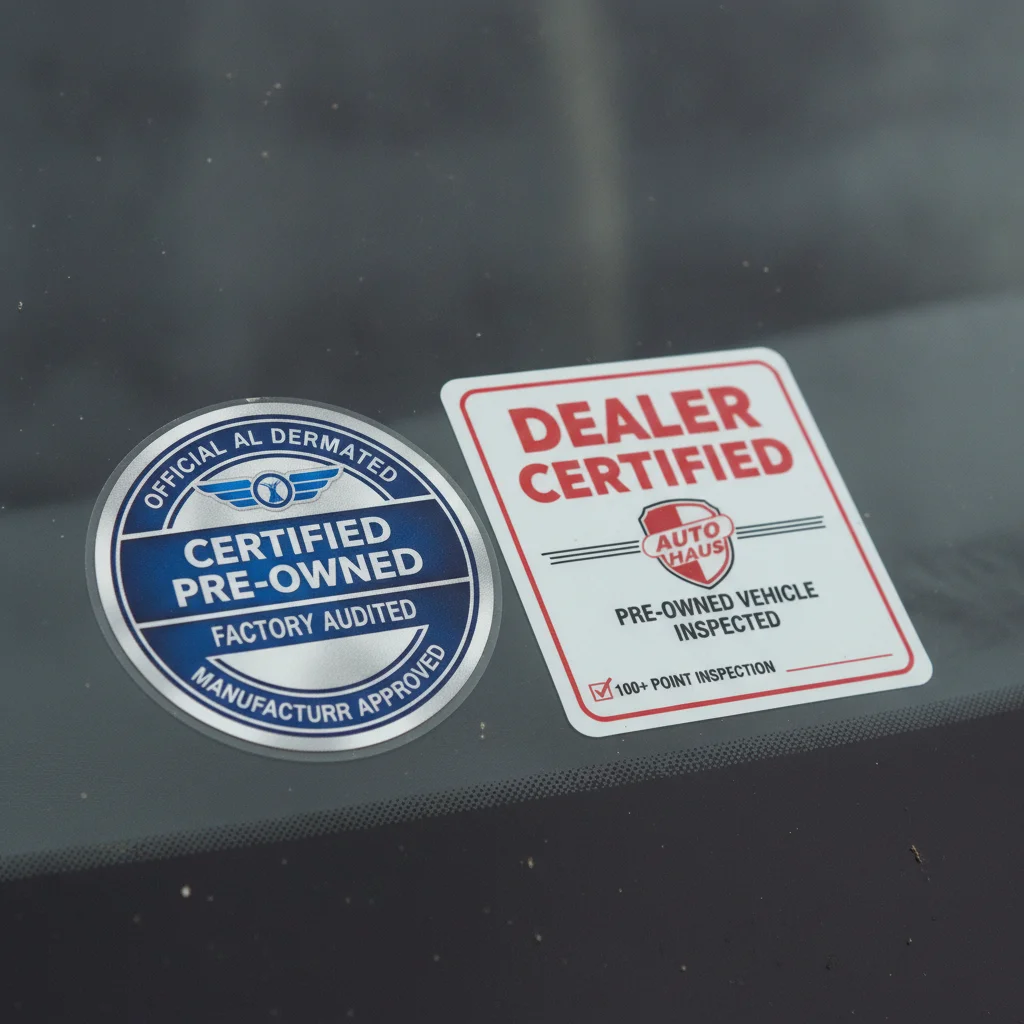
This article draws a clear line between the two programs so you can evaluate what you're actually buying — and whether the price premium is justified.
What a Manufacturer CPO Program Actually Includes
A genuine manufacturer CPO program has three defining characteristics that no dealer-only program can replicate: factory-set inspection criteria, factory-backed warranty coverage, and manufacturer-administered benefits.
Factory-Set Inspection Criteria
Every automaker with a CPO program publishes a specific inspection checklist — often 100 to 200 points — that every vehicle must pass before earning the certification. Toyota's program, for example, requires a 160-point inspection. Honda's requires 182 points. These aren't suggestions; they're minimum standards enforced across every franchised dealership in the country. A technician at a Toyota dealer in Maine uses the same checklist as one in Arizona.
Manufacturer programs also impose hard eligibility limits. Most require the vehicle to be:
- Under 6 years old (some programs cap at 5)
- Under 80,000 miles (some cap at 60,000 or 75,000)
- A single brand (you can't buy a Honda CPO at a Toyota store)
- Free of major structural or flood damage, verified through a vehicle history report
If a car doesn't meet those criteria, it simply cannot be sold as a manufacturer CPO — period. That hard gate is part of what makes the label meaningful.
Factory-Backed Warranty
This is the most consequential difference. When you buy a manufacturer CPO vehicle, the warranty is issued by the automaker — not the dealer. If the dealer closes tomorrow, your warranty remains valid at any franchised dealership for that brand. The coverage is also standardized: you know exactly what's included before you buy.
Most manufacturer CPO warranties include a powertrain warranty extension (often bringing total powertrain coverage to 7 years or 100,000 miles from the original in-service date) and a shorter bumper-to-bumper component warranty. Some — like BMW and Mercedes-Benz — offer full remaining factory warranty transfer plus an additional extension period.
182 pts
Honda's manufacturer CPO inspection checklist
Honda's certified pre-owned program requires a 182-point inspection, a standard applied uniformly at every Honda franchise dealer in the United States.
$2,000+
Potential interest savings with CPO financing
On a $25,000 vehicle financed over 60 months, a 3% APR difference between manufacturer CPO rates and standard used-car rates can reduce total interest paid by roughly $2,000.
7 yrs / 100k
Typical manufacturer CPO powertrain coverage
Many major automakers extend powertrain coverage to 7 years or 100,000 miles from the original in-service date as part of their certified pre-owned programs.
$100–$200
Cost of an independent pre-purchase inspection
An independent mechanic's pre-purchase inspection typically costs between $100 and $200, offering a cost-effective alternative when manufacturer CPO is unavailable.
Additional Manufacturer Benefits
Beyond the inspection and warranty, manufacturer CPO programs typically include:
- 24-hour roadside assistance — towing, lockout service, and flat-tire help at no extra cost
- Trip-interruption protection — reimbursement for meals and lodging if your vehicle breaks down far from home
- Special financing rates — manufacturers frequently offer 1–2% lower APR on CPO vehicles compared to non-certified used cars through their captive lenders
- Exchange or buyback provisions — some programs allow a return or exchange within a set window if you're unhappy
These benefits are administered by the manufacturer, not negotiated dealership-by-dealership.
What Dealer-Certified Actually Means
Here's the honest reality of dealer-certified programs: there is no universal definition. A dealer can call a car "certified" after a 20-point visual inspection or after a thorough 150-point mechanical audit. Both are legal. Both can use the word on the window sticker. The difference is entirely up to the dealer's own standards and business practices.
Dealer-Set Standards Vary Wildly
Some franchise dealers who sell brands outside their main product line — a Toyota store selling a used Honda, for instance — run rigorous inspections and offer limited warranty add-ons. Others use "certified" as a marketing term with no substantive inspection behind it. Independent lots without any franchise agreement operate in the same gray zone.
Dealer-certified cars also typically do not qualify for age and mileage limits set by manufacturers. An 8-year-old car with 110,000 miles can be dealer-certified. A manufacturer CPO program would never allow it. That doesn't automatically make the car a bad purchase, but it does mean you're operating without the safety net of factory standards.
The Warranty Situation
If a dealer offers any warranty on a certified vehicle, it is almost always one of two things:
- A limited dealer warranty — typically 30 to 90 days of powertrain coverage only, honored only at that dealership
- A third-party extended warranty — purchased by the dealer from an aftermarket warranty company and bundled into the sale price
Neither of these is equivalent to a manufacturer warranty. A dealer warranty disappears if the dealer closes. A third-party warranty from an aftermarket company may come with claim denials, coverage exclusions, and customer service issues that manufacturer warranties rarely produce. Always read the actual warranty contract — not just the sales pitch.

Before accepting a dealer-certified label at face value, ask for the written inspection report. If the dealer can't produce a detailed checklist showing what was inspected and what — if anything — was repaired, treat the certification as essentially meaningless. You can also cross-reference with our guide on how to verify a car's CPO status directly to confirm what you're actually getting.
Franchise vs. Independent Dealers Matter Here
Only franchised dealerships — those with an official agreement to sell a specific brand new — can participate in that brand's manufacturer CPO program. An independent used-car lot, even a large and reputable one, cannot sell a Toyota CPO or a Ford CPO vehicle. If you're shopping at an independent dealer and see the word 'certified,' it is by definition a dealer-defined program, not a manufacturer one. This isn't necessarily disqualifying, but it means your due diligence has to be more thorough.
Ask for the Warranty Document Before You Negotiate Price
Most buyers review the warranty after they've already emotionally committed to a vehicle. Review the actual warranty contract — not a brochure — before you begin price negotiations. Understanding exactly what's covered and what's excluded lets you calculate the true value of the certification, which directly affects how much premium (if any) you should be willing to pay. If the dealer won't produce the warranty document before the sale, that itself is a red flag.
Head-to-Head: The Key Differences at a Glance
The table below distills the structural differences between manufacturer CPO programs and dealer-certified programs across the criteria that matter most to buyers.
| Criterion | Manufacturer CPO | Dealer-Certified |
|---|---|---|
| Who sets inspection standards | The automaker (uniform, nationwide) | The individual dealership (varies widely) |
| Inspection point count | 100–200 points (published) | Varies; often unpublished |
| Age/mileage eligibility limits | Yes — strict (e.g., under 6 yrs / 80k miles) | None — any vehicle can qualify |
| Warranty backer | The manufacturer | The dealer or a third-party company |
| Warranty transferability | Valid at any franchised dealer nationwide | Often only at the selling dealer |
| Roadside assistance | Included (manufacturer-administered) | Rarely included; varies by dealer |
| Subsidized financing rates | Often available through manufacturer lender | Not available; standard used-car rates apply |
| Price premium over non-certified | $1,000–$3,000 typical | $0–$1,500 typical |
| Verifiable with manufacturer | Yes — directly confirmable | No — no external verification |
One category deserves extra attention: financing. When manufacturers want to move CPO inventory, they use their captive lending arms — Toyota Financial Services, GM Financial, Ford Motor Credit, etc. — to offer reduced APR rates. It's not unusual to see CPO financing offered at 1.9% or 2.9% APR when the going rate on a non-certified used car at the same dealer is 6% or 7%. Over a 60-month loan on a $25,000 vehicle, a 3% interest rate difference saves approximately $2,000 in total interest paid. That savings alone can offset much of the CPO price premium.
Dealer-certified vehicles rarely come with subsidized financing rates. You're more likely to be quoted a standard used-car rate from a third-party lender, which won't carry the same manufacturer-backed incentives.
When Each Option Makes Financial Sense
Manufacturer CPO programs cost more upfront — typically $1,000 to $3,000 above comparable dealer-certified or non-certified used vehicles. Whether that premium is worth paying depends on several factors.
The Case for Paying for Manufacturer CPO
The CPO premium tends to justify itself when:
- You're financing the purchase. The lower CPO interest rate can offset or eliminate the price premium entirely over the loan term.
- The vehicle is coming off lease and has remaining factory warranty. A CPO extension on top of existing coverage gives you near-new-car protection at a significant discount versus buying new.
- You're buying a luxury brand. Repair costs for BMW, Mercedes-Benz, Audi, and similar brands are substantially higher than mainstream brands. The warranty extension has much higher actuarial value.
- You plan to keep the car 3–5 years. Longer ownership means more exposure to repair risk and more time to benefit from roadside assistance and trip interruption coverage.
For buyers weighing the broader new vs. used calculation, our guide to buying new cars covers how CPO fits into that decision.
When Dealer-Certified Can Be Acceptable
Dealer-certified isn't automatically a red flag — it's a red flag only when buyers don't understand what they're accepting. The dealer-certified route can be reasonable when:
- The vehicle is outside manufacturer CPO eligibility. A 7-year-old car can still be a solid purchase; it just won't carry factory coverage. A thorough dealer inspection with a written report is still better than nothing.
- You plan to buy a separate third-party extended warranty. If you negotiate a robust aftermarket warranty from a reputable provider and price it separately, you can approximate CPO-level coverage at potentially lower total cost.
- You have the vehicle inspected independently. A pre-purchase inspection from an independent mechanic (typically $100–$200) can substitute for some of the assurance that a CPO inspection provides.
The key is knowing what you're buying. See our comparison of what certified labels actually get you vs. standard used for a deeper look at this trade-off.
If you're considering an electric vehicle in either category, the CPO evaluation has additional complexity around battery health and range degradation. Our article on EV CPO programs and what makes them different walks through those specific considerations.
Questions to Ask Before You Sign Anything
Whether you're looking at a manufacturer CPO or a dealer-certified vehicle, the due diligence process isn't optional. Here are the specific questions to ask — and what to do with the answers.
For Any Vehicle Labeled Certified
- "Can I see the written inspection checklist?" — A legitimate inspection produces a written record. If it doesn't exist or can't be produced, the certification is marketing, not mechanics.
- "What is the warranty, and who backs it?" — Get the warranty document in hand before the sale, not after. Identify whether it says the manufacturer's name or a third-party warranty company.
- "Is this vehicle registered in the manufacturer's CPO system?" — For manufacturer programs, you can verify certification status directly with the automaker's customer service line or online portal. See how that process works in our guide on verifying a CPO car's actual certification status.
- "What is the interest rate available on this vehicle through manufacturer financing?" — If CPO financing is available, compare it directly to your own pre-approved rate from a bank or credit union.
Specifically for Dealer-Certified Vehicles
- "What does your certification program actually include?" — Make the dealer define it in writing.
- "Is any warranty offered, and what are the exclusions?" — Exclusions matter more than coverage claims. Powertrain-only warranties, for example, exclude almost everything that commonly fails on a modern vehicle.
- "What was repaired or replaced during the inspection?" — A certification that found nothing wrong and repaired nothing may not have looked very hard.
Franchise vs. Independent Dealers Matter Here
Only franchised dealerships — those with an official agreement to sell a specific brand new — can participate in that brand's manufacturer CPO program. An independent used-car lot, even a large and reputable one, cannot sell a Toyota CPO or a Ford CPO vehicle. If you're shopping at an independent dealer and see the word 'certified,' it is by definition a dealer-defined program, not a manufacturer one. This isn't necessarily disqualifying, but it means your due diligence has to be more thorough.
Ask for the Warranty Document Before You Negotiate Price
Most buyers review the warranty after they've already emotionally committed to a vehicle. Review the actual warranty contract — not a brochure — before you begin price negotiations. Understanding exactly what's covered and what's excluded lets you calculate the true value of the certification, which directly affects how much premium (if any) you should be willing to pay. If the dealer won't produce the warranty document before the sale, that itself is a red flag.
One more step worth taking regardless of certification type: run a vehicle history report (Carfax or AutoCheck) and cross-reference the mileage and ownership history against what the dealer has told you. Certifications don't change history — they certify condition at a moment in time.

All claims are backed by peer-reviewed research. Sources on request.