
Key Takeaways
Summary
24 items · 20–40 minutes at the dealership
Why the Finance Office Is Where Deals Go Sideways
You spent hours researching trim levels, negotiating price, and test-driving vehicles. You got the salesperson down to a number you can live with. Then you're handed off to the finance manager — and that's where many buyers quietly give back everything they just won.
The finance office is a profit center. Finance managers are compensated on back-end revenue: the interest rate markup, the extended warranty, the GAP insurance, the paint protection film. A skilled finance manager can add $1,500 to $4,000 in back-end profit to a deal in 20 minutes, and most buyers leave without realizing it happened.
This checklist won't make that room less uncomfortable. But it will give you the right questions to ask at each stage — on the loan terms, on every fee, and on every product placed in front of you — so you know exactly what you're signing before you sign it.

If you're still in the vehicle selection phase, asking the right questions during a test drive will help you surface information about the vehicle before any paperwork comes into play. And if you're buying remotely, questions for buying a car you can't drive first covers a different set of risks worth knowing about.
What to Have Ready Before You Sit Down
Walking into the finance office unprepared is like negotiating a salary without knowing the market rate. The single most powerful thing you can do is arrive with a pre-approval letter from your bank or credit union. It converts you from a passive recipient of whatever rate the dealer offers into a buyer with an alternative — and dealers know it.
Here's what to bring and know before you enter:
Bank or Credit Union Pre-Approval Letter
Gives you a concrete APR benchmark to compare against dealer financing and signals to the finance manager that you're an informed buyer.
Credit Score Report (recent, within 30 days)
Helps you anticipate the rate tier you'll be placed in and catch any discrepancies in the dealer's credit assessment.
Calculator App
Run your own payment calculations to verify the dealer's figures and model different loan term scenarios on the spot.
Auto Loan Amortization Tool
Shows the total interest paid over the life of a loan, making term-length trade-offs concrete and comparable.
Your Auto Insurance Contact or App
Lets you quickly check the cost of adding GAP coverage through your insurer before accepting the dealer's version.
Notepad or Phone Notes App
Record every number verbally quoted during negotiation so you can compare them to what appears in the final contract.
Your credit score matters because lenders use it to place you into rate tiers. A buyer at 720 and a buyer at 680 are often quoted meaningfully different rates — sometimes 2–3 percentage points apart — even at the same dealership. Know where you stand so you can gauge whether the rate you're offered is appropriate or inflated.
Monthly Payment Framing Is a Deflection Tactic
When a finance manager asks 'what payment are you comfortable with,' they're shifting your attention away from the total cost of the loan. A 72-month loan at 9% APR on a $35,000 vehicle means you'll pay over $10,000 in interest alone. Always anchor the conversation to the total purchase price and total interest paid — not a monthly dollar figure.
Spot Delivery Can Unwind a Deal After You Drive Home
Some dealers finance the vehicle on the spot before lender approval is confirmed. If the lender later declines or requires different terms, you may be called back to sign a new contract — often at a higher rate. Ask explicitly whether your financing is fully approved or contingent, and do not consider a deal final until you have confirmed written lender approval.
Verbal Promises Are Worthless Without Paper
If a salesperson or finance manager verbally promises to include floor mats, a full tank of gas, or a first free oil change, that promise means nothing unless it appears on the purchase agreement. Dealers have no obligation to honor verbal commitments once you've signed. Get every concession in writing before your pen touches the contract.
The Questions — Organized by Stage
These questions are organized to match the sequence of a typical finance office visit. Work through them in order, and don't let the conversation move forward until you have a clear answer to each one that applies to your deal.
Before You Enter the Finance Office
Loan Terms and Interest Rate
Fees Line by Line
Add-On Products and Warranties
Final Contract Review
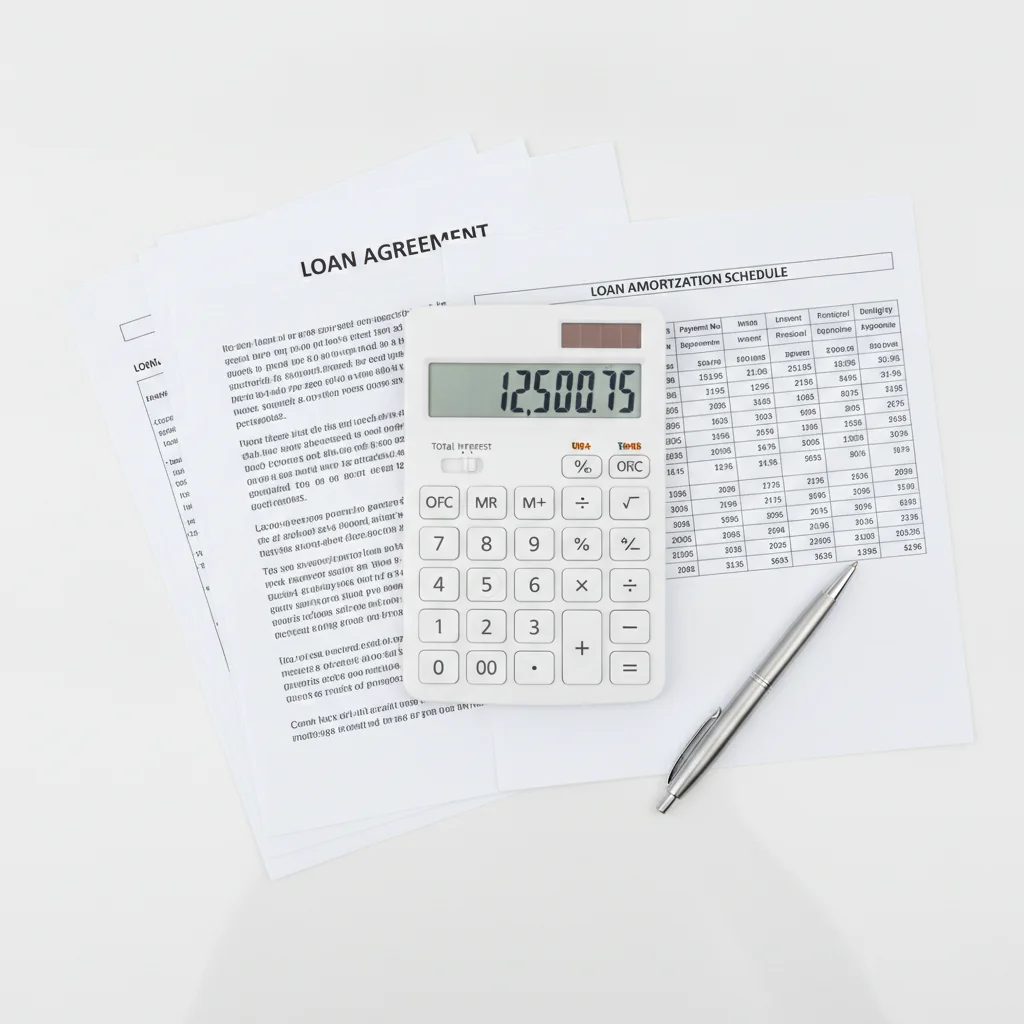
For a deeper look at what each line of the actual contract means, the step-by-step guide to reading an auto loan contract walks through the document structure in detail. And if you want a parallel checklist focused specifically on the contract itself rather than the conversation, see the pre-signing checklist for car purchase contracts.
You Can Walk Away at Any Point Before Signing
Until your signature is on the purchase agreement, you are under no obligation to complete the transaction. Pressure tactics, long waits, and urgency language ('this deal is only good today') are sales techniques — not contractual realities. If the terms in the finance office don't match what was negotiated on the floor, it is always better to walk than to sign a contract you'll be paying on for five or six years.
Dealer-Added Products Can Add Thousands With One Checkbox
Finance managers are trained to present add-ons quickly and bundle them into a monthly payment impact ('it's only $12 more a month'). On a 72-month loan, that '$12' is an extra $864 — often for a product with limited value. Extended warranties, paint sealants, and tire-and-wheel packages added in the finance office are almost always marked up significantly. Price each product separately and research alternatives before agreeing.
The Numbers That Actually Matter
Most of the confusion in a finance office comes from shifting attention between different numbers. Here's a plain breakdown of the figures you need to track simultaneously:
| What to Track | Why It Matters | Where to Find It |
|---|---|---|
| Vehicle selling price | The baseline for everything — must match your negotiated figure | Purchase agreement, line 1 or 2 |
| APR (not interest rate) | APR includes fees and reflects the true annual cost of borrowing | Retail installment contract |
| Loan term (months) | Longer terms lower payments but dramatically increase total interest | Retail installment contract |
| Total amount financed | The principal you're borrowing — should equal price minus down payment | Retail installment contract |
| Total of payments | What you'll actually pay the lender over the full term | Retail installment contract |
| Total interest paid | Total of payments minus amount financed — the real cost of the loan | Calculate it yourself or ask |
A 72-month loan at 8.5% APR on $32,000 financed will cost you roughly $8,300 in interest over the term. A 48-month loan on the same amount at the same rate costs about $5,500. That $2,800 difference is real money — and it's the kind of trade-off that gets glossed over when the conversation stays on monthly payments.
For a full breakdown of how loan length affects total cost, the pre-signing loan term review guide covers this in structured detail.
Add-Ons: What to Question, What to Skip, What to Price Elsewhere
Every product the finance manager presents has value to someone in some situation. The problem isn't the products — it's the pricing and the pressure. Here's a quick reference on the most common add-ons:
- GAP Insurance
- Covers the difference between what you owe and what your insurer pays if the car is totaled. Genuinely useful if you're putting less than 20% down or financing over 60 months. However, your auto insurer can typically add this for $20–$40 per year. The dealer version often runs $400–$900 and is rolled into the loan, so you pay interest on it too.
- Extended Warranty / Service Contract
- Can be worth considering for vehicles you plan to keep past the manufacturer's warranty period, especially on brands with higher repair costs. But read the exclusions. Many contracts exclude the components most likely to fail. Also note: you can usually buy a manufacturer-backed extended warranty after purchase, without the finance office pressure.
- Paint Protection Film or Ceramic Coating
- Legitimate products, but the dealer markup is often 300–500% of what an independent detailer charges. If you want this, price it at two or three local shops first.
- Tire and Wheel Coverage
- Only worth it in urban environments with significant pothole exposure. Read the claim process carefully — some contracts require pre-authorization that's difficult to get in a roadside situation.
- Credit Life / Disability Insurance
- Pays off your loan if you die or become disabled. Almost always cheaper through a standalone life or disability insurance policy. Rarely a good value at dealership pricing.
Whatever you decide, price each product as a separate transaction — never as a monthly payment add-on. 'It's only $18 more a month' on a 72-month loan is actually $1,296. Run that math every time.
After You Sign: What to Keep and What to Watch
Once the ink is dry, your job isn't over. Here's what to do in the first 30 days after signing:
- Verify your first payment due date. Missing a payment because you misread the start date creates a delinquency on your credit report that can take months to resolve.
- Confirm the lender servicing your loan. If the dealer sold your contract, you'll need to make payments to a different institution than you might expect. Get the lender's name and contact information before leaving.
- Review all documents at home. What you review in a 20-minute finance office session is less thorough than what you'll catch with fresh eyes and no pressure. Flag anything that doesn't match your recollection and call the dealership immediately.
- Check your credit report in 30–45 days. Confirm the loan appears correctly and that the dealer didn't run more credit inquiries than you authorized.
- Set a calendar reminder to reassess your rate in 12 months. If your credit score improves significantly, refinancing to a lower rate can save hundreds to thousands in interest on longer-term loans.
The Paperwork & Contracts hub has additional resources for buyers navigating the document side of a vehicle purchase, including what to do when you spot an error after signing.
Buying a car should leave you feeling confident, not unsettled. The questions in this checklist exist for one reason: to make sure you walk out knowing exactly what you agreed to, what you're paying for it, and why. That's not cynicism — it's just good practice.
All claims are backed by peer-reviewed research. Sources on request.