Key Takeaways
Why Your Questions Matter as Much as the Drive Itself
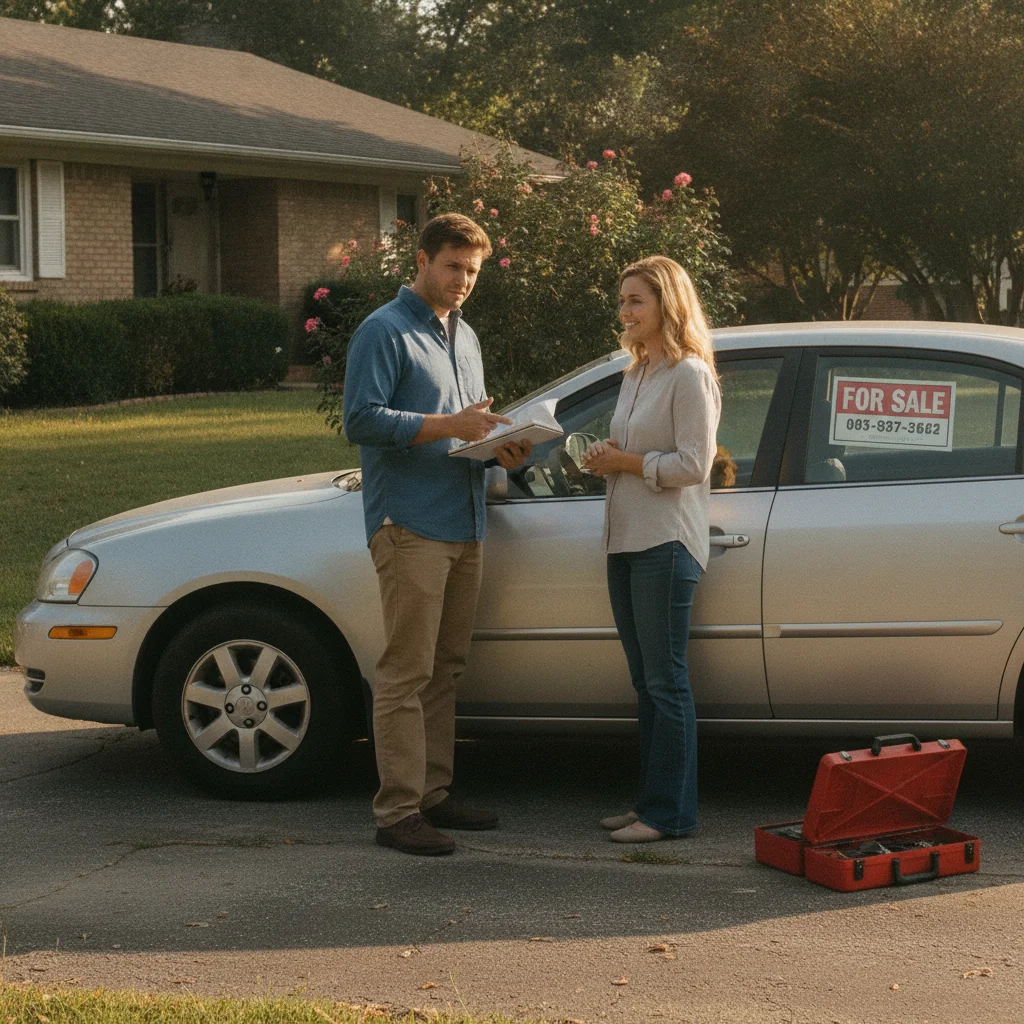
Most buyers spend a test drive focused on how the car feels behind the wheel — and that's exactly right. But the conversation happening alongside that drive is equally valuable. A seller who has owned a car for three years knows things no CarFax report can surface: the slow leak that appears every winter, the transmission hesitation at highway on-ramps, the fact that the check engine light was reset two days before listing.
Getting that information out requires direct, specific questions — not polite small talk. Sellers aren't always dishonest; many simply won't volunteer details they assume you're not interested in. Your job is to make it clear you are interested, and that you're thorough enough to notice inconsistencies.
This list covers the questions that consistently produce useful answers across all types of used car transactions — private party sales, small dealerships, and even certified pre-owned purchases where "certified" can mean different things to different sellers. Pair these with the sensory evaluation covered in test drive tactics for what to listen, feel, and notice and you'll walk away from every showing with a clear picture of what you're actually buying.
The Questions to Ask — and Why Each One Earns Its Place
How long have you owned it, and why are you selling?
This is your opening question and it's more revealing than it sounds. Ownership duration tells you immediately whether you're dealing with a long-term owner who knows the car intimately or a flipper who acquired it recently and may know very little. A seller who's owned the car for six months is in a very different position than someone who drove it for seven years.
The reason for selling matters equally. "Upgrading to something newer," "had a baby and need an SUV," or "relocating and can't take it" are life-circumstance answers that hold up under scrutiny. Vague answers like "just time for a change" or obvious deflection should prompt a follow-up: "Was there anything specific about the car that prompted the timing?"
You're not trying to trap anyone. You're establishing a baseline for the conversation — and short ownership with a vague reason is a combination worth noting.
Short ownership with a vague reason for selling is a combination worth investigating further.
How was the car used day-to-day?
Mileage is just a number. How those miles were accumulated is what determines wear. A vehicle with 80,000 highway miles driven by a single commuter is typically in far better condition than one with 50,000 city miles driven in stop-and-go traffic, with frequent cold starts and heavy brake use.
Ask specifically: Was it a daily driver or a weekend car? Did they use it for road trips or mostly local errands? Was it ever used to tow a trailer, haul heavy loads, or driven off-road? Each of these use patterns leaves a signature on specific components — the transmission, the suspension, the tow hitch receiver, the underbody.
If the seller mentions towing, follow up with whether the car was rated for that load and whether the towing equipment was ever serviced afterward. Many buyers skip this entirely and end up with transmission damage that traces directly back to overloading.
Highway miles are generally easier on a vehicle than the same number of city miles driven in stop-and-go conditions.
Do you have service records, and where was it maintained?
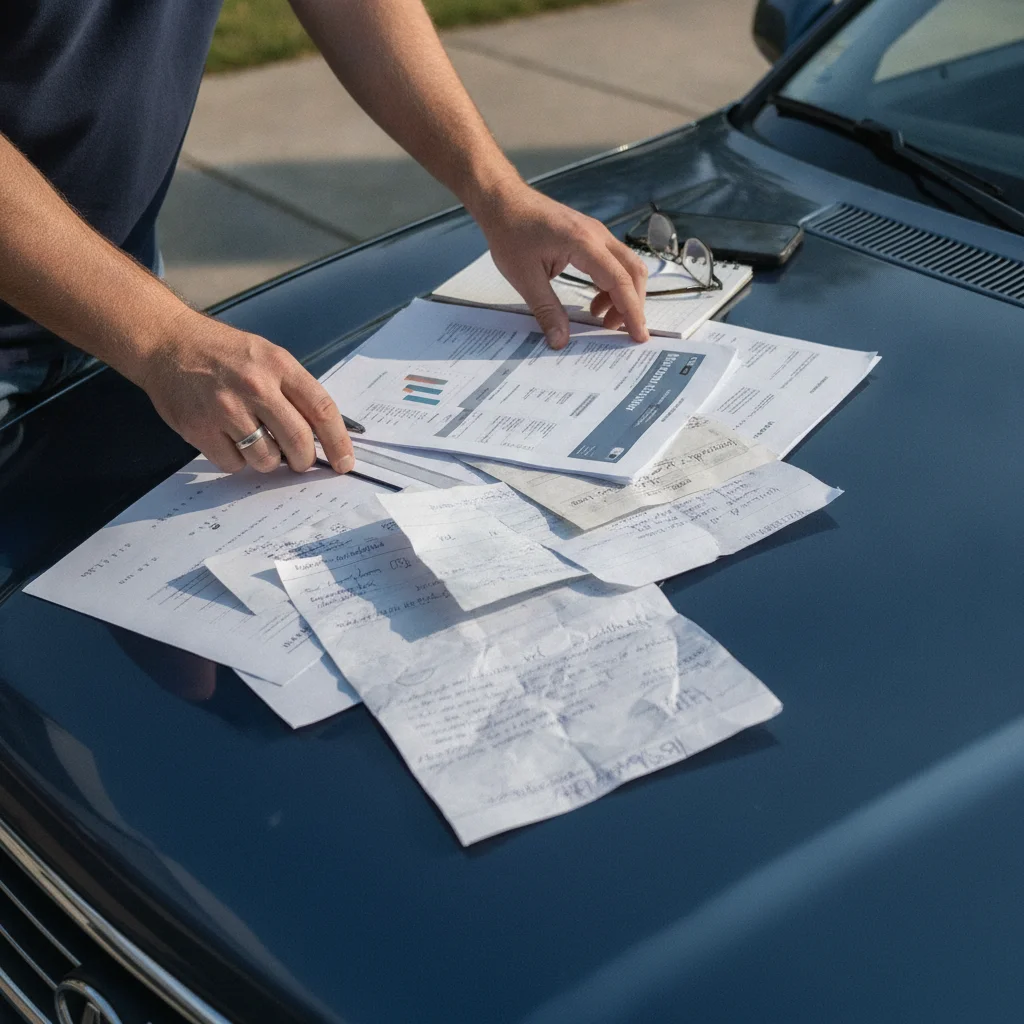
This question separates serious sellers from casual ones immediately. A seller with an organized folder of oil change receipts, tire rotation logs, and repair invoices has been paying attention. That documentation is worth real money — it reduces your risk and strengthens your negotiating position.
Ask to see the records, not just hear about them. Flip through them on the spot. Look for consistency in dates and mileage intervals. Note whether maintenance was done at a dealership, an independent shop, or a quick-lube chain. Dealership records are easiest to verify; independent shop receipts are fine as long as the shop name and mileage are legible.
Red flags: large time gaps between services, records that stop abruptly at a certain mileage, or a seller who says "I have them at home" but didn't bring them to the showing. You can request to see them before committing to any price, and you should. The full paper trail every used car should have goes well beyond oil change receipts — it includes title documents, emissions records, and recall completion paperwork.
An organized folder of service records reduces your risk and strengthens your negotiating position.
Has it ever been in an accident — including minor ones?
Don't rely on the listing description or even a vehicle history report to answer this. Ask directly, and be specific: "Has the car been in any collisions, even minor parking lot impacts or fender-benders?" Sellers sometimes interpret "accident" narrowly, so widening the scope gets more honest answers.
Listen for the pause. A car with a genuinely clean history usually produces a quick, confident denial. A longer hesitation followed by "nothing major" means something happened — and now you need to ask what specifically was repaired and where.
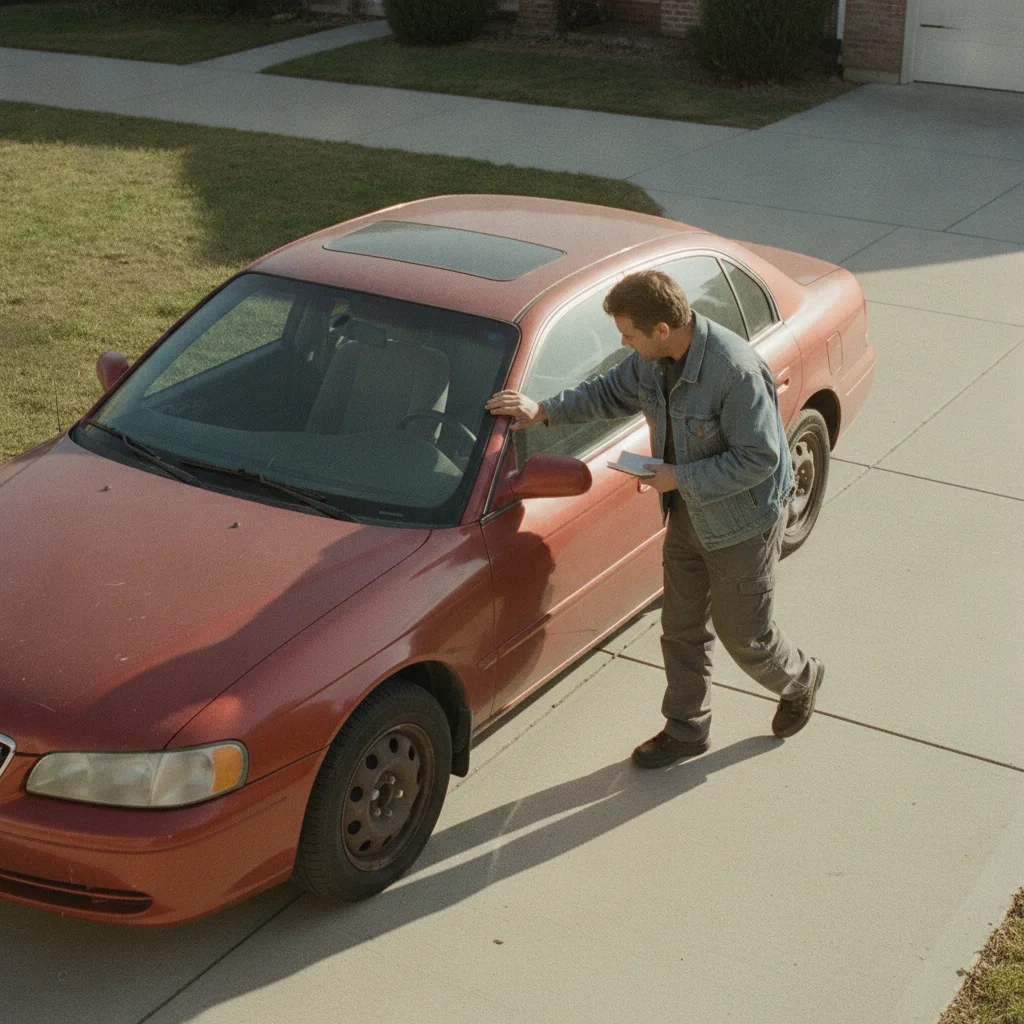
Even minor accidents can affect long-term reliability if the repair work was substandard. Misaligned body panels, overspray on rubber trim, and uneven gaps between doors and their frames are all physical evidence that survives the conversation. Walk around the car deliberately before and after asking this question. What you observe in the sheet metal and paint will either confirm or contradict what you hear.
A long pause followed by 'nothing major' almost always means something happened — find out what.
Are there any current issues or anything you've been meaning to fix?
This is the question most buyers skip because they worry it sounds confrontational. Ask it anyway, and ask it plainly. A reasonable seller will respect the directness and a dishonest one will reveal themselves through evasion.
Phrase it practically: "Is there anything you've noticed that you've been putting off, or anything I should know about before I make a decision?" This framing gives sellers an easy opening to disclose deferred maintenance without feeling accused of hiding something.
Common answers that are completely manageable: needs new tires, rear brakes at 30%, AC hasn't been recharged in two years. These are negotiating points. Answers that warrant deeper investigation: intermittent warning lights, a shimmy at highway speeds, a noise that "comes and goes." Any symptom described as intermittent is the hardest to diagnose and the most likely to be expensive.
[in_content_images:2]Intermittent symptoms are the hardest to diagnose and often the most expensive to fix — investigate them before committing.
Have any major components been replaced — timing belt, transmission, water pump?
For higher-mileage vehicles, this question can flip your evaluation entirely. A 140,000-mile car with a fresh timing belt, recently replaced struts, and a new water pump may be a better buy than a 90,000-mile car with all original components approaching their service limits.
Ask specifically about: timing belt or chain (on interference engines, a failed timing belt is catastrophic), transmission fluid or rebuild, water pump, head gaskets, and suspension components. If the seller mentions any of these, ask to see the receipt. Verbal claims about major work are cheap — documentation is what counts.
If the car has a timing belt (not a chain), check the manufacturer's replacement interval in the owner's manual or online. If it's due and hasn't been done, factor the cost — typically $500–$1,200 depending on the vehicle — directly into your offer price. Don't accept a vague assurance that it was done without a receipt to back it up. Your mechanic can also help you ask the right questions about what's next — see questions worth asking your mechanic at every service visit for guidance on how to evaluate upcoming service needs.
A 140,000-mile car with fresh major components can be a better buy than a 90,000-mile car with everything original.
How many owners has it had, and was it ever a rental or fleet vehicle?
Multiple ownership changes — especially in a short period — are worth understanding. Each transition represents a gap in the vehicle's history. A car that's been sold three times in five years either had problems that drove each seller away, or it's been a financial asset passed between people, which often means minimum-maintenance ownership.
Fleet and rental use carries specific risk patterns: high-volume drivers, minimal personal care, and maintenance done on a cost-control schedule rather than manufacturer recommendations. That's not automatically disqualifying — rental companies do maintain their fleets — but it tells you the car has been treated as a commodity rather than a personal vehicle.
Cross-check what you hear against the vehicle history report. If the seller claims one previous owner but the report shows three registrations, ask about the discrepancy. Sellers sometimes count themselves as the "first" owner even when they bought it used.
Multiple ownership changes in a short period often signal recurring problems that drove each previous seller away.
Is the title clean, and is it in your name?
You should be asking to see the title before any money changes hands, but asking about it during the test drive sets expectations early and reveals important information. A clean title means no salvage designation, no flood damage branding, and no active liens recorded against the vehicle.
If the seller doesn't have the title in hand — it's at the bank, they haven't received it yet, or it's in a family member's name — treat that as a complication, not a dealbreaker by itself, but something to resolve completely before you pay. A car sold without a title transfer can create serious legal and financial problems for the buyer.
Ask directly: "Is the title in your name, and is there a lien on it?" If there's a loan outstanding, the lender holds the title. That loan must be paid off before you can receive a clean title. Make sure you understand the payoff process before proceeding. The paperwork and contracts involved in a car purchase become significantly more complex when a lien is involved.
A car sold without a clean title transfer can create lasting legal and financial problems for the buyer.
Has it ever been stored for extended periods, or sat unused?
Extended storage creates a specific category of problems that differ entirely from high-mileage wear. Rubber seals dry out and crack. Fuel systems accumulate varnish deposits. Brake rotors develop surface rust. Rodents find warm engine bays and chew through wiring harnesses — a repair that can run thousands of dollars and is notoriously difficult to find completely.
Ask: "Was the car driven regularly throughout your ownership, or were there periods when it sat for a month or more?" Seasonal vehicles — convertibles, sports cars, trucks stored during winter — are the most common candidates. Even vehicles stored properly with a fuel stabilizer and fresh oil can develop problems if they sit long enough.
During the test drive, pay particular attention to brake feel and pedal firmness on a car that's been stored. Surface rust burns off rotors quickly, but pitting does not. Your mechanic can evaluate rotor condition definitively if you want a professional read before committing.
Extended storage creates its own category of problems — rubber seals, fuel systems, and rodent damage are the most costly.
What's the lowest price you'd accept — and why?
This one belongs in the conversation, not just in your internal calculations. Asking it directly and respectfully is not rude — it's efficient. Serious sellers usually have a number in mind, and asking the question saves both parties time.
You don't have to lead with this question, but once you've completed the test drive and asked about the car's history and condition, it's a natural transition: "Based on everything, what's the realistic bottom you'd take for it?" Some sellers will give you a real number. Others will throw it back to you. Either way, you've opened the negotiation in a structured way.
If you've uncovered issues during the drive or the conversation — deferred maintenance, a past accident, high mileage on the timing belt — those become specific line items to reference when you make your offer. "I noticed the rear brakes are close to minimum thickness, and the timing belt is overdue. I'm comfortable at X accounting for those." Concrete reasoning lands better than arbitrary lowballing.
If you're buying from a dealer rather than a private seller, different questions reveal how much room a dealer actually has to move — the dynamics of that negotiation are different from a private party transaction.
Referencing specific issues you found — not just lowballing — produces far better negotiating outcomes.
Bring a Short Checklist to Every Showing
Print or screenshot these ten questions and bring them with you. Reviewing your list before you get out of the car takes thirty seconds and ensures you won't leave a showing having forgotten to ask about accidents or title status. Sellers rarely mind — most interpret it as a sign you're a serious buyer.
Ask Follow-Up Questions When Answers Are Vague
If a seller says 'it's been well maintained,' follow up immediately with 'Do you have the receipts?' or 'Who did the oil changes?' Vague positive claims are easy to make and hard to verify — concrete details are what you're after. A seller who genuinely maintained the car will have specifics ready.
Schedule a Pre-Purchase Inspection Before Signing
Budget $100–$150 for an independent mechanic inspection before finalizing any private party purchase. Ask the seller if they're comfortable with it upfront — most honest sellers say yes immediately. A seller who declines or adds conditions is telling you something important about what they'd rather you not find out.
Vehicle History Reports Have Real Limits
Services like Carfax and AutoCheck are useful starting points, but they only show events that were reported — accidents handled privately, cash-pay repairs, and out-of-state incidents often don't appear. A clean report is encouraging, not definitive. Your questions and a physical inspection fill the gaps that data can't.
Private Party vs. Dealer Transactions Differ
Private sellers are not bound by the same disclosure rules as licensed dealers in most states, which makes your questions even more important. Dealers operating under state lemon laws and FTC used car rules carry different obligations — but 'certified pre-owned' designations vary widely by brand and dealership, so asking about condition history is equally important even in a dealership setting.
Putting It All Together Before You Make an Offer
Good questions are only useful if you're listening carefully and following up. When an answer feels vague — "it runs great, no problems" — push gently: "Has anything come up in the last six months that needed attention?" Most sellers will fill the silence with something closer to the truth.
After the test drive, cross-reference what you heard with the physical evidence. Did the seller claim regular oil changes every 5,000 miles, but the dipstick shows dark, gritty oil? Did they say no accidents, but the door gaps on the passenger side are noticeably uneven? Inconsistencies between verbal answers and physical observation are the single biggest red flag in any used car transaction.
Before you agree on a price, request the full paper trail that should accompany every used car — service records, title documentation, any repair receipts mentioned during your conversation. If the seller described a timing belt replacement at 90,000 miles, ask to see the receipt. That single request tells you whether the claim is real and tells the seller you're a serious, informed buyer.
If something feels off but you can't pinpoint why, invest $100–$150 in a pre-purchase inspection from an independent mechanic before committing. That cost is negligible against the risk of inheriting a vehicle with hidden structural or mechanical problems. And if the seller refuses to allow an inspection — that's your answer.
Finally, keep in mind that the questions in this list work just as well at a dealership as they do in a private driveway. Other questions can reveal how much negotiating flexibility a dealer actually has — combine both sets for a complete picture before you sign anything. And if you're ever in a situation where a test drive isn't possible, there's a separate set of questions designed for remote purchases that fill the information gaps when you can't evaluate the car in person.

All claims are backed by peer-reviewed research. Sources on request.