
Key Takeaways
Manufacturer Incentives & Rebates
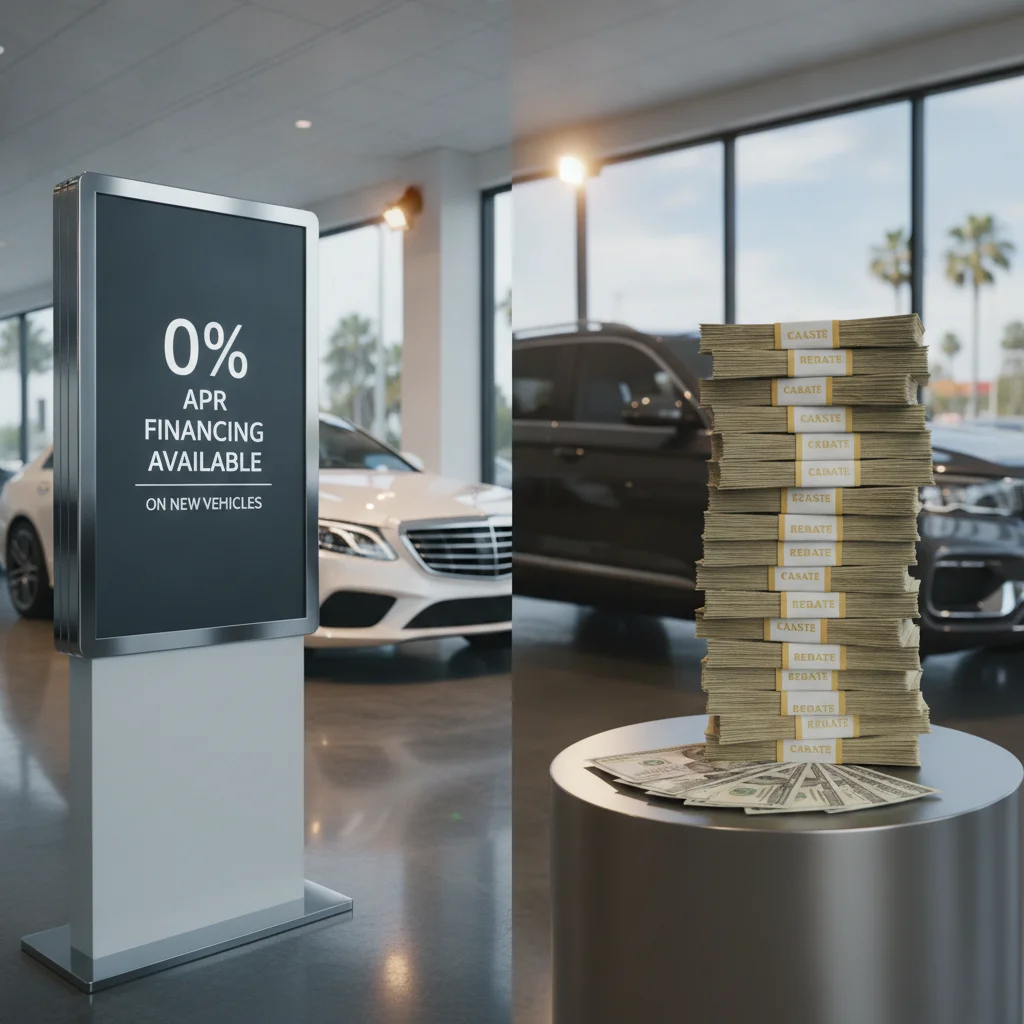
Manufacturer incentives are discounts or special financing terms offered directly by automakers — not dealerships — to stimulate sales of specific vehicles. They typically take two forms: cash rebates (a lump sum deducted from the purchase price) and subsidized low-APR financing (below-market interest rates funded by the manufacturer's captive finance arm). These programs run on rotating cycles, usually tied to model year changes, inventory levels, and seasonal demand.
Incentives are booked as marketing expenses on the manufacturer's income statement, meaning they come out of the automaker's pocket — not the dealer's margin — though dealers can sometimes influence how they're applied.
The Two Core Types of Manufacturer Incentives
Walk into any dealership during a sales event and you'll see window stickers promising things like "$2,500 Cash Back" or "0% APR for 60 months." These aren't dealer discounts — they're manufacturer-funded programs designed to move specific models, and they work very differently from each other.
Cash Rebates
A cash rebate is exactly what it sounds like: the automaker gives money back to the buyer. The mechanics depend on how you're paying:
- If you're financing: The rebate is usually applied as a reduction in the financed amount — so if the car is $32,000 and there's a $2,000 rebate, you finance $30,000 (before taxes and fees).
- If you're paying cash: The rebate comes off the purchase price directly at signing.
- If you're leasing: Rebates can be applied as a cap cost reduction, lowering your monthly payment — though lease-specific programs often have different rebate amounts than purchase programs.
The rebate check doesn't come in the mail — it's processed at the dealership as part of the transaction. The manufacturer reimburses the dealer, who passes it through to you as a price reduction.
Subsidized Low-APR Financing
This is where manufacturers get creative. When an automaker advertises 0% APR or 1.9% APR for 48 months, they're not offering a special loan rate out of goodwill — they're buying down the interest rate through their captive finance arm (think Toyota Financial Services, GM Financial, Ford Motor Credit).
Here's how the subsidy works in practice: If market rates are 7% and the manufacturer offers 0%, the captive lender charges the manufacturer the difference on every loan written. That cost is a marketing expense. The buyer gets a below-market rate; the lender gets compensated by the brand. Everyone's aligned except, sometimes, the buyer — because to get that rate, you typically have to give up the cash rebate.
Understanding which type of incentive applies to your specific vehicle trim, region, and purchase timing is the first step toward using them intelligently. Automakers run different programs on different models simultaneously, and what's on the ad might not match what's available on the exact trim you're eyeing. Always verify current offers on the manufacturer's official website before you walk in.
Cash Back vs. Low APR: The Trade-Off You Can't Avoid
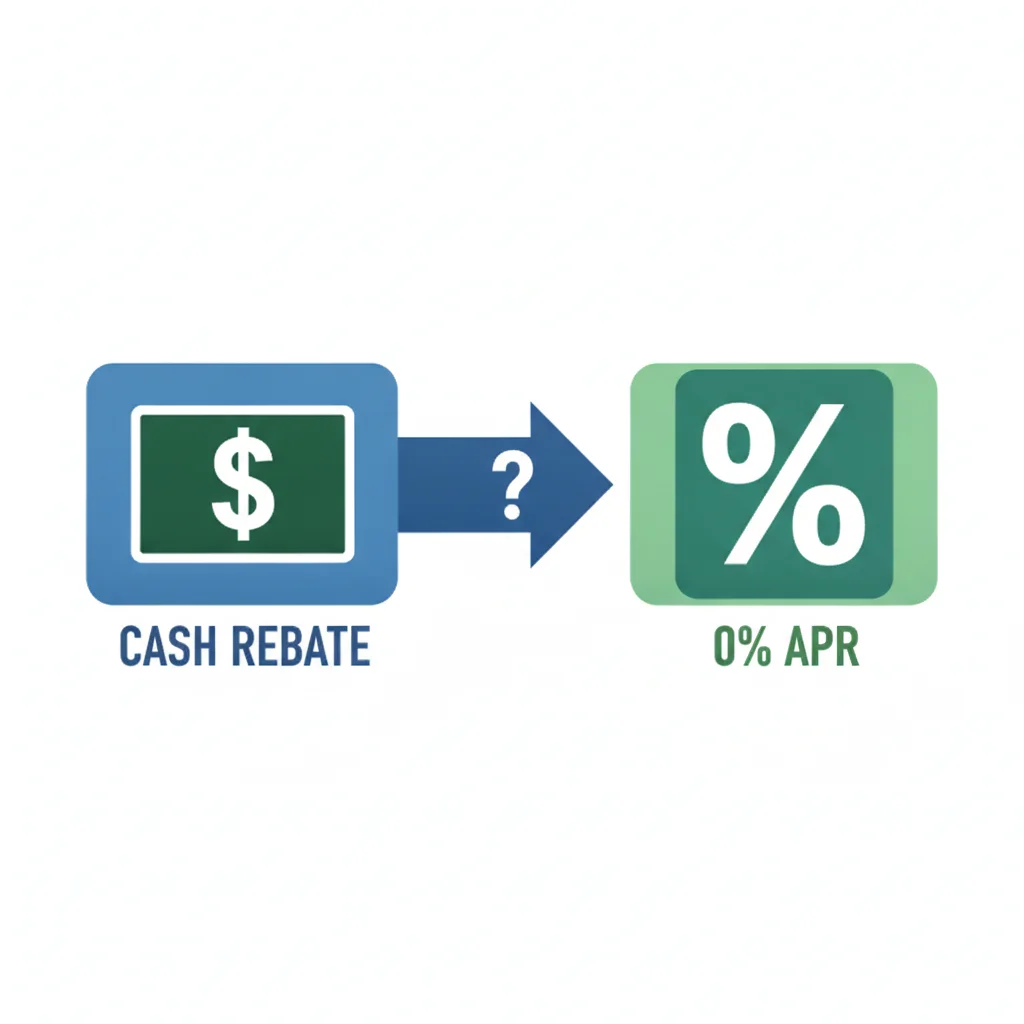
Here's the decision that trips up most buyers: on nearly every incentivized vehicle, you must choose between the cash rebate and the special financing rate. You can't stack them. Manufacturers enforce this because offering both simultaneously would eliminate their margin entirely.
$3,200
Average new car incentive per unit (2024)
According to Cox Automotive data, average per-unit incentive spending by manufacturers reached approximately $3,200 in mid-2024 as inventory levels normalized post-pandemic.
720+
Minimum FICO typically required for best APR tier
Most major captive lenders (Toyota Financial, Ford Motor Credit, GM Financial) reserve their lowest advertised financing rates for buyers scoring 720 or above on standard FICO models.
80%
New car buyers who finance their purchase
Experian's State of the Automotive Finance Market report consistently shows roughly 80% of new vehicle purchases involve financing, making the APR vs. rebate decision relevant to the vast majority of buyers.
$1,500–$6,000
Typical rebate range for slow-selling models
Manufacturer cash-back amounts on slow-moving sedans and full-size vehicles have ranged from $1,500 to over $6,000 depending on inventory pressure, based on publicly available incentive data from Edmunds.
$7,500
Maximum federal EV tax credit (Inflation Reduction Act)
The IRA established a maximum $7,500 credit for new EVs meeting domestic battery and assembly requirements, with income and price caps that exclude a significant portion of buyers and vehicles.
The math isn't always obvious. A $3,000 rebate sounds great, but if you were going to finance anyway and the low-APR offer would save you $4,200 in interest over 60 months, you'd be leaving money on the table by taking the cash.
Here's a simplified example to illustrate:
| Scenario | Vehicle Price | Rebate Applied | Amount Financed | APR | Term | Total Interest Paid | Total Cost |
|---|---|---|---|---|---|---|---|
| Take the Cash Rebate | $35,000 | $3,000 | $32,000 | 7.5% (market rate) | 60 months | $6,494 | $38,494 |
| Take the 0% APR | $35,000 | $0 | $35,000 | 0% | 60 months | $0 | $35,000 |
In this scenario, the 0% APR saves $3,494 more than the cash rebate. But the calculus changes if you have a short loan term, a large down payment, or access to financing well below market rates. For a deeper breakdown of how to run this calculation for your specific numbers, see 0% APR vs. cash rebate: which saves more.
Always Negotiate Price Before Mentioning the Rebate
Tell the salesperson you're interested in the vehicle and want to negotiate the best selling price — don't mention the rebate yet. Once you've locked in the lowest price the dealer will accept, then ask how the manufacturer incentive applies. This prevents the dealer from using the rebate as a substitute for an actual discount.
Check Manufacturer Websites the Morning You Shop
Incentive programs reset monthly, sometimes mid-month. Verify the current offer directly on the brand's website before you enter the dealership. Screenshot the offer with a timestamp — if the dealer tells you the program changed, you have documentation to push back.
One underappreciated wrinkle: if you plan to pay the loan off early, the 0% APR loses some of its advantage. The interest savings are spread over the full loan term — compress that term and the rebate becomes more competitive.
Who Actually Qualifies — and Who Gets Surprised at the F&I Desk
Manufacturer incentive ads are aspirational. The 0% APR headline is real — but it's only available to buyers who hit the manufacturer's credit tier thresholds. In practice, that typically means a FICO score of 720 or higher, though some programs set the floor at 740. Below those thresholds, you may be approved at a tiered rate (say, 3.9% or 5.9%) or referred to a third-party lender entirely.
The fine print on most manufacturer financing promotions includes language like "Well-qualified buyers only" or "Tier 1 credit required." That's the tell. If you're financing and your credit isn't in that range, the advertised rate is not your rate.
Captive Lender vs. Outside Financing
To access a manufacturer's low-APR offer, you must finance through their captive lender — you can't take the 0% rate with your credit union's loan. However, for cash rebates, outside financing is generally permitted. If you want to use your own lender and also capture a rebate, confirm with the dealer that your rebate isn't contingent on using their financing. Some promotional packages bundle rebates with financing requirements.
Incentives Vary by Region — Not Just Nationally
Manufacturers set incentive amounts by regional marketing zone, which means buyers in Dallas and buyers in Chicago may see different cash-back amounts on the exact same vehicle. Always verify the offer using your actual ZIP code on the manufacturer's website, not a national average published by a third-party site.
Incentive Expiration Dates Are Hard Deadlines
Manufacturer incentive programs have firm expiration dates, typically the last day of each month. If your deal doesn't close before midnight on that date, you may lose the incentive — even if you've signed a purchase agreement. Confirm the program end date in writing and factor that into your negotiation timeline.
Beyond credit scores, other eligibility factors that routinely catch buyers off guard include:
- Vehicle eligibility: Incentives often apply only to specific trim levels or model year designations. The base model may qualify; the higher trim may not, or vice versa.
- Regional availability: Manufacturers adjust incentives by ZIP code based on local inventory and competitive pressure. The $2,500 rebate advertised nationally might be $1,500 in your market.
- Lease vs. purchase programs: Rebate amounts differ significantly between lease and retail purchase programs. Don't assume the ad applies to your transaction type.
- New vs. used: Manufacturer incentives almost exclusively apply to new vehicles. Certified pre-owned programs exist but are structured differently.
The cleanest way to verify what you actually qualify for: check the manufacturer's website the day before you visit the dealer, note the exact program expiration date, and ask the finance manager to show you the rate tier sheet before signing anything. For a full walkthrough of what to expect at the financing desk, see what a 0% APR car loan offer really means.
How Dealers Interact With Manufacturer Incentives
This is where a lot of buyers get confused. Manufacturer incentives and dealer discounts are two completely separate pools of money. The rebate comes from the automaker's marketing budget. The dealer's discount — if they offer one — comes out of their own gross profit. They're not the same thing, and dealers sometimes blur that line deliberately.

A common tactic: a dealer will quote you a price that's already "discounted" by the rebate, making it look like they've negotiated down more than they have. When you ask for additional money off, they act like there's nothing left. The tell is simple — ask the dealer to separate the manufacturer rebate from their own selling price adjustment. If the "discount" and the rebate are the same number, no actual negotiation has happened.
The correct sequence for any new car negotiation:
- Negotiate the out-of-door selling price to its lowest point, ignoring rebates.
- Confirm which manufacturer incentives apply to your specific transaction.
- Apply the rebate (or the subsidized financing) after the price is set.
- Handle trade-in value separately — it's a distinct transaction. See how dealer trade-in appraisals work if that's part of your deal.
There are also manufacturer-to-dealer incentives (sometimes called "dealer cash" or "stair-step incentives") that buyers never see on paper. These are backend programs that reward dealers for hitting volume targets or selling specific vehicles. The existence of this dealer cash means there's often more room to negotiate on certain models than the sticker price suggests — the dealer is getting compensated on the back end in ways that offset their visible margin. For a complete picture of how these programs layer together, see decoding dealer incentives.
“The single biggest mistake I see buyers make is thinking the rebate is the dealer giving them money. It isn't. The rebate is from the manufacturer, and the dealer's job is to make sure as little of their own margin as possible goes out the door on top of it.”
— Jordan Delray, Former dealership finance manager, auto lending specialist
Timing: When Incentives Are Strongest (and Why)
Manufacturer incentives don't run at a constant level year-round. They spike predictably in response to two forces: inventory pressure and competitive pressure. Understanding when those forces peak gives you a structural advantage as a buyer.
Model Year Changeovers
When a new model year arrives — typically August through October depending on the brand — dealers need to move the outgoing model year units. Manufacturers respond by increasing rebates and extending special financing to accelerate clearance. A vehicle that had a $1,500 rebate in June might carry a $4,000 rebate in September. The car is identical; the incentive is dramatically better.
End-of-Month and End-of-Quarter Pressure
Automakers set monthly and quarterly sales targets. As those deadlines approach, manufacturers sometimes layer on additional incentives — or authorize dealers to use additional flexibility — to hit their numbers. The last three days of a month can be genuinely better for buyers than the first three, though the effect varies by brand and region.
Slow-Selling Models and High-Inventory Vehicles
Incentives are heaviest on models where supply outpaces demand. A hot-selling compact SUV might carry zero manufacturer incentives; a slow-moving full-size sedan in the same brand's lineup might have $5,000 in cash back. Before you shop, check inventory levels and current incentive amounts on the manufacturer's site or on aggregators like Edmunds and TrueCar — they publish current program data by model.
For a systematic approach to tracking these cycles before you shop, see reading manufacturer incentive cycles. And for a broader look at when in the calendar year to buy, visit the timing your purchase hub.

Captive Lender vs. Outside Financing
To access a manufacturer's low-APR offer, you must finance through their captive lender — you can't take the 0% rate with your credit union's loan. However, for cash rebates, outside financing is generally permitted. If you want to use your own lender and also capture a rebate, confirm with the dealer that your rebate isn't contingent on using their financing. Some promotional packages bundle rebates with financing requirements.
Incentives Vary by Region — Not Just Nationally
Manufacturers set incentive amounts by regional marketing zone, which means buyers in Dallas and buyers in Chicago may see different cash-back amounts on the exact same vehicle. Always verify the offer using your actual ZIP code on the manufacturer's website, not a national average published by a third-party site.
Incentive Expiration Dates Are Hard Deadlines
Manufacturer incentive programs have firm expiration dates, typically the last day of each month. If your deal doesn't close before midnight on that date, you may lose the incentive — even if you've signed a purchase agreement. Confirm the program end date in writing and factor that into your negotiation timeline.
EV Incentives: A Completely Different Animal
If you're shopping for an electric vehicle, put aside everything above and treat the incentive landscape as a separate subject. EV incentives don't come primarily from manufacturers — they come from the federal government (via the IRS under the Inflation Reduction Act), state governments, and sometimes local utilities. The structure, eligibility rules, and application process are all different.
The federal EV tax credit of up to $7,500 has income limits, vehicle price caps, and battery sourcing requirements that disqualify many popular models. Some states layer on additional rebates. Some utilities offer charging equipment credits. And some manufacturers — those that have exceeded their original tax credit cap — offer their own manufacturer-funded rebates to compensate buyers for the lost federal benefit.
The key differences from traditional manufacturer incentives:
- EV tax credits are often claimed on your tax return (not at point of sale), though the Inflation Reduction Act created a point-of-sale transfer mechanism for qualifying dealers starting in 2024.
- Income limits apply — joint filers above $300,000 AGI are ineligible for the federal credit.
- MSRP caps apply — vehicles above $80,000 (trucks/SUVs/vans) or $55,000 (other cars) don't qualify for the federal credit.
- Manufacturer incentives on EVs are often stacked on top of (not in place of) government programs — though the terms vary.
For a full primer on how to navigate the EV-specific incentive stack, see getting started with EV incentives. Don't assume a traditional manufacturer rebate guide applies to your EV purchase without checking the EV-specific rules first.
All claims are backed by peer-reviewed research. Sources on request.