Key Takeaways
Why Timing Is the Most Underrated Variable in Car Buying
Most car shoppers spend hours researching trim levels, fuel economy ratings, and safety scores. Almost none of them spend an hour researching when to buy. That's a costly imbalance. The same vehicle — same trim, same color, same options — can carry a meaningfully different transaction price depending on the month, the week, and even the point in the model cycle when you walk into the dealership.
Timing affects more than just sticker negotiation. It shapes the size of manufacturer rebates on the table, the urgency a dealer feels to move inventory, and the residual value of your trade-in. Get the timing wrong in two or three of these dimensions simultaneously and the total cost difference can easily reach $3,000–$5,000 on a single purchase.
This article walks through the specific timing mistakes buyers make most often — why they're so easy to stumble into, and exactly what to do instead. For a broader look at how the calendar can work in your favor, see our guide to timing your new car purchase.

The Mistakes That Quietly Drain Your Buying Power
Each of the mistakes below operates quietly. None of them announces itself at the dealership. You won't see a line item on the sales sheet that reads "paid extra because you shopped in April." The cost is embedded in a higher transaction price, a smaller rebate, or a weaker trade-in offer — and most buyers never connect the outcome back to the timing decision that caused it.
Shopping during peak demand months (March through August) when dealer leverage is at its highest.
Why it happens: Spring and summer feel like natural times to buy — weather is good, people are energized, and tax refunds provide extra cash. Buyers follow their natural impulse without realizing the entire market is doing the same thing.
Finalizing a deal in the first two weeks of the month, missing the end-of-month incentive and quota window.
Why it happens: Buyers research at their own pace and feel ready to buy whenever the research is done — they're not thinking in terms of the dealer's monthly sales cycle or manufacturer incentive expiration dates.
Buying the final model year of an outgoing generation without accounting for accelerated depreciation.
Why it happens: The purchase discount on outgoing-generation vehicles is real and visible. The depreciation consequence is future and invisible. Buyers optimize for the number in front of them today.
Ignoring the seasonal value cycle of your trade-in and accepting whatever offer comes at purchase time.
Why it happens: Most buyers mentally bundle the trade-in with the purchase as a single transaction. It's convenient and feels simpler. The idea of selling a car before you have a replacement lined up creates anxiety that most people avoid.
Waiting for a "perfect" deal that never arrives, missing multiple favorable windows in the process.
Why it happens: Buyers who have done thorough research often develop a precise idea of what a "great" deal looks like. When the market doesn't deliver that exact target, they keep waiting — through one end-of-year window, then another.
Buying a new model in its first year of production, paying a premium for a vehicle with unproven reliability and minimal incentives.
Why it happens: First-year models generate buzz and excitement. Buyers get caught up in being early adopters, and the novelty factor overrides more deliberate financial thinking.

Understanding why these mistakes happen is just as important as knowing how to avoid them. Buyers are rarely impulsive — they're often following intuition that sounds reasonable on the surface. The goal here is to replace that intuition with a clearer framework.
$1,200+
Average premium paid during peak demand months
Analysis by iSeeCars found that buyers shopping in March and April paid an average of $1,200 more above invoice compared to buyers who purchased in October through December.
8–12%
Additional depreciation on outgoing model-year vehicles post-redesign
Automotive data firm Black Book documented an average 8–12% steeper depreciation rate for vehicles purchased in the final model year of an outgoing generation, measured over a 36-month horizon.
$2,500
Average December manufacturer incentive value
Edmunds data shows December consistently carries the highest average incentive value per new vehicle transaction, historically averaging around $2,500 in combined cash rebates and financing support.
3–7%
Seasonal trade-in value swing for trucks and SUVs
According to CarGurus market data, full-size trucks and body-on-frame SUVs show a seasonal value range of 3–7% between their peak demand months and their lowest demand months.
The Spring and Summer Demand Trap
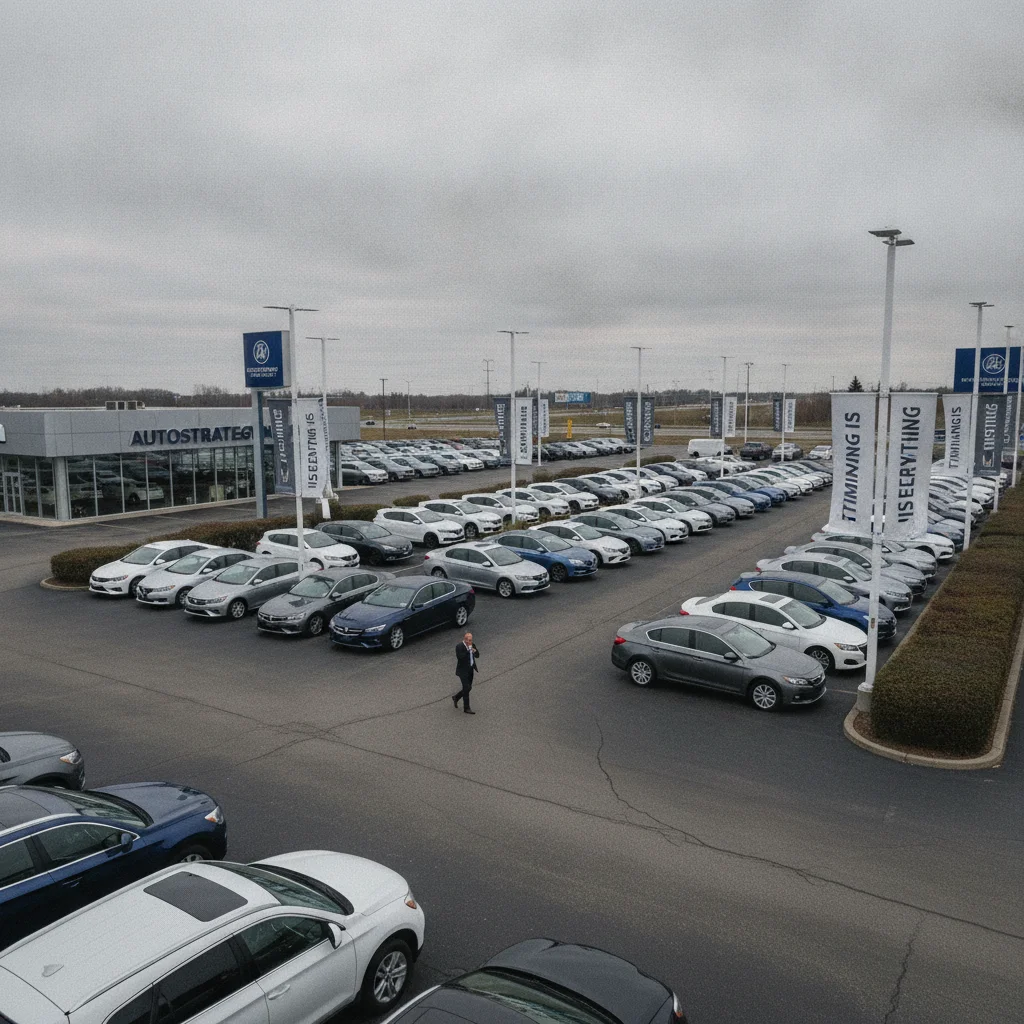
Consumer demand for vehicles peaks between March and August. Tax refunds hit in March and April, families want new vehicles before summer road trips, and graduation season creates a wave of first-time buyers. Dealers know this. Inventory turns faster, salespeople feel less pressure to negotiate aggressively, and manufacturers pull back on rebate programs because the market is doing the selling for them.
Spring Shoppers Pay a Predictable Premium
March through May is the single most expensive window to buy a new car in most vehicle segments. Dealers receive fewer incoming concessions from manufacturers and have less motivation to discount when traffic is high. If you're shopping in this window, go in with below-invoice pricing data in hand — otherwise you're likely to pay at or above MSRP without realizing it.
Redesign Discounts Can Be Depreciation Traps
A 10% discount on the final year of an outgoing model sounds compelling. But if that model's redesigned successor launches 12 months later, your vehicle's perceived desirability on the used market drops immediately. Run a 3-year cost-of-ownership comparison — factoring in the discounted purchase price against the steeper depreciation curve — before committing to a "clearance" deal.
The practical consequence is straightforward: when demand is high, your leverage is low. A dealer sitting on a vehicle that three other buyers have looked at this week has little reason to move off the asking price. That same dealer in late November, staring at the same vehicle that hasn't moved in 45 days, has a very different set of incentives.
This doesn't mean you should never buy in spring or summer — sometimes life doesn't allow for perfect timing. But if you have flexibility, shifting your purchase to late fall or early winter can put a few hundred to a few thousand dollars back in your pocket, depending on the vehicle segment and region. Pickup trucks, for example, see softer demand in December and January in Northern states, while convertibles and sports cars often soften in the same period across most markets.
Missing the Month-End and Year-End Incentive Windows
Manufacturer incentive programs — cash rebates, low APR financing, lease subventions — are almost universally structured on a monthly cycle. They reset at the start of each month and expire at month-end. Dealer sales quotas follow the same calendar. This creates a specific, recurring window near the last three to five business days of each month when both factors align: incentives are still active and salespeople are working to hit their numbers.
Incentives Expire — Know the Date Before You Negotiate
Manufacturer cash rebates and low-APR financing offers have hard expiration dates, almost always at the end of the calendar month. If you're counting on a $1,500 rebate to make a deal work, verify its exact expiration date on the manufacturer's official website before you sit down to negotiate. A deal signed on the first of the following month may not include any of the incentives you planned around.
Your Net Deal Includes the Trade-In — Optimize Both Sides
Many buyers negotiate the purchase price carefully and then accept the first trade-in offer without question. The net transaction is what you actually pay: purchase price minus trade-in value minus rebates. A $500 win on the sticker can easily be offset by a $1,000 gap on the trade-in offer. Get competing written appraisals before you go to the dealership so you walk in knowing your trade-in's real market value.
The year-end window amplifies this dynamic considerably. Dealers need to clear current model-year inventory before the new year, both for tax purposes and to make room for incoming stock. Manufacturers often stack additional incentives on top of regular rebates during December. The combination — end of month, end of quarter, end of model year, and calendar year-end all happening simultaneously — makes late December one of the most structurally favorable times to buy a new car.
The mistake buyers make isn't failing to know this in theory. It's failing to act on it in practice. Many shoppers browse throughout the month and then finalize the deal in the first two weeks, missing the window entirely. Others wait until they feel fully "ready," which often means buying whenever they've completed their research rather than when the market is most favorable. For a deeper look at timing myths that sound strategic but don't hold up, see our article on car-buying timing myths.
Buying Just Before a Major Redesign or Model Year Changeover
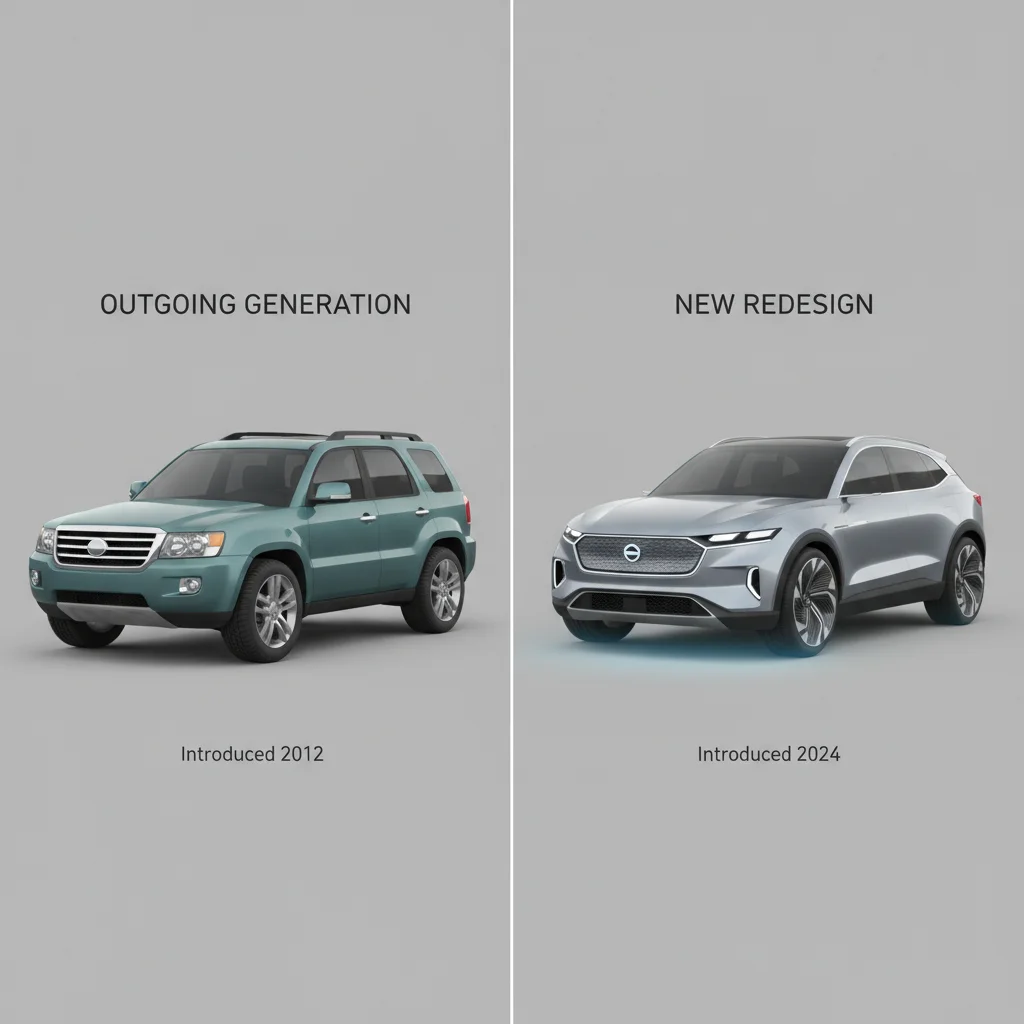
Every vehicle model follows a product cycle — typically five to eight years between full redesigns, with minor refreshes in between. When a model is due for a significant update, the outgoing generation depreciates faster than normal. Buyers who purchase the final model year of an outgoing generation often experience steeper value loss in years two and three of ownership than they would have with a different timing decision.
Here's why: the used car market prices vehicles partly on how "current" their design looks. When a freshly redesigned version hits showrooms, the prior generation immediately looks dated — even if mechanically nothing has changed. That perception gap accelerates depreciation. A buyer who purchased an outgoing-generation vehicle 18 months before the redesign will feel this acutely at trade-in time.
The irony is that dealers often push remaining outgoing-generation inventory with aggressive discounts, which can make those vehicles feel like great deals in the moment. The discount at purchase may be real — but so is the accelerated depreciation that follows. Run the numbers over a four- or five-year ownership horizon before concluding the discount is worth it. Our guide to hidden depreciation triggers covers how redesigns and other factors quietly drag down resale value.
Spring Shoppers Pay a Predictable Premium
March through May is the single most expensive window to buy a new car in most vehicle segments. Dealers receive fewer incoming concessions from manufacturers and have less motivation to discount when traffic is high. If you're shopping in this window, go in with below-invoice pricing data in hand — otherwise you're likely to pay at or above MSRP without realizing it.
Redesign Discounts Can Be Depreciation Traps
A 10% discount on the final year of an outgoing model sounds compelling. But if that model's redesigned successor launches 12 months later, your vehicle's perceived desirability on the used market drops immediately. Run a 3-year cost-of-ownership comparison — factoring in the discounted purchase price against the steeper depreciation curve — before committing to a "clearance" deal.
The best timing strategy around model cycles is to buy early in a new generation — ideally in year two or three after a redesign, once initial production bugs have been ironed out but the design still has several "fresh" years ahead of it. This balances depreciation risk against reliability risk.
Ignoring Your Trade-In's Seasonal Value Window
Your trade-in is not a static asset. Its market value fluctuates based on demand cycles that are often out of sync with when you personally want to buy. Trucks and SUVs tend to peak in value in late spring and early fall when demand is high. Convertibles and sports cars are worth more to private buyers — and sometimes to dealers — in spring and early summer. Sedans are somewhat more stable but still show regional and seasonal variation.
The timing mistake here is treating the trade-in decision as something that just happens automatically alongside the purchase decision. Buyers think: "I'm buying a car, so I'll trade in my car at the same time." But those two transactions have different optimal timing windows. Ideally, you'd sell your current vehicle when its market value peaks and buy your next vehicle when dealer incentives are strongest — and those two moments often don't coincide.
When they don't, you have options. You can sell your current vehicle privately before shopping for your next car, capturing better timing on both ends. Or you can at least be aware of the trade-in value cycle so you're not negotiating from a position of ignorance. A dealer who offers you $18,000 on your truck in August might offer $20,500 on that same truck in late October when used truck supply tightens. See our article on trade-in pitfalls and our guide on market timing for sellers for more on this dynamic.

The net deal — purchase price minus trade-in value — is what actually determines what you pay. Optimizing only the purchase side while neglecting the trade-in side is like negotiating hard on the sticker price and then accepting the first financing offer without reading the terms. Both variables matter equally to the final outcome.
Incentives Expire — Know the Date Before You Negotiate
Manufacturer cash rebates and low-APR financing offers have hard expiration dates, almost always at the end of the calendar month. If you're counting on a $1,500 rebate to make a deal work, verify its exact expiration date on the manufacturer's official website before you sit down to negotiate. A deal signed on the first of the following month may not include any of the incentives you planned around.
Your Net Deal Includes the Trade-In — Optimize Both Sides
Many buyers negotiate the purchase price carefully and then accept the first trade-in offer without question. The net transaction is what you actually pay: purchase price minus trade-in value minus rebates. A $500 win on the sticker can easily be offset by a $1,000 gap on the trade-in offer. Get competing written appraisals before you go to the dealership so you walk in knowing your trade-in's real market value.
Timing is ultimately about leverage. When you understand where the market is in its seasonal cycle, where manufacturers are in their incentive calendar, and where a specific model sits in its product lifecycle, you can make decisions that align your interests with market forces rather than working against them. For a comprehensive look at how market timing affects vehicle pricing, explore our full resource hub on the topic.

All claims are backed by peer-reviewed research. Sources on request.