Key Takeaways
Why Car-Buying Timing Myths Persist
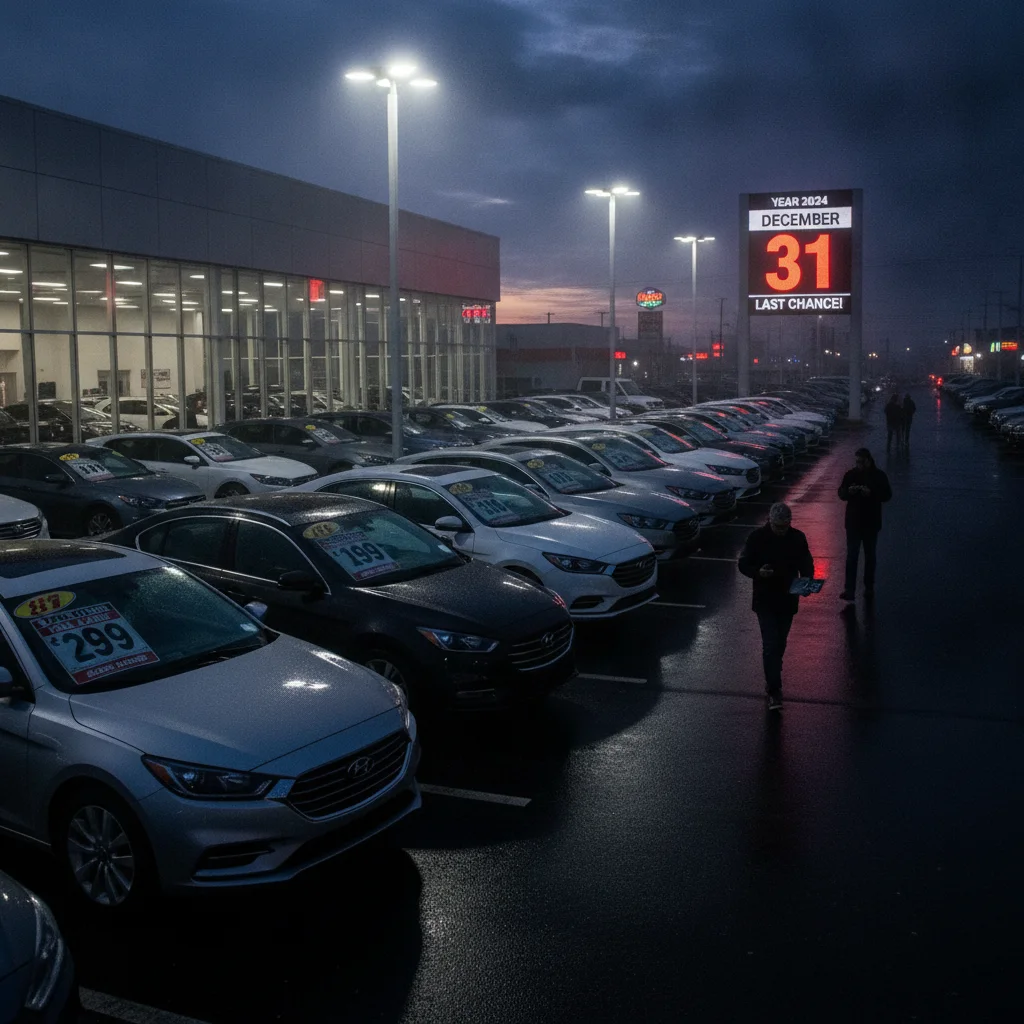
Walk into any online car-buying forum and you'll find confident advice: go on a rainy Tuesday at the end of December and you'll get a steal. The problem is that advice like this has been repeated so many times it feels like established wisdom, even though the logic behind it rarely survives contact with how modern dealerships actually operate.
Today's franchised dealers use sophisticated inventory management software, real-time market pricing tools, and manufacturer-dictated invoice structures. A salesperson's willingness to discount a vehicle is shaped far more by regional demand data, manufacturer incentive programs, and their own monthly bonus thresholds than by whether it's drizzling outside.
That doesn't mean timing is irrelevant. Some windows genuinely do favor buyers. The key is separating the myths that sound strategic from the patterns that actually move the needle. Getting this wrong doesn't just leave money on the table — it can cost shoppers thousands in avoidable overpayment, as we detail in The Timing Mistakes That Quietly Cost Car Buyers Thousands.

The Myths, Corrected
Below are the most pervasive timing myths car shoppers encounter — and what the evidence actually shows. Each one is worth understanding before you plan your purchase.
Myth
Buying on a rainy day gets you a better deal because the lot is empty and salespeople are desperate.
Fact
Low foot traffic on rainy days doesn't change a vehicle's invoice price, dealer holdback, or manufacturer incentives — the real levers of discount.
The rainy-day myth assumes that a bored salesperson equals a desperate one. But a salesperson's authority to discount is constrained by the desk manager and the store's pricing guidelines — not by how many other customers walked in that morning.
What actually influences discount depth is the dealer's inventory position (how long a specific vehicle has sat on the lot), the manufacturer's current incentive program, and the dealer's proximity to monthly or quarterly sales targets. None of those variables change because it's raining. You might get more one-on-one attention on a slow afternoon, which can make the process less rushed — but that's a customer-experience benefit, not a financial one.
If you want to use slow traffic to your advantage, a better approach is to visit mid-week and come prepared with competing quotes from other dealers. That gives the salesperson a concrete reason to sharpen their pencil, regardless of the weather.
Myth
The end of the month is always the best time to buy because dealers are desperate to hit quotas.
Fact
End-of-month pressure is real for some dealers, but it's inconsistent, unpredictable, and often offset by higher foot traffic from other shoppers who've heard the same advice.
There is a kernel of truth here. Franchise dealers often have monthly sales volume targets tied to manufacturer bonus programs — hitting a threshold might earn the dealer additional profit per unit. When a dealer is close to a target with a few days left in the month, they may be willing to close a deal more aggressively.
The problem is that you have no way of knowing where any given dealer stands relative to their target. A dealer who has already blown past their goal in the first three weeks has no urgency at all. One who is well below target may have already decided the month is a loss and stopped discounting.
Compounding this: the end-of-month timing tip has become so widely repeated that foot traffic on the last weekend of the month can actually be higher than mid-month, reducing your negotiating leverage by filling the showroom with competing buyers.
Quarter-end (March, June, September, December) is a more reliable pressure point than any single month-end, because manufacturer regional incentives and dealer group bonuses tend to stack at quarter close. But even then, treat it as a modest advantage — not a guarantee. For more on how sellers experience these same cycles, see Myths About the Best Time to Sell a Car.
Myth
December is the best month to buy a new car, full stop.
Fact
December can offer good deals, but it's also one of the most competitive shopping months of the year, and the vehicles remaining in inventory may not match what you actually want.
December has earned its reputation partly because it combines two real phenomena: calendar year-end (dealers clearing prior-model-year units) and manufacturer year-end sales events (which often include subsidized financing or cash back). These are legitimate incentives.
But here's what the myth glosses over. By December, the most desirable configurations of popular models — the trim levels and color combinations with the widest appeal — have often already sold. What remains tends to be slower-moving inventory: unusual color combinations, fully loaded packages priced above the market's comfort zone, or base trims dealers couldn't move all year.
You also compete with every other shopper who has read the same December advice. Dealership foot traffic in the final two weeks of December is among the highest of the year in most markets. That crowds out the negotiating advantage the timing was supposed to provide.
If December genuinely works for your timeline and the inventory matches what you need, go for it. But don't contort your purchase decision around a calendar date if it means taking a vehicle that's a poor fit or rushing a financing decision. January, for example, often has comparable or better incentive availability with far less showroom competition.
[in_content_images:2]Myth
Weekends are the worst time to shop because dealers are too busy to negotiate.
Fact
Weekends bring more foot traffic, but they're often the only realistic option for working buyers — and preparation matters far more than day of week.
The weekday-is-better advice is rooted in real observation: showrooms are quieter Monday through Thursday, salespeople have more time per customer, and the process tends to feel less rushed. Those things are true.
What the advice overstates is the pricing impact. A dealer isn't going to sell you a $38,000 SUV for $35,500 on a Tuesday that they'd only sell for $37,800 on a Saturday. The negotiating levers — competing quotes, manufacturer incentives, documented market pricing — work the same regardless of the day.
For most buyers with full-time jobs, weekday shopping simply isn't practical. If you shop on a weekend, arrive early (before the lot gets busy), have your financing pre-approved, and bring printed quotes from at least two competing dealers. That preparation eliminates most of the disadvantage of a busy showroom. What you lose in one-on-one salesperson time you can recover through organization.
Myth
New model-year arrivals mean discounts on every car at the dealership.
Fact
Model-year changeovers create real discounts, but only on prior-year units that haven't sold — not on the new arrivals or already-sold prior-year models.
When a 2026 model arrives on the lot, the 2025 units still sitting there do face genuine pricing pressure. The dealer paid floor plan interest on those vehicles and now faces the perception (and eventual reality) of selling a 'last year's model.' That's a legitimate opportunity for a buyer who wants that specific vehicle.
But the myth inflates this into a storewide discount event. The new 2026 arrivals carry their own MSRP and often come with limited initial inventory, which reduces dealer motivation to negotiate at all. Hot new models may actually command above-MSRP pricing in the first few months of availability.
Additionally, prior-year vehicles remaining at changeover are often there for a reason — they may be high-trim configurations priced above average transaction price, or slower-selling variants. The bargain you're getting may come with compromises on features or color. Go in knowing exactly what you're evaluating, not just that it's 'last year's model.'
Myth
Waiting for a market downturn will get you a dramatically better price.
Fact
Broad economic downturns do soften vehicle prices somewhat, but the savings are modest compared to using available incentives and competing quotes right now.
During the COVID-era inventory crunch of 2021–2022, average transaction prices for new vehicles rose well above MSRP in many markets. As inventory normalized in 2023 and 2024, prices softened and dealer markups largely disappeared. That shift was real and meaningful.
But waiting for a market correction as a buying strategy is a form of market timing — and it carries the same risks as timing any market. You might wait 18 months for prices to drop $1,500, while paying $1,200 more in insurance and maintenance on your existing aging vehicle during that window. You also risk rates rising, your credit profile changing, or the specific model you want being discontinued or redesigned.
More importantly, the discount you can negotiate today using manufacturer incentives, competing dealer quotes, and a strong credit profile often exceeds what a mild market softening would deliver anyway. A 0.9% APR promotional rate versus a market rate of 6.5% on a $35,000 loan over 60 months saves roughly $6,000 in interest — a far more certain saving than waiting for macroeconomic conditions to shift in your favor.
[important_callout]Myth
Buying at the very start of a new model year gets you the freshest car at the best price.
Fact
Early in a model year, dealers have less negotiating pressure and new models often carry higher initial pricing — the opposite of a bargain window.
There's a reasonable appeal to buying early in a model year: you get the maximum ownership period before the next update, and defects or recalls (if any) can be identified while the vehicle is still under warranty with plenty of ownership time ahead.
But 'freshest' doesn't mean 'cheapest.' When a new model year launches, dealers have just received inventory they ordered months earlier and face limited competition from identical units across the region. Manufacturer incentive programs for new model years are also typically thin in the first few months — automakers want to establish transaction prices at or near MSRP before introducing discounts.
The best pricing on any given model year usually arrives 6–9 months into the model year, when inventory has built up, competing quotes are easier to gather, and the manufacturer begins layering in incentives to sustain sales momentum. If you can wait, the sweet spot is often spring of the model year you want — not the fall launch.
What Actually Gives Buyers a Timing Advantage
After stripping away the myths, a clearer picture emerges. Timing advantages for car buyers come from three real sources: manufacturer incentive cycles, inventory pressure, and your own financial readiness.
Manufacturer Incentive Cycles
Automakers run promotional APR offers, cash-back programs, and lease subsidies that expire on specific dates — usually the last day of a month or quarter. These are publicly posted on manufacturer websites. Shopping two to three weeks before an expiration date gives you time to negotiate without the chaos of last-minute foot traffic. Check the manufacturer's site directly, not just the dealership's, to verify what's available and when it ends.
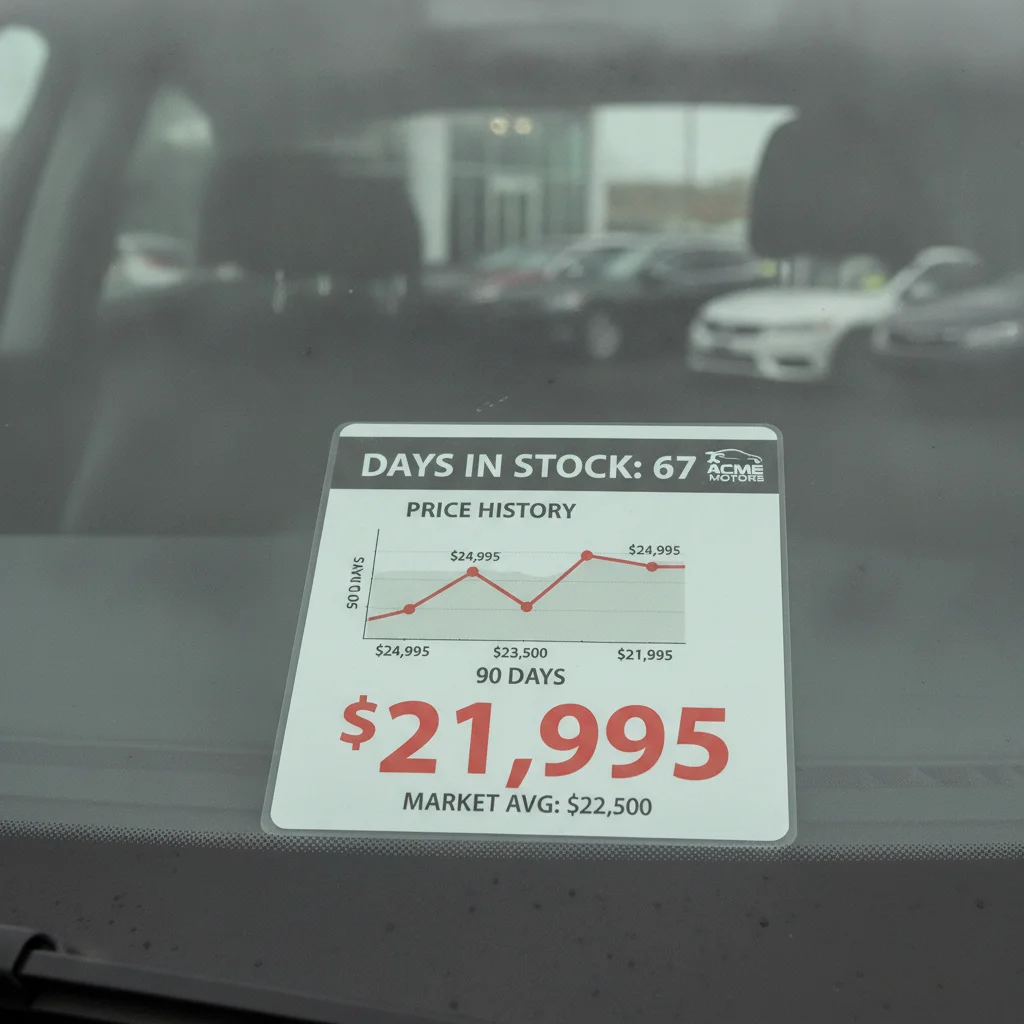
60+ days
Lot age that signals dealer flexibility
Industry analysts at iSeeCars consistently find that vehicles listed for more than 60 days sell at a measurably higher discount rate than freshly arrived inventory.
$6,000+
Interest savings from a strong credit score
On a $35,000 auto loan over 60 months, the difference between a 760-score rate and a 620-score rate can exceed $6,000 in total interest paid.
4–6%
Rate gap between top and subprime borrowers
According to Experian's State of the Automotive Finance Market reports, the spread between super-prime and subprime new-car loan rates regularly spans 4 to 6 percentage points.
January
Month with lowest new-car transaction prices
TrueCar and Edmunds historical transaction data shows January consistently produces average transaction prices below December, with less showroom competition.
Inventory Pressure
Dealers carrying aging inventory — vehicles that have sat on the lot more than 60 days — face real carrying costs and are statistically more flexible on price. You can identify slow-moving inventory using third-party listing sites that show how long a vehicle has been listed. Pairing this information with manufacturer incentives is more reliable than any day-of-week or weather strategy.
Similarly, when a new model year arrives and a prior-year version remains unsold, the dealer's motivation to clear that unit is concrete and documentable. This is one of the few timing windows that consistently favors buyers — but only on that specific unsold unit, not the entire lot. For a deeper look at how seasonal and economic trends affect vehicle pricing, see our Market Timing hub.
Your Own Financial Readiness
No calendar trick saves as much money as arriving with a strong credit score and a pre-approved loan offer from a bank or credit union. A buyer with a 760 credit score qualifies for rates that could be 4–6 percentage points lower than a buyer at 620. On a $30,000 loan over 60 months, that gap can cost over $4,000 in extra interest — far more than any timing discount.
For context on how new-car myths overlap with timing assumptions, it's worth reading New Car Buying Myths That Cost People Real Money. And if you're considering used vehicles, Used Car Myths That Cost Buyers Real Money covers how different the timing calculus is for pre-owned inventory.
Don't Let Timing Myths Rush a Bad Decision
Chasing a 'perfect' buying window — like the last day of December — can pressure you into accepting a vehicle that doesn't fit your needs or a financing term you haven't fully evaluated. A deal that closes on the wrong car is still the wrong deal. Timing should be one input, not the deciding factor.
Bundling Trade-In and Purchase Hides True Cost
Dealers may offset a purchase discount by lowballing your trade-in, making the 'timing win' on the new car effectively invisible. Always negotiate the purchase price and trade-in value as separate transactions. Get an independent offer on your trade before visiting the dealership.
Promotional APR Offers Have Hard Expiration Dates
Manufacturer low-APR offers expire on a specific calendar date — often the last day of a month — and are not retroactively applied. If you sign paperwork the day after the offer expires, you lose it entirely. Confirm the expiration date directly on the manufacturer's website before finalizing your purchase timeline.
Putting It Together: A Practical Timing Checklist
Rather than chasing a mythical perfect day, use this framework to identify when your timing is genuinely favorable:
- Check manufacturer incentives — Visit the automaker's site directly and note expiration dates for any cash-back or low-APR offers on the model you want.
- Search for aged inventory — Use listing platforms to filter by days on market. Units past 60 days are candidates for below-sticker negotiations.
- Confirm your credit score — Pull your credit report at least 30 days before shopping so you have time to correct errors. Get pre-approved before stepping into a dealership.
- Shop near quarter-end if possible — March, June, September, and December mark the end of fiscal quarters for most automakers and large dealer groups. Regional sales managers apply more pressure during these periods, which sometimes filters down to the buyer.
- Evaluate your trade-in separately — Don't let the dealership bundle your trade-in value into the negotiation. Get an independent offer from an instant-offer platform first; see common misconceptions about that process at Myths About Instant Car-Buying Services That Cost Sellers Money.
- Don't ignore insurance costs — Timing your purchase also affects your insurance premiums. Shopping for coverage simultaneously lets you bundle discounts; explore available options at Car Insurance Discounts & Deals.
None of these steps depend on the weather or the day of the week. They depend on information, preparation, and an understanding of what actually motivates a dealer to lower their price.
Pre-Approval Beats Any Timing Strategy
No calendar trick — not end-of-month, not December, not a rainy Tuesday — saves as much money as arriving with a pre-approved auto loan from a bank or credit union. Your pre-approval locks in an interest rate benchmark the dealer's finance office must beat or match. Without it, the financing negotiation is entirely on the dealer's terms. Get pre-approved before you step foot on a lot, regardless of what month it is.
Market Timing Is Mostly Speculation
Waiting for a market downturn to buy a car carries the same risks as timing any financial market — the conditions you're waiting for may not materialize, and the opportunity cost of delay (higher rates, an aging trade-in, a changed credit profile) can easily exceed any price reduction you'd gain. Use the tools available to you now: competing quotes, manufacturer incentives, and strong financing. Those deliver concrete, measurable savings.

All claims are backed by peer-reviewed research. Sources on request.